
In This Article
Picture this: crisp October mornings, your garden beds bursting with lush, dark green spinach leaves while your neighbours’ summer crops have long since withered. Fall spinach isn’t just possible in Canada—it’s actually superior to spring crops in flavour, texture, and reliability.
The secret? Choosing the right spinach seeds for fall harvest transforms your garden from a seasonal hobby into a year-round powerhouse. Canadian gardeners from Vancouver Island to the Maritimes are discovering that autumn-planted spinach not only survives our winters but actually thrives, producing sweeter, more tender leaves than any summer variety could dream of achieving.
When temperatures drop, spinach plants shift into survival mode, concentrating sugars in their leaves to prevent freezing. This natural antifreeze creates that melt-in-your-mouth sweetness that makes fall spinach legendary among home growers. Plus, cooler weather means fewer pests, less bolting stress, and longer harvest windows—sometimes stretching from September clear through to May.
Whether you’re gardening in Zone 3 Winnipeg or Zone 8 Victoria, selecting cold hardy spinach varieties suited to Canadian conditions makes all the difference between a disappointing frost casualty and a thriving winter crop that keeps your salad bowl full through the coldest months.
Quick Comparison Table: Top Fall Spinach Seeds
| Variety | Type | Days to Maturity | Cold Hardiness | Best For | Price Range (CAD) |
|---|---|---|---|---|---|
| Bloomsdale Long Standing | Savoy | 45-50 days | Zone 3+ | Heirloom flavour | $3.99-$8.99 |
| Giant Winter Spinach | Semi-Savoy | 45-50 days | Zone 2+ | Overwintering | $7.49-$13.99 |
| Space F1 Organic | Smooth | 37-40 days | Zone 4+ | Fast growth | $8.99-$15.99 |
| Tyee F1 | Savoy | 40-45 days | Zone 3+ | Disease resistance | $9.99-$16.99 |
| Baby Spinach Blend Organic | Mixed | 21-35 days | Zone 4+ | Quick harvests | $6.99-$12.99 |
| Winter Bloomsdale | Savoy | 45-55 days | Zone 2+ | Extreme cold | $8.49-$14.99 |
| Noble Giant | Semi-Savoy | 43-50 days | Zone 3+ | Large leaves | $7.99-$13.49 |
💬 Just one click – help others make better buying decisions too! 😊
✨ Don’t Miss These Exclusive Deals!
🔍 Take your fall garden to the next level with these carefully selected spinach seeds available in Canada. Click on any highlighted item to check current pricing and availability on Amazon.ca. These varieties will help you create authentic harvests your family will love!
Top 7 Spinach Seeds for Fall Harvest: Expert Analysis
1. Bloomsdale Long Standing Spinach Seeds – The Time-Tested Canadian Favourite
When Canadian gardeners talk about reliable fall spinach, Bloomsdale Long Standing dominates the conversation for good reason. This heirloom variety has been grown across North America since the 1880s, earning its reputation through brutal winters and unpredictable springs.
Key Specifications:
- Dark green, heavily savoyed (crinkled) leaves
- 45-50 days to maturity
- Packet contains approximately 300+ seeds
- Certified organic options available
The deeply crinkled texture isn’t just aesthetically pleasing—it creates tiny air pockets that help insulate leaves during frost. I’ve harvested Bloomsdale from snow-covered beds in late November, and the leaves emerged crisp and sweet, not wilted or damaged.
Canadian buyers consistently praise this variety for its dependability across diverse climates. One Ontario reviewer noted harvesting continuously from September through December with minimal protection. Alberta gardeners report successful overwintering under 15 cm of mulch, with vigorous regrowth in early April.
Pricing: $3.99-$8.99 CAD depending on packet size and organic certification
✅ Thick, meaty leaves perfect for cooking
✅ Excellent bolt resistance in fall
✅ Strong historical performance across Canada
❌ Slower growing than modern hybrids
❌ Leaves require thorough washing due to texture
2. Giant Winter Spinach Seeds – The Overwintering Champion
For serious Canadian gardeners who want spinach on the table in February, Giant Winter Spinach is non-negotiable. Bred specifically for autumn and winter production, this variety laughs at temperatures that would kill lesser plants.
Key Specifications:
- Smooth to semi-savoyed leaves reaching Swiss chard size
- Incredibly cold hardy (survives to -15°C uncovered)
- 45-50 days to maturity
- Approximately 500+ seeds per packet
What sets Giant Winter apart is its two-season performance. Plant in late August, harvest baby leaves in October, then watch it go dormant under snow. Come March, those same plants explode with the earliest fresh greens you’ve ever tasted—often 3-4 weeks before any spring-planted variety.
British Columbia growers report leaving Giant Winter completely unprotected through coastal winters, harvesting sporadically all winter long. Manitoba gardeners cover with straw and achieve similar results, pulling back mulch for harvests during January thaws.
Pricing: $7.49-$13.99 CAD for standard packets
✅ Unmatched cold tolerance for Canadian climates
✅ Huge leaves provide generous yields
✅ Sweet flavour intensifies after frost
❌ Slower spring bolt resistance than hybrids
❌ Requires space for mature leaf development
3. Space F1 Organic Spinach Seeds – The Fast-Growing Hybrid
Need spinach in a hurry? Space F1 Organic delivers baby leaves in just 37 days, making it perfect for succession planting through fall. This compact, upright variety is a favourite among Canadian market gardeners and container enthusiasts alike.
Key Specifications:
- Smooth, medium-green leaves
- Extremely compact growth habit
- Certified USDA Organic
- Disease resistance to 19 downy mildew races
The compact, skyward-reaching growth pattern makes Space incredibly efficient for small Canadian gardens or balcony containers. Leaves stay cleaner than sprawling varieties, reducing wash time—a huge advantage during cold-weather harvests.
Toronto apartment gardeners rave about growing Space in window boxes, harvesting continuously through autumn. Saskatchewan farmers use it for multiple fall succession plantings, sowing every two weeks from mid-August through mid-September for non-stop production.
Pricing: $8.99-$15.99 CAD for organic certified seeds
✅ Lightning-fast maturity for fall planting
✅ Superior disease resistance package
✅ Perfect for containers and small spaces
❌ Smaller individual leaf size
❌ Premium pricing for organic certification
4. Tyee F1 Spinach Seeds – The Disease-Fighter
Canadian fall gardens face unique challenges: damp weather, shortened daylight, and increased disease pressure from summer carryover. Tyee F1 was bred specifically to combat these issues while delivering exceptional bolt resistance.
Key Specifications:
- Dark green, heavily savoyed leaves
- 40-45 days to maturity
- Professional-grade downy mildew resistance
- Upright plant habit for easier harvesting
Downy mildew devastates spinach crops across humid regions of Canada—coastal BC, the Maritimes, and southern Ontario particularly. Tyee’s genetic resistance means you can plant confidently even in challenging microclimates.
Nova Scotia growers specifically mention Tyee’s performance during wet autumns when other varieties succumb to fungal pressure. Quebec market gardeners use it as their fall workhorse, appreciating the uniform maturity that allows efficient harvest scheduling.
Pricing: $9.99-$16.99 CAD for hybrid seed packets
✅ Best-in-class disease resistance for humid climates
✅ Excellent bolt tolerance during warm fall spells
✅ Uniform growth for efficient harvesting
❌ Higher cost than open-pollinated varieties
❌ Cannot save seeds for replanting (F1 hybrid)
5. Baby Spinach Seed Blend Organic – The Quick Harvest Solution
Sometimes you want instant gratification from your fall garden. Baby Spinach Seed Blend Organic delivers tender, restaurant-quality greens in just 21-28 days, perfect for Canadian gardeners maximizing short autumn windows.
Key Specifications:
- Mix of 3-4 complementary varieties
- Harvest-ready in 21-35 days
- Organic certified seeds
- Approximately 1,000+ seeds per pack
The beauty of blended varieties lies in succession—different maturity dates mean prolonged harvests from a single planting. Early varieties fill your salad bowl while slower types continue developing for later cuts.
Urban Canadian gardeners love baby spinach blends for cut-and-come-again harvesting. Plant in early September, start cutting at 7-10 cm height, and continue harvesting every 10 days until hard frost. With row cover protection, many extend this through November in Zone 5+.
Pricing: $6.99-$12.99 CAD depending on blend composition
✅ Ultra-fast first harvest for impatient gardeners
✅ Extended harvest window from variety mix
✅ Tender baby leaves ideal for fresh eating
❌ Less suitable for overwintering
❌ Smaller total yield per plant

6. Winter Bloomsdale Organic Spinach Seeds – The Extreme Climate Specialist
Standard Bloomsdale is excellent; Winter Bloomsdale is exceptional. This specially selected strain was developed by renowned plant breeder Frank Morton for extreme cold hardiness and intense, sweet flavour that develops under stress.
Key Specifications:
- Extra-savoyed dark green leaves
- 45-55 days to maturity
- Certified organic
- Bred specifically for fall planting and overwintering
The flavour difference between regular Bloomsdale and Winter Bloomsdale becomes apparent after the first hard frost. While standard varieties taste good, Winter Bloomsdale develops an almost candy-like sweetness that converted sugar protects it against freezing.
Prairie gardeners in Zones 2-3 swear by this variety, successfully overwintering under straw mulch and cold frames. The “fighter spinach” nickname comes from its legendary toughness—one Yukon grower reported plants surviving -25°C under minimal protection.
Pricing: $8.49-$14.99 CAD for organic certified seeds
✅ Ultimate cold hardiness for extreme Canadian climates
✅ Superior flavour development in cold conditions
✅ Frank Morton breeding pedigree
❌ Limited availability from some retailers
❌ Longer maturity than standard hybrids
7. Noble Giant Spinach Seeds – The Heavy Producer
When yield matters most, Noble Giant (also called Giant Noble) delivers massive, smooth-textured leaves that keep producing through extended fall seasons. This semi-savoy variety bridges the gap between easy-to-clean smooth types and cold-hardy savoy varieties.
Key Specifications:
- Large, slightly textured leaves
- 43-50 days to maturity
- 600-1,000 seeds per packet (bulk options)
- Non-GMO heirloom variety
The semi-savoyed texture provides excellent cold protection while remaining much easier to wash than heavily crinkled varieties—a practical advantage when harvesting in cold autumn rain.
Noble Giant excels in fall succession planting across Canada. Sow in late July for September harvest, mid-August for October, and early September for overwintering. Many Canadian gardeners report plants that survive winter producing enormous spring leaves—sometimes 25-30 cm across.
Pricing: $7.99-$13.49 CAD with bulk discounts available
✅ Exceptional yields from large leaf size
✅ Easier washing than heavily savoyed types
✅ Excellent value with bulk seed options
❌ Requires more garden space per plant
❌ Can be slow to germinate in warm soil
Understanding Cold Hardy Spinach Varieties for Canadian Gardens
Not all spinach is created equal when it comes to surviving Canadian winters. Cold hardiness depends on three key factors: variety genetics, leaf structure, and physiological adaptations.
The Science Behind Cold Tolerance
Spinach plants respond to dropping temperatures by producing antifreeze compounds—primarily sugars and proteins that lower the freezing point of cellular fluids. Savoy varieties with crinkled leaves trap air, providing natural insulation. This explains why heavily textured Bloomsdale types consistently outperform smooth-leaf varieties in Zone 2-4 winters.
Research from Agriculture and Agri-Food Canada confirms that spinach can tolerate temperatures down to -10°C once properly hardened off. Some varieties like Giant Winter and Winter Bloomsdale survive even colder with minimal protection.
Selecting by Growing Zone
Zones 2-3 (Prairie Provinces, Northern BC, Yukon): Prioritize extreme cold-hardy varieties: Winter Bloomsdale, Giant Winter. Use heavy mulch (20-30 cm straw) or cold frames.
Zones 4-5 (Southern Ontario, Quebec, Manitoba): All varieties perform well with modest protection. Bloomsdale, Tyee, and Noble Giant excel with 10-15 cm mulch or row covers.
Zones 6-7 (Vancouver Island, Southern BC, Atlantic Coast): Most varieties overwinter successfully with minimal or no protection. Focus on disease resistance (Tyee, Space) for humid maritime climates.
Zone 8+ (Coastal BC): Nearly any variety thrives. Emphasize bolt resistance for mild winters and succession planting for continuous harvest.
Organic vs. Conventional Spinach Seeds: What Canadian Gardeners Need to Know
The baby spinach seeds organic market has exploded in Canada, driven by demand for chemical-free growing. But are organic seeds worth the 30-50% price premium?
Certification Matters
ECOCERT Canada and USDA Organic certifications guarantee seeds were produced without synthetic pesticides, fertilizers, or GMOs. Canadian retailers like West Coast Seeds and Incredible Seeds offer domestically-certified organic options supporting local growers.
Performance Differences
Surprisingly, multiple Canadian university trials show minimal germination or yield differences between organic and conventional seeds of identical varieties. The real advantage lies in supporting sustainable agriculture and avoiding chemical residues in your garden ecosystem.
When to Choose Organic
Organic certification is crucial if you’re growing commercially for farmers’ markets or selling to certified organic restaurants. Home gardeners benefit most from organic seeds when:
- Building living soil ecosystems
- Attracting beneficial insects
- Saving seeds for future generations
- Growing for chemically-sensitive family members
Best Canadian Sources for Organic Spinach Seeds:
- West Coast Seeds (BC) – extensive organic selection
- Incredible Seeds (Nova Scotia) – Canadian heirloom focus
- Northern Seeds (Quebec) – climate-adapted varieties
- Greta’s Family Gardens (Alberta) – certified organic specialty seeds
Winter Spinach Seeds Zone 5: Strategies for Central Canadian Success
Zone 5 encompasses some of Canada’s most populated growing regions—southern Ontario, Quebec’s St. Lawrence valley, and parts of the Maritimes. These areas experience cold winters (-20 to -30°C) but benefit from decent snow cover and moderate growing seasons.
Timing Your Zone 5 Fall Plantings
Late July (weeks of July 20-31): Sow fast-maturing varieties (Space, Tyee) for September harvest before first frost. These plants establish strong root systems for potential overwintering.
Mid-August (weeks of August 10-20): Prime time for Bloomsdale, Noble Giant, and Giant Winter. Target 6-8 weeks of growth before hard frost, allowing plants to size up while remaining juvenile (non-bolting).
Early September (first week): Final planting window for overwintering crops. Use only the hardiest varieties (Winter Bloomsdale, Giant Winter) and plan for spring harvest rather than fall.
Protection Strategies for Zone 5
Row Covers (Floating): Lightweight agricultural fabric adds 2-4°C protection, extending harvest by 3-4 weeks. Remove during mild periods to prevent overheating.
Low Tunnels: Wire hoops with 4-6 mil greenhouse plastic create mini-greenhouses that can protect spinach down to -5°C outside. Ontario gardeners harvest through December using this method.
Mulch Layering: Apply 10-15 cm of straw, leaves, or marsh hay after the ground freezes. Quebec growers often wait until mid-November, allowing plants to fully harden before insulating.
Cold Frames: The gold standard for Zone 5 winter spinach. The Province of British Columbia’s spinach production guide recommends south-facing cold frames for maximum solar gain during short winter days.
Bloomsdale Spinach Seeds: Why This Heirloom Dominates Canadian Gardens
Few vegetable varieties achieve the cult status of Bloomsdale spinach. Available since 1826, this American heirloom has conquered Canadian gardens from coast to coast. What makes it so special?
The Bloomsdale Advantage
Flavour Profile: Thick, meaty leaves with pronounced earthy-sweet notes that intensify after frost. The high oxalate content gives that characteristic spinach “tooth-coating” sensation beloved by traditional cooks.
Texture Benefits: Those deeply crinkled leaves aren’t just pretty—they provide 3-4x more surface area than flat varieties, perfect for holding dressings, sauces, and vinaigrettes. When cooked, Bloomsdale maintains structure better than smooth types.
Historical Reliability: Nearly 200 years of selection across North American climates created a robust, adaptable plant. Canadian seed savers have further selected regional strains optimized for local conditions.
Bloomsdale Variants Available in Canada
Bloomsdale Long Standing: The classic version, bred for extended harvest before bolting. Best for spring and fall planting.
Winter Bloomsdale: Frank Morton’s ultra-hardy selection for extreme cold climates. Noticeably sweeter and more cold-tolerant.
Bloomsdale Organic: Same genetics, certified organic production. Available from most Canadian organic seed companies.
Growing Bloomsdale Successfully
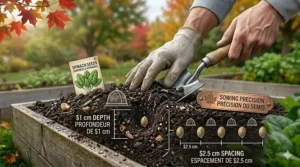
Sow seeds 1.5 cm deep in rows 30-45 cm apart. Thin seedlings to 10-15 cm spacing once they develop true leaves—use thinnings in salads. Bloomsdale appreciates rich, nitrogen-heavy soil; side-dress with compost tea or aged manure midway through growth.
Harvest outer leaves once they reach 10-12 cm, or cut entire plants 2-3 cm above soil level for regrowth. Fall-planted Bloomsdale often provides 3-4 cuttings before winter dormancy.
Giant Winter Spinach: Your Ticket to February Fresh Greens
Imagine stepping into your snow-covered garden in the depths of Canadian winter, brushing aside a few centimetres of powder, and harvesting armloads of deep green, tender spinach leaves. That’s the giant winter spinach promise—and it delivers.
Overwintering Mechanics
Unlike spring spinach that races to produce before heat triggers bolting, fall-planted Giant Winter focuses on root development and cold adaptation. By the time hard frost arrives, these plants have:
- Taproots extending 20-30 cm deep
- Crown tissues packed with carbohydrate reserves
- Leaf cells fortified with cryoprotective compounds
When spring arrives, those established root systems fuel explosive early growth—often producing harvestable leaves 4-6 weeks before spring plantings even germinate.
Canadian Regional Performance
Prairie Provinces: Exceptional performance with 20-30 cm straw mulch. Saskatchewan growers report reliable overwinter survival to -30°C.
Ontario/Quebec: Near-perfect results with modest mulch (10-15 cm) or cold frames. Some years require no protection in Zone 6.
Atlantic Provinces: Excellent performer in maritime climates. Coastal gardens often harvest continuously all winter without protection.
British Columbia: Outstanding in both coastal and interior regions. Interior growers use cold frames; coastal gardeners often harvest uncovered.
Maximizing Giant Winter Yields
Plant in blocks rather than rows to create microclimate benefits. Dense plantings trap snow (natural insulation) and reduce wind desiccation—a major winter injury factor.
Harvest selectively through winter, taking outer leaves while leaving inner rosettes intact. Each plant can produce 300-500 grams of greens over a full season—remarkable productivity from a single seed.
Space Spinach Variety: The Modern Marvel for Canadian Containers and Small Gardens
Urban Canadian gardening exploded during recent years, with balcony growers and small-lot homeowners seeking productive varieties suited to limited spaces. Enter Space—a game-changing hybrid designed for exactly these conditions.
Compact Architecture Benefits
Traditional spinach varieties sprawl, creating overlapping leaves prone to rot and disease in crowded conditions. Space grows like a fountain—leaves shoot upward from a tight central crown, creating a plant footprint of just 15-20 cm diameter while reaching 25-30 cm height.
This vertical growth pattern allows:
- 40-50% more plants per square metre
- Better air circulation reducing disease
- Easier harvesting without bending
- Superior container performance
Container Growing Guidelines for Canadian Climate
Container Selection: Minimum 20 cm deep, 25 cm diameter for individual plants. Larger containers (40+ litres) support 4-6 plants in fall production.
Soil Mix: Equal parts quality potting soil, compost, and perlite. Space demands consistent moisture but abhors waterlogging.
Balcony Placement: South or west exposure in fall months maximizes diminishing light. Northern exposures work through September but struggle by October.
Winter Protection: Move containers against building walls during cold snaps. Wrap pots with bubble wrap or burlap to prevent soil freezing—far more dangerous than air temperature for container spinach.
Montreal balcony gardeners extend Space harvests into December using portable cold frames. Vancouver apartment dwellers harvest year-round by rotating containers between outdoor and indoor locations.
Succession Planting with Space
The 37-day maturity allows aggressive succession schedules. Plant every 10-14 days from mid-August through mid-September for continuous baby leaf harvests through November. Each planting provides 2-3 cuts before exhaustion.
How to Choose Spinach Seeds for Fall Harvest in Canada: 6 Essential Steps
Selecting the right seeds makes the difference between abundant harvests and disappointing failures. Follow this systematic approach:
1. Determine Your Primary Goal
- Quick baby greens → Space F1, Baby Blend
- Overwintering production → Giant Winter, Winter Bloomsdale
- Disease-prone location → Tyee F1
- Heirloom flavour → Bloomsdale Long Standing, Noble Giant
2. Check Your Growing Zone Use Natural Resources Canada’s Plant Hardiness Zone Map to confirm your zone. Match varieties to your minimum winter temperatures using the cold hardiness rankings above.
3. Calculate Planting Dates Work backwards from your average first hard frost date (usually -2°C minimum):
- Fast varieties (Space): 40 days before frost
- Medium varieties (Bloomsdale): 50-55 days before frost
- Slow varieties (Giant Winter): 60+ days before frost
Most Canadian seed packets list maturity as “days to harvest.” Add 7-14 days for fall conditions with shorter daylight and cooler soil.
4. Assess Disease Pressure If your region experienced summer spinach diseases (downy mildew, fusarium wilt), prioritize resistant varieties. Coastal gardeners benefit most from Tyee’s comprehensive resistance package. According to Statistics Canada agricultural reports, humidity-related diseases are the leading cause of spinach crop failures in maritime provinces.
5. Consider Seed Source and Freshness Spinach seeds lose viability relatively quickly—about 15% germination decline per year under typical storage. Purchase from reputable Canadian seed companies with high turnover. Organic certification often indicates fresher stock (higher production costs incentivize rapid sales).
Check packaging dates when possible. Seeds packaged for the current season (2026) germinate 80-90%; prior season seeds drop to 60-75%.
6. Plan Quantities Realistically Most spinach seeds germinate 65-90% under ideal conditions. Fall soil is often warmer and drier than spring, reducing germination to 50-70% for some growers.
Purchase Formula: (Desired plants × 2) ÷ (seeds per packet × expected germination %) = packets needed
Example: Want 50 mature plants. Packet has 300 seeds, expecting 60% germination. (50 × 2) ÷ (300 × 0.60) = 0.56 packets → Buy 1 packet (allows for succession planting)
Soil Preparation and Nutrition for Fall Spinach Success in Canada
Fall spinach faces unique nutritional challenges compared to spring crops. Cooler soil temperatures slow nutrient availability while decreasing microbial activity limits nitrogen mineralization. Compensating through targeted soil prep makes enormous yield differences.
Pre-Planting Soil Amendments
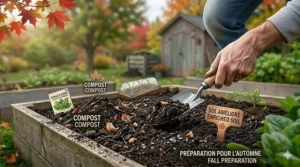
Compost Integration (2-4 Weeks Before Sowing): Work 5-8 cm of finished compost into the top 15 cm of soil. Fall’s slower decomposition means you need already-broken-down organic matter rather than fresh manures that would release nutrients too slowly.
Nitrogen Boost: Spinach demands high nitrogen for lush leaf production. Blood meal (12-0-0), feather meal (15-0-0), or fish meal (10-6-2) applied at 200 grams per 10 square metres provides season-long nutrition. Avoid synthetic nitrogen sources before overwintering—excess stimulates tender growth vulnerable to freezing.
pH Adjustment: Canadian government agricultural resources recommend 6.5-7.0 for optimal spinach growth. Most prairie soils run alkaline (7.5+); acidify with elemental sulfur. Maritime and coastal soils often need lime to raise pH above 6.0.
Phosphorus and Potassium: Incorporate bone meal (0-10-0) at 150 grams per 10 square metres and kelp meal (1-0.5-2.5) at 100 grams per 10 square metres. These slow-release amendments support root development crucial for overwintering.
Micronutrient Considerations
Canadian soils frequently show magnesium and boron deficiencies affecting spinach. Symptoms include:
- Magnesium deficiency: Yellowing between leaf veins while veins stay green
- Boron deficiency: Stunted growth, small yellowed leaves, poor root development
Epsom salts (magnesium sulfate) at 50 grams per 10 square metres corrects magnesium issues. Borax at 10 grams per 10 square metres addresses boron—but over-application causes toxicity, so test soil first if possible.
Fall-Specific Watering Strategy
September plantings in most of Canada face lingering summer heat with unreliable rainfall. Inconsistent moisture triggers premature bolting and bitter-tasting leaves.
Germination Phase (Days 1-14): Keep soil surface consistently moist—never saturated, never dry. Water lightly twice daily in warm weather, once daily as temperatures moderate.
Establishment Phase (Days 15-35): Transition to deep watering every 3-4 days, applying 2-3 cm per session. Encourages deep root growth essential for winter survival.
Pre-Winter Hardening (Days 35-Frost): Reduce watering frequency as temperatures drop below 10°C. Slightly stressed plants develop better cold tolerance.
Pest and Disease Management for Fall Spinach in Canadian Climates
Fall’s cooler temperatures reduce many pest pressures, but damp autumn conditions favour fungal diseases. Integrated management prevents problems before they start.
Common Canadian Spinach Pests
Leaf Miners (Liriomyza spp.): Small flies lay eggs in leaves; hatching larvae tunnel through leaf tissue creating distinctive white trails. Fall populations peak in September across southern Canada.
Control: Floating row covers exclude egg-laying adults. Remove and destroy affected leaves promptly. Natural parasitoids control most populations by October—avoid broad-spectrum insecticides that kill beneficials.
Aphids (Myzus persicae): Green to black sap-sucking insects cluster on growing tips and leaf undersides. Fall aphids vectors often carry cucumber mosaic virus.
Control: Strong water spray dislodges colonies. Insecticidal soap (2% solution) kills contact. Lady beetles, lacewings, and parasitic wasps provide biological control—plant yarrow, dill, and alyssum nearby to attract these beneficials.
Slugs and Snails: Maritime and coastal regions battle these mollusks through wet autumns. They devastate young seedlings overnight.
Control: Beer traps, copper barrier tape around beds, and hand-picking at dusk. Iron phosphate baits (Sluggo) work well organically. Encourage ground beetles and rove beetles with permanent mulched pathways.
Fungal Disease Prevention
Downy Mildew (Peronospora effusa): The #1 spinach disease across humid Canadian regions. Yellow spots on upper leaf surfaces with purple-grey fuzzy growth underneath.
Prevention: Plant resistant varieties (Tyee, Space). Ensure adequate spacing (10-15 cm) for airflow. Water at soil level, never overhead. Apply preventative copper fungicide in high-risk areas.
White Rust (Albugo occidentalis): White blister-like pustules on leaf undersides, common in cool, wet conditions.
Prevention: Three-year crop rotation away from all Amaranthaceae family members (beets, chard, quinoa). Remove volunteer spinach and lambsquarters (weed host). Resistant varieties available.
Fusarium Wilt: Soil-borne fungus causing yellowing, wilting, and plant death. Persistent in infected soils for years.
Prevention: Cannot be cured; prevention only. Use disease-free seed, practice 4-year rotations, maintain soil pH above 6.5 (alkaline conditions suppress fusarium). Consider raised beds with fresh soil in chronically infected gardens.
Harvesting and Storage: Maximizing Your Fall Spinach Bounty
Proper harvesting techniques extend productivity while maintaining quality. Fall spinach offers unique storage advantages compared to spring crops.
Optimal Harvest Timing
Baby Leaves (7-10 cm): Tender, mild flavour perfect for salads. Harvest begins 21-28 days after sowing for fast varieties, 28-35 days for others.
Mature Leaves (15-20 cm): More intense flavour, ideal for cooking. Reaches this stage 40-55 days depending on variety and fall conditions.
Cut-and-Come-Again Method: Harvest outer leaves when they reach desired size, leaving inner rosette to continue growing. Provides 3-5 cuttings per plant before winter or exhaustion.
Whole Plant Harvest: Cut entire plant 2-3 cm above soil level. Many varieties regrow from crown, especially in milder climates, providing second harvest.
Post-Harvest Handling for Canadian Conditions
Fall-harvested spinach lasts significantly longer than summer crops due to lower field heat and natural cold-crisping.
Field to Table:
- Harvest during coolest part of day (early morning) when leaves are fully turgid
- Immerse immediately in ice water bath for 15-20 minutes (removes field heat)
- Shake dry or use salad spinner
- Store loosely in perforated plastic bags with damp paper towel
- Refrigerate at 1-4°C with high humidity (95%+)
Storage Duration:
- Properly handled fall spinach: 10-14 days
- Summer spinach: 5-7 days maximum
Preservation Methods for Canadian Winters
Blanching and Freezing: The gold standard for long-term storage. Blanch clean leaves 60-90 seconds in boiling water, shock in ice bath, squeeze dry, portion into freezer bags removing air. Maintains quality 10-12 months.
Vacuum Sealing: Extends fresh refrigerator storage to 2-3 weeks. Requires vacuum sealer but preserves raw texture better than freezing.
Dehydration: Less common but viable. Dehydrate at 40°C until crispy (6-8 hours). Powder in blender for smoothie additions. Rehydrate for cooking within 6 months.
Winter Harvesting from Living Plants
Overwintered spinach requires special handling. Don’t harvest if:
- Temperature below -5°C (brittle, damaged leaves)
- Heavy frost on leaves (wait for afternoon thaw)
- Immediately after removing winter mulch (allow 2-3 days re-adjustment)
Harvest lightly through winter (no more than 30% of leaf mass per cutting) to maintain plant vigour for spring regrowth.
Frequently Asked Questions
❓ What is the best time to plant spinach seeds for fall harvest in Canada?
❓ How cold can spinach tolerate in Canadian winters?
❓ Can you grow spinach seeds indoors during Canadian winters?
❓ What is the difference between savoy and smooth-leaf spinach varieties?
❓ How much does spinach seed cost in Canada and where can I buy quality varieties?
Conclusion: Your Path to Year-Round Spinach Success in Canada
Growing spinach seeds for fall harvest transforms Canadian gardens from seasonal ventures into year-round food production systems. The varieties we’ve explored—from tried-and-true Bloomsdale to cutting-edge hybrids like Space and Tyee—prove that winter harvests aren’t just possible across our diverse climate zones, they’re actually superior in flavour and reliability to spring crops.
Whether you’re a Zone 2 prairie gardener gambling on Giant Winter under heavy mulch, a Zone 6 maritime grower harvesting uncovered Bloomsdale in December, or an urban balcony enthusiast maximizing Space in containers, the right variety selection aligns with your specific circumstances.
Remember the fundamentals: plant 6-8 weeks before hard frost for fall harvests, choose cold-hardy varieties for overwintering, prepare nutrient-rich soil with excellent drainage, and protect appropriately for your zone. Canadian gardeners from St. John’s to Victoria are proving that fresh, homegrown spinach on the dinner table in February isn’t a fantasy—it’s achievable with proper planning and the varieties covered in this guide.
Start small if you’re new to fall gardening. Try a single 1-metre row of Bloomsdale this August. Experience the satisfaction of harvesting your own spinach while snow falls outside. Next year, expand to multiple varieties, succession plantings, and season extension techniques. Before long, you’ll join the growing community of Canadian gardeners who consider winter their favourite spinach season.
✨ Don’t Miss These Exclusive Deals!
🔍 Take your fall gardening to the next level with these carefully selected spinach seeds available in Canada. Click on any highlighted variety above to check current pricing and availability on Amazon.ca. These cold-hardy varieties will help you create authentic harvests your family will love through the coldest months!
Recommended for You
- 7 Best Kale Seeds for Canadian Winter 2026 – Frost-Proof Picks
- 7 Best Winter Lettuce Seeds Canada Zone 4 (2026 Expert Guide)
- 7 Best Lettuce Seeds for Canadian Climate in 2026
Disclaimer: This article contains affiliate links to Amazon.ca. If you purchase products through these links, we may earn a small commission at no additional cost to you.
✨ Found this helpful? Share it with your friends! 💬🤗
