
In This Article
Somewhere in every gardener’s shed there’s a shovel with a story — a bent tip from a rock that won, a handle held together with electrical tape, a memory of the day it finally gave out mid-dig. Buying the best garden shovel isn’t really about specs on a cardboard hang-tag. It’s about picking a tool that survives contact with your actual soil, your actual back, and your actual patience level on a Saturday morning.
A garden shovel is a long-handled hand tool with a curved, pointed, or flat blade used for digging, lifting, and moving soil, compost, and other loose materials in yards and garden beds. That’s the textbook version. The lived version is messier: some blades shrug off clay like it’s nothing, others bend the first time they meet a root. Ontario clay, Prairie hardpan, coastal loam — they all punish the wrong shovel differently, and Canadian winters are hard on cheap fiberglass and untreated wood alike.
This guide walks through seven real, currently sold shovels spanning budget to premium, explains what their specs actually mean once you’re standing in a half-dug hole, and digs into the specific problems Canadian gardeners run into — clay that clumps like pottery, roots that fight back, and handles that fail exactly when you need them not to. Shovels have barely changed in basic concept since humans first started shaping tools for moving earth, and understanding why a modern blade is shaped the way it is makes it a lot easier to pick the right one.
Quick Comparison Table
| Shovel | Blade Material | Best For | Price Range (CAD) |
|---|---|---|---|
| Bully Tools 82515 14-Gauge Round Point | 14-gauge steel | Overall toughness | C$75-C$95 |
| Fiskars Steel D-Handle Digging Shovel | 14-gauge welded steel | Ergonomics & leverage | C$60-C$80 |
| AMES Razor-Back Round Point (Fiberglass) | Tempered steel | Best value | C$35-C$55 |
| Radius Garden 202 PRO Ergonomic | Stainless steel | Clay & rocky soil | C$90-C$120 |
| Corona SS27020 Square Point | 15-gauge steel | Edging & trenching | C$45-C$65 |
| Root Slayer 22011 Serrated Shovel | Carbon steel | Roots & compacted ground | C$55-C$75 |
| True Temper Budget Square Point | Stamped steel | Light-duty, tight budgets | C$25-C$40 |
Looking at the table, there’s a pretty clear split between “buy once, cry once” tools like the Radius Garden and Bully Tools models and genuinely capable budget options like the AMES Razor-Back. The Corona and Root Slayer picks aren’t trying to be all-purpose — they’re specialists that will outperform every generalist on this list the moment the job matches their design. If you only take one thing from this table, let it be this: matching blade shape to your soil type matters more than brand loyalty.
💬 Just one click — help others make better buying decisions too!😊
Top 7 Garden Shovels: Expert Analysis
1. Bully Tools 82515 14-Gauge Round Point Shovel — practically indestructible build
The standout here is the 14-gauge steel blade, which feels less like a garden tool and more like a piece of light construction equipment. This shovel pairs that blade with a triple-wall reinforced fiberglass handle, a combination that gives it a no-frills, utilitarian feel built for users who are genuinely hard on their equipment. In practice, that thickness means the blade resists the kind of edge-rolling and flex that ends the life of thinner shovels within a season or two of hitting Canadian clay and shale.
Based on the spec comparison with lighter 15- and 16-gauge shovels on this list, the Bully Tools model is squarely aimed at homeowners doing serious yard renovation, new bed construction, or anyone who’s snapped a handle mid-dig before and doesn’t want a repeat performance. It’s overkill for potting soil and container gardening, but that’s not really its job. Reviewers consistently note the long ferrule connection between blade and handle holds up well under prying, which matters more than people expect the first time they try to lever out a buried rock.
Aggregated review sentiment across major retailers points to strong marks for durability and made-in-USA build quality, with the recurring critique being weight — this isn’t the shovel you want if you’re moving hundreds of scoops of mulch in an afternoon.
Pros:
- ✅ 14-gauge steel blade resists bending under heavy prying
- ✅ Triple-wall fiberglass handle shrugs off weather and impact
- ✅ Long ferrule adds leverage strength at the blade-handle joint
Cons:
- ❌ Noticeably heavier than fiberglass competitors
- ❌ Overbuilt (and overpriced) for light container gardening
At around C$75-C$95, this sits mid-pack price-wise but punches well above it on durability — a solid value verdict if you dig more than a few times a season.
2. Fiskars Steel D-Handle Digging Shovel — best ergonomic all-rounder
What jumps out first is the aggressive double-angled handle — starting at roughly 33° near the blade and easing to about 25° near the grip — which keeps your wrist in a more neutral position through a full digging stroke. Based on the spec comparison, this ergonomic tweak is a deliberate answer to the wrist-angle problem that most traditional straight-shaft shovels ignore entirely.
Construction-wise, the blade and shaft are all-welded 14-gauge steel with no bolts or collars to loosen over time, which means power transfer from your foot and arms goes almost entirely into the ground instead of flexing away in the tool. What most buyers overlook about this model is the oversized foot platform — it’s wide enough to stomp with real weight behind it, which matters enormously once you hit compacted clay that laughs off a narrow blade edge.
This is the shovel for someone doing repetitive digging over a full afternoon: turning garden beds, trenching for irrigation, or general landscaping where wrist and lower-back fatigue add up fast. Reviewers frequently mention that the all-steel construction, while heavier than fiberglass, feels more “planted” and controlled during heavy prying.
Pros:
- ✅ Double-angled handle reduces wrist strain over long sessions
- ✅ All-welded steel means zero flex, zero loosening joints
- ✅ Wide foot platform handles compacted or rocky ground
Cons:
- ❌ All-steel build adds noticeable heft versus fiberglass rivals
- ❌ Premium ergonomic design comes at a premium price
Expect to pay in the C$60-C$80 range — a fair trade for a design that genuinely reduces strain rather than just claiming to.
3. AMES Razor-Back Long Handle Round Point Shovel — best bang-for-buck pick
The standout advantage is a tempered steel blade paired with a fiberglass handle at a price point that undercuts most of this list by a wide margin. Here’s what to weigh: the blade won’t match the Bully Tools shovel gauge-for-gauge, but for typical garden bed digging, planting, and general yard cleanup, it holds its edge and resists bending far better than department-store bargain bins would suggest.
The fiberglass handle is genuinely the standout feature. It won’t rot, splinter, or crack from sitting out in the rain — a common failure point for wood-handled tools left in a Canadian shed through a damp spring — and it’s non-conductive, a subtle safety perk if you’re ever unsure what’s buried nearby. Based on the spec comparison against premium picks here, this is the shovel for budget-conscious gardeners, renters, or anyone buying a second or third shovel to keep at a cottage.
Aggregated reviewer sentiment describes it as a dependable “grab it and go” tool rather than a specialist, with the fiberglass handle earning consistent praise and occasional notes that the blade edge dulls faster than pricier steel gauges under heavy rock contact.
Pros:
- ✅ Excellent durability-to-price ratio for everyday garden tasks
- ✅ Fiberglass handle resists rot, splintering, and weather damage
- ✅ Non-conductive shaft adds a margin of safety near buried lines
Cons:
- ❌ Blade edge dulls faster than heavier-gauge premium models
- ❌ Less prying strength against large buried rocks
At C$35-C$55, this is the easiest recommendation on the list for anyone who just wants a shovel that works without a specialist’s price tag.
4. Radius Garden 202 PRO Ergonomic Stainless Steel Shovel — best for clay and rocky soil
The standout feature is a slightly cupped stainless steel blade shape that, based on the spec comparison with flat-bladed competitors, is specifically suited to gripping and lifting sticky, compacted material rather than letting it slide back off the blade. That cupped geometry is the whole game when your problem soil is heavy clay: a flat blade tends to shear through clay without actually carrying a load, while the cupped design scoops and holds.
The patented Natural Radius O-Handle Grip offers roughly four times the gripping surface of a traditional D-handle, which translates to real leverage when you’re wrenching a blade out of dense, root-veined clay. What most buyers overlook is the extra-wide, elevated forward step — on a heavier-than-average shovel, that wider foothold is what keeps your boot from sliding sideways under real digging force.
Reviewers consistently note the stainless blade resists rust impressively well even after years of clay contact, though a handful mention the resin-coated shaft can show surface rust at the seams if water pools in poorly drilled drainage holes — worth a quick check before you buy.
Pros:
- ✅ Cupped blade grips and holds heavy clay instead of shedding it
- ✅ O-Handle grip roughly quadruples hand contact for leverage
- ✅ Wide forward step improves footing under hard digging force
Cons:
- ❌ Premium price relative to standard round-point shovels
- ❌ A few users report minor shaft rust at drainage seams over time
At C$90-C$120, this is the specialist pick for anyone whose main enemy is clay rather than roots or rock — the price reflects genuinely different engineering, not just branding.
5. Corona SS27020 Square Point Shovel — best for edging and trenching
The standout advantage is the flat-bottomed, square-edged 15-gauge steel blade, built for clean, straight cuts rather than scooping loose material. Based on the spec comparison with round-point shovels on this list, a square point is the tool that actually squares off a trench wall or slices a crisp bed edge — a round point just can’t replicate that flat face no matter how sharp it is.
The 48-inch fiberglass handle adds real leverage for a taller adult without forcing an awkward crouch, and the blade’s straight edge doubles nicely as a sod-cutter along lawn borders. Here’s what to weigh: this isn’t your primary digging shovel for holes and planting — it’s the tool you reach for once the round point has done the bulk digging and you need clean lines.
Aggregated reviews describe the blade as holding a usably sharp edge longer than expected for its gauge, with occasional mentions that the fiberglass handle flexes slightly more than steel-shaft competitors during heavy prying against rock.
Pros:
- ✅ Flat square blade cuts crisp trench walls and bed edges
- ✅ 48-inch handle suits taller users without excess bending
- ✅ Straight edge doubles as an effective sod and edging tool
Cons:
- ❌ Not designed for scooping loose soil efficiently
- ❌ Fiberglass handle flexes more than steel under heavy prying
Priced around C$45-C$65, it’s a smart second-shovel purchase rather than a do-everything solution, and it earns its keep the first time you edge a bed.
6. Root Slayer 22011 Serrated Digging Shovel — best for roots and compacted ground
The obvious standout is the arrowhead-shaped blade with a serrated cutting edge running along both sides — essentially a saw blade fused to a digging spade. What most buyers overlook about serrated shovels in general is that they’re not actually better at moving soil; they’re better at getting through the roots and sod that stop a smooth-edged blade cold, which the serration handles by sawing through material rather than trying to muscle past it.
Based on the spec comparison against standard round-point shovels, the narrower, more pointed profile concentrates force into a smaller contact area, so it slices through stubborn roots and packed dirt more efficiently than a wide, blunt-nosed blade would. The O-Handle design here mirrors the ergonomic grip philosophy of the Radius Garden model, giving two-handed control when you’re sawing downward through a root mass rather than scooping.
Reviewer sentiment is largely positive on the root-cutting performance specifically, with a recurring caveat that the blade isn’t meant for extremely hard, rocky hardpan — it’s a root specialist first, an all-purpose digger a distant second.
Pros:
- ✅ Serrated edge saws through roots smoother blades can’t handle
- ✅ Arrowhead point concentrates force for easier ground penetration
- ✅ O-Handle grip aids two-handed control during downward cuts
Cons:
- ❌ Not ideal for extremely hard, rocky, or compacted hardpan
- ❌ Narrower blade moves less material per scoop than a round point
Expect C$55-C$75, a reasonable premium for a tool that solves the one problem — established roots — that turns every other shovel on this list into a workout.
7. True Temper Budget Square Point Transfer Shovel — best light-duty, budget-friendly pick
The standout here is simply price-to-function: a stamped steel square-point blade on a basic long handle that handles light transfer work — mulch, compost, loose garden soil — without asking much of your wallet. Based on the spec comparison against the heavier-gauge shovels on this list, the thinner stamped steel isn’t built for prying rocks or hacking through hardpan, and it shouldn’t be asked to.
Here’s what to weigh: for apartment-dwellers with a small planter bed, seasonal renters, or anyone who needs “a shovel” in the shed for occasional light use rather than a specialized digging tool, this is a perfectly sensible purchase. What most buyers overlook is that a lighter blade actually reduces fatigue for shorter, less demanding tasks — the extra steel gauge on premium models is dead weight if you’re only ever moving mulch.
Aggregated review sentiment is mixed but predictably tied to expectations: buyers using it for its intended light-duty transfer work report solid satisfaction, while those using it for heavy digging or clay-breaking report bent blades and disappointment — a mismatch of tool to task rather than a flaw in the product itself.
Pros:
- ✅ Genuinely low price point for occasional, light-duty use
- ✅ Lighter blade reduces fatigue on short, easy tasks
- ✅ Square point handles mulch and loose soil transfer well
Cons:
- ❌ Thin stamped steel bends under heavy prying or clay
- ❌ Not suited to root cutting or rocky, compacted ground
At C$25-C$40, it’s the right call only if your digging needs are genuinely modest — pushed beyond that, you’ll be back here shopping again within a season.
Practical Usage Guide: Getting the Most from Your New Shovel
Buying the right shovel is half the job — using and maintaining it properly is what makes it last a decade instead of two summers. Start with a quick inspection before first use: check that the handle-to-blade connection (the ferrule or socket) is tight, and on wood-handled models, look for a factory finish that hasn’t been nicked in shipping, since exposed wood grain absorbs moisture and starts the rot process almost immediately.
For first-use technique, resist the urge to muscle through everything with your arms. Place the ball of your foot on the shoulder of the blade, let your body weight do the initial push, and use your legs — not your lower back — to lever the load up. This single habit prevents more shovel-related strain injuries than any product feature could.
A simple seasonal maintenance routine pays off: wipe the blade dry after use in wet soil (rust starts within hours on unprotected carbon steel), apply a light coat of boiled linseed oil to wooden handles once or twice a season, and touch up the blade edge with a file or bench grinder when digging starts feeling noticeably harder than it used to. Common first-30-days mistakes include storing a wet shovel blade-down in damp soil (accelerates corrosion), using a round-point shovel to try to edge a bed (it can’t cut a straight line no matter how sharp), and ignoring a slightly loose handle until it fails mid-dig instead of tightening or re-gluing it early.
Real-World Scenarios: Which Shovel Actually Fits Your Yard
The new homeowner with heavy clay and a first flower bed: budget around C$300-C$400 in total tool spend, digging maybe once every week or two through spring and fall. The Radius Garden 202 PRO earns its price here — the cupped blade is built for exactly this clay-and-rock combination, and the ergonomic handle matters when you’re new to regular digging and haven’t built up the right muscles yet.
The weekend landscaper tackling a full yard renovation: frequent, heavy use over several weekends, likely hitting buried rocks, old roots, and compacted subsoil from construction fill. This is Bully Tools territory — the 14-gauge blade and reinforced handle are designed for exactly this kind of abuse, and the extra weight becomes a non-issue once you’re doing serious digging rather than light garden maintenance.
The apartment or condo gardener with a couple of raised beds: light, occasional use — a few plantings a season, some mulch top-ups. There’s no reason to spend C$100 here; the AMES Razor-Back or the True Temper budget pick will handle raised-bed soil without complaint, and the lighter weight is actually an advantage for shorter sessions.
How to Choose the Best Garden Shovel
- Identify your dominant soil type first. Clay, sand, rocky loam, and compacted fill all favour different blade shapes — a cupped blade for clay, a pointed round blade for general sandy or loamy digging.
- Match blade gauge to how hard you’ll push it. Occasional light use doesn’t need 14-gauge steel; frequent heavy digging or prying absolutely does.
- Choose handle material based on how it’s stored. Fiberglass shrugs off damp sheds and freeze-thaw cycles far better than untreated wood.
- Consider handle length against your height. A too-short handle forces more bending, which is where back strain actually comes from.
- Decide if you need a round point, square point, or both. Round points dig and scoop; square points cut clean edges and trench walls — most serious gardeners eventually own one of each.
- Factor in weight versus your typical session length. A heavier, tougher shovel is worth the trade-off for infrequent heavy jobs, but becomes fatiguing fast for long sessions of light work.
- Check the warranty and country of manufacture. Lifetime guarantees on brands like Radius Garden and Bully Tools reflect real confidence in build quality, not just marketing language.
Best Shovel for Clay Soil: What Actually Works
Clay is deceptive — it looks soft when wet and turns to something close to concrete when it dries, and a huge share of frustration with garden shovels traces back to using the wrong blade shape against it. The Canadian System of Soil Classification defines heavy clay and clay soils by their fine particle content, and that fine particle structure is exactly why clay clings to a flat blade instead of releasing cleanly — the same property that makes clay great for pottery makes it miserable for digging with the wrong tool.
A slightly cupped blade, like the one on the Radius Garden 202 PRO, is specifically designed to counteract this. The curve creates a small pocket that lifts and carries a clay clod instead of letting it slide back into the hole as you try to lift. Stainless or well-coated carbon steel also matters more in clay than in sandy soil, since clay retains moisture against the blade far longer, accelerating rust on unprotected steel.
Technique compounds the equation: working clay slightly damp — not bone dry, not saturated — makes an enormous difference regardless of which shovel you’re using, since bone-dry clay behaves like concrete and waterlogged clay just smears rather than lifting. If you’re consistently fighting clay, pairing a cupped-blade round point for the bulk digging with a square-point spade for clean bed edges solves nearly every clay-related frustration gardeners run into.
Round Point Shovel vs Square Point Spade: Which Digging Implement Wins?
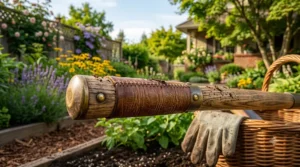
This is less a competition than a division of labour, and understanding it prevents buying the wrong tool for the job. A round point shovel has a tapered, pointed blade built to penetrate soil and scoop loose material — it’s the tool for digging holes, turning beds, and general excavation. A square point spade has a flat, straight-edged blade built for cutting clean vertical faces — trench walls, bed edges, sod removal — tasks where a pointed tip would just get in the way.
A traditional spade’s narrow, flat profile is built for digging post holes and similarly precise, straight-sided cuts, which is exactly why trying to edge a lawn with a round point shovel produces a ragged, wandering line no matter how careful you are. Conversely, trying to dig a planting hole with a square point spade means fighting the flat blade’s poor penetration in anything but loose soil.
For most home gardeners, the honest answer is both — a round point for the 80% of digging tasks, a square point kept nearby for the edging and trenching jobs that come up a handful of times a season. If forced to own just one, choose based on your most frequent task: new garden bed construction favours the round point; ongoing lawn and bed maintenance often leans square point.
Heavy-Duty Garden Shovel: What “Heavy-Duty” Really Means
“Heavy-duty” gets slapped on packaging liberally enough that it’s worth defining properly before you pay a premium for the label. In practical terms, a genuinely heavy-duty garden shovel means three things together: thicker blade gauge (typically 12- to 14-gauge steel versus 15- to 16-gauge on standard models), a reinforced connection between blade and handle (a long ferrule or fully welded joint rather than a simple stamped socket), and a handle material — steel or reinforced fiberglass — rated to withstand prying force without flexing or snapping.
The Bully Tools 82515 and the Fiskars steel D-handle model both qualify honestly under this definition; the blade gauge and joint construction on each are measurably tougher than the mid-range and budget shovels on this list, not just marketed as tougher. What most buyers overlook is that heavy-duty construction adds real weight, and that weight is a genuine trade-off — it’s an advantage for occasional hard prying against rock and root, and a disadvantage for anyone doing long sessions of lighter work where fatigue accumulates.
The practical test: if you’ve broken a handle or bent a blade tip in the last two or three years of normal use, upgrading to a genuinely heavy-duty model is worth the extra cost. If your existing shovel has simply dulled or your soil is mostly loose and loamy, a heavy-duty upgrade solves a problem you don’t actually have.
Common Mistakes When Buying a Garden Shovel
The single most common mistake is buying based on price alone without matching blade shape to soil type — a rock-bottom round point shovel in dense clay will underperform a mid-priced, properly shaped blade every single time. A close second is ignoring handle length relative to height; a shovel that’s too short forces constant bending, which is where most digging-related back strain actually originates, not from the weight of the load itself.
Buyers also frequently skip checking country of manufacture and warranty terms, missing that brands like Bully Tools and Radius Garden back their products with lifetime guarantees precisely because the build quality supports that promise — a warning sign when a “heavy-duty” shovel offers no meaningful warranty at all. Finally, many gardeners buy a single all-purpose shovel and expect it to handle edging, root cutting, and heavy digging equally well, when the honest answer is that specialized tools — a square point for edges, a serrated blade for roots — consistently outperform generalists at their specific task.
What to Expect: Real-World Digging Performance
Specs on a box rarely translate directly into what a shovel feels like at hour two of a Saturday digging session. A 14-gauge steel blade, in practice, means noticeably less arm fatigue from flex-absorption — every bit of force you put in goes into the soil instead of bending the tool — but it also means the shovel itself weighs more, which shows up as shoulder fatigue on long sessions regardless of soil resistance.
An ergonomic D- or O-handle genuinely changes wrist comfort over a full session; it’s not a marketing gimmick so much as a measurable reduction in the awkward wrist angle a straight handle forces during repeated lifting. Ergonomics guidance on shovelling notes that shovel weight typically ranges from about 1.5 to 3 kilograms, and that range matters practically — a shovel at the heavier end of that scale will feel noticeably more tiring by scoop 50 than one at the lighter end, even if both handle the soil equally well.
Clay-specific blades like the Radius Garden’s cupped design show their real-world advantage specifically in the “lift and carry” phase of digging — the moment right after the blade penetrates, when a flat blade lets a clay clod slide back into the hole and a cupped blade doesn’t. That’s a difference you feel within the first few scoops, not something that shows up on a spec sheet at all.
Long-Term Cost & Maintenance of Earth-Moving Tools
A cheap shovel that needs replacing every one to two seasons often costs more over five years than a single premium purchase with a lifetime warranty. Running rough numbers: a C$30 budget shovel replaced twice over five years totals roughly C$90, while a C$90 Radius Garden model backed by a lifetime guarantee could realistically outlast that same five-year window with just a replacement handle, if ever needed at all.
Maintenance costs are modest across the board but not zero — expect to occasionally replace a wood handle (roughly C$15-C$25 for a quality ash replacement shaft) or touch up a blade edge with a file, a five-minute job with no material cost. Fiberglass and steel-shaft models largely avoid the handle-replacement cost entirely, which is part of why the total cost of ownership on the AMES Razor-Back and Bully Tools models compares so favourably to wood-handled alternatives over a decade of use.
The real long-term value calculation isn’t just purchase price versus lifespan — it’s also digging efficiency over time. A blade that holds its edge and shape reduces the number of strokes needed per hole, which adds up meaningfully across dozens of planting sessions a season, especially in clay or root-heavy ground where a dull or bent blade multiplies the effort required for identical results.
Features That Actually Matter (And Those That Don’t)
Blade gauge, handle material, and blade shape genuinely matter — they directly determine durability, weight, and how the tool performs against your specific soil. Ergonomic handle grips also matter more than most buyers expect going in; the wrist-angle difference between a straight shaft and an angled D- or O-handle is measurable and noticeable within a single digging session.
What matters far less than marketing suggests: colour, cosmetic coatings on the blade (beyond basic rust resistance), and brand name alone divorced from actual gauge and construction specs. A flashy powder-coat finish looks nice in a hardware store display but tells you nothing about how the blade will hold up against a buried rock. Similarly, “professional grade” as a label means nothing without the actual gauge number and handle construction details to back it up — always check the real specs underneath the marketing language before assuming a higher price reflects genuinely better engineering.
Safety and Excavation: Using Hand Tools Around Buried Utilities
Before any digging project — even something as small as planting a new shrub — Ontario One Call and similar provincial services require homeowners to request a public utility locate at least five business days before digging, and it’s free. This isn’t bureaucratic overcaution; buried gas lines, electrical cables, and water pipes can sit surprisingly close to the surface, and striking one with even a hand shovel carries real injury and liability risk.
Proper digging technique also matters for your own safety independent of buried utilities. Shovelling places real stress on the spine through the combination of lifting and twisting motion, and the safest approach keeps the load close to the body, bends at the knees rather than the waist, and avoids twisting while holding a loaded blade. Wearing gloves and sturdy, closed-toe footwear with good arch support rounds out the basic safety checklist that applies regardless of which shovel on this list you choose.
For any excavation hand tools work near a marked utility locate, hand-digging rather than power equipment is often specifically required within the “tolerance zone” around a marked line — one more reason a good, sharp, well-maintained shovel remains an essential tool even in an age of rental excavators and power augers.
Buyer’s Decision Framework
If your soil is dense clay, choose the Radius Garden 202 PRO because the cupped blade solves the specific lift-and-carry problem clay creates. If you’re clearing a new bed full of established roots, choose the Root Slayer because a serrated edge saws through material a smooth blade fights. If you need clean trench walls or crisp bed edges, choose the Corona square point because a flat blade cuts straight lines a round point physically cannot. If you’re doing heavy, frequent digging in mixed or rocky soil, choose the Bully Tools or Fiskars model because reinforced steel construction absorbs prying force that would bend a lighter blade. If your budget is tight and your digging is occasional, choose the AMES Razor-Back or True Temper pick and don’t feel like you’re settling — matching tool to actual task beats overspending on capability you won’t use.
Frequently Asked Questions
❓ What is the best all-around garden shovel for most homeowners?
❓ How do I stop my garden shovel from rusting?
❓ Is a heavy-duty shovel worth the extra cost for a small backyard garden?
❓ What's the difference between a garden shovel and a garden spade?
❓ How long should a good garden shovel handle last?
Conclusion
There’s no single best garden shovel — there’s the best shovel for the digging you actually do. Clay calls for a cupped blade like the Radius Garden PRO. Roots call for serrated steel like the Root Slayer. Heavy, rocky ground calls for the reinforced construction on the Bully Tools or Fiskars models, and clean edges call for a proper square point spade. Budget-conscious, light-duty gardening is served just fine by the AMES Razor-Back or an entry-level pick like the True Temper.
What all seven of these shovels share is honest, verifiable construction — real gauge numbers, real handle materials, real aggregated reviewer sentiment rather than marketing adjectives. Match the blade to your soil, the handle to your storage conditions, and the weight to how long you’ll actually be digging, and any of these seven will earn its keep in your shed for years.
✨ Don’t Miss These Exclusive Deals!
🔍 Take your garden shovel shopping to the next level with these carefully selected picks. Click on any highlighted item to check current pricing and availability on Amazon.ca. The right tool will make every digging job in your yard easier, faster, and a lot less punishing on your back!
Recommended for You
- Weeding Knife Hori Hori: 7 Top Picks Canadians Trust in 2026
- Tool for Removing Dandelions: 7 Picks That Actually Work (2026)
- Washable Gardening Gloves: 7 Best Picks for 2026
Disclaimer: This article contains affiliate links. As an Amazon Associate, I earn from qualifying purchases. If you purchase products through these links, we may earn a small commission at no additional cost to you.
✨ Found this helpful? Share it with your friends! 💬🤗
