
In This Article
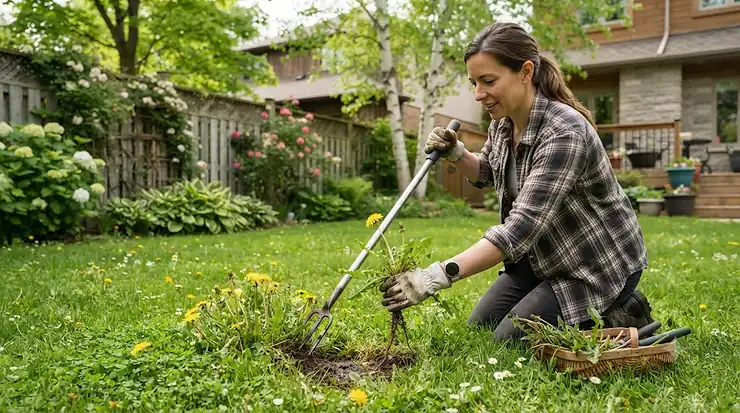
Every spring, the same yellow invasion rolls across Canadian lawns from Victoria to Halifax, and by the time you’ve noticed the first bloom, there are already forty more hiding in the grass, quietly plotting their seed-head takeover. Since most provinces restrict cosmetic pesticide use, spraying your troubles away isn’t really on the table anymore — which means the right tool for removing dandelions has become less of a nice-to-have and more of a small act of household diplomacy. This guide walks through seven real, currently available options, from budget hand tools to stand-up models built for anyone who’d rather not spend an afternoon on their knees. A tool for removing dandelions, in the simplest sense, is any implement designed to grip or dig beneath the plant’s taproot and lift it — leaves, crown, and root — cleanly out of the soil, since anything short of that just triggers regrowth. We’ll dig into a dandelion weeder tool for close-up precision, a stand-up weed puller for anyone weeding a whole yard, and a few in-between options that split the difference. Along the way, expect honest analysis grounded in real specs and aggregated review sentiment — not manufactured enthusiasm — because the goal here is helping you spend your money once, not five times.
Quick Comparison Table
| Tool | Type | Best For | Price Range (CAD) |
|---|---|---|---|
| Fiskars Stand-Up Weed Puller (4-Claw) | Stand-up, foot-assisted | Whole-lawn dandelion clearing | C$45–C$60 |
| Grampa’s Weeder (Bamboo, 4-Claw) | Stand-up, lever-action | Bad knees, older gardeners | C$40–C$55 |
| CobraHead Original Weeder & Cultivator | Hand tool, hooked blade | Precision tap root extraction | C$30–C$40 |
| CobraHead Long Handle (48″) | Stand-up sweep tool | Larger beds, minimal bending | C$55–C$70 |
| Garden Guru Dandelion Weeder Tool | Hand tool, forked tip | Budget-friendly ergonomic grip | C$15–C$25 |
| WORKPRO 11.5″ Dandelion Weeder | Hand tool, two-prong fork | Compact storage, casual use | C$10–C$18 |
| Fiskars Ergo Weeder | Hand tool, angled head | Leverage in compacted soil | C$20–C$30 |
Looking at the spread above, the split really comes down to your knees and the size of your problem. If you’re clearing a full front yard, the stand-up options save your back and let you cover ground fast, while the hand tools reward patience with better precision around flower beds and pavers. Budget shouldn’t be the only lens here, either — a C$15 hand weeder that snaps a root off halfway down costs you more time in the long run than a sturdier C$45 stand-up model that pulls it clean the first try.
💬 Just one click — help others make better buying decisions too!😊
Top 7 Tools for Removing Dandelions: Expert Analysis
1. Fiskars Stand-Up Weed Puller (4-Claw) — best all-round stand-up option
The Fiskars Stand-Up Weed Puller is the model most Canadian garden centres stock for a reason: it’s a genuinely well-engineered take on a simple idea. The 39-inch aluminum shaft, four serrated stainless-steel claws, and reinforced foot platform mean you position it over the dandelion, step down to drive the claws into the soil, then pull back on the offset handle to pop the root free. The offset design reduces wrist strain compared to a straight handle, and the built-in viewing window in the foot pedal helps you line up the claws precisely instead of guessing. Based on the spec comparison with similar 3-claw models, the extra claw improves grip on wider taproots without adding meaningful weight. This is the tool for someone weeding an entire lawn in one sitting, or anyone who’s decided kneeling is no longer part of their gardening routine. Reviewers consistently report that it works best in damp soil and struggles somewhat once the ground dries out and hardens in midsummer — a limitation shared by nearly every stand-up weeder on this list, not a flaw unique to Fiskars. A recurring complaint in user reviews is that on rocky or clay-heavy soil, the claws sometimes eject the plant’s crown while leaving a few centimetres of root behind, which simply means going back for a second pass on stubborn specimens.
Pros:
- ✅ No bending or kneeling required at all
- ✅ Easy-eject mechanism keeps hands clean
- ✅ Backed by Fiskars’ lifetime warranty
Cons:
- ❌ Less effective once soil dries out and hardens
- ❌ Bulkier to store than hand tools
Priced in the C$45–C$60 range, it’s a mid-tier investment that pays off fastest if your dandelion problem covers more than a few square metres.
2. Grampa’s Weeder (Bamboo, 4-Claw) — best for bad knees and lever-action ease
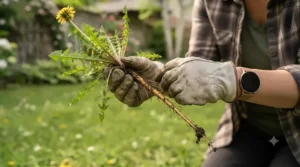
Grampa’s Weeder takes a different mechanical approach than the Fiskars: instead of a foot-driven claw system, it uses a lever-and-fulcrum action, where you plant the bamboo shaft’s steel head over the weed, then press down on the handle like a see-saw to lever the root straight up. The real bamboo shaft gives it a lighter feel in the hand than aluminum models, and the fulcrum ball at the base concentrates leverage exactly where you need it. What most buyers overlook about this design is that the see-saw motion actually demands less downward force than a stomp-and-pull weeder, which matters if you’ve got wrist or shoulder limitations as much as knee trouble. It’s genuinely one of the better weeding tools for bad knees on the market, since your feet barely move and your spine stays upright the entire time. Aggregated review sentiment across major retailers skews strongly positive, with many buyers specifically citing arthritis or previous back surgery as their reason for switching from hand tools. A common complaint in user reviews is that the bamboo handle, while lighter, isn’t quite as rugged as steel over years of heavy use, and a small number of buyers report cracking after repeated hard use in rocky ground.
Pros:
- ✅ Lever action needs less downward force
- ✅ Lightweight bamboo shaft is easy to swing
- ✅ Purpose-built for limited mobility gardeners
Cons:
- ❌ Bamboo shaft less durable than steel long-term
- ❌ Four-claw head can be bulky in tight garden beds
At roughly C$40–C$55, it’s a smart mid-range pick for anyone who specifically needs weeding tools for bad knees rather than a general-purpose garden tool.
3. CobraHead Original Weeder & Cultivator — best precision tap root extractor
If the stand-up tools are shotguns, the CobraHead is a scalpel. This single curved steel blade, shaped roughly like a bent fingernail, is one of the more respected tap root extractors among hobby gardeners specifically because it doesn’t try to do everything — it just gets under a root and lifts. The forged steel blade holds an edge well enough to cut through compacted clay, and the recycled-plastic handle is contoured for a secure one-hand grip. Here’s what to weigh: this tool requires you to kneel or crouch, so it isn’t the pick for anyone managing knee pain, but for isolated dandelions growing in flower beds, between pavers, or close to prized perennials, its narrow profile avoids collateral damage that a wider stand-up claw simply can’t. Reviewers consistently note that it excels specifically at deep-rooted weed removers duty — the tempered blade gets several centimetres beneath the crown and levers the whole taproot out in one motion, rather than snapping it partway down like cheaper forked tools tend to. On dandelions, chickweed, and other tap-rooted lawn invaders, the strike-and-pull motion becomes second nature within a few uses.
Pros:
- ✅ Precise blade avoids damaging nearby plants
- ✅ Forged steel holds an edge for years
- ✅ Doubles as a cultivator and edging tool
Cons:
- ❌ Requires kneeling or crouching to use
- ❌ Slower than stand-up tools for large areas
In the C$30–C$40 range, this is the tool serious garden-bed owners tend to reach for daily, even after buying something flashier.
4. CobraHead Long Handle Weeder & Cultivator (48″) — best stand-up hybrid for garden beds
CobraHead’s long-handle version takes that same steel hook blade and mounts it on a 48-inch shaft, essentially turning a precision hand tool into a stand-up implement you sweep sideways across the bed rather than stomp straight down into. On paper this means you trade a bit of the original’s surgical precision for a genuine reduction in bending, and in practice that trade-off works well for anyone managing a larger garden bed rather than a whole lawn. The sweeping, raking motion described by the manufacturer is distinct from every claw-and-foot design on this list — instead of pulling straight up, you drag the hook sideways through the top layer of soil to catch the root and lever it loose. Reviewers on gardening forums and retail sites frequently mention that it performs particularly well on tap-rooted lawn weeds like dandelions and dead nettle, and several note that after years of daily use the tempered blade still holds its edge, a claim consistent with the shorter original CobraHead’s reputation for longevity. What the spec sheet won’t tell you, but reviewers note, is that the sweeping technique takes a session or two to get comfortable with if you’re used to straight-down stand-up weeders.
Pros:
- ✅ No bending, unlike the original CobraHead
- ✅ Sweeping motion covers ground efficiently
- ✅ Same durable forged-steel blade as the original
Cons:
- ❌ Learning curve for the sweeping technique
- ❌ Less precise than the short-handle version
Expect to pay in the C$55–C$70 range, making it the priciest tool on this list, though buyers managing chronic back pain often say it’s worth every dollar.
5. Garden Guru Dandelion Weeder Tool — best budget ergonomic hand tool
The Garden Guru is a straightforward stainless-steel, two-pronged fork weeder with a soft-grip ergonomic handle, and it’s a genuinely solid entry point if you’re not ready to commit to a stand-up tool yet. The contoured finger grooves distribute pressure across your palm rather than concentrating it in one spot, which matters more than it sounds for anyone weeding for more than fifteen minutes at a stretch. Based on the spec comparison with pricier ergonomic weeding implements, the stainless-steel construction here punches above its price point — it resists rust and holds its shape under moderate prying pressure, though it won’t match forged-steel tools like the CobraHead for raw durability. What most buyers overlook is the large hang-hole built into the handle, a small design touch that keeps the tool from disappearing into a garden shed’s clutter. Aggregated customer sentiment is largely positive on comfort and value, with the brand’s lifetime warranty and satisfaction guarantee coming up frequently as a reason buyers feel confident recommending it to family members with arthritis or grip strength concerns.
Pros:
- ✅ Soft-grip handle reduces hand fatigue
- ✅ Backed by a lifetime warranty
- ✅ Rust-resistant stainless steel construction
Cons:
- ❌ Two-prong fork can split shallow-rooted weeds
- ❌ Requires kneeling like most hand tools
Priced around C$15–C$25, it’s an easy first purchase for anyone testing whether a dedicated dandelion weeder tool is worth adding to their kit.
6. WORKPRO 11.5″ Dandelion Weeder Puller Tool — best compact option for casual use
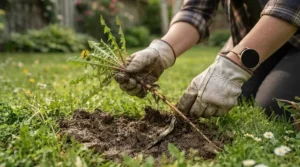
WORKPRO’s dandelion weeder is a smaller, more affordable cousin to the Garden Guru — an 11.5-inch stainless-steel tool with a two-pronged fork tip and a soft-touch handle, aimed squarely at gardeners who weed occasionally rather than obsessively. The shorter overall length makes it easier to store in a small toolbox or hang on a pegboard, and the polished stainless-steel head resists the rust that plagues cheaper carbon-steel forks left out in a Canadian spring. Here’s what to weigh: at this price, you’re not getting forged-blade durability, so this tool is better suited to loose garden soil and occasional lawn dandelions than daily heavy-duty prying in compacted clay. Reviewers frequently compare it favourably to similar budget forked weeders, citing the soft handle grip and lightweight feel as standout qualities for shorter weeding sessions. A common theme in user feedback is that it’s an efficient, no-fuss option for apartment dwellers with small planters or renters who don’t want to invest heavily in a yard they don’t own.
Pros:
- ✅ Compact size stores easily
- ✅ Lightweight for extended handheld use
- ✅ Affordable entry point for casual gardeners
Cons:
- ❌ Not built for heavy, compacted soil
- ❌ Shorter handle means more kneeling
At roughly C$10–C$18, this is the tool for removing dandelions occasionally rather than fighting a full lawn infestation.
7. Fiskars Ergo Weeder — best leverage tool for compacted or clay soil
The Fiskars Ergo Weeder swaps the two-pronged fork design for a single angled, cast-aluminum head, and that shape makes a real practical difference in tougher ground. The angled head is engineered to slice cleanly through turf and give you leverage against the soil itself, rather than relying purely on prying force from your wrist. On paper this means less strain per pull, and reviewers consistently back that up, frequently describing it as the go-to among ergonomic weeding implements for gardeners dealing with heavier clay soil common across parts of Ontario and the Prairies. The uniquely contoured handle and SoftGrip surface reduce wrist and hand fatigue during longer sessions, and the rust-resistant cast-aluminum construction is built to survive being left outside occasionally without corroding into uselessness. What most buyers overlook is that this tool doubles well as a general cultivator, not just a dandelion weeder — the angled blade works for light digging and edging between uses. A recurring theme in aggregated feedback is that it’s less specialized than the two-pronged forks for grabbing a taproot cleanly, so pairing it with a dedicated hand weeder for stubborn dandelions is a common strategy among repeat buyers.
Pros:
- ✅ Angled head cuts through compacted soil
- ✅ Doubles as a light cultivator tool
- ✅ Ergonomic handle reduces wrist strain
Cons:
- ❌ Less precise for isolated taproot extraction
- ❌ Cast aluminum less rigid than forged steel
In the C$20–C$30 range, it’s a strong mid-budget pick for anyone gardening in dense or clay-heavy Canadian soil.
Practical Usage Guide: Getting the Most Out of Any Dandelion Weeder
Buying the right tool is only half the job — technique determines whether you’re pulling whole roots or just mowing the tops off a plant that’ll be back in ten days. Start by timing your weeding after rainfall or a good watering session, since damp soil loosens its grip on the taproot dramatically compared to bone-dry summer ground; nearly every review across every product on this list mentions the same pattern. For stand-up tools, plant the claws directly over the crown of the dandelion — not beside it — and apply steady, even downward pressure rather than a sharp stomp, which tends to snap claws off-centre instead of driving them cleanly around the root. For hand tools like the CobraHead or Garden Guru, insert the blade at a roughly 30-degree angle a few centimetres from the base of the plant, then lever backward in one smooth motion rather than sawing or wiggling, which just shreds the root and leaves fragments behind to regrow. In the first thirty days of regular use, the most common mistake is rushing: pulling before the tool has fully gripped, which leaves the crown behind and guarantees regrowth within two weeks. After each session, rinse soil and root fragments off the head before storing — most stand-up tools include an easy-eject feature specifically to prevent debris buildup that dulls claws prematurely. A quick wipe with a lightly oiled cloth every few uses keeps stainless-steel heads from developing surface rust over a Canadian gardening season.
Real-World Scenarios: Which Tool Fits Your Situation
Picture three very different backyards. First, there’s Maria, a retired teacher in Kelowna with a modest front lawn peppered with dandelions every May, and knees that make kneeling a genuine ordeal — for her, the Grampa’s Weeder or the Fiskars 4-Claw stand-up model solves the actual problem, letting her clear the whole lawn from an upright position in under an hour. Second, consider Devon, a first-year homeowner in the Ottawa suburbs with a young perennial garden and just a handful of dandelions scattered between prized hostas — a stand-up tool would be overkill and risk collateral damage, so the CobraHead Original or the Garden Guru hand weeder gives him the precision to remove weeds without disturbing what he’s trying to protect. Third, there’s Priya, who rents a townhouse with a small patio garden in a few containers and pulls maybe a dozen dandelions a season — for her, the budget WORKPRO tool is genuinely all she needs, since a premium stand-up weeder would sit unused for eleven months of the year. The throughline across all three: match the tool to your actual weed density and physical situation, not to whichever option has the most five-star reviews, since the “best” tool is entirely dependent on whether you’re managing a whole yard or a few stubborn stragglers.
Problem → Solution: Fixing Common Dandelion Removal Headaches
Even with a decent tool, dandelion removal goes sideways in a few predictable ways. Problem: the root keeps snapping halfway down. This usually means the soil is too dry or the tool’s claws aren’t centred over the crown — water the area the evening before, and for hand tools like the CobraHead, insert the blade closer to the root’s centre rather than off to one side. Problem: dandelions keep reappearing in the exact same spots. A single dandelion seed head can release thousands of seeds, so unless neighbouring lawns or verges are also weed-free, reseeding from nearby sources is often the real culprit rather than an incomplete pull — bagging seed heads before they open, rather than composting them, helps break the local cycle. Problem: stand-up tools struggle in compacted clay. Tools like the Fiskars Ergo Weeder with an angled cutting head handle clay far better than pronged claws, or you can loosen the top few centimetres with a hand fork before using a stand-up puller. Problem: hands and wrists get sore after extended sessions. This is exactly what ergonomic weeding implements with contoured, soft-grip handles are designed to solve — if your current tool has a hard plastic or bare wood handle, upgrading the grip alone often resolves the fatigue without buying an entirely new tool. Problem: you’re not sure whether a plant is a dandelion or a look-alike weed. Cat’s-ear and hawksbit both mimic dandelion rosettes closely; checking for the single, hollow, unbranched flower stalk that’s characteristic of true dandelions helps confirm you’re pulling the right plant before committing tool and effort to it.
How to Choose a Tool for Removing Dandelions
- Assess your weed density first. A handful of scattered dandelions calls for a precise hand tool, while a lawn-wide infestation justifies investing in a stand-up model that covers ground faster.
- Be honest about your physical limitations. If kneeling or repeated bending causes discomfort, weeding tools for bad knees like lever-action stand-up weeders aren’t a luxury — they’re the difference between a chore getting done and being avoided entirely.
- Match the tool to your soil type. Clay-heavy or compacted ground favours angled cutting heads like the Fiskars Ergo, while loose garden soil works well with almost any forked or clawed design.
- Consider storage space realistically. A 39-inch or 48-inch stand-up weeder needs somewhere to live between seasons — a garage, shed, or hanging hook — while compact hand tools tuck into a small toolbox or drawer.
- Check the material and warranty. Stainless steel and forged steel both resist rust, but forged blades generally hold an edge longer under repeated prying pressure; a lifetime warranty, offered by both Fiskars and Garden Guru, signals manufacturer confidence.
- Factor in how often you’ll actually use it. A premium stand-up tool sitting unused eleven months a year is a worse investment than a modest hand weeder that matches your actual gardening habits.
- Read aggregated review themes, not star averages alone. A 4.3-star rating built on hundreds of reviews mentioning the same soil-dampness caveat tells you more than the number itself — look for patterns, not just scores.
Common Mistakes When Buying Weeding Tools
The single most frequent mistake is buying based on handle length alone without considering the mechanism — a 39-inch shaft with a weak claw design won’t outperform a shorter tool with a well-engineered grip. Another recurring misstep is assuming every “stand-up weeder” works the same way; the Fiskars claw-and-foot mechanism and the Grampa’s Weeder lever action solve the same problem through genuinely different physics, and the wrong choice for your strength and mobility level can turn a labour-saving tool into a frustrating one. Buyers also frequently underestimate soil conditions, purchasing a lightweight fork-style tool for what turns out to be dense clay soil, then blaming the tool rather than the mismatch. Skipping reviews that mention specific weed types is another gap — a tool praised for shallow crabgrass removal won’t necessarily excel at deep-rooted weed removers duty against a stubborn dandelion taproot. Finally, plenty of buyers chase the cheapest option available without checking material quality, only to replace a snapped plastic-tined tool within a single season — spending an extra ten or fifteen dollars upfront on stainless or forged steel is almost always the better long-term math.
Stand-Up Weed Puller vs Tap Root Extractors: Which Wins Where
The core tension in dandelion tool shopping comes down to this comparison: a stand-up weed puller trades precision for speed and comfort, while a hand-held tap root extractor like the CobraHead trades comfort for surgical accuracy. In an open lawn with dozens of scattered dandelions and no delicate neighbouring plants to worry about, a stand-up tool wins decisively — you can clear a hundred weeds in the time a hand tool takes to manage twenty, and your knees and back stay entirely out of the equation. But drop that same stand-up tool into a densely planted flower bed, and its wide claw footprint becomes a liability, disturbing root systems of plants you’re trying to keep. That’s exactly where tap root extractors earn their keep: the narrow blade profile threads between plants, extracting a single dandelion’s root without collateral damage to anything nearby. Reviewers consistently note that serious gardeners with mixed lawn-and-bed properties often end up owning both tool types rather than picking one — the stand-up weeder for the open lawn in a spring sweep, and the hand extractor kept nearby for spot-treating strays that pop up in beds through the summer. If you can only afford one tool this season, let your yard’s actual layout be the tiebreaker rather than online popularity rankings.
Ergonomic Weeding Implements for Comfort and Long Sessions
Comfort isn’t a cosmetic feature bolted onto garden tools — it’s directly tied to how thoroughly and how often you’ll actually weed. Ergonomic weeding implements typically address three specific stress points: grip pressure on the palm, wrist angle during the pulling or levering motion, and the amount of bending required to reach the work. Soft, contoured handles like those on the Garden Guru and Fiskars Ergo distribute grip pressure across more of the hand’s surface, reducing the pinching fatigue that hard plastic or bare wood handles cause after twenty or thirty minutes. Offset handle geometry, seen on the Fiskars Stand-Up Weed Puller, keeps the wrist in a more neutral position during the pulling motion rather than forcing an awkward bent-wrist pull, which matters considerably for anyone managing arthritis or tendinitis. The Canadian Centre for Occupational Health and Safety notes that ergonomics is fundamentally about matching the tool to the physical demands of the task, a principle that applies just as directly to a Saturday morning in the garden as it does to a factory floor. For anyone who weeds regularly through a full Canadian growing season, prioritizing an ergonomic grip over raw price is one of the more underrated upgrades available — it’s the difference between weeding becoming a dreaded chore and staying a manageable weekend habit.
Long-Term Cost & Maintenance
A cheap C$10 forked hand weeder that needs replacing every season costs more over five years than a C$50 stand-up tool with a lifetime warranty, so it’s worth running the actual math rather than anchoring on the sticker price alone. Stainless-steel and forged-steel heads, when rinsed and lightly oiled after use, can realistically last a decade or more, while cheaper coated or painted metal tools tend to develop rust pitting within two or three Canadian winters if left in an unheated shed. Maintenance itself is minimal: rinse soil off after each session, dry the head before storage to prevent rust, and periodically check any pivot points or foot pedals on stand-up models for stiffness that a drop of household oil usually resolves. Compare that modest upkeep against the ongoing cost of chemical alternatives — even where cosmetic pesticides remain legal to purchase, professionally applied iron-based or biopesticide treatments typically need multiple applications per season and run considerably more than a one-time tool purchase over a five-year horizon. From a pure cost-per-use standpoint, a well-maintained manual tool amortizes to pennies per weeding session within its first full season of use.
Safety, Regulations & Cosmetic Pesticide Rules in Canada
Manual tools have become considerably more relevant across Canada specifically because chemical options are far more restricted than they once were. Ontario’s cosmetic pesticide ban, in effect since 2009, prohibits the non-essential use of more than 250 pesticide products on residential lawns and gardens, and similar restrictions exist across most other provinces, generally administered at the provincial or municipal level. Health Canada maintains oversight of pesticide registration nationally and notes that any lawn pesticide used in Canada must be authorized and carry a valid Pest Control Products registration number, regardless of where in the country you’re gardening. The practical result, as CBC News reported following restrictions in several provinces, is that homeowners and municipalities alike have shifted toward manual removal and biologically based treatments rather than the broad-spectrum herbicides once common on Canadian lawns. Beyond the regulatory angle, there’s a straightforward safety upside to manual tools: no chemical exposure risk for children, pets, or pollinators using the lawn, and no runoff concern for nearby gardens or waterways. If your municipality does permit certain low-risk cosmetic pesticides, always confirm the product’s registration number and read label instructions fully before use — but for most Canadian homeowners today, a solid dandelion weeder tool is doing the job pesticides used to.
What to Expect: Real-World Performance
Specs on a product page rarely capture what a weeding session actually feels like, so here’s the translation. A stand-up 4-claw weeder in damp spring soil typically pulls a full dandelion root in five to ten seconds per weed, including the step-down, pull, and eject motions — meaning a lawn with fifty scattered dandelions is realistically a twenty- to thirty-minute job, not an all-afternoon ordeal. Hand tools like the CobraHead take longer per weed, closer to fifteen to twenty seconds once you factor in kneeling down and repositioning, but the trade-off is a noticeably higher success rate at extracting the entire root intact on the first try, particularly around obstacles. By midsummer, once soil has dried and compacted, expect success rates to drop across every tool type — claws and blades alike will more frequently snap the root a few centimetres down rather than pulling it whole, which is simply the physical reality of dry Canadian clay rather than a flaw specific to any one product. Realistically, most homeowners find that two to three dedicated weeding sessions per growing season, timed after rainfall, keep a lawn’s dandelion population manageable without turning it into a weekly obligation.
Buyer’s Decision Framework
If you’re managing a full lawn and have any knee, hip, or back limitations, choose a stand-up weed puller with a foot-assisted or lever mechanism, because comfort determines whether the tool actually gets used consistently. If you’re weeding a mixed flower bed with plants you don’t want disturbed, choose a precision hand tool like the CobraHead, because the narrow profile protects everything around the target weed. If your soil is heavy clay or compacted, choose an angled-blade tool like the Fiskars Ergo Weeder over a forked design, because leverage matters more than grip shape in dense ground. If you’re on a tight budget and weed only occasionally, choose an affordable forked hand weeder like the WORKPRO, because a premium tool sitting unused most of the year isn’t a good use of funds. And if you genuinely can’t decide, default to a mid-range stand-up model in the C$40–C$55 bracket — it covers the widest range of situations reasonably well, even if it isn’t the single best option for any one scenario.
✨ Don’t Miss These Exclusive Deals!
🔍 Take your lawn care to the next level with these carefully selected products. Click on any highlighted item to check current pricing and availability. These tools will help you create a genuinely dandelion-free yard your whole family will enjoy!
Frequently Asked Questions
❓ What is the best tool for removing dandelions from a lawn?
❓ Does a dandelion weeder tool really remove the whole root?
❓ Are stand-up weed pullers good for bad knees?
❓ What's the difference between a tap root extractor and a regular hand weeder?
❓ Can I still use pesticides on dandelions in Canada?
Conclusion
There’s no single best tool for removing dandelions — there’s only the best tool for your particular lawn, your soil, and your knees. A stand-up weed puller earns its keep on open lawns with scattered infestations, a precision hand tool like the CobraHead protects delicate flower beds while still pulling stubborn taproots clean, and budget forked weeders serve casual gardeners perfectly well without overspending on features they’ll rarely use. What actually matters across every option here is technique as much as hardware: damp soil, centred placement, and a steady pull rather than a yank will outperform an expensive tool used carelessly every time. With Canadian cosmetic pesticide restrictions in place across most provinces, manual dandelion removal isn’t a fallback anymore — for most homeowners, it’s simply the primary strategy, and a well-chosen tool makes that strategy genuinely sustainable rather than a seasonal dread. Match the tool to your yard’s real conditions, keep it clean and lightly oiled between uses, and that yellow spring invasion becomes a manageable Saturday task instead of a losing battle.
Recommended for You
- Washable Gardening Gloves: 7 Best Picks for 2026
- 7 Best Rose Pruning Gloves Thorn Proof for Canadian Gardens (2026)
- Best Gardening Gloves in Canada 2026: 7 Top Picks Reviewed
Disclaimer: This article contains affiliate links. As an Amazon Associate, I earn from qualifying purchases. If you purchase products through these links, we may earn a small commission at no additional cost to you.
✨ Found this helpful? Share it with your friends! 💬🤗
