
In This Article
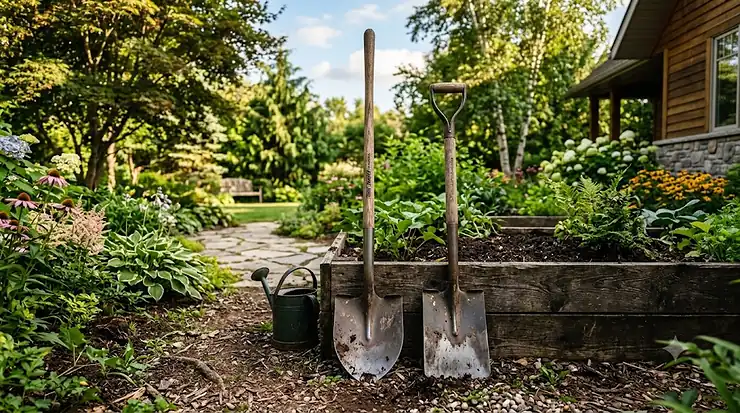
Somewhere between “just grab whatever’s in the shed” and “spend three hours reading spec sheets,” there’s a smarter way to figure out shovel vs spade for digging — and most Canadian gardeners never get there. They buy the first thing on the shelf at the hardware store, wonder why their back aches after twenty minutes, and blame themselves instead of the tool. That’s backwards. A spade, in the simplest terms, is a digging implement with a flat, sharp-edged blade built for slicing straight down through soil, sod, and roots, while a shovel typically has a curved, scoop-shaped blade designed for lifting and moving loose material. Neither is “better” in some universal sense; they’re built for different jobs, the way a chef’s knife and a bread knife both live in the same drawer but earn their keep differently.
This guide digs into seven real, currently available tools — a mix of shovels and spades spanning budget, mid-range, and premium price points — with honest analysis grounded in actual specifications and aggregated review sentiment. You’ll find out when a spade beats a shovel for edging your lawn, why a transplanting spade saves your shrubs’ root balls, whether a fiberglass handle really outlasts wood, and how to match the right digging tool selection to your particular patch of Canadian dirt, whether that’s coastal loam, Prairie clay, or Canadian Shield rubble. There’s also a look at specialized excavation tools worth knowing about, and the everyday garden tool differences that trip up even experienced growers. By the end, you’ll know exactly which tool earns a spot in your shed — and why.
The shovel-versus-spade divide goes back further than you’d think — early digging implements were literally sharpened animal shoulder blades before humans figured out metal tips, and the basic distinction between the two tools has held remarkably steady for millennia. What’s changed is the materials: steel, fiberglass, and ergonomic engineering now do the work that a flattened bone used to.
Quick Comparison Table
| Feature | Spade | Shovel |
|---|---|---|
| Blade shape | Flat, square-edged | Curved, scooped |
| Best for | Edging, transplanting, cutting sod | Digging holes, moving loose soil |
| Cutting ability | Excellent (clean vertical cuts) | Moderate |
| Scooping/lifting ability | Weak | Excellent |
| Typical handle length | 71–102 cm (28–40 in) | 102–142 cm (40–56 in) |
| Ideal soil type | Root-bound, compacted, sod | Loose, sandy, mixed |
| Beginner-friendly | Yes, for precision jobs | Yes, for general digging |
Looking at the table, the real takeaway is that a spade and a shovel aren’t competing for the same job — they’re specialists. If you’re slicing a crisp edge along a flower bed or dividing a root-bound hosta, a flat spade for edging wins every time because its square profile cuts a straight line instead of gouging a curve. But if you’re relocating a cubic metre of topsoil or digging a proper planting hole, a shovel’s curved, deeper blade scoops far more material per pass, saving your shoulders dozens of repetitions. Most serious Canadian gardeners eventually own at least one of each rather than trying to force a single tool to do both jobs well.
💬 Just one click — help others make better buying decisions too! 😊
Top 7 Shovels and Spades for Digging: Expert Analysis
Picking the right tool is about matching blade geometry, handle material, and weight to your specific tasks. These seven products cover the full range — from a C$30 workhorse to a C$100-plus specialist — with real specs and honest, sourced commentary on where each one shines and where it falls short.
1. Fiskars Long-Handled Steel Digging Shovel — best all-steel value for everyday digging
The Fiskars Long-Handled Steel Digging Shovel stands out because the shaft is welded directly to the blade instead of inserted into a socket, which is the single biggest point of failure on cheaper shovels. That welded, all-steel build means there’s no seam to work loose after a season of heavy use.
Specwise, the full-width footrest runs from blade edge to shaft with zero gap, letting you drive the blade in with your whole boot rather than balancing on a narrow wing — in practice that means more force transferred into the ground per push and noticeably less foot fatigue on long digging days. Reviewers consistently report that the tradeoff is the shaft’s rounded-triangle cross-section, which some find less comfortable to grip than a standard cylindrical handle, particularly during extended lifting rather than straight digging.
Based on the spec comparison with other budget shovels, this is the pick for a homeowner who digs a dozen or two holes a year and wants a tool that simply won’t snap at the neck — the classic weak point on cheaper models. It’s not the lightest option here, and it’s not built for finesse work like edging, but for general-purpose digging in mixed soil, it punches well above its price bracket.
Pros:
- ✅ Welded shaft-to-blade joint resists the most common failure point
- ✅ Full-width footrest improves force transfer and comfort
- ✅ Straightforward, no-frills design with minimal parts to fail
Cons:
- ❌ Triangular shaft profile feels awkward to some users
- ❌ Heavier than fiberglass-handled alternatives
Price sits in the C$35-C$50 range at the time of research — solid value for a shovel built to survive years of regular digging.
2. Radius Garden Root Slayer Shovel — best serrated blade for root-heavy soil
The Radius Garden Root Slayer Shovel earns its name honestly: its blade is serrated on both sides, letting it saw through roots and thin branches rather than just pushing past them, which is exactly what most standard digging shovels struggle with.
The 104 cm (41-inch) shaft and oversized foot steps give real leverage for crouched or kneeling work, and the recycled-aluminum O-handle spreads pressure across your whole palm instead of concentrating it on a T- or D-grip’s edges — something that matters a lot if you’ve got wrist or grip strength concerns. What the spec sheet won’t tell you, but aggregated reviewer sentiment does, is that this tool’s blade is genuinely wider and more earth-moving-capable than narrower “root saw” specialty tools, even though it can’t out-cut a dedicated root saw on branches over roughly 10 cm thick.
This is the shovel for anyone who gardens in older, tree-root-riddled yards — a common reality in established Canadian neighbourhoods — where standard blades either bounce off roots or get stuck trying to slice through them. It’s noticeably heavier than a basic digging shovel, so it’s not the first choice for someone doing light container gardening.
Pros:
- ✅ Serrated dual-edge blade saws through roots cleanly
- ✅ O-handle distributes grip pressure, reducing hand strain
- ✅ Large foot steps aid leverage in kneeling positions
Cons:
- ❌ Heavier than standard digging shovels
- ❌ Overkill for soft, root-free garden soil
Expect to pay in the C$70-C$90 range — a fair value verdict for anyone dealing with mature root systems where lighter tools simply give up.
3. Spear Head Spade SHFD3 — best precision transplanting spade for shrubs
The Spear Head Spade SHFD3 takes a genuinely different approach to blade geometry: its spearhead-shaped head is forged from hardened manganese steel and tapers to a point, letting it find the path of least resistance through packed soil rather than brute-forcing straight down like a standard flat spade.
The 9 x 11-inch blade combines a wide step for foot-driven force with a sharp edge that slices cleanly through roots — independent testing found it capable of cutting through a substantial oak hydrangea’s main root while keeping the root ball intact for relocation, which is the whole point of a proper transplanting spade. The open-back socket, reinforced with a steel collet and rubber gasket, absorbs shock that would otherwise travel straight into your wrists on a closed-socket design. Reviewers consistently note the tool’s compact, well-balanced head makes it a strong option for gardeners managing reduced grip strength or mobility, though the premium price is a genuine barrier for casual users.
Based on the spec comparison, this is the spade for anyone who regularly relocates shrubs, divides perennials, or plants trees and cares more about preserving root integrity than speed. It’s not the tool for shifting large volumes of loose soil — that job belongs to a shovel.
Pros:
- ✅ Spearhead blade slices roots while preserving root balls
- ✅ Shock-absorbing reinforced socket reduces wrist strain
- ✅ Compact head suits users with reduced grip strength
Cons:
- ❌ Premium price relative to standard spades
- ❌ Not designed for high-volume soil moving
At C$130-C$160, it’s the priciest tool on this list, but for anyone who transplants often, the value verdict comes down to how much you value your plants’ survival rate.
4. Fiskars 46-Inch Steel D-Handle Garden Spade — best flat spade for crisp lawn edging
The Fiskars 46-Inch Steel D-Handle Garden Spade is the benchmark flat spade for edging, and the flat, square blade is exactly why: it cuts a straight vertical line instead of a curved gouge, which is the difference between a lawn edge that looks intentional and one that looks accidental.
The all-steel, welded construction means the blade and teardrop-shaped shaft form one continuous piece rather than a shaft jammed into a socket, and the extra-large foot platform running the full width of the blade lets you put real weight behind each cut without your boot slipping off. Aggregated review sentiment consistently praises the tool’s rigidity under pry-testing — testers reported being unable to detect meaningful flex even under significant applied weight — though the teardrop shaft shape, while comfortable for most, isn’t to everyone’s taste compared with a round cylindrical handle.
What most buyers overlook about a flat spade like this one is that its stiffness is actually the point: a spade that flexes under load transfers less force into the cut, meaning more strokes to finish the same edge. For anyone doing regular lawn maintenance, garden bed definition, or sod-cutting, this is the tool that turns a half-hour edging chore into fifteen minutes.
Pros:
- ✅ Rigid all-steel welded build resists flex under load
- ✅ Full-width foot platform for secure, powerful cuts
- ✅ Flat blade delivers clean, straight edging lines
Cons:
- ❌ Teardrop shaft shape isn’t universally comfortable
- ❌ Steel construction adds noticeable weight
Price runs C$65-C$85 at the time of research, and for anyone serious about lawn edges, it’s arguably the best value tool on this entire list.
5. Bully Tools 12-Gauge Edging/Planting Spade — best commercial-grade edging spade
The Bully Tools 12-Gauge Edging/Planting Spade is built for people who use their tools professionally, and the 12-gauge tempered steel blade — thicker than what you’ll find on most consumer spades — is the clearest signal of that. Where hobby-grade spades bend under sustained pressure, this one is engineered to shrug off repeated contact with roots, clay, and buried debris.
The straight blade design lets you dig a genuinely vertical cut, something curved shovel blades can’t replicate, and the closed-back socket prevents soil buildup that would otherwise add unwanted weight mid-job. Buyers can choose between fiberglass or American hardwood handles, and between a D-grip or long-handle configuration — a level of customization rare outside commercial tool suppliers. Based on the spec comparison with the Fiskars flat spade above, the Bully Tools model’s thicker gauge steel suggests a longer service life under heavy, repeated commercial use, though for an average homeowner doing a weekend’s worth of edging per season, that extra durability margin may go largely unused.
This is the spade for landscapers, serious DIYers tackling a full property renovation, or anyone who’s worn out a cheaper spade and wants the last one they’ll ever need to buy.
Pros:
- ✅ Thicker 12-gauge steel built for commercial-grade durability
- ✅ Closed-back socket prevents soil buildup during use
- ✅ Choice of handle material and grip configuration
Cons:
- ❌ Heavier gauge steel adds overall tool weight
- ❌ More cost than most homeowners strictly need
Expect a price in the C$80-C$110 range, with a value verdict that leans heavily toward frequent or professional users rather than occasional weekend gardeners.
6. AMES Long Wood Handle Round Point Shovel — best budget wood-handle shovel
The AMES Long Wood Handle Round Point Shovel is the lone wooden-handled tool on this list, and that’s a deliberate inclusion — plenty of gardeners still prefer wood’s warmer feel and lighter overall weight, and it remains the most affordable entry point into a genuinely usable full-size digging shovel.
The classic round-point blade handles most general digging tasks competently, and the extra-grippy casing at the handle’s base is a nice touch that reduces slip during repeated lifts. The wide, one-inch step is comfortable enough to stomp or even bounce on for extra leverage in stubborn soil. Reviewers consistently flag one real tradeoff, though: wood flexes under heavy prying in ways steel and fiberglass simply don’t, and unlike a fiberglass handle shovel’s durability under weather exposure, a wooden handle left outside through Canadian freeze-thaw cycles and rain will deteriorate faster and eventually need replacing.
Here’s what to weigh: if you store your tools properly in a shed or garage, the AMES is genuinely excellent value and easy to repair with basic wood glue if lightly damaged. If your shovel tends to live outdoors, the ongoing maintenance burden may erode the initial savings.
Pros:
- ✅ Lowest price point of any full-size shovel on this list
- ✅ Lighter overall weight than steel or fiberglass models
- ✅ Handle is repairable rather than requiring full replacement
Cons:
- ❌ Wood flexes more than steel under heavy prying
- ❌ Shorter lifespan if left exposed to weather
At roughly C$30-C$45, it’s the most budget-friendly full-length shovel here, with a value proposition that depends heavily on how well you store it.
7. Hooyman Digging Shovel — best fiberglass-shaft shovel for tough mixed terrain
The Hooyman Digging Shovel pairs a lightweight fiberglass shaft with a slightly serrated blade edge, and that serration is the detail that separates it from most general-purpose shovels — it lets the blade saw through sod, small roots, and matted turf rather than simply pushing against them.
No-slip grip sections at both the shaft’s end and a secondary mid-shaft point give you real control with a two-handed grip, which matters most when you’re not wearing work gloves or working in damp conditions where a smooth handle would slip. Independent testers reported smooth, efficient digging even in rocky, root-filled soil, with the blade holding enough sharpness to cut through roots or pry out embedded rocks. On fiberglass handle shovel durability specifically, this is a strong data point: fiberglass shafts resist the swelling, splintering, and rot that eventually claim wooden handles, while staying noticeably lighter than an all-steel shaft — a real advantage for anyone digging for hours at a stretch.
This is the shovel for someone who wants one do-everything tool that handles rough, unpredictable terrain without needing to switch between three specialized implements mid-project.
Pros:
- ✅ Fiberglass shaft resists rot, splintering, and weather damage
- ✅ Slightly serrated blade cuts through sod and small roots
- ✅ Dual grip points improve control and reduce hand fatigue
Cons:
- ❌ Costs more than basic steel-shaft shovels
- ❌ Serrated edge isn’t necessary for soft, root-free soil
Price sits around C$55-C$75, and given the fiberglass shaft’s long-term durability, it’s a strong middle-ground pick between budget steel shovels and premium specialty spades.
Practical Usage Guide: Setup, Care & Your First 30 Days
A brand-new shovel or spade needs a little attention before it earns its keep. Start by checking the handle-to-blade connection — give it a firm twist and pull before first use, since shipping and handling can loosen even a well-made joint. If you bought a wood-handled tool like the AMES Long Wood Handle Round Point Shovel, a light coat of boiled linseed oil on the handle before its first outdoor use will meaningfully slow moisture absorption and cracking.
For the first month, resist the urge to pry with a tool that isn’t rated for it — spades in particular are built for cutting and slicing, not for levering out boulders, and using them that way is the single most common cause of early handle failure. After each use, knock off wet soil with a stiff brush rather than hosing the blade down and leaving it wet; a few seconds of drying time prevents rust from taking hold on carbon steel blades. Roughly once a month during active gardening season, run a mill file along the blade’s cutting edge at a consistent angle — a sharp spade slices through sod and roots with a fraction of the effort a dull one demands.
Proper ergonomic technique matters just as much as tool maintenance: bend at the knees rather than the waist, keep the load close to your body, and switch which foot drives the blade every few minutes to avoid repetitive strain on one side. Store tools hung vertically rather than leaned in a corner, which keeps blades from developing a curve and handles from warping under their own weight over a Canadian winter.
Real-World Scenarios: Which Tool Fits Your Yard?
The new homeowner with an overgrown, root-choked yard. If you’ve just bought an older property with mature trees and haven’t touched the garden beds in years, a Radius Garden Root Slayer Shovel earns its weight almost immediately — its serrated dual edges cut through the tangle of surface roots that would otherwise stall a standard blade every few centimetres.
The condo-dweller with a small balcony or raised bed. Limited space calls for precision, not brute force. A compact flat spade, or the Spear Head Spade SHFD3 if the budget allows, lets you make clean, controlled cuts around container edges without disturbing neighbouring plants — critical when your entire growing space might be under two square metres.
The weekend landscaper renovating a whole front yard. Someone tackling a full edging-and-bed-redefinition project across a large property benefits most from a genuinely rigid, commercial-grade tool like the Bully Tools 12-Gauge Edging/Planting Spade or the Fiskars 46-Inch Steel D-Handle Garden Spade — both hold a straight edge through dozens of metres of cutting without the blade dulling or flexing.
The budget-conscious first-time gardener. If you’re testing whether gardening is even for you this season, there’s no shame in starting with the AMES Long Wood Handle Round Point Shovel or the Fiskars Long-Handled Steel Digging Shovel — both handle general digging duty competently at the lowest entry cost on this list, and you can always add a specialized spade once you know your yard’s particular quirks.
✨ Ready to Gear Up for Your Next Project?
🔍 Whichever scenario matches your yard, take a closer look at these hand-picked tools above. Click through to check current pricing and availability before your next digging weekend — the right tool really does make the difference between a chore and a satisfying afternoon outside!
How to Choose a Shovel or Spade for Digging
Digging tool selection comes down to matching a handful of concrete factors to your actual tasks rather than chasing brand names. Here’s a practical framework:
- Identify your primary task first. Edging and cutting sod call for a flat spade; moving loose soil or digging deep holes calls for a curved shovel. Trying to make one tool do both jobs well usually means it does neither particularly well.
- Match handle length to your height. A shaft that’s too short forces you to bend excessively, while one that’s too long reduces leverage control — as a rough rule, the handle should reach roughly to your sternum when the blade rests on the ground.
- Consider handle material honestly. Wood is light and repairable but weather-sensitive; steel is nearly indestructible but heavy; fiberglass splits the difference, resisting rot while staying lighter than steel.
- Weigh blade steel gauge against your soil type. Rocky, clay-heavy, or root-bound soil justifies a thicker, reinforced blade; soft, loamy soil doesn’t need that extra material or the added weight it brings.
- Check the socket and collar design. A closed-back socket resists soil buildup; an open-back design with reinforcement can absorb more shock during heavy prying, which matters if roots are a regular obstacle.
- Factor in grip type for your hand strength. A D-grip suits most users, while an O-handle distributes pressure more evenly for anyone managing reduced grip strength or joint discomfort.
- Set a realistic budget based on frequency of use. Someone digging a handful of holes per year doesn’t need a C$150 commercial spade, while a serious landscaper renovating multiple beds each season will recoup a premium tool’s cost in reduced replacements.
Shovel vs Spade for Digging: Which Wins in Real Use?
The honest answer is that this isn’t really a competition — it’s a mismatch of purpose dressed up as a rivalry. A shovel’s curved, deep blade is engineered to scoop and lift, which makes it the clear winner any time you’re moving volume: digging a planting hole, shifting a wheelbarrow’s worth of compost, or excavating a trench. Try that same job with a flat spade and you’ll spend twice the effort moving half the material, because the blade simply isn’t shaped to hold loose soil as you lift.
Flip the task to edging a lawn, dividing a root-bound perennial, or cutting a clean line along a garden bed, and a spade’s flat, sharp-edged blade wins decisively. A shovel’s curved profile can’t cut a straight vertical line — it gouges a curve instead, leaving edges that look rounded rather than crisp. Where most buyers get tripped up is assuming that a “digging shovel” and a “digging spade” are interchangeable simply because both have “digging” in the name; in practice, the blade geometry is doing fundamentally different jobs. What most experienced gardeners eventually land on isn’t a single winner, but a small rotation: a shovel for the heavy lifting, a spade for the precision work, and the wisdom to know which job calls for which.
Flat Spade for Edging: Getting Crisp, Professional Lines
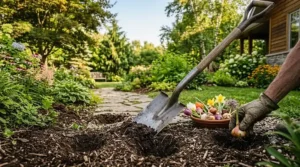
A flat spade for edging works because its square, straight-bottomed blade acts like a knife rather than a scoop — pressing it straight down and rocking it slightly severs grass roots along an exact line instead of tearing them unevenly. The Fiskars 46-Inch Steel D-Handle Garden Spade and the Bully Tools 12-Gauge Edging/Planting Spade both illustrate this well: their flat, rigid blades resist flexing mid-cut, which is what actually produces that professionally clean line rather than a wavy one.
Technique matters as much as tool choice here. Working in short, consistent segments — roughly 15 to 20 cm at a time — rather than trying to drag the blade continuously along a metre of edge produces straighter results, since a dragged cut tends to wander with the terrain. Reviewers consistently note that a wider foot platform, like the full-width design on the Fiskars spade, lets you apply consistent downward force without your boot slipping, which matters most in compacted soil where a narrow foot rest concentrates pressure painfully on a small area of your boot. For anyone maintaining defined garden bed borders, a dedicated edging spade pays for itself within a single season compared to repeatedly re-cutting a sloppy line with the wrong tool.
Transplanting Spade Essentials: Moving Plants Without Killing Them
A transplanting spade’s entire design exists to solve one problem: how do you sever roots cleanly enough to move a plant without shredding the root ball it depends on to survive the move? The Spear Head Spade SHFD3 and the Radius Garden Root Slayer Shovel both approach this differently — the former with a tapering, spearhead-shaped blade that finds the path of least resistance, the latter with dual serrated edges that saw through fibrous roots.
Based on the spec comparison between the two, the spearhead design tends to preserve more of the intact root ball, since its narrow profile disturbs less surrounding soil per cut, while the serrated Root Slayer trades some of that precision for raw cutting speed through denser root mats. Reviewers consistently note that timing matters as much as tool choice: transplanting in cooler, overcast conditions and watering the target hole beforehand reduces transplant shock regardless of which spade does the cutting. What most buyers overlook is that a transplanting spade’s narrower blade width, typically 15 to 20 cm compared to a standard shovel’s 25-plus centimetres, is deliberate — it’s built to cut a tighter circumference around the root ball, minimizing the soil volume disturbed and giving the plant a better shot at establishing quickly in its new spot.
Fiberglass Handle Shovel Durability: What the Data Actually Shows
Fiberglass handle shovel durability comes down to one core property: fiberglass doesn’t absorb moisture the way wood does, so it doesn’t swell, crack, or rot after repeated exposure to rain, dew, or Canadian freeze-thaw cycles. The Hooyman Digging Shovel‘s fiberglass shaft is a solid example — reviewers consistently report years of use without the handle developing the splits or soft spots that eventually claim wooden handles left outdoors.
That durability isn’t unconditional, though. Fiberglass can become slippery when wet, which is part of why manufacturers pair it with textured or rubberized grip sections rather than leaving the bare shaft exposed at contact points. It’s also lighter than solid steel, shaving meaningful weight off a full day’s digging, but it flexes slightly more than steel under extreme prying loads — not enough to matter for normal digging or edging, but worth knowing if you regularly use your shovel to lever out large rocks. On paper, this means fiberglass sits in a genuine sweet spot between wood’s lightness and steel’s rigidity: it won’t rot, it won’t add unnecessary weight, and for the vast majority of home gardening tasks, it will outlast a wood handle by years while costing less than upgrading to full steel construction.
Garden Tool Differences Buyers Often Overlook
Beyond the basic shovel-versus-spade split, subtler garden tool differences quietly determine whether a tool actually performs the way its marketing promises. Blade thickness, for one, gets glossed over constantly — a thin blade might look identical to a thick one in a product photo, but a 1.2 mm blade will bend under stress that a 2 mm blade shrugs off entirely, which matters enormously in clay or rocky soil. Socket design is another: an open-back socket flexes slightly to absorb shock, which is great for prying but can loosen faster under repeated stress, while a closed-back socket resists soil packing but transfers more shock directly into the shaft.
Retailers with detailed buying guides note that the face shape difference between a spade and a shovel is really about the depth of the “bowl” — a spade’s face is flatter and shallower for breaking ground cleanly, while a shovel’s is deeper and more curved for scooping and carrying material, which explains why swapping the two for the wrong job always feels harder than it should. Handle diameter is a smaller but real factor too: a shaft slightly too thick for your hand size accelerates fatigue over a long digging session, even if every other spec looks identical to a better-fitting tool. None of these differences show up clearly in a five-second glance at a store shelf, which is exactly why so many buyers end up disappointed with a tool that looked fine but performs poorly for their specific soil and task.
Digging Tool Selection by Soil Type and Task
| Soil / Task Type | Recommended Tool | Best For |
|---|---|---|
| Sandy or loose loam | Round-point shovel (e.g., AMES Long Wood Handle Round Point Shovel) | General digging, planting holes |
| Heavy clay | Reinforced flat spade (e.g., Bully Tools 12-Gauge Edging/Planting Spade) | Cutting through dense, compacted ground |
| Root-bound or established beds | Serrated shovel (e.g., Radius Garden Root Slayer Shovel) | Cutting roots while digging |
| Lawn edging / sod cutting | Flat spade (e.g., Fiskars 46-Inch Steel D-Handle Garden Spade) | Clean, straight vertical lines |
| Transplanting shrubs/perennials | Transplanting spade (e.g., Spear Head Spade SHFD3) | Preserving root balls during moves |
The table above underscores a point worth repeating: soil composition should drive your tool choice more than price or brand loyalty. Clay-heavy ground, common across much of Ontario and parts of the Prairies, punishes thin blades and rewards reinforced steel that won’t bend under repeated compacted-soil resistance. Sandy or well-amended loam, by contrast, barely challenges any reasonably built shovel, so there’s little reason to overspend on heavy-duty steel if that’s your primary soil type. Matching digging tool selection to your actual ground conditions — rather than to whichever tool a neighbour swears by — consistently produces better results with less physical strain.
Specialized Excavation Tools Worth Knowing About
Beyond standard shovels and spades, a handful of specialized excavation tools solve narrower problems that general-purpose blades handle poorly. A post-hole digger, with its two hinged, scissor-like blades, penetrates and removes soil from a narrow, deep hole far more efficiently than any flat-bladed tool — essential for fence posts or deck footings where a wide shovel simply can’t fit the hole’s diameter. A drain spade or trenching spade features a narrower, often curved blade purpose-built for digging long, shallow trenches for irrigation lines or drainage, where a standard shovel’s wider blade would require moving far more soil than necessary.
Root saws and dedicated root-cutting tools, distinct from a serrated shovel like the Root Slayer, use an actual sawing motion rather than a slicing one, making them the better choice for thick, established roots over roughly 10 cm in diameter that would resist even a serrated blade’s slicing action. For anyone working stony or heavily compacted ground before a shovel or spade can even penetrate, a digging bar or pick mattock — with a pointed end for breaking up hard-packed earth and a flat or chisel end for prying — often needs to do the initial groundwork first. None of these specialized tools replace a good general-purpose shovel or spade; they supplement one, handling the narrow edge cases where a general blade’s shape works against you rather than for you.
Common Mistakes When Buying a Shovel or Spade for Digging
The single most common mistake is buying based on price alone rather than matching the tool to actual soil and task — a cheap shovel in heavy clay will bend or crack far sooner than a mid-range one properly suited to the job, making it a false economy. Close behind is ignoring handle length relative to height: a shaft that’s too short forces excessive bending, which compounds into real back strain over repeated use, and manual handling injuries remain a leading cause of workplace and home strain across Canada.
A third frequent error is buying a single “do-everything” tool and expecting spade-level precision and shovel-level scooping capacity from the same blade — as covered earlier, that compromise rarely satisfies either task well. Fourth, many buyers overlook socket and collar construction entirely, focusing on blade steel while ignoring the joint that actually fails first on cheap tools. Finally, skipping basic maintenance — never sharpening the blade, leaving wet soil caked on after use, or storing tools leaned against a wall rather than hung — shortens the working life of even a well-chosen, well-made tool by years.
Long-Term Cost & Maintenance: Total Ownership Value
A cheap shovel that needs replacing every two seasons often costs more over a decade than a single well-built one purchased once. Running rough numbers: a C$25 shovel replaced five times over ten years costs C$125 in materials alone, plus the recurring hassle of researching and rebuying, while a C$70-C$90 shovel like the Hooyman Digging Shovel or Fiskars Long-Handled Steel Digging Shovel, properly maintained, can realistically last that entire decade.
Maintenance costs stay low regardless of which tool you choose: a mill file for sharpening runs under C$15 and lasts years, and boiled linseed oil for wood handles costs a few dollars per bottle and covers dozens of applications. The real long-term cost driver isn’t the sharpening supplies — it’s storage. Tools left outdoors through Canadian winters degrade dramatically faster than those hung in a dry shed or garage, regardless of handle material, which means the cheapest way to extend any tool’s service life is simply committing fifteen seconds after each use to hanging it up dry. Factoring in reduced replacement frequency, lower physical strain from a properly matched tool, and minimal ongoing maintenance costs, the total cost of ownership consistently favours investing a bit more upfront in a tool that actually fits your soil and tasks.
FAQ
❓ What's the real difference between a shovel and a spade?
❓ Do I need both a shovel and a spade?
❓ Is a fiberglass handle better than wood for a shovel?
❓ What's the best tool for edging a lawn?
❓ Can I use a regular shovel to transplant a shrub?
Conclusion
Shovel vs spade for digging isn’t really a rivalry once you understand what each tool is actually built to do — a shovel scoops and lifts, a spade cuts and slices, and the smartest gardeners keep both within reach rather than forcing one tool to cover jobs it was never designed for. Whether you land on the value-focused Fiskars Long-Handled Steel Digging Shovel, the root-slicing Radius Garden Root Slayer Shovel, the precision Spear Head Spade SHFD3, the edging-ready Fiskars 46-Inch Steel D-Handle Garden Spade, the commercial-grade Bully Tools 12-Gauge Edging/Planting Spade, the budget-friendly AMES Long Wood Handle Round Point Shovel, or the fiberglass-shafted Hooyman Digging Shovel, the right choice comes down to your actual soil, your actual tasks, and how often you’ll realistically be out there digging.
Match the tool to the job, maintain it properly, and store it out of the weather, and any one of these seven picks should serve a Canadian garden well for years rather than seasons. Prices and availability change regularly, so it’s always worth checking current listings before you commit to a purchase.
✨ Don’t Miss These Exclusive Deals!
🔍 Take your gardening projects to the next level with these carefully selected tools. Click on any highlighted item to check current pricing and availability. The right shovel or spade will make every digging job in your yard genuinely easier this season!
Recommended for You
- Best Garden Shovel 2026: 7 Picks That Actually Earn Their Keep
- Weeding Knife Hori Hori: 7 Top Picks Canadians Trust in 2026
- Tool for Removing Dandelions: 7 Picks That Actually Work (2026)
Disclaimer: This article contains affiliate links. As an Amazon Associate, I earn from qualifying purchases. If you purchase products through these links, we may earn a small commission at no additional cost to you.
✨ Found this helpful? Share it with your friends! 💬🤗
