
In This Article
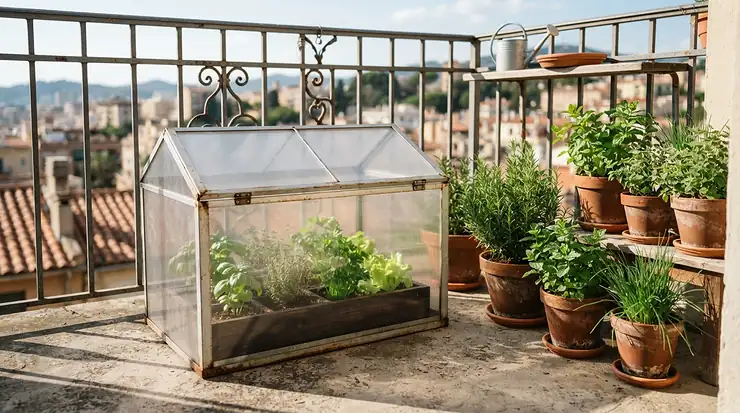
Late October is when most gardens quietly surrender. The tomatoes are mush, the basil went black overnight, and the whole patch looks like it lost an argument with winter. A cold frame greenhouse is how you refuse to sign the treaty.
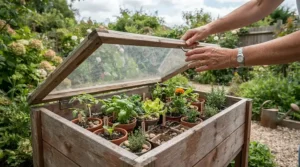
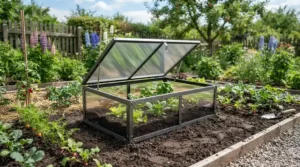
So what is it? A cold frame greenhouse is a low, unheated, transparent-lidded box that sits over soil or a raised bed. It traps the sun’s warmth to shelter plants from frost, wind and wet. Think of it as a greenhouse stripped to the essentials: no heater, no fuss, just glazing and good geometry.
Wikipedia’s entry on the cold frame describes it as essentially a miniature greenhouse for stretching the growing season. It also notes that you can build one yourself or buy a kit. Both routes work. Salvaged windows and scrap lumber are lovely, but not everyone has a pile of old sashes or a free weekend.
This guide ranks seven real options for Canadian gardeners: measurements in metric, prices in CAD ranges, and honest commentary on who each one suits. If you’re weighing whether to buy cold frame greenhouse kit options or build your own, the later sections give you a framework for deciding.
One honesty note up front. I haven’t handled any of these frames. Everything below comes from manufacturer specs, retailer listings and the review sentiment I could actually verify. I’ll flag where the evidence is thin.
Cold Frame Greenhouse Quick Comparison: 7 Options Side by Side
Here’s the cheat sheet. Prices are rough CAD ranges drawn from retailer listings at the time of research, so check current price before you commit. Availability on amazon.ca varies by seller and size.
| Product | Type | Footprint / Size | Cover | Price Range (CAD) | Best For |
|---|---|---|---|---|---|
| Backyard Discovery Aggie | Cedar raised cold frame | about 122 × 61 cm (4 × 2 ft) | Double-wall polycarbonate, self-venting | C$450-C$600 | Hands-free venting |
| VegTrug Classic Cold Frame (1m) | Cover for raised bed | 105 × 76 × 46 cm | 3.5 mm polycarbonate | C$200-C$320 | Existing VegTrug owners |
| Outsunny Raised Bed Cold Frame | Steel bed + wood cover | 122 × 61 × 82 cm | Polycarbonate | C$230-C$330 | Bed and cover in one box |
| Giantex Wood Cold Frame Greenhouse | Wooden cabinet-style | 94 cm (37 in) width option | Polycarbonate panels | C$150-C$300 | Ergonomic tending |
| MCombo 0760 | Vertical wooden cabinet | 76 × 46 × 110 cm | Polycarbonate | C$140-C$250 | Balconies, seed trays |
| Outsunny 2-Tier Cold Frame | Compact wooden cabinet | 58 × 44 × 78 cm | Polycarbonate | C$100-C$180 | Tiny patios |
| Zenport SH3212A | Steel tube + soft cover | 120 × 60 × 60 cm | Reinforced plastic | C$60-C$120 | Cheap spring and fall boost |
Looking at the table, the Backyard Discovery Aggie is the only option that vents itself, and the price reflects it. If you already have a raised bed, the VegTrug Classic Cold Frame (1m) is the tidy upgrade, while the Outsunny Raised Bed Cold Frame bundles the bed and the cover. Budget buyers should note that the Zenport SH3212A trades durability for price, since a soft cover is a consumable part.
💬 Just one click — help others make better buying decisions too!😊
Top 7 Cold Frame Greenhouse Picks: Expert Analysis
Seven frames, three price tiers, one rule: no spec goes unexplained. Each entry covers what the numbers mean in a real garden, who it suits, and what reviewers say where I could verify it.
1. Backyard Discovery Aggie — wax-powered lid that vents itself
The lid does the thinking so you don’t have to. A wax-filled hinge expands as the air warms and nudges the polycarbonate lid open from roughly 21°C (70°F). It eases shut again as things cool, with no electricity and no lunchtime dash home.
The footprint is about 122 × 61 cm (4 × 2 ft), built from cedar with a double-wall polycarbonate lid, powder-coated steel legs and a mesh drainage liner. Double-wall glazing holds more warmth overnight than a single sheet. Cedar’s natural rot resistance matters in a freeze-thaw spring that would turn cheaper fir spongy. One roundup puts the weight near 43 kg (about 95 lb), so this is a place-it-once frame, which also means it won’t wander off in a November gale.
Based on the spec comparison, this is the pick for gardeners whose real enemy isn’t frost but forgetfulness. The classic cold frame casualty is a seedling baked under a closed lid on a surprisingly sunny 15°C day, and the self-venting hinge removes that failure mode. Reviewers on retailer listings describe the lid opening on warm days as advertised. The recurring reservation in roundups is long-term durability of the wax mechanism, which the five-year warranty is meant to answer.
Pros:
- ✅ Vents automatically, no power needed
- ✅ Rot-resistant cedar build
- ✅ Five-year warranty
Cons:
- ❌ Heavy and awkward to relocate
- ❌ Premium price for a compact footprint
Price: around C$450-C$600, so check current price. Verdict: serious money, but it buys back your time.
2. VegTrug Classic Cold Frame (1m) — a fully hinged lid built for raised beds
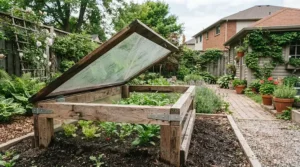
This one is a cover rather than a complete bed. It drops onto a VegTrug Classic 1m planter, props open on a ventilation post, and swings fully back when you need elbow room.
The frame measures 105 × 76 × 46 cm and uses 3.5 mm double-layer polycarbonate in an FSC-certified timber frame. Thicker glazing slows heat loss on clear, cold nights, which is exactly when frost bites. The fully opening lid is a genuine ergonomic win: watering, thinning and harvesting don’t turn into a one-handed wrestling match with a propped flap. It can also sit directly on the ground.
The catch is fit. It’s designed for the Classic 1m planter, so measure before you buy anything else to sit under it. VegTrug sells mostly through UK, US and Australian retailers, so confirm stock and shipping to Canada. The manufacturer warranty is a modest 12 months.
On reviews, the verifiable pool is thin: retailer pages showed only a handful of ratings. Judge this one on spec merit rather than crowd wisdom.
Pros:
- ✅ Lid opens fully for easy tending
- ✅ Thick 3.5 mm glazing insulates well
- ✅ Works on a planter or bare ground
Cons:
- ❌ Planter sold separately
- ❌ Manual venting only, so you must remember
Price: roughly C$200-C$320 for the frame alone. Verdict: strong value if you already own the bed.
3. Outsunny Raised Bed Cold Frame — bed and polycarbonate cover in one box
The pitch is efficiency: one purchase gives you a galvanized steel raised bed and a fir-framed polycarbonate cover, and the cover can also be used on its own. It lists at about 122 × 61 × 82 cm, with a pointed roof that sheds rain and snow instead of pooling it.
The open-bottom steel bed lets roots like carrots and parsnips dive deep, and the drainage keeps soil from going soggy in a wet fall. Galvanized steel won’t rot like a wooden bed, which is a practical edge in damp Canadian springs. The openable roof handles ventilation, but you’re the thermostat here. That’s perfectly manageable on a patio you walk past daily and a gamble on a rental plot you visit twice a week.
For beginners, this is the most complete starter system on the list: raised bed gardening and frost protection solved in a single assembly session. The stained fir frame will want a fresh coat of sealant every year or two to hold its shape.
Retailer pages carry limited product-level review detail, so I can’t give you a reliable sentiment read. Treat it as a well-specified mid-range choice.
Pros:
- ✅ Bed and cover included together
- ✅ Open bottom suits deep-rooted crops
- ✅ Pointed roof sheds rain and snow
Cons:
- ❌ Manual venting required
- ❌ Fir frame needs periodic resealing
Price: around C$230-C$330. Verdict: the sensible all-in-one for first-timers.
4. Giantex Wood Cold Frame Greenhouse — sized to tend without kneeling
Giantex shows up repeatedly in 2026 roundups, usually praised for ergonomic design, and it comes in several sizes. Roundups mention a 37 in (94 cm) model and a taller 42 in (107 cm) version, so treat the dimensions on the specific listing as the final word.
The wood frame with transparent polycarbonate panels follows the standard formula, and some variants advertise an adjustable roof. In practice, taller, cabinet-style frames put plants closer to waist height, which matters if kneeling in cold mud has lost its charm. The trade-off is that a tall frame catches more wind and holds heat differently from a ground-hugging box, so it suits pots and trays better than in-ground crops.
My analytical take: this is a safe middle-of-the-road option for container growers. The warning is the confusing variant landscape, because near-identical Giantex listings differ in size, roof design and shelving. Compare the exact model before you click.
I couldn’t verify a large pool of independent reviews for a specific variant, so I’ll say so rather than invent a consensus.
Pros:
- ✅ Comfortable working height on tall models
- ✅ Multiple sizes to match your space
- ✅ Light-admitting polycarbonate panels
Cons:
- ❌ Variants differ and listings confuse
- ❌ Wood frame needs sealing
Price: around C$150-C$300 depending on size. Verdict: good for container gardeners who read the listing carefully.
5. MCombo 0760 — a vertical cabinet for balconies and seed trays
If your garden is a balcony, this is the shape that fits. The MCombo 0760 stands about 76 × 46 × 110 cm tall, with an adjustable shelf on preset screw holes and polycarbonate panels all round.
The adjustable shelf matters more than it sounds. Seed trays want to sit close to the light early on, while potted herbs need headroom later, and a movable shelf handles both. The fir frame is sanded for staining, and the door is generous enough for full trays.
Where it falls short is frost protection in deep winter. A small, thin-walled cabinet loses heat faster than a big insulated box, so think hardening off and spring seed starting rather than overwintering anything tender. Roundups call it a sturdy wooden build, and the one retailer review I found praised the framed panels. That’s a sample of one, so I’m not leaning on it.
Pros:
- ✅ Tall design saves floor space
- ✅ Adjustable shelf height
- ✅ Good for hardening off seedlings
Cons:
- ❌ Loses heat quickly in hard freezes
- ❌ Not suited to in-ground crops
Price: around C$140-C$250. Verdict: ideal for patio growers who start from seed.
6. Outsunny 2-Tier Cold Frame — smallest footprint in the lineup
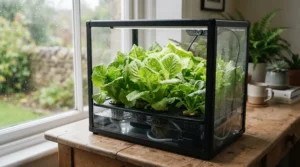
At 58 × 44 × 78 cm, this is the one you can wedge beside a back door. It has fir wood, polycarbonate panels, double front doors and a top-opening lid, and each tier is rated for about 15 kg (33 lb).
That load rating is the useful number. Fifteen kilos per shelf comfortably covers a few seed trays or pots, but it won’t hold a row of heavy ceramic planters. Double doors and a top lid give you two ways in, which helps when you’re venting on a mild afternoon but don’t want the whole front open to a cold gust.
The listing shows a 90-day limited warranty, which is short, so treat this as a cheap seasonal helper rather than a decade-long investment. It’s best for balcony gardeners, renters, and anyone testing whether cold frame gardening suits them. I couldn’t verify a meaningful pool of independent reviews, so I’m leaning on the specs alone.
Pros:
- ✅ Fits tight patios and doorsteps
- ✅ Double doors plus a top lid
- ✅ Light and easy to reposition
Cons:
- ❌ Very short warranty
- ❌ Limited capacity for larger plants
Price: around C$100-C$180. Verdict: a low-risk way to try the idea.
7. Zenport SH3212A — lightest, cheapest, fastest to deploy
This is the soft-sided entry. A green tubular steel frame wears a reinforced plastic cover with a roll-up zipped panel, giving a 120 × 60 × 60 cm tunnel you can set up in minutes. The zip panel doubles as your vent, and the plastic cover is the consumable part.
Roundups note that light plastic-covered frames suit spring and fall temperature boosts better than deep-winter protection, and that matches the physics: thin film holds less heat than twin-wall polycarbonate. Use it to harden off seedlings, shelter a patch of lettuce through a cold snap, or bridge the shoulder seasons.
Review evidence is mixed and small. One 10-pack listing averaged three stars across six ratings, while one reviewer reported it held up in wind with overnight lows near 2°C (35°F). That’s a thin sample, so verify wind anchoring with stakes or weights.
Pros:
- ✅ Very affordable and lightweight
- ✅ Sets up in minutes
- ✅ Roll-up zip panel doubles as a vent
Cons:
- ❌ Plastic cover wears out and needs replacing
- ❌ Weak for deep-winter protection
Price: around C$60-C$120. Verdict: the best “try before you commit” option.
Here’s how the seven stack up on construction and ventilation.
| Product | Frame | Cover | Venting | Best For |
|---|---|---|---|---|
| Backyard Discovery Aggie | Cedar, steel legs | Double-wall polycarbonate | Automatic wax hinge | Set-and-forget gardeners |
| VegTrug Classic Cold Frame (1m) | FSC timber | 3.5 mm polycarbonate | Lid and post | Existing VegTrug owners |
| Outsunny Raised Bed Cold Frame | Fir + galvanized steel bed | Polycarbonate | Openable roof | First-timers |
| Giantex Wood Cold Frame Greenhouse | Wood | Polycarbonate | Varies by model | Container growers |
| MCombo 0760 | Fir | Polycarbonate | Door | Balcony seed starters |
| Outsunny 2-Tier Cold Frame | Fir | Polycarbonate | Top lid + doors | Tiny patios |
| Zenport SH3212A | Steel tube | Reinforced plastic | Zip panel | Budget shoulder-season use |
The pattern is clear: rigid polycarbonate costs more but protects deeper into winter, while soft covers win on price and portability. Aggie is the only automatic venter, which is why it stands alone. If your budget sits under C$200, the Outsunny 2-Tier Cold Frame or MCombo 0760 gives you rigid glazing, while the Zenport SH3212A wins for sheer low cost.
How to Choose a Cold Frame Greenhouse
A good cold frame greenhouse isn’t about the fanciest listing. It’s about matching five or six variables to your garden. Work through these in order:
- Decide what you’re protecting. Seedlings and hardy greens need a small, low frame. Tall potted herbs need a cabinet. Match the shape to the crop, not the photo.
- Pick your glazing. Twin-wall polycarbonate holds more heat than film, which helps in deeper cold. Film is fine for spring and fall.
- Plan your ventilation. More plants die from overheating than from frost, so decide whether you’ll vent by hand or pay for an automatic opener.
- Check the footprint against your bed. Measure the interior of any raised bed before buying a cover, and allow room to lift the lid.
- Think wind and weight. Light frames need anchoring, and heavy frames need a permanent spot.
- Pick the site. Dalhousie University’s season extension guide recommends angling the frame toward the south or southeast and building in ventilation. It also suggests insulating with straw bales on the coldest nights.
Read the list as a filter, not a checklist. Two non-negotiables are ventilation and orientation, and everything else is negotiable.
Buy Cold Frame Greenhouse Kit: Wood, Metal or Soft Cover?
If you plan to buy cold frame greenhouse kit options online, the material choice shapes the next five years more than the brand does.
Wood (cedar or fir) looks lovely and insulates well, but it needs sealing and eventually weathers. Cedar resists rot naturally, while fir is cheaper but wants a protective coat. Metal frames shrug off moisture but can transfer cold. Soft covers are cheapest and lightest but are consumable.
Before you buy cold frame greenhouse kit options, confirm the practical details that listings bury. How heavy is the box when it arrives? Is it flat-packed with pre-drilled parts? What does the warranty actually cover? A kit that needs two people and a weekend is a different purchase from one you assemble in twenty minutes.
Shipping is also worth a thought for bulky items in Canada. Check delivery estimates, return terms and who handles damaged panels, because a cracked polycarbonate sheet is a headache you want resolved quickly.
✨ Ready to Pick Your Frame?
🔍 Take your fall harvest further with these carefully compared options. Click any highlighted product name to check current pricing and availability. A little glazing between your kale and the first hard frost goes a long way! 🥬
Cold Frame Greenhouse Review: How to Read the Evidence
Any honest cold frame greenhouse review should start by admitting how little independent testing exists. Many 2026 roundups claim hands-on testing, yet several carry near-identical wording across unrelated domains. When the same paragraph appears on different sites, treat the claims as marketing until corroborated.
Here’s how to read reviews like a sceptic:
- Look for specifics. A reviewer who mentions the lid opening at a particular temperature, or a panel cracking in a freeze, is more credible than “great product, five stars.”
- Separate seller ratings from product ratings. A seller with thousands of reviews doesn’t mean this exact frame earned them.
- Weigh sample size. One enthusiastic review proves nothing, and six mixed ratings prove very little.
- Watch for the durability gap. Most reviews arrive in month one. The question that matters, whether the hinge survives its third winter, rarely gets answered.
For that reason, my product sections lean on specs and flag thin evidence. If a retailer lists verified purchase reviews with photos, read the three-star ones first: they’re usually the most balanced.
Cold Frame Greenhouse vs Walk-In Greenhouse vs Low Tunnel
A cold frame greenhouse isn’t your only route to extending the season, and it isn’t always the right one.
| Option | Heat Held | Setup | Typical Cost | Best For |
|---|---|---|---|---|
| Cold frame greenhouse | Moderate | Minutes to hours | C$60-C$600 | Greens, seedlings, small beds |
| Walk-in greenhouse | High | Hours to days | From roughly C$500 up | Tomatoes, serious growers |
| Low tunnel / row cover | Low to moderate | Minutes | Low | Large beds, light frost |
The table makes the trade-off plain. Walk-in greenhouses hold the most heat and let you stand inside, but they cost more, need a level site and may raise bylaw questions if you go big, so a quick call to your municipality is worthwhile. Low tunnels cover long rows cheaply but offer less insulation and more fiddling.
A cold frame greenhouse sits in the sweet spot for small yards: enough insulation to shelter hardy crops, small enough to need no permit anxiety, and affordable enough that a failed experiment doesn’t sting. For most balcony and backyard gardeners, it’s the best first season extension structure to try.
Raised Bed Gardening With a Cold Frame Greenhouse
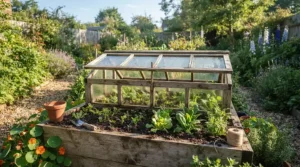
Raised bed gardening and cold frames are natural partners. Soil in a raised bed drains faster and warms sooner in spring, and a glazed lid then multiplies the effect.
There are two ways to marry them. You can buy a cover sized to an existing bed, like the VegTrug Classic Cold Frame (1m), or buy a combined system, like the Outsunny Raised Bed Cold Frame. The cover route is cheaper if the bed already exists. The combined route saves measuring headaches.
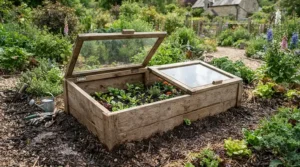
Practical tips matter here. Measure the inside lip of your bed, not the outside, and leave room for the lid to swing. Leave an access side so you can reach the middle without stepping on soil. Ohio State’s master gardeners also note that sunken frames, dug 15-30 cm into the ground, gain extra insulation, though they need more effort and better drainage.
If you’re building raised bed gardening plans around a frost-tolerant crop list, spinach, lettuce, kale and radishes are the traditional performers inside a cold frame. Pair them with a frame that fits and you’ll be harvesting greens when the neighbours are raking leaves.
Frost Protection: What to Expect in Canadian Winters
Be realistic about frost protection. A cold frame greenhouse isn’t a heater. It shelters plants by trapping solar warmth and blocking wind, typically gaining you a few degrees. That’s enough to transform a harsh frost into a mild one for hardy crops.
Harrowsmith’s guide to stretching the Canadian growing season notes that mesclun, leaf lettuce, kale and Swiss chard can survive well below freezing inside a cold frame. It also points out that hardening off seedlings in one saves you hauling trays indoors every night.
What it won’t do is save tender crops like basil or peppers in a deep freeze. For hard cold snaps, add insulation: a blanket or straw over the lid, or straw bales banked around the sides, as the Dalhousie guide suggests. Add a cheap min-max thermometer so you’re managing readings, not guesses.
Check your zone on Natural Resources Canada’s plant hardiness map, because a frame that carries lettuce through December in one region may only buy you weeks in another. The honest rule: frost protection scales with your climate, your insulation habits and your crop choice, not just the frame you buy.
Season Extension Structures: Building a Layered System
Think of season extension structures as layers in a winter coat. Each adds a little warmth, and together they can stretch your harvest by weeks or months.
At the base is your soil, mulched and healthy. Above it sits row cover or fabric, which can live inside a cold frame for a double layer. Then comes the cold frame itself, a low tunnel over the bed, and finally a walk-in greenhouse for those who go all-in.
Layering works because each barrier traps its own pocket of air. A cold frame greenhouse with a fleece blanket inside can feel like a more serious structure than its price suggests. That’s the secret of many four-season growers: not one big expensive structure, but several cheap ones stacked sensibly.
For most Canadian gardeners, starting with one cold frame and learning its quirks teaches you more than buying a large season extension structure and discovering its flaws later. Add layers as you learn what your garden needs.
Your First 30 Days: Setup and Maintenance Guide
You’ve unboxed the frame. Now what? This is the guide the product listing doesn’t write.
Days 1-3: Placement and levelling. Face the glazing south or southeast, shelter it from wind, and make sure it sits level on well-drained ground. Anchor light frames with stakes or weights.
Days 4-10: Warm the soil. Expect a couple of weeks before the soil inside truly warms. Don’t plant tender things yet. Sow hardy greens or move in hardened seedlings.
Days 10-20: Learn your venting rhythm. On days around 2-7°C (35-45°F), open the lid partway. Once the inside climbs past about 29°C (85°F), vent fully, as university extension guidance suggests. If your frame vents manually, set a phone reminder.
Days 20-30: Check and adjust. Look for condensation, loose hinges and gaps where cold air sneaks in. Water lightly, because dehydration kills more cold frame plants than anything else.
Common first-month mistakes include forgetting to vent on a sunny day, overwatering in cold weather and placing the frame in shade. Gardening educator Niki Jabbour, speaking to The Weather Network, recommends building a cold frame as a first fall step, and says carrots can be harvested well into February with this approach.
Real-World Scenarios: Which Frame Matches Your Garden?
Here are three hypothetical profiles, with reasoning for each.
The condo balcony gardener. Budget around C$150, limited space, wants herbs and seed starting. A vertical cabinet like the MCombo 0760 or the Outsunny 2-Tier Cold Frame fits the footprint and the budget. Neither will overwinter tender plants in a hard freeze, so plan for spring seedlings and fall salad greens.
The windy-prairie backyard grower. Budget C$450-C$600, one or two raised beds, wants a durable frame that survives gusts. The heft of the Backyard Discovery Aggie is an asset in the wind, and the self-venting lid helps when chinooks swing the weather unpredictably. Anchor it anyway.
The frugal grower with existing beds. Budget under C$300, already has a bed. The VegTrug Classic Cold Frame (1m) works if the bed matches, while the Outsunny Raised Bed Cold Frame replaces the bed entirely. Add a Zenport SH3212A as a cheap second frame for hardening off.
The lesson in each case: start from your constraint, whether that’s space, wind or budget, and let the frame follow.
Long-Term Cost & Maintenance: What You’ll Really Spend
Sticker price isn’t the whole story. A cheaper frame that needs a new cover every couple of seasons can cost more than a pricier one that lasts.
| Option | Planning Lifespan (illustrative) | Maintenance | Approx. Cost per Season |
|---|---|---|---|
| Backyard Discovery Aggie | 5+ years (warranty-backed) | Occasional hinge check | C$90-C$120 |
| VegTrug Classic Cold Frame (1m) | 4-5 years | Reseal timber | C$40-C$80 |
| Outsunny Raised Bed Cold Frame | 3-5 years | Reseal fir yearly | C$50-C$110 |
| Zenport SH3212A | 2-3 years (cover) | Replace cover | C$20-C$60 |
Lifespans are my planning assumptions, not manufacturer claims, and cost per season is simply price range divided by years. The takeaway: soft covers are cheapest per season but you’re renting, not owning. Rigid frames cost more upfront and spread it over years, especially if you reseal wood regularly. A coat of exterior-safe sealant every couple of years is the cheapest insurance in the whole category.
Common Mistakes When Buying a Cold Frame Greenhouse
Most buyers regret the same handful of things.
- Buying too small. Seedlings grow. A frame that looks roomy in March feels like a closet by May.
- Ignoring ventilation. A sealed box on a sunny day is an oven. If you can’t vent daily, choose an automatic opener.
- Skipping the wind plan. Light frames fly. Stake them or weigh them down.
- Trusting photos over dimensions. Always check the stated measurements, especially for raised bed covers.
- Assuming one frame fits every crop. Tall cabinets suit pots, low boxes suit in-ground greens.
The common thread is that listings sell the dream and skip the details. Read the specs, then read them again.
Frequently Asked Questions
❓ How warm does a cold frame greenhouse stay in winter?
❓ Where is the best place to put a cold frame greenhouse?
❓ Can I buy a cold frame greenhouse kit for an existing raised bed?
❓ How much does a cold frame greenhouse cost in Canada?
❓ Do I need to water plants in a cold frame greenhouse over winter?
Conclusion: Is a Cold Frame Greenhouse Worth It?
For most Canadian gardeners, yes. A cold frame greenhouse is the cheapest, simplest way to claim extra weeks at both ends of the season, and it teaches you how your garden behaves before you commit to anything bigger.
If you want hands-free convenience and can spend more, the Backyard Discovery Aggie is the standout. If you already own a raised bed, the VegTrug Classic Cold Frame (1m) or the Outsunny Raised Bed Cold Frame gives you the best fit for the money. Balcony gardeners will find the MCombo 0760 and Outsunny 2-Tier Cold Frame more sensible, and the Giantex Wood Cold Frame Greenhouse suits container growers who want a comfortable working height. The Zenport SH3212A is the low-risk way to test the idea.
Whichever you choose, remember the real skills: vent on time, anchor against wind, and match your crops to your frame. Do that and you’ll be pulling fresh greens while the rest of the street is shovelling.
Recommended for You
- Pop-Up Greenhouse For Balcony Gardening: 7 Best Picks 2026
- Pop-Up Greenhouse: 7 Best Picks For Canada In 2026
- Polycarbonate Greenhouse For Cold Winters: 7 Best Kits 2026
Disclaimer: This article contains affiliate links. As an Amazon Associate, I earn from qualifying purchases. If you purchase products through these links, we may earn a small commission at no additional cost to you.
✨ Found this helpful? Share it with your friends! 💬🤗
