
In This Article
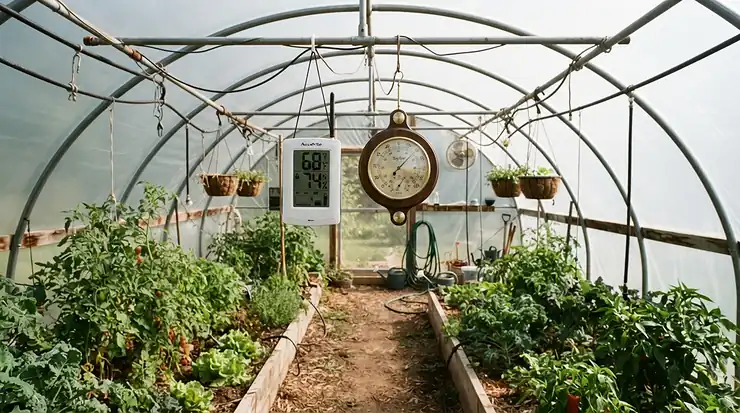
A digital greenhouse thermometer vs analog greenhouse thermometer comparison comes down to how each device senses and remembers temperature. Digital units use an electronic sensor and an LCD, often adding min/max memory, humidity readings or Wi-Fi alerts. Analog units use liquid in a tube or a mechanical dial: no batteries, no screen, fewer ways to fail.
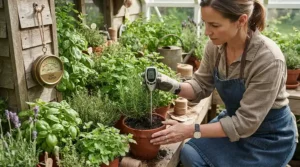
It’s early November 2026, and across most of Canada the greenhouse is about to become a negotiation with the weather. One cold, clear night can undo a summer of tomato-growing. That’s why the digital greenhouse thermometer vs analog greenhouse thermometer question matters more than it first appears. You’re not choosing a gadget. You’re choosing how you find out, at 2 a.m. or 7 a.m., that something went wrong.
Here’s the honest framing. Analog is the old reliable: it doesn’t care about dead batteries. Digital is the better historian: it remembers extremes, can track humidity, and can text your phone. Even the humidity side of the story is old. Leonardo da Vinci sketched a prototype hygrometer back in 1480, and we’re still arguing about the best way to measure moisture in the air.
I compared seven real products, from a few-dollar analog tube to a Wi-Fi controller that switches your heater on its own. Everything below is based on published specifications and the real, aggregated sentiment of reviewers. I haven’t tested these units myself, and I’ll flag where review data is thin. Let’s get into it.
Quick Comparison: Digital Greenhouse Thermometer vs Analog Greenhouse Thermometer Picks
| Product | Type | Listed Range | Listed Accuracy | Power | Best For |
|---|---|---|---|---|---|
| Brannan Digital Quick Set Max Min Thermometer | Digital, analog styling | −20 to 50°C | ±1°C | 1 AAA | Overnight low tracking |
| ThermoPro TP50 | Digital temp + humidity | −50 to 70°C | ±1°F; ±2% RH (30–80%) | 1 AAA | Budget humidity checks |
| Govee H5179 WiFi Thermo-Hygrometer | Wi-Fi digital | −20 to 60°C | ±0.3°C; ±3% RH | 3 AA | Remote alerts |
| Inkbird ITC-308 WiFi | Controller + probe | −40 to 100°C control | ±1°C | 120V mains | Automated heat/cool |
| Taylor 5460 Max/Min | Analog min/max | −40 to 50°C | Not clearly listed | None | Battery-free reliability |
| Sper Scientific 800122 | Analog + digital hybrid | Analog −40 to 50°C | See listing | Battery (digital side) | Cross-checking readings |
| Taylor 5132N Utility Thermometer | Analog, current only | −40 to 50°C | 2°F divisions | None | Cheap backup |
Looking at the table, the real split isn’t “digital good, analog bad.” It’s memory versus resilience. The Brannan Digital Quick Set Max Min Thermometer and Taylor 5460 Max/Min both answer “how cold did it get?”, but only the Taylor 5460 Max/Min survives a −40°C night without a screen to freeze. The Govee H5179 WiFi Thermo-Hygrometer is the only unit here that can reach you when you’re away, and the Inkbird ITC-308 WiFi is the only one that acts on what it sees.
Budget buyers should note that the Taylor 5132N Utility Thermometer gives up memory entirely. It tells you the temperature now, not what happened at 3 a.m. Pair it with something that remembers and you’ve covered both bases for very little money.
💬 Just one click — help others make better buying decisions too!😊
Top 7 Picks: Digital Greenhouse Thermometer vs Analog Greenhouse Thermometer Options, Analyzed
1. Brannan Digital Quick Set Max Min Thermometer — digital screen, old-school looks
It looks like the push-button glass thermometer hanging by every grandfather’s potting bench, and that’s the whole idea. The Brannan Digital Quick Set Max Min Thermometer (model 12/430/3) keeps the familiar shape but swaps the glass for a sensor and an LCD. The datasheet lists a −20°C to 50°C range, ±1°C accuracy, 0.1°C resolution on the live reading, 1°C steps on stored max and min, and a new sample every 10 seconds, all on one AAA battery. For the question that matters at 7 a.m. (“how cold did it get overnight?”), 1°C steps are plenty.
Here’s what the spec sheet quietly implies. Two units hung side by side can disagree by a couple of degrees and both still be within spec, and Brannan’s own FAQ says exactly that. The −20°C floor also matters in a Canadian winter: the datasheet notes the display reads “LL.L” at the limit. You’d know it got cold, but not how cold. For an attached or mild-climate greenhouse that’s fine. For an unheated prairie one, it’s a blind spot.
Reviews across Brannan’s digital max/min range lean positive on display clarity and easy resetting, while a minority report faded LCDs or condensation inside the case. I couldn’t verify review data specific to this exact variant, so weigh that accordingly.
Pros:
- ✅ Max, min and current readings on one screen
- ✅ Familiar push-button reset
- ✅ Distributor listings cite roughly two-year battery life
Cons:
- ❌ Display bottoms out at −20°C
- ❌ Needs a spot sheltered from drips and condensation
Around C$25–C$45 at the time of research; check current price. Fair value if overnight lows are your main worry.
2. ThermoPro TP50 — cheapest way to add humidity
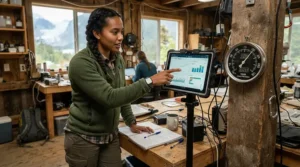
The ThermoPro TP50 is a pocket-sized digital hygrometer-thermometer that earns its place by costing about as much as a latte. The published specs: −50°C to 70°C range, ±1°F temperature accuracy, 10% to 99% humidity range, ±2% RH between 30% and 80% (±3% outside that), a 10-second refresh, and all-time high/low records on one AAA battery.
What those numbers mean on the bench: that humidity accuracy is genuinely useful. A ±2% reading means you can tell 55% from 75%, which is the difference between “fine” and “open the vents.” The wide temperature range also means it won’t quit during a Canadian cold snap. The catch is that it’s marketed as an indoor unit, and condensation is a greenhouse’s favourite hobby. Hang it high, away from drips, and don’t expect it to love a mist system.
Reviewers on retailer listings describe it as easy to read and reasonably accurate, and plenty buy it for plants. One practical wrinkle from the manual: to clear the high/low records, you remove the battery for a few seconds. It’s clunky, but it works. Note that its records are “all-time” rather than daily, so you’ll reset them yourself.
Pros:
- ✅ Humidity and temperature in one tiny unit
- ✅ Wide −50 to 70°C operating range
- ✅ Very low cost per sensor
Cons:
- ❌ Indoor-rated, so keep it out of direct moisture
- ❌ Records reset by pulling the battery
Around C$15–C$30 at the time of research; check current price. Excellent value as a humidity “second opinion.”
3. Govee H5179 WiFi Thermo-Hygrometer — alerts that reach your phone
If your greenhouse is a twenty-minute drive away, this is where digital stops being a convenience and becomes insurance. The Govee H5179 WiFi Thermo-Hygrometer reports a ±0.3°C temperature accuracy, ±3% RH humidity accuracy, a 2-second refresh, a −20°C to 60°C range, and Wi-Fi plus Bluetooth through the Govee Home app. It runs on three AA batteries, which Govee says last about seven months.
The practical upside is alerts: set a low-temperature threshold and your phone gets the news before your seedlings do. Govee also says the app stores up to two years of history you can export, which turns guesswork into a trend line. The fine print matters, though. It supports 2.4 GHz Wi-Fi only, so a greenhouse at the edge of your router’s range may struggle. A signal booster or a closer router solves that.
Reviewer sentiment is mixed in useful ways. Buyers praise the accuracy and the app, while some complain that Wi-Fi works only through Govee’s own ecosystem and that smart-home integrations (Home Assistant, Alexa temperature queries) are limited. It’s also listed for indoor use, so treat it with the same care as any electronics near condensation.
Pros:
- ✅ Phone alerts when temperature or humidity drifts
- ✅ Tight ±0.3°C listed accuracy
- ✅ Exportable history for spotting patterns
Cons:
- ❌ 2.4 GHz Wi-Fi only
- ❌ Limited smart-home integration reported
Around C$35–C$60 at the time of research; check current price. Strong value for anyone who can’t check daily.
4. Inkbird ITC-308 WiFi — turns readings into action
Every other product here tells you something. The Inkbird ITC-308 WiFi does something. It’s a plug-in temperature controller with a probe, dual outlets for heating and cooling, and a 2.4 GHz app. Published specs: −40°C to 100°C control range on the Wi-Fi model, ±1°C accuracy, and a load rating of 1100W (120V, 10A). Plug a small heater into the “heat” outlet, a fan into “cool,” set your target, and it handles the rest.
That’s real greenhouse climate control for the price of a nice dinner. But the analysis cuts both ways. It controls the temperature at the probe, which is a single point; Inkbird’s FAQ notes the probe on the Wi-Fi model isn’t removable. And because it switches mains-powered loads, check for a CSA or cUL mark on the specific unit sold in Canada, and never run a heater beyond the rated load.
It’s popular with brewers and reptile keepers, and the Wi-Fi version adds alarms and history graphs. I couldn’t verify a clean greenhouse-specific review sample, so treat greenhouse performance as less proven than the brewing use case.
Pros:
- ✅ Independent heat and cool outlets
- ✅ Wi-Fi alarms and temperature history
- ✅ Plug-and-play, no wiring
Cons:
- ❌ 1100W cap limits heater size
- ❌ Single probe means single-point control
Around C$50–C$90 at the time of research; check current price. Worth it if you want automation, not just monitoring.
5. Taylor 5460 Max/Min — no batteries, nothing to fail
Zero batteries, zero screens, zero apps. The Taylor 5460 Max/Min is a 10-inch indoor/outdoor min/max thermometer with a large white face and bold numbers, listed at −40°F to 120°F (−40°C to 50°C), with Permacolor filling and a push-button reset.
The meaning here is resilience. Its range bottoms out at −40°C, which most digital units can’t touch, so it keeps reading through the cruellest Canadian nights. It’s also easy to read from across the greenhouse. The trade-off is that the 50°C ceiling can be a problem: a closed greenhouse on a hot July afternoon can climb past that, and the unit simply pegs out.
I couldn’t find reliable reviews for this exact model. For the broader Taylor min/max family, one reviewer of a sibling model (546035) noted that the markers ride on the liquid rather than recording on their own, that readings from the two sides of the tube differed by more than a degree, and that it needs no batteries. That’s consistent with how this category behaves: tidy and dependable, but not lab-grade.
Pros:
- ✅ Works down to −40°C
- ✅ No batteries or electronics
- ✅ Big, easy-to-read face
Cons:
- ❌ Tops out at 50°C
- ❌ Coarser resolution than digital units
Around C$20–C$40 at the time of research; check current price. A sturdy winter workhorse.
6. Sper Scientific 800122 — two readouts in one housing
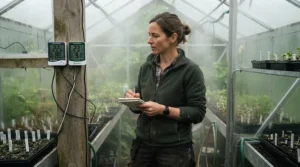
Why choose when you can have both? The Sper Scientific 800122 combines a classic analog-style glass thermometer with a digital min/max display. The listing describes an IPX4 splash-resistance rating, a removable rain guard, an analog range of −40°F to 122°F (−40°C to 50°C), and a body about 24.5 cm tall.
The value is cross-checking. If the digital display and the analog tube disagree wildly, something’s off, and you know before a crop pays the price. The IPX4 rating also makes it better suited to a damp greenhouse than a plain indoor sensor. Still, IPX4 means splash-resistant, not submersible, so don’t mount it where a sprinkler lands on it.
The retailer listing sells it as a two-piece set, which suits a larger greenhouse. I couldn’t verify a meaningful review sample, so treat this as a spec-led pick. Pair it with an ice-bath check (see below) and you’ll learn quickly how much to trust each side.
Pros:
- ✅ Analog and digital readings side by side
- ✅ IPX4 splash resistance
- ✅ Two-piece set suits larger greenhouses
Cons:
- ❌ Less review data to lean on
- ❌ Analog side still tops out at 50°C
Around C$25–C$50 at the time of research; check current price. Smart value as a self-checking pair.
7. Taylor 5132N Utility Thermometer — backup thermometer for pocket change
Sometimes the best gear is the cheap gear you forget about. The Taylor 5132N Utility Thermometer is a simple weather-resistant, rust-proof analog thermometer with an aluminum back and white plastic end caps. It reads −40°F to 120°F (−40°C to 50°C) in 2°F divisions on a roughly 9-inch scale, and some listings include a suction-cup mount.
On paper that’s modest. In practice it’s the “second opinion” you hang at plant height while a fancier unit watches the roof peak. Because greenhouse microclimate varies from corner to corner, a few cheap analog tubes can reveal cold pockets that one expensive sensor never would. The limit is obvious: it shows the current reading only, with no memory, so you have to be looking at the right time.
I couldn’t verify a trustworthy review sample for this exact model, so I’m treating it as a spec-led, low-risk buy. At this price, being wrong costs you almost nothing.
Pros:
- ✅ Weather-resistant, rust-proof build
- ✅ Works down to −40°C
- ✅ Almost disposable cost
Cons:
- ❌ No min/max memory
- ❌ 2°F divisions limit precision
Under C$15 at the time of research; check current price. The best “cheap insurance” on this list.
Practical Usage Guide: Placement, Setup and the First 30 Days
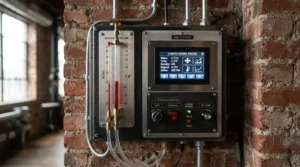
The thermometer you buy matters less than where you hang it. Government research makes the point plainly: greenhouse microclimate varies significantly both horizontally and vertically, so a single reading is only a local truth.
Start with placement. Hang one unit at plant height in the middle of the bench and another near the roof peak. Keep every sensor out of direct sun. Brannan’s FAQ warns that sunlight makes a thermometer read high, and the same logic applies to the Govee H5179 WiFi Thermo-Hygrometer and the ThermoPro TP50.
Run a calibration check on day one. Fill a glass with crushed ice and a little water, stir for a few minutes, and place the sensor tip in the slush. It should read close to 0°C. If a unit is off by two degrees, write the offset on a label and stick it beside the thermometer. This works for the Taylor 5460 Max/Min, the Taylor 5132N Utility Thermometer and the Sper Scientific 800122 alike.
Reset on a schedule. Reset max/min units at the same time every day, ideally mid-morning. That way each reading covers a full overnight low and an afternoon high.
Watch the first 30 days. Note when the lows occur, how fast the afternoon spike arrives, and whether humidity creeps up after watering. Mark battery changes on a calendar so a quiet digital unit doesn’t die unnoticed.
Real-World Scenarios: Three Growers, Three Setups
These are illustrative scenarios built from the specs above, not real customer stories.
The weekend hobbyist (small, unheated greenhouse, budget under C$60). Winter lows are brutal and she visits twice a week. Pair the Taylor 5460 Max/Min (survives −40°C, records the low) with the ThermoPro TP50 (humidity check). Total cost stays low, and nothing needs Wi-Fi.
The commuter with a lean-to (away ten hours a day). He needs to know about problems while at work. The Govee H5179 WiFi Thermo-Hygrometer gives alerts and history, and the Taylor 5132N Utility Thermometer is a battery-free backup if the Wi-Fi drops.
The seed-starter with a heater (early-spring tomatoes, budget up to C$150). Reliability and automation matter most. The Inkbird ITC-308 WiFi controls the heater and a vent fan, the Brannan Digital Quick Set Max Min Thermometer gives an independent overnight-low reading, and the Sper Scientific 800122 provides the cross-check. Independent confirmation matters when a controller is in charge.
✨ Don’t Miss These Exclusive Deals!
🔍 Take your greenhouse to the next level with these carefully selected products. Click on any highlighted item to check current pricing and availability. These tools will help you create the stable growing conditions your plants will love!
Problem → Solution Guide for Greenhouse Thermometers
Problem 1: “My two thermometers disagree.” Every thermometer has a tolerance. Test both in an ice bath, label the offsets, and trust the one closer to 0°C. For example, Brannan Quick Set units read within ±1°C by spec, so a two-degree gap isn’t a fault.
Problem 2: “The display went blank or faint.” Moisture is the usual culprit. Move digital units like the Brannan Quick Set under cover, away from drips, and replace batteries before deep cold sets in.
Problem 3: “Wi-Fi keeps dropping.” The Govee H5179 WiFi Thermo-Hygrometer and Inkbird ITC-308 WiFi both use 2.4 GHz only. Move the router closer, use a Wi-Fi extender, or add a battery-free analog unit like the Taylor 5460 Max/Min as a fallback.
Problem 4: “It’s too hot and the analog scale pegs out.” Units capped at 50°C, such as the Taylor 5460 Max/Min and Taylor 5132N Utility Thermometer, can’t tell you how hot a sealed greenhouse really gets. Add a digital sensor with a higher ceiling, like the Govee H5179 WiFi Thermo-Hygrometer (up to 60°C) or ThermoPro TP50 (up to 70°C).
Digital Greenhouse Thermometer vs Analog Greenhouse Thermometer: Head-to-Head
| Factor | Digital | Analog | Edge |
|---|---|---|---|
| Resolution | 0.1°C readings (e.g., Brannan Quick Set) | 1–2°C scale divisions (e.g., Taylor 5132N) | Digital |
| Min/max memory | Built in (ThermoPro TP50, Brannan Quick Set) | Marker-based (Taylor 5460) | Digital |
| Humidity | Yes (Govee H5179, ThermoPro TP50) | Rare and coarse | Digital |
| Remote alerts | Yes (Govee H5179, Inkbird ITC-308) | None | Digital |
| Deep-cold range | Often −20°C floor (Brannan Quick Set) | −40°C typical (Taylor 5460) | Analog |
| Power failure | Dead battery means blank screen | Keeps working | Analog |
| Cost | Higher | Lower | Analog |
Looking at the comparison, digital wins on information and analog wins on survival. If you want a full picture (lows, highs, humidity, alerts), you need electronics. If you want something that will still read correctly after a power outage and a −35°C night, you want a tube. The strongest setups use both: a digital unit for the data and an analog unit like the Taylor 5460 Max/Min as a sanity check.
For the hybrid-minded, the Sper Scientific 800122 puts both approaches in one housing, which makes disagreements visible instantly.
How to Choose Between a Digital Greenhouse Thermometer vs Analog Greenhouse Thermometer
- Decide what you need to know. Just the current temperature? Analog is enough. Overnight extremes, humidity or trends? Choose digital.
- Check the lowest temperature you’ll face. If your greenhouse drops below −20°C, confirm the display range. The Brannan Quick Set shows “LL.L” at its limit, while the Taylor 5460 Max/Min reads to −40°C.
- Check the highest temperature too. Analog scales here stop at 50°C. A sealed greenhouse in summer can exceed it.
- Consider how often you’ll visit. If you’re away most days, remote alerts from the Govee H5179 WiFi Thermo-Hygrometer are worth the cost.
- Think about humidity. Mist, fog or tomatoes? A real humidity sensor like the ThermoPro TP50 beats guessing.
- Plan a backup. Pair any digital unit with a battery-free thermometer, such as the Taylor 5132N Utility Thermometer.
- Decide whether you want automation. Only the Inkbird ITC-308 WiFi in this lineup switches heating and cooling for you.
Common Mistakes When Buying a Greenhouse Thermometer
The biggest mistake is trusting one sensor. A single unit at the wrong height tells you about that spot, not the greenhouse. Next is ignoring the cold limit: a handsome display is useless when it’s blank at −25°C. Third is buying humidity-capable gear and installing it where condensation drips on it, which is how ThermoPro TP50 and Govee H5179 style indoor sensors meet an early end.
Another trap is treating specs as gospel. ±1°C accuracy means ±1°C, so don’t fuss over a half-degree difference between two units. And finally, many buyers skip a backup. A battery-free Taylor 5132N Utility Thermometer costs less than a coffee and has saved more than a few crops from a dead battery.
Temperature Monitoring in a Canadian Winter
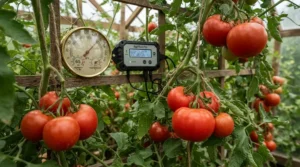
Good temperature monitoring in a Canadian winter is mostly about extremes. Daytime sun can push a closed greenhouse far above comfortable levels, while a clear night can drop it close to outdoor temperatures. A crop-technology review of greenhouse cucumber (Gruda, Sallaku and Balliu) notes that shoot growth stops below roughly 13–15°C and that the ideal air temperature in the first week after planting is about 22–24°C, so even “mild” lows can stall warm-season crops.
That’s why min/max memory matters so much. A live reading at noon tells you nothing about the 4 a.m. disaster. Units that record extremes, like the Brannan Quick Set, ThermoPro TP50 and Taylor 5460 Max/Min, answer the question you actually care about. For deep cold, the analog Taylor 5460 Max/Min keeps working at −40°C, while digital units differ: the ThermoPro TP50 lists −50°C, but the Brannan Quick Set stops at −20°C.
For anyone away from the greenhouse, alerts make temperature monitoring proactive instead of forensic. The Govee H5179 WiFi Thermo-Hygrometer and Inkbird ITC-308 WiFi can notify you when conditions drift, so you can act while there’s still time.
Humidity Sensors: Where Digital Wins Outright
Humidity sensors are the clearest argument for going digital. Wikipedia’s hygrometer entry notes that capacitive sensors can reach ±2% RH when calibrated, while uncalibrated ones can be two to three times worse. Cheaper dial hygrometers based on metal-paper coils can be off by 10% or more.
| Method | Typical Accuracy | Notes | Best For |
|---|---|---|---|
| Metal-paper coil dial | Roughly ±10% or worse | Cheap, easily drifts | Rough trend only |
| Capacitive electronic | ±2–3% RH (calibrated) | Robust against condensation, but drifts over time | ThermoPro TP50, Govee H5179 |
| Hair/fibre dial | Better, but needs upkeep | Needs periodic regeneration | Enthusiasts |
Interpreting the table: a ±3% sensor is plenty for deciding whether to vent or hold, which is the real-world decision. The ThermoPro TP50 lists ±2% between 30% and 80% RH, and the Govee H5179 WiFi Thermo-Hygrometer lists ±3% RH. Both are dramatically better than a dial hygrometer of unknown calibration.
Humidity also moves with temperature, because warm air holds more moisture. That’s why a sensor that tracks both, like the Govee H5179 WiFi Thermo-Hygrometer, tells you more than a standalone gauge. Keep any humidity sensor out of direct spray, and compare two units occasionally to catch drift.
Greenhouse Climate Control: When a Thermometer Isn’t Enough
Monitoring tells you what happened. Greenhouse climate control changes what happens next. Greenhouse Canada’s coverage of greenhouse climate control describes a blend of traditional and modern methods that can lower costs while supporting year-round production, which is a useful mindset for small growers too.
At the hobby scale, that blend looks like a battery-free analog thermometer, a digital logger and a simple controller. The Inkbird ITC-308 WiFi is the entry point: heat on one outlet, a fan on the other, and a target temperature in between. Add the Govee H5179 WiFi Thermo-Hygrometer for humidity trends and you’ve built a basic feedback loop.
Remember the limits. A single probe controls one point, so verify results with an independent thermometer such as the Taylor 5460 Max/Min or Sper Scientific 800122. Never trust a controller you aren’t cross-checking. Also match your heater to the 1100W load rating, and look for CSA or cUL certification on mains-powered gear sold in Canada.
Long-Term Cost and Maintenance
| Product | Price Range (CAD) | Ongoing Cost | Value Verdict |
|---|---|---|---|
| Taylor 5132N Utility Thermometer | Under C$15 | None | Excellent backup |
| ThermoPro TP50 | C$15–C$30 | 1 AAA | Best budget humidity |
| Brannan Quick Set | C$25–C$45 | 1 AAA | Good overnight-low tracker |
| Sper Scientific 800122 | C$25–C$50 | Battery (digital side) | Smart cross-check |
| Taylor 5460 Max/Min | C$20–C$40 | None | Cold-weather workhorse |
| Govee H5179 WiFi Thermo-Hygrometer | C$35–C$60 | 3 AA (about 7 months) | Best for remote alerts |
| Inkbird ITC-308 WiFi | C$50–C$90 | Electricity | Best for automation |
The value story isn’t purchase price, it’s ownership. Analog units like the Taylor 5460 Max/Min and Taylor 5132N Utility Thermometer cost nothing after purchase, while digital units add a small battery cost. The Govee H5179 WiFi Thermo-Hygrometer uses three AA batteries (about seven months, per Govee), which works out to a few dollars a year.
Maintenance is light but real: wipe sensors, check batteries before winter, re-run the ice-bath test each season, and replace anything that drifts. For most backyard growers, a pairing like the ThermoPro TP50 plus a Taylor 5460 Max/Min covers humidity, extremes and cold-weather resilience for well under C$70.
FAQ
❓ Is a digital greenhouse thermometer more accurate than an analog one?
❓ Will a digital greenhouse thermometer survive a Canadian winter?
❓ Are Wi-Fi greenhouse thermometers worth it for a small backyard greenhouse?
❓ What humidity should I aim for in a greenhouse?
❓ How much should I budget for greenhouse temperature monitoring in Canada?
Conclusion
So, digital greenhouse thermometer vs analog greenhouse thermometer: who wins? Neither, alone. Digital wins on detail: humidity, resolution, alerts, history. Analog wins on grit: no batteries, deep-cold range, nothing to reboot. The sensible Canadian answer is to use both.
If you want one starting point, pair a Taylor 5460 Max/Min (rugged, records extremes) with a ThermoPro TP50 (humidity and cheap digital detail). If you’re away often, add the Govee H5179 WiFi Thermo-Hygrometer for alerts. If you want automation, the Inkbird ITC-308 WiFi closes the loop, and the Sper Scientific 800122 or Taylor 5132N Utility Thermometer keeps everything honest as a cross-check.
Whichever you choose, hang it at plant height, keep it out of the sun, and calibrate it in ice water. For temperature targets by crop, Agriculture and Agri-Food Canada’s greenhouse cucumber crop profile includes a section on temperature and is a good Canadian reference to keep handy.
Recommended for You
- Greenhouse Exhaust Fan For Humidity Control: 7 Best Picks 2026
- Greenhouse Ventilation Fan: 7 Best Picks For Canada (2026)
- Electric Greenhouse Heater Vs Propane Greenhouse Heater: 7 Best 2026
Disclaimer: This article contains affiliate links. As an Amazon Associate, I earn from qualifying purchases. If you purchase products through these links, we may earn a small commission at no additional cost to you.
✨ Found this helpful? Share it with your friends! 💬🤗
