
In This Article
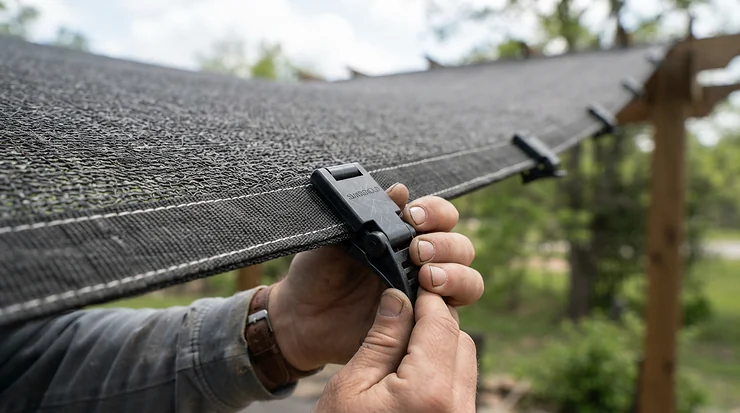
Greenhouse shade cloth is a woven or knitted fabric, usually UV-stabilized polyethylene, that hangs over or inside a greenhouse to block a set portion of sunlight. It lowers heat, softens harsh light, and shields leaves from scorching while still letting air, rain and enough light through to keep plants growing.
Canadian growers often assume shade is a southern problem. It isn’t. Environment and Climate Change Canada notes that the country’s highest UV Index readings occur in southern Ontario, and a glazed box with the sun on it can turn into a sauna by 11 a.m. in July. Seedlings wilt, tomatoes drop blossoms, and lettuce bolts before you have finished your coffee.
This guide is a buyer-focused greenhouse shading review for 2026. I compared seven real products, from budget sheets to heavy rolls, and reasoned through what their specs mean in a Canadian backyard. The review sentiment I cite comes from aggregated retailer listings and published roundups. I haven’t personally tested any of these products. Where I couldn’t verify a rating, I say so.
You’ll also get the plain-language maths of shade percentage. You’ll learn why greenhouse ventilation matters as much as the fabric, and how to size up a roll before you buy it. Prices below are approximate CAD ranges from my research, so check current pricing on Amazon.ca before you order.
Greenhouse Shade Cloth at a Glance: Quick Comparison Table
| Product | Shade % | Typical Size | Approx. Price Range (CAD) | Best For |
|---|---|---|---|---|
| Agfabric 50% Sunblock Shade Cloth | 50% | Many sizes, grommets or clips | C$30–C$70 | All-round value for hobby greenhouses |
| Coolaroo 50% UV Block Knitted Roll | 50% | 1.8 × 30 m (6 × 100 ft) | C$170–C$230 | Long runs, cutting to fit |
| Coolaroo 70% UV Block Knitted Roll | 70% | 3.7 × 15 m (12 × 50 ft) | C$200–C$280 | Glass greenhouses, light-sensitive crops |
| Winpull 50% Shade Cloth | 50% | 3 × 6 m (10 × 20 ft) | C$40–C$75 | Windy sites |
| SUNNY GUARD 35-45% Shade Cloth | 35–45% | 3 × 6 m (10 × 20 ft) | C$30–C$50 | First-time buyers |
| Storystore 40% Shade Cloth | 40% | 3 × 6 m (10 × 20 ft) | C$40–C$70 | Tomatoes and peppers |
| Agfabric Aluminet | Varies by weave | Varies | C$60–C$150 | Hot, bright, south-facing sites |
Ranges are approximate conversions of figures I found during research. They are not live Amazon.ca prices.
The table shows a clear split. If you only need to cover a small hobby greenhouse, the sheet-style options near the top are cheaper and arrive ready to hang. If you plan to cut your own panels or shade several structures, the roll formats cost more up front but work out cheaper per square metre. The Agfabric Aluminet is the odd one out, because it reflects heat instead of just absorbing it.
💬 Just one click — help others make better buying decisions too!😊
Top 7 Greenhouse Shade Cloth Picks: Expert Analysis
1. Agfabric 50% Sunblock Shade Cloth — best all-round value
The Agfabric 50% Sunblock Shade Cloth gets recommended again and again in affiliate roundups as the “default” choice. It is a knitted, UV-stabilized HDPE fabric sold in a long list of sizes, with either grommets or clips, and it is also offered in 30%, 40%, 60%, 70% and 80% versions.
Knitted construction matters because cut edges resist fraying. That lets you trim a sheet to your roof line without the unravelling you’d get from cheaper woven tarps. The 50% shade percentage is the sweet spot for most mixed greenhouses, since it takes the sting out of midsummer sun without turning the interior into a cave.
Roundups frequently rank it a best-value option, and one of them notes that black cloth casts sharper shadows than white. I couldn’t verify individual Amazon.ca reviews, so check the live rating for your size.
Pros:
- ✅ Knitted HDPE resists fraying at cut edges
- ✅ Wide range of sizes and shade levels
- ✅ Budget-friendly entry for most hobby greenhouses
Cons:
- ❌ Thinner than roll-grade fabric
- ❌ Included clips and grommets may need upgrading
Expect roughly C$30–C$70 depending on size. Good value for the first-time buyer.
2. Coolaroo 50% UV Block Knitted Roll — best for long runs and custom cutting
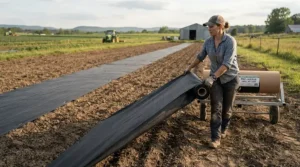
The Coolaroo 50% UV Block Knitted Roll is the pick for people who would rather cut than compromise. A 1.8 × 30 m (6 × 100 ft) roll lets you shade a long hoop house, a row of cold frames, and the greenhouse door in one go.
It’s a knitted HDPE fabric that “breathes,” which is the whole point: hot air escapes upward through the weave instead of building up like it would under a solid tarp. Coolaroo reports a temperature drop of up to 32 percent beneath the fabric, which is a manufacturer figure, so treat it as a best case.
At Tractor Supply, the black 50% roll carries a 4.8 rating from 47 reviews. That is one retailer’s sample, not Amazon.ca data. Reviewers mention gardens, hosta and hydrangea, plus easy handling. One roundup also cites a 15-year warranty, so confirm the terms on the listing.
Pros:
- ✅ Roll length covers multiple structures
- ✅ Breathable knitted weave vents hot air
- ✅ Strong retailer sentiment on durability
Cons:
- ❌ No grommets, so you add your own
- ❌ Higher upfront cost than sheets
Think roughly C$170–C$230. Better per-square-metre value if you’re covering a lot of area.
3. Coolaroo 70% UV Block Knitted Roll — heavy-duty density for intense sun
The Coolaroo 70% UV Block Knitted Roll in 3.7 × 15 m (12 × 50 ft) is a heavier fabric at roughly 10 kg (23 lb) per roll. That mass shows in the feel: knitted, not woven, so it won’t unravel when trimmed. The listing also advertises it as mold- and mildew-resistant and hose-cleanable.
Seventy percent is a lot of shade. Based on the spec comparison, it suits glass greenhouses that trap more heat than polycarbonate, or houses full of ferns, begonias and orchids. For tomatoes and peppers it is too dark, and extension sources warn that over-shading vegetables produces stretched, weak growth.
One retailer shows 4.5 stars across 83 reviews, with comments such as holding up well and attractive. I couldn’t confirm the Amazon.ca equivalent, so check the listing before you buy.
Pros:
- ✅ Dense, heavy knit tolerates strong sun
- ✅ Wide 3.7 m width covers large roofs
- ✅ Mold and mildew resistant
Cons:
- ❌ Too dark for most fruiting vegetables
- ❌ Heavier to handle and hang
Roughly C$200–C$280. Pick it for glass houses and shade-lovers, not tomatoes.
4. Winpull 50% Shade Cloth — tough pick for windy sites
The Winpull 50% Shade Cloth in 3 × 6 m (10 × 20 ft) is aimed at extreme heat and wind. A roundup lists it at about 1 kg (2.2 lb), which is a respectable weight for HDPE of that size, and the same source gives it 4.6 stars across more than 250 Amazon ratings (US listing, so verify the Canadian one).
Wind is the quiet killer of shade cloth. A prairie gust can turn a loose panel into a sail, and the stress lands on the grommets. Heavier fabric and sturdy edges mean fewer rips, and for open sites in Alberta, Saskatchewan or along the Great Lakes, that counts for more than the extra dollars.
Pros:
- ✅ Solid weight for HDPE in this size
- ✅ Strong rating volume on the US listing
- ✅ Suits exposed, gusty sites
Cons:
- ❌ Costs more than basic sheets
- ❌ Included fasteners may not last forever
Expect roughly C$40–C$75. Pay a little more if your yard is a wind tunnel.
5. SUNNY GUARD 35-45% Shade Cloth — best budget starter
The SUNNY GUARD 35-45% Shade Cloth (green HDPE mesh, 3 × 6 m / 10 × 20 ft) is the cheapest way to learn what your greenhouse actually needs. One roundup calls it the best entry-level pick at under US$30, and that fits.
The lighter 35–45% band suits tomatoes, cucumbers and most mid-sized vegetables in northern climates. If summer reveals you need more shade, you can step up to a heavier cloth without having lost much.
Green mesh also looks less industrial in a front-yard setting. Since I couldn’t verify a solid Amazon.ca review count, treat this as a low-risk experiment rather than a decade-long purchase.
Pros:
- ✅ Very low cost of entry
- ✅ Light shading suits vegetables
- ✅ Green colour blends into gardens
Cons:
- ❌ Not built for years of harsh sun
- ❌ Narrow shade range limits flexibility
Roughly C$30–C$50. Ideal for beginners testing their light levels.
6. Storystore 40% Shade Cloth — best grommet spacing for easy hanging
The Storystore 40% Shade Cloth (3 × 6 m / 10 × 20 ft) is notable for its aluminum grommets spaced every 1 m (3.28 ft), a detail one roundup flagged as a plus. Closer grommets spread the load, so a strong gust is less likely to rip out a single anchor point.
At 40% shade, it targets the tomato-and-pepper crowd. Michigan State’s floriculture specialist suggests roughly 40 percent for high-light crops, slightly more for glass houses, so this lands in the zone where growth and cooling balance well.
I’d choose it if you plan to tie the cloth to a ridge cable. Grommet spacing matters far more than people expect, because every grommet is a place the fabric can fail.
Pros:
- ✅ Aluminum grommets every metre
- ✅ 40% density suits fruiting crops
- ✅ Good mid-range size for small houses
Cons:
- ❌ Brand is less established
- ❌ Fewer shade options than Agfabric
Think roughly C$40–C$70. A tidy mid-range choice.
7. Agfabric Aluminet — reflective shade for hot, bright sites
The Agfabric Aluminet isn’t really a shade cloth in the traditional sense. A farm roundup describes it as acting more like a thermal mirror than a simple screen. Metalized strips reflect solar energy instead of absorbing it, so less heat reaches the plants.
That makes a difference in southern Ontario or BC’s Okanagan, where July can feel like another country. Aluminet also tends to diffuse light, which can evenly illuminate shaded parts of a greenhouse. It can double as an energy screen in cold weather, trapping some heat at night, though that depends on how you install it.
Reflective fabrics cost more, and shade levels vary by weave, so read the listing carefully. I couldn’t verify detailed review sentiment for the Canadian listing.
Pros:
- ✅ Reflects heat rather than absorbing it
- ✅ Diffuses light for even plant exposure
- ✅ Suits intensely sunny south-facing houses
Cons:
- ❌ Pricier than standard HDPE
- ❌ Shade level varies by weave, so check specs
Roughly C$60–C$150 depending on size. Worth it for severe heat.
How to Choose Greenhouse Shade Cloth: 7 Steps
Choosing greenhouse shade cloth is easier when you run through a checklist rather than a gut feeling.
- Start with your crops. Sun-lovers like tomatoes and peppers prefer 30–50% shade, while ferns and orchids want 60–70%.
- Check your glazing. Glass traps more heat than polycarbonate, so it usually needs a denser cloth.
- Consider your latitude. A Vancouver Island greenhouse needs less than a Windsor one.
- Pick knitted over woven. Knitted HDPE resists fraying when cut.
- Verify UV stabilization. Unstabilized plastic can turn brittle in a season or two.
- Measure twice. Include overhang so the cloth sits a little beyond the roof.
- Plan the fasteners. Grommets, clips or cable ties should match your frame.
Skip the white-versus-black debate until you’ve done the above. Colour is a refinement, not a foundation.
Shade Percentage Guide: Matching Density to Crops and Climate
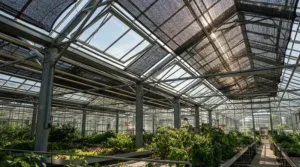
Shade percentage is the portion of sunlight the cloth blocks. A 50% cloth blocks half the light and lets half through. It’s the single most important number on any listing, and also the most misunderstood.
| Shade % | Typical Use | Why |
|---|---|---|
| 30% | Northern mixed vegetables | Light relief without much dimming |
| 40% | Tomatoes, peppers, high-light crops | Balances heat and growth |
| 50% | General greenhouse, lettuce, flowers | Popular all-purpose density |
| 60–70% | Glass houses, ornamentals, light-sensitive plants | Handles stronger heat load |
| 80–90% | Deep shade, privacy, livestock | Too dark for most crops |
Suppliers largely agree on this ladder. The Canadian-based BC Greenhouse Builders recommend roughly 70% for glass and 60% for polycarbonate, which is stronger than many US vegetable guides. The gap shows how much your structure and region matter.
Read that table as a starting point, not a verdict. If you’re growing tomatoes under polycarbonate in Manitoba, 40% will usually outperform 70%. If you’re protecting orchids under glass in Niagara, the reverse holds. Over-shading is the more expensive mistake, because it quietly cuts yields all season.
Greenhouse Ventilation: Why Shade Cloth Can’t Work Alone
Shade cloth lowers heat that enters the greenhouse. Greenhouse ventilation removes heat that is already inside. You need both, and the second does more of the heavy lifting than most beginners expect.
UMass Extension notes that ventilation can cool a greenhouse close to outdoor temperature, and that shading is a low-cost supplement. It also reports that an NC State engineer found total energy reduction was about half the labelled shade percentage, because heat still conducts through the structure. In practice, a 50% cloth won’t halve your temperature.
A few practical rules help:
- Open roof and sidewall vents together so hot air has an exit path and cool air an entry.
- Add a circulation fan to prevent stale pockets.
- Keep shade cloth a few centimetres above the glazing where possible, so air can flow between.
- Don’t seal the cloth tightly against the roof, which traps heat.
Think of shade as the umbrella and ventilation as the open window. Neither does much on a stuffy day without the other.
Greenhouse Shade Cloth vs Whitewash and Internal Curtains
Shade cloth isn’t your only option. Whitewash paint and interior shade curtains also cut heat, and each has trade-offs.
| Option | Cost | Flexibility | Main Drawback |
|---|---|---|---|
| Shade cloth (external) | Low | High, removable | Needs fastening against wind |
| Whitewash compound | Low | Low, always on | Wears off with rain, dims cloudy days |
| Internal curtains | High | Very high, automated | Cost and installation effort |
Michigan State’s Erik Runkle points out that whitewash stays in place on cloudy days, when you don’t want it, and can wear away through the season. Shade cloth, by contrast, comes off in minutes in September when light is precious again.
The takeaway: for backyard growers, external shade cloth is the best balance of price and control. Commercial operations lean toward motorized curtains, which OMAFRA describes as serving shade, light diffusion and energy conservation, sometimes all at once. For most of us, a roll and a few clips will do.
Sun Protection: Shielding Plants and People Under Shade Cloth
Sun protection isn’t only a plant issue. Leaf temperatures can run well above air temperatures in direct sun, and that stress causes scorching, wilting and bolting. A cloth takes the edge off.
It also helps you. If you spend afternoons potting seedlings, a shaded greenhouse is simply a safer workplace. Health Canada and the Canadian Cancer Society both advise seeking shade when the UV Index is 3 or higher, and that can happen from 11 a.m. to 3 p.m. between April and September, even when it’s cloudy. Greenhouse glazing blocks some UV but not all, so a shade layer adds comfort and a modest extra margin of sun protection.
Don’t treat the cloth as a substitute for a hat and sunscreen, though. Shade cloth percentages describe light blockage, not a certified UV protection rating for skin.
✨ Don’t Miss These Exclusive Deals!
🔍 Take your greenhouse to the next level with these carefully selected products. Click any highlighted item to check current pricing and availability. These picks will help you build a cooler, healthier growing space your plants will love!
Buy Greenhouse Shade Cloth Roll: Sizing, Cutting and Cost
When you buy greenhouse shade cloth roll stock, the maths changes. A sheet costs more per square metre but saves time. A roll costs less per square metre but needs cutting, hemming and fasteners.
Here is how to size it:
- Measure the roof length and the arc from ground to ground, or ridge to eave on each side.
- Add 30–60 cm of overhang on every side.
- Divide by the roll width. A 1.8 m roll often needs two passes on a wide roof.
- Cut with sharp scissors. Knitted fabrics, like Coolaroo 50% UV Block Knitted Roll and Coolaroo 70% UV Block Knitted Roll, resist fraying.
Rolls also suit multi-use projects. You can shade the greenhouse, a pergola and a few cold frames from one purchase. If you only have a single small greenhouse, a ready-made sheet like Agfabric 50% Sunblock Shade Cloth usually wins on convenience.
Features That Actually Matter (And Those That Don’t)
Features that matter:
- UV stabilization. Without it, plastic fabric degrades quickly.
- Knitted construction. It resists fraying, as listings for Agfabric 50% Sunblock Shade Cloth and the Coolaroo rolls emphasize.
- Edge reinforcement. Grommet spacing, as on Storystore 40% Shade Cloth, decides how well it survives wind.
- Shade percentage. This number drives results more than brand.
Features that matter less:
- Colour. Black absorbs; white scatters light more evenly. Both work.
- Marketing warranty years. Read what’s actually covered.
- Fancy packaging. It doesn’t change how the cloth performs.
Reflective products like Agfabric Aluminet are a genuine feature, not hype, but only if your site is very hot.
Common Mistakes When Buying Greenhouse Shade Cloth
Shoppers repeat a few errors again and again.
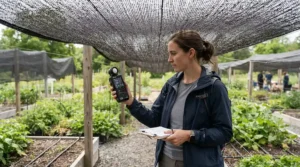
Buying too dark. It feels safer, but extension sources warn that heavy shade stretches vegetables and cuts yield. Start with 40–50%.
Ignoring wind. A lightweight sheet without reinforced edges can tear in the first storm. Consider something like Winpull 50% Shade Cloth for exposed sites.
Forgetting greenhouse ventilation. The cloth cannot do the work of open vents.
Skipping the take-down plan. Light drops in autumn, and leaving shade up can slow ripening. Plan to remove it in September.
Choosing on price alone. The cheapest option, like SUNNY GUARD 35-45% Shade Cloth, is fine for testing but not for ten years of sun.
Practical Usage Guide: Installing and Maintaining Your Shade Cloth
A good install adds years of service life.
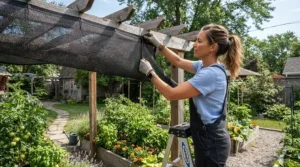
Setup. Hang the cloth over the roof with a gap of a few centimetres above the glazing, so air moves underneath. Use clips or cable ties every 60–90 cm. Anchor both ends, because wind finds the loose one.
First 30 days. Check fasteners weekly. Watch for pooling rain or snow on the cloth, which adds a surprising amount of weight. If a panel flaps, tighten it right away.
Maintenance. Rinse with a hose a few times per season to remove dust, which can cut light and heat performance. Look for chafing at grommets.
Seasonal plan. Put shade up when sustained heat arrives, usually May or June in much of Canada. Remove it in late summer or early autumn. Fold it dry, store it out of sunlight, and label the size.
Common errors. Pulling it drum-tight (stress), leaving it on through snow (weight), or covering the vents (heat).
Real-World Scenarios: Which Shade Cloth Fits Your Situation?
The Ontario tomato grower. A 3 × 3.7 m polycarbonate greenhouse, tomatoes and peppers, hot July afternoons. Based on the spec comparison, Storystore 40% Shade Cloth or Agfabric 50% Sunblock Shade Cloth fits, with strong greenhouse ventilation.
The BC glass greenhouse owner. An older glass structure with orchids and ferns. The Coolaroo 70% UV Block Knitted Roll suits the heat load and the light-sensitive plants, following the glass guidance from BC Greenhouse Builders.
The prairie hoop-house gardener. Windy site, long structure, tight budget. A roll like Coolaroo 50% UV Block Knitted Roll lets you cut to fit, while Winpull 50% Shade Cloth helps on a smaller footprint.
The first-timer. Unsure what the plants need. Start with SUNNY GUARD 35-45% Shade Cloth, learn from a season, then upgrade.
Problem and Solution Guide: Fixing Common Shade Cloth Headaches
Problem: the greenhouse is still hot. Solution: add vents or a fan, and lift the cloth off the glazing for airflow. A reflective Agfabric Aluminet may help at very sunny sites.
Problem: plants are leggy. Solution: you’re over-shading. Drop from 70% to 50%, or from 50% to 40%.
Problem: the cloth is tearing. Solution: reinforce edges and anchor points, or choose a model with tighter grommets like Storystore 40% Shade Cloth.
Problem: leaf scorch persists. Solution: check watering, then consider a denser cloth for afternoon sun only.
Problem: autumn crops are slow. Solution: remove the cloth earlier, since light is the limiting factor by then.
Long-Term Cost and Maintenance: Is Greenhouse Shade Cloth Worth It?
Shade cloth is one of the cheapest upgrades in gardening. UMass Extension puts typical commercial shade materials at about a 10-year life, with cost depending on density. Hobby-grade fabric usually lasts fewer years, depending on UV, wind and handling.
Run a simple cost-per-year calculation. A C$60 sheet that survives four seasons costs C$15 per year. A C$200 roll that lasts eight seasons costs C$25 per year but covers far more area. Add a few dollars in clips and the picture barely changes.
Compare that to lost produce, replaced seedlings or electricity for fans, and the value is clear. Cheap cloth isn’t a bad choice, as long as you know it’s a shorter-lived one.
FAQ: Greenhouse Shade Cloth Questions Answered
❓ What shade percentage is best for a vegetable greenhouse?
❓ Should shade cloth go inside or outside a greenhouse?
❓ Does white or black shade cloth work better?
❓ When should I take shade cloth down in Canada?
❓ Can shade cloth stay on in winter?
Conclusion: Pick the Right Shade, Then Let the Air Move
The best greenhouse shade cloth isn’t the darkest or the dearest. It’s the one that matches your crops, your glazing and your climate. For most Canadian hobby growers, that means Agfabric 50% Sunblock Shade Cloth or Storystore 40% Shade Cloth for vegetables, and SUNNY GUARD 35-45% Shade Cloth as a low-risk starter. Roll buyers will like Coolaroo 50% UV Block Knitted Roll, glass-house owners should look at Coolaroo 70% UV Block Knitted Roll, and windy sites suit Winpull 50% Shade Cloth. For brutal heat, Agfabric Aluminet is the specialist.
Remember the bigger picture. Shade percentage sets how much light gets in, greenhouse ventilation sets how much heat gets out, and sun protection covers you as well as your plants. Get those three right and the fabric does the rest.
Prices and availability change often, so check current Amazon.ca listings before you buy.
Recommended for You
- Greenhouse Thermometer With Remote Monitoring App: 7 Best Picks 2026
- Digital Greenhouse Thermometer Vs Analog Greenhouse Thermometer 2026
- Greenhouse Exhaust Fan For Humidity Control: 7 Best Picks 2026
Disclaimer: This article contains affiliate links. As an Amazon Associate, I earn from qualifying purchases. If you purchase products through these links, we may earn a small commission at no additional cost to you.
✨ Found this helpful? Share it with your friends! 💬🤗
