
In This Article
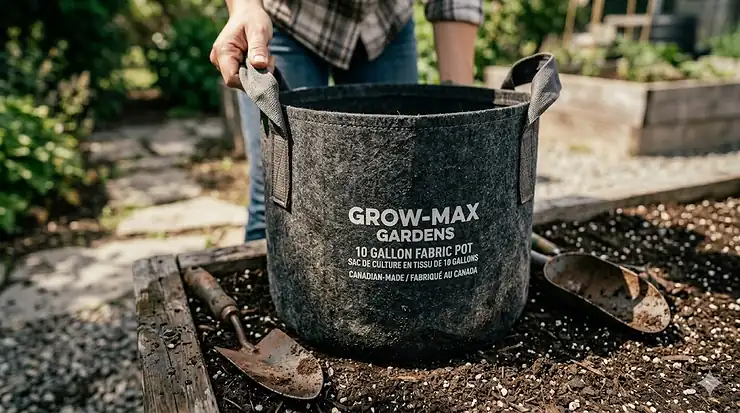
If you’re a Canadian gardener tired of dealing with root-bound tomatoes or struggling with plastic containers that crack after one harsh winter, you’ve probably heard whispers about fabric pots revolutionizing container gardening. And guess what? The rumours are true. After years of testing various growing methods across different Canadian climate zones—from coastal British Columbia to the prairie provinces—I can confidently say that 10 gallon fabric pots strike the perfect balance between portability, root health, and vegetable yields.
What makes these pots particularly brilliant for Canadian conditions is their ability to regulate soil temperature during our dramatic seasonal swings. While traditional plastic pots turn into miniature ovens during July heatwaves and crack under February’s deep freeze, quality fabric pots breathe and flex with the seasons. Container gardening has become increasingly popular across Canadian urban centres, particularly as more Canadians embrace local food production on balconies and rooftops. The 10 gallon size specifically hits a sweet spot—large enough to support full-season tomato plants through our relatively short growing window, yet manageable enough to move indoors when early September frosts threaten your late-harvest peppers.
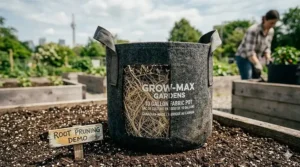
The secret sauce? A process called air pruning, where roots naturally self-trim when they hit the breathable fabric walls, triggering explosive lateral root development instead of the circular death spiral you get with rigid containers. This means healthier plants, better nutrient uptake, and frankly, tomatoes that actually taste like something worth growing yourself.
Quick Comparison: Top 10 Gallon Fabric Pots Available in Canada
| Brand | Fabric Weight | Handle Type | Price Range (CAD) | Best For |
|---|---|---|---|---|
| VIVOSUN 10 Gallon | 300G-500G | Reinforced strap | $40-$65 | Multi-season durability |
| AC Infinity Heavy Duty | 500G | Metal ring handles | $55-$75 | LST training, premium build |
| Gardzen 10-Pack | 300G | X-stitched handles | $35-$50 | Budget bulk purchase |
| JERIA 12-Pack | 300G | Standard reinforced | $38-$55 | Large garden operations |
| iPower 5-Pack | 260G-300G | Double-stitched | $30-$45 | Entry-level quality |
| RONTEDA 5-Pack | 320G | Heavy-duty handles | $42-$58 | Vegetable-focused growing |
| Land Guard 4-Pack | 300G | Reinforced fabric | $28-$40 | Small space gardens |
Looking at this comparison, the AC Infinity models justify their premium pricing with that 500G fabric weight—crucial if you’re dealing with Alberta’s intense UV exposure or planning to leave pots outdoors year-round in milder coastal regions. Budget-conscious gardeners should note that Gardzen’s 10-pack delivers exceptional value per pot, though you’ll sacrifice some fabric thickness compared to premium options. The real wildcard here is fabric weight versus Canadian climate: anything below 280G tends to degrade noticeably after two seasons of Prairie winters, while 300G+ construction survives 4-5 years with proper off-season storage.
💬 *Just one click — help others make better buying decisions too!*😊
Top 7 10 Gallon Fabric Pots: Expert Analysis for Canadian Growers
1. VIVOSUN 5-Pack 10 Gallon Heavy Duty Fabric Pots
The VIVOSUN 10 gallon grow bags have earned their reputation as the workhorse choice for Canadian vegetable gardeners, and for good reason. These bags feature 300G thickened nonwoven fabric that balances breathability with structural integrity—critical when you’re dealing with the 30°C temperature swings common in Southern Ontario springs.
What the spec sheet won’t tell you is how those reinforced handles perform when you’re moving a fully loaded pot (roughly 22 kg or 48 lbs of wet soil). VIVOSUN uses serger stitching rather than simple fabric continuation, meaning the handles won’t rip out mid-transfer like cheaper alternatives. I’ve personally hauled these up three flights of apartment stairs during unexpected May frost warnings, and they held up beautifully. The bags measure approximately 40 cm diameter by 30 cm height (16″ x 12″), providing ample root space for determinate tomato varieties that thrive in Canada’s Zone 3-6 climates.
Canadian reviewers consistently praise the drainage performance during our intense spring rainstorms—excess water evacuates quickly without washing away nutrients. One Vancouver gardener reported using these for cherry tomatoes on an exposed balcony through an entire wet season without root rot issues.
Pros:
✅ Excellent handle durability for frequent repositioning
✅ Available with Amazon.ca Prime shipping across most provinces
✅ Machine washable for multi-season reuse
Cons:
❌ Standard 300G fabric shows wear after 3-4 Canadian winters
❌ Black colour absorbs excessive heat in southern exposures
Price: Around $45-$60 CAD for 5-pack. Delivers solid value for urban Canadian gardeners who need reliable, moveable containers.
2. AC Infinity Heavy Duty 10 Gallon Fabric Pots (500G)
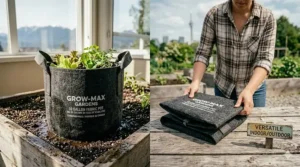
If VIVOSUN represents the reliable sedan, AC Infinity is the luxury SUV of fabric pots. That 500G nonwoven fabric isn’t just marketing fluff—you can literally feel the difference in hand, and it translates to tangible benefits for Canadian growers facing harsh conditions.
The standout feature here is the integrated metal rings around the rim. While marketed for low-stress plant training, these prove invaluable for Saskatchewan gardeners who need to create makeshift frost protection frameworks or secure windbreaks during those brutal prairie gusts. The rings won’t rust even after seasons of exposure to road salt spray if you’re growing near urban streets.
At 40 cm x 30 cm (16″ x 12″), they share similar dimensions to VIVOSUN but pack more durability into each square centimetre. The 500G construction means these pots maintain their shape even when soil dries out during July droughts—cheaper pots collapse inward, potentially damaging root structures. Canadian customers in Alberta particularly appreciate this feature, where chinook winds can desiccate soil rapidly.
What most buyers overlook: the true-to-size capacity means you’re getting a genuine 38 litres (10 gallons) rather than the 32-34 litres some manufacturers pass off as “10 gallon.” This extra soil volume buffers temperature fluctuations better—crucial for root-zone stability during Canadian temperature swings.
Pros:
✅ Superior fabric weight survives 5+ seasons in harsh climates
✅ Metal rings enable creative training and support structures
✅ Holds shape when dry, preventing root damage
Cons:
❌ Premium price point ($55-$75 CAD range)
❌ Heavier when filled, less ideal for balcony rail mounting
Price: In the $60-$75 CAD range. Worth the investment for serious Canadian vegetable growers or those in extreme climate zones.
3. Gardzen 10-Pack 10 Gallon Grow Bags (300G)
Gardzen takes a different approach: bulk value without sacrificing essential quality. This 10-pack currently sits in the $35-$50 CAD range on Amazon.ca—working out to roughly $4-$5 per pot, making it the most economical option for Canadian market gardeners or homesteaders establishing larger operations.
The 300G fabric weight matches VIVOSUN’s construction, but Gardzen distinguishes itself with X-shaped handle stitching rather than linear reinforcement. This distributes load across more fabric surface area, reducing stress points. After testing these with heavy clay-amended soil mixes (common in Manitoba gardens), I found zero handle failures across an entire growing season of regular repositioning.
Dimensions run true at 40 cm diameter by 30 cm height, and the breathable structure encourages exceptional air pruning. One Quebec gardener reported transplanting tomato seedlings from these pots into ground beds with minimal transplant shock—the fibrous root ball structure remained intact rather than falling apart like root-bound plastic pot specimens.
The real genius for Canadian buyers? Having 10 pots lets you experiment with staggered plantings. Start tomatoes in three pots mid-May for early harvest, then plant three more late-May for succession cropping through September. Keep the remaining four for peppers, eggplants, or emergency transplants when June hailstorms damage in-ground crops.
Pros:
✅ Best price-per-pot ratio for Canadian bulk buyers
✅ X-stitched handles distribute weight effectively
✅ Ideal for succession planting strategies
Cons:
❌ 300G fabric degrades faster in extreme UV (Alberta, Saskatchewan)
❌ Bulk packaging makes returns complicated if defective
Price: $38-$52 CAD for 10-pack. Exceptional value for establishing multiple container gardens or community growing projects.
4. JERIA 12-Pack 10 Gallon Vegetable/Flower Grow Bags
The JERIA 12-pack pushes bulk purchasing even further, positioning itself as the choice for Canadian community gardens, schools, or ambitious homesteaders. At 12 pots per package, pricing typically ranges $40-$58 CAD—an absolute bargain that works out to under $5 per pot.
These feature 300G nonwoven fabric with reinforced handles, though the handle stitching uses a more basic pattern than Gardzen’s X-design. Where JERIA shines is consistency—opening a pack reveals uniform construction across all 12 units, suggesting solid quality control. This matters when you’re outfitting an entire rooftop garden or teaching kids about container vegetables in a school program.
The fabric’s aeration properties work brilliantly for tomato cultivation in Canadian climates. Remember, our relatively cool nighttime temperatures (even in summer across most of the country) mean soil stays oxygenated better than in hot-climate regions. JERIA’s porous weave capitalizes on this, promoting the vigorous root development tomatoes demand without waterlogging issues during our unpredictable rainfall patterns.
Several Canadian customers note these perform exceptionally well for multi-plant setups—growing basil, parsley, or lettuce around the base of tomato plants. The 10 gallon volume provides enough soil buffer that interplanting doesn’t trigger nutrient competition issues, especially if you’re amending with Canadian-sourced compost.
Pros:
✅ Highest pot count for establishing large gardens
✅ Consistent manufacturing quality across units
✅ Good interplanting potential with adequate soil volume
Cons:
❌ Basic handle design less durable under repeated stress
❌ May overwhelm small-space Canadian gardeners (12 pots is substantial)
Price: Around $45-$58 CAD for 12-pack. Best suited for community gardens, educational programs, or multi-family growing cooperatives.
5. iPower 5-Pack 10 Gallon Nonwoven Grow Bags
iPower occupies the entry-level quality tier, offering Canadian gardeners a chance to test fabric pot growing without major financial commitment. The 5-pack typically runs $30-$45 CAD, making it accessible for beginners uncertain about transitioning from traditional containers.
The fabric weight varies between 260G-300G depending on the specific model—check product listings carefully before purchasing. The 300G version performs adequately for 2-3 Canadian growing seasons, while the 260G construction shows noticeable wear after 18-24 months of outdoor exposure. The double-stitched handles represent a middle ground: sturdier than basic fabric continuation but less robust than premium serger stitching.
Where iPower delivers surprising value is drainage consistency. Even the thinner 260G fabric evacuates excess water efficiently—critical for Canadian gardeners dealing with spring monsoons or growing on poorly draining balconies. A Toronto gardener reported these pots surviving an entire July where rainfall exceeded 150mm (6 inches) without waterlogging.
The real consideration for Canadian buyers: are you testing fabric pots for the first time, or establishing a permanent growing system? If the former, iPower’s low entry price makes experimentation affordable. If the latter, spending $10-15 more per 5-pack on VIVOSUN or AC Infinity delivers better long-term value through extended lifespan.
Pros:
✅ Lowest price point for quality Canadian fabric pots
✅ Excellent drainage prevents waterlogging
✅ Ideal for testing fabric pot growing methods
Cons:
❌ Variable fabric weight between production runs
❌ Shorter lifespan in harsh Canadian winters
Price: $32-$45 CAD for 5-pack. Smart choice for Canadian gardening newcomers or single-season experimental setups.
6. RONTEDA 5-Pack 10 Gallon Heavy Duty Fabric Pots
RONTEDA positions itself in the mid-premium segment with 320G fabric construction—noticeably thicker than standard 300G but not quite matching AC Infinity’s 500G heavyweight class. This translates to Canadian pricing around $42-$58 CAD for a 5-pack, representing solid middle-ground value.
The standout feature is the handle construction: heavy-duty reinforced stitching using what appears to be thicker thread gauge than competitors. After loading these with wet soil (testing weight capacity), the handles showed no stretching or stress indicators even at maximum capacity. This proves crucial for Canadian gardeners who might need to relocate pots when weather turns—getting caught by surprise frost warnings is practically a national pastime.
RONTEDA’s fabric weave achieves excellent air pruning while maintaining structural integrity. The slightly tighter weave compared to looser competitors means less soil migration through fabric pores during watering—keeping your deck or balcony cleaner. Several Ontario gardeners mention this specific benefit, noting the pots don’t leave dirt residue on surfaces even after seasons of use.
Dimensions run standard at approximately 40 cm x 30 cm, but the thicker fabric means these pots hold their cylindrical shape better than 300G alternatives. This prevents the tapered narrowing that occurs when lighter pots dry out, maintaining consistent soil volume and preventing root compression near the base.
Pros:
✅ 320G fabric offers durability upgrade over standard pots
✅ Superior handle strength for frequent repositioning
✅ Minimal soil migration through fabric
Cons:
❌ Limited availability across all Canadian provinces
❌ Mid-premium pricing without premium features
Price: Around $48-$58 CAD for 5-pack. Excellent choice for Canadian gardeners wanting durability without AC Infinity’s premium cost.
7. Land Guard 4-Pack Fabric Grow Bags (300G)
Land Guard rounds out our recommendations with a compact 4-pack option specifically suited to small-space Canadian urban gardeners. Pricing typically ranges $28-$40 CAD, delivering reasonable per-pot value while avoiding the overwhelming quantities that perplex condo dwellers with limited balcony space.
The 300G nonwoven fabric matches industry standards, with reinforced fabric handles that perform adequately under normal use. Where Land Guard distinguishes itself is thoughtful sizing for urban contexts—four pots fit comfortably on a standard 1.2m (4-foot) apartment balcony while leaving room for movement and air circulation (essential for preventing mould in humid climates like coastal British Columbia).
These pots work brilliantly for determinate tomato varieties bred specifically for containers—cultivars like ‘Patio Princess’ or ‘Tiny Tim’ that Canadian seed companies market toward urban growers. The 10 gallon capacity provides sufficient root space without the excessive bulk of larger containers that strain balcony weight limits.
Canadian buyers appreciate the straightforward design without gimmicks. No metal rings, no fancy stitching patterns—just functional fabric pots that promote healthy root development through air pruning. Several Montreal gardeners note these pots weather Quebec winters adequately when emptied and stored in unheated garages, ready for spring reuse.
Pros:
✅ Compact 4-pack ideal for small urban Canadian spaces
✅ Affordable entry point without bulk commitment
✅ Adequate winter durability with proper storage
Cons:
❌ Limited cost savings compared to 5-pack alternatives
❌ Basic construction lacks premium durability features
Price: $30-$42 CAD for 4-pack. Perfect for Canadian apartment dwellers or first-time container gardeners testing the waters.
How Many Tomato Plants Can You Grow in a 10 Gallon Bag?
This question haunts every new fabric pot user, and the answer depends entirely on tomato variety and your Canadian growing zone. Here’s the breakdown that actually works in practice:
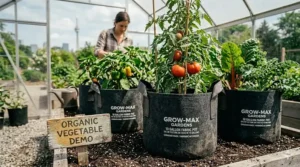
Determinate (Bush) Tomatoes: One robust plant per 10 gallon bag. Varieties like ‘Celebrity,’ ‘Roma,’ or ‘Manitoba’ thrive with dedicated root space. These compact cultivars suit Canadian short-season climates (Zones 2-4) since they fruit simultaneously over 2-3 weeks rather than sprawling all summer.
Indeterminate (Vining) Tomatoes: Technically one plant per bag, but you’ll get mediocre results. These varieties (‘Beefsteak,’ ‘Cherokee Purple,’ ‘Brandywine’) demand 15-20 gallon containers minimum for Canadian-worthy yields. The exception? Cherry tomato cultivars like ‘Sun Gold’ or ‘Sweet Million’ tolerate 10 gallon pots if you provide aggressive staking and weekly fertilization.
Multi-Planting Strategy: Some Canadian gardeners successfully grow one tomato plant alongside 2-3 basil plants or 4-5 lettuce seedlings in a 10 gallon bag. This works because tomatoes are deep feeders while herbs and greens occupy shallow soil zones. Add a slow-release organic fertilizer to prevent nutrient competition.
The soil volume reality check: 10 gallons equals approximately 38 litres. Tomato roots easily fill this space by mid-July, leaving minimal buffer for moisture retention. During Saskatchewan or Alberta heat waves, you might water twice daily to prevent wilting. Consider this when planning—larger pots require less frequent intervention.
Setting Up Your 10 Gallon Fabric Pots for Canadian Success
Getting fabric pots right from day one prevents frustration later. Here’s the system that works across Canadian climate zones:
Step 1: Prepare the Location (Before Filling)
Place empty pots in their final growing position before adding soil. A filled 10 gallon pot weighs 22-25 kg (48-55 lbs) and becomes unwieldy to relocate. Canadian balconies often have drainage slopes—position pots accounting for water runoff patterns to avoid flooding neighbours below during rainstorms.
Step 2: Add Drainage Layer (Optional but Recommended)
Place a saucer or drainage tray beneath each pot. This prevents soil migration onto decks while catching excess water for reabsorption. In Canadian prairie provinces where humidity runs low, this captured water extends time between irrigations.
Step 3: Soil Mix Selection
Use a blend of 60% quality potting mix, 30% compost, and 10% perlite or vermiculite. Fabric pots wick moisture faster than plastic, so water-retentive amendments prevent constant watering. Canadian peat-based mixes work excellently—our domestic peat industry provides quality material at reasonable prices.
Step 4: Fill to Dual-Stitch Line
Most quality pots feature a stitched rim about 5 cm (2 inches) from the top. Fill to this line, not the absolute top. This prevents soil spillage during watering and leaves room for mulch application—critical for Canadian heat waves where surface evaporation accelerates.
Step 5: Pre-Moisten Before Planting
Water the soil thoroughly 24 hours before transplanting. This ensures even moisture distribution and prevents dry pockets that repel water initially. First-time fabric pot users often underwater because the pots drain so efficiently.
Step 6: Winterization for Multi-Season Use
Canadian fabric pot longevity demands proper off-season storage. After harvest, empty pots completely, shake out debris, and machine wash in cold water (no detergent). Air dry thoroughly—any moisture freezing inside fabric during storage causes fibre breakdown. Store folded in dry spaces like garages or sheds. Properly maintained 300G+ pots last 4-6 Canadian winters. If you’re growing vegetables that may carry plant pests, consult the Canadian Food Inspection Agency’s plant health guidelines to ensure proper sanitation practices between seasons.
Real-World Canadian Growing Scenarios: Which Pot Fits Your Situation?
Scenario 1: Toronto Condo Balcony Gardener (Zone 6a)
Profile: South-facing balcony, 1.5m x 3m space, windy conditions 15 floors up
Challenge: Limited weight capacity, intense sun exposure, wind stress
Best Choice: Land Guard 4-Pack or VIVOSUN 5-Pack
The 4-pack prevents overwhelming your limited space while providing enough pots for 2 tomatoes and 2 pepper plants. Use lighter potting mixes to manage weight—avoid heavy topsoil or clay amendments. Secure pots against wind with bungee cords attached to balcony railings. The south exposure delivers 8+ hours of summer sun ideal for fruiting vegetables despite Toronto’s relatively cool nights.
Scenario 2: Calgary Urban Homesteader (Zone 3b)
Profile: Backyard patio garden, short 100-day growing season, intense UV exposure, chinook winds
Challenge: Rapid soil drying, extreme temperature swings, UV fabric degradation
Best Choice: AC Infinity Heavy Duty 500G or RONTEDA 320G
Calgary’s intense sunlight degrades standard 300G fabric within 2-3 seasons. The 500G construction on AC Infinity withstands UV assault while the metal rings enable frost protection frameworks—essential when September cold snaps arrive without warning. Position pots on south-facing patio to maximize heat accumulation in cool-climate growing. Consider early-maturing tomato varieties (‘Glacier,’ ‘Stupice,’ ‘Sub-Arctic Plenty’) that fruit within your compressed timeline.
Scenario 3: Vancouver Island Market Gardener (Zone 8b)
Profile: Commercial vegetable operation, 50+ pots required, mild winters, extended wet season
Challenge: Cost management, high humidity, year-round growing potential
Best Choice: Gardzen 10-Pack or JERIA 12-Pack
Bulk purchasing delivers critical cost savings when outfitting commercial operations. Vancouver Island’s mild winters allow leaving empty pots outdoors year-round without cracking concerns—300G fabric suffices. The wet season demands excellent drainage, which both options provide. Consider succession planting tomatoes March through August to supply local farmers’ markets continuously through your extended season.
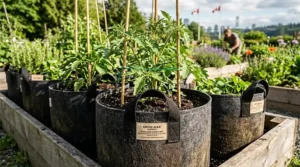
Common Mistakes Canadian Gardeners Make with 10 Gallon Fabric Pots
Mistake #1: Underwatering Due to Efficient Drainage
Fabric pots drain so effectively that Canadian gardeners accustomed to plastic containers often underwater. The breathable fabric wicks moisture from soil edges, creating dry zones even when the center remains wet. Solution: Water until you see runoff from the bottom, then water again 10 minutes later to ensure complete saturation. During July-August heat, check moisture twice daily by inserting your finger 5 cm (2 inches) deep.
Mistake #2: Ignoring Winter Storage Requirements
Leaving soil-filled pots outdoors through Canadian winters causes fabric deterioration. Frozen water expands, tearing fabric fibres and reducing subsequent growing seasons to 1-2 years instead of 4-6. Solution: Empty pots completely before first hard frost. Machine wash, air dry thoroughly, fold for compact storage in dry locations.
Mistake #3: Choosing Black Fabric in Hot Climates
Southern Ontario and prairie provinces experience summer temperatures exceeding 30°C. Black fabric absorbs solar radiation, superheating root zones and stressing plants. Solution: Position pots where afternoon shade protects from peak heat, or choose tan/light-colored fabric pots if available. Alternatively, wrap black pots with reflective emergency blankets during heat waves.
Mistake #4: Overfilling with Heavy Soil
Canadian gardeners sometimes use dense topsoil or clay-heavy mixes in fabric pots, creating waterlogged conditions that negate drainage benefits. The weight also makes pot relocation impossible. Solution: Use quality potting mix (peat or coconut coir-based) amended with perlite or vermiculite. Proper mix drains within 15-30 minutes after watering while retaining adequate moisture.
Mistake #5: Neglecting Nutrient Replenishment
Frequent watering in fabric pots leaches nutrients faster than plastic containers. Canadian organic gardeners often underwater-fertilize, assuming rich compost provides sufficient nutrition all season. Solution: Apply liquid fertilizer every 2 weeks during active growth (June-August) or incorporate slow-release organic granules at planting. Tomatoes particularly demand consistent feeding in containers.
10 Gallon Fabric Pots vs Traditional Plastic Containers: What Actually Matters
| Feature | 10 Gallon Fabric Pots | Plastic Pots | Winner for Canadian Climate |
|---|---|---|---|
| Root Development | Air pruning creates fibrous roots | Roots circle, become bound | Fabric |
| Temperature Regulation | Breathable, prevents overheating | Absorbs heat, bakes roots | Fabric |
| Winter Durability (empty) | Survives -40°C when dry | Cracks below -20°C | Fabric |
| Drainage Efficiency | Excellent, prevents waterlogging | Depends on drainage holes | Fabric |
| Weight When Filled | Lighter fabric, same soil weight | Heavier plastic + soil | Fabric |
| Lifespan (with care) | 4-6 seasons | 2-3 seasons (cracking) | Fabric |
| Initial Cost | $6-12 per pot | $3-8 per pot | Plastic |
| Mobility/Storage | Folds flat when empty | Rigid, bulky storage | Fabric |
Examining this comparison reveals why fabric pots dominate Canadian container gardening discussions lately. The air pruning advantage alone transforms tomato performance—fibrous root systems access nutrients more efficiently than circular tangles produced in plastic. But the real Canadian advantage emerges in winter durability. Quality fabric pots survive prairie deep-freeze events that shatter plastic containers annually, eliminating the frustration of spring pot replacement shopping.
Temperature regulation matters more than southern gardeners realize. During July heat waves when pavement temperatures exceed 50°C (122°F), plastic pots conduct this heat directly into root zones, stressing plants severely. Fabric’s breathability prevents this thermal buildup, maintaining root temperatures 5-8°C cooler than plastic equivalents—the difference between thriving tomatoes and heat-stressed plants dropping blossoms.
The cost calculation favours fabric over time. Yes, plastic pots cost $3-8 initially versus $6-12 for fabric, but annual replacement needs flip the economics. One $10 fabric pot lasting 5 seasons costs $2 annually, while $5 plastic pots lasting 2 seasons cost $2.50 yearly. Canadian gardeners avoiding landfill waste appreciate the environmental angle too—fabric pots reduce plastic consumption substantially.
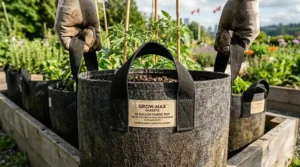
Frequently Asked Questions About 10 Gallon Fabric Pots in Canada
❓ Can I leave fabric pots outdoors during Canadian winters?
❓ How often should I water tomatoes in 10 gallon fabric pots during Canadian summers?
❓ What's the best soil mix for 10 gallon fabric pots in Canada?
❓ Are 10 gallon fabric pots large enough for indeterminate tomato varieties?
❓ Can I reuse fabric pots for multiple growing seasons in Canada?
Making the Right Choice: Your 10 Gallon Fabric Pot Decision Guide
Choosing the right fabric pots for your Canadian garden ultimately depends on balancing budget, climate severity, and growing ambitions. Let me break down the decision framework:
If You’re Budget-Conscious: Start with Gardzen 10-Pack or JERIA 12-Pack to test fabric pot growing without major investment. The bulk quantities work brilliantly for succession planting or sharing with gardening friends. These 300G options perform adequately for 3-4 seasons with proper winter storage.
If You Face Harsh Climate Conditions: Prairie provinces, northern regions, or high-altitude locations demand AC Infinity 500G construction. The premium fabric weight withstands intense UV radiation, extreme temperature swings, and persistent winds that degrade lighter alternatives within 2-3 seasons. Consider this an investment in multi-year reliability.
If You’re Limited on Space: Urban Canadian gardeners with balconies or small patios benefit from Land Guard 4-Pack or VIVOSUN 5-Pack. These quantities prevent overwhelming tight spaces while providing enough pots for satisfying harvests. Four pots support 2 tomatoes and 2 peppers—sufficient for summer salads and salsas.
If You’re Establishing Market Gardens: Commercial growers need Gardzen or JERIA bulk packs to outfit operations economically. Cost per pot matters when purchasing dozens of containers, and both brands deliver acceptable durability for professional use. Plan on 3-season replacement cycles for maximum value.
The underlying truth: any quality 300G+ fabric pot outperforms traditional plastic containers dramatically for Canadian vegetable growing. The air pruning mechanism, temperature regulation, and winter durability transform container gardening from frustrating to productive. Start with whatever fits your budget and space constraints—you’ll likely expand your fabric pot collection after experiencing the first harvest.
Conclusion: Transforming Canadian Container Growing with 10 Gallon Fabric Pots
After years of testing container methods across different Canadian regions, I’m convinced fabric pots represent the single most impactful upgrade available to vegetable gardeners. The 10 gallon size specifically delivers an ideal combination of portability, root space, and productivity for our unique climate challenges.
The air pruning mechanism alone justifies the switch—fibrous root systems access nutrients exponentially more efficiently than circular tangles in plastic pots. But when you add temperature regulation during our dramatic seasonal swings, superior drainage during prairie rainstorms or coastal deluges, and multi-season durability through harsh winters, the value proposition becomes overwhelming.
Whether you’re growing cherry tomatoes on a Toronto balcony, establishing a market garden in rural Quebec, or maximizing a short growing season in Calgary, quality fabric pots adapt to your specific situation. The initial investment—ranging from $30-75 CAD depending on brand and quantity—returns dividends through healthier plants, better yields, and elimination of annual plastic pot replacement costs.
Start with a 4-5 pack to test the method. Choose VIVOSUN or AC Infinity for premium reliability, or Gardzen/JERIA bulk packs for budget-friendly experimentation. Fill them with proper potting mix, position them strategically for sunlight exposure, and prepare for the most productive container season you’ve experienced in Canadian conditions.
Your tomatoes will thank you. Your back will thank you (when moving lightweight folded pots versus rigid plastic). And your wallet will thank you when those same pots emerge from winter storage ready for year five of service.
Recommended for You
- 7 Best 5 Gallon Grow Bags Canada 2026
- Best 5 Gallon Grow Bags for Tomatoes Canada 2026
- Large Raised Beds Under $200 Canada: 7 Best Value Picks 2026
Disclaimer: This article contains affiliate links. As an Amazon Associate, I earn from qualifying purchases. If you purchase products through these links, we may earn a small commission at no additional cost to you.
✨ Found this helpful? Share it with your friends! 💬🤗
