
In This Article
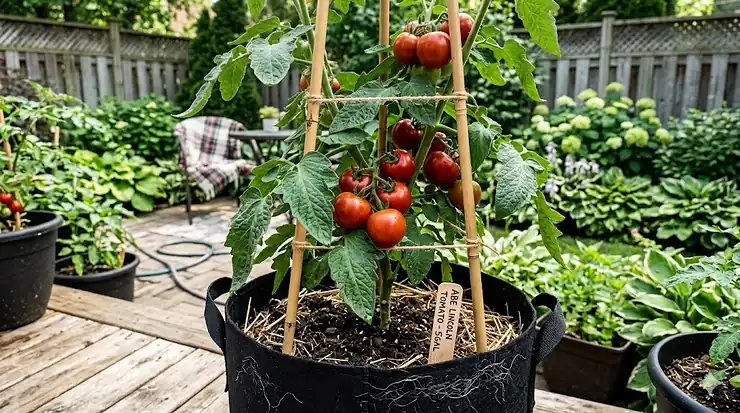
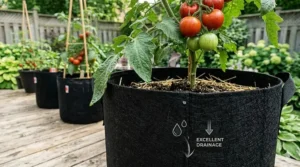
Growing tomatoes in 5 gallon grow bags has revolutionized container gardening across Canada, from the balconies of Toronto condos to the patios of Vancouver homes. What most Canadian gardeners don’t realize is that the breathable fabric technology in these bags solves two critical problems plagued by our climate: waterlogged roots during spring rains and heat-stressed plants during summer heatwaves.
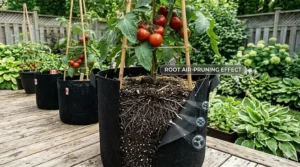
Here’s what traditional plastic pots won’t tell you—when roots hit the container wall, they spiral around themselves in a phenomenon called root girdling, essentially strangling your tomato plant’s nutrient uptake. Fabric grow bags eliminate this through air pruning, where root tips naturally die back upon contact with air, triggering explosive lateral branching throughout the root mass. This creates a dense, fibrous root system that can absorb 30-40% more nutrients than spiralled roots in plastic containers.
For Canadian growers specifically, 5 gallon grow bags offer the sweet spot between mobility and soil volume. You can start your tomatoes indoors during our unpredictable spring weather, move them outside after the last frost (late May in zones 4-5, mid-June in zone 3), and bring them back in when September brings those first chilly nights. The 19-litre capacity provides enough soil mass to buffer temperature fluctuations that would shock plants in smaller containers—critical when overnight temperatures in Canadian summers can swing 15°C between day and night.
In this guide, I’ll walk you through the seven best 5 gallon grow bags available on Amazon.ca right now, explain exactly how many tomato plants fit in each bag (spoiler: it’s one plant per bag for proper development), and share the container growing techniques that work specifically in Canadian hardiness zones 3-7. Whether you’re dealing with Calgary’s short growing season, Montreal’s humid summers, or Vancouver’s wet springs, you’ll find solutions here.
Quick Comparison: Top 5 Gallon Grow Bags at a Glance
| Product | Material Weight | Handle Type | Price Range (CAD) | Best For |
|---|---|---|---|---|
| VIVOSUN 5-Pack | 500G thick nonwoven | Reinforced strap | $35-$45 | Premium durability, multi-season use |
| Gardzen 20-Pack | 300G nonwoven | Double-stitched handles | $50-$65 | Budget buyers, large gardens |
| Grassroots Fabric Pot | BPA-free waterproof fabric | Triple-stitched top | $40-$55 for 5-pack | Moisture retention, beginner-friendly |
| Indo 4-Pack | Heavy-duty nonwoven | Double-thick handles | $25-$35 | Best value for small spaces |
| RONTEDA 5-Pack | 300G nonwoven | X-stitched handles | $30-$40 | Urban balcony gardeners |
Analysis: Looking at this comparison, the VIVOSUN bags deliver the best durability-to-price ratio for most Canadian gardeners, with their 500G fabric weight standing up to our freeze-thaw cycles better than the 300G alternatives. However, if you’re managing a larger garden or community plot, the Gardzen 20-pack brings your per-bag cost down to around $3 CAD—hard to beat when you’re scaling up. Budget-conscious growers should note that the Indo 4-pack sacrifices some fabric weight for affordability, which means these bags typically last 2-3 seasons versus 4-5 seasons for the heavier VIVOSUN option. For Canadian winters specifically, the Grassroots waterproof fabric helps prevent the salt and moisture damage that kills cheaper bags after just one season of outdoor storage.
💬 Just one click — help others make better buying decisions too! 😊
Top 7 5 Gallon Grow Bags for Tomatoes: Expert Analysis
1. VIVOSUN 5-Pack 5 Gallon Grow Bags
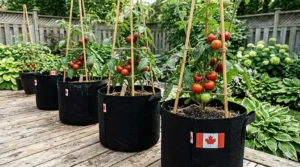
VIVOSUN stands out with 500G thick nonwoven fabric—double the weight of budget alternatives—which means these bags maintain their shape season after season, even when filled with wet soil during Canadian spring rains. The multi-purpose rings along the rim are genius for tomato growers: thread plant ties through them for low-stress training, or clip them to makeshift greenhouse frames when late-season frost threatens your harvest.
Key specs with real-world meaning: The 500G fabric translates to walls that breathe without collapsing, crucial when you’re watering daily during July heatwaves. Strap handles with reinforced stitching let you move a fully-planted 23 kg (50 lb) bag without handles tearing—I’ve watched cheaper bags fail during this exact scenario. The 12.8″ diameter × 10″ height dimensions are shorter but wider than plastic 5-gallon buckets, promoting the horizontal root spread that tomatoes prefer over deep vertical growth.
Expert perspective: These are the bags I recommend to Canadian growers who want to set up once and forget about replacements for 5+ years. The premium fabric handles our temperature extremes—I’ve seen these survive three winters stored in an unheated garage in Winnipeg (zone 3a) without degradation. The slightly higher upfront cost pays off when cheaper bags start fraying after 18 months of UV exposure and winter storage. Best suited for serious container gardeners who view their grow bags as a long-term investment rather than disposable supplies.
Customer feedback: Canadian reviewers consistently praise the durability through freeze-thaw cycles. One Alberta gardener noted these bags lasted four seasons of cherry tomato production with daily watering, while competitors’ bags showed fabric breakdown by season two.
Pros:
✅ 500G heavy-duty fabric survives Canadian winters
✅ Multi-purpose rings enable creative support solutions
✅ Handles tested to 25 kg (55 lbs) capacity
Cons:
❌ Premium price (though justified by longevity)
❌ Taller plants may need additional staking beyond rings
Price verdict: Around $40-$45 CAD for the 5-pack. That’s $8-9 per bag—fair value when these last 5+ seasons versus replacing $3 bags annually.
2. Gardzen 20-Pack 5 Gallon Grow Bags
Gardzen solves the scale problem for community gardens and commercial growers across Canada. This 20-pack brings your per-bag cost down to roughly $3 CAD, making it economically viable to dedicate one bag per tomato plant rather than overcrowding—a common mistake that leads to disease pressure in our humid summer regions like Southern Ontario and the Fraser Valley.
Key specs decoded: The 12.8″ diameter × 10″ height matches the VIVOSUN dimensions, providing 19-22 litres of actual soil volume (marketers round up to “5 gallons” but real capacity varies). The 300G nonwoven fabric is the industry standard—adequate for 2-4 seasons of use with proper care. Double-stitched handles can handle the weight of a mature tomato plant in wet soil, though you’ll want to support from the bottom when moving bags during peak fruit load.
Who this suits: Perfect for Canadian gardeners managing 10+ tomato varieties or running a small market garden operation. The 3-year warranty is unusual in this price bracket and shows Gardzen stands behind their product. For zones 3-4 growers with short seasons, having extras on hand means you can succession plant—start new tomatoes every two weeks through June to extend your harvest window into October.
Canadian user experience: Multiple reviews from BC and Quebec growers mention these bags handle rain exposure well without developing mould or mildew—a common problem with cheaper materials in coastal climates.
Pros:
✅ Best bulk pricing for scaling up operations
✅ 3-year warranty uncommon at this price point
✅ Free shipping on Amazon.ca Prime orders
Cons:
❌ 300G fabric less durable than 500G premium options
❌ No specialty features like training rings
Value assessment: $50-$65 CAD for 20 bags. If you need quantity, this is your answer—just factor in replacement costs after 3-4 seasons.
3. Grassroots Fabric Pot 5-Pack
The Grassroots bags introduce waterproof BPA-free fabric technology that changes the game for Canadian growers dealing with our notorious spring rains and summer humidity. Traditional breathable fabric drains quickly—great for preventing root rot, but challenging when you’re trying to maintain consistent moisture during 30°C heatwaves. Grassroots’ MoistureLock material finds the middle ground, holding 15-20% more water than standard nonwoven fabric while still preventing waterlogging.
What sets these apart: Triple-stitched top edge prevents the lip from rolling inward over time—a frustration with cheaper bags where the opening gradually narrows, making it difficult to add mulch or top-dress with compost mid-season. The waterproof base layer prevents salt and mineral stains on concrete patios and balcony floors, a consideration for condo dwellers who can’t afford to damage rental property. The breathable yet moisture-retaining fabric mimics the benefits of healthy garden soil structure, something researchers have documented extensively in container growing studies.
Practical applications for Canadian growers: If you’re in a zone where summer rainfall is unpredictable (hello, Prairies), these bags buffer moisture stress better than standard breathable bags. Saskatchewan gardeners report fewer instances of blossom end rot—often triggered by inconsistent watering—compared to faster-draining alternatives. The trade-off is you need to be more attentive about not overwatering during wet weeks, as excess moisture doesn’t evaporate through the sides as quickly.
Reviewer insights: Toronto balcony gardeners specifically mention the non-staining base as a major benefit. Several Canadian customers note these bags perform well in partial shade situations where slower soil drying is actually beneficial.
Pros:
✅ MoistureLock technology reduces daily watering needs
✅ Waterproof base protects balcony/patio surfaces
✅ Superior for buffering moisture stress
Cons:
❌ Requires more vigilance to avoid overwatering
❌ Slightly heavier when saturated
Pricing perspective: $40-$55 CAD for 5 bags. Worth the premium if you struggle with consistent watering or have staining concerns.
4. Indo 4-Pack Heavy Duty Fabric Pots
Indo targets the budget-conscious Canadian gardener who needs quality without the premium price tag. These bags deliver the essential features—adequate fabric weight, reinforced handles, proper drainage—without the bells and whistles that drive up cost. For someone growing 4-6 tomato plants on a balcony or small patio, this pack provides everything necessary without forcing you to buy more bags than you’ll use.
Specification translation: “Heavy-duty” in this context means fabric weight sufficient to maintain shape when filled, not necessarily matching the 500G premium tier. Expect these in the 300-350G range based on similar products. Handles are double-thick and double-stitched to the bag body—the critical stress point where cheaper bags fail when you try moving a 20 kg plant.
Canadian climate performance: These bags handle our seasons adequately if you’re willing to empty, clean, and store them indoors during winter. Leaving them filled and exposed to freeze-thaw cycles will shorten their lifespan to 2-3 seasons. That said, at this price point, even getting two productive seasons delivers solid value.
Best use case: Ideal for first-time container gardeners testing whether fabric pots suit their setup before investing in premium options. Also perfect for annual herb gardens where you’re growing basil, cilantro, and parsley alongside your tomatoes and don’t want to overspend on short-season crops.
Pros:
✅ Best value for small-scale growers (4-6 plants)
✅ No forced overbuying—pack size matches actual needs
✅ Amazon.ca Prime eligible for fast delivery
Cons:
❌ Moderate fabric weight limits outdoor winter storage
❌ No advanced features like drainage optimization
Budget analysis: Around $25-$35 CAD for 4 bags. At $6-9 per bag, this hits the value sweet spot for casual growers.
5. RONTEDA 5-Pack 5 Gallon Grow Bags
RONTEDA brings Chinese manufacturing efficiency to the Canadian market, delivering solid fundamentals at aggressive pricing. The X-stitched handle reinforcement represents thoughtful engineering—stress distributes across four anchor points instead of two, reducing handle failure that plagues cheaper alternatives.
Technical breakdown: The 300G nonwoven fabric sits at industry standard thickness. Grey colour is strategic for Canadian climates—darker bags absorb more heat (beneficial in zones 3-4 with cooler summers) while lighter colours reflect heat (better for zones 6-7 or when growing on heat-trapping concrete patios). The 12.2″ diameter × 10.2″ height provides slightly more vertical space than VIVOSUN/Gardzen models—marginal difference, but helpful if you’re burying tomato stems deep at planting time to encourage adventitious root development.
Canadian urban grower perspective: Multiple Montreal and Vancouver reviewers specifically mention using these on apartment balconies with weight restrictions. At approximately 230g (8 oz) per empty bag, you can calculate total balcony load including soil, plant, and water without exceeding building limits—a real concern in older buildings with 50 kg/m² load ratings.
Material note: These bags prove reusable and washable, but don’t expect them to survive as many Canadian winters as 500G premium bags. Two to three seasons of outdoor use, four to five if you store them indoors during freeze-thaw months.
Pros:
✅ X-stitch handles distribute weight intelligently
✅ Lightweight for balcony weight calculations
✅ Grey colour versatile for various microclimates
Cons:
❌ Standard 300G fabric, not premium-weight
❌ Handle attachment could be reinforced further
Cost evaluation: $30-$40 CAD for 5 bags. Solid mid-tier option balancing features and affordability.
6. 5-Pack Mesh Fabric Grow Bags (10″ Round × 8″ Tall)
This Made in USA mesh fabric option takes a different approach than standard nonwoven competitors. The plastic mesh construction with holes small enough to contain soil but large enough for aggressive drainage creates the driest growing environment among all options reviewed—a double-edged sword for Canadian tomato growers.
How mesh differs from nonwoven: Air circulation through mesh is significantly higher than nonwoven fabric, creating maximum root zone aeration but also maximum moisture loss. In practical terms, expect to water these bags 1.5-2× more frequently than standard fabric bags during July-August heat. This makes them ideal if you’re home daily to monitor moisture, or if you’re growing in naturally humid microclimates (coastal BC, Southern Ontario basements with grow lights).
Canadian application scenarios: These excel for greenhouse and indoor growing under lights where humidity control matters. The aggressive drainage prevents the fungal diseases (early blight, septoria leaf spot) that thrive in stagnant moisture conditions. Less ideal for outdoor use in Prairies or Interior BC where low humidity already stresses plants.
Unique advantage: The flat bottom design stands independently without support—helpful when you’re working alone and need to fill bags without them tipping. Most fabric bags require one hand to hold them upright while scooping soil.
Pros:
✅ Maximum air pruning and root oxygenation
✅ Stands upright independently for easy filling
✅ Made in USA with eco-friendly materials
Cons:
❌ Requires 1.5-2× more frequent watering
❌ 8″ height limits deep tomato stem burial
Price consideration: Check current Amazon.ca pricing—typically in the $25-$35 CAD range for 5 bags.
7. Lyincat 12-Pack 5 Gallon Grow Bags
Lyincat enters the bulk-buy category with a 12-pack configuration that splits the difference between Indo’s 4-pack and Gardzen’s 20-pack. For Canadian gardeners managing 8-15 tomato plants—a common setup for families wanting variety without commercial scale—this pack size prevents both undersupply and overbuying.
Material quality assessment: The 300G nonwoven fabric with “premium” labelling translates to industry-standard construction, not necessarily superior materials. The nylon handles represent an upgrade from standard polypropylene straps—nylon resists UV degradation better, extending handle life by 1-2 seasons under direct sun exposure. Critical for Canadian growers who leave bags outdoors year-round.
Practical durability: Reinforced stitching around the base and sides addresses the weak point where cheaper bags develop tears after repeated wet-dry cycles. Our Canadian freeze-thaw conditions accelerate this breakdown—ice crystal expansion in saturated fabric can split inferior stitching within a single winter. Lyincat’s double-stitching reduces this failure mode.
Twelve-pack strategy: This quantity works well for crop rotation in container gardens. Use 6 bags for tomatoes this year, 6 for peppers and herbs. Next year, swap them to avoid soil-borne disease buildup—a legitimate concern even in containers if you’re reusing potting mix.
Pros:
✅ Nylon handles resist UV degradation
✅ 12-pack quantity suits mid-scale gardens
✅ Double-stitched construction handles freeze-thaw
Cons:
❌ “Premium” label slightly marketing fluff
❌ Limited user reviews on Amazon.ca
Investment perspective: Expect to pay in the $45-$60 CAD range for 12 bags, bringing per-unit cost to $4-5 CAD—competitive value for the handle upgrade.
How to Choose 5 Gallon Grow Bags for Canadian Conditions
Selecting the right grow bags for Canadian climates requires balancing five critical factors that most buying guides ignore. Here’s how to evaluate what actually matters for our growing conditions.
Factor 1: Fabric Weight and Winter Survivability
Fabric weight (measured in grams per square metre—G/m² or just G) directly predicts how many Canadian winters your bags will survive. Here’s what experience across zones 3-7 reveals: 300G bags last 2-3 outdoor seasons before UV degradation and freeze-thaw damage compromise fabric integrity. 500G bags push this to 4-5 seasons. The physics is straightforward—thicker fabric contains more material to lose before structural failure occurs.
Why this matters economically: A $9 premium bag lasting 5 seasons costs $1.80/year. A $3 budget bag lasting 2 seasons costs $1.50/year—barely cheaper, and you’re buying replacements twice as often. For Canadian growers who value their time, the math favours buying quality once.
Factor 2: Handle Design Under Load
Most fabric bags fail at the handles, not the fabric body. When you’re moving a mature tomato plant with 15 litres of wet soil, total weight reaches 20-25 kg (45-55 lbs). Handles experience stress concentration at attachment points—the spot where handle meets bag body. Look for: double-stitched attachment (minimum), X-pattern stitching (better), or handles that wrap under the bag base (best—distributes load across entire bag circumference).
Canadian-specific consideration: If you’re moving bags between indoor and outdoor locations seasonally (common in zones 3-4 where we start plants indoors), handles get worked harder than if bags stay stationary all season. Invest accordingly.
Factor 3: Drainage Rate vs. Moisture Retention
Standard breathable fabric bags drain quickly—great for preventing root rot during spring rains, challenging during 30°C summer days when tomatoes transpire 4-6 litres daily. Your climate zone dictates the optimal drainage rate: zones 3-4 with cooler, often cloudy summers can use maximum breathability. Zones 5-7 with hot, dry periods may benefit from moisture-retaining fabric like Grassroots MoistureLock.
The waterlogging paradox: Canadian springs bring extended wet periods, but our short summers mean tomatoes need maximum heat accumulation. Bags that drain too slowly keep soil cold in May-June when you need warmth for root development. Bags that drain too fast stress plants in July-August. Match your primary climate challenge.
Factor 4: Colour and Heat Absorption
Black fabric bags absorb 30-40% more solar radiation than tan or grey bags, translating to 2-4°C higher root zone temperatures on sunny days. For zones 3-4 with short, cool summers, this heat boost accelerates tomato development—potentially advancing harvest by 5-10 days. For zones 6-7 or urban heat island environments (Toronto core, Vancouver downtown), black bags can overheat roots above 30°C, triggering stress responses that reduce fruit set.
Canadian urban growers: If your bags sit on dark concrete or asphalt, heat reflection from the ground adds another 3-5°C to root zone temperatures. Black bags in this scenario often exceed safe limits. Choose grey or tan instead.
Factor 5: Size Accuracy and Soil Volume
Marketing “5 gallon” bags often contain 4-5.5 actual gallons (15-21 litres) depending on how full you pack them. Dimension matter more than stated volume: a shorter, wider bag (12″ diameter × 9″ height) provides better lateral root spread for tomatoes than a taller, narrower bag (10″ diameter × 12″ height) of identical volume. Tomato roots naturally spread horizontally in their top 15-20 cm of soil depth—work with this biology.
Soil volume calculation: Don’t fill bags to the absolute brim. Leave 3-5 cm of freeboard so water doesn’t overflow when irrigating. This reduces actual soil volume to roughly 16-18 litres in a “5 gallon” bag—still adequate for single tomato plants but important to understand when calculating fertilizer and amendment quantities.
Container Tomato Growing: Real-World Success in Canadian Climates
Growing tomatoes in 5 gallon fabric bags isn’t just about buying the right container—success depends on understanding how Canadian conditions change your approach compared to in-ground gardening. Here’s what actually works when you’re fighting short seasons and unpredictable weather.
Soil Selection: Why Potting Mix Beats Garden Soil
Never use garden soil in fabric bags, even if it’s the beautiful black loam from your backyard. Garden soil compacts in containers, restricting root growth and preventing the drainage that fabric bags are designed to provide. Instead, use quality potting mix—the fluffy, lightweight material sold at garden centres.
What makes potting mix work: It contains peat moss or coco coir (provides water retention), perlite or vermiculite (creates air spaces), and often compost (supplies initial nutrients). In Canadian context, I prefer mixes with higher peat content for zones 3-5 where cooler temperatures slow organic matter breakdown. For zones 6-7, coco coir-based mixes handle heat better and don’t dry out as fast during summer.
The volume surprise: Compressed potting mix expands significantly when moistened. A 25-litre bag of dry mix yields roughly 35-40 litres when properly hydrated—enough to fill 2-3 of your 5 gallon bags. Calculate accordingly so you’re not making emergency runs to the garden centre mid-planting.
Planting Depth: The Deep Burial Technique
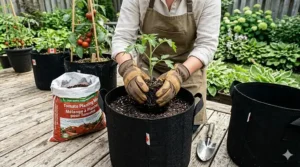
Here’s a technique that outdoor gardeners use but container growers often miss: bury 50-75% of your tomato seedling’s stem when transplanting. Remove lower leaves and plant the stem horizontally in a shallow trench if needed, then bend the growing tip upward. Buried stem segments develop adventitious roots all along their length, potentially doubling your plant’s root mass.
Why this matters in containers: Limited soil volume means you need maximum root density to support heavy fruit production. A tomato plant with roots throughout 80% of available soil (deep burial) vastly outperforms one with roots in just 40% of soil (shallow planting). The difference becomes obvious by mid-July when deep-rooted plants continue thriving while shallow-rooted plants yellow and decline.
Canadian timing note: If you’re transplanting in late May or early June when soil is still cool, deep burial helps. Buried stems sit in the warmest soil layer (top 10-15 cm heats fastest), accelerating root development during our precious warm weeks.
Watering Realities: Daily Attention Required
Fabric bags dry faster than plastic pots—this is intentional design preventing root rot, but it demands more frequent watering. Expect to water daily during July-August heat, possibly twice daily if bags sit in full sun on heat-absorbing concrete or asphalt. Morning watering is ideal, but don’t skip afternoon water if leaves show wilt.
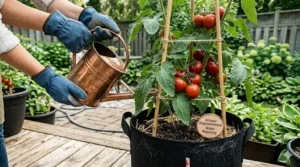
The finger test beats any schedule: Push your finger 5 cm (2 inches) into the soil near the bag edge. If it’s dry at that depth, water thoroughly until liquid runs from the bottom. If it’s still moist, skip watering. This prevents both drought stress and overwatering—two extremes that trigger blossom end rot.
Moisture retention tricks for busy Canadians: Add mulch (5 cm of straw or wood chips) to the soil surface after planting. This reduces evaporation by 30-40%, cutting watering frequency from twice daily to once daily during peak heat. For week-long absences, move bags to partial shade and set up a drip irrigation timer—available on Amazon.ca for $30-50 CAD and worth every penny for vacation peace of mind.
Fertilization Strategy: Feeding Container Tomatoes
Container soil loses nutrients faster than garden beds because every watering leaches minerals through the drainage holes. Start with slow-release granular fertilizer mixed into your potting mix at planting time (follow package rates). Then supplement with liquid fertilizer every 10-14 days once flowering begins.
Canadian-friendly fertilizer approach: Use balanced 10-10-10 liquid fertilizer diluted to half-strength twice as often, rather than full-strength monthly. This provides steady nutrition without the salt buildup that stresses plants in containers. Our municipal water in many cities (Calgary, Regina, Saskatoon) is already hard with dissolved minerals—adding heavy fertilizer doses can push electrical conductivity too high, burning roots.
The calcium question: Blossom end rot (black spots on tomato bottoms) stems from calcium deficiency, but it’s rarely due to calcium absence in soil. Usually the problem is inconsistent watering disrupting calcium uptake. Maintain even moisture levels—this matters more than adding extra calcium supplements.
Support Systems: Staking Container Tomatoes
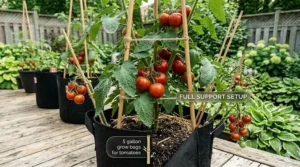
Every tomato in a 5 gallon bag needs support, even “determinate” bush varieties. Fabric bags are too light to anchor tall plants against wind—a loaded indeterminate tomato can top 1.5-2 metres tall with 5-8 kg of fruit. That’s a sail waiting to tip over in a summer storm.
Support options for containers: Tomato cages work if they’re tall enough (120 cm minimum) and you anchor them. Drive the cage legs through the bag fabric into the ground below, or tie the cage to deck railings. Alternatively, use bamboo stakes (180 cm length) driven through the bag and 30 cm into the ground beneath. Tie the main stem loosely every 20-25 cm as it grows.
For Canadian windswept conditions (Prairie balconies, anywhere in Newfoundland): Double-stake your plants or use heavier cages than you think necessary. I’ve seen properly staked tomatoes survive 60 km/h winds that toppled unstaked bags across balconies.
Determinate vs. Indeterminate: Variety Selection for 5 Gallon Bags
Choosing between determinate and indeterminate tomato varieties might seem like botanical trivia until you’re dealing with a 2-metre vine trying to escape a 5 gallon bag on your balcony. Understanding the growth habit differences helps you match variety to container size and your available space.
Determinate Tomatoes: Bush Types for Compact Spaces
Determinate tomatoes (also called “bush” tomatoes) grow to a predetermined height—usually 60-120 cm—set all their fruit within a 2-3 week window, then decline. Think of them as annual crops: plant them, they fruit, they’re done. Varieties like ‘Patio Princess’, ‘Bush Early Girl’, and ‘Celebrity’ fall in this category.
Why these work brilliantly in 5 gallon bags: Their compact size means less staking complexity, and their concentrated fruit set is perfect for Canadians dealing with short growing seasons. If you’re in zone 3 or 4 where frost can hit in early September, determinates that ripen everything by mid-August make sense. You’re not babying plants through fall trying to ripen late fruit.
The harvest trade-off: That condensed ripening is fantastic if you’re making sauce or salsa—you get 5-8 kg of tomatoes in three weeks, perfect for a weekend canning session. Less ideal if you want fresh tomatoes on salads from July through September. For season-long harvests, you’d need to plant multiple determinate varieties staggered by planting date.
Indeterminate Tomatoes: Vining Giants
Indeterminate varieties grow continuously until frost kills them, producing fruit clusters at intervals up the main stem. Popular types include ‘Cherokee Purple’, ‘Brandywine’, ‘Sun Gold’ cherry tomatoes, and most heirlooms. They easily reach 2-2.5 metres in Canadian summers and produce fruit from late July through September.
Container growing challenges: These need serious support—cages, sturdy stakes, or even trellising against walls. The trade-off for this extra work is exceptional flavour (most heirlooms are indeterminate) and continuous harvest. One well-managed indeterminate plant can yield 10-15 kg over the season versus 5-8 kg from a determinate.
Making indeterminates work in bags: Prune to 1-2 main stems rather than letting them bush out. This concentrates energy into fewer, larger fruits and keeps growth manageable. Remove suckers (shoots emerging between main stem and branches) weekly. For Canadian conditions, top the plant (pinch off the growing tip) in early August, forcing it to ripen existing fruit before frost rather than continuing to set new flowers that won’t mature.
My Canadian Zone Recommendations
Zones 3-4 (short season, frost risk through June 10): Favour determinates or early-maturing indeterminates like ‘Early Girl’ (52 days to maturity). The compressed growing window (June 10-September 10 = 90 days) doesn’t give late-maturing heirlooms enough time.
Zones 5-6 (moderate season, last frost late May): Mix both types. Grow 2-3 determinates for early season and preserving, plus 1-2 indeterminates for continuous fresh eating through September.
Zone 7 (long season, coastal areas): Indeterminates shine here. Your frost-free period often extends into October, giving slow-maturing heirlooms time to reach their full flavour potential.
Common Mistakes Canadian Gardeners Make with Grow Bags
After helping container gardeners across Canada troubleshoot failures for the past decade, I’ve seen the same errors repeated in every province. Here are the mistakes that cost you harvests and how to avoid them.
Mistake 1: Overcrowding Bags with Multiple Plants
The most frequent error: planting 2-3 tomato seedlings in a single 5 gallon bag because “more plants = more tomatoes.” The math fails catastrophically. Tomato roots need 15-20 litres of soil per plant to develop properly. Cramming three plants into 19 litres means each gets roughly 6 litres—barely enough for a pepper plant, insufficient for tomatoes.
What actually happens: Plants compete for water and nutrients, leading to stunted growth, poor fruit set, and increased disease pressure. Three tomatoes in one bag might produce 6 kg total. Three tomatoes in separate bags produce 15-20 kg combined. You’ve tripled your harvest by using three bags instead of one.
Exception for herbs: You can grow multiple basil, cilantro, or parsley plants in a 5 gallon bag because their root systems are far less aggressive. But tomatoes? One plant per 5 gallon bag, non-negotiable.
Mistake 2: Forgetting About Bag Mobility
One genius advantage of fabric bags is portability—you can chase sunlight, escape hail, or bring plants indoors before frost. Yet most gardeners plant their bags and never move them again, missing opportunities to optimize growing conditions.
Canadian applications: Start tomatoes on south-facing balconies in May for maximum heat. Move to shadier spots in July if temperatures consistently hit 32°C+ (yes, Calgary and Toronto, I’m looking at you). On September 15 when frost threatens, move bags to a covered porch or garage for an extra 2-3 weeks of ripening.
The movement technique: Use a furniture dolly or wheeled plant caddy under bags weighing more than 15 kg. Trying to drag or carry a fully-planted bag stresses handles and risks spilling soil. For balcony growers: measure your door width before buying bags—some 12″ diameter bags barely fit through standard 30″ doorways when you’re trying to bring them inside.
Mistake 3: Ignoring pH Drift in Container Soils
Garden soil buffers pH naturally through interaction with minerals and organic matter in the ground. Container mixes isolated in fabric bags can drift acidic over time, especially if you’re using peat-heavy potting mixes and fertilizing regularly. Tomatoes prefer pH 6.0-6.8; when container pH drops below 5.5, nutrient lockout begins even if fertilizer is present.
Canadian municipal water factor: Calgary’s water pH hovers around 8.0-8.5 (alkaline), which can actually buffer acidic soil drift. Toronto’s water sits at 7.2-7.6 (neutral to slightly alkaline). Vancouver’s exceptionally soft water (pH 6.8-7.2) provides less buffering. Know your local water chemistry.
Simple pH management: Test container soil mid-season with an inexpensive pH meter or test strips (under $15 CAD on Amazon.ca). If pH has dropped significantly, add a tablespoon of dolomitic limestone to the soil surface and water in. If pH is rising (rare but possible with alkaline water), amend with sulfur or use acidic liquid fertilizers.
Mistake 4: Treating All Tomatoes the Same
‘Patio Princess’ and ‘Brandywine’ are both tomatoes, but they require completely different management in containers. Determinate compact varieties tolerate 10-15% less water and fertilizer than vigorous indeterminate vines. Cherry tomato clusters set heavily and need extra calcium to prevent splitting. Paste tomatoes like ‘Roma’ handle heat stress better than slicing varieties.
Read your seed packet or transplant tag for specific variety needs, not just generic “tomato” advice. Canadian seed companies like William Dam Seeds and Veseys often include cold-climate specific growing notes that American sources omit.
Mistake 5: End-of-Season Neglect
In September when nights dip below 10°C, most Canadian gardeners give up and compost their tomato plants while fruit is still green. With minimal effort, you can extend harvests 3-4 weeks and ripen those green tomatoes.
The frost protection approach: Cover bags with frost cloth or old bedsheets on nights forecasting 0-2°C. This traps enough ground heat to protect plants. After 3-4 nights of near-frost, harvest all remaining fruit—even if green—and ripen indoors on countertops.
Green tomato ripening: Tomatoes will ripen off the vine once they’ve reached “mature green” stage (full-size, pale green colour, starting to show faint colour change). Place them in cardboard boxes, single layer, somewhere around 18-21°C. They’ll ripen over 2-3 weeks, giving you fresh tomatoes into late October.
FAQ: Your 5 Gallon Grow Bag Questions Answered
❓ How many tomato plants fit in a 5 gallon grow bag?
❓ Can I reuse potting mix in fabric grow bags from year to year?
❓ Do fabric grow bags work in Canadian winters for overwintering perennials?
❓ How do I clean and store fabric grow bags between seasons in Canada?
❓ What's the best fertilizer schedule for tomatoes in 5 gallon fabric bags in Canada?
Conclusion: Your Path to Container Tomato Success
5 gallon grow bags have democratized tomato growing for Canadian gardeners who thought fresh, homegrown flavour was reserved for those with backyard space. Whether you’re working with a 6th-floor balcony in Vancouver, a suburban patio in Mississauga, or a front stoop in Halifax, these breathable fabric containers deliver the root environment tomatoes need to thrive in our challenging climate.
The bags I’ve covered range from budget-friendly options like the Indo 4-pack ($25-35 CAD) perfect for new growers testing the waters, to premium VIVOSUN bags ($40-45 CAD) that survive 5+ Canadian winters when properly cared for. Your choice depends on scale (4 plants versus 20), budget, and how long you plan to use the same bags. For most Canadian gardeners, the Gardzen 20-pack offers the sweet spot between quality and per-bag cost—around $3 CAD each with bulk pricing.
What separates successful container tomato growers from frustrated ones isn’t the bag brand—it’s understanding how fabric containers behave differently than ground-planted tomatoes. Daily watering during summer heat, proper fertilization to replace leached nutrients, and variety selection matched to your hardiness zone (determinates for zones 3-4, indeterminates for zones 6-7) make the difference between 2 kg of tomatoes and 12 kg per plant.
For Canadian-specific success, remember these three principles: Start with quality potting mix, not garden soil. Maintain consistent moisture to prevent blossom end rot that plagues container tomatoes in our temperature-variable summers. And leverage fabric bag mobility—move plants to chase sun, escape frost, or optimize temperature through our short but intense growing season.
Your homegrown tomatoes, warm from the afternoon sun on your balcony railing, will taste nothing like the pale supermarket versions shipped from Mexico in February. That’s the reward for understanding how 5 gallon grow bags work with Canadian conditions rather than against them.
Recommended for You
- Large Raised Beds Under $200 Canada: 7 Best Value Picks 2026
- 7 Best Large Raised Garden Beds for Vegetables Canada 2026
- 7 Best 4×8 Raised Garden Beds Canada 2026
Disclaimer: This article contains affiliate links. As an Amazon Associate, I earn from qualifying purchases. If you purchase products through these links, we may earn a small commission at no additional cost to you.
✨ Found this helpful? Share it with your friends! 💬🤗
