
In This Article
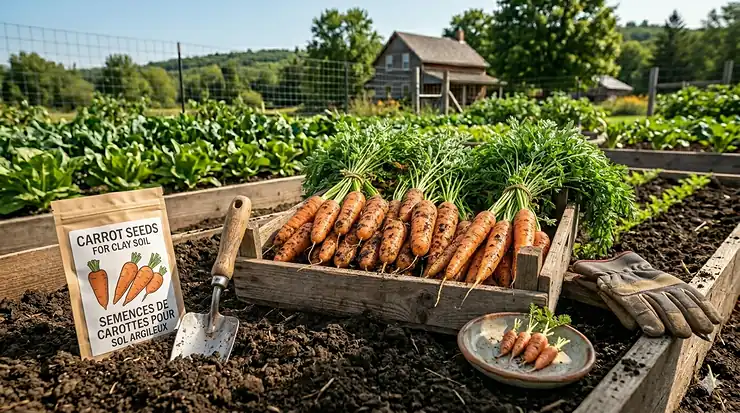
If you’ve ever pulled a stubby, forked carrot from your Canadian garden and wondered what went wrong, you’re not alone. Clay soil is the silent saboteur behind countless disappointing harvests across provinces from British Columbia to Ontario. The tiny, tightly-packed particles in clay create an almost impenetrable barrier that stops carrot roots dead in their tracks.
Here’s the reality: when a carrot root hits dense clay, it either gives up entirely or twists into those bizarre multi-legged formations that look nothing like the straight beauties at your local grocery store. The root is trying to expand, but the soil simply won’t budge. It’s like asking someone to do push-ups in a straitjacket.
But here’s the good news — you don’t need to replace all your soil or give up on homegrown carrots. The secret lies in choosing the right varieties. Certain heirloom and hybrid carrot seeds have evolved specifically to thrive in heavy, compacted conditions. These stocky, short-rooted champions can push through what would stop their long-rooted cousins cold.
Growing your own carrots matters more than ever for Canadian families. Statistics Canada reports that only 28.6% of Canadians consume fruits and vegetables five or more times daily, well below recommended levels. Fresh, homegrown carrots packed with beta-carotene and fibre offer an easy path to better nutrition.
In this guide, you’ll discover seven carrot varieties that Canadian gardeners swear by for clay soil success, complete with real product availability on Amazon.ca, current CAD pricing, and actionable strategies to finally harvest carrots you’ll actually want to eat. Whether you’re gardening in the dense soils of Saskatchewan or the heavy clay found throughout Southern Ontario, these varieties deliver.
Quick Comparison Table
| Carrot Variety | Root Length | Days to Maturity | Best For | Price Range (CAD) |
|---|---|---|---|---|
| Danvers 126 | 6-8″ | 70-75 days | Heavy clay, storage | $11-$25 |
| Scarlet Nantes | 6-7″ | 60-70 days | Sweet flavour, containers | $8-$18 |
| Chantenay Red Core | 5-6″ | 65-70 days | Compact soil, juicing | $9-$20 |
| Rainbow Blend | 6-7″ | 65-75 days | Visual appeal, kids | $10-$22 |
| Thumbelina | 1-2″ round | 60-70 days | Containers, shallow soil | $12-$20 |
| Oxheart (Guerande) | 4-5″ wide | 75-85 days | Severe clay, large yield | $13-$23 |
| Royal Chantenay | 5-7″ | 68-75 days | All-purpose, freezing | $10-$19 |
💬 Just one click – help others make better buying decisions too!😊
Top 7 Carrot Seeds for Clay Soil: Expert Analysis
1. Danvers 126 Carrot Seeds – The Clay Soil Workhorse
Danvers 126 is the undisputed champion for Canadian gardeners battling heavy clay. This heirloom variety, originally bred in Massachusetts during the 1870s and refined in the 1940s, produces blocky, tapered roots that don’t need to penetrate deep soil to reach full size.
Key Specifications:
- Root length: 6-8 inches (15-20 cm)
- Maturity: 70-75 days
- Colour: Deep orange
Price: $11.63-$25 CAD (depending on seed quantity)
What sets Danvers 126 apart is its vigorous top growth that can actually break through surface crusting that stops other varieties cold. Canadian buyers consistently praise its reliability in challenging conditions. One Alberta gardener noted these produced “the most uniform carrots I’ve grown in 15 years of fighting prairie clay.”
✅ Excellent for storage (up to 6 months)
✅ High yields (15-20 carrots per square foot)
✅ Strong shoulders prevent green tops
❌ Takes slightly longer to mature
❌ Can be too large for small containers
Available on Amazon.ca through various Canadian seed suppliers
2. Scarlet Nantes Carrot Seeds – Sweet Canadian Favourite
The Scarlet Nantes variety has been a Canadian garden staple since the 1880s, and for good reason. This fast-growing carrot produces cylindrical, coreless roots with fine-grained flesh that’s perfect for fresh eating and juicing.
Key Specifications:
- Root length: 6-7 inches (15-18 cm)
- Maturity: 60-70 days (matures earlier than most)
- Type: Nantes-type, cylindrical
Price: $8-$18 CAD
What makes Scarlet Nantes special for clay soil is its ability to produce sweet, crisp carrots even when conditions aren’t perfect. Canadian seed companies specifically recommend this variety for newer gardeners working with heavy soils. The roots resist forking better than standard Nantes varieties when grown in amended clay.
✅ Matures a full week ahead of most varieties
✅ Exceptionally sweet flavour
✅ Perfect for succession planting every 2-3 weeks
❌ Requires more consistent moisture
❌ Shorter shelf life than Danvers types
Available on Amazon.ca in both conventional and organic certified versions
3. Chantenay Red Core Carrot Seeds – The Dense Soil Specialist
Chantenay Red Core dates back to the 1830s and remains one of the most reliable choices for gardeners facing compacted earth. This variety produces stocky roots with broad shoulders that can muscle through soil other carrots simply can’t handle.
Key Specifications:
- Root width: 2-3 inches (5-8 cm)
- Root length: 5-6 inches (13-15 cm)
- Maturity: 65-70 days
Price: $9-$20 CAD
Canadian gardeners appreciate how Chantenay varieties tolerate compacted soil better than longer types. The roots grow outward rather than downward, making them ideal for shallow beds or areas where you haven’t fully amended the soil yet. Ontario container gardeners report excellent success with this variety in fabric grow bags 30 cm deep.
✅ Tolerates compacted soil exceptionally well
✅ Excellent for juicing (sweet, meaty texture)
✅ Large healthy tops make harvesting easy
❌ Wider shape requires more spacing
❌ Not as sweet when harvested too young
Available on Amazon.ca from multiple Canadian suppliers
4. Rainbow Blend Carrot Seeds – Colourful Clay Champion
If you want to get kids excited about homegrown vegetables, Rainbow Blend delivers visual drama alongside reliable performance. This mix typically includes Atomic Red, Cosmic Purple, Solar Yellow, Lunar White, and traditional orange varieties.
Key Specifications:
- Root length: 6-7 inches (15-18 cm)
- Maturity: 65-75 days (varies by colour)
- Blend: 4-5 different colour varieties
Price: $10-$22 CAD
Each colour brings slightly different growing characteristics, but they’re all selected to handle less-than-perfect soil. The purple varieties contain anthocyanins (powerful antioxidants), while yellow carrots are high in lutein. Health Canada recognizes carrots as an excellent source of vitamin A, which helps maintain eyesight, skin health, and immune function. Canadian customers report that the blend performs well across different soil types, though individual colours may mature at different rates.
✅ Multiple nutritional profiles in one planting
✅ Makes harvesting exciting for families
✅ Organic certified options available
❌ Colours mature at different times
❌ Some colours (white) less visible underground
Available on Amazon.ca in both organic and conventional seed packets
5. Thumbelina Carrot Seeds – Round Clay Problem-Solver
Thumbelina turns the carrot growth problem sideways — literally. This 1992 All-America Selections winner produces golf-ball-sized round carrots that grow outward instead of downward, completely bypassing the depth issues that plague clay gardeners.
Key Specifications:
- Size: 1-2 inches (2.5-5 cm) diameter
- Maturity: 60-70 days
- Shape: Round (like a radish)
Price: $12-$20 CAD
Where Thumbelina really shines is in containers and raised beds with limited depth. Canadian apartment gardeners report successful harvests in pots as shallow as 20 cm. The thin skin requires no peeling, making them perfect for roasting whole or serving as crudités. Kids love their baby-carrot appearance.
✅ Thrives in containers and shallow soils
✅ Perfect for rocky or problematic ground
✅ Thin skin, no peeling needed
❌ Lower yield per square foot
❌ Must harvest at correct size or they get woody
Available on Amazon.ca from specialty vegetable seed suppliers
6. Oxheart (Guerande) Carrot Seeds – The Heavy Clay Specialist
When your clay soil feels like concrete, Oxheart is your answer. This French heirloom produces massive, heart-shaped roots that can weigh up to one pound each. The wide, blocky shape means these carrots don’t need to push deep into stubborn subsoil.
Key Specifications:
- Shape: Heart-shaped, very wide
- Weight: Up to 1 pound (450g) per carrot
- Maturity: 75-85 days
Price: $13-$23 CAD
Oxheart carrots look almost triangular, more like beets than traditional carrots. But don’t let the unusual appearance fool you — they’re sweet, crunchy, and store exceptionally well. Canadian farmers with heavy clay report this variety outperforms everything else when soil improvement isn’t possible. One Saskatchewan grower noted: “These are the only carrots that give me consistent results in virgin prairie clay.”
✅ Handles the heaviest, worst soils
✅ Huge individual carrots (great for soups/stews)
✅ Excellent storage capabilities
❌ Requires significant spacing (8″ apart)
❌ Longer maturity time
Available on Amazon.ca and through Canadian heirloom seed companies like Bright Bush Farm
7. Royal Chantenay Carrot Seeds – The All-Purpose Canadian Classic
Royal Chantenay rounds out our list as the most versatile option for Canadian gardeners. This variety produces reliable, stocky V-shaped roots with strong shoulders that make harvesting from clay soil significantly easier.
Key Specifications:
- Root length: 5-7 inches (13-18 cm)
- Shoulder width: Up to 2 inches (5 cm)
- Maturity: 68-75 days
Price: $10-$19 CAD
The strong greens on Royal Chantenay can withstand a good yank, which matters more than you’d think when pulling carrots from sticky clay. This variety excels at canning and freezing, making it ideal for Canadian gardeners who preserve their harvest. It won’t bolt prematurely in spring plantings and stores beautifully in cool cellars.
✅ Strong tops for easy clay-soil harvesting
✅ Excellent for canning and freezing
✅ Reliable across different Canadian climate zones
❌ Not quite as sweet as Nantes types
❌ Needs room to develop width
Available on Amazon.ca from Mountain Valley Seed Company and other suppliers
✨ Don’t Miss These Exclusive Deals!
🔍 Take your vegetable gardening to the next level with these carefully selected carrot seeds available in Canada. Click on any highlighted product above to check current pricing and availability on Amazon.ca. These varieties will help you create authentic garden harvests your family will love!
Understanding Clay Soil: Why Most Carrots Fail
Clay soil presents unique challenges that go beyond mere hardness. The microscopic flat particles in clay pack together so tightly they leave almost no air pockets. When a developing carrot root encounters a dense pocket of clay, it faces a choice: stop growing or attempt to push through.
Most long carrot varieties choose to stop, resulting in stunted roots. Carrots (Daucus carota) have been cultivated for thousands of years, but modern varieties still struggle in compacted earth. Others try to force their way through and end up forked or twisted into bizarre shapes. According to research from the University of Saskatchewan’s College of Agriculture, carrots prefer sandy loam or loam soil, but shorter varieties can be successfully grown in heavy clay when planted in raised beds.
The real issue isn’t just compaction — it’s the combination of density, poor drainage, and tendency to form hard crusts when dry. Clay becomes brick-like after rain, making it nearly impossible for tiny carrot seedlings to break through the surface. This is why many Canadian gardeners report seeds germinating but seedlings never appearing.
Working clay soil when wet is one of the worst mistakes you can make. It destroys soil structure and creates hard clumps that persist for years. The solution is timing your soil work for when clay is dry enough to crumble but still moist enough to be workable — a narrow window that experienced gardeners learn to recognize.
How Clay Affects Carrot Root Development
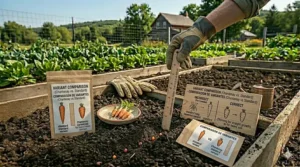
When a carrot grows in ideal sandy loam, the root expands uniformly, pushing aside loose particles as it lengthens. The soil offers just enough resistance to keep the root straight while providing space for expansion. In clay, this delicate balance disappears.
Dense clay doesn’t move aside — it pushes back. The carrot root encounters resistance, and since it can’t expand in one direction, it tries to grow in multiple directions. This creates forking. If the root hits a rock or especially hard clay pocket, it diverts around it, creating those characteristic twisted shapes.
Moisture fluctuations make things worse. Clay holds water like a sponge but drains poorly. During wet periods, carrot roots can crack or split. During dry spells, the soil becomes so hard that roots simply stop growing. Achieving consistent moisture in clay takes careful attention to watering schedules.
Temperature also plays a role. Clay soils warm up more slowly in spring than sandy soils, delaying germination by weeks. Canadian gardeners in Northern climates often lose valuable growing days waiting for clay beds to become warm enough for planting. This is why raised beds filled with improved soil are so popular in regions with heavy clay and short growing seasons.
Soil Preparation Strategies for Canadian Clay Gardens
Success with carrots in clay starts months before you plant a single seed. The first step is testing your soil pH. Carrots prefer slightly acidic to neutral soil (pH 6.0-6.8), and clay often skews toward alkaline. A simple soil test kit from any Canadian garden centre will tell you where you stand.
If you need to lower pH, work in elemental sulphur or acidic compost in fall. Raising pH requires agricultural lime. Both amendments take time to work through heavy clay, which is why fall preparation for spring planting is ideal. Breaking up clay requires organic matter — lots of it. Work in compost at a ratio of at least one-third compost to two-thirds native soil.
For the top 20-25 cm of soil where carrot roots develop, this means significant amendment. Till or dig when soil is dry enough to crumble, breaking up every clump you find. Remove rocks and debris as you work. This initial breaking and amending is labour-intensive but essential.
Canadian gardeners in areas with severe clay often skip in-ground planting entirely, opting for raised beds at least 30 cm deep filled with purchased garden soil or a custom blend. While more expensive upfront, this approach guarantees results and saves years of soil improvement work. For those committed to improving existing beds, the process typically takes 2-3 seasons of regular compost additions before carrots grow without issues.
Best Planting Practices for Short Root Varieties
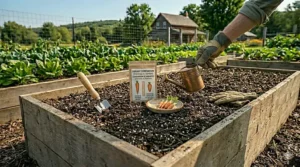
Short-rooted carrot varieties for clay soil need different handling than their long-rooted cousins. Start by preparing shallow furrows no deeper than 0.5 cm. Carrot seeds are tiny and need light to germinate — bury them too deep and they’ll never emerge from heavy soil.
Mix carrot seeds with fine sand before sowing (ratio 1 part seed to 3 parts sand). This helps you distribute the tiny seeds more evenly and marks where you planted. The sand also helps prevent soil crusting around germinating seeds. Space your furrows 30 cm apart to allow room for root expansion and air circulation.
After sowing, cover seeds with a thin layer of vermiculite or very fine compost rather than native clay soil. This light covering prevents crusting while maintaining moisture. Water immediately with a gentle mist setting — never a strong stream that could wash seeds away or create compaction.
For the critical 2-3 week germination period, keep the soil surface consistently moist. In Canadian summer heat, this might mean light watering twice daily. Some gardeners lay damp burlap over seeded rows, removing it immediately when green shoots appear. This keeps moisture consistent without forming a crust.
Timing Your Planting for Canadian Climate Zones
Canadian gardeners work with dramatically different frost dates across the country. In Southern Ontario, you can often plant carrots in early April. In Northern Alberta, late May is more realistic. Check your local frost date calendar and plan to sow short-season varieties 2-4 weeks before your last expected spring frost.
Carrots tolerate light frost, making them excellent for early spring planting. However, soil temperature matters more than air temperature. Wait until soil reaches at least 7°C, with 13-18°C being ideal. A simple soil thermometer (available at any Canadian Tire or garden centre) eliminates guesswork.
For fall crops in Canadian gardens, count backward from your first expected fall frost. Most short varieties need 60-75 days to mature. Subtract this from your frost date, then add 2 weeks for slower fall germination. This gives you your planting window. Fall carrots often taste sweeter because cooler soil temperatures encourage sugar storage.
Succession planting every 2-3 weeks from spring through mid-summer provides continuous harvest rather than one overwhelming crop. However, avoid planting during the hottest weeks of July and August when germination becomes difficult and soil dries quickly. In most Canadian zones, your last planting should happen by mid-July for harvest before hard frost.
Container Growing: The Clay Soil Workaround
If amending clay soil feels overwhelming, containers offer an immediate solution. Round varieties like Thumbelina thrive in pots as shallow as 20 cm. Chantenay types do well in 30 cm deep containers, while even Danvers can succeed in 40 cm deep fabric grow bags.
✨ Ready to Start Your Carrot Success Story?
🥕 Browse the proven varieties above and select the perfect match for your Canadian garden. Each seed packet linked delivers tested genetics that handle clay soil challenges. Check current availability and seasonal discounts on Amazon.ca today!
Choose containers with excellent drainage holes — carrots absolutely cannot tolerate waterlogged conditions. Fill with a quality vegetable potting mix or create your own blend: 40% peat moss or coconut coir, 40% compost, and 20% perlite or vermiculite for drainage. This mix provides the loose, friable texture carrots love.
Container carrots need more frequent watering than in-ground plantings because pots dry out faster. During hot Canadian summers, daily watering may be necessary. However, consistency matters more than frequency. Fluctuating moisture causes cracking and splitting. Consider self-watering containers if you struggle with consistent watering schedules.
Feed container carrots with diluted liquid fertilizer every 2-3 weeks, using a balanced or slightly lower-nitrogen formula (too much nitrogen produces big tops and small roots). Harvest by gently pulling when shoulders show good colour. Container-grown carrots from quality potting mix will be the straightest, most uniform carrots you’ve ever grown — a stark contrast to clay-soil battles.
Common Mistakes Canadian Gardeners Make
The biggest mistake is choosing the wrong variety. Those gorgeous 25 cm long Imperator carrots sold at grocery stores need deep, perfect soil. In clay, they become twisted disasters. Stick with short, stocky varieties specifically bred for difficult soil conditions.
Over-fertilizing ranks second. Fresh manure or high-nitrogen fertilizers cause excessive top growth and forked, hairy roots. Carrots are light feeders. If you’ve amended clay soil with compost, they’ll have plenty of nutrition without additional feeding.
Working wet clay destroys soil structure for years. Wait until clay is dry enough to crumble when squeezed. If it forms a sticky ball, it’s too wet. If it’s completely dusty and hard, it’s too dry. The perfect moment is when it forms a loose ball that crumbles with light pressure.
Inconsistent watering creates the perfect storm for poor results. Deep watering once weekly is better than shallow watering daily. Carrots follow moisture downward, so deep watering encourages straight growth. Frequent shallow watering keeps roots near the surface and promotes weak, forked development.
Finally, many Canadian gardeners plant too densely and never thin. Crowded carrots compete for space and nutrients, producing small, misshapen roots. Thin ruthlessly when seedlings reach 8 cm tall, leaving 5-8 cm between plants depending on variety. Use the thinned baby carrots in salads.
Companion Planting for Clay Soil Gardens
Companion planting helps carrots in multiple ways. Radishes germinate quickly and can be mixed with carrot seeds. They break up soil crusts, making it easier for slower-germinating carrot seedlings to emerge. Harvest the radishes before they compete with developing carrots.
Onions and carrots make excellent neighbours. Onions repel carrot rust flies, a common pest across Canadian gardens. The strong onion scent masks the carrot smell that attracts these pests. Plant onion sets in rows alternating with carrot rows for maximum protection.
Aromatic herbs like sage and rosemary also confuse carrot pests. These perennials can border your carrot beds year after year, providing ongoing protection without replanting. However, avoid planting carrots near dill or parsnips, as they attract similar pests and diseases.
Tomatoes benefit from carrot proximity — some gardeners report improved tomato yields when carrots grow nearby. The dense carrot foliage can suppress weeds around tomato plants while the deep tomato roots don’t compete with shallow carrot roots. This pairing works particularly well in raised beds where space is limited.
Avoid planting carrots where potatoes, celery, or other root crops grew the previous season. These plants attract similar pests and deplete similar nutrients. Practice a 3-4 year rotation to prevent pest and disease buildup and maintain soil fertility.
Harvesting and Storage Tips for Canadian Growers
Harvest timing dramatically affects flavour. Most short varieties taste best when roots reach 1.5-2 cm diameter. Larger isn’t always better — overmature carrots become woody and lose sweetness. Gently brush aside soil from the top of a few carrots to check size without disturbing the entire row.
For storage varieties like Danvers 126 and Royal Chantenay, wait until after the first light frost. Cold temperatures trigger carrots to convert starches to sugars, dramatically improving sweetness. However, harvest before ground freezes solid or you’ll need a pickaxe to extract your crop.
Loosen clay soil around carrots before pulling to prevent breakage. A garden fork inserted 10 cm away from the row and gently levered upward works well. Grasp carrot tops at the base (not the greens, which can tear off) and pull with steady pressure. In very heavy clay, you may need to dig entire sections rather than pulling individual carrots.
After harvest, remove tops immediately — they draw moisture from roots. Brush off loose soil but don’t wash carrots destined for storage. Washing removes the protective layer that prevents spoilage. Store in perforated plastic bags in your refrigerator’s crisper drawer or in damp sand in a cool (0-4°C) cellar.
Properly stored Danvers and Chantenay varieties can last 4-6 months, providing fresh Canadian-grown carrots well into winter. Check stored carrots monthly and remove any showing soft spots or mould to prevent spread to healthy roots.
FAQ
❓ Can you really grow carrots in pure clay soil without amendments?
❓ Which carrot variety matures fastest for short Canadian growing seasons?
❓ How deep should raised beds be for short carrot varieties in Canada?
❓ When is the best time to plant fall carrots in Ontario?
❓ Do organic carrot seeds perform differently than conventional in clay soil?
✨ Transform Your Clay Garden Today!
🌱 Don’t let another growing season pass with disappointing carrot harvests. The seven varieties featured in this guide are specifically selected for Canadian clay soil conditions. Click any highlighted product name above to view current prices on Amazon.ca and start your journey to straight, sweet carrots. Your garden’s transformation begins with the right seeds!
Conclusion: Your Path to Clay Soil Carrot Success
Growing carrots in Canadian clay soil doesn’t have to end in frustration. The key is working with your soil’s limitations rather than fighting against them. Short, stocky varieties like Danvers 126, Chantenay, and Thumbelina are specifically adapted to handle the challenges that clay presents.
Start with proper soil preparation — this investment pays dividends for years. Choose varieties matched to your soil type and growing conditions. Practice consistent watering and resist the urge to over-fertilize. Most importantly, be patient with both your soil and yourself. Even experienced gardeners face learning curves when transitioning to clay-friendly varieties.
The satisfaction of pulling your first straight, sweet carrot from previously impossible clay soil makes the effort worthwhile. These aren’t just vegetables — they’re proof that with the right knowledge and varieties, Canadian gardeners can succeed in any soil type. Your garden doesn’t need perfect sandy loam to produce excellent carrots. It just needs the right seeds and proper techniques.
This season, choose at least two varieties from this list and give them a fair trial. You’ll discover which performs best in your specific soil and climate zone. By next year, you’ll be the neighbour everyone asks for carrot-growing advice.
Recommended for You
- 7 Best Vegetable Seed Starter Kit Canada Beginners 2026
- 7 Best Cucumber Seeds for Containers Canada 2026
- 7 Best Pea Seeds for Short Growing Season Canada 2026
Disclaimer: This article contains affiliate links to Amazon.ca. If you purchase products through these links, we may earn a small commission at no additional cost to you.
✨ Found this helpful? Share it with your friends! 💬🤗
