
In This Article
If you’re ready to transform your backyard into a productive food-growing space, a 4×8 raised garden bed might be exactly what you need. This isn’t just another gardening trend—it’s a practical solution that addresses the unique challenges Canadian gardeners face, from our short growing seasons to unpredictable spring weather and harsh winters.
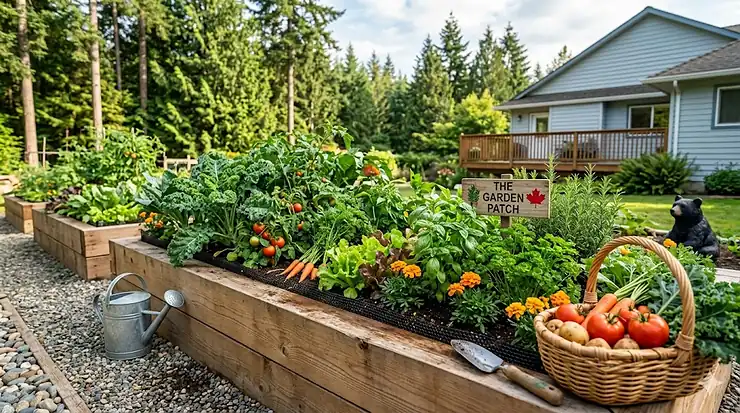
A 4×8 raised garden bed provides 32 square feet (roughly 3 square metres) of prime growing space, which translates to enough room for a diverse mix of vegetables without overwhelming beginners or taking over your entire yard. The four-foot width is particularly clever: you can comfortably reach the centre from either side without stepping on your soil and compacting it, which is crucial for maintaining healthy root systems throughout our growing season.
What most Canadian gardeners discover after their first season is that raised beds warm up faster in spring than in-ground gardens. This seemingly small advantage can extend your effective growing season by two to three weeks—significant when you’re working with the frost dates in Calgary, Halifax, or Winnipeg. The elevated soil drains better during our wet springs, prevents root rot, and gives you complete control over your soil quality, which matters immensely if you’re dealing with heavy clay or rocky native soil common across much of Canada.
Quick Comparison: Top 4×8 Raised Garden Beds Available in Canada
| Brand & Model | Material | Height | Price Range (CAD) | Best For | Canadian Availability |
|---|---|---|---|---|---|
| VEVOR 8x4x2ft Metal | Galvanized Steel | 61 cm (24″) | $180-$220 | Deep-rooted vegetables | Prime eligible |
| Land Guard 8x4x2ft | Galvanized Metal | 61 cm (24″) | $160-$200 | All-weather durability | Ships Canada-wide |
| Raised Garden Beds Canada Discover | RGB Steel Alloy | 91 cm (36″) | $350-$450 | Accessible gardening | Made in Canada |
| FOYUEE 8x4x1ft | Galvanized Steel | 30 cm (12″) | $120-$160 | Budget-conscious | Prime shipping |
| Frame It All Composite 4×8 | Composite Timber | 30 cm (12″) | $280-$340 | Aesthetic appeal | Available on Amazon.ca |
| Outsunny Cedar Wood 8×4 | Natural Cedar | 46 cm (18″) | $190-$240 | Traditional look | Prime eligible |
| VEGEGA 17″ Tall 4×8 | Corrugated Metal | 43 cm (17″) | $150-$190 | Modular expansion | Ships to Canada |
Looking at this comparison, the sweet spot for most Canadian gardeners falls in the $160-$220 CAD range for metal beds. The VEVOR and Land Guard models deliver exceptional value without sacrificing the 61 cm depth that accommodates carrots, parsnips, and other deep-rooted crops. Budget buyers gravitating toward the FOYUEE option should note the trade-off: at 30 cm depth, you’ll need to stick with shallow-rooted vegetables or invest in additional soil depth modifications. The Canadian-made Discover model from Raised Garden Beds Canada commands a premium, but if accessibility is your priority—those with mobility concerns or back issues—the 91 cm height eliminates bending entirely and justifies the extra investment.
💬 Just one click — help others make better buying decisions too! 😊
Top 7 4×8 Raised Garden Beds: Expert Analysis for Canadian Conditions
1. VEVOR Metal Raised Garden Bed 8x4x2ft
The VEVOR 8x4x2ft galvanized metal raised garden bed stands out as the most versatile option for Canadian gardeners who want serious growing depth without breaking the budget. At 61 cm (24 inches) tall, this bed provides ample soil volume for virtually any vegetable you’d want to grow—from shallow-rooted lettuce to deep-diving carrots that need 30-40 cm of loose soil to develop properly.
The corrugated Alu-Zinc coating withstands our freeze-thaw cycles better than standard galvanized steel, which matters during those unpredictable April days when temperatures swing from -5°C overnight to +15°C by afternoon. The open-bottom design promotes natural drainage—critical during spring snowmelt or heavy summer rains—while allowing beneficial earthworms to migrate up into your growing zone. What the product specifications won’t tell you is that this depth also provides excellent insulation for soil microbes during early spring, helping your soil biology wake up faster when you’re eager to get planting.
Canadian reviewers consistently praise the assembly process, noting that pre-drilled holes align properly and the included hardware actually fits (not always a given with overseas manufacturing). One Edmonton gardener mentioned the bed survived three winters of -30°C temperatures without warping or losing its powder coating. The dark grey finish absorbs solar heat efficiently, which extends your growing season on both ends—warming soil faster in spring and maintaining warmth into early autumn.
Pros:
✅ Exceptional depth accommodates all vegetable root systems
✅ Alu-Zinc coating resists Canadian weather extremes
✅ Open bottom prevents waterlogging during spring thaw
✅ Pre-drilled assembly takes approximately 45 minutes
Cons:
❌ Heavier than shallow beds—needs two people for positioning
❌ Sharp edges before rubber cap installation (assembly required carefully)
Price & Value: Around $180-$220 CAD depending on seasonal availability. For the depth and durability you’re getting, this represents outstanding value for Canadian conditions where winter survival isn’t optional.
2. Land Guard 8x4x2ft Galvanized Raised Garden Bed
The Land Guard 8x4x2ft brings Q195 galvanized metal construction with a wave-structure design that’s engineered specifically to handle lateral soil pressure—something that becomes relevant when you’re filling 61 cm of depth with dense, moisture-rich soil. The oval shape isn’t just aesthetic; it distributes outward force more evenly than rectangular corners, reducing the risk of bulging or joint failure over multiple freeze-thaw cycles.
At 0.78mm average thickness (reaching 1.56mm at reinforced points), this bed outperforms thinner competitors that tend to flex or dent when you’re working around the edges. Canadian gardeners dealing with clay-heavy soil will appreciate this rigidity—it maintains its shape even when filled with heavier soil mixes that might cause cheaper beds to bow outward. The upgraded arc-shaped edges eliminate the sharp-flake concern that plagues some budget metal beds, making this a safer choice for families with children helping in the garden.
What separates this from similar options is the double-layer anti-corrosion galvanizing process. While most beds use single-layer galvanization that can fail at weld points after 3-4 Canadian winters, Land Guard’s approach extends lifespan to 7-10 years even in harsh Prairie or Atlantic coastal conditions. One Halifax gardener noted the bed showed zero rust after two years of saltwater-tinged coastal fog—impressive performance that justifies choosing this over cheaper alternatives.
Pros:
✅ Wave structure resists soil pressure better than flat panels
✅ Double-layer galvanizing survives coastal salt exposure
✅ 0.78mm thickness prevents flexing with heavy clay soil
✅ Assembly time under 30 minutes
Cons:
❌ Oval shape limits companion planting patterns slightly
❌ Not currently available with colour options
Price & Value: Typically $160-$200 CAD. The engineering behind the wave structure and double galvanizing justifies the mid-range pricing, especially if you’re in coastal BC, Atlantic Canada, or anywhere road salt exposure is a concern.
3. Raised Garden Beds Canada Discover 36″ High
The Raised Garden Beds Canada Discover represents the premium end of the 4×8 market, and for good reason—this Canadian-designed bed addresses accessibility challenges that other manufacturers ignore. At 91 cm (36 inches) tall, this isn’t just a raised bed; it’s an elevated garden that eliminates bending, kneeling, or even stooping. For gardeners with mobility limitations, arthritis, or back issues, this height transforms gardening from a painful chore into an accessible pleasure.
Made from 1.00mm thick RGB Steel Alloy—a proprietary galvanized blend developed specifically for Canadian conditions—this bed incorporates decades of Canadian winter survival data into its metallurgy. The corrugated profile provides structural integrity without requiring corner posts or external bracing, and the beds come in two pieces with stainless steel hardware designed to resist rust even in high-moisture environments. This is a “buy once, garden for decades” investment that’s manufactured domestically in Canada, ensuring quality control and eliminating the overseas shipping carbon footprint.
The 91 cm height requires more soil volume—approximately 1.2-1.5 cubic metres (42-53 cubic feet)—which translates to higher initial fill costs. However, this depth provides unmatched insulation for root systems during temperature swings, and the thermal mass helps moderate soil temperature throughout the growing season. One Ontario gardener reported her lettuce continued producing two weeks later into autumn than her traditional in-ground bed, attributing the extended season to the soil’s thermal stability at that depth.
Pros:
✅ Eliminates all bending—accessible for all physical abilities
✅ Canadian-made with 20+ years of domestic engineering
✅ RGB Steel Alloy formulated for Canadian freeze-thaw cycles
✅ Lifetime expectancy exceeds 15-20 years
Cons:
❌ Requires 40-50% more soil volume than standard beds
❌ Premium pricing reflects domestic manufacturing
Price & Value: Around $350-$450 CAD. This is definitely an investment rather than an impulse purchase, but if accessibility matters—or if you’re planning to garden for the next two decades—the per-year cost becomes reasonable.
4. FOYUEE 8x4x1ft Galvanized Steel Garden Bed
The FOYUEE 8x4x1ft targets budget-conscious Canadian gardeners who want to start raised bed gardening without committing $200+ per unit. At 30 cm (12 inches) deep, this bed works perfectly for shallow-rooted crops—lettuce, spinach, radishes, bush beans, and most herbs—making it ideal if you’re focusing on salad greens and quick-harvest vegetables rather than deep-rooted crops.
The overlapping 10 cm panel design at corners adds structural strength that flat-jointed competitors lack, and the four support bars across the length prevent the long 2.4-metre sides from bowing outward when filled with moist soil. What makes this particularly appealing for Canadian beginners is the Prime shipping eligibility and straightforward assembly—most users report 20-30 minute setup time with basic hand tools. The galvanized coating handles Prairie winters adequately, though coastal gardeners should apply a rust-inhibiting spray to welded joints for maximum longevity.
The limitation here is obvious: 30 cm depth restricts your vegetable choices. Carrots, parsnips, potatoes, and tomatoes won’t reach their full potential at this depth. However, if you’re primarily growing leafy greens and planning a succession-planting strategy—sowing new lettuce every two weeks throughout summer—this depth actually works in your favour by warming faster in spring and requiring less initial soil investment. One Winnipeg gardener uses three FOYUEE beds for continuous salad production, replanting every 14 days from May through September.
Pros:
✅ Budget-friendly entry point for raised bed gardening
✅ Overlapping corners resist splitting during freeze-thaw
✅ Prime shipping across Canada
✅ Assembly under 30 minutes
Cons:
❌ 30 cm depth limits vegetable variety
❌ Not suitable for deep-rooted crops
Price & Value: Typically $120-$160 CAD. For dedicated leafy-green production or supplementary herb gardens, this represents excellent value. Just understand the depth limitation before purchasing.
5. Frame It All Composite 4×8 Raised Bed
The Frame It All Composite 4×8 appeals to Canadian gardeners who prioritize aesthetics alongside functionality. Made from recycled plastic and wood fiber composite, this bed mimics natural wood appearance without the rot, splinter, or maintenance issues that plague cedar or pine beds in Canadian climates. The composite material withstands our temperature extremes—from -40°C Prairie winters to +35°C summer heat—without warping, cracking, or requiring annual treatments.
At 30 cm (12 inches) standard height, this bed works well for most vegetables when positioned over decent native soil (the roots can extend down into the ground below). The modular design uses tool-free pivoting brackets that allow you to reconfigure your garden layout without disassembling everything—useful if you’re experimenting with different bed arrangements or need to relocate due to changing sunlight patterns. One Vancouver Island gardener mentioned converting her 4×8 into an L-shape configuration to maximize a corner space without purchasing additional materials.
The composite material offers a significant advantage over wood: it won’t leach tannins or chemicals into your soil, and it doesn’t attract insects or promote fungal growth like traditional lumber. However, it also doesn’t provide the natural insulation properties of thick wood, so soil temperatures fluctuate more dramatically between day and night—something to consider if you’re in a region with significant diurnal temperature swings. The material does heat up in direct summer sun, which can stress plants near the edges unless you mulch heavily.
Pros:
✅ Zero maintenance—no sealing, staining, or rot concerns
✅ Modular brackets enable garden reconfigurations
✅ Recycled materials align with sustainability values
✅ Attractive wood-grain appearance
Cons:
❌ Less thermal insulation than solid wood or metal
❌ Higher initial cost than basic metal alternatives
Price & Value: Around $280-$340 CAD. The premium reflects the composite manufacturing process and modular bracket system. If longevity without maintenance is your priority, this justifies the investment.
6. Outsunny Cedar Wood 8x4ft Raised Bed
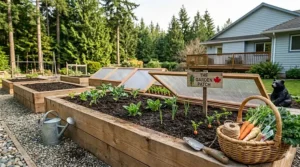
The Outsunny Cedar Wood bed brings traditional aesthetics with natural pest-resistant properties that cedar wood inherently provides. At 46 cm (18 inches) deep, this hits a functional middle ground—deep enough for most vegetables including tomatoes and peppers, yet not so deep that filling it requires a mortgage on soil purchases. Natural cedar contains oils that deter insects and resist decay better than pine or spruce, extending its functional lifespan in Canadian climates to 5-8 years before requiring replacement.
The wood construction offers superior insulation compared to metal beds, buffering soil temperatures during cold snaps and heat waves. This thermal stability benefits root development and extends the active growing period for cool-season crops like lettuce and spinach into warmer months. One Calgary gardener noted that her cedar bed’s lettuce remained productive three weeks longer than her friend’s metal bed, which she attributed to the wood’s ability to shade and cool the soil edges during July heat.
The aesthetic appeal shouldn’t be underestimated—cedar ages to an attractive silvery-grey patina that blends naturally with garden landscapes, unlike the industrial appearance of metal beds. However, maintenance becomes necessary around year 4-5 when the wood begins checking (developing small cracks). Applying a food-safe sealant annually extends lifespan, but this maintenance requirement might not suit everyone. The wood also becomes a habitat for beneficial insects, which can be viewed as either positive (supporting ecosystem health) or negative (attracting unwanted bugs near your vegetables).
Pros:
✅ Natural cedar oils resist decay and pests
✅ Superior thermal insulation moderates soil temperature
✅ Attractive traditional aesthetic ages gracefully
✅ Creates habitat for beneficial garden insects
Cons:
❌ Requires maintenance after 4-5 years
❌ Eventually needs replacement (8-10 year lifespan)
Price & Value: Typically $190-$240 CAD. For gardeners who value natural materials and traditional appearance, cedar remains the classic choice despite requiring eventual replacement.
7. VEGEGA 17″ Tall 4×8 Modular Metal Bed
The VEGEGA 17-inch (43 cm) represents the modular approach to raised bed gardening, offering 10-in-1 configuration flexibility that lets you adapt your garden layout as your needs evolve. The 0.6mm thick Zn-Al-Mg coated sheets provide 4-7 times longer lifespan than wood or plastic beds, with the coating specifically engineered to dissipate heat from steel edges—preventing the soil-scorching issue that affects some thin-gauge metal beds during peak summer sun.
The 43 cm height occupies the Goldilocks zone: deep enough for substantial root systems including carrots and beets, yet not so deep that you’re pricing yourself out with soil costs. Canadian reviewers particularly appreciate the modular expansion capability—you can connect multiple units to create L-shapes, U-shapes, or even circular configurations, adapting to irregular yard spaces or changing garden ambitions. One Saskatchewan gardener started with a single 4×8 unit and has since connected three more to create a 12×8 arrangement that feeds her family of five throughout summer.
The included rubber top seal eliminates the sharp-edge concern that deters some gardeners from metal beds, making this safe for households with children who want to participate in gardening. The material withstands temperatures down to -35°C (the manufacturer claims -76°C, though few Canadian locations test that limit), and the corrugated structure prevents deformation even when filled with water-saturated heavy clay soil. Winter survival isn’t a concern—leave it filled with soil and mulched, and it’ll emerge ready for planting when the snow melts.
Pros:
✅ Modular design enables garden layout evolution
✅ Zn-Al-Mg coating extends lifespan to 15+ years
✅ Rubber seal prevents sharp-edge injuries
✅ Handles extreme cold without structural damage
Cons:
❌ Sage green and off-white colour options limited on Amazon.ca
❌ Modular connectors sold separately for expansions
Price & Value: Around $150-$190 CAD. The modular flexibility and extended lifespan make this an excellent choice for gardeners who anticipate expanding their raised bed gardens over several seasons.
How Much Soil for 4×8 Raised Bed: The Canadian Gardener’s Calculator
One of the most common mistakes new raised bed gardeners make is underestimating soil volume requirements—or worse, overbuying and wasting money on excess material. Let’s break down the mathematics simply, using the specific example of a 4×8 raised bed at various depths, so you’ll know exactly what to order.
The formula is straightforward: Length × Width × Depth = Volume. For a 4×8 bed (which measures 1.2m × 2.4m in metric), you’ll multiply those dimensions by the depth. Here’s where Canadian gardeners need to pay attention: most soil is sold either by cubic feet in bags or by cubic yards/cubic metres for bulk delivery.
Standard Depth Calculations
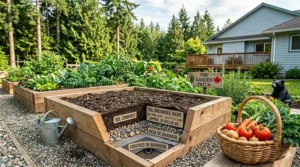
12-inch (30 cm) Depth: This shallow depth works for lettuce, spinach, radishes, and herbs. You’ll need approximately 32 cubic feet (0.91 cubic metres). If you’re buying bagged soil in the common 1.5 cubic foot size, that’s roughly 21-22 bags. At current Canadian prices, expect to invest $140-$180 CAD in soil depending on whether you’re buying basic garden soil or premium blends.
18-inch (46 cm) Depth: This mid-range depth accommodates most vegetables including tomatoes, peppers, and carrots. You’ll need approximately 48 cubic feet (1.36 cubic metres). That translates to 32 bags of 1.5 cubic foot soil, costing $210-$280 CAD. At this volume, consider bulk delivery—many Canadian landscape suppliers deliver 1.5 cubic yards for $120-$180 CAD, significantly undercutting bagged costs.
24-inch (61 cm) Depth: This deep option supports everything from shallow lettuce to deep parsnips in a single bed. You’ll need approximately 64 cubic feet (1.81 cubic metres). That’s 43 bags of 1.5 cubic foot soil, which would cost $280-$360 CAD. Bulk delivery becomes the obvious choice here—2 cubic yards delivered typically runs $160-$240 CAD depending on your province and soil quality.
Optimizing Your Soil Mix for Canadian Conditions
According to Agriculture and Agri-Food Canada research, healthy garden soil requires balanced organic matter to support the microbial life that feeds your plants. The recommended blend for raised beds combines 40% topsoil (provides mineral content and structure), 40% compost (delivers nutrients and improves water retention), and 20% coarse sand or perlite (ensures drainage).
This 40-40-20 mixture creates a “fluffy” soil that compacts less than pure topsoil, but you’ll still experience 15-25% settling after the first season as compost breaks down and soil particles nestle together. Smart Canadian gardeners order 20% extra soil initially or plan to top-dress with 5-8 cm of fresh compost each spring. This annual top-dressing replenishes nutrients extracted by last season’s crops and maintains optimal bed depth despite natural settling.
One cost-saving strategy for deep beds involves the “lasagna layering” method: fill the bottom 15-20 cm with coarse organic material like branches, wood chips, or autumn leaves, then layer your 40-40-20 mix on top. The bottom layer decomposes slowly over several seasons, gradually releasing nutrients upward while reducing your initial soil investment by 25-30%. This works particularly well in beds deeper than 46 cm where plants won’t root all the way to the bottom during their first season.
4×8 Raised Bed Vegetable Layout: Maximizing Your Canadian Growing Season
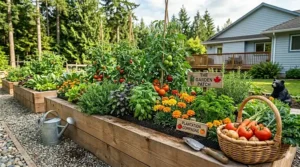
Planning your vegetable layout transforms a 4×8 raised bed from a simple container into a productive food system that feeds your family throughout summer. The key to success lies in understanding companion planting, succession sowing, and how to maximize your limited space within Canada’s abbreviated growing season.
North-South Orientation Strategy
Position your 4×8 bed with the long axis running north-south whenever possible. This orientation ensures both east and west sides receive equal sunlight exposure throughout the day, preventing one side from shading the other during peak growing hours. Plant taller crops—tomatoes, pole beans, climbing peas—on the north end where they won’t cast shadows on shorter vegetables. Place low-growing crops like lettuce, radishes, carrots, and beets toward the south end where they’ll receive full sun exposure all day.
Zone-Based Planting Layout
Divide your 4×8 bed mentally into three zones running the length of the bed:
West Edge (30 cm wide): Taller, trellised crops that won’t shade the center. Consider pole beans, climbing peas, or cucumber vines trained vertically. In late June, succession-plant a second round of beans to extend harvest into September.
Center Strip (1.2m wide): Your production powerhouse. Plant two rows of tomatoes (spacing plants 60 cm apart), interplanted with basil between each tomato (the basil deters aphids and improves tomato flavour). Alternatively, dedicate this space to three rows of lettuce succession-planted every two weeks, providing continuous salads from late May through September.
East Edge (30 cm wide): Fast-maturing, shade-tolerant crops. Spinach, radishes, and Asian greens thrive here, and you can plant them early (mid-April in southern Canada) since they tolerate light frost. As these spring crops finish in mid-June, replant with bush beans for a late-summer harvest.
Companion Planting Combinations
Certain vegetable combinations actively support each other’s growth through pest deterrence, nutrient sharing, or structural support. Plant carrots between onion rows—the onions deter carrot rust flies while carrots repel onion flies. Interplant lettuce around the base of tomato plants; the lettuce appreciates the afternoon shade from tomato foliage during July heat, and it’ll be harvested before tomatoes need the space for sprawling growth.
Marigolds planted at corners aren’t just decorative—they deter aphids, whiteflies, and tomato hornworms through their pungent scent. One Manitoba gardener reports zero tomato hornworm damage since she started bordering beds with marigolds five years ago, compared to hand-picking 20-30 hornworms weekly before implementing this strategy.
Best Soil for 4×8 Raised Bed: Building Fertility That Lasts Decades
Selecting appropriate soil for your raised bed represents the most important decision you’ll make—more impactful than which vegetables you plant or even the bed material itself. Poor soil limits plant potential no matter how much you water or fertilize, while rich, living soil produces abundant harvests with minimal intervention.
Understanding the Three Soil Components
Topsoil (40% of mix): Provides mineral content, structure, and weight that anchors plant roots. Look for screened topsoil that’s been sieved to remove rocks, sticks, and clay clumps. Avoid “fill dirt” which is subsoil scraped from construction sites—it lacks the organic matter and beneficial organisms found in genuine topsoil. In Canada, expect to pay $30-$50 CAD per cubic yard for quality screened topsoil from landscape suppliers.
Compost (40% of mix): Delivers nutrients, improves water retention, and feeds the soil microorganism community that transforms raw organic matter into plant-available nutrients. Municipal compost (derived from yard waste programs) costs $20-$35 CAD per cubic yard and works adequately, though it may contain weed seeds. Premium mushroom compost or aged cattle manure ($40-$60 CAD per cubic yard) provides richer nutrients without weed seed concerns.
Drainage Material (20% of mix): Coarse sand, perlite, or vermiculite prevents compaction and ensures excess water drains away from roots. Coarse sand ($35-$50 CAD per cubic yard) works well and integrates seamlessly with topsoil. Perlite ($25-$40 CAD per 4 cubic foot bag) weighs less, making it preferable for rooftop or balcony gardens where weight matters, but it tends to float to the soil surface over time.
Testing and Adjusting pH for Canadian Soils
Canadian native soils tend toward acidic pH (5.5-6.0) in most provinces due to coniferous forest coverage and acid rain deposition over decades. Most vegetables prefer slightly acidic to neutral pH (6.2-7.0), so testing your soil mix before planting prevents nutrient lockout issues down the line. Basic pH test kits ($12-$18 CAD at garden centres) provide adequate accuracy for home gardening.
If your soil tests below 6.0, incorporate dolomitic limestone at 1-2 cups per 1.2 cubic metres of soil to raise pH gradually. If your soil tests above 7.5, work in sulphur or peat moss to lower pH toward the ideal range. One critical point Canadian gardeners often overlook: pH adjustments take 4-6 weeks to complete as minerals dissolve and integrate, so test and adjust in autumn for spring planting, or test in early April for late May planting.
Common Mistakes When Buying a 4×8 Raised Garden Bed in Canada
Mistake #1: Ignoring Winter Performance Data
The biggest error Canadian gardeners make is selecting beds based on summer performance reviews without verifying winter survival. That attractive powder-coated metal bed might look perfect in July, but does the coating crack at -25°C? Will the corner joints separate during freeze-thaw cycles? Always check reviews from Canadian buyers specifically mentioning winter survival, particularly from buyers in climate zones similar to yours (Prairie winters differ dramatically from coastal BC winters).
Mistake #2: Underestimating Soil Costs
Many enthusiastic beginners budget carefully for the bed itself but experience sticker shock when they discover soil costs often equal or exceed the bed price. A 61 cm deep 4×8 bed requires 1.8 cubic metres of soil costing $160-$240 CAD delivered in bulk, or $280-$360 CAD in bags. Factor soil cost into your initial planning, and remember that you’ll need to top-dress with 5-8 cm of compost annually ($30-$50 CAD per bed) to maintain fertility.
Mistake #3: Neglecting Drainage Planning
Canadian gardeners face two distinct drainage challenges: spring snowmelt flooding, and summer thunderstorm deluges. Position your raised bed on ground that naturally drains away from foundations, and avoid low spots where water pools after rain. If your only option is a low-lying area, create a 10 cm gravel base underneath the bed before adding soil. This investment ($30-$50 CAD in gravel) prevents waterlogged soil that drowns plant roots and promotes fungal diseases.
Mistake #4: Choosing Depth Based on Price Instead of Plants
Opting for a 30 cm shallow bed to save $50 CAD seems reasonable until you discover it won’t accommodate the carrots, parsnips, or potatoes you wanted to grow. Match bed depth to your vegetable ambitions from the start. If budget is tight, start with one properly deep bed (46-61 cm) that supports all crops rather than two shallow beds that limit your options. You can always expand with additional beds next season.
Mistake #5: Ignoring Accessibility and Ergonomics
Consider who will be maintaining this garden and what physical limitations they face. If bending or kneeling causes pain, spending extra for a 76-91 cm tall bed prevents gardening from becoming a painful chore that you abandon mid-season. Conversely, if you’re a healthy adult who enjoys being close to the soil, don’t overspend on unnecessary height—invest those savings in better soil or additional beds instead.
4×8 Raised Bed Vegetable Layout for Canadian Climate Success
Early Spring Layout (Late April – May)
This is when cold-hardy vegetables that tolerate light frost excel. Plant the following in your 4×8 bed as soon as soil can be worked (typically late April in southern Ontario, early May on the Prairies):
North End: Snap peas planted along a trellis (space plants 8 cm apart). These produce heavily for 4-6 weeks before heat stress causes production to decline.
Centre Section: Three rows of leaf lettuce spaced 15 cm apart, with radishes interplanted between lettuce plants. The radishes mature in 25 days while lettuce is still small, creating succession harvest.
South End: Spinach (two rows) and green onions (one row). Both tolerate frost and produce quickly before summer heat causes bolting.
Main Summer Layout (June – August)
After your cool-season crops finish, replant with heat-loving vegetables that define Canadian summer gardens:
North End: Two tomato plants on stakes, spaced 60 cm apart, with basil planted between them. The basil deters aphids and improves tomato flavour according to generations of gardening wisdom.
Centre Section: Bush beans planted in blocks rather than rows—space plants 10 cm apart in all directions. This increases yield per square metre and creates a canopy that shades soil and conserves moisture.
South End: Carrots and beets in alternating rows. Both root vegetables appreciate the consistent moisture that raised beds provide, and they mature in time for autumn harvest.
Fall Extension Layout (September – October)
As summer crops finish, replant with quick-maturing cold-tolerant vegetables that appreciate cooler temperatures:
Entire Bed: Broadcast-seed a mesclun mix (mixed baby greens) across the bed surface. These germinate quickly in cooler soil and produce salad greens until hard frost (late October to early November in most Canadian regions).
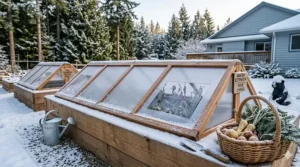
Add a simple hoop tunnel with row cover fabric, and you can extend harvest into December in milder areas like Vancouver or Halifax. One Victoria gardener reported harvesting arugula and mizuna greens through Christmas using this technique, supplementing her family’s salad needs when grocery prices peak.
FAQ: Your 4×8 Raised Bed Questions Answered
❓ How much does it cost to fill a 4x8 raised bed with soil in Canada?
❓ Can I use a 4x8 raised bed year-round in Canadian winters?
❓ What vegetables grow best in a 4x8 raised bed in Canada?
❓ Do I need a bottom on my raised garden bed in Canada?
❓ How deep should a 4x8 raised bed be for vegetables in Canada?
Conclusion: Start Your Canadian Garden Journey with Confidence
A 4×8 raised garden bed represents more than a simple backyard improvement—it’s your entry point into food security, connection with nature, and the profound satisfaction of eating vegetables you grew yourself. Canadian gardeners face unique challenges from our abbreviated growing season to extreme weather, but raised beds address these obstacles by providing control over soil quality, improved drainage during spring snowmelt, and faster soil warming that extends your planting window.
The seven beds reviewed here range from budget-friendly options like the FOYUEE at $120-$160 CAD to premium accessible designs like the Canadian-made Discover at $350-$450 CAD, ensuring there’s an appropriate choice regardless of your budget or physical needs. Focus on selecting a bed depth that matches your vegetable ambitions—don’t let a shallow budget choice limit your gardening potential for years to come.
Remember that your initial investment extends beyond the bed itself. Quality soil representing 40% topsoil, 40% compost, and 20% drainage material costs $160-$360 CAD depending on bed depth, but this foundation determines your success more than any other factor. Start with one properly filled bed this season, observe what works in your specific microclimate, then expand next year with the confidence of experience.
Canadian gardeners across provinces from Victoria to St. John’s are rediscovering the joy and practicality of growing their own food. Your 4×8 raised bed journey starts with a single decision—choose your bed, order your soil, and get ready to transform your backyard into a productive, beautiful food-growing space that nourishes both body and spirit.
✨ Don’t Miss These Exclusive Deals!
🔍 Take your raised bed gardening to the next level with these carefully selected products. Click on any highlighted item to check current pricing and availability on Amazon.ca. These tools will help you create authentic harvests your family will love!
Recommended for You
- 7 Best Elevated Planter Box on Wheels Canada 2026
- Best Elevated Garden Beds for Bad Backs Canada 2026
- 7 Best Plastic Raised Garden Beds Canada 2026
Disclaimer: This article contains affiliate links. As an Amazon Associate, I earn from qualifying purchases. If you purchase products through these links, we may earn a small commission at no additional cost to you.
✨ Found this helpful? Share it with your friends! 💬🤗
