
In This Article
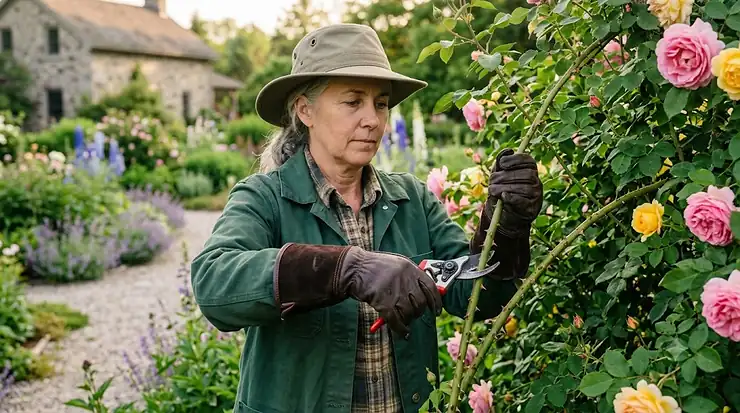
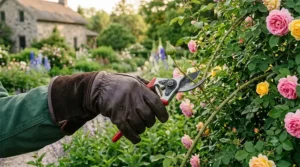
Anyone who has ever reached into a rose bush wearing the wrong gloves knows the particular sting of regret that follows. You feel the prick before you see it, and by the time you’ve pulled your arm back, there’s a thin red line tracking up your forearm like a warning you should have heeded ten minutes earlier. Rose pruning gloves thorn proof exist precisely because thorns don’t negotiate, and a cheap pair of fabric gardening gloves is about as useful against a mature hybrid tea cane as a paper umbrella in a hailstorm.
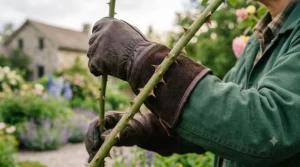
So what are they, exactly? Rose pruning gloves thorn proof are gauntlet-style gloves — typically leather, with an extended cuff covering the forearm — engineered with reinforced palms, fingertips, and thick hide to resist punctures from thorns, brambles, and other sharp garden growth. The “proof” part is relative (more on that honestly, later), but the right pair turns a wince-inducing chore into something closer to enjoyable.
This guide pulls from real product specs, genuine aggregated reviewer sentiment, and Canadian horticultural sources — including pruning guidance from the Canadian Rose Society — to walk you through seven solid options, what the marketing language actually means in practice, and how to choose without overpaying for features you won’t use. We’ll also dig into related needs — gloves for weeding and thorns, waterproof garden gloves, garden gloves for sensitive skin, puncture-resistant gloves, thick leather gardening gloves, and reinforced palm protection — because rarely does one glove do everything equally well.
Quick Comparison Table: Glove Materials at a Glance
Before diving into specific products, it helps to understand what the leather itself is doing for you. Not all “thorn proof” claims are created equal, and the hide type drives most of the difference in feel, durability, and price.
| Material | Puncture Resistance | Breathability | Best For |
|---|---|---|---|
| Goatskin leather | High (per millimetre) | Excellent | Fine motor tasks, sensitive skin |
| Pigskin leather | Moderate-High | Best of all leathers | Hot climates, all-day wear |
| Cowhide leather | Very High | Lower (stiffer) | Heavy bramble, thick cane work |
| Canvas + leather hybrid | High on palm only | High on sleeve | Mixed tasks, value seekers |
Goatskin earns its reputation among serious rose growers because it’s thin enough to preserve dexterity while still standing up to thorn pressure — a trade-off cowhide doesn’t make as gracefully. Cowhide wins on raw abrasion resistance and tends to last longest under heavy bramble-clearing, but it stiffens with use and can feel like wrestling a stiff envelope until it breaks in. If you’re choosing based on hand fatigue over a long pruning weekend, breathability matters more than most buyers initially assume — sweaty hands inside stiff leather lead to blisters long before any thorn does.
💬 Just one click — help others make better buying decisions too! 😊
💬 Found this comparison useful? One click to share it helps fellow gardeners avoid a scratched-up spring!
Top 7 Rose Pruning Gloves Thorn Proof: Expert Analysis
We researched real, currently available products across budget, mid-range, and premium tiers, prioritizing models with verifiable specs and genuine aggregated customer feedback rather than manufacturer copy alone. Here’s the quick-reference table before the full breakdowns.
| # | Product | Material | Cuff Length | Price Range (CAD) | Best For |
|---|---|---|---|---|---|
| 1 | Wells Lamont Rosetender | Grain leather + spandex back | Mid-forearm | C$35-C$50 range | Precision deadheading |
| 2 | Legacy Gardens Goatskin Gauntlet | A-grade goatskin | Elbow-length | C$30-C$40 range | Sensitive skin |
| 3 | NoCry Rose Pruning Gloves | Goatskin leather | Forearm | C$25-C$35 range | Women’s sizing, dexterity |
| 4 | HANDLANDY Pigskin Gauntlet | Pigskin leather | Elbow-length | C$20-C$30 range | Hot-weather pruning |
| 5 | COOLJOB Thorn Proof Gloves | Synthetic-leather blend | Forearm | Under C$25 | Budget, machine-washable |
| 6 | SLARMOR Cowhide Gauntlet | Full-grain cowhide | Elbow-length | C$22-C$32 range | Thick bramble clearing |
| 7 | Bellingham Glove C7352 | Cowhide palm + canvas sleeve | Forearm | C$25-C$35 range | Mixed weeding and pruning |
This spread interprets a simple truth: the “best” glove depends entirely on what your garden throws at you. A condo balcony with two potted miniature roses doesn’t need the same armour as a quarter-acre with hybrid teas, climbing brambles, and a stubborn hawthorn hedge.
1. Wells Lamont Rosetender
The standout feature here is the stretch-fit spandex back paired with a genuine grain leather palm — a combination that keeps the glove flexible where flexibility matters and tough where punctures actually land. The leather covers the entire palm, fingers, and fingertips, creating a dense barrier against rose thorns, while reinforced stitching at the palm heel and thumb saddle targets the two zones that fail first on cheaper gloves. In practice, this means you get noticeably more dexterity for snipping deadheads than you would from a stiffer all-leather glove, without sacrificing the puncture barrier where your hand actually grips canes.
What most buyers overlook about this model is that the gauntlet cuff runs a bit shorter than true elbow-length competitors — useful if you find longer cuffs bunch awkwardly at the elbow crease, less useful if you’re reaching deep into an overgrown bush. Reviewers consistently report that a single pair holds up through roughly two seasons of weekly pruning before the leather softens noticeably, which is solid longevity for a mid-priced glove. A common theme in feedback is praise for the cool, breathable feel during long sessions, thanks to the spandex back panel.
Pros: excellent dexterity for detail work; durable grain leather palm; breathable spandex back. Cons: shorter cuff than full elbow-length rivals; not ideal for waterproof garden gloves needs since the spandex panel isn’t water-resistant. Typically falls in the C$35-C$50 range — a reasonable value verdict for anyone doing precision rose work rather than heavy brush clearing.
2. Legacy Gardens Goatskin Gauntlet
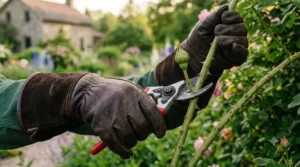
This glove’s standout move is choosing A-grade goatskin specifically for its skin-friendly qualities rather than maximum toughness alone — a deliberate trade-off that pays off for people whose hands react badly to stiffer hides. The double-stitched padding on the thumb, index, and middle fingers reinforces the three contact points that take the most abuse from rose canes, while the thinner goatskin (relative to cowhide) preserves enough flexibility for fine motor control like deadheading individual blooms.
Based on the spec comparison with cowhide alternatives, goatskin offers superior puncture resistance per millimetre of thickness, which is the honest explanation for why a thinner-feeling glove can still stop a thorn. This makes it a genuine contender for anyone searching specifically for garden gloves for sensitive skin, since the leather is chosen to avoid the sweating and rubbing irritation that lower-quality hides can cause. Aggregated reviewer sentiment frequently mentions the gloves staying comfortable through extended sessions, with occasional notes that very fine, long spikes (cactus spines rather than rose thorns) can still find their way through thinner sections.
Pros: genuinely comfortable for sensitive skin; strong dexterity; elbow-length coverage. Cons: less abrasion-resistant than cowhide for heavy brush; goatskin needs more careful conditioning to avoid drying out. Price typically sits in the C$30-C$40 range, fair value for the comfort trade-off if your hands are the limiting factor, not your budget.
3. NoCry Rose Pruning Gloves
The standout claim — reinforced leather offering roughly double the protection of a standard garden glove — checks out reasonably well against the spec sheet, since the palms and fingers carry visibly thicker reinforced panels than typical gardening gloves in this price bracket. Made from 100% natural goatskin leather, the glove balances the suppleness needed to handle pruning shears comfortably against the density needed to resist thorn punctures, which is the central tension every rose glove design has to solve.
Here’s what to weigh: this model is marketed toward women’s hand sizing but functions well for smaller-handed gardeners of any gender, and reviewers consistently note the fit runs true rather than oversized, unlike several competitors that “run large.” What the spec sheet won’t tell you, but reviewer patterns suggest, is that the gloves hold up particularly well for repeated, frequent use — daily deadheading through a full bloom season — rather than occasional, heavy-duty brush clearing, where cowhide options have an edge.
Pros: true-to-size fit; strong dexterity; reinforced fingertips genuinely puncture-resistant. Cons: forearm coverage is shorter than full elbow-length gauntlets; not positioned as a waterproof garden gloves option. Price generally lands in the C$25-C$35 range, solid value for regular rose maintenance.
4. HANDLANDY Pigskin Gauntlet
Pigskin is the standout choice here, and it’s a smart one: pigskin’s naturally porous hide structure makes it the most breathable of the common leather types, which matters enormously once temperatures climb. The elbow-length gauntlet cuff extends coverage to just below the elbow, addressing the most common rose-pruning injury site — the lower forearm — while reinforced, puncture-resistant padding sits across the palm and fingertips.
Reviewers consistently report success against rose thorns and similar barbed plants, with one detailed account describing three hours of brush-clearing work yielding only three or four minor punctures — a modest failure rate for sustained heavy use. A recurring complaint, however, is candid and worth noting honestly: because the double-layered reinforcement is concentrated on the palm and fingertips rather than the entire hand, thorns can occasionally punch through thinner zones, so this isn’t the glove to reach for blindly into the thickest part of an overgrown bush. Reviewers also praise the dries-soft-after-wet quality of pigskin, a genuine advantage if you’re caught pruning after a light rain.
Pros: best-in-class breathability; full elbow-length protection; comfortable for extended wear. Cons: thinner coverage outside reinforced zones; not a true waterproof garden gloves substitute. Price sits around C$20-C$30 range — strong value for hot-climate or long-session gardeners.
5. COOLJOB Thorn Proof Gloves
The standout practicality here is machine-washability, a feature most leather-heavy gauntlets simply can’t offer, paired with a long-sleeve padded design built specifically for puncture resistance against bush, blackberry, and cactus work. Independent hands-on testing from a UK gardening publication found these gloves puncture-resistant against both roses and blackberries while remaining comfortable to wear — a useful third-party data point beyond manufacturer claims.
Based on the spec comparison with leather-only alternatives, the synthetic-leather blend trades some longevity for easier care and a lower price point, which is exactly the right trade-off for gardeners who want gloves for weeding and thorns without babying a premium hide afterward. What most buyers overlook is that “puncture resistant” here leans more toward abrasion and scratch protection during general yard work — weeding, bramble pulling, brush clearing — than the surgical-grade thorn defence a goatskin gauntlet provides for precision rose work.
Pros: machine washable; genuinely budget-friendly; tested puncture resistance in independent reviews. Cons: less refined dexterity than premium leather; reinforcement leans general-purpose rather than rose-specific. Priced under C$25 for most listings — excellent value verdict for anyone whose garden chores extend well beyond roses alone.
6. SLARMOR Cowhide Gauntlet
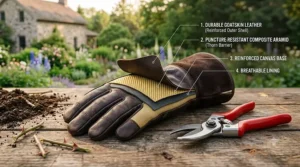
Full-grain cowhide is the standout material decision, and it’s the right call for anyone whose garden involves more bramble and bush-clearing than delicate deadheading. Made from carefully selected 100% cowhide leather, this model is positioned as softer and more breathable than typical heavy cowhide gloves while still delivering the abrasion resistance the hide is known for — a claim that held up in independent testing from a UK home and garden publication, which described the gloves as strong, comfortable, and “up to the challenge” of thorny garden plants.
The elbow-length gauntlet extends protection all the way to the elbow, with an extended cuff specifically protecting forearms from cuts and scratches during deep reaches into dense growth. Here’s the honest caveat that the same independent review flagged: customer feedback occasionally mentions thinner, longer spikes — think cactus needles or milk thistle rather than rose thorns — finding their way through, which lines up with the general rule that no leather glove is truly puncture-proof against every possible spine shape. As thick leather gardening gloves go, this is among the more genuinely substantial options in its price tier, and it represents some of the best reinforced palm protection available without stepping into premium pricing.
Pros: excellent abrasion resistance; full elbow coverage; independently tested performance. Cons: stiffer break-in period than goatskin; not vegan, which matters to some buyers. Price typically runs C$22-C$32 range, strong value for anyone tackling thick bramble regularly.
7. Bellingham Glove C7352
This is the lesser-known but genuinely high-quality pick on this list, manufactured by Bellingham Glove, a long-established work-glove brand now produced under Radians Safety. The standout design choice is a hybrid build: a reinforced grain cowhide palm paired with a canvas gauntlet sleeve rather than leather running the full arm length, which keeps costs down while still extending real coverage up the forearm.
Based on the spec comparison, this construction delivers stronger puncture and abrasion resistance than a standard short-cuff garden glove while costing less than a full-leather gauntlet of similar palm quality — a sensible trade-off if your gardening mixes rose pruning with general weeding and brush clearing rather than rose work exclusively. The canvas sleeve also helps keep exposed forearm skin covered when working near poison ivy or poison oak, though it’s worth being honest that this isn’t marketed or rated as a dedicated chemical barrier, so it shouldn’t be relied on as one. Available across five sizes from extra-small through extra-large, sizing runs more precisely than many one-size-fits-most competitors, and the manufacturer suggests sizing up slightly if you’re between two sizes for a more comfortable gauntlet fit.
Pros: trusted long-established manufacturer; precise five-size range; strong value for mixed-task gardens. Cons: canvas sleeve offers less puncture resistance than full leather; not a substitute for true waterproof garden gloves in sustained wet conditions. Price generally falls in the C$25-C$35 range — a smart pick if you want reinforced palm protection without paying for elbow-length leather you won’t always need.
✨ Don’t Miss the Right Pair for Your Garden!
🌹 Whatever your roses throw at you this season, the right gauntlet means fewer scratches and more time actually enjoying the blooms. Check current pricing and availability on any of the picks above, and look for the model that matches how you actually garden — not just how the packaging says you should.
Practical Usage Guide: Your First 30 Days With Thorn-Proof Gauntlets
A new pair of leather gauntlets rarely performs at its best straight out of the packaging, and treating the break-in period correctly extends the life of the glove considerably. For the first week, wear the gloves for shorter sessions — twenty to thirty minutes — to let the leather flex and mould to your hand shape rather than forcing a full day of pruning into stiff, unbroken hide. Goatskin and pigskin soften faster than cowhide, so if you’ve chosen a cowhide gauntlet, expect the adjustment period to run closer to two weeks of regular use before the glove stops feeling like it’s fighting your grip.
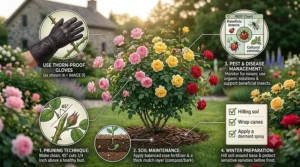
Maintenance during the first month matters more than most buyers expect. After any session involving moisture — morning dew, a light rain, sweaty hands — let the gloves air dry away from direct heat, since a radiator or dryer will crack leather fibres and shorten the glove’s working life dramatically. A light application of leather conditioner (mink oil or a beeswax-based product) every few weeks during regular use keeps the hide supple and adds a modest layer of water resistance, which matters if you don’t own a dedicated pair of waterproof garden gloves. A common first-month mistake is storing gauntlets crumpled in a garden bag or bucket; hanging them by the cuff, or laying them flat, prevents the creasing that eventually becomes a crack line — usually right at the high-stress point between thumb and palm.
Real-World Scenarios: Matching Gloves to Your Garden and Tasks
If you’re a condo-dweller with two potted hybrid teas on a balcony, a lighter goatskin glove like the Legacy Gardens or NoCry option makes more sense than an elbow-length cowhide gauntlet you’ll rarely need for full-reach work — dexterity for tight deadheading beats raw toughness when your “garden” is three square metres of containers.
If you’re clearing an overgrown property line tangled with wild rose, blackberry, and hawthorn — the classic case calling for gloves for weeding and thorns rather than precision pruning — a thicker cowhide option like SLARMOR or the canvas-and-cowhide Bellingham C7352 will outlast lighter leathers, since you’re fighting volume and abrasion as much as individual punctures. Budget-conscious gardeners doing occasional weekend yard work, meanwhile, are well served by the COOLJOB option: machine-washable, inexpensive, and tested to hold up against both roses and blackberries without the upkeep a premium hide demands.
Seniors or anyone managing arthritis or sensitive skin face a different calculus entirely. Softer, lighter goatskin with minimal seam bulk reduces grip strain, and a glove specifically marketed for skin sensitivity — rather than maximum thorn defence — is usually the right trade. The honest analysis here: nobody needs the toughest glove on the market; they need the toughest glove they can comfortably wear for the length of time their pruning actually takes.
How to Choose Rose Pruning Gloves Thorn Proof
Selecting the right pair comes down to matching a handful of decision points to your actual garden conditions, not chasing every feature listed on a product page. The Toronto Master Gardeners’ pruning guide is a useful companion read once you’ve got gloves sorted, since proper cutting technique reduces the number of stray cane snags you’ll face in the first place.
- Match cuff length to reach depth. If you regularly reach deep into the centre of a bush, prioritize elbow-length coverage over a shorter, more dexterous cuff.
- Pick leather type by task, not toughness alone. Goatskin for precision and sensitive skin, cowhide for abrasion and bramble clearing, pigskin for breathability in heat.
- Check reinforcement zones specifically. Look for double-stitched panels at the thumb saddle, palm heel, and fingertips — the three points that fail first under repeated thorn pressure.
- Consider frequency of use. Daily deadheading favours lighter, more breathable leather; occasional heavy clearing favours thicker, stiffer hide.
- Be realistic about water exposure. No leather glove is genuinely waterproof; if you garden after rain often, budget for regular conditioning or a canvas-hybrid option.
- Verify sizing charts before buying. Several brands run noticeably large or small, and an ill-fitting gauntlet loses both dexterity and protection at the wrist seam.
- Factor in skin sensitivity honestly. If sweating or rubbing irritation is a known issue, goatskin or pigskin will serve you better than stiffer cowhide.
Thick Leather, Puncture Resistance, and Reinforced Palm Protection: What the Specs Really Mean
Marketing copy throws around “puncture-resistant gloves” and “reinforced palm protection” almost interchangeably, but the two terms describe different engineering choices. Puncture resistance is primarily a function of hide thickness and density — thick leather gardening gloves resist a sharp point pushing straight through the material. Reinforced palm protection, by contrast, usually means an additional layer of material stitched over the base glove at specific high-contact zones, rather than uniform thickness across the entire hand.
What most buyers overlook is that these two features solve different problems. A thin goatskin glove with excellent fingertip reinforcement can outperform a uniformly thick but unreinforced cowhide glove specifically at the fingertip — the single most common thorn-contact point during pruning — while still losing on raw palm-heel toughness during heavier gripping tasks like hauling cut branches. The practical takeaway: read past the headline claim and look specifically at where reinforcement panels sit, since that detail predicts real-world performance far better than overall leather weight alone.
Waterproof Garden Gloves: Separating Marketing From Reality
Here’s an honest point worth stating plainly: very few genuinely waterproof garden gloves exist among thorn-proof gauntlets, because the leather construction that resists punctures is fundamentally different from the rubber or coated-nylon construction that resists water. Untreated leather absorbs moisture, which is why several reviewers across multiple product lines specifically note their gloves are “not recommended for wet weeding.”
What you can reasonably expect, and what’s worth budgeting for honestly, is water resistance rather than waterproofing. Regular leather conditioning with mink oil or a beeswax-based treatment adds a meaningful barrier against light moisture and morning dew, and canvas-and-leather hybrids like the Bellingham C7352 dry faster than full-leather gauntlets after getting damp. If your garden routine genuinely requires waterproof garden gloves — heavy rain, irrigation work, wet-soil weeding — a dedicated rubber-palmed glove is the more honest solution than expecting a thorn-proof leather gauntlet to pull double duty it was never built for.
Garden Gloves for Sensitive Skin: What Actually Helps
For gardeners specifically searching out garden gloves for sensitive skin, the leather choice matters more than almost any other spec. Goatskin’s natural lanolin content keeps the hide supple against skin without the rubbing irritation that drier, stiffer cowhide can cause over a long session, which is precisely why several manufacturers — Legacy Gardens among them — market goatskin specifically toward sensitive-skin buyers rather than maximum-toughness buyers.
Seam placement matters almost as much as material. A seam running directly across the second and third finger crease, a complaint noted in independent testing of at least one premium gauntlet, becomes genuinely uncomfortable for grip-heavy tasks over time, regardless of how soft the leather itself feels. If sensitive skin is your primary concern, prioritize a glove with minimal interior seaming and a lighter hide over one boasting maximum thorn defence — the toughest glove on the shelf does you no good if you can’t comfortably wear it through a full pruning session.
Common Mistakes When Buying Thorn-Proof Gardening Gloves
The most frequent mistake is buying based on toughness alone and ignoring fit — an oversized gauntlet, even in premium cowhide, loses dexterity and lets debris and the occasional thorn slip in at a loose wrist seam. A close second is assuming “thorn proof” means impervious; aggregated reviewer sentiment across nearly every product on this list mentions at least occasional puncture from particularly fine or long spikes, which is simply the nature of flexible leather rather than rigid armour.
A third common error is choosing cuff length based on price rather than reach — buyers regularly report being disappointed when a shorter, less-expensive cuff leaves the lower forearm exposed during the exact deep-reach pruning moments that cause the worst scratches. Finally, plenty of gardeners skip leather conditioning entirely, treating gauntlets as disposable rather than maintainable, which shortens a C$30 glove’s useful life to a single season when proper care could have stretched it to three or four.
Thorn-Proof Gauntlets vs Standard Gardening Gloves
| Feature | Thorn-Proof Gauntlet | Standard Garden Glove |
|---|---|---|
| Forearm coverage | Extended cuff to forearm/elbow | None — wrist length only |
| Puncture resistance | High (reinforced leather) | Low to moderate |
| Dexterity | Moderate (varies by hide) | High |
| Typical price (CAD) | C$20-C$50 range | Under C$15 |
| Best For | Roses, brambles, thorny shrubs | Light weeding, planting |
Looking at this comparison, the case for a dedicated thorn-proof gauntlet comes down almost entirely to forearm exposure: standard gardening gloves simply weren’t designed with rose canes or hawthorn in mind, and the wrist-length cut leaves exactly the area most vulnerable to a deep reach unprotected. The trade-off is real, though — you give up some fine dexterity, which matters if your gardening also involves seed planting or delicate transplant work, in which case keeping both a standard pair and a gauntlet pair on hand solves more problems than forcing one glove to do everything.
Safety and Hygiene: Sporotrichosis and Other Rose Garden Risks
There’s a genuine medical reason to take thorn protection seriously beyond simple comfort. Public Health Agency of Canada documentation on the fungus Sporothrix schenckii notes that the organism is associated with sporotrichosis, sometimes called “rose handler’s disease”, an infection that occurs when the fungus enters the body through a break in the skin — including thorn punctures sustained while pruning. While serious complications are uncommon and the infection is treatable, the basic prevention logic is straightforward: fewer punctures mean fewer entry points, which is the core practical argument for investing in genuinely puncture-resistant gloves rather than treating gauntlets as an optional accessory.
Beyond the fungal risk, the Canadian Rose Society’s own spring maintenance guidance reinforces good pruning hygiene more broadly, recommending that gardeners clear away pruned material and dead leaves promptly rather than letting clippings accumulate near the base of the plant, since old debris can harbour disease spores in addition to creating more opportunities for an unprotected hand to brush against a stray cane. Landscape Ontario’s rose pruning resource echoes the same point, noting that different rose types call for different cutting depths — another reason proper technique and proper gloves work together rather than as substitutes for one another. Pairing solid gauntlets with basic wound care — washing any scratch promptly with soap and water, even a minor one — covers the practical safety bases most rose gardeners never think to ask about.
Long-Term Cost & Maintenance
| Tier | Typical Price (CAD) | Expected Lifespan | Value Verdict |
|---|---|---|---|
| Budget (COOLJOB-type) | Under C$25 | 1 season heavy use | Best for occasional gardeners |
| Mid-range (HANDLANDY, NoCry, SLARMOR, Bellingham) | C$20-C$35 range | 1-2 seasons | Best overall value |
| Premium (Wells Lamont, Legacy Gardens) | C$30-C$50 range | 2+ seasons with care | Best for frequent rose work |
The math here favours mid-range and premium gloves more than the sticker price initially suggests. A C$45 premium gauntlet that lasts two full seasons with proper conditioning works out to roughly the same per-season cost as replacing a C$22 budget pair every year — and that’s before factoring in the reduced scratch count premium leather typically delivers. The exception worth noting honestly is the occasional gardener doing a handful of pruning sessions per year, for whom a budget pair genuinely makes more financial sense than premium leather that will outlast their actual usage by several seasons.
Frequently Asked Questions
❓ What are the best thorn proof gloves for pruning roses?
❓ Are leather gardening gloves waterproof?
❓ How do I know what size rose pruning gloves to buy?
❓ Can rose thorns cause infection?
❓ Are gauntlet gloves worth it for casual gardeners?
Conclusion
Choosing rose pruning gloves thorn proof really comes down to being honest about what your garden actually demands of you. A quarter-acre tangled with wild bramble calls for a different glove than two potted hybrid teas on a balcony, and no single product on this list is the universally “best” pick — only the best pick for a specific set of tasks, hand sensitivities, and budget constraints. What every option here shares is a genuine attempt to solve the same old problem: keeping a beautiful, thorny plant from drawing blood every time you try to care for it properly.
Whether you land on the precision-focused Wells Lamont Rosetender, the sensitive-skin-friendly Legacy Gardens goatskin gauntlet, or the budget-smart COOLJOB pair, the underlying advice stays the same — match cuff length to your reach, leather type to your task, and don’t skip the basic maintenance that turns a one-season glove into a three-season investment. For technique tips that pair well with any glove on this list, Montreal’s Space for Life pruning guide offers solid, climate-appropriate advice for Canadian growers. Your roses aren’t going to stop growing thorns, but with the right gauntlet, they don’t have to win quite so often.
Recommended for You
- Best Gardening Gloves in Canada 2026: 7 Top Picks Reviewed
- Best Left-Handed Pruning Shears in Canada 2026: 7 Top Picks
- Bypass vs Anvil Pruners: 7 Best Picks for Canadian Gardens 2026
Disclaimer: This article contains affiliate links. As an Amazon Associate, I earn from qualifying purchases. If you purchase products through these links, we may earn a small commission at no additional cost to you.
✨ Found this helpful? Share it with your friends! 💬🤗
