
In This Article
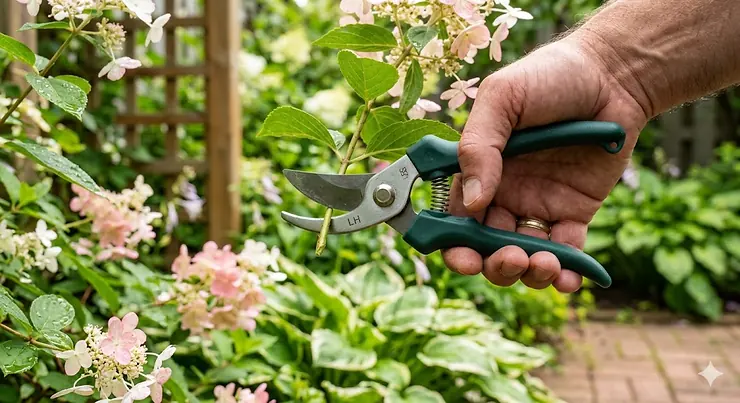
If you’ve ever walked away from a pruning session with tired, aching wrists and a nagging sense that something just wasn’t right, welcome to the club — the approximately 10% of Canadians who are left-handed and have spent years wrestling with tools built for someone else. Left-handed pruning shears aren’t just a nice-to-have novelty. They are a genuinely different tool engineered around a mirrored blade orientation, a reversed locking mechanism, and handle geometry shaped for a left-dominant grip. For anyone seriously tending a garden from Kelowna to Halifax, getting this right makes an enormous difference.
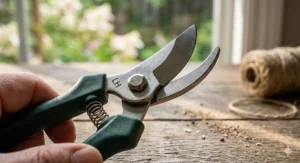
So, what exactly are left-handed pruning shears? In short, they are bypass or anvil pruners designed with the sharp cutting blade positioned on the left side of the bypass — rather than the right — so that a left-handed gardener sees and controls the cut line naturally, applies force through their dominant hand correctly, and achieves cleaner cuts with measurably less effort. Standard right-handed pruners, when used by a lefty, actually crush the stem on the “keeper” side and make a clean cut on the waste side — the exact opposite of what healthy plant pruning requires. Over seasons of repetitive use, this also translates to increased risk of repetitive strain injuries including tendonitis, carpal tunnel syndrome, and De Quervain’s tenosynovitis.
This guide covers 7 real products available to Canadian buyers — verified on Amazon.ca or through Canadian retailers that ship nationally — with CAD price ranges, expert commentary, and genuinely practical advice tailored to Canadian gardening conditions. Whether you’re managing a sprawling backyard in suburban Calgary after the spring thaw, trimming rose bushes on a Vancouver Island property, or deadheading perennials on a Toronto condo balcony, there’s a southpaw gardening solution here for you.
Quick Comparison: Best Left-Handed & Lefty-Friendly Pruning Shears in Canada
| Product | Type | Cut Capacity | Best For | Approx. Price (CAD) | Amazon.ca Available |
|---|---|---|---|---|---|
| Felco 9 | True Left-Hand Bypass | 25 mm (1 in) | Professionals, large hands | $100–$130 | ✅ Yes |
| Felco 10 | Left-Hand Rotating Handle | 25 mm (1 in) | Arthritis, high-volume cutting | $120–$150 | ✅ Yes (via CA retailers) |
| Fiskars Bypass Pruner (7934) | Ambidextrous Bypass | 16 mm (⅝ in) | Budget-conscious beginners | $30–$45 | ✅ Yes |
| Spear & Jackson 6459BS | True Left-Hand Bypass | 20 mm (¾ in) | Mid-range home gardeners | $40–$60 | ✅ Yes |
| Corona BP 3180D ClassicCUT | Ambidextrous Bypass | 25 mm (1 in) | Versatile all-rounders | $45–$65 | ✅ Yes |
| WORKPRO 8″ Bypass Pruner | Ambidextrous Bypass | 20 mm (¾ in) | Value-seekers, everyday use | $20–$35 | ✅ Yes |
| BETUREEIU G20 Titanium Pruner | Ambidextrous Bypass | 20 mm (¾ in) | Lightweight, rust-resistance | $25–$40 | ✅ Yes |
Looking at the table above, the clear split is between true left-handed tools (Felco 9, Felco 10, Spear & Jackson 6459BS) and ambidextrous designs that work reasonably well for lefties without being purpose-built. If you’re a casual gardener doing occasional light trimming, an ambidextrous bypass pruner gets you 80% of the way there. If you prune regularly — roses, fruit trees, ornamental shrubs — investing in a true left-hand bypass pruner will protect both your plants and your wrists over the long term. Canadian pricing tends to run 10–20% higher than equivalent US prices due to the exchange rate and import duties, but you avoid cross-border shipping fees, customs delays, and warranty complications that so often frustrate Canadians who order from Amazon.com.
💬 Just one click — help others make better buying decisions too! 😊
Top 7 Left-Handed Pruning Shears: Expert Analysis
1. Felco 9 Left-Handed Bypass Pruning Shears — Best Overall for Canadian Lefties
The Felco 9 is the benchmark by which every other left-handed pruning shear is measured, and for good reason. This Swiss-engineered masterpiece — manufactured in Les Geneveys-sur-Coffrane, Switzerland — features forged aluminium handles weighing just 245 g (0.54 lb), a precision-ground hardened carbon steel blade with 25 mm (1 in) cutting capacity, a sap groove to prevent sticking, a wire-cutting notch, and a micrometric screw adjustment that lets you tune the blade gap to your exact preference. The angled cutting head is specifically offset for a left-hander’s natural wrist position, meaning your forearm, wrist, and cut line all align the way nature intended.
What most Canadian buyers overlook about the Felco 9 is the total cost of ownership calculation. Yes, the upfront spend of around $100–$130 CAD is higher than a budget pair of ambidextrous shears. But every single component — blade, spring, bumper, screw, handle grips — is individually replaceable. The Felco 9 you buy this spring could still be in your tool shed in 2036 with just a few blade replacements and the occasional sharpening. That is a dramatically better ROI than cycling through $25 replacements every season or two. FELCO even maintains a Canadian operation (Pygar Canada Sales Ltd. in Bowmanville, ON) for warranty and repairs. For Canadian gardeners dealing with everything from spring-mud pruning sessions to late-autumn cleanup before the first frost, that local service presence matters.
Canadian buyers consistently report that the Felco 9 handles the heavy pruning of apple and pear trees particularly well — the wire-cutting notch comes in surprisingly handy for clearing old trellis wires left over from winters past. Available on Amazon.ca, Lee Valley Canada, and directly through FELCO Canada (canada.felco.com).
✅ Swiss precision, lifetime-repairable construction
✅ Perfect left-hand blade orientation and angled head
✅ Sap groove, wire notch, micrometric adjustment
❌ Premium price point ($100–$130 CAD)
❌ Designed for large hands; smaller-handed left-handers may prefer Felco 12 (right-hand) adapted or Felco 6
Price range: around $100–$130 CAD. Outstanding long-term value. Check current price and availability on Amazon.ca.
2. Felco 10 Left-Hand Rotating Handle Pruning Shears — Best for High-Volume Pruning & Arthritis
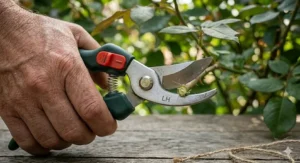
If the Felco 9 is the standard left-handed pruner, the Felco 10 is what you reach for when you have serious volume to cover. The defining feature here is the revolving handle — a rotating lower grip that spins with your squeezing motion rather than creating friction against your palm. According to FELCO’s own testing, this mechanism reduces cutting effort by up to 30%, which doesn’t sound dramatic until you’ve made your 400th cut of the morning and your forearm still feels fresh. The Felco 10 shares the same 25 mm (1 in) cutting capacity, forged aluminium handles, and replaceable parts as the rest of the Felco range, with the same left-hand blade orientation and angled head as the Felco 9.
For Canadian gardeners managing arthritis or recovering from repetitive strain, the Felco 10 is genuinely life-changing. The rotating handle breaks the repetitive friction cycle that standard pruners create with every squeeze. Many occupational therapists and certified hand therapists in Canada specifically recommend rotating-handle pruners for patients with De Quervain’s tenosynovitis or early-stage osteoarthritis who want to continue gardening. The soft-closing rubber shock absorbers also protect the wrist on the release stroke — something most budget pruners completely ignore.
This pruner is available through FELCO Canada’s official Canadian site and select Canadian garden retailers. Amazon.ca availability may vary by season; if out of stock, FELCO Canada ships nationally with reasonable delivery times even to more remote communities.
✅ 30% less cutting effort via rotating handle
✅ Ideal for arthritis, high-volume pruning, continuous use
✅ Same replaceable-parts ecosystem as all Felco tools
❌ Higher price ($120–$150 CAD range)
❌ Rotating handle takes a session or two to feel natural
Price range: $120–$150 CAD. Worth every dollar for anyone managing hand fatigue or joint conditions.
3. Spear & Jackson 6459BS Razorsharp Left-Handed Bypass Pruners — Best Mid-Range True Left-Hand Pick
The Spear & Jackson 6459BS is a name that flies under the radar for many Canadian buyers, but it deserves serious attention as a true left-hand bypass pruner in the $40–$60 CAD range. Spear & Jackson is a Sheffield-founded British brand with over 250 years of cutting tool heritage, and the 6459BS delivers a genuinely reversed blade layout specifically designed for left-hand use — not just marketing spin. The teflon-coated, stainless steel blade handles cuts up to roughly 20 mm (¾ in) and the coating meaningfully reduces the sticky drag you get when pruning sappy wood like roses or fruit trees. The spring-return mechanism is lively without being tiring, and the ergonomic handles include a cushioned non-slip coating that holds up well even when working in damp spring conditions.
What I find genuinely impressive about the 6459BS for the Canadian market is how it bridges the gap between budget ambidextrous shears and a full Felco investment. It’s not a lifetime tool — the blades are not individually replaceable in the Felco sense — but the stainless steel construction is resistant to the rust and corrosion that plagues cheaper carbon steel pruners exposed to the wet springs and humid summers common across much of Ontario, Quebec, and the BC coast. For a home gardener who prunes seasonally rather than professionally, this is a very sensible middle ground. Available on Amazon.ca, typically Prime-eligible for free shipping.
✅ True left-hand blade orientation at a mid-range CAD price
✅ Teflon coating reduces sap sticking
✅ Stainless steel resists Canada’s humid seasonal conditions
❌ Blades not individually replaceable
❌ 20 mm (¾ in) cut capacity limits use on thicker branches
Price range: $40–$60 CAD. The smart southpaw choice when you want real left-hand engineering without the Felco premium.
4. Fiskars Bypass Pruning Shears (Model 7934) — Best Ambidextrous Option for Beginners
Fiskars is one of the most recognizable names in gardening tools across Canada, and the 7934 Bypass Pruner earns its place on this list as the best ambidextrous design for casual left-handed gardeners who aren’t ready to commit to a true left-hand tool. The precision-ground steel blade maintains a sharp edge through extended use, the low-friction coating reduces the effort required to open and close between cuts, and the ergonomic handle shape is notably comfortable for a wide range of hand sizes. Cut capacity sits at around 16 mm (⅝ in) — suited for deadheading, flower trimming, soft stems, and light shrub work.
Here’s the honest truth about ambidextrous pruners and left-handers: you’re still using the sharp blade on the “wrong” side relative to your natural grip. For light, occasional work — snipping herbs, trimming annuals, deadheading perennials — this causes no meaningful problem. Where it starts to matter is when you’re making repeated cuts on thicker woody stems and need the blade on the cut-side to be the sharp one, not the blunt hook. For beginners building their first tool kit, the Fiskars 7934 is a perfectly reasonable starting point available across Amazon.ca for under $45 CAD, often Prime-eligible. Just be aware of its limitations if you move into more serious pruning.
Fiskars is a Scandinavian-designed brand with wide availability across Canadian big box retailers as well, making parts and replacements easy to source even in smaller Canadian communities.
✅ Widely available on Amazon.ca and Canadian retailers
✅ Low-friction coating, comfortable grip for varied hand sizes
✅ Budget-friendly entry point under $45 CAD
❌ Ambidextrous — not a true left-hand blade orientation
❌ 16 mm (⅝ in) capacity limits use on woody stems
Price range: $30–$45 CAD. Solid beginner pick; upgrade to a true left-hand model once you’re pruning regularly.
5. Corona BP 3180D ClassicCUT Bypass Pruner — Best All-Round Ambidextrous Workhorse
Corona is a California-founded tool brand with over a century of professional horticultural heritage, and the BP 3180D ClassicCUT is the most capable ambidextrous bypass pruner on this list. Its MAXForged steel blade — produced via a molecular compaction forging process — is genuinely harder and stays sharp longer than the rolled steel blades found in lower-tier options. The 25 mm (1 in) cutting capacity puts it in genuine competition with the Felco 9 in terms of what it can handle physically, and the sap groove keeps cuts clean through even the stickiest of summer pruning sessions on maple or cherry. The non-slip ergonomic handle fits medium-to-large hands well and is comfortable in either hand.
For Canadian left-handers who haven’t decided whether to invest in a true left-hand tool yet, the BP 3180D makes an excellent transitional pruner. Its ambidextrous design means you’re not working against it the way you would with a right-hand-specific model, and the forged steel quality means you’re not going to be disappointed by the cutting performance. Corona tools have distribution across Canada and are available on Amazon.ca, typically shipping without issue to most provinces. Replacement blades are also available, extending the tool’s useful life considerably.
✅ MAXForged steel blade, 25 mm (1 in) capacity — comparable to premium tools
✅ Sap groove, comfortable non-slip grip
✅ Replacement blades available; longer service life than most competitors
❌ Ambidextrous design rather than true left-hand orientation
❌ Heavier than forged aluminium alternatives at similar price
Price range: $45–$65 CAD. Punches well above its weight class in cutting performance.
6. WORKPRO 8″ Bypass Pruning Shears — Best Budget Pick for Light Everyday Use
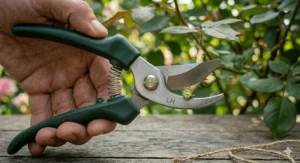
The WORKPRO 8-inch SK5 steel bypass pruner occupies the entry-level space on Amazon.ca, typically landing in the $20–$35 CAD range, and it delivers a surprising amount of capability for that price point. The SK5 high-carbon steel blade holds a serviceable edge and the spring-return mechanism is responsive. The TPR-coated handles provide decent grip even when your hands are damp from the morning dew, which any Canadian gardener working through May and June in the Pacific Northwest or Atlantic provinces will appreciate. Cut capacity sits at around 20 mm (¾ in), suitable for most light-to-moderate pruning tasks.
The spec sheet won’t tell you this, but what most budget buyers overlook about the WORKPRO is its value as a backup or secondary pruner. Keep a Felco 9 for your serious work and a WORKPRO stashed in your garden apron for quick snips that don’t warrant pulling out the premium tool. This is genuinely how many experienced Canadian gardeners manage their tool kits — a hierarchy of tools matched to task intensity. At its price point, the WORKPRO is also a low-risk option for left-handers experimenting with pruning for the first time before committing to a specialised southpaw gardening equipment investment. Available on Amazon.ca, often Prime-eligible with free shipping on orders over $35.
✅ Budget-friendly entry price, $20–$35 CAD
✅ SK5 carbon steel blade, TPR grip, spring-return mechanism
✅ Good backup or secondary pruner
❌ Ambidextrous only; not purpose-built for left-hand use
❌ Carbon steel requires cleaning and oiling to prevent rust in humid Canadian climates
Price range: $20–$35 CAD. Strong value at its price; treat it as a secondary tool rather than a primary investment.
7. BETUREEIU G20 8″ Premium Titanium Bypass Pruning Shears — Best Lightweight Rust-Resistant Option
The BETUREEIU G20 earns a spot on this list for one very specific reason: the titanium-coated blade. Titanium coating over SK5 high-carbon steel is not the same as solid titanium (it’s a surface treatment), but the practical effect is meaningful — the blade is significantly harder, resists corrosion far better than untreated carbon steel, and the non-stick surface reduces the effort required to cut through sappy wood by a measurable margin. At 20 mm (¾ in) cutting capacity, the G20 handles the vast majority of what home gardeners actually prune. The weight is notably low, which matters during extended pruning sessions where cumulative fatigue adds up.
For Canadian gardeners in coastal BC, Atlantic Canada, or anywhere with persistent humidity and precipitation, the titanium coating is a genuinely useful feature — rusting pruner blades is a real seasonal frustration that a titanium-treated blade sidesteps effectively. The G20 is an ambidextrous design, so left-handers are working with the standard right-hand blade orientation, but the lightness and non-stick coating make the experience noticeably more comfortable than heavier alternatives at the same price. Available on Amazon.ca in the $25–$40 CAD range, often Prime-eligible.
✅ Titanium-coated blade — rust-resistant, non-stick, harder edge
✅ Very lightweight — reduces hand fatigue over long sessions
✅ Good price-to-quality ratio for a coated blade
❌ Ambidextrous design, not left-hand specific
❌ Titanium is a coating, not solid — durability depends on maintenance
Price range: $25–$40 CAD. The best lightweight rust-resistant choice for humid Canadian climates.
🔍 Ready to upgrade your garden game?
Click on any highlighted product above to check current pricing and availability on Amazon.ca. These carefully selected left-handed and southpaw-friendly tools will help you prune with more precision, less fatigue, and healthier plants season after season — whether you’re working through a Montreal spring or a Victoria summer. 🇨🇦
Why Standard Pruning Shears Are Failing Left-Handed Canadian Gardeners
Most Canadian gardeners who are left-handed have simply accepted that tools feel a little awkward, the locking mechanism is in the wrong place, and their wrists get sore faster than they should. What they haven’t been told is that standard right-hand bypass pruners create a specific, preventable injury pattern when used by left-handers over the long term.
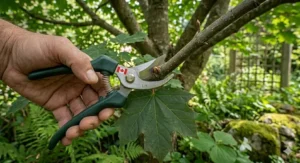
Here is the mechanical reality: a bypass pruner works like scissors, with a sharp cutting blade and a blunt counter-blade. In a standard right-hand pruner, the sharp blade is on the right side of the bypass when held with the right hand dominant. A left-hander gripping the same tool ends up with the sharp blade on the outside of the cut — meaning the clean, precise cut goes to the waste side of the stem, while the side you’re keeping (the live branch) gets a crushed, ragged wound from the blunt counter-blade. As noted by Label Our Lefty’s 2026 gardening tool guide, this reversed blade position also creates asymmetric muscle strain in the left wrist and forearm, increasing the risk of repetitive strain injury (RSI) — particularly for gardeners who prune frequently during the season.
This isn’t a minor inconvenience. Crushed plant wounds heal more slowly, invite fungal infection, and create entry points for the bacterial canker and fire blight that frustrate Canadian fruit tree growers from the Okanagan Valley to Ontario’s apple belt. Using the right tool — with the blade oriented for your dominant hand — produces cleaner cuts that heal faster, healthier plants, and far less strain on your wrist and forearm. According to health information from the Government of Canada, repetitive strain injuries are among the most common musculoskeletal conditions affecting Canadians who perform repetitive hand and wrist motions, and prevention through proper tool selection is explicitly recommended.
How to Choose Left-Handed Pruning Shears in Canada: 6-Step Expert Framework
Choosing the right pair isn’t just about finding something labeled “left-handed.” Here’s what actually matters, step by step:
1. Confirm the blade orientation. A true left-hand bypass pruner has the sharp cutting blade on the left side of the bypass when held in the left hand with the handles in cutting position. If a product description doesn’t clearly state “left-handed” or “reversed blade,” it’s ambidextrous at best. Felco 9, Felco 10, and Spear & Jackson 6459BS are examples of genuinely reversed designs.
2. Match cut capacity to your garden. For deadheading flowers and trimming soft stems, 16–20 mm (⅝–¾ in) capacity is sufficient. For woody rose canes, apple tree water sprouts, or ornamental shrub trimming, you want 25 mm (1 in) capacity. Most Canadian home gardens need the latter, especially after a long winter when growth is vigorous in spring.
3. Consider your hand size. Felco specifically sizes their pruners by hand dimension — the Felco 9 (and 10) are for large hands, while other models suit medium and small hands. An ill-fitting pruner, regardless of how well-engineered it is, will cause fatigue and poor control. Download FELCO’s hand sizing chart before purchasing.
4. Assess long-term cost. A $120 CAD pruner with replaceable blades and a lifetime warranty typically costs less over five years than two or three $40–$50 replacements of non-repairable budget tools. Do the math for your pruning frequency before defaulting to the cheaper option.
5. Factor in the Canadian climate. If you garden in a humid region (BC coast, Atlantic provinces, Great Lakes basin), stainless steel or titanium-coated blades are worth the premium over raw carbon steel, which rusts more aggressively in persistent moisture. If you’re in a drier climate (Prairies), carbon steel with proper oiling is perfectly workable.
6. Check Prime eligibility before purchasing. Amazon.ca Prime members get free shipping on eligible orders; non-Prime orders need to meet the $35+ threshold for free shipping. For a single $120 pruner, this isn’t an issue, but factor it in if you’re bundling a smaller purchase.
Practical Usage Guide: Getting the Most from Your Left-Handed Pruners in Canadian Conditions
First Use and Break-In
New pruners — particularly Felco models — often benefit from a light application of oil on the blade pivot and spring before your first use. The micrometric adjustment screw on Felco models is factory-set but may need minor tuning to your cutting style; a half-turn adjustment can dramatically change how the blades feel when they close. Take 10 minutes to familiarize yourself with the locking mechanism (on left-hand models it’s positioned for the left thumb — significantly more natural than stretching your left thumb across to a right-hand lock).
Pruning Technique for Lefties
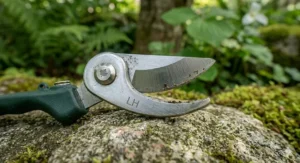
Grip the handles with your left hand dominant, keeping your wrist in a neutral (straight) position relative to your forearm. This is where the angled cutting head on models like the Felco 9 earns its price — the head angle is specifically designed to put the cut line in your natural sight line as a left-hander, rather than forcing a wrist twist to see where you’re cutting. Position the sharp blade (on the left side) against the stem portion you’re keeping, and the blunt counter-blade against the waste side. This is the opposite of how you may have instinctively used a standard right-hand tool for years.
Canadian Seasonal Maintenance
Spring: Before the pruning season begins, sharpen the blade with a fine whetstone, clean the pivot with a dry cloth, and apply a thin layer of camellia oil or mineral oil to all metal surfaces. Canadian winters in an unheated garage or shed will have drawn moisture into any microscopic surface imperfections.
Summer: After every session involving sappy wood (fruit trees, roses, ornamentals with resinous sap), wipe the blade with rubbing alcohol or a diluted bleach solution (1 part bleach : 10 parts water) to prevent spreading fungal or bacterial plant diseases between cuts. This is particularly important in humid Ontario, Quebec, and coastal BC summers.
Autumn/Winter storage: Disassemble the pruner if possible (Felco models make this easy), clean all parts, dry thoroughly, apply a rust-inhibiting oil, and store in a dry location above floor level. Never store pruners in a plastic bag, which traps moisture. A breathable cloth pouch or the original packaging works well.
Canadian Gardener Profiles: Which Left-Hand Pruner Fits Your Life?
Profile A — “The Weekend Rose Gardener in Oakville, ON” Maria has a medium-sized backyard with 14 rose bushes, a few ornamental shrubs, and a small apple tree she inherited from the previous owners. She prunes heavily in May and does lighter deadheading all summer. Maria needs a true left-hand bypass pruner with at least 25 mm (1 in) capacity. Her best match is the Felco 9 — the rose-specific sap groove will be a revelation after years of blades sticking mid-cut, and the long-term repair ecosystem means she’s not replacing tools every few years. Budget: $100–$130 CAD, once, for a tool that outlasts the rose bushes.
Profile B — “The Container Gardener in a Montreal Condo” Jacques tends an impressive balcony container garden with herbs, compact ornamentals, and a dwarf lemon. His pruning is light — mostly deadheading, snipping herbs, and shaping compact growth. He doesn’t need 25 mm (1 in) capacity or a lifetime warranty. His best match is the Spear & Jackson 6459BS — a true left-hand design at a mid-range price that gives him the correct blade orientation without overbuying for his pruning volume. Budget: $40–$60 CAD.
Profile C — “The Fruit Tree Orchardist Near Kelowna, BC” Diane manages a small orchard of 30 apple and pear trees and prunes heavily each February before bud break, plus ongoing thinning and suckering through summer. For her, the Felco 10 is the answer — the revolving handle turns what would be 600+ cuts a day into something her forearms can sustain without injury. In the Okanagan’s dry climate, carbon steel blades with proper oiling are fine. Budget: $120–$150 CAD for a tool that could genuinely sustain a commercial operation.
Profile D — “The First-Time Gardener in Saskatoon, SK” Ben just bought his first house with a small yard and is new to gardening. He needs something inexpensive that works tolerably well while he figures out how much gardening he actually enjoys. His best starting point is the WORKPRO 8″ Bypass Pruner or the Fiskars 7934 — ambidextrous, affordable, available at local retailers. If he catches the gardening bug, he can upgrade to a true left-hand tool in season two. Budget: $20–$45 CAD.
Left-Handed Pruning Shears vs. Standard Right-Hand Pruners: What the Data Actually Shows
| Feature | True Left-Hand Pruner | Ambidextrous Pruner | Standard Right-Hand Pruner |
|---|---|---|---|
| Blade orientation | Correct for left-handers | Neutral/compromise | Designed for right-hand only |
| Cut quality for lefties | ✅ Clean, on the keeper side | ⚠️ Acceptable for light work | ❌ Clean cut on waste side |
| Wrist alignment | ✅ Natural/neutral | ⚠️ Some twist required | ❌ Forced unnatural twist |
| Locking mechanism position | ✅ Left-thumb operable | ✅ Central/ambidextrous | ❌ Right-thumb primary |
| RSI risk (long-term, heavy use) | ✅ Minimized | ⚠️ Moderate | ❌ Elevated |
| Price premium | 10–30% higher than equivalent right-hand | None | Baseline |
This comparison makes a critical point clear: for light occasional gardening, the distinction is minor. For anyone pruning regularly — weekly or more during peak season — the left-hand vs. right-hand blade orientation is not a comfort preference, it’s a plant health and injury prevention issue. A true left-hand bypass pruner from FELCO or Spear & Jackson produces measurably cleaner cuts, documented in plant science research including Wikipedia’s coverage of bypass pruners, which notes that the clean slicing action of a bypass blade (when correctly oriented) minimizes cellular damage compared to crushing or tearing.
Common Mistakes Canadian Lefties Make When Buying Pruning Shears
Mistake 1: Buying “ambidextrous” without reading the fine print. Many products market themselves as ambidextrous with clever language — “comfortable for all users” or “works in either hand.” What this usually means is that the handle shape isn’t wildly uncomfortable in the left hand. It does not mean the blade is reversed. Always look for explicit confirmation that the sharp cutting blade is positioned for left-hand use.
Mistake 2: Ignoring cut capacity for Canadian plant growth. Canadian spring growth — especially after a long Prairie or Central Canadian winter — is vigorous and thick. A 16 mm (⅝ in) pruner that seemed adequate for last autumn’s maintenance cuts in September can struggle by May. Size up to 25 mm (1 in) capacity if you’re pruning anything woody.
Mistake 3: Buying without checking Amazon.ca vs. Amazon.com availability. Some specialty left-hand pruners are listed on Amazon.com but don’t ship to Canada, or ship at prohibitive cost with customs duties added. Verify Amazon.ca listing specifically, or check Canadian garden retailers (Lee Valley, Rittenhouse, FELCO Canada) for reliable national shipping.
Mistake 4: Skipping maintenance entirely. Carbon steel blades that aren’t oiled after use in humid Canadian conditions will rust by the following spring. Stainless or titanium-coated blades are more forgiving, but all pruners benefit from a quick wipe and oil after use. A neglected $120 pruner performs no better than a $20 one after two seasons of rust damage.
Mistake 5: Judging by weight alone. Lighter isn’t always better. Forged aluminium handles (Felco) are light and strong — they achieve this through material engineering. Cheaper plastic-and-steel composites may be lighter but flex under pressure, reducing cutting efficiency and longevity in cold Canadian temperatures where plastics can become brittle.
What to Expect: Real-World Performance of Left-Hand Pruners in Canadian Climate Conditions
Cold weather (below -5°C / 23°F): Rubber grip coatings and shock absorbers on pruning shears can stiffen in sub-zero temperatures. Felco’s rubber bumpers, for example, lose some of their cushioning feel in deep winter. This matters less in practical terms because most Canadians aren’t actively pruning in mid-January — but if you’re doing late winter apple tree pruning in February in Ontario or Manitoba when overnight temperatures are still well below freezing, bring your pruners inside the night before to restore grip flexibility.
Spring thaw (March–May): This is peak pruning season for most of Canada, and also the muddiest, most moisture-rich period. Stainless steel and titanium-coated blades genuinely earn their keep during spring thaw. Carbon steel pruners used in wet, muddy conditions need cleaning and drying after every session to prevent surface rust from developing.
Summer humidity (June–August): Sap flow is high during summer pruning. The sap groove on Felco models prevents the specific frustration of blades welding themselves shut mid-session in the heat, particularly when working on ornamental trees and fruiting canes. Cleaning with rubbing alcohol between plants is even more important during warm, humid conditions when fungal spores spread rapidly.
Autumn cleanup (September–October): Lighter pruning tasks — deadheading, removing spent growth, final shaping before dormancy. Any pruner on this list handles this comfortably. This is also the ideal time to do a full sharpening and oiling of your tools before winter storage.
Long-Term Cost & Maintenance in Canada: The Real Price of Your Pruner
The upfront CAD sticker price is only one part of the cost equation. Here is a realistic 5-year cost analysis for different tiers of pruner:
| Tool Tier | Upfront Cost (CAD) | Typical Lifespan (without replacement parts) | 5-Year Estimate (parts/replacements) | True 5-Year Cost (CAD) |
|---|---|---|---|---|
| Budget ambidextrous ($20–$35) | $25 | 2–3 years with care | 1–2 replacements | $50–$75 |
| Mid-range ($40–$65) | $55 | 4–5 years | 1 replacement | $110 |
| Felco 9 / 10 ($100–$150) | $125 | 20+ years (repairable) | Blade + spring (~$25) | $150 |
The Felco math is compelling over a 5-year horizon, and even more so over 10. For Canadian buyers who appreciate the value of buying once and buying well — a sensibility built into the Canadian consumer psyche by harsh winters and long distances from urban retailers — the Felco ecosystem makes particular sense. Replacement blades, springs, and bumpers are available on Amazon.ca and through Canadian garden retailers, so you’re never stuck waiting for an import from overseas. Note: Import duties on garden tools from Switzerland and the UK (Spear & Jackson) are generally minor, but confirm current tariff classifications via the Canada Border Services Agency if ordering directly from international sources.
Frequently Asked Questions About Left-Handed Pruning Shears in Canada
❓ Are left-handed pruning shears actually worth buying in Canada, or is 'ambidextrous' fine?
❓ Can I buy Felco 9 pruners on Amazon.ca, or do I need to order internationally?
❓ Do left-handed pruning shears work in Canadian winter conditions?
❓ What's the shipping situation for specialty left-hand pruners to remote Canadian areas?
❓ How do I sharpen left-handed pruning shear blades in Canada?
Conclusion: The Right Tool Makes Every Cut Count
For the 10% of Canadian gardeners who are left-handed, the pruning tool market has historically been a frustrating afterthought — designed by and for right-handed users, with left-handers expected to simply adapt. The good news, as this guide makes clear, is that genuinely excellent left-handed pruning shears do exist, they are available in Canada, and the gap between using the wrong tool and the right one is larger than most people expect — in plant health, in physical comfort, and in the simple pleasure of a clean, efficient cut that goes exactly where you intended.
For serious Canadian gardeners who prune regularly, the Felco 9 is the gold standard — Swiss-engineered, lifetime-repairable, available in Canada, and worth every dollar of the $100–$130 CAD investment. For high-volume or arthritis-conscious pruners, the Felco 10‘s rotating handle is genuinely transformative. Mid-range lefties will be well served by the Spear & Jackson 6459BS, and budget-conscious beginners can start with the Fiskars 7934 or WORKPRO while building their tool kit.
Whatever your Canadian garden looks like — from a Vancouver patio to a Halifax backyard to an Okanagan orchard — you deserve a tool that works with your dominant hand, not against it. Start with the right pruner, and every session from the spring thaw to the autumn cleanup becomes easier, faster, and more satisfying.
✨ Don’t Miss These Exclusive Deals!
🔍 Ready to prune smarter this season? Click any highlighted product to check current pricing and availability on Amazon.ca. From true left-hand Swiss precision to budget-friendly everyday clippers, your perfect southpaw gardening tool is one click away! 🇨🇦🌿
Recommended for You
- Bypass vs Anvil Pruners: 7 Best Picks for Canadian Gardens 2026
- 7 Best Pruning Shears in Canada (2026): Tested for Real Gardens
- 7 Best Garden Trowels in Canada (2026): Top Picks & Buying Guide
Disclaimer: This article contains affiliate links. As an Amazon Associate, I earn from qualifying purchases. If you purchase products through these links, we may earn a small commission at no additional cost to you.
✨ Found this helpful? Share it with your friends! 💬🤗
