
In This Article
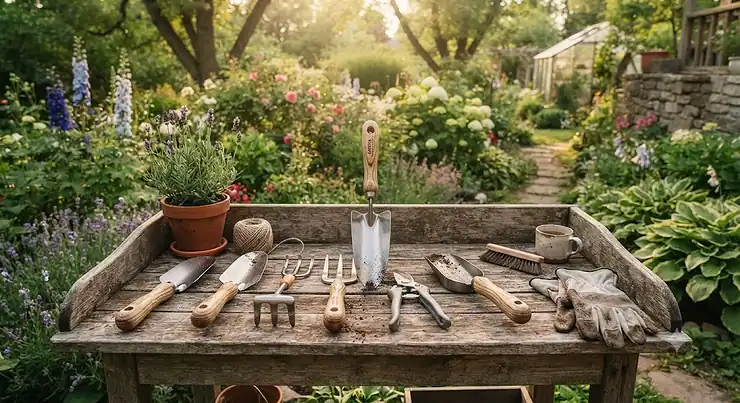
A professional garden tool set is a curated collection of forged or hardened-steel hand tools — typically a trowel, cultivator, transplanter, weeder, and fork — built to commercial-grade tolerances and backed by a manufacturer warranty, rather than the flimsy stamped-metal bundles sold as impulse buys near the checkout. That distinction matters more than most gardeners realize until their third trowel snaps mid-season. If you’ve ever bent a bargain-bin blade on a stubborn root or watched a rivet pop after one Ontario clay-soil dig, you already understand why “cheap” and “cost-effective” are two very different things in this category.

This guide digs into seven real, currently available options — from a C$30 aluminum three-piece up to a hand-forged Dutch heirloom set — and weighs them against genuine spec sheets and aggregated review sentiment, not marketing copy. We’ll cover forged steel construction, what a lifetime warranty actually protects, and how commercial-grade kits differ from what your local garden centre stocks. Whether you’re outfitting a suburban Toronto backyard or supplying a small landscaping crew in the Fraser Valley, there’s a set below that fits the job — and the budget.
Quick Comparison Table
Before the deep dives, here’s the short version for anyone scanning on a coffee break.
| Set | Material | Best For | Price Range (CAD) |
|---|---|---|---|
| Fiskars 3-in-1 Garden Tool Set | Cast aluminum | Best all-around value | Under C$50 |
| DeWit 3-Piece Tool Gift Set | Forged boron steel | Best heirloom quality | C$100-C$150 range |
| Radius Garden Root Slayer Hand Tool Set | Serrated carbon steel | Best for rocky/rooty soil | C$60-C$80 range |
| A.M. Leonard Forged Steel Spading Fork | Forged carbon steel | Best commercial-grade pick | C$70-C$100 range |
| WORKPRO 8-Piece Garden Tool Set | Stainless steel | Best budget bundle | Under C$50 |
Looking at the spread, the pattern is clear: aluminum sets are lighter and gentler on the wallet, forged steel sets cost more but shrug off rocks and clay, and stainless-steel bundles land in the middle on both durability and price. Buyers who dig in sandy loam a few times a month can lean toward the lighter aluminum options, while anyone tackling compacted or root-heavy soil regularly will get more mileage from forged steel, even at the higher upfront cost.
💬 Just one click — help others make better buying decisions too!😊
Top 7 Professional Garden Tool Sets: Expert Analysis
1. Fiskars 3-in-1 Garden Tool Set — best all-around lifetime-warranty value
The Fiskars 3-in-1 Garden Tool Set pairs a trowel, transplanter, and cultivator under a single lifetime warranty, which is a rare guarantee at this price tier. The heads are polished cast aluminum rather than forged steel — lighter in the hand, which matters over a long weeding session, but with a lower ceiling for prying against rocks or compacted clay. The teardrop-shaped SoftGrip handles are genuinely ergonomic; Fiskars has spent decades refining hand-tool grip geometry, and it shows in reduced wrist fatigue during repetitive digging. Based on the spec comparison, this set is built for raised beds, container gardens, and average residential soil rather than heavy excavation work. Reviewers consistently note the aluminum heads resist rust well and the hang-holes make shed storage easy, though a recurring theme in aggregated feedback is that the tips can bend if used to lever out large rocks or thick roots — a limitation of aluminum versus forged steel. This is the set to recommend to a first-time gardener or anyone who wants dependable tools without a forged-steel price tag.
Pros:
- ✅ Lifetime warranty included at a budget-friendly price
- ✅ Ergonomic SoftGrip handles reduce wrist fatigue
- ✅ Rust-resistant cast aluminum heads
Cons:
- ❌ Aluminum bends more easily than forged steel on rocks
- ❌ Not ideal for heavy clay or root-choked soil
The Fiskars 3-in-1 Garden Tool Set typically runs under C$50, and at that price the lifetime warranty alone makes it a sound value pick for lighter-duty gardening.
2. DeWit 3-Piece Tool Gift Set — heirloom-grade forged Dutch steel
The DeWit 3-Piece Tool Gift Set bundles a forged trowel, forged hand fork, and 3-tine cultivator, each hand-forged from Swedish boron steel by a fourth-generation Dutch blacksmithing company founded in 1898. Boron steel holds an edge longer than standard carbon steel and resists the micro-chipping that dulls cheaper blades after a season of clay-soil digging. The FSC-certified ash handles flex slightly under load instead of snapping outright, which is a meaningful practical difference when you’re leaning hard into compacted ground. What most buyers overlook about this set is that it’s genuinely designed to be a decades-long tool, not a seasonal purchase — the lifetime guarantee reflects that intent rather than being a marketing add-on. Aggregated reviewer sentiment consistently praises the balance and cutting sharpness of the forged heads, with the main critique being that the price feels steep for a three-piece kit until you compare it against replacing cheaper tools every two or three years. This is the pick for a serious hobbyist who treats tools as an investment rather than a consumable.
Pros:
- ✅ Hand-forged Swedish boron steel holds an edge
- ✅ FSC-certified ash handles flex instead of snapping
- ✅ Backed by a genuine lifetime guarantee
Cons:
- ❌ Premium price for only three tools
- ❌ Heavier feel than aluminum alternatives
Expect the DeWit 3-Piece Tool Gift Set to sit in the C$100-C$150 range, positioning it firmly as a high-end tool investment rather than an impulse buy.
3. Olmsted Forge 5-Piece Garden Tool Set — best mid-range powder-coated build
The Olmsted Forge 5-Piece Garden Tool Set includes a wide scoop, hand trowel, hand rake, cultivator, and transplant tool, all made from welded, powder-coated solid steel. The powder coating is more than cosmetic — it’s a genuine corrosion barrier that outperforms bare or painted steel when tools get left out in Canadian spring drizzle. The oversized “Big Scoop,” at roughly 10 cm wide and 37 cm long, moves noticeably more soil per pass than the smaller trowels bundled in typical stainless sets, which practically translates into fewer bends over a raised bed. On paper this means faster bed prep; in practice, reviewers back that up, with aggregated feedback consistently highlighting the cork-and-rubber handle grip as comfortable even during extended use, though a few buyers note the welded joints, while sturdy, add noticeable heft compared to lighter stainless alternatives. This is a strong middle-ground choice for someone who wants forged-adjacent durability without DeWit-level pricing.
Pros:
- ✅ Oversized scoop moves more soil per pass
- ✅ Powder-coated finish resists corrosion well
- ✅ Comfortable cork-and-rubber grip for long sessions
Cons:
- ❌ Heavier than comparable stainless steel sets
- ❌ Welded joints add bulk versus one-piece forged tools
The Olmsted Forge 5-Piece Garden Tool Set generally lands in the mid-C$40 to mid-C$60 range, a fair middle ground between budget aluminum and premium forged imports.
4. Radius Garden Root Slayer Hand Tool Set — best for rocky, root-choked soil
The Radius Garden Root Slayer Hand Tool Set pairs the Root Slayer Trowel with the Root Slayer Soil Knife, both featuring an inverted V-shaped blade tip and serrated, saw-like teeth along the edges. That tooth pattern is the standout feature here — instead of just pushing past roots, the blade actually saws through them, which is a genuine advantage over a smooth-edged trowel when you’re planting in a yard with established tree roots or thick sod. The enamel powder-coated, high-carbon steel blades can be sharpened repeatedly, extending usable life well beyond tools that dull and get tossed. Here’s what to weigh: the ergonomic NRG grip and flared handle design were specifically engineered to reduce wrist strain, which reviewers with arthritis or hand sensitivity consistently call out as a genuine quality-of-life improvement over standard straight handles. The soil knife doubles as a makeshift weeder and twine cutter, adding practical versatility that a single-purpose trowel can’t match. The main trade-off noted in aggregated feedback is that the aggressive teeth, while excellent for roots, are overkill for simple potting or container work.
Pros:
- ✅ Serrated teeth cut through roots other trowels can’t
- ✅ Sharpenable high-carbon steel extends usable life
- ✅ Ergonomic grip reduces strain for sensitive hands
Cons:
- ❌ Aggressive blade is overkill for light potting tasks
- ❌ Pricier than a standard two-tool trowel set
Priced in the C$60-C$80 range, the Radius Garden Root Slayer Hand Tool Set earns its premium in yards where roots, not soft loam, are the real opponent.
5. WORKPRO 8-Piece Garden Tool Set — best budget stainless steel bundle
The WORKPRO 8-Piece Garden Tool Set rounds out a trowel, hand weeder, cultivator, transplanter, pruner, gloves, and a 30 cm garden tote into one bundle built around high-hardness stainless steel heads. The pruner blades use SK5 steel, a carbon-tool-steel grade genuinely capable of clean cuts on small stems and light branches, which is a step up from the mystery-metal shears bundled into many budget kits. Stainless steel won’t hold an edge quite as long as forged boron or high-carbon steel, but it resists rust more reliably than untreated carbon steel left in a damp shed — a fair trade-off for a starter or occasional-use gardener. Based on the spec comparison, the included 600D polyester tote with eight exterior pockets is arguably the most functional part of the kit, since keeping eight small tools organized is often harder than the digging itself. Aggregated review sentiment is generally positive on value for money, with the most common complaint being that the trowel’s depth scale markings wear off faster than the tool itself.
Pros:
- ✅ Eight tools and a storage tote in one bundle
- ✅ SK5 steel pruner blades cut cleanly
- ✅ Genuinely useful organized tote with eight pockets
Cons:
- ❌ Stainless heads dull faster than forged carbon steel
- ❌ Depth markings on the trowel wear off with use
The WORKPRO 8-Piece Garden Tool Set usually sells under C$50, making it one of the better per-tool values on this list for a light-to-moderate gardening routine.

6. GardenHOME 7-Piece Gardening Tool Set — best kit with a built-in stool
The GardenHOME 7-Piece Gardening Tool Set bundles stainless steel hand tools with wooden handles, a folding garden stool, and a canvas tote — a combination that acknowledges gardening is as much about knees and backs as it is about blades. The stool is the genuine differentiator here: raised-bed and border gardeners who spend long stretches at ground level report that a stable seat cuts fatigue more than any single tool upgrade could. The stainless heads themselves are solid mid-tier performers — not forged, but hardened enough for routine transplanting, weeding, and cultivating in average garden soil. What most buyers overlook about combo kits like this one is that the accessories (stool, tote) often deliver more day-to-day comfort improvement than marginal upgrades to blade steel would, especially for gardeners managing joint pain or limited mobility. Reviewers consistently flag the folding stool’s stability and the canvas tote’s durability as the standout features, while the trade-off is that the wooden handles need occasional oiling to prevent drying and splitting — a small maintenance step easy to forget.
Pros:
- ✅ Folding stool genuinely reduces kneeling fatigue
- ✅ Durable canvas tote keeps tools organized
- ✅ Solid stainless steel for routine garden tasks
Cons:
- ❌ Wooden handles need periodic oiling
- ❌ Blade steel isn’t forged, so it’s not for heavy digging
At roughly C$60-C$90, the GardenHOME 7-Piece Gardening Tool Set is a smart pick for anyone who values comfort accessories as much as the tools themselves.
7. A.M. Leonard Forged Steel Spading Fork — best commercial-grade landscaping pick
The A.M. Leonard Forged Steel Spading Fork is the outlier on this list — a single, purpose-built implement rather than a multi-piece kit, and it’s here because commercial-grade garden kits often start with exactly this kind of tool as their anchor piece. A.M. Leonard supplies professional horticultural and landscaping crews across North America, and their spading forks use a forged, four-tine head welded to a 34-and-a-half-inch D-grip handle rated for repeated, heavy-duty use rather than occasional weekend digging. The forged (not stamped) construction means the tines are formed from a single heated steel blank, which distributes stress more evenly and resists the tine-bending failure mode that plagues cheaper stamped forks under sustained leverage. Based on the spec comparison, this is the tool to add to any “set” when the job moves from flower beds to breaking new ground, dividing perennials, or turning compost — tasks where a hand trowel simply isn’t the right scale of tool. Reviewers and professional users consistently describe the D-grip as stable under heavy load, with the trade-off being that a full-length fork like this is genuinely overkill for container gardening or small urban plots.
Pros:
- ✅ Forged four-tine head resists bending under heavy load
- ✅ D-grip handle built for repeated commercial-grade use
- ✅ Trusted supplier to professional landscaping crews
Cons:
- ❌ Overkill for small urban or container gardens
- ❌ Long handle needs more storage space than hand tools
The A.M. Leonard Forged Steel Spading Fork typically runs in the C$70-C$100 range per tool, which reflects its positioning as a professional landscaping tool rather than a starter-kit component.
Forged Steel Garden Tools: Why the Material Matters
Not all “steel” on a spec sheet means the same thing, and this is where a lot of marketing copy gets deliberately vague. Forged steel garden tools are shaped under heat and pressure from a single solid billet, which aligns the metal’s internal grain structure along the tool’s stress lines. Stamped steel, by contrast, is cut from a flat sheet — cheaper to produce, but structurally weaker at the exact points (the neck of a trowel, the base of a tine) where garden tools take the most abuse. The practical result: a forged trowel like the ones in the DeWit 3-Piece Tool Gift Set can be levered against a rock without the blade folding, while a stamped equivalent is more likely to bend or crack at the seam.
There’s a real cost trade-off here, and it’s worth being honest about it rather than pretending forged steel is always the right answer. Forged tools cost more to manufacture, so a fully forged set — like DeWit or the A.M. Leonard Forged Steel Spading Fork — will always carry a higher price than a comparable stamped or cast-aluminum set like Fiskars. For light container gardening or annual flower beds, that premium may not pay for itself. For anyone regularly digging clay, rocky soil, or root systems, forged steel typically pays for itself within a few seasons simply by not needing replacement.
Lifetime Warranty Tool Sets: What the Fine Print Really Covers
“Lifetime warranty” is one of the most misused phrases in garden tool marketing, so it’s worth reading the actual terms before treating it as a purchase-decision shortcut. In most cases — including Fiskars’ and DeWit’s programs — a lifetime warranty covers manufacturing defects and workmanship failures, not normal wear, misuse, or damage from prying out a boulder the tool was never designed to move. That distinction matters: a warranty won’t replace a trowel you snapped using it as a pry bar, but it will typically replace one where a weld failed or a handle cracked from a manufacturing flaw.
What’s genuinely valuable about lifetime warranty tool sets is less the occasional free replacement and more what the guarantee signals about the manufacturer’s confidence in their own materials. A company backing forged boron steel with an unlimited-years promise is making a different bet than one covering cast aluminum for the same term — the underlying material still determines how often you’ll actually need to invoke the warranty in the first place. Reviewers who’ve owned Fiskars or DeWit tools for a decade-plus consistently note they’ve rarely needed the warranty at all, which is arguably the best outcome: a tool built well enough that the guarantee becomes a formality rather than a lifeline.
How to Choose a Professional Garden Tool Set
Sorting through spec sheets is easier with a structured checklist. Here’s the reasoning gardening experts consistently point to, distilled into a practical sequence:
- Identify your soil type first. Clay and rocky soil demand forged steel; sandy loam is more forgiving of lighter cast aluminum.
- Count how often you’ll actually dig. Weekly gardeners justify a premium set faster than someone who plants twice a season.
- Check the warranty terms, not just the word “lifetime.” Confirm it covers manufacturing defects specifically, and for how long.
- Match handle material to your grip needs. Wood flexes and feels warmer; composite resists moisture damage better in humid climates.
- Weigh piece count against actual use. An 8-piece kit sounds generous, but three well-made tools often outperform eight mediocre ones.
- Factor in storage. A tote or stool bundled in, like gardening experts commonly recommend for reducing physical strain, adds real day-to-day value beyond the blades themselves.
- Price per tool, not per set. A three-piece C$130 forged set can cost less per tool than an eight-piece C$50 stamped one.
Running through this checklist before comparing individual listings tends to narrow seven options down to two or three genuinely relevant ones fast.

Common Mistakes When Buying Premium Quality Tool Collections
Even experienced gardeners fall into predictable traps when shopping premium quality tool collections, and most of them come down to optimizing for the wrong variable. The first mistake is buying based on piece count alone — a 10-piece set stuffed with duplicate or rarely used tools isn’t automatically better value than a tight 3-piece forged kit that covers 90% of actual garden tasks. The second is skipping the material spec entirely and trusting adjectives like “heavy duty” on the packaging, which carries no standardized meaning across manufacturers.
A third recurring mistake is ignoring handle ergonomics until after purchase, when wrist or elbow strain shows up mid-season. Premium quality tool collections earn that label through handle geometry and grip material as much as blade steel — a forged head on a poorly shaped handle still causes fatigue. Finally, many buyers assume “premium” and “expensive” are interchangeable, when in reality some mid-priced sets, like the Olmsted Forge 5-Piece Garden Tool Set, deliver a genuinely premium build at a price well below the imported heirloom brands.
Commercial-Grade Garden Kits vs Homeowner Sets
Commercial-grade garden kits and typical homeowner sets are built to solve different problems, and understanding the distinction saves both money and disappointment. A homeowner set — think WORKPRO or GardenHOME — is engineered around occasional, moderate-intensity use across a residential yard: a few hours most weekends, average soil, light-to-medium tasks. Commercial-grade tools, like the A.M. Leonard Forged Steel Spading Fork, are engineered around daily, sustained use by paid crews, which means thicker steel gauges, reinforced joints, and handles rated for repetitive leverage well beyond what a homeowner set is tested for.
The practical difference shows up in failure points. A homeowner set that fails after two seasons of weekend use might survive five years under commercial conditions if it were actually rated for that stress — the issue is it usually isn’t, and pushing a residential-grade tool into commercial-frequency use is the single most common reason people feel “cheap tools break constantly” when the real problem is a mismatch between tool rating and use case. Landscaping businesses and serious market gardeners are almost always better served paying the commercial-grade premium upfront rather than replacing homeowner-grade tools every season.
Practical Usage Guide: Setup, Break-In, and the First 30 Days
New forged tools benefit from a short break-in routine that most buyers skip. On day one, wipe factory oil residue off blades with a rag and check that handle attachments (rivets, welds, or epoxy joints) are snug — a loose fitting caught early is a simple fix, while one ignored for a season can crack a handle socket. For the first few uses, avoid maximum-leverage tasks like prying out large rocks; let welded joints and wooden handles “settle” under moderate load before pushing them hard.
A basic maintenance schedule extends any set’s working life significantly: rinse soil off blades after each use rather than letting it dry and cake on, apply a light coat of boiled linseed oil to wooden handles every two to three months during active gardening season, and wipe carbon or boron steel heads with a lightly oiled cloth before long-term winter storage to prevent rust. Cleaning tools between uses also reduces the spread of soil-borne pathogens between plants, which matters as much for plant health as it does for tool longevity. Common first-month mistakes include storing damp tools in a closed shed, using a trowel as a makeshift hammer or pry bar, and skipping the initial rivet check — all avoidable with five minutes of attention.
Real-World Scenarios: Matching the Right Set to Your Yard
Consider three realistic buyer profiles. A condo balcony gardener with a handful of containers and no clay or roots to fight is genuinely well served by the Fiskars 3-in-1 Garden Tool Set — light, warrantied, and sized for small-scale tasks where forged steel’s extra durability would go unused. A suburban homeowner with an established yard, mature trees, and the inevitable root systems that come with them will get noticeably more out of the Radius Garden Root Slayer Hand Tool Set, since the serrated blades solve the specific, recurring frustration of trowels bouncing off roots instead of cutting through them.
A small market gardener or part-time landscaper running a side business, meanwhile, is the clearest case for commercial-grade tools: someone digging multiple beds weekly for paying clients will wear out homeowner-grade steel within one or two seasons, making the A.M. Leonard Forged Steel Spading Fork and a forged hand-tool set like DeWit’s a better total-cost-of-ownership decision even at a higher sticker price. Matching the set to the actual soil, frequency, and scale of the work — rather than to the biggest piece count or lowest price — is the single decision that most affects long-term satisfaction.

High-End Tool Investments: Long-Term Cost & Maintenance
Framing premium tools as investments rather than purchases changes the math considerably. A C$30 stamped trowel that needs replacing every 18 months costs roughly C$20 per year over a decade. A C$130 forged trowel from a set like DeWit’s, maintained with basic oiling and rust prevention, can realistically last that entire decade or longer — working out to roughly C$13 per year, despite the much higher upfront price. High-end tool investments win the long game specifically because forged steel and quality handle materials resist the fatigue-and-failure cycle that drives repeat purchases of cheaper tools.
| Set Tier | Approx. Upfront Cost (CAD) | Typical Lifespan | Approx. Annual Cost |
|---|---|---|---|
| Budget stamped/cast (WORKPRO, Fiskars) | Under C$50 | 3-6 years | C$10-C$15 |
| Mid-range powder-coated (Olmsted Forge, GardenHOME) | C$50-C$90 | 6-10 years | C$8-C$12 |
| Premium forged (DeWit, A.M. Leonard) | C$70-C$150 | 10-20+ years | C$5-C$10 |
The table makes the case plainly: cost-per-year actually drops as build quality rises, which is the opposite of what sticker price alone suggests. Maintenance requirements scale in the other direction, though — forged carbon and boron steel need occasional oiling and rust checks that cast aluminum and stainless steel largely shrug off, so the “investment” framing assumes the buyer will actually do that light upkeep.
Professional Landscaping Sets for Serious Growers and Small Farms
Professional landscaping sets differ from residential kits mainly in scale and repetition tolerance. A landscaping crew or small farm operation isn’t digging one flower bed on a Saturday — they’re moving soil across multiple properties or plots, often daily, which is precisely the use case forged, commercial-grade tools like the A.M. Leonard Forged Steel Spading Fork are built for. Serious growers should generally prioritize single-purpose, full-sized forged tools over multi-piece hand-tool kits, since the leverage and durability requirements of daily fieldwork exceed what compact hand trowels are designed to handle.
For crews assembling a full professional landscaping set, a sensible core includes a forged spading fork for turning and aerating soil, a forged hand trowel and cultivator for detail planting work — the DeWit 3-Piece Tool Gift Set covers this well — and a dedicated root-cutting tool like the Radius Garden Root Slayer for established or overgrown plots. Budgeting for commercial-grade replacement parts (handles, in particular, on high-use forks) is also worth planning for, since even forged steel heads will eventually outlast a wooden handle under daily professional use.
Safety, Regulations, and Compliance for Canadian Gardeners
Garden tools are simple mechanically, but they’re a genuine source of household injury, and Canadian health authorities take the category seriously enough to publish dedicated guidance. Health Canada notes that gardening carries real physical risks worth planning around, particularly for unintentional injuries from tools and stored equipment around children. Practical takeaways for anyone using a forged or commercial-grade set: always store sharpened blades — pruners, forks, soil knives — out of reach of children, wear gloves rated for the tool in use, and inspect handle-to-head joints periodically for cracks that could fail under load.
Beyond household safety, there’s no CSA certification specific to hand tools like trowels and cultivators the way there is for powered equipment, so the manufacturer’s own quality claims (forged versus stamped, steel grade, warranty terms) are the main verifiable signal a buyer has. For anyone using longer-handled or powered garden equipment alongside a hand-tool set, it’s also worth reviewing general backyard equipment safety guidance, since hearing protection and proper storage apply across both power and hand tools.
Frequently Asked Questions
❓ What's the difference between a professional garden tool set and a regular one?
❓ Are forged steel garden tools worth the extra cost?
❓ What does a lifetime warranty on garden tools actually cover?
❓ How many pieces should a good garden tool set include?
❓ Do commercial-grade garden kits make sense for a home garden?
Conclusion
Choosing a professional garden tool set really comes down to matching material and build quality to how often, and in what soil, you’ll actually be digging. Light container or raised-bed gardeners get excellent value from the Fiskars 3-in-1 Garden Tool Set, root-heavy yards call for the Radius Garden Root Slayer Hand Tool Set, and anyone treating tools as a decade-plus investment should look hard at the DeWit 3-Piece Tool Gift Set or the commercial-grade A.M. Leonard Forged Steel Spading Fork. The middle-ground options — Olmsted Forge, WORKPRO, and GardenHOME — cover the broad majority of Canadian backyards perfectly well without stretching the budget.
Whichever tier fits your yard, the underlying rule holds across every price point covered here: forged beats stamped, a real warranty beats a vague one, and the “best” set is always the one actually matched to your soil and how often you’ll use it — not the one with the most pieces in the box.
🌱 Ready to Build Your Own Professional Garden Tool Kit?
Compare current listings and check availability on the picks above before your next planting weekend — prices and stock shift often, so it pays to look now rather than after the soil’s ready and the good sets are sold out.
Recommended for You
- Garden Tool Set For Seniors: 7 Easy-Grip Picks for 2026
- 7 Best Beginner Garden Tool Set Picks for 2026
- 7 Best Garden Tool Set Picks for Canadian Yards in 2026
Disclaimer: This article contains affiliate links. As an Amazon Associate, I earn from qualifying purchases. If you purchase products through these links, we may earn a small commission at no additional cost to you.
✨ Found this helpful? Share it with your friends! 💬🤗
