
In This Article
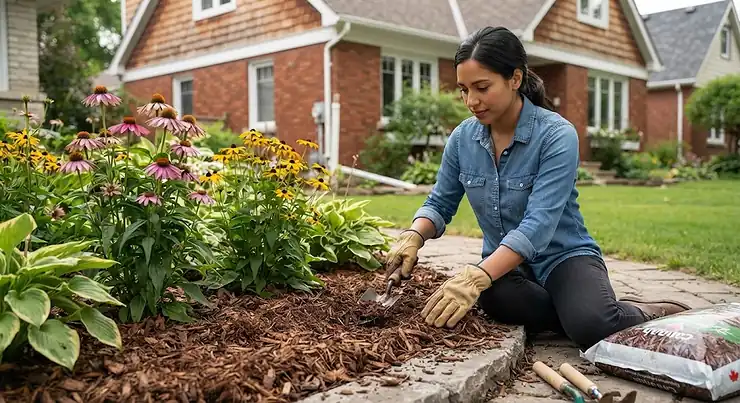
Somewhere between “I’ll get to the flower beds this weekend” and three weekends later, most of us end up standing in a garden aisle wondering why a bag of shredded bark costs more than we budgeted for. Good news: mulch under $30 CAD for flower beds is not some mythical unicorn discount — it is the default price bracket for small and mid-size bags at most Canadian retailers, including amazon.ca. What is mulch, exactly? It is a protective layer — bark, wood chips, straw, or rubber — spread over soil to slow moisture loss, block weed germination, and buffer roots from temperature swings, and a bag or two is usually all a modest flower bed needs.
The trick isn’t finding cheap mulch. It’s finding mulch that’s cheap and actually does the job, because a C$9 bag that blows away in the first windstorm or fades to grey by August isn’t saving you anything — it’s costing you a second trip to the store. According to horticultural references on mulch, the material’s core function — insulating soil and suppressing weed growth — depends heavily on depth and composition, not brand prestige, which is genuinely good news for anyone shopping on a budget.
This guide walks through seven real, currently available mulch products that land at or near the sub-$30 CAD mark, what each one is actually good at, and how to stretch every bag as far as it will go. We researched specs, packaging sizes, and aggregated review sentiment rather than inventing anecdotes, so expect honest trade-offs, not marketing copy. Whether you’re refreshing a single perennial border or covering three raised beds along a fence line, there’s a version of affordable mulch bags for gardens here that fits.
Quick Comparison Table
| Product | Type | Price Range (CAD) | Best For |
|---|---|---|---|
| Less Mess Cedar Mulch | Shredded cedar | Around C$14–C$19 | Budget cedar with bug-deterrent scent |
| GARDENWISE Premium Organic Wood Mulch (0.5 CF) | Natural wood, small bag | Under C$12 | Containers and tiny beds |
| GARDENWISE Premium Black Wood Mulch (0.7 CF) | Dyed black wood | C$14–C$18 range | High-contrast foundation beds |
| GARDENWISE Premium Brown Wood Mulch (2 CF) | Dyed brown wood, large bag | C$22–C$28 range | Best coverage-per-dollar |
| GARDENWISE Premium Red Wood Mulch (0.7 CF) | Dyed red wood | C$14–C$18 range | Bold curb-appeal colour |
| GARDENWISE Premium Cypress Mulch (1 CF) | Natural cypress | C$17–C$22 range | Insect resistance, slower breakdown |
| NuPlay Black Rubber Garden Mulch (20 lb) | Recycled rubber | C$24–C$29 range | Permanent, buy-once beds |
Looking at the spread above, the GARDENWISE Premium Brown Wood Mulch delivers the most volume for the money if you’re covering more than one bed, while the GARDENWISE Premium Organic Wood Mulch is the entry point for anyone testing mulch on a single container before committing to a larger bag. The NuPlay Black Rubber Garden Mulch sits at the top of this bracket for a reason — it’s the only non-organic option here, and that permanence carries a real price premium even at the small-bag scale.
💬 Just one click — help others make better buying decisions too!😊
Top 7 Mulch Bags Under $30 CAD: Expert Analysis
Coverage estimates below assume the standard 7–8 cm (about 3 inch) application depth recommended for most ornamental flower beds — go shallower and you sacrifice weed control, go deeper and you risk suffocating shallow roots.
1. Less Mess Cedar Mulch — budget cedar with a natural bug-deterrent scent
Cedar has a reputation for punching above its price tag, and this bag leans into that reputation without pretending to be something fancier than shredded softwood bark. The cedar oil content is what gives it that sharp, clean smell — the same compound that reportedly makes mosquitoes and some soil pests less inclined to stick around. Because it’s a natural, undyed product, expect the colour to mellow from reddish-tan to silvery grey within a season, which is normal aging rather than a defect. Based on the spec comparison against dyed alternatives, this is the pick for gardeners who want a “does what it says” bag without worrying about dye runoff near edible borders.
Reviewers consistently report that the scent is strongest in the first week or two after spreading, tapering off as the wood dries in place; a smaller cluster of reviews mentions the shreds being finer than expected, which actually helps with a tighter, more woven mat that resists wind scatter better than chunkier bark. If you cannot verify a specific claim about pest deterrence for your region, treat it as a mild bonus rather than the main reason to buy — the moisture retention and weed suppression are the real workhorses here.
Pros:
- ✅ Natural cedar scent may discourage some insects
- ✅ Fine shred texture resists wind scatter well
- ✅ Undyed, so no dye leaching near edible plants
Cons:
- ❌ Colour fades to grey faster than dyed mulch
- ❌ Coverage per bag is modest for larger beds
Priced around C$14–C$19, it’s solid mid-pack value — not the cheapest bag on this list, but reviewers seem to feel the cedar scent and finer texture justify the few extra dollars over plain wood chips.
2. GARDENWISE Premium Organic Wood Mulch (0.5 CF) — smallest bag for tight beds and containers
This is the “just try it” bag. At roughly 14 litres, it’s not meant to cover a sprawling border — it’s meant to top-dress two or three large planters or a single small perennial clump without leaving you with three-quarters of a bag sitting in the garage all winter. GARDENWISE markets it as free of chemical additives, which matters if the bed in question doubles as a herb or vegetable patch. What most buyers overlook about this size tier is that the price-per-litre is actually worse than the larger bags in the same line — you’re paying a convenience premium for not having leftover product.
Aggregated review sentiment for the GARDENWISE organic line skews positive on texture and colour consistency, with a recurring note that the small bag size is genuinely sized for container use rather than being a marketing trick — buyers who expected garden-bed coverage and bought only one bag have reported running short. That’s less a flaw in the product and more a mismatch in expectations, which is exactly the kind of thing a spec sheet won’t spell out for you.
Pros:
- ✅ Chemical-free formulation is edible-garden friendly
- ✅ Ideal single-bag size for containers, no waste
- ✅ Easier to carry and store than bulk bags
Cons:
- ❌ Highest price-per-litre of the GARDENWISE lineup
- ❌ Won’t stretch far across an open flower bed
At under C$12, it’s the cheapest entry point on this list in absolute terms, even if it’s not the best value mulch for flower beds when measured per square foot.
3. GARDENWISE Premium Black Wood Mulch (0.7 CF) — richest colour contrast for foundation beds
Black mulch is the one that makes green foliage look genuinely vivid — it’s a design choice as much as a horticultural one. The dye used in these commercial-grade black mulches is typically carbon-based rather than the older, more controversial options, though as with any dyed product, it’s worth keeping it clear of direct food contact zones out of caution. On paper this means slightly more heat absorption than lighter-coloured mulch, which can be a genuine plus for cool-season shoulder months and a mild downside during a Prairie or Southern Ontario heat wave.
What most buyers overlook about black mulch generally is that the colour intensity is also the thing that fades first and most visibly — a faded black mulch looks patchier than a faded brown one simply because the contrast against green plants makes the change more obvious. Reviewers of this specific bag report that the colour holds reasonably well through a single Canadian growing season, with a refresh recommended annually for beds that get full sun exposure.
Pros:
- ✅ Strongest visual contrast against green foliage
- ✅ Slightly warms soil in cooler shoulder seasons
- ✅ Consistent shred size for an even finished look
Cons:
- ❌ Fading is more visually obvious than lighter colours
- ❌ Can overheat soil in full-sun summer beds
Landing in the C$14–C$18 range, it’s a fair trade for the visual payoff, provided you’re comfortable with an annual top-up.
4. GARDENWISE Premium Brown Wood Mulch (2 CF) — best coverage-per-dollar of the lineup
This is the workhorse bag of the group. At roughly 56 litres, it covers meaningfully more square footage per dollar than any of the smaller-format bags on this list, and brown is the colour least likely to clash with brick, stone, or existing hardscaping — which is probably why it’s the best seller in most bagged-mulch lineups. Based on the spec comparison, one bag applied at a 7 cm depth realistically covers a modest 10 x 3 foot border, meaning most single flower beds need only one bag rather than two or three of the smaller sizes.
Here’s what to weigh: because it’s a larger bag, it’s heavier to carry — expect roughly 15–18 kg depending on moisture content at time of packaging, so factor that into how far you’re hauling it from the car. Reviewers note the shred consistency is a step above bargain-bin mulch, with fewer oversized chunks that can create air pockets and let weeds punch through. For anyone assembling affordable mulch bags for gardens with more than one bed, this is usually the anchor purchase.
Pros:
- ✅ Largest volume per bag on this list
- ✅ Neutral brown tone suits most hardscaping
- ✅ Fewer oversized chunks than budget alternatives
Cons:
- ❌ Heavier bag, harder to carry solo
- ❌ Takes up more storage space if unused
At C$22–C$28, it sits near the top of this under-$30 bracket, but the coverage math usually makes it the cheapest option per square metre once you compare it against buying two small bags instead.
5. GARDENWISE Premium Red Wood Mulch (0.7 CF) — boldest curb-appeal colour
Red mulch tends to be a love-it-or-leave-it choice, and that’s fine — this is squarely a curb-appeal product rather than a purely functional one. It performs the same core jobs as the brown and black versions in this line (same wood base, different dye), so there’s no meaningful difference in weed suppression or moisture retention. The real decision driver is aesthetics: red reads warmer against evergreens and stone pathways, and it tends to show dust and pollen less than black mulch does through a pollen-heavy spring.
Reviewers consistently flag that red mulch dye can transfer slightly to hands or gloves during spreading, particularly right out of the bag — a cosmetic non-issue that washes off, but worth knowing before you handle it in good clothes. A smaller subset of reviews raises the same fading concern seen with the black variant, though red tends to shift toward a muted terracotta rather than an obviously “faded” look, which some gardeners actually prefer as it ages.
Pros:
- ✅ Distinct warm tone pairs well with stone and brick
- ✅ Fades to a muted terracotta rather than dull grey
- ✅ Shows less dust and pollen than black mulch
Cons:
- ❌ Dye can transfer to hands during application
- ❌ Purely aesthetic — no functional edge over brown
Priced in the same C$14–C$18 range as its black sibling, this one comes down entirely to personal taste rather than performance.
6. GARDENWISE Premium Cypress Mulch (1 CF) — naturally insect-resistant and slow to break down
Cypress mulch has long-standing usage in humid, insect-heavy climates because of naturally occurring oils in the wood that resist decay and reportedly deter some insects — a trait cedar shares, though cypress tends to interlock more tightly once settled, which gives it a slight edge in resisting wind and rain displacement. At roughly 28 litres, this bag sits between the small container-size bags and the large 2 CF bag, making it a reasonable middle-ground purchase for a single medium flower bed.
The spec sheet won’t tell you this, but user reports suggest cypress mulch’s slower breakdown rate is a genuine double-edged trait: it means fewer replacement bags over a couple of seasons, but it also means slower organic matter contribution back into the soil compared to faster-composting bark mulches. For gardeners prioritizing low-maintenance longevity over soil-building, that trade-off tips clearly in cypress’s favour.
Pros:
- ✅ Naturally decay- and insect-resistant wood oils
- ✅ Interlocking texture resists wind displacement
- ✅ Slower breakdown means fewer seasonal top-ups
Cons:
- ❌ Slower decomposition adds less organic matter to soil
- ❌ Mid-tier pricing versus basic wood mulch
In the C$17–C$22 range, it’s a reasonable middle path for gardeners who want more durability than basic wood chips without stepping all the way up to rubber.
7. NuPlay Black Rubber Garden Mulch (20 lb) — buy-once permanence for high-traffic beds
Rubber mulch is the outlier on this list, and it’s worth being upfront about why it’s here: it is not biodegradable, does not need annual replacement, and behaves completely differently from every wood-based product above it. Made from recycled rubber (commonly reclaimed from tires), it’s dense, doesn’t blow away, and according to general horticultural references, provides strong, consistent moisture retention because the material itself doesn’t absorb water the way porous wood does. That’s a real functional advantage for beds that dry out fast — think south-facing borders against a hot brick wall.
Based on the spec comparison against the wood options above, the trade-offs are equally real: rubber mulch doesn’t feed the soil as it breaks down, some municipalities and gardening guides raise questions about heavy-metal leaching over very long timeframes in edible-adjacent applications, and it can retain heat more aggressively than wood mulch in full summer sun. Reviewers of similar rubber mulch products consistently praise the “set it and forget it” durability while flagging a noticeably rubbery smell in the first few weeks that dissipates with weather exposure. This is a decorative, non-edible-bed product — not a fit for anywhere near a vegetable patch.
Pros:
- ✅ Doesn’t blow away or wash out like wood mulch
- ✅ No annual replacement needed for years
- ✅ Excellent moisture retention in hot, dry beds
Cons:
- ❌ Not suitable for edible or vegetable garden beds
- ❌ Noticeable rubber odour in the first few weeks
At C$24–C$29, it’s right at the ceiling of this roundup, and reviewers who bought it for ornamental-only beds seem to feel the multi-year lifespan makes that upfront cost worthwhile.
✨ Don’t Miss These Exclusive Deals!
🔍 Take your flower bed refresh to the next level with these carefully compared mulch bags. Click on any highlighted product to check current pricing and availability on amazon.ca. A few dollars and an afternoon of spreading is genuinely all it takes to create the tidy, weed-free borders your garden — and your neighbours — will love! 🌷
Practical Usage Guide: Getting Mulch Right the First Time
Buying the right bag is half the job; applying it correctly is the other half, and it’s the half most listings skip entirely. Start by clearing the bed of existing weeds — mulch suppresses new weed germination far better than it smothers established growth, so five minutes of hand-weeding before you spread saves an entire season of frustration. Apply at a depth of 7–8 cm (roughly 3 inches); thinner layers let light reach weed seeds, and much thicker layers risk trapping excess moisture against stems, which can encourage rot.
Keep mulch pulled back 5–8 cm from plant crowns and stems — a “donut, not a volcano” is the classic mnemonic, since piling mulch directly against a stem invites moisture-related disease. In the first 30 days after application, check moisture levels with a simple finger test a couple of centimetres down; mulch changes how quickly you’ll notice dryness, and overwatering out of habit is a common early mistake. For maintenance, plan to fluff wood mulch lightly each spring to break up any compacted crust and extend its weed-blocking life before deciding whether a top-up bag is needed. A gardening columnist featured in CBC Life’s climate-resilient gardening guide recommends a similar 5–7 cm application at planting time specifically to reduce surface evaporation and moderate soil temperature swings, which lines up closely with the depth guidance above.
Real-World Scenarios: Matching Mulch to Your Flower Bed
Picture three different gardeners, three different beds, three different right answers. Consider a condo-dweller with two large planters on a balcony — no in-ground bed, minimal storage space, and no interest in a half-used bag sitting around all winter. The GARDENWISE Premium Organic Wood Mulch (0.5 CF) is built exactly for this scenario: small format, chemical-free, done in ten minutes.
Now consider a family with a 3-metre perennial border along a south-facing fence that bakes in direct sun from noon onward. Moisture retention matters more here than colour, and the bed dries out fast enough that a wood mulch might need refreshing mid-summer. The NuPlay Black Rubber Garden Mulch or the denser-textured GARDENWISE Premium Cypress Mulch both outperform lighter wood chips in that kind of punishing exposure, with rubber winning on longevity and cypress winning on being organically permitted for edible-adjacent zones.
Finally, picture a first-time homeowner tackling three separate garden beds around a new build on a tight weekend budget. Volume matters most here, and buying two bags of the GARDENWISE Premium Brown Wood Mulch (2 CF) covers substantially more ground than four or five small bags at a similar total cost — proof that value mulch for flower beds is often about matching bag size to project scope, not just chasing the lowest sticker price.
Problem → Solution: Fixing the Five Most Common Mulching Mistakes
Problem: Mulch keeps washing away in heavy rain. Solution — apply slightly less depth on slopes (5 cm instead of 8) and choose a denser, interlocking product like GARDENWISE Premium Cypress Mulch, which resists displacement better than loose wood chips.
Problem: Weeds are still coming through. Solution — the layer is almost always too thin. Bump up to a full 7–8 cm and make sure the bed was weeded before mulch went down, since mulch prevents germination far better than it smothers existing growth.
Problem: Mulch smells musty or looks mouldy. Solution — this usually signals it was applied too thick against wet soil with poor drainage. Rake it back to a thinner, more even layer and let the bed breathe for a few days.
Problem: Colour faded within a few months. Solution — this is normal for dyed products like the GARDENWISE Premium Black Wood Mulch or GARDENWISE Premium Red Wood Mulch in full-sun exposure; budget for an annual light top-up rather than expecting a full-bag replacement.
Problem: Plants near the mulch line look stressed. Solution — check for the “volcano” mistake of piling mulch against stems, which traps moisture and can cause rot; pull mulch back a hand’s width from every crown.
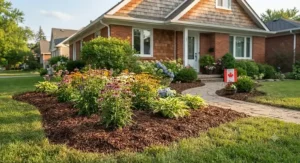
How to Choose Affordable Mulch Bags for Gardens
Finding genuinely affordable mulch bags for gardens comes down to matching material, bag size, and bed exposure rather than defaulting to whatever’s cheapest on the shelf. Follow these steps:
- Measure your bed first. Multiply length by width in feet, then check the coverage-per-bag figures below before buying — guessing usually means an extra trip back to the store.
- Decide organic vs. synthetic. Wood-based mulches feed the soil as they decompose; rubber does not but lasts years longer — pick based on whether the bed is ornamental-only or edible-adjacent.
- Match colour to your hardscaping. Brown blends into almost anything; black and red are style statements that fade faster and show it more visibly.
- Factor in sun exposure. Full-sun beds lose moisture fastest, favouring denser products like cypress or rubber mulch over light, airy wood chips.
- Buy slightly more than the math says. A 10% buffer covers uneven ground and settling, and it’s cheaper to have a little leftover than to run short mid-project.
- Check the price-per-litre, not just the sticker price. Small bags almost always cost more per litre than large ones, even within the same product line.
- Read aggregated review themes, not star ratings alone. Recurring complaints about fading, odour, or bag tears tell you more than a 4.5-star average does.
Coverage Per Bag: How Far Does Each Bag Really Go?
Coverage per bag is the single most misunderstood number on a mulch label, because it depends entirely on application depth — a bag that “covers 8 square feet” typically means at a shallow 3-inch depth, and going deeper shrinks that number fast.
| Product | Bag Volume | Approx. Coverage @ 7–8 cm depth | Price Range (CAD) |
|---|---|---|---|
| GARDENWISE Premium Organic Wood Mulch | 0.5 CF (14 L) | ~1.6–2 sq. ft. | Under C$12 |
| GARDENWISE Premium Black Wood Mulch | 0.7 CF (20 L) | ~2.3–2.8 sq. ft. | C$14–C$18 |
| GARDENWISE Premium Cypress Mulch | 1 CF (28 L) | ~3.3–4 sq. ft. | C$17–C$22 |
| GARDENWISE Premium Brown Wood Mulch | 2 CF (56 L) | ~6.5–8 sq. ft. | C$22–C$28 |
| NuPlay Black Rubber Garden Mulch | 20 lb | ~4–5 sq. ft. (denser material) | C$24–C$29 |
Looking at this table, the coverage math clearly favours buying fewer, larger bags whenever the bed size allows it — two of the GARDENWISE Premium Brown Wood Mulch (2 CF) bags will comfortably outcover four or five of the smallest containers-sized bag for a similar total spend. Rubber mulch covers less ground per bag than its wood counterparts by volume, but because it never needs replacing, the true multi-year coverage-per-dollar looks considerably better once you stop comparing it as a single-season purchase.
Weed Suppression: What Actually Works
Weed suppression is mulch’s headline job, and it works almost entirely through light-blocking rather than any chemical mechanism — buried weed seeds simply can’t photosynthesize their way to the surface through a dense enough layer. Reviewers consistently note that the biggest predictor of weed breakthrough isn’t the brand, it’s the depth and evenness of application; thin patches near bed edges are the most common failure point across every product in this roundup.
Denser materials edge out lighter ones here. The naturally interlocking texture of GARDENWISE Premium Cypress Mulch and the solid, non-porous structure of NuPlay Black Rubber Garden Mulch both create a tighter physical barrier than loosely shredded wood, which can settle unevenly over a season and open small gaps. That said, standard wood mulch from the GARDENWISE brown and black lines performs perfectly well for weed suppression provided it’s applied at full depth and refreshed once compaction sets in — the “gap” is more about maintenance discipline than product quality.
Moisture Retention: Why Depth Matters More Than Brand
Moisture retention is where mulch earns its keep during a hot Canadian summer, and the research consensus is refreshingly simple: depth and coverage consistency matter more than which specific bag you bought. A 7–8 cm layer slows evaporation dramatically compared to bare soil, reducing watering frequency and buffering roots against the kind of sudden dry-out that stresses shallow-rooted annuals.
Between the products on this list, rubber mulch and the denser cypress option hold their moisture-buffering edge longest in full-sun conditions specifically because they resist compaction and don’t wick water away the way porous wood fibres can during a drought stretch. That’s not a knock against the wood-based GARDENWISE lines — for beds with partial shade or regular rainfall, the difference is marginal, and the lower cost per bag makes wood mulch the more sensible choice for most Canadian gardens outside the hottest microclimates.
Value Mulch for Flower Beds vs. Premium Bagged Options
It’s worth being honest about what “value” actually buys you here, because the temptation is to assume premium always means better. In practice, value mulch for flower beds in this under-$30 CAD bracket performs the two core jobs — moisture retention and weed suppression — almost as well as pricier boutique or specialty bagged mulches, provided depth and coverage are correct.
| Factor | Value Mulch (this list) | Premium/Specialty Mulch |
|---|---|---|
| Weed suppression | Strong at proper depth | Strong, marginal edge from denser blends |
| Moisture retention | Good to very good | Very good to excellent |
| Colour longevity | 1 season typical | Often 1–2 seasons |
| Price per bag | Under C$30 | Often C$35–C$60+ |
| Best for | Most residential flower beds | Show gardens, extreme exposure sites |
The gap narrows considerably once you factor in annual refresh costs — a premium bag that lasts two seasons at C$50 works out similarly to two value bags at C$25 replaced yearly. GARDENWISE Premium Brown Wood Mulch and NuPlay Black Rubber Garden Mulch in particular close most of that performance gap for typical residential beds, leaving premium mulch as a reasonable splurge mainly for high-visibility show gardens rather than a functional necessity.
Common Mistakes When Buying Mulch Under $30
The single most common mistake is buying by bag count instead of coverage math — grabbing “a few bags” without measuring the bed first almost always results in either an awkward shortfall or an unused leftover bag. A close second is choosing colour before checking material: dyed mulches like the GARDENWISE Premium Black Wood Mulch and GARDENWISE Premium Red Wood Mulch look identical to their undyed cousins in performance but differ meaningfully in fade rate, which matters if you’re mulching a highly visible front bed.
A third mistake is ignoring bed exposure entirely — buying the lightest, airiest wood mulch for a scorching south-facing border when a denser option like cypress or rubber would hold moisture far better. Finally, many buyers skip reading aggregated review themes for recurring complaints (odour, bag tears, inconsistent shred size), relying purely on star averages that can mask a pattern three or four reviews would have flagged clearly.
Mulch for Small Flower Beds and Container Gardens
Small beds and containers have different needs than sprawling borders, chiefly because over-buying wastes both money and storage space. The GARDENWISE Premium Organic Wood Mulch (0.5 CF) is purpose-built for this — its chemical-free formulation is also the safer default if any of those containers double as herb pots, since additives in dyed mulch are best kept away from edible root zones even when manufacturers describe them as low-risk.
For small in-ground beds bordering a patio or walkway, a single bag of GARDENWISE Premium Black Wood Mulch or GARDENWISE Premium Red Wood Mulch typically covers the space in one application without leftover waste, and the stronger colour saturation reads better in a compact, close-viewed space than it would spread thin across a large border. The general rule for container and small-bed shoppers: buy the smallest bag that still meets your coverage math, since the convenience premium on tiny bags is only worth paying when you’d otherwise waste product.
Long-Term Cost & Maintenance: Is Cheap Mulch Actually Cheaper?
Total cost of ownership tells a more interesting story than sticker price alone. Wood-based mulch in the C$12–C$28 range typically needs a partial top-up or full refresh annually as it breaks down and fades, meaning a modest flower bed might cost roughly C$15–C$25 per year in ongoing mulch spend over a five-year stretch — somewhere in the C$75–C$125 range total, depending on bed size and colour choice.
Rubber mulch flips that math. A one-time purchase of the NuPlay Black Rubber Garden Mulch in the C$24–C$29 range, applied once, can realistically last three to five years or longer with no seasonal replacement, before accounting for any minor top-up around the edges. Over that same five-year window, total spend on rubber mulch for an equivalent bed often lands lower than repeated wood-mulch purchases — the trade-off is simply that rubber contributes nothing to soil health as it ages, while wood mulch is quietly improving your soil structure with every seasonal breakdown. Which one “wins” depends on whether you’re optimizing for lowest dollar cost or for soil-building value, and honestly, both are legitimate goals.
Safety & Regulations: What Canadian Gardeners Should Know
Mulch itself isn’t heavily regulated in Canada, but a few practical safety notes matter. Health Canada’s guidance on home and garden safety recommends checking for approved Pest Control Products numbers on any treated garden product and notes that replacing high-traffic grass areas with mulch is a reasonable, low-pesticide landscaping choice — a helpful data point if you’re weighing mulch against turf in problem areas of the yard.
For dyed mulches specifically, keep them away from direct contact with edible crops as a precaution, even though most reputable Canadian suppliers, including the GARDENWISE line featured throughout this guide, use dyes marketed as low-toxicity for ornamental use. Rubber mulch carries its own separate consideration: some municipal composting programs won’t accept rubber-mulched yard waste, so if you ever remove it, plan for regular waste disposal rather than assuming it’s compostable. None of these notes should discourage typical residential use — they’re simply the kind of practical detail a spec sheet leaves out.
Buyer’s Decision Framework
If you’re short on time, use this simple framework rather than re-reading every product section:
- If your bed is under 2 square metres and includes containers, choose the GARDENWISE Premium Organic Wood Mulch for its right-sized bag and chemical-free formulation.
- If your bed gets full, punishing sun all afternoon, choose the NuPlay Black Rubber Garden Mulch or GARDENWISE Premium Cypress Mulch for superior moisture retention.
- If you’re covering multiple beds on a tight budget, choose the GARDENWISE Premium Brown Wood Mulch (2 CF) for the best coverage-per-dollar in this roundup.
- If curb appeal is the priority over function, choose between the GARDENWISE Premium Black Wood Mulch and GARDENWISE Premium Red Wood Mulch based purely on which tone suits your hardscaping.
- If you never want to buy mulch again, the rubber option is the only true “set and forget” pick, provided the bed is strictly ornamental.
Frequently Asked Questions
❓ Is mulch under $30 CAD good enough for flower beds, or should I spend more?
❓ How many bags of mulch do I need for a small flower bed?
❓ What is the cheapest mulch option for gardens on amazon.ca?
❓ Does black or red mulch fade faster than brown mulch?
❓ Is rubber mulch safe for flower beds near vegetables?
Conclusion
Getting flower beds looking sharp doesn’t require a specialty supplier or a premium price tag — it requires matching the right bag to the right bed, applying it at the correct depth, and being honest with yourself about how much square footage you’re actually covering. Across the seven products in this guide, the pattern holds: value mulch for flower beds in the sub-$30 CAD bracket handles weed suppression and moisture retention competently, with the real differentiators being bag size, colour longevity, and whether you’re chasing a one-season refresh or a multi-year, buy-once solution like rubber mulch.
If there’s one habit worth adopting from Canadian gardening writers, it’s treating mulch as an annual ritual rather than a one-time fix — the CBC Life guide to reworking a front yard puts it plainly: budget for mulch upfront and plan to refresh it, and your beds will look intentional rather than neglected, season after season. Measure twice, buy the bag that matches your math, and let the rest of the growing season take care of itself.
✨ Don’t Miss These Exclusive Deals!
🔍 Ready to give your flower beds the finish they deserve? Check current pricing on any of the seven picks above and get your beds covered before the next dry spell hits. Your garden — and your weekend free time — will thank you. 🌱
Recommended for You
- Professional Garden Tool Set 2026: 7 Elite Picks Worth Buying
- Garden Tool Set For Seniors: 7 Easy-Grip Picks for 2026
- 7 Best Beginner Garden Tool Set Picks for 2026
Disclaimer: This article contains affiliate links. As an Amazon Associate, I earn from qualifying purchases. If you purchase products through these links, we may earn a small commission at no additional cost to you.
✨ Found this helpful? Share it with your friends! 💬🤗
