

In This Article
There’s a particular kind of heartbreak that has nothing to do with romance and everything to do with a rose bed. It’s the moment a lifelong gardener sets down a trowel, flexes a stiff wrist, and wonders if the hobby that’s kept them sane for forty years is finally asking too much of their hands. If that sounds familiar, you’re not alone, and you’re not out of options. A garden tool set for seniors is simply a collection of hand tools engineered around one idea: gardening shouldn’t hurt. What is a garden tool set for seniors? It’s a curated group of trowels, pruners, weeders, and support tools built with lightweight materials, contoured non-slip grips, and reduced-effort mechanisms so that arthritis, limited grip strength, or joint pain don’t have to end your time in the dirt.
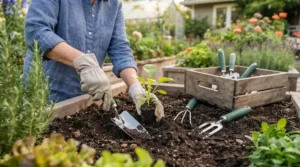
This guide digs into seven real, currently available options — sourced from actual product listings and aggregated review sentiment rather than guesswork — and breaks down which ones actually deliver on their ergonomic promises. According to Arthritis Society Canada, simple modifications like raised beds and joint-friendly tools can make gardening far more comfortable for people managing arthritis, and that principle guides everything below. We’ll cover ergonomic garden tool sets built for full garden coverage, lightweight tools for elderly gardeners who need to conserve energy, easy-grip tool collections designed around weaker hands, and the accessible gardening kits that bundle support gear like kneelers alongside the tools themselves. Whether you’re shopping for yourself or for a parent who insists they’re “fine” despite wincing every time they kneel, you’ll walk away with a shortlist worth clicking “add to cart” on.
Quick Comparison Table: Best Garden Tool Set for Seniors at a Glance
| Product | Best For | Price Range (CAD) | Weight |
|---|---|---|---|
| Fiskars Ergo 3-in-1 Garden Tool Set | Best all-around ergonomic set | around C$35–C$50 | Light |
| Radius Garden NRG Ergonomic Tool Set | Best for arthritic hands | C$45–C$70 range | Ultra-light |
| gonicc GPPS-1011 Ratchet Pruning Shears | Best for weak grip strength | around C$25–C$40 | Light |
| VEVOR Garden Kneeler and Seat | Best for knee and back support | C$40–C$65 range | Moderate |
| Fiskars 4-Claw Stand-Up Weeder | Best for zero-bend weeding | around C$35–C$50 | Light |
| Garden Guru Hori Hori Knife | Best all-in-one digging tool | around C$25–C$40 | Ultra-light |
| Corona GT 3070 Extendable Cultivator | Best budget reach extender | C$30–C$45 range | Light |
Prices fluctuate constantly on Amazon.ca, so treat these as ballpark ranges and always check current pricing at checkout. Looking at the spread above, the Fiskars Ergo 3-in-1 Garden Tool Set earns its “best all-around” label because it covers digging, transplanting, and cultivating in a single ergonomic package, while the Radius Garden NRG Ergonomic Tool Set justifies its higher price with a patented grip shape that specifically targets arthritic hands. Budget-conscious shoppers shouldn’t overlook the gonicc GPPS-1011 or the Garden Guru Hori Hori Knife, both of which punch well above their price point for anyone dealing with reduced hand strength.
💬 Just one click — help others make better buying decisions too!😊
Top 7 Garden Tool Sets for Seniors: Expert Analysis
Here’s where the spec sheets stop mattering in the abstract and start mattering in your actual hands. Each of these seven picks was chosen to cover a real gap — hand strength, wrist angle, kneeling ability, or reach — so you can match the tool to the specific thing that’s been slowing you down.
1. Fiskars Ergo 3-in-1 Garden Tool Set — best all-rounder for everyday garden tasks
The standout here is simplicity: one purchase covers digging, transplanting, and cultivating without cluttering your shed with singles. The set bundles a trowel, transplanter, and cultivator, each with a cast-aluminum head that resists rust and a contoured SoftGrip handle designed to keep your wrist in a more neutral position while you work. In practice, that neutral-wrist geometry is the whole point — a straight or slightly bent wrist under load is dramatically easier on the joints than the sharp bend a standard trowel forces you into during a long planting session. This set is built for gardeners who want one dependable trio for raised beds, container gardens, or general border maintenance rather than a specialized single-task tool. Reviewers consistently note that the aluminum heads hold up over multiple seasons without bending, and a common thread in feedback is genuine surprise at how much less forearm fatigue shows up after an afternoon of weeding compared to bargain-bin alternatives. A recurring complaint, however, is that the cultivator’s tines can struggle in heavy clay soil, so gardeners in dense-soil regions may want to pre-loosen ground with a fork first.
Pros:
- ✅ Covers three core tasks in one ergonomic set
- ✅ Cast-aluminum heads resist rust for years
- ✅ Neutral-wrist grip reduces fatigue noticeably
Cons:
- ❌ Cultivator struggles in dense clay soil
- ❌ No wrist strap for gardeners with grip loss
Priced around C$35–C$50, this set delivers strong everyday value for anyone who wants broad coverage without buying three separate tools.
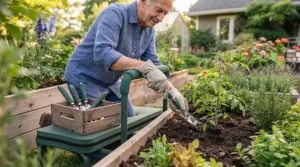
2. Radius Garden NRG Ergonomic Garden Hand Tool Set — best Natural Radius Grip for arthritic hands
What sets this set apart immediately is the patented Natural Radius Grip, a curved handle shape that mimics how your hand naturally rests rather than forcing a straight-shaft grip. That curve matters more than it sounds: a straight handle concentrates pressure on the same few points of your palm and wrist with every push, while the radius shape spreads that load and adds real leverage without extra squeezing. The bundle typically includes a trowel, transplanter, weeder, and cultivator, all built from ultra-lightweight die-cast aluminum that resists rust indefinitely. Based on the spec comparison with more conventional sets, this is the pick for gardeners who’ve specifically been told by an occupational therapist to reduce wrist deviation, or for anyone whose hands ache after twenty minutes with a standard trowel. Aggregated review sentiment across retailers consistently flags this brand as a favourite among gardeners managing carpal tunnel or early-stage arthritis, with the tools frequently described as feeling like “an extension of the arm” rather than a separate implement to wrestle with. The main drawback reviewers mention is that the thermoplastic grip material, while comfortable, shows wear faster than a solid rubber grip after years of outdoor storage.
Pros:
- ✅ Patented grip reduces wrist and hand strain
- ✅ Ultra-lightweight aluminum never rusts
- ✅ Recommended by national gardening and arthritis publications
Cons:
- ❌ Grip material wears faster than solid rubber
- ❌ Premium price versus basic tool sets
At C$45–C$70 range, this is a justified splurge for anyone whose hands are the limiting factor in how long they can garden.
3. gonicc GPPS-1011 Professional Ratchet Anvil Pruning Shears — best for weak grip strength
The headline feature is the 3X ratchet mechanism, and it’s not marketing fluff — instead of one hard squeeze to cut through a woody stem, the ratchet clicks through several smaller stages, multiplying your hand’s force with each partial squeeze. What most buyers overlook about ratchet pruners is that this isn’t just about convenience; it’s specifically what occupational therapists recommend for anyone with reduced grip strength, since it converts a single high-force action into several low-force ones. The SK-5 steel anvil blade handles dead or woody branches well, while the chrome vanadium handle keeps the whole tool light without feeling flimsy. Reviewers consistently report that hands which previously couldn’t manage a full pruning session without cramping can now get through an entire hedge trim, and several noted it as the single tool that let them keep pruning roses after other shears became unmanageable. On the downside, anvil-style blades aren’t ideal for live, soft green growth — the crushing action can bruise tender stems rather than cleanly slicing them, so a companion bypass pruner is worth keeping on hand for delicate cuts.
Pros:
- ✅ Ratchet action cuts required grip force dramatically
- ✅ SK-5 steel blade handles thick, woody branches
- ✅ Ambidextrous design works for left or right hands
Cons:
- ❌ Not ideal for soft, live green stems
- ❌ Ratcheting action is slower than a single-cut pruner
Around C$25–C$40, this is one of the highest-value tools in this entire lineup for anyone whose hands are the primary obstacle.
4. VEVOR Garden Kneeler and Seat — best for knee and back support
This one isn’t a hand tool at all, and that’s exactly the point: no amount of ergonomic trowel design fixes the problem of getting down to ground level and back up again. The VEVOR kneeler flips between a cushioned kneeling pad and a stable seat, addressing the two biggest physical barriers to gardening as we age — sore knees and a back that doesn’t love bending forward for twenty minutes at a stretch. The thick EVA foam pad absorbs impact on hard or gravelly ground, and the folding steel frame collapses flat for storage in a shed or garage corner. Here’s what the spec sheet won’t tell you, but user reports suggest: the side handles that come standard on most kneeler-seat combos double as a genuine assist for pushing back up to standing, which matters enormously if getting up off the ground has become its own small project. Aggregated feedback across kneeler-style products in this category frequently praises the tool pouches attached to the frame, since they keep a trowel or pruner within arm’s reach without another trip back to the shed. The most common complaint is that the seat height sits a little low for very tall users, so it’s worth checking dimensions against your own height before buying.
Pros:
- ✅ Flips between kneeling pad and seat instantly
- ✅ Side handles assist with standing back up
- ✅ Folds flat to just a few inches for storage
Cons:
- ❌ Seat height runs low for taller gardeners
- ❌ Foam pad compresses over several seasons
At C$40–C$65 range, this is arguably the highest-impact accessible gardening kit item on this list for anyone who dreads the up-and-down of ground-level work.
5. Fiskars 4-Claw Stand-Up Weeder — best for zero-bend weeding
The standout feature is right there in the name: this is a weeding tool you operate entirely from a standing position, which sidesteps the bending-and-kneeling problem before it even starts. A 39-inch shaft ends in four serrated stainless-steel claws that grip a weed’s root system when you step down on the foot platform, and an easy-eject mechanism releases the pulled weed with a second step rather than requiring you to bend down and pry it loose by hand. On paper this means dandelions and thistles come out root and all without a single knee touching the ground, which for many older gardeners is the difference between weeding being a chore they avoid and one they can actually keep up with weekly. Reviewers consistently note the offset handle design as reducing wrist strain compared to straight-shaft alternatives, and the viewing window built into the foot pedal gets specific praise for helping users place the claws accurately without squinting at ground level. The most common frustration in aggregated feedback is that the claws lose effectiveness in very compacted or rocky soil, where they simply can’t get enough purchase to pull a stubborn root.
Pros:
- ✅ Removes weeds without any bending or kneeling
- ✅ Easy-eject mechanism avoids hand contact with weeds
- ✅ Offset handle reduces wrist strain while standing
Cons:
- ❌ Struggles in compacted or rocky soil
- ❌ Less precise than a hand tool for tight spaces
Priced around C$35–C$50, this is a strong pick specifically for gardeners whose back, not their hands, is the limiting factor.
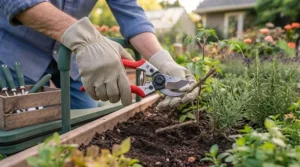
6. Garden Guru Hori Hori Gardening Knife — best all-in-one digging and cutting tool
The short version of why this tool has such a devoted following: one implement replaces a trowel, a small saw, a weeder, and a measuring tool, which means fewer trips back to the shed and less gear to manage with tired hands. The stainless-steel full-tang blade combines a sharp flat edge for cutting roots, a serrated edge for sawing through woody material, and a concave scoop shape for lifting soil, all measured with depth markings along the blade for accurate planting. Based on the spec comparison with dedicated single-purpose trowels, the hori hori’s versatility is what earns it a spot here — it’s genuinely one of the lightest tools in this list, and its single-hand operation makes it a favourite for gardeners who use a cane or walker and only have one free hand for tool work. Aggregated review sentiment repeatedly highlights how the wide, concave blade lets users scoop and lift soil with far less wrist rotation than a narrow trowel requires, and several gardeners specifically mention it as the one tool they’d keep if forced to give up everything else. The main drawback is the lack of a contoured ergonomic grip found on purpose-built senior tools — the wooden handle is comfortable but doesn’t offer the same cushioned support as a rubberized grip.
Pros:
- ✅ Replaces four separate tools in one blade
- ✅ Usable one-handed for cane or walker users
- ✅ Depth markings help with accurate planting
Cons:
- ❌ Handle lacks cushioned ergonomic grip
- ❌ Exposed blade requires careful storage around others
At around C$25–C$40, this is easily one of the best value-per-gram tools on this entire list.
7. Corona GT 3070 Extendable Handle Cultivator — best budget reach extender
The advantage here is reach without a price tag to match: this telescoping cultivator extends from 18 to 32 inches, letting you work a raised bed or a border without bending over at all. The ComfortGEL grip that Corona uses across its extended-reach line spreads pressure across the palm rather than concentrating it in the fingers, which matters over a long session of turning soil. Here’s what most buyers overlook about extendable tools — the ability to shorten the handle back down for tight container work means this single cultivator can flex between standing tasks and close-up detail work, covering more ground (literally) than a fixed-length tool. Reviewers consistently praise the telescoping mechanism for staying locked in place under real digging pressure rather than slipping to a shorter length mid-task, a common failure point in cheaper extendable designs. On the downside, some feedback notes the tines are narrower than a full garden fork, so it’s better suited to loosening soil around existing plants than breaking fresh, unworked ground.
Pros:
- ✅ Extends 18–32 inches to eliminate bending
- ✅ ComfortGEL grip spreads pressure across the palm
- ✅ Telescoping lock holds firm under real pressure
Cons:
- ❌ Narrower tines than a full digging fork
- ❌ Less durable than solid-shaft cultivators long-term
In the C$30–C$45 range, this is the budget pick for anyone whose main issue is reach and bending rather than grip strength.
Practical Usage Guide: Setting Up Your Ergonomic Garden Tool Set
Getting an ergonomic garden tool set into your hands is only half the job — setting it up properly is what actually delivers the pain relief you’re after. Start by adjusting expectations before adjusting tools: give yourself a full week of shorter, more frequent sessions rather than one marathon Saturday, since new grip angles use muscles differently than what you’re used to, even when they’re objectively easier on the joints. During the first thirty days, a common mistake is gripping new ergonomic handles too tightly out of habit — the whole design intent is reduced grip force, so consciously relaxing your hold lets the tool do the leverage work it was built for.
For maintenance, a quick wipe-down after each use prevents soil buildup from stiffening moving parts like ratchet pruners or telescoping shafts, and an occasional drop of light oil on any hinge or ratchet mechanism keeps the reduced-effort action working as intended. Store hand tools in a wall-mounted rack rather than a bin at ground level — reaching into a deep bucket to fish out a trowel defeats half the purpose of buying ergonomic gear in the first place. One optimization trick that rarely makes it onto product packaging: pairing a stand-up weeder with a garden kneeler-seat combo covers both major physical limitations — standing tasks and ground-level tasks — without needing to buy a third specialized tool for either one.
✨ Don’t Miss These Exclusive Deals!
🔍 Take your garden tool set for seniors search to the next level with these carefully selected products. Click on any highlighted item to check current pricing and availability. These tools will help you create a comfortable, pain-free gardening routine your whole family will notice!
Real-World Scenarios: Matching Accessible Gardening Kits to Your Life
Different gardeners hit different walls, so let’s walk through three real profiles and see which accessible gardening kits actually solve their specific problem.
Scenario one: the container gardener with arthritic hands. Say you’ve downsized to a condo balcony with a handful of pots, and your main obstacle is that your fingers ache after ten minutes with a standard trowel. The Radius Garden NRG Ergonomic Garden Hand Tool Set is the clear match here — its patented grip is specifically engineered around exactly this problem, and the lightweight aluminum heads mean you’re not fighting tool weight on top of joint pain.
Scenario two: the backyard vegetable grower with knee and back trouble. If you’ve got raised beds and borders but dread the process of getting down to soil level and back up, pair the VEVOR Garden Kneeler and Seat with the Fiskars 4-Claw Stand-Up Weeder. Together they cover both the sitting-and-kneeling tasks and the standing weeding tasks without a single knee hitting the ground.
Scenario three: the budget-conscious weekend pruner. For someone who mostly deals with hedges, roses, and the occasional overgrown shrub on a fixed income, the gonicc GPPS-1011 Ratchet Pruning Shears deliver outsized value, converting tough one-handed cuts into a series of gentle squeezes without needing a full tool set overhaul.
| Gardener Profile | Best Match | Why It Fits |
|---|---|---|
| Arthritic hands, container gardening | Radius Garden NRG Ergonomic Tool Set | Patented grip reduces wrist deviation |
| Knee/back pain, raised beds | VEVOR Kneeler + Fiskars Stand-Up Weeder | Covers both sitting and standing tasks |
| Budget-conscious, pruning focus | gonicc GPPS-1011 Ratchet Shears | High-value grip-force reduction |
As the table shows, matching a tool to your specific limitation matters more than buying the most expensive set available. A gardener with strong hands but a bad back gains little from a premium hand-tool grip, while someone with arthritic fingers won’t benefit much from a kneeler alone.
How to Choose a Garden Tool Set for Seniors
Shopping for a garden tool set for seniors gets a lot easier once you break it down into a short checklist rather than scrolling endless listings. Here’s the process worth following:
- Identify your specific limitation first. Grip strength, wrist mobility, knee flexibility, and back tolerance are four separate problems, and no single tool fixes all of them.
- Prioritize weight over material toughness. A slightly less durable aluminum tool you can actually lift comfortably beats a heavy-duty steel one sitting unused in the shed.
- Check handle shape, not just handle padding. A cushioned grip on a straight shaft still forces the same wrist angle as an unpadded one — shape matters more than softness.
- Look for reduced-effort mechanisms on cutting tools. Ratchet pruners and geared loppers multiply hand force, which matters far more than blade sharpness alone.
- Consider reach-extending options for bending-related pain. Telescoping handles or stand-up weeders remove the ground-level problem entirely rather than just cushioning it.
- Read aggregated review themes, not star ratings alone. A 4.3-star average tells you little; recurring comments about “less hand fatigue” or “easier on my wrists” tell you everything.
- Buy support gear alongside hand tools. A kneeler-seat, per Canada’s physical activity guidance for older adults, helps sustain the muscle-strengthening benefits gardening offers without overloading joints in a single position.
Lightweight Tools for Elderly Gardeners: Why Weight Matters More Than Price
Here’s a pattern that shows up constantly in review data but rarely in marketing copy: the single biggest predictor of whether a tool actually gets used long-term isn’t its price or even its ergonomic grip — it’s raw weight. Lightweight tools for elderly gardeners matter because fatigue compounds. A half-pound difference in a trowel feels trivial for the first five minutes and becomes the entire reason someone stops gardening at the twenty-minute mark. Aluminum and fiberglass consistently outperform steel and hardwood on this metric, which is exactly why five of the seven products above lean on cast or die-cast aluminum heads. What most buyers overlook is that lighter isn’t automatically weaker — modern cast-aluminum alloys used in tools like the Fiskars Ergo 3-in-1 Garden Tool Set hold an edge and resist bending nearly as well as steel while weighing a fraction as much. The practical upshot: when comparing two otherwise similar sets, check the listed weight before checking the price, since a tool that sits unused because it’s tiring to hold delivers zero value regardless of how cheap it was.
Easy-Grip Tool Collections: The Science Behind Reduced Hand Fatigue
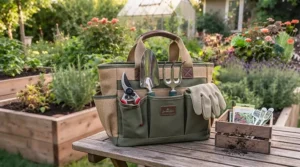
Easy-grip tool collections aren’t just padded versions of standard tools — the good ones change the actual geometry your hand works against. A traditional straight-shaft trowel forces a pincer-style grip that concentrates force on your thumb and first two fingers, precisely the joints most affected by osteoarthritis. Curved or radius-style grips, like the one on the Radius Garden NRG Ergonomic Garden Hand Tool Set, instead let your whole palm and fingers wrap around the handle in a more natural “C” shape, spreading load across a much larger surface area. What the spec sheet won’t tell you, but user reports suggest, is that this grip change alone often matters more than the tool’s blade quality — a gardener with a mediocre blade but a genuinely ergonomic grip will typically outlast one with a premium blade and a standard straight handle. Reduced-diameter isn’t the goal either; slightly larger, softer grip diameters generally reduce the squeezing force needed to maintain control, which is exactly why ratchet pruners like the gonicc GPPS-1011 pair oversized cushioned handles with their multiplying mechanism rather than relying on mechanism alone.
Common Mistakes When Buying Garden Tools for Seniors
The most frequent misstep is buying based on the word “ergonomic” printed on the packaging rather than checking what specifically makes a tool ergonomic — the word itself carries no regulatory meaning and gets slapped on plenty of products that offer little more than a rubber sleeve over a standard handle. A second common error is buying an entire multi-piece set when the real problem is a single task, like pruning; a gardener struggling specifically with cutting doesn’t need six new hand tools, they need one good ratchet pruner. Third, many buyers skip support gear entirely, assuming hand tools alone solve everything, when a kneeler-seat or stand-up weeder often delivers more relief than any trowel upgrade ever could. Fourth, shoppers frequently ignore handle length relative to their own height, buying a stand-up weeder or extendable cultivator sized for an average adult without checking whether it actually reaches a comfortable working height for them. Finally, plenty of gardeners overlook maintenance requirements — a ratcheting mechanism or telescoping shaft needs occasional cleaning and light oiling, and skipping this step is the single fastest way to turn an easy-grip tool back into a stiff, frustrating one within a season.
Garden Tool Set for Seniors vs Traditional Garden Tools
The gap between a genuinely ergonomic garden tool set for seniors and a traditional hardware-store set isn’t cosmetic — it shows up in handle geometry, material weight, and mechanical assistance. Traditional tools are largely designed for average adult strength and a one-size-fits-all wrist angle, which works fine until arthritis, reduced grip strength, or joint stiffness enters the picture. Ergonomic sets, by contrast, are built specifically around minimizing force and awkward angles, often at a modest price premium that pays for itself the first time you finish a full afternoon of gardening without needing to ice your wrists afterward.
| Factor | Traditional Garden Tools | Ergonomic Senior-Focused Tools |
|---|---|---|
| Handle shape | Straight shaft, uniform grip | Curved/radius grip matching hand shape |
| Material weight | Often steel, heavier | Aluminum or fiberglass, lighter |
| Cutting mechanism | Single-squeeze pruners | Ratcheting, force-multiplying mechanisms |
| Reach options | Fixed length | Telescoping/extendable handles common |
Looking at the table, the biggest practical difference lands in the cutting mechanism row — a standard single-squeeze pruner asks for one large burst of hand strength, while a ratcheting design like the gonicc GPPS-1011 breaks that same cut into several small, manageable squeezes. Arthritis Research Canada notes that choosing tools which reduce strain and support the joints is one of the most effective adaptations available to gardeners managing joint conditions, which lines up directly with what the comparison above shows. The trade-off is usually price: expect to pay somewhat more upfront for genuinely ergonomic gear, though the reduced fatigue and lower injury risk generally make that premium worthwhile over a full gardening season.
Reduced-Strain Tool Sets and Long-Term Joint Health
Reduced-strain tool sets earn their name by targeting the specific movements that cause cumulative joint damage over years of gardening, not just the occasional ache after one long session. Repeated wrist deviation — the sideways bend a standard trowel forces with every scoop — is a known contributor to long-term strain, and it adds up far more than most gardeners realize across hundreds of digging motions in a single planting season. Tools built around neutral-wrist grips, like the Fiskars Ergo 3-in-1 Garden Tool Set, aren’t just more comfortable in the moment; they reduce the accumulated micro-strain that eventually shows up as chronic tendon or joint irritation. The same principle applies to kneeling: repeated unsupported kneeling compresses cartilage in ways a cushioned kneeler like the VEVOR Garden Kneeler and Seat is specifically designed to offset. Reviewers across this category consistently connect reduced-strain gear with being able to garden more frequently rather than in occasional painful bursts, which matters because consistency, not intensity, is what delivers gardening’s well-documented physical benefits over months and years.
Comfort-Designed Implements: Features That Actually Matter (And Those That Don’t)
Not every feature printed on a comfort-designed implement’s packaging translates into real-world relief, so it’s worth separating genuine upgrades from marketing filler. Features that actually matter: cushioned, contoured grip shapes that change wrist angle; ratcheting or geared mechanisms on cutting tools; genuinely lightweight materials like aluminum or fiberglass; and telescoping or extendable handles that eliminate bending. Features that matter far less than their marketing suggests: bright colour schemes (nice for not losing a tool in the grass, irrelevant to comfort), “heavy-duty” branding on hand tools that most seniors will never actually need for typical bed maintenance, and bundled gloves or bags that pad out a set’s perceived value without addressing the actual ergonomic problem. Based on the spec comparison across all seven products reviewed here, the tools that generated the most positive aggregated review sentiment were consistently the ones that changed the fundamental mechanics of the task — grip angle, force required, or bending posture — rather than simply adding a soft coating to an otherwise standard design.
Long-Term Cost & Maintenance
A garden tool set for seniors is rarely a one-and-done purchase decision from a pure cost standpoint, so it’s worth thinking in terms of total value over several seasons rather than sticker price alone. Cheap steel tools without rust protection often need replacing within two or three seasons in damp Canadian climates, while cast-aluminum or stainless-steel options in this guide are built to last considerably longer with minimal upkeep.
| Product | Approx. Price Range (CAD) | Maintenance Needed |
|---|---|---|
| Fiskars Ergo 3-in-1 Garden Tool Set | C$35–C$50 | Wipe after use, occasional oiling |
| Radius Garden NRG Ergonomic Tool Set | C$45–C$70 | Minimal, rinse and dry |
| gonicc GPPS-1011 Ratchet Pruning Shears | C$25–C$40 | Clean sap, oil ratchet mechanism |
| VEVOR Garden Kneeler and Seat | C$40–C$65 | Wipe foam pad, check frame bolts |
The maintenance column above tells a clear story: mechanical tools like ratchet pruners need slightly more attention to keep their force-multiplying action smooth, while simple aluminum hand tools require almost none. In terms of cost-per-use, a C$45 tool set used weekly across an eight-month growing season works out to pennies per gardening session, which makes the ergonomic premium over bargain-bin alternatives look considerably smaller once you spread it across actual use.
Buyer’s Decision Framework
If you’re still narrowing things down, a simple priority checklist beats scrolling through more listings. If your hands are the main problem, choose the Radius Garden NRG Ergonomic Garden Hand Tool Set or gonicc GPPS-1011 Ratchet Pruning Shears, because both directly reduce grip force and wrist strain. If your knees or back are the main problem, choose the VEVOR Garden Kneeler and Seat paired with the Fiskars 4-Claw Stand-Up Weeder, since together they eliminate ground-level work almost entirely. If budget is your primary constraint, choose the Garden Guru Hori Hori Gardening Knife, since it replaces multiple single-purpose tools at a fraction of the cost of a full set. If you garden mostly in raised beds or containers, choose the Corona GT 3070 Extendable Handle Cultivator, since its telescoping design adapts to both close-up and standing-distance work. And if you want one dependable set that covers general maintenance without specializing in any one limitation, choose the Fiskars Ergo 3-in-1 Garden Tool Set as your baseline, then add specialized tools as specific needs come up.

Frequently Asked Questions
❓ What is the best garden tool set for seniors with arthritis?
❓ Are lightweight garden tools actually strong enough for real gardening?
❓ What tool helps most with weeding without bending or kneeling?
❓ Do ratchet pruning shears really need less hand strength?
❓ What's the difference between a garden kneeler and a garden stool?
Conclusion
Gardening shouldn’t come with an unspoken expiration date tied to how your joints feel this season. The seven tools covered here — from the all-around Fiskars Ergo 3-in-1 Garden Tool Set to the specialized VEVOR Garden Kneeler and Seat — each solve a specific, real limitation rather than promising a vague, one-size-fits-all fix. The honest truth is that no single product magically erases arthritis or a cranky lower back, but the right combination of reduced-effort mechanisms, lighter materials, and smarter grip geometry genuinely changes how much gardening you can comfortably do in a season. Start with whichever limitation bothers you most — hands, knees, or back — and build outward from there rather than buying an entire matching set out of habit. Whichever combination you land on, the goal stays the same: more time enjoying the garden, less time nursing sore wrists afterward.
✨ Don’t Miss These Exclusive Deals!
🔍 Ready to make gardening comfortable again? Browse the picks above, check current pricing, and start building a routine that keeps you outside all season long!
Recommended for You
- 7 Best Beginner Garden Tool Set Picks for 2026
- 7 Best Garden Tool Set Picks for Canadian Yards in 2026
- Warren Hoe vs Regular Hoe: 7 Top Picks for Canadian Gardens (2026)
Disclaimer: This article contains affiliate links. As an Amazon Associate, I earn from qualifying purchases. If you purchase products through these links, we may earn a small commission at no additional cost to you.
✨ Found this helpful? Share it with your friends! 💬🤗
