
In This Article
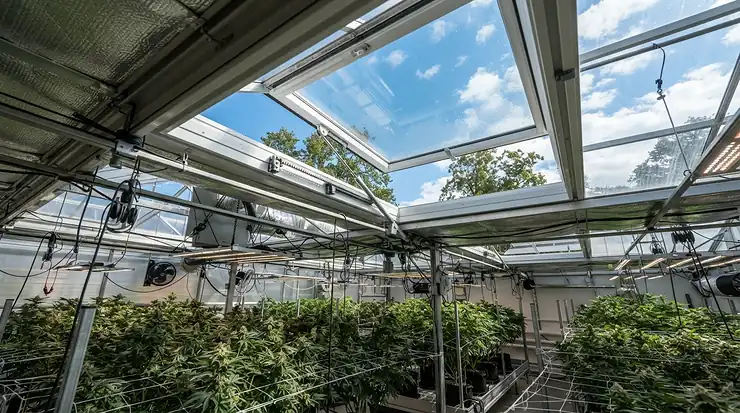
Most backyard gardeners outgrow their first greenhouse in about one season. The 6×8 that felt luxurious in April is a traffic jam by June. A 10×12 greenhouse for serious gardeners fixes that problem without turning your yard into an industrial site. It gives you roughly 120 square feet (about 11 m²) of growing floor, enough for two benches, a central aisle, a potting corner and still room to swing a wheelbarrow.
Size isn’t the whole story, though. The glazing decides how much light your plants get. The frame decides whether the structure survives a prairie gust or a Maritime nor’easter. The insulation decides whether your seedlings are alive on a February morning.
I researched real 10×12 and near-10×12 kits, compared their specs and read what verifiable buyer reviews exist. Then I translated all of it into practical advice for Canadian conditions. You’ll find seven products, a straight comparison of 10×12 polycarbonate greenhouse vs glass greenhouse, honest talk about year-round cultivation in a cold country, and a permit warning most listings skip.
One heads-up before we start: 120 square feet lands just above the 10 m² line where many Canadian municipalities start asking for permits. We’ll deal with that properly further down.
What Is a 10×12 Greenhouse for Serious Gardeners?
A 10×12 greenhouse for serious gardeners is a walk-in structure of roughly 3.0 × 3.7 m (about 120 sq ft) with a rigid frame, durable glazing, adjustable vents and a lockable door. It is built for repeated seasons of cultivation, not casual seed-starting.
That definition matters because the word “greenhouse” covers a lot of ground. Wikipedia’s overview of the greenhouse notes that the smallest example is a cold frame, while large commercial houses are high-tech production facilities. A 10×12 sits in the interesting middle: big enough for real production, small enough to heat, ventilate and manage by yourself.
What separates a “serious” build from a pop-up tent is the stuff you don’t see in a glossy photo. Look for thicker aluminum extrusions, proper anchoring points, gutters and drainage, at least two roof vents and glazing that holds heat overnight. Spec sheets also vary wildly on snow load. Several Canadian retail listings for smaller Outsunny greenhouses openly state that the structure isn’t designed for heavy snow, so read the fine print on any kit you consider.
For a Canadian gardener, “serious” also means planning for frost heave, wind, snow and condensation. A kit that thrives in a mild coastal zone can struggle on the Prairies. The rest of this guide is about matching the structure to your reality.
Quick Comparison: 7 Greenhouse Picks at a Glance
Here is the lineup before we dig into each one. Price ranges are in Canadian dollars, converted approximately from retail listings seen at the time of research. They are not live Amazon prices, so check current price and availability on amazon.ca before you commit.
| Product | Frame & Glazing | Footprint | Est. Price Range (CAD) | Best For |
|---|---|---|---|---|
| Palram Canopia Four Season Chalet 12′ x 10′ | Aluminum, 4 mm twin-wall roof + clear walls | 12′ x 10′ | C$3,800-C$4,300 | Long-term, low-fuss growing |
| AMERLIFE 12x10x8 Hybrid Polycarbonate Greenhouse | Aluminum, hybrid clear/translucent panels | 12′ x 10′ | Mid-C$1,000s to low-C$2,000s (verify) | Cold-climate value |
| Jocisland 10×12 Polycarbonate Greenhouse | Aluminum, polycarbonate, 4 roof vents | 10′ x 12′ | C$1,200-C$1,700 | Ventilation-hungry growers |
| Oasis Hexagonal 10×12 DIY Greenhouse Kit | Aluminum, polycarbonate, hexagonal | 10′ x 12′ | C$3,800-C$4,300 | Garden showpiece |
| 10 ft. W x 12 ft. D Greenhouse (Model GHY-A1012-BK) | Black aluminum, UV-coated panels | 10′ x 12′ | C$1,000-C$1,400 | Tight budgets |
| Chery Industrial Walk-in Polycarbonate Greenhouse (GG000052) | Powder-coated aluminum, twin polycarbonate | 10′ x 12′ | C$1,400-C$1,800 | Sliding-door convenience |
| WUKHG 10X12FT Greenhouse | Aluminum, polycarbonate | 10′ x 12′ | C$1,200-C$1,700 | Year-round growing on a budget |
The table shows a clear split. Two products sit in the premium bracket for engineered glazing and design, while the rest cluster in a budget-to-mid band where the real differences are vent count, panel thickness and anchoring. If you want the 10×12 greenhouse for serious gardeners experience at the lowest sensible spend, the middle band is where most of your decisions live.
💬 Just one click — help others make better buying decisions too!😊
Top 7 Picks for the 10×12 Greenhouse for Serious Gardeners: Expert Analysis
Every entry below mixes real specs with a straight analytical read. Where I couldn’t verify real customer reviews, I say so rather than guess.
1. Palram Canopia Four Season Chalet 12′ x 10′ — premium twin-wall roof, crystal-clear walls
The big idea here is a split personality: diffusing twin-wall panels overhead and clear polycarbonate panels on the walls. The listing describes 4 mm twin-wall roof panels that block up to 99.9 per cent of UV, clear wall panels passing over 90 per cent of light, and a double-wall, rust-resistant aluminum frame on a galvanized steel base. In practice, that mix gives you soft, even light on the bench and unobstructed light at plant height from the sides. That matters most in the gloomy weeks around the winter solstice.
Floor space is about 112 sq ft (roughly 10.4 m²) with more than 2.4 m of headroom, so trellised tomatoes and cucumbers won’t hit the ceiling. Two adjustable roof vents plus wide double doors with a threshold ramp tell you this was designed around wheelbarrows. Based on the spec comparison, it’s the most “finished” option on this list.
Reviewers on a Walmart.com listing averaged about 4.2 stars across 64 ratings at the time of research. Buyers praise the look, and some mention pouring a concrete base with drainage or adding foam board insulation and a fan, which suggests the stock setup rewards a little tinkering.
Pros:
- ✅ Clear walls pass over 90 per cent of light
- ✅ 4 mm twin-wall roof diffuses harsh sun
- ✅ Wide double doors with threshold ramp
Cons:
- ❌ Priciest tier in this lineup
- ❌ Needs a proper base and anchoring
Expect roughly C$3,800-C$4,300 (check current price). Verdict: you’re paying for refined glazing and hardware, which makes sense if you plan to use it for a decade.
2. AMERLIFE 12x10x8 Hybrid Polycarbonate Greenhouse — hybrid panels built for snowy yards
Hybrid here means clear polycarbonate on the walls and translucent twin-wall on the roof, the same logic as the Palram at a lower price tier. The Amazon listing highlights a quick-connect aluminum frame, dual roof vents, double doors and gutters. An 8-foot ridge height (about 2.4 m) gives you real vertical growing room, which is the cheapest way to add “floor space” to any greenhouse.
What the spec sheet won’t tell you, but affiliate-style roundups note repeatedly, is that it wants a level foundation of concrete, treated wood or compacted gravel. Take that seriously in Canada, where frost heave can twist a frame out of square in a single winter. Pair it with the anchoring hardware and a gravel pad that drains.
On review sentiment, I’ll be candid: sources disagree. One roundup cites 216 reviews averaging about 4.2 stars, while another says only 14 reviews. Check the live listing. The consistent theme is that it holds up well when properly anchored.
Pros:
- ✅ 2.4 m ridge height gives vertical growing space
- ✅ Hybrid panels balance light and insulation
- ✅ Dual roof vents and double doors included
Cons:
- ❌ Review counts vary between sources
- ❌ Requires a perfectly level foundation
Price is best treated as mid-range, so verify the current listing. Verdict: strong value if you anchor it well.
3. Jocisland 10×12 Polycarbonate Greenhouse — four roof vents for hot-weather control
Ventilation is where cheap greenhouses quietly fail. Jocisland’s 10×12 kit ships with a rain gutter and four adjustable roof vents on an aluminum frame. Four vents in a 120 sq ft space means hot air has plenty of escape routes. That’s useful in July, when a closed greenhouse can cook seedlings in an afternoon.
The listing also mentions thickened corner posts, ground stakes, expansion bolts and fixed steel plates for anchoring into soil or concrete. Anchoring matters more than panel thickness on a windy lot. The listing doesn’t state panel thickness, so ask the seller before you assume twin-wall insulation.
On the Walmart.com listing, the kit averaged 4.8 stars from 123 reviews at the time of research. The review excerpts I could see mostly praise the purchase experience rather than detailed performance, so treat the rating as encouraging but not conclusive.
Pros:
- ✅ Four roof vents for strong airflow
- ✅ Built-in rain gutter for water collection
- ✅ Heavy anchoring hardware included
Cons:
- ❌ Panel thickness isn’t clearly stated
- ❌ Review detail on winter performance is thin
Expect roughly C$1,200-C$1,700 (check current price). Verdict: great for summer-heavy growing, but confirm glazing thickness before relying on it for winter.
4. Oasis Hexagonal 10×12 DIY Greenhouse Kit — hexagonal design that doubles as garden art
Hexagonal greenhouses are rare at this size, and the shape does real work. Angled panels shed snow and rain more readily than flat roofs, and the geometry looks deliberate in a landscaped yard. The Home Depot listing (Model 705239) describes a gray-and-clear aluminum frame with polycarbonate panels in a DIY kit.
The trade-off is layout. A hexagon wastes corner space that a rectangle uses for benches, so your usable growing area is smaller than the “10×12” label suggests. If you’re a serious gardener counting every bench foot, measure your intended layout on paper first.
I couldn’t find verified customer reviews for this specific kit, so I won’t characterize satisfaction. The listing showed 0 in stock at one store when I looked, so confirm availability on Canadian retailers and amazon.ca.
Pros:
- ✅ Angled panels shed snow and rain readily
- ✅ Distinctive look suits ornamental gardens
- ✅ Aluminum frame with polycarbonate panels
Cons:
- ❌ Corners reduce usable bench space
- ❌ No verifiable reviews found
Price sits near the C$3,800-C$4,300 range. Verdict: a design-led purchase, not the best value per square foot.
5. 10 ft. W x 12 ft. D Greenhouse (Model GHY-A1012-BK) — black frame, lowest entry price
Black frames soak up sunlight and look sharp against a green backdrop. This Home Depot-listed kit has UV-coated panels, a roof vent, a “quick setup” structure and two drainage channels. Those channels matter more than they sound, because pooled water against a base is how wooden foundations rot.
With only one roof vent listed, you’ll likely want to add a second or lean on a thermostat-driven fan. A single vent in a 120 sq ft space is the weak point I’d flag first. The listing shows pricing that dropped substantially from its list price, which suggests the market treats it as a promotional item.
I couldn’t verify customer reviews, so treat it as a spec-sheet judgment only. For a first-time buyer on a tight budget, it deserves a look, but do your own checking on panel thickness and wind rating.
Pros:
- ✅ Lowest price among 10×12 options here
- ✅ Two drainage channels manage runoff
- ✅ UV-coated panels protect plants and plastic
Cons:
- ❌ Only one roof vent listed
- ❌ No verified reviews or snow rating
Expect roughly C$1,000-C$1,400. Verdict: acceptable value if you upgrade ventilation and anchor it properly.
6. Chery Industrial Walk-in Polycarbonate Greenhouse (GG000052) — sliding doors and four-season branding
Sliding doors are underrated in a greenhouse. Swing doors need clearance and can slam in a gust, while sliders glide and leave your aisle space intact. This 10′ L x 12′ W model (Mfr # GG000052) pairs a powder-coated aluminum frame with twin polycarbonate sheets, vents and sliding doors.
The listing markets it for use “in spring, summer, autumn and winter.” Treat that phrase as marketing rather than a performance guarantee. Twin-wall sheets do help with insulation, but winter performance in a Canadian cold snap depends on your heat source, base and air sealing.
It’s sold through a U.S. industrial supplier with a delivery surcharge, and the product originates in China. Check Canadian availability and shipping before you fall for it. I found no verified buyer reviews.
Pros:
- ✅ Sliding doors save aisle space
- ✅ Twin polycarbonate sheets aid insulation
- ✅ Powder-coated aluminum resists rust
Cons:
- ❌ Delivery surcharge on top of price
- ❌ Canadian availability unclear
Expect roughly C$1,400-C$1,800 before shipping. Verdict: decent hardware, but confirm logistics first.
7. WUKHG 10X12FT Greenhouse — year-round growing reputation on a budget
The WUKHG name keeps appearing in year-round growing roundups. The smaller 8×10 sibling is described as 4 mm twin-wall aluminum with thermometers, a lockable hinged door and a roof vent. One roundup calls it the best for year-round growing among its picks.
I can’t confirm the 10×12 version shares those exact specs, so verify panel thickness, vent count and frame gauge on the live listing. That caution matters because listings for budget kits sometimes change between size variants.
Roundup-site praise is not the same as verified buyer reviews, and I couldn’t find individual reviews for the 10×12 model. Treat the reputation as a lead worth investigating, not a conclusion.
Pros:
- ✅ Twin-wall panels on the sibling model aid insulation
- ✅ Lockable door protects tools and plants
- ✅ Frequently named in year-round growing lists
Cons:
- ❌ 10×12 specs need verification
- ❌ No individual reviews found
Expect roughly C$1,200-C$1,700 (check current price). Verdict: a promising budget candidate that needs a careful spec check.
Specs, Ratings and Price Ranges Compared
| Product | Glazing | Vents / Doors | Verified Rating | Est. Price (CAD) |
|---|---|---|---|---|
| Palram Canopia Four Season Chalet 12′ x 10′ | 4 mm twin-wall roof, clear walls | 2 vents / double doors | 4.2 (64 ratings) | C$3,800-C$4,300 |
| AMERLIFE 12x10x8 Hybrid Polycarbonate Greenhouse | Hybrid clear + twin-wall | Dual vents / double doors | ~4.2 (counts vary) | Mid-range |
| Jocisland 10×12 Polycarbonate Greenhouse | Polycarbonate (thickness unstated) | 4 vents | 4.8 (123 reviews) | C$1,200-C$1,700 |
| Oasis Hexagonal 10×12 DIY Greenhouse Kit | Polycarbonate panels | Not verified | None found | C$3,800-C$4,300 |
| 10 ft. W x 12 ft. D Greenhouse (Model GHY-A1012-BK) | UV-coated panels | 1 vent | None found | C$1,000-C$1,400 |
| Chery Industrial Walk-in Polycarbonate Greenhouse (GG000052) | Twin polycarbonate | Vents / sliding doors | None found | C$1,400-C$1,800 |
| WUKHG 10X12FT Greenhouse | Polycarbonate (verify) | Verify | None found | C$1,200-C$1,700 |
Only three of the seven have any rating I could stand behind, and that is the real finding here. Strong star averages exist for Jocisland 10×12 Polycarbonate Greenhouse and the Palram Canopia Four Season Chalet 12′ x 10′, but even those come from U.S. retail listings. For the rest, spec reading and a careful look at the live seller page are your best tools.
10×12 Polycarbonate Greenhouse vs Glass Greenhouse: What the Material Really Changes
This is the debate that never dies in gardening circles, and the honest answer is “it depends on what you value most.” The 10×12 polycarbonate greenhouse vs glass greenhouse question comes down to light, insulation, durability and cost.
Per a University of Arkansas greenhouse glazing reference, single 3 mm glass transmits about 90 per cent of light with a U-factor around 1.05, which implies an R-value near 1. Twin-wall polycarbonate usually transmits closer to 76-82 per cent but insulates noticeably better. Suppliers commonly cite R-values from roughly 1.5 for 6 mm twin-wall up to about 3.2 for 16 mm five-wall panels.
| Factor | Twin-wall Polycarbonate | Single Glass | Double / Insulated Glass |
|---|---|---|---|
| Light transmission | ~76-82% | ~90% | Slightly below single |
| Insulation (R-value) | ~1.5-2+ | ~1 | ~3-6 |
| Impact resistance | High | Breakable | Breakable |
| Weight | Light | Heavy | Heavier |
| Cost | Lower | Higher | Highest |
| Best For | Cold-climate DIY builds | Maximum winter light | Permanent premium builds |
Glass wins on pure clarity and long-term transmission stability. Polycarbonate wins on insulation, weight and resilience, plus it diffuses light, which reduces hot spots and lets more light reach lower leaves. The grower has to decide, as WSU Extension puts it, whether light or insulation matters more for their situation.
For most Canadian backyard growers, polycarbonate is the pragmatic choice. It’s cheaper, kinder to your heating bill and forgiving of hail and errant soccer balls. Glass becomes appealing if you’re an obsessive winter grower of light-hungry crops and you’re willing to spend more on a heavier, pricier structure.
How to Choose a 10×12 Greenhouse for Serious Gardeners
Choosing well comes down to seven checks. Work through them in order.
- Confirm the footprint against local rules. At about 11 m², a 10×12 may trigger a permit. Phone your municipality before you order anything.
- Match glazing to climate. Twin-wall of at least 4 mm suits most milder zones. Colder regions benefit from thicker panels or a hybrid setup with extra insulation on the north side.
- Check frame gauge and anchoring. Thin extrusions flex in wind. Look for corner reinforcement, steel base plates and real anchor hardware.
- Count the vents. Two roof vents is a floor, not a ceiling. Add a thermostatic fan if the kit ships with one vent.
- Verify snow-load language. If the listing says “not for heavy snow,” believe it, and plan to clear the roof.
- Look at the door. Wide doors with a low threshold make wheelbarrow work painless. Sliding doors save aisle space.
- Plan the base first. A level, drained base matters more than any feature on the spec sheet.
Skipping step one is the most common regret. A kit that arrives on a pallet and can’t legally go on your lot is a very expensive lawn ornament.
Insulation: How Warm Can a 10×12 Greenhouse Really Stay?
Insulation is the difference between a greenhouse that helps in March and one that works in January. The physics is blunt: heat escapes through every surface in proportion to its U-value, and glazing is the weakest link.
Moving from single glass (roughly R-1) to 6 mm twin-wall (about R-1.5) cuts conductive heat loss by roughly a third. A 16 mm multiwall (around R-3) cuts it by about two thirds, though it trades away light. One supplier warns that five-wall panels at roughly 62 per cent transmission can delay harvests by two to three weeks.
Beyond glazing, the cheap wins are on the ground. A gravel or insulated base slows heat loss through the floor. Sealing gaps around doors and vents matters more than most people expect, because wind-driven infiltration can overwhelm even good panels. Bubble insulation on the north wall, a layer of foam board on a blank end wall, and thermal mass such as water barrels all steady the overnight swing.
Pair insulation with a small, thermostat-controlled electric heater and you’ll gain real control. Avoid unvented combustion heaters in a sealed greenhouse. Whatever you choose, look for CSA or equivalent safety certification, and have any permanent wiring done to code.
10×12 Greenhouse for Year-Round Growing: What’s Realistic in Canada
Let’s be honest about 10×12 greenhouse for year-round growing. In most of Canada, an unheated polycarbonate kit extends your season by weeks, not by a full calendar. It won’t turn Winnipeg in January into Tuscany.
What it does well is year-round cultivation of cold-hardy crops. Spinach, kale, mâche, claytonia, carrots and many herbs will happily overwinter in an unheated or lightly heated structure, especially with row cover inside for an extra layer. Tomatoes, peppers and cucumbers need steady warmth and proper light, which means supplemental heat and often grow lights.
Daylight is the hidden limit. When days drop below roughly ten hours, plant growth slows sharply regardless of temperature. Crops sit in a kind of suspended animation rather than dying, and then surge when light returns in February. Plan your winter as a storage and maintenance season for greens, and your spring as a head start on everything else.
If year-round cultivation is the goal, put your money into insulation, a reliable heater and a good base before extras like benches and shelving. A modest, well-sealed structure beats a fancy leaky one every time. Pairing the right kit from the Top 7 with a sensible heating plan is what turns an extended season into something close to all-year production.
Polycarbonate Glazing Explained: Thickness, Walls and Light
Polycarbonate glazing is not one product. Panels come in different thicknesses and wall counts, and each combination shifts the balance between light and heat retention.
Single-wall or corrugated panels transmit up to about 90 per cent of light but insulate poorly. Twin-wall panels (4 mm to 10 mm) trap an air layer, gaining insulation at a modest light cost. Multiwall panels (16 mm and up) add chambers for even better insulation but diffuse and reduce light more.
Here’s what the spec sheet rarely mentions. Twin-wall panels have hollow flutes, and the open ends need sealing. If dust, insects or moisture get inside, you’ll see green algae streaks and clouded panels within a few seasons. Quality kits include end caps or tape, and it’s worth buying extra if yours don’t.
UV protection also matters. Reputable panels carry a UV-protective layer on the outer face, and installing them upside down (UV side inward) can shorten their life dramatically. Always follow the marked orientation. A diffusing roof panel combined with clear walls, the hybrid approach used by the Palram Canopia Four Season Chalet 12′ x 10′ and the AMERLIFE 12x10x8 Hybrid Polycarbonate Greenhouse, is a smart compromise for people who want soft light overhead and visibility at plant height.
Permits, Snow Loads and Safety: A Canadian Regulation Guide
Here’s the part nobody wants to read and everybody should. A 10×12 greenhouse measures about 11.2 m², which crosses the 10 m² threshold used by many Canadian municipalities.
The Regional Municipality of Wood Buffalo states that a development permit is required for accessory structures of 10 m² or larger, and it lists greenhouses among examples. It adds that Safety Codes permits may still be required for any new electrical wiring, gas lines, water lines or heating appliances. Rules differ elsewhere: some Newfoundland towns exempt greenhouses under 16 m², while others use 10 m².
Check three things with your local office:
- Whether a greenhouse counts as an accessory building
- Setbacks from property lines and any front-yard restrictions
- Whether a building permit is needed once you exceed the size threshold, and if electrical work is involved
Structural safety deserves equal respect. Anchor to a real foundation, clear heavy snow from the roof, and don’t assume “weatherproof” means “snowproof.” Keep heaters on stable surfaces, away from plastic, and use certified equipment. A permit conversation costs ten minutes; ignoring one can cost you the whole structure.
Price Range and Long-Term Value Analysis
Sticker price is only the opening bid. Total cost of ownership includes base materials, anchoring, heating, ventilation upgrades and replacement panels over time.
| Tier | Example Product | Typical Range (CAD) | What You’re Paying For | Best For |
|---|---|---|---|---|
| Budget | 10 ft. W x 12 ft. D Greenhouse (Model GHY-A1012-BK) | C$1,000-C$1,400 | Basic frame and panels | First-time buyers |
| Mid | Jocisland 10×12 Polycarbonate Greenhouse | C$1,200-C$1,700 | Extra vents and anchoring | Summer-heavy growers |
| Premium | Palram Canopia Four Season Chalet 12′ x 10′ | C$3,800-C$4,300 | Engineered glazing and hardware | Long-term owners |
Spread a premium kit over ten years and the annual cost drops considerably, particularly if cheaper kits need new panels or frame repairs. But a budget kit with a few smart upgrades can outperform a pricey one that’s poorly sited. Budget an extra 15-25 per cent for the base, anchors, a thermostat fan and a heater, and your real cost will track what you actually pay.
For gardeners selling produce or growing a large share of their family’s food, even modest yield gains pay the difference. For weekend hobbyists, the mid-range is usually the efficient choice.
Practical Setup and Maintenance Guide
A greenhouse is only as good as its first month. Follow this sequence and you’ll avoid the usual rookie injuries.
Pick the site. Choose a spot with maximum winter sun, ideally with the long axis running east-west, and a windbreak such as a fence or hedge on the prevailing-wind side. Avoid low ground where cold air pools.
Build the base. Level it, drain it and anchor it. A compacted gravel pad with a treated-wood frame works for most kits. Check frost depth in your area.
Assemble on a calm day. Two people can usually do it in a weekend. Lay out and count every part first, and test-fit panels before final tightening. Seal panel ends and joints.
Set up the climate. Install thermometers at plant height, add a thermostat-controlled fan and consider a small electric heater. Put water barrels on the north side for thermal mass.
Maintain on a schedule. Each month, check fasteners, clear gutters and wash panels. In autumn, scrub algae and lubricate door tracks. After snow, brush the roof gently with a soft tool.
Common first-30-day mistakes: leaving vents closed on a sunny day, overwatering in cold weather, ignoring ground moisture, and forgetting to anchor before a windy week.
Real-World Scenarios: Matching the Greenhouse to the Gardener
The prairie market grower. Budget of C$4,000, selling greens and transplants from March to November, with hard winters and big winds. The Palram Canopia Four Season Chalet 12′ x 10′ or the AMERLIFE 12x10x8 Hybrid Polycarbonate Greenhouse, set on a concrete or gravel pad with proper anchors, is the sensible pairing. Add a heater and extra roof insulation, and you can run cold-hardy greens through winter.
The coastal tomato enthusiast. Mild winters, wet springs, and a goal of earlier, cleaner tomatoes. The Jocisland 10×12 Polycarbonate Greenhouse, with four vents for humidity control, suits the damp air that invites mildew. Prioritize airflow over insulation here.
The budget-conscious family in Ontario. Roughly C$1,500 to spend, weekends only, and a lot of enthusiasm. The 10 ft. W x 12 ft. D Greenhouse (Model GHY-A1012-BK) or WUKHG 10X12FT Greenhouse can work, provided you reinforce anchoring, add a second vent and verify specs before purchase. Plan your spend around the base and a thermostat fan, and grow cool-season crops first.
Problem → Solution Guide for 10×12 Greenhouse Owners
Problem: overheating in summer. Open both vents and door, add a thermostatic fan, and use shade cloth during heat waves. A kit with four vents, like the Jocisland 10×12 Polycarbonate Greenhouse, gives you a head start.
Problem: condensation drip and mould. Increase airflow, water in the morning rather than evening, and space plants out. Twin-wall panels diffuse condensation better than glass.
Problem: winter cold snaps. Add thermal mass, bubble insulation on the north wall and a small certified heater. Row cover inside protects crops without raising the whole structure’s temperature.
Problem: snow load on the roof. Clear snow gently with a soft broom from outside. Don’t climb on panels, and don’t use sharp tools that scratch the coating.
Problem: your municipality says no. Ask whether a smaller footprint or seasonal designation changes the rules. Some jurisdictions treat the thresholds differently, as the Municipality of Crowsnest Pass explains, noting that an accessory building of 10 m² or larger requires a building permit under the National Building Code. Alternatives include a slightly smaller kit under the threshold.
FAQ
❓ What is the best base for a 10x12 greenhouse?
❓ How many tomato plants fit in a 10x12 greenhouse?
❓ Can I use a 10x12 greenhouse in winter without heating?
❓ How long does polycarbonate glazing last?
❓ Is a 10x12 greenhouse kit easy to assemble alone?
Conclusion
A 10×12 greenhouse for serious gardeners rewards planning more than spending. The best structure is the one that fits your climate, your permits and your base, not necessarily the priciest.
If you want the most refined option, the Palram Canopia Four Season Chalet 12′ x 10′ is the standout for glazing mix and hardware. For cold-region value, the AMERLIFE 12x10x8 Hybrid Polycarbonate Greenhouse deserves a close look, provided you verify the current listing. Ventilation-focused growers should consider the Jocisland 10×12 Polycarbonate Greenhouse, while tight budgets point toward the 10 ft. W x 12 ft. D Greenhouse (Model GHY-A1012-BK) or the WUKHG 10X12FT Greenhouse, with careful spec checks. Design lovers may enjoy the Oasis Hexagonal 10×12 DIY Greenhouse Kit, and anyone wanting sliding doors can check the Chery Industrial Walk-in Polycarbonate Greenhouse (GG000052).
Remember the order of operations: confirm permits first, build a proper base second, then choose glazing and insulation to match your goals. Whether you favour a 10×12 polycarbonate greenhouse vs glass greenhouse for your climate, or want to chase serious year-round cultivation, a well-chosen setup will pay you back in earlier harvests and longer seasons.
✨ Ready to grow more, longer? 🌿
🔍 Check current pricing and availability on your favourite pick and start planning your base today. Your future self, standing among ripe tomatoes in a late-autumn sunset, will thank you! 🍅
Recommended for You
- 8×10 Greenhouse For Small Farms: 7 Proven Picks For 2026
- 8×10 Greenhouse Kit: 7 Best Picks For Canadian Gardens (2026)
- 6×8 Greenhouse For Vegetable Growing: 7 Best Picks In 2026
Disclaimer: This article contains affiliate links. As an Amazon Associate, I earn from qualifying purchases. If you purchase products through these links, we may earn a small commission at no additional cost to you.
✨ Found this helpful? Share it with your friends! 💬🤗
