
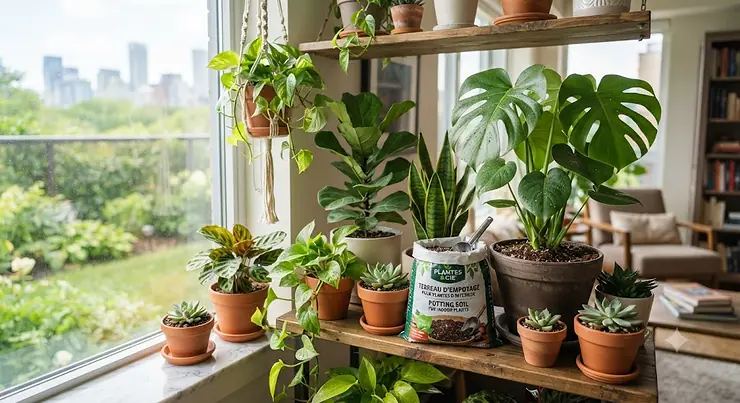
In This Article
Here’s a confession every plant parent eventually makes: you can buy the healthiest fiddle leaf fig at the nursery, carry it home like a trophy, and still watch it decline within weeks — not because you forgot to water it, but because of what’s sitting under the surface. The bag of dirt scooped from the backyard, or the cheapest potting soil for indoor plants grabbed off a big-box shelf, is very often the real culprit. Despite the name, most bagged mixes contain little to no actual dirt at all — as the Wikipedia entry on potting soil explains, they’re really engineered blends built around moisture retention, aeration, and drainage. Indoor containers behave nothing like garden beds. There’s no earthworm traffic, no rain to flush salts, no deep soil layers to buffer mistakes — just a few litres of material doing all the work of feeding roots, holding moisture, and letting them breathe.
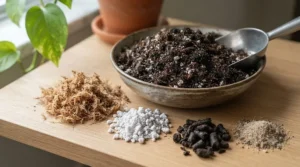
That’s the gap this guide closes. Rather than repeating what’s printed on a bag, we dug into real product specs, aggregated customer-review patterns, and the actual science of what makes a growing medium behave well in a pot on your windowsill. You’ll get seven genuinely different potting soil for indoor plants options — from bargain bags to peat-free specialty blends — plus the comparative reasoning to know which one fits your space, your plants, and your patience level for maintenance. We’ll also dig into the finer questions: how a lightweight potting mix for houseplants differs from a dense all-purpose bag, what changes when you’re working with soil for indoor succulents, and the soil-level habits that make root rot prevention almost automatic rather than a constant worry.
Quick Comparison Table
Before the deep dive, here’s the shortcut. This table sketches out where each of our seven picks lands on price, texture, and best-fit use case, so you can jump straight to the product that matches your situation.
| Product | Texture | Price Range (CAD) | Best For |
|---|---|---|---|
| Miracle-Gro Houseplant Potting Mix | Light, perlite-rich | Under C$15 | Budget all-rounder, gnat-prone homes |
| Hoffman Organic Potting Soil Plus | Medium-light | Under C$12 | First-time buyers, small pots |
| Miracle-Gro Organic Indoor Potting Mix | Light, moisture-buffered | C$15-C$22 | Forgetful waterers, OMRI-conscious shoppers |
| Black Gold Natural & Organic Potting Mix | Medium, aerated | C$18-C$26 | Mid-range all-purpose, mixed plant collections |
| FoxFarm Ocean Forest Potting Soil | Rich, dense-ish | C$25-C$35 | Heavy feeders, fast-growing tropicals |
| Rosy Soil Indoor Potting Soil Mix | Light, chunky, peat-free | C$20-C$28 | Eco-conscious buyers, sensitive root systems |
| Back to the Roots Organic Succulent & Cacti Mix | Gritty, fast-draining | C$12-C$18 | Soil for indoor succulents, cacti, and snake plants |
Reading across this table, the split isn’t really “cheap versus expensive” — it’s texture and intent. Miracle-Gro Houseplant Potting Mix and Hoffman Organic Potting Soil Plus are built for ease and forgiveness at a low price point, while FoxFarm Ocean Forest Potting Soil trades some of that lightness for a heavier nutrient load that fast growers actually burn through. If your collection leans succulent-heavy, the Back to the Roots Organic Succulent & Cacti Mix is really the only true fit here, since general-purpose bags hold far more water than a cactus root ball wants to sit in.
💬 Just one click — help others make better buying decisions too!😊
Top 7 Potting Soils for Indoor Plants: Expert Analysis
Amazon.ca’s growing-media aisle is genuinely crowded, so we narrowed things down to seven products that actually earn a spot: a mix of budget, mid-range, and premium bags, plus one purpose-built option for succulent and cactus growers. Every product below gets read the same way — what’s actually in the bag, what that means for your plant, and who should (and shouldn’t) buy it.
1. Miracle-Gro Houseplant Potting Mix — engineered to resist fungus gnats
The standout here is the formulation itself: it’s built specifically to be less hospitable to the larvae that cause most indoor gnat infestations, a detail regular garden soil simply doesn’t address. Bag contents lean on sphagnum peat moss and perlite, giving a light, fast-draining texture that’s fertilized to feed for roughly the first month after potting — in practice, that means new transplants get an easy runway before you need to think about liquid fertilizer. Based on the spec comparison with other entry-level mixes, this one earns its shelf space through that gnat-resistant claim rather than through unusually rich nutrition; it’s a solid generalist, not a heavy feeder’s bag. Reviewers consistently report noticeably fewer gnats compared with previous bags they’d used, alongside a texture that drains quickly without turning bone-dry within a day. A recurring critique in user feedback is that the bag can run inconsistent between batches, with some finding it slightly heavier or wetter than expected out of the packaging.
Pros:
- ✅ Formulated specifically to reduce fungus gnat activity
- ✅ Lightweight texture suits most common houseplants
- ✅ Widely available and easy to find at big-box retailers
Cons:
- ❌ Batch consistency varies according to some reviewers
- ❌ Not nutrient-dense enough for fast-growing tropicals long-term
Priced under C$15 for a standard bag, this is a genuinely low-risk starting point — the value verdict is straightforward for anyone whose main headache has been gnats swarming every time they water.
2. Hoffman Organic Potting Soil Plus — no-mixing simplicity for small pots
What sets this one apart is how ready-to-use it is straight from the bag, with no need to blend in extra perlite or amendments before your first repot. The composition emphasizes moisture retention alongside organic matter, meaning smaller pots — the kind that dry out fastest — get a bit more buffer between waterings. What most buyers overlook about a “plus” formulation like this is that the extra retention is a double-edged sword: great for a sunny windowsill pothos, less great for anything that prefers to dry out fully between waterings, like a jade plant. Aggregated review sentiment points to strong satisfaction among beginners specifically, with several noting it’s an easy entry point for people repotting their very first indoor plant. A recurring theme in critical reviews is that the bag size runs small relative to the price per litre compared with bulkier competitors.
Pros:
- ✅ Ready-to-use with no pre-mixing required
- ✅ Strong moisture retention for smaller containers
- ✅ Beginner-friendly, low learning curve
Cons:
- ❌ Higher per-litre cost than larger bags
- ❌ Too moisture-retentive for drought-tolerant species
At under C$12 for a 4-quart bag, it’s an easy first purchase, though anyone potting more than a handful of plants will likely outgrow the bag size quickly and want to size up.
3. Miracle-Gro Organic Indoor Potting Mix — OMRI-listed buffer against watering mistakes
The headline feature is right there in the name: this mix is designed to protect against both over- and under-watering, a claim that matters because inconsistent watering is arguably the single biggest killer of houseplants. In practice, that protection comes from a blended structure of coco coir, perlite, and organic matter that holds moisture evenly without turning waterlogged, meaning the margin for error when you forget a plant for a week (or drown it out of anxiety) is wider than with a straight peat-based bag. Being OMRI Listed matters to a specific slice of buyers too — anyone avoiding synthetic fertilizers in their home will appreciate that this qualifies for organic growing standards. Reviewers consistently note the texture feels noticeably lighter and fluffier straight out of the bag compared with older Miracle-Gro formulations, with several mentioning it as their go-to for repotting pothos, monstera, and peace lilies. A common complaint in user reviews is that the bag can arrive slightly damp or compacted after shipping, requiring a quick fluff before use.
Pros:
- ✅ OMRI Listed for organic gardening standards
- ✅ Balanced moisture buffer reduces watering mistakes
- ✅ Light, fluffy texture straight from the bag
Cons:
- ❌ Can arrive compacted or slightly damp after shipping
- ❌ Premium organic price versus non-organic Miracle-Gro lines
Sitting in the C$15-C$22 range depending on bag size, this is the mix we’d point anxious first-time plant owners toward — the built-in forgiveness genuinely offsets the higher price tag.
4. Black Gold Natural & Organic Potting Mix — aeration-forward blend for mixed collections
This one’s standout trait is a notably airy structure, built around a combination of Canadian sphagnum peat moss, perlite, and pumice that keeps roots well-oxygenated even in denser containers. What that composition means in practice is fewer soggy-bottom problems in pots without generous drainage holes, since the pumice and perlite create physical air pockets that peat alone can’t. Based on the spec comparison against similarly priced bags, this mix reads as a genuine middle-ground pick — not as light as a succulent blend, not as rich as a fertilized tropical formula, which actually makes it a smart default for a windowsill with five different plant types on it. Reviewers frequently mention it as a reliable “one bag fits most” option for mixed collections of pothos, ferns, and peace lilies, praising the consistent texture batch to batch. A recurring critique is that it contains forest products that some buyers find a bit chunky for very small pots or seed-starting trays.
Pros:
- ✅ Strong aeration reduces waterlogging risk
- ✅ Reliable texture across batches, per reviewer reports
- ✅ Versatile enough for varied plant collections
Cons:
- ❌ Chunkier texture less ideal for tiny pots
- ❌ Mid-range price versus basic all-purpose bags
At roughly C$18-C$26, it lands as the safe, dependable middle child of this list — not flashy, but hard to get wrong.
5. FoxFarm Ocean Forest Potting Soil — nutrient-dense pick for fast growers
The defining trait of this bag is sheer richness: a blend that includes earthworm castings, bat guano, and composted forest humus, giving it a nutrient density well above the average all-purpose mix. What that translates to in real terms is less need for supplemental fertilizer in the first couple of months after potting, since the organic matter itself is doing a lot of the feeding. Here’s what the spec sheet won’t tell you, but reviewers note repeatedly: this mix runs slightly acidic and quite rich, which is fantastic for hungry, fast-growing tropicals like monstera or philodendron, but can actually be too much for slow-growing succulents or seedlings that prefer lean conditions. Aggregated customer sentiment is strongly positive on growth rate, with many long-time users specifically calling out visibly faster leaf production after switching from a basic bag. A common complaint is that the density holds water longer than lighter mixes, so it needs extra perlite mixed in for plants sensitive to soggy roots.
Pros:
- ✅ Nutrient-rich blend reduces need for early fertilizing
- ✅ Strong reviewer consensus on faster growth rates
- ✅ Well suited to hungry tropical foliage plants
Cons:
- ❌ Holds moisture longer, risky for drought-tolerant species
- ❌ Benefits from cutting with perlite for finer roots
In the C$25-C$35 range, this is a premium bag that earns its price for the right plants — just don’t reach for it if your shelf is mostly cacti and succulents.
6. Rosy Soil Indoor Potting Soil Mix — peat-free formula with biochar
What makes this one genuinely different is the ingredient swap: instead of leaning on sphagnum peat moss, it’s built around a peat-free base with biochar folded in, aimed at buyers who want a lower-impact alternative without sacrificing performance. Biochar’s real-world job here is to hold onto nutrients and moisture in tiny pore structures, releasing them gradually rather than letting fertilizer wash straight through — which is a meaningfully different mechanism than a standard peat-and-perlite bag. Based on the spec comparison, this positions the product less as a budget alternative and more as an eco-premium pick, aimed at the buyer who’s already comfortable paying more for organic groceries and wants their plant hobby to match. Reviewers consistently describe the texture as noticeably chunky and airy compared with traditional bagged mixes, and several specifically mention it as their pick after researching a lightweight potting mix for houseplants sensitive to compaction. A recurring theme in critical feedback is that the chunkier structure needs a bit of an adjustment period for buyers used to a finer, denser bag.
Pros:
- ✅ Peat-free formulation with a lower environmental footprint
- ✅ Biochar aids nutrient and moisture retention
- ✅ Chunky, airy texture resists compaction over time
Cons:
- ❌ Higher price point than traditional peat-based bags
- ❌ Chunky texture takes adjustment for some growers
At C$20-C$28 for a 4-quart bag, it’s pricier per litre than the basics on this list, but the sustainability angle and compaction resistance genuinely justify it for a specific kind of buyer.
7. Back to the Roots Organic Succulent & Cacti Mix — purpose-built for soil for indoor succulents
The standout trait is right in the name: this is a dedicated soil for indoor succulents, cacti, and other drought-tolerant houseplants, built with a grittier, faster-draining structure than any all-purpose bag on this list. That composition — heavier on sand and mineral particles, lighter on moisture-holding organic matter — means water moves through and out fast, which mimics the well-drained native conditions succulents actually evolved in, rather than the boggy conditions a tropical-focused mix would create. Here’s what most generic potting soil listings won’t tell you: using an all-purpose mix on a jade plant or snake plant is one of the more common (and preventable) causes of root rot in an otherwise healthy plant, which is exactly the problem this specialty bag is designed to sidestep. Reviewers consistently praise the fast-draining texture and note visibly fewer rot issues after switching from a general bag, particularly for aloe and echeveria. A common critique is that the mix is unsuitable — and shouldn’t be used — for moisture-loving tropicals, since it simply won’t hold enough water for them.
Pros:
- ✅ Purpose-built drainage for succulents, cacti, and snake plants
- ✅ Reviewers report fewer rot issues after switching
- ✅ Organic formulation suits eco-conscious succulent collectors
Cons:
- ❌ Drains too fast for moisture-loving tropical plants
- ❌ Smaller niche use case than all-purpose mixes
Typically found in the C$12-C$18 range, this is the single best-value pick on the list if your indoor jungle leans toward the spiky and drought-tolerant side of things.
Practical Usage Guide: Setting Your Indoor Plants Up for Success
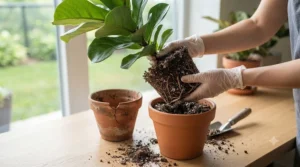
Buying the right bag is only half the job — how you use it in the first thirty days matters almost as much. Start by pre-moistening any peat-heavy mix before potting; dry peat can be surprisingly water-repellent, and water will often just run down the inside of the pot instead of soaking in evenly. When repotting, resist the urge to jam soil down hard around the root ball — compaction squeezes out the air pockets that make a mix like Black Gold Natural & Organic Potting Mix or Rosy Soil Indoor Potting Soil Mix worth buying in the first place. A gentle tamp is plenty.
For maintenance, most fertilized bags like Miracle-Gro Houseplant Potting Mix feed for roughly the first month, after which a diluted liquid fertilizer every two to four weeks (less in winter) keeps growth steady without overwhelming young roots. Watch for a common first-30-days mistake: watering on a fixed schedule rather than checking the soil itself. Stick a finger two to three centimetres (about an inch) into the mix before every watering session — if it’s still cool and damp, wait. This single habit does more for long-term plant health than any specific bag choice, though a well-drained mix obviously makes the habit easier to follow correctly.
One optimization trick rarely mentioned on product packaging: top-dress with a thin layer of coarse perlite or fine gravel after potting. It slows surface evaporation just enough to reduce the temptation to overwater, while still letting you see when the surface has actually dried.
Real-World Scenarios: Which Potting Soil Fits Your Life?
Consider three fairly different households. First, the busy apartment renter with a handful of pothos and philodendron on open shelving, watering maybe once a week and forgetting occasionally — for this profile, the moisture-buffering of Miracle-Gro Organic Indoor Potting Mix is close to ideal, since it tolerates the inconsistency without punishing the plant.
Second, picture the plant-collector type with forty-plus houseplants crammed onto every windowsill, mixing tropicals, succulents, and the occasional fern. This is where a two-bag strategy actually makes sense: Black Gold Natural & Organic Potting Mix for the general foliage collection, paired with Back to the Roots Organic Succulent & Cacti Mix kept separately for the cacti and snake plants, since one bag genuinely can’t serve both needs well.
Third, think about the budget-conscious student in a small dorm or studio, growing two or three plants on a desk with limited natural light. Here, cost per use matters more than premium ingredients, and Hoffman Organic Potting Soil Plus or the base Miracle-Gro Houseplant Potting Mix both do the job affordably without demanding a fertilizing routine the student doesn’t have time for. In each case, the “best” product genuinely depends less on brand reputation and more on matching texture and moisture behaviour to the actual watering habits of the household.
Problem → Solution Guide: Fixing Common Indoor Soil Issues
Problem: Soil dries out within a day. This usually signals too much peat and not enough structure, or a pot that’s simply too small for the plant. Switching to a chunkier, aeration-forward mix like Black Gold Natural & Organic Potting Mix, or sizing up the container by a couple of centimetres, both help.
Problem: Fungus gnats swarming every time you water. Gnat larvae thrive in the top layer of consistently damp organic matter. Miracle-Gro Houseplant Potting Mix is formulated specifically against this, but letting the top two to three centimetres dry fully between waterings helps regardless of bag choice.
Problem: Yellowing leaves on a succulent or cactus. This is a near-classic sign of a mix that holds too much water for the plant’s needs. Repotting into Back to the Roots Organic Succulent & Cacti Mix and cutting back on watering frequency typically resolves it within a few weeks.
Problem: Soil that seems to shrink and pull away from the pot’s edges. Often a sign of peat that’s dried out and become hydrophobic. Pre-soaking the root ball in a basin of water for ten to fifteen minutes reintroduces moisture evenly, better than a quick top-down watering.
Problem: Slow, stalled growth in a fast-growing species. If a lightweight, low-nutrient bag has run out of steam a couple of months in, a richer option like FoxFarm Ocean Forest Potting Soil — or a regular liquid fertilizer schedule — usually kickstarts new growth.
How to Choose Potting Soil for Indoor Plants
- Start with your plant type, not the bag’s marketing. A tropical foliage plant and a cactus want fundamentally different drainage profiles, and no single “all-purpose” claim overrides that.
- Check the ingredient list for structure, not just nutrients. Look for perlite, pumice, or coarse bark alongside peat or coir — these are what actually create the air pockets roots need.
- Match moisture retention to your watering habits. Forgetful waterers benefit from a buffered mix; frequent waterers are better off with something that drains fast.
- Consider pot size and material. Terracotta breathes and dries faster than plastic, so a slightly more water-retentive mix can work better in unglazed clay.
- Factor in your maintenance appetite. A pre-fertilized bag reduces early feeding decisions, but eventually needs supplementing — decide now whether you want to think about that in month two or month six.
- Weigh sustainability if it matters to you. Peat-free options like the Rosy Soil Indoor Potting Soil Mix cost more but reduce reliance on harvested peatlands.
- Buy the right quantity for your actual repotting needs. A single large bag is cheaper per litre, but a smaller bag avoids waste if you’re only repotting one or two plants a year.
Peat-based ingredients remain the backbone of most Canadian-made mixes, and it’s worth knowing where that material comes from: according to the Canadian Sphagnum Peat Moss Association, horticultural peat harvesting in Canada covers a small fraction of the country’s peatlands and follows government-monitored restoration practices. That context is useful for anyone weighing a traditional peat-based bag against a peat-free option later in this guide.
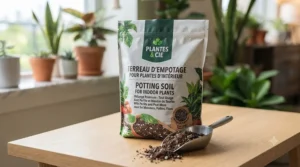
Lightweight Potting Mix for Houseplants vs Traditional Garden Soil
It’s tempting to assume dirt is dirt, but a lightweight potting mix for houseplants and ordinary garden soil behave in almost opposite ways once they’re confined to a container. Garden soil is dense and mineral-heavy, built to sit in an open bed where rain, worms, and deep root systems keep it from compacting. Trapped in a pot, that same soil compresses under its own weight, squeezing out the air pockets roots depend on — within a few waterings it can turn into something closer to wet clay than a healthy growing medium.
A lightweight mix, by contrast, is engineered around ingredients like peat, coir, and perlite specifically because they resist that compaction. The practical result: roots breathe more easily, water drains rather than pools, and the risk of anaerobic, rot-friendly conditions drops sharply. There’s a value trade-off too — garden soil is essentially free if you’ve already got a yard, while a bag of Miracle-Gro Houseplant Potting Mix or Black Gold Natural & Organic Potting Mix costs money every time you repot. But the total cost of ownership tips heavily toward the lightweight mix once you factor in the price of replacing a plant that’s died from compacted, waterlogged roots. For any container smaller than a large planter box, the lightweight option isn’t really a luxury — it’s close to a requirement.
Soil for Indoor Succulents: What Makes It Different
Succulents and cacti evolved in fast-draining, mineral-poor environments, and soil for indoor succulents is formulated to recreate that — not to feed them richly, but to keep water moving through and out. The key structural difference from a standard potting mix is a much higher ratio of coarse sand, pumice, or perlite relative to organic matter, which drops water-holding capacity dramatically. In practice, this means a succulent potted in an all-purpose mix is sitting in soil that stays wet for days after watering, exactly the kind of environment that invites the fungal pathogens behind root rot.
Reviewers consistently describe a very specific pattern with dedicated blends like Back to the Roots Organic Succulent & Cacti Mix: fewer mushy stems, faster recovery after accidental overwatering, and generally more resilient plants overall. What most buyers overlook, though, is that pot choice matters just as much as soil choice here — an unglazed terracotta pot with a drainage hole pairs naturally with a gritty mix, while a sealed decorative pot can undercut even the best succulent soil by trapping moisture at the bottom regardless of what’s in the bag. If you’re building a windowsill full of echeveria, haworthia, or jade plants, treating the soil and the pot as one decision, rather than two separate purchases, makes the biggest practical difference.
Root Rot Prevention: The Soil Science Behind Healthy Roots
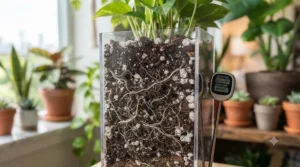
Root rot prevention starts well before a plant ever shows a symptom — it starts with the physical structure of what’s in the pot. Roots need oxygen just as much as water, and when a growing medium compacts or stays saturated too long, the air pockets that supply that oxygen collapse. According to the Wikipedia article on overwatering, excess water in houseplant soil depletes oxygen and encourages the growth of harmful bacteria and fungi — which is exactly the mechanism behind most root rot cases, rather than water itself being the direct culprit.
That’s precisely why texture matters as much as watering discipline. A dense, compacted mix can rot roots even under a careful watering schedule, while a well-aerated bag like Black Gold Natural & Organic Potting Mix or a gritty specialty blend gives you real margin for error. Practically speaking, root rot prevention comes down to three habits working together: choosing a mix with genuine drainage structure (not just marketing language), using pots with actual drainage holes rather than sealed decorative planters, and checking soil moisture at root depth — not just the surface — before watering again. When all three line up, root rot becomes a rare event rather than a recurring one, regardless of how often you’re tempted to reach for the watering can.
Container Gardening Indoors: Matching Soil to Pot and Plant
Container gardening indoors is really a three-way negotiation between the pot, the plant, and the soil, and getting one piece wrong undercuts the other two. A large plant in a small pot with rich, moisture-retentive soil is a recipe for waterlogging, since there’s not enough root mass to draw water out quickly. Conversely, a small plant swimming in an oversized pot with a fast-draining succulent mix may dry out unevenly, leaving pockets of moisture the roots never quite reach.
The general rule worth internalizing: match soil density to pot size, not just plant type. Larger pots benefit from a chunkier, more aerated mix like FoxFarm Ocean Forest Potting Soil or Black Gold Natural & Organic Potting Mix, since there’s enough volume for water to move through properly. Smaller pots, which dry faster by nature, can handle — and often benefit from — a more moisture-retentive option like Hoffman Organic Potting Soil Plus. Master gardeners featured on CBC’s coverage of container gardening note that containers open up growing space for people without traditional gardens at all — apartment balconies, windowsills, even a sunny corner of a condo — but that accessibility only holds up if the soil-to-pot ratio is actually right, not just whatever was on sale.
Common Mistakes When Buying Potting Soil
The single most common mistake is treating “potting soil” as a single, interchangeable category rather than a spectrum of very different formulations. Buying a rich, moisture-retentive bag for a succulent collection, or a gritty cactus mix for a moisture-loving fern, both stem from this same misconception. A second frequent error is over-indexing on price alone — the cheapest bag on the shelf is sometimes genuinely fine, but it’s also sometimes cheap because it’s mostly filler with minimal aeration structure, so it’s worth actually reading the ingredient list rather than assuming price tracks quality in a straight line.
A third mistake is ignoring bag size relative to actual need. Buying a large bag “to save money per litre” only pays off if you’re repotting several plants; otherwise, unused soil sitting in a garage can degrade, compact, or attract pests before you ever use it. Finally, many buyers skip checking whether a bag is fertilized and for how long — using an already-fertilized mix alongside a full-strength liquid fertilizer schedule can actually burn tender new roots, an easy mistake to make when following generic care advice that wasn’t written for your specific bag.
Long-Term Cost & Maintenance
Thinking in cost-per-use rather than sticker price changes the calculus on several of these products. A C$12 bag of Hoffman Organic Potting Soil Plus looks cheaper upfront than a C$28 bag of Rosy Soil Indoor Potting Soil Mix, but if the smaller bag needs replacing twice as often for the same volume of repotting, the actual cost gap narrows considerably. Total cost of ownership also has to include what happens after the bag runs empty: fertilized mixes like Miracle-Gro Organic Indoor Potting Mix delay the need for supplemental liquid fertilizer, effectively bundling a small cost saving into the bag price itself.
Maintenance costs matter just as much as the soil price. A mix prone to compaction, like some ultra-fine budget bags, may need replacing or refreshing annually to keep aeration adequate, while a chunkier, more structurally stable mix like Black Gold Natural & Organic Potting Mix can often go two to three years between full repots with just a light top-up of fresh soil. For anyone managing a large plant collection, that difference in repotting frequency adds up to real time and real money saved over several seasons — arguably more than the up-front price difference between any two bags on this list.
Features That Actually Matter (And Those That Don’t)
Cutting through the marketing language on a bag of potting soil, a few features genuinely move the needle: real aeration ingredients (perlite, pumice, coarse bark), a nutrient source that matches your plant’s growth rate, and moisture retention calibrated to your actual watering habits. These three factors predict plant health far more reliably than anything else printed on the packaging.
What matters far less than the marketing implies: fancy scent additives, decorative packaging, or vague claims like “premium blend” without any ingredient specificity behind them. Similarly, an “all-natural” label sounds appealing but says nothing about drainage structure — a completely natural mix can still be too dense for a succulent, and a synthetic-fertilizer-enhanced mix can still have excellent aeration. The honest advice: skip the front-of-bag buzzwords and read the ingredient list on the back instead. That’s where the real differences between a genuinely good mix and a mediocre one actually live.
FAQ
❓ What is the best potting soil for indoor plants overall?
❓ Can I use regular garden soil for indoor plants?
❓ How often should I repot indoor plants with fresh potting soil?
❓ Does potting soil expire or go bad in the bag?
❓ What's the difference between potting soil and potting mix?
Conclusion
Choosing the right potting soil for indoor plants isn’t about finding one mythical “best” bag — it’s about matching texture, moisture behaviour, and nutrient density to the plants actually sitting in your home. A collection of thirsty tropicals wants something closer to FoxFarm Ocean Forest Potting Soil or Miracle-Gro Organic Indoor Potting Mix, while a windowsill of succulents genuinely needs the gritty drainage of Back to the Roots Organic Succulent & Cacti Mix to avoid the slow creep of root rot. Budget-conscious buyers aren’t shortchanged either — Miracle-Gro Houseplant Potting Mix and Hoffman Organic Potting Soil Plus both deliver solid, dependable performance without a premium price tag.
What ties every recommendation in this guide together is the same underlying idea: aeration and drainage aren’t optional extras, they’re the foundation everything else is built on. Get that right, match the bag to the plant in front of you, and most of the common houseplant problems — gnats, yellowing leaves, mushy stems — become far less likely to show up in the first place.
✨ Don’t Miss These Exclusive Deals!
🔍 Take your container gardening indoors to the next level with these carefully selected potting mixes. Click on any highlighted product to check current pricing and availability on Amazon.ca. The right soil today means healthier, happier houseplants for years to come!
Recommended for You
- Cedar Mulch for Garden Beds: 7 Top Picks for 2026
- 7 Picks: Mulch Under $30 CAD for Flower Beds (2026)
- Professional Garden Tool Set 2026: 7 Elite Picks Worth Buying
Disclaimer: This article contains affiliate links. As an Amazon Associate, I earn from qualifying purchases. If you purchase products through these links, we may earn a small commission at no additional cost to you.
✨ Found this helpful? Share it with your friends! 💬🤗
