
In This Article
If you’ve been struggling with Canada’s notoriously challenging soil conditions—whether it’s heavy clay in Ontario, rocky terrain in Alberta, or sandy patches in the Maritimes—metal raised garden beds offer a game-changing solution. Unlike traditional in-ground gardens that force you to spend years amending difficult soil, these weatherproof metal planters let you start fresh with optimal growing conditions from day one.
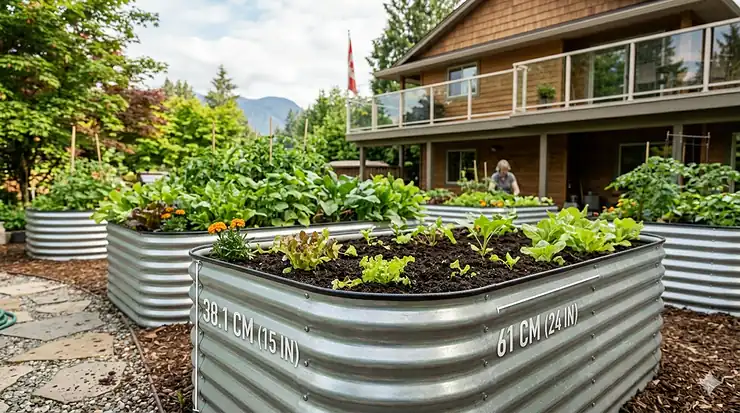
What makes metal raised garden beds particularly suited to Canadian climates is their exceptional durability through our harsh seasonal extremes. A quality galvanized steel raised garden bed will survive decades of freeze-thaw cycles, spring deluges, and scorching summer heat without warping, rotting, or requiring replacement like wooden alternatives. According to Agriculture and Agri-Food Canada, soil quality is the foundation of a healthy garden, and raised beds give you complete control over this crucial element.
The real beauty lies in what these rust-resistant raised garden beds enable: earlier spring planting as the elevated soil warms faster, extended fall harvests, higher-density planting for maximized yields, and dramatically reduced maintenance since you’re working with clean, nutrient-rich soil rather than battling compacted ground. For Canadian gardeners juggling short growing seasons and unpredictable weather, that translates to more tomatoes, herbs, and vegetables on your table with significantly less back-breaking labour.
Quick Comparison: Top Metal Raised Garden Beds
| Product | Size | Material | Price Range (CAD) | Best For |
|---|---|---|---|---|
| Land Guard Oval 8×4×2 ft | 244×122×61 cm | Q195 Galvanized Steel | $180-$220 | Deep-rooted vegetables |
| Miracle-Gro Galvanized Bed | 102×51×27 cm | Galvanized Steel | $80-$110 | Small spaces, herbs |
| COATTOA 2-Pack 8×3×1 ft | 244×91×30 cm | Galvanized Metal | $140-$170 | Multiple garden zones |
| Land Guard 4×2×1 ft | 122×61×30 cm | Q195 Steel | $60-$85 | Beginners, compact yards |
| CATMANOR Corrugated 8×4 ft | 244×122×46 cm | Corrugated Steel | $130-$160 | Budget-conscious |
| SnugNiture Round 2×2×1 ft | 61×61×30 cm | Galvanized Steel | $35-$50 per unit | Patios, balconies |
| Outsunny 7×2×2 ft | 213×61×61 cm | Powder-Coated Steel | $110-$145 | Tall crops, accessibility |
Looking at this comparison, the Land Guard 8×4×2 ft delivers exceptional value for Canadian families wanting serious vegetable production—the 61 cm depth handles everything from carrots to tomatoes without root restriction. Budget-conscious gardeners should note the CATMANOR corrugated option offers 90% of the performance at 25% less cost, though the thinner gauge means you’ll want to reinforce it in windy prairie locations. For condo dwellers in Toronto or Vancouver with limited balcony space, those SnugNiture round beds provide genuine growing capacity without overwhelming small areas.
💬 Just one click — help others make better buying decisions too! 😊
Top 7 Metal Raised Garden Beds: Expert Analysis
1. Land Guard 8×4×2 ft Galvanized Raised Garden Bed Kit
Land Guard’s 8×4×2 ft model stands out as the workhorse choice for serious Canadian vegetable gardeners who want maximum soil depth without sacrificing durability. The Q195 galvanized metal construction features double-layer anti-corrosion galvanizing that shrugs off our brutal freeze-thaw cycles—crucial when you’re dealing with Quebec winters or Alberta’s temperature swings.
The key specification here is that 61 cm (2 ft) height, which provides 396 gallons (64 cubic feet) of soil capacity. This depth matters more than most beginners realize: carrots, parsnips, and potatoes need 30-40 cm minimum for proper root development, while tomatoes and peppers thrive with 45+ cm. The oval wave structure distributes pressure better than flat panels, preventing the warping and bowing that plague cheaper rectangular designs after a few Canadian winters. At 0.78mm average thickness (reaching 1.56mm at stress points), this bed won’t flex when you fill it with wet spring soil.
Canadian reviewers consistently praise the 5-minute assembly—those butterfly nuts and pre-drilled holes mean you’re not fumbling with tools in April when you’re eager to plant. The open-bottom design is non-negotiable for Canadian climates: it prevents waterlogging during spring thaw while allowing beneficial organisms from your native soil to migrate upward.
Pros:
✅ Deep 61 cm capacity handles all vegetable types
✅ Double galvanization survives Canadian weather extremes
✅ Reinforced oval design prevents warping
Cons:
❌ Requires significant soil volume to fill (expensive initial setup)
❌ Large footprint not ideal for compact urban yards
Price & Verdict: Expect to invest in the $180-$220 CAD range. This is the bed you buy once and use for 15+ years—worth every dollar if you’re feeding a family or serious about preserving harvests through Canadian winters.
2. Miracle-Gro Outdoor Galvanized Steel Raised Garden Bed
Miracle-Gro’s compact 102×51×27 cm bed addresses a specific Canadian need: apartment dwellers and condo owners in Toronto, Vancouver, or Montreal who have small balconies or patios but still want fresh herbs and compact vegetables. The chemical-free galvanized steel construction means no toxins leaching into your basil or lettuce—a legitimate concern with some imported metal planters.
The 27 cm height limits you to shallow-rooted crops (lettuce, herbs, radishes, spinach), but that’s precisely the point. This bed holds 144 litres (5.09 cubic feet) of soil, which you can fill with premium potting mix without breaking the bank. The tool-free assembly via bolts and wingnuts takes under 10 minutes, perfect for renters who might move next year and need something easily transportable.
What Canadian urban gardeners appreciate is the clean, modern aesthetic that doesn’t look out of place on a downtown balcony. The compact size also means it warms quickly in spring—expect to plant lettuce 2-3 weeks earlier than ground-level gardens. Just be aware that the smaller soil volume dries out faster during July heat waves, requiring daily watering versus the larger beds’ every-other-day schedule.
Pros:
✅ Perfect dimensions for balconies and small patios
✅ Chemical-free construction for edible crops
✅ Budget-friendly for beginners testing raised bed gardening
Cons:
❌ Shallow depth limits vegetable variety
❌ Small soil volume requires frequent watering in summer
Price & Verdict: At $80-$110 CAD, this is your entry point into raised bed gardening. Ideal for Canadian urbanites growing culinary herbs and salad greens without committing to a full backyard setup.
3. COATTOA Galvanized Raised Garden Bed 2-Pack 8×3×1 ft
The COATTOA 2-pack offers a clever solution for Canadian gardeners practicing crop rotation or companion planting—two separate 244×91×30 cm beds let you isolate tomatoes from brassicas or dedicate one bed to perennial herbs while rotating annuals in the other. The wave-structure galvanized metal resists the soil pressure that causes flat-panel beds to bow outward after wet seasons.
Each bed provides 195 litres (51.8 gallons) of growing space, and the included metal plant stakes add structural support plus trellising options for climbing beans or cucumbers. The 30 cm depth works well for most vegetables except deep-rooted varieties—think lettuce, kale, bush beans, and determinate tomatoes rather than carrots or parsnips.
What makes this particularly smart for Canadian gardens is the flexibility: position both beds together for a unified 8×6 ft garden, or separate them to catch sun in different yard zones as our sun angle changes through the season. Prairie gardeners note that the thinner gauge (compared to premium brands) means you’ll want to secure these beds with landscape staples in high-wind areas—those chinooks in Calgary can shift unsecured beds.
Pros:
✅ Two-bed system enables crop rotation strategies
✅ Included stakes support climbing plants
✅ Excellent value per square foot of growing space
Cons:
❌ 30 cm depth restricts some vegetable choices
❌ Thinner gauge requires wind securing in exposed locations
Price & Verdict: The $140-$170 CAD range for two beds translates to roughly $70-$85 per unit—hard to beat if you’re starting a productive vegetable garden on a budget. Best suited to southern Ontario, BC Lower Mainland, or other moderate Canadian climates where wind isn’t extreme.
4. Land Guard 4×2×1 ft Galvanized Planter Box
Land Guard’s compact 122×61×30 cm model serves as the ideal starter bed for Canadians testing whether raised bed gardening suits their lifestyle before committing to larger installations. Despite its modest size, the same Q195 galvanized steel construction and oval design from their premium line ensures you’re not buying disposable quality.
The 30 cm depth accommodates lettuce, herbs, radishes, bush beans, and compact tomato varieties—essentially a full salad garden in 7.14 cubic feet. The open-bottom design is particularly valuable in Canadian clay soils; as roots extend downward beyond the bed, they access additional moisture during dry spells while the raised portion provides the loose, friable soil vegetables crave.
Canadian first-time gardeners appreciate that this bed requires only 200-250 litres of soil to fill, making the initial soil investment manageable around $40-$60 CAD if you’re buying bagged garden soil. The 5-minute assembly and lightweight construction mean a single person can move it if you’re optimizing sun exposure or relocating when you move houses.
Pros:
✅ Low-risk entry point for beginners
✅ Manageable soil fill requirement
✅ Portable for renters or layout experimentation
Cons:
❌ Limited capacity for large families
❌ Shallow depth rules out root vegetables
Price & Verdict: At $60-$85 CAD, this bed costs less than a month of grocery-store organic lettuce. Consider it your proof-of-concept: if you harvest successfully here, scale up to 8×4 ft beds next season. Perfect for teaching Canadian kids about gardening without overwhelming them.
5. CATMANOR Corrugated Galvanized Steel 8×4 ft Tall Bed
The CATMANOR corrugated design delivers surprising value for budget-conscious Canadian gardeners who understand the trade-offs. The 244×122×46 cm dimensions provide genuine vegetable-growing depth at roughly 25% less cost than premium brands—that price difference matters when you’re outfitting multiple beds.
The corrugated steel construction (ridged rather than smooth panels) adds structural rigidity that helps thinner-gauge metal resist soil pressure. At 46 cm depth, you can grow most vegetables successfully, though the deepest-rooted crops (long carrots, parsnips) might hit limits. Canadian users report the assembly takes 15-20 minutes versus 5 minutes for premium beds, mainly due to less precise pre-drilling.
Here’s the honest Canadian-weather assessment: this bed will last 8-12 years versus 15-20 for premium galvanized options. The thinner galvanization means you’ll see surface rust spots forming by year 5-6, though the corrugated structure prevents catastrophic failure. If you’re gardening in a rental situation or treating this as a multi-year experiment before permanent installation, the value proposition makes sense.
Pros:
✅ Excellent soil capacity for the price
✅ Corrugated design adds strength to thinner metal
✅ 46 cm depth handles most vegetable varieties
Cons:
❌ Less precise manufacturing = longer assembly
❌ Thinner galvanization shows age faster in harsh climates
Price & Verdict: The $130-$160 CAD range represents genuine savings—approximately $0.35 per litre of soil capacity versus $0.55-$0.70 for premium beds. Smart choice for Canadian gardeners prioritizing immediate productivity over multi-decade longevity, or those in moderate climates (southern BC, southern Ontario) where weather extremes won’t test the thinner construction as brutally.
6. SnugNiture Round Galvanized Raised Garden Bed 2×2×1 ft
SnugNiture’s circular 61×61×30 cm design might seem like a novelty, but it solves real problems for Canadian urban gardeners working with awkward spaces. Corners waste space on rectangular balconies, and round beds maximize soil volume while fitting snugly against railings or in patio corners. The galvanized steel construction handles Canadian weather, though at this compact size, winter storage indoors is practical for those worried about longevity.
Each round bed holds roughly 87 litres (23 gallons) of soil—enough for 4-6 lettuce plants, a cherry tomato, or a herb trio (basil, parsley, cilantro). The 30 cm depth works for compact vegetables and herbs but limits root crops. What Canadian balcony gardeners discover is these beds warm exceptionally fast in spring because their small mass heats through quickly, allowing March-April herb planting when larger beds remain cold.
The wave-structure edges prevent the warping that plagues cheap circular planters, and the open-bottom design (when placed on soil) encourages deep rooting. Condo dwellers should know these work brilliantly on balconies when placed on saucers to catch drainage—though you’re creating a container garden at that point, not truly a raised bed.
Pros:
✅ Maximizes awkward corner spaces
✅ Quick spring warm-up for early planting
✅ Affordable multi-bed installations
Cons:
❌ Limited soil volume per bed
❌ Circular shape complicates efficient spacing
Price & Verdict: At $35-$50 CAD per unit, buy three or four to create a productive balcony garden. Canadian apartment gardeners in Toronto, Vancouver, or Montreal high-rises find these perfect for year-round herbs when brought indoors October-April. Not suitable as your primary vegetable source, but excellent supplementary growing for culinary herbs and compact crops.
7. Outsunny Galvanized Raised Garden Bed 7×2×2 ft
The Outsunny 213×61×61 cm bed targets a specific Canadian user: gardeners with mobility challenges who benefit from the 61 cm height reducing bending, plus those growing tall crops like indeterminate tomatoes that need deep rooting. The powder-coated steel finish (not just galvanized) provides extra corrosion protection—particularly valuable in coastal BC where salt air accelerates rust.
That 61 cm depth opens possibilities other beds can’t match: multi-year asparagus, deep-rooted herbs like horseradish, or staked tomato varieties that produce all summer. The narrow 61 cm width is actually strategic—it means you can comfortably reach the centre from either side without stepping on soil, crucial when mobility is limited. The safe rolled edges (included gloves and plant labels are nice touches) show Outsunny understands the Canadian market.
Canadian seniors and gardeners with back issues consistently rate this bed highly because the waist-height design genuinely reduces strain. The trade-off is soil volume: at 213×61×61 cm, you’re getting less square footage than an 8×4 ft bed, though the extreme depth compensates somewhat. Fill cost runs $100-$140 CAD for quality soil, so factor that into your budget.
Pros:
✅ 61 cm height dramatically reduces bending/strain
✅ Deep capacity supports tall, productive plants
✅ Powder coating adds extra corrosion resistance
Cons:
❌ Narrow width limits crop variety per bed
❌ Higher soil fill cost due to depth
Price & Verdict: Expect $110-$145 CAD investment. This isn’t the most cost-effective square footage, but if mobility challenges have kept you from gardening, the accessibility justifies the premium. Canadian occupational therapists actually recommend raised beds at 60-75 cm height for wheelchair users and those with chronic back conditions—this bed delivers on that requirement while maintaining genuine vegetable productivity.
Setting Up Your Metal Garden Bed for Canadian Success
The difference between a thriving metal raised garden bed and a disappointing first season often comes down to setup choices made in the first 48 hours. Canadian gardeners face unique challenges—compacted clay in Ontario, alkaline soils in the Prairies, acidic conditions in parts of BC and Atlantic Canada—that we can completely sidestep with proper bed preparation.
Location Selection: Place beds where they’ll receive 6-8 hours of direct sunlight during our peak growing season (June-August). In southern Canada, a slight eastern exposure prevents afternoon scorching during July heatwaves. Northern gardeners (zones 2-3) benefit from south-facing placement that maximizes every available sun hour. Check drainage by observing where spring melt water pools—avoid those spots unless you’re installing gravel beneath the bed.
The Canadian Soil Mix Formula: Agriculture and Agri-Food Canada research shows optimal vegetable soil contains 40-50% topsoil, 30-40% compost, and 10-20% peat moss or coconut coir. For an 8×4×1 ft bed (0.73 cubic metres), you’ll need roughly 15-20 bags of soil at $8-$12 CAD each. Buy from Canadian garden centres in late April/early May when bulk pricing applies—many offer “raised bed mix” specifically formulated for our climate.
First-Season Strategy: Don’t fill to the brim initially. Start 8-10 cm below the rim, which allows for settling and makes spring mulch addition easier. In year one, plant heavy feeders (tomatoes, peppers, cucumbers) that love the nutrient-rich fresh soil. Year two, as the soil compacts and nutrients deplete, top-dress with 5 cm of compost and shift to lighter feeders (lettuce, herbs, beans).
Winterization for Canadian Climates: Unlike wooden beds that rot when covered, metal beds benefit from winter protection. After first frost, remove annual plant debris, spread 5-8 cm of leaves or straw as mulch, and let snow accumulate naturally. This insulation moderates freeze-thaw cycles that can heave beds upward. Resist the urge to clear snow—it acts as nature’s insulation, keeping soil biology alive beneath.
Real Canadian Gardeners: Three Scenarios Matched to Metal Beds
Scenario 1: The Toronto Condo Dweller
Profile: Sarah lives in a downtown Toronto condo with a 3×6 metre balcony. She wants fresh herbs and salad greens but has zero gardening experience and limited storage.
Best Choice: Three SnugNiture Round 2×2×1 ft beds placed in sunny balcony corners.
Why It Works: The round shape maximizes usable soil in corner spaces that rectangular beds waste. Total investment around $120-$140 CAD for beds plus $60-$80 for soil. Sarah grows basil, parsley, and cilantro in one bed; mixed lettuce in the second; and cherry tomatoes in the third. The 30 cm depth handles these crops perfectly, and compact size means she can bring them indoors during October-April for year-round herb production near a sunny window. When she eventually moves (typical Toronto renter reality), three small beds fit in a car versus needing a truck for 8×4 ft options.
Scenario 2: The Calgary Family Backyard
Profile: The Martinez family has a typical Calgary suburban lot with heavy clay soil and chinook winds. They want enough vegetables to reduce grocery bills through summer and fall, with extra for canning.
Best Choice: Two Land Guard 8×4×2 ft beds positioned north-south for even sun exposure.
Why It Works: That 61 cm depth provides true vegetable-growing capacity—they’ll harvest 30-40 kg of tomatoes, plus beans, peppers, cucumbers, and squash from two beds. The double-galvanized Q195 steel survives Calgary’s dramatic temperature swings (minus 25°C winter to plus 30°C summer), and the reinforced oval structure resists chinook-driven wind pressure that would warp cheaper beds. Total investment $360-$440 CAD for beds plus $200-$280 for soil, but annual vegetable savings exceed $800-$1,000 versus store-bought organic produce. The open-bottom design lets roots access moisture during dry spells—crucial when Calgary receives only 300-400 mm annual precipitation.
Scenario 3: The Rural Manitoba Homesteader
Profile: James and Wei own acreage outside Winnipeg with terrible soil (heavy clay that becomes concrete in summer). They want serious vegetable production, preserving capacity, and durability through Manitoba’s brutal climate extremes.
Best Choice: Four CATMANOR Corrugated 8×4 ft beds creating a 16×16 ft garden area.
Why It Works: At $520-$640 CAD for four beds, the CATMANOR option stretches their budget further than premium alternatives, allowing investment in greenhouse plastic and season-extension infrastructure instead. The 46 cm depth handles all vegetables except the deepest carrots—perfectly adequate for their crop plan (tomatoes, peppers, beans, squash, cucumbers, plus separate in-ground beds for potatoes and carrots). The corrugated structure survives Manitoba’s minus 35°C winters and spring flooding better than smooth-panel budget beds. They’re harvesting 200+ kg of vegetables annually, preserving enough salsa and pickles to last until next summer. Yes, these beds might show rust spots by year 7-8, but the 8-12 year functional life exceeds the 5-6 year lifespan of wooden beds in Manitoba’s moisture extremes.
How to Choose Metal Raised Garden Beds in Canada
Selecting the right metal raised garden bed requires matching your specific situation—climate zone, space constraints, budget, and growing goals—to the available options. Here’s the decision framework Canadian gardeners should follow:
1. Determine Your Minimum Depth Requirements: Shallow-rooted crops (lettuce, herbs, radishes, spinach) thrive in 25-30 cm depth. Most vegetables need 30-45 cm. Deep-rooted varieties (carrots, parsnips, potatoes, asparagus) and indeterminate tomatoes demand 45-60 cm minimum. Canadian growing seasons are short—don’t handicap yourself with insufficient depth forcing you to grow only lettuce when you wanted tomatoes and beans.
2. Calculate Your Actual Growing Space: A standard 8×4 ft (2.4×1.2 m) bed provides 2.88 square metres of growing space. Using square-foot gardening intensity, that supports 64-96 plants depending on variety. Canadian families of four typically need 4.6-9.3 square metres (two to four 8×4 ft beds) to significantly reduce summer vegetable purchases. Single gardeners or couples often find one 8×4 ft bed plus a few herb containers sufficient.
3. Assess Your Climate Zone Harshness: Zones 2-4 (Prairies, northern regions) demand the most robust construction—double galvanization, thicker gauge steel, reinforced corners. Zones 5-6 (southern Ontario, southern BC, Maritimes) can use mid-grade options successfully. Coastal areas require powder-coated or extra-thick galvanization to resist salt-air corrosion. Don’t cheap out if you live where winter temperatures hit minus 30°C or colder—buy once and be done.
4. Match Budget to Longevity Needs: Premium beds ($150-$250 CAD for 8×4 ft) last 15-20+ years. Mid-range options ($100-$150) deliver 10-15 years. Budget beds ($80-$120) provide 5-10 years. If you’re renting or might relocate within 5 years, budget options make sense. Homeowners planning to stay put should invest in premium durability—the annualized cost actually favours spending more upfront.
5. Consider Assembly and Modification Capabilities: Tool-free assembly (bolts and wingnuts) beats screw-together designs for Canadian weather—metal contracts and expands with temperature swings, and bolts accommodate this movement better than screws. Look for beds with expansion options (connector kits to join multiple beds) if you anticipate scaling up. Modular systems let you start with one bed and add three more next season without visual mismatch.
6. Verify Amazon.ca Availability and Shipping: Some manufacturers restrict Canadian shipping or charge prohibitive fees. Always confirm the specific model you want ships to your province—northern territories and remote areas sometimes face limitations. Read Canadian reviewer feedback specifically; a bed that excels in California might fail in Saskatchewan’s climate.
Common Mistakes When Buying Metal Raised Garden Beds
Canadian gardeners waste thousands of dollars annually by making preventable errors during their metal raised bed purchase and setup. Learn from these common mistakes:
Mistake #1: Choosing Depth Based on Price Rather Than Crops. Budget shoppers gravitate toward shallow 25-30 cm beds because they cost less and require less soil. Then they wonder why tomatoes underperform and carrots grow stunted. The soil depth you need is determined by what you want to grow, not your budget. Better to buy one properly-sized bed than three shallow ones that limit your vegetable choices. Canadian solution: Start with a single 45-60 cm deep bed for serious vegetables, and add shallow herb beds later if budget allows.
Mistake #2: Ignoring Gauge Thickness and Galvanization Quality. “Galvanized steel” appears identical in product photos, but the difference between 0.4mm and 0.8mm thickness is dramatic in Canadian freeze-thaw cycles. Thin-gauge beds (under 0.5mm) warp and bow within 2-3 years when soil pressure combines with temperature cycling. Canadian buyers should specifically search product descriptions for thickness specifications—if it’s not mentioned, assume it’s thin cheap material. Double-layer galvanization or zinc coating above 100 g/m² matters for longevity.
Mistake #3: Failing to Account for Soil Fill Costs. An 8×4×2 ft bed requires 0.73 cubic metres (730 litres) of soil. At $8-$12 CAD per 30-litre bag, that’s $195-$292 just for soil—often exceeding the bed’s purchase price. Canadian gardeners get sticker shock when this reality hits. Smart approach: Calculate total project cost (bed + soil + amendments) before buying. Sometimes a smaller quality bed you can properly fill outperforms a massive bed half-filled with poor soil.
Mistake #4: Positioning Beds Before Understanding Canadian Sun Patterns. Spring sun angles differ dramatically from summer patterns—a spot receiving 8 hours of sun in April might get only 4-5 hours in July when surrounding trees leaf out. Canadian mistake: placing beds during early spring enthusiasm without tracking summer sun exposure. Solution: If buying beds in April-May, mark potential locations and track sun exposure through June before permanent placement. Vegetables need 6-8 hours of direct sun during peak season, not shoulder season.
Mistake #5: Overlooking Provincial Winter Performance Requirements. A bed rated “rust-resistant” and “all-weather” might perform beautifully in California but fail within three Canadian winters. Our minus 25°C to minus 40°C temperatures, freeze-thaw cycling (especially in Ontario and Quebec), and salt exposure (coastal areas, road spray in cities) test metal far beyond American climate assumptions. Canadian-specific mistake: buying based on American reviews without seeking Canadian user feedback. Look for reviews from Canadians in similar climate zones—a bed succeeding in Victoria, BC might struggle in Winnipeg, MB.
Metal Raised Garden Beds vs Traditional Wooden Beds
Canadian gardeners often debate whether metal or wood better suits their needs. Having tested both through multiple Canadian growing seasons, here’s the honest comparison:
Durability in Canadian Climates: Metal raised garden beds outlast wooden alternatives by 10-15 years minimum in Canadian conditions. Cedar and pressure-treated lumber both degrade under our moisture extremes—spring snowmelt, summer humidity, fall rains. Even rot-resistant cedar shows significant deterioration by year 7-8 in Ontario or BC climates. Galvanized steel maintains structural integrity for 15-20 years, and powder-coated options push past 20 years easily. The math favours metal: if a premium metal bed costs $200 and lasts 18 years versus a cedar bed at $140 lasting 8 years, the metal bed costs $11 annually versus $17.50 for wood.
Temperature Implications for Canadian Growing: Here’s where nuance matters. Metal beds warm faster in spring (advantage: 2-3 weeks earlier planting) but also heat more intensely in summer sun. In southern Ontario or BC’s Lower Mainland, that summer heat can stress plants during July-August heatwaves unless you mulch heavily. Wooden beds insulate better, moderating temperature swings. Canadian solution: metal beds work brilliantly with 8-10 cm mulch layer (straw, wood chips) that prevents overheating while retaining the spring warmth advantage.
Soil Chemistry Differences: Wood leaches tannins and gradually acidifies soil over time—beneficial for blueberries, problematic for vegetables preferring neutral pH. Metal beds maintain pH stability, requiring less frequent soil testing and amendment. Canadian advantage: you can grow vegetables and berries in adjacent metal beds with customized soil pH rather than fighting wood’s influence.
Assembly and Modification Flexibility: Quality metal beds assemble in 5-15 minutes with basic tools and can be disassembled for relocation—crucial for Canadian renters or those experimenting with garden layout. Wooden beds require power tools, carpentry skills, and become permanent installations once built. The flexibility factor matters more than most realize: Canadian gardeners average 2-3 garden layout changes in the first five years as they optimize sun exposure and workflow.
Wildlife and Pest Resistance: Metal beds resist chewing by rabbits, groundhogs, and porcupines that damage wooden beds in rural Canadian settings. Wood harbours insects (carpenter ants, beetles) that gradually compromise structure. For Prairie homesteaders or rural Quebec gardeners dealing with wildlife pressure, metal provides peace of mind that wood cannot match.
The Aesthetic Consideration: Wooden beds offer warmer, traditional cottage-garden appeal. Metal beds provide clean, modern lines. In urban Canadian settings (Toronto, Vancouver, Montreal), metal’s contemporary aesthetic often suits the architectural context better. In rural or heritage home settings, either works depending on personal preference. Truth is, once vegetables fill the bed and sprawl over edges, you barely notice the material.
Understanding Galvanization and Rust Prevention
Canadian climate demands robust metal protection, making galvanization quality the most critical specification when choosing metal raised garden beds. Here’s what you need to understand:
What Galvanization Actually Means: Galvanization is a zinc coating applied to steel that prevents rust through sacrificial protection—the zinc corrodes before the underlying steel. Double-layer galvanization (mentioned in premium beds) means zinc coating applied on both sides of the steel sheet, providing superior protection for Canadian freeze-thaw cycles that attack both interior (soil moisture) and exterior (rain, snow) surfaces.
Zinc Coating Weight Specifications: Quality galvanized raised garden beds feature zinc coating at 100-275 g/m². Below 100 g/m², expect visible rust within 3-5 Canadian winters. The 150-200 g/m² sweet spot delivers 15+ year performance in zones 4-6, while 200+ g/m² handles zones 2-3’s extreme conditions. Canadian problem: most Amazon.ca listings don’t specify coating weight, forcing you to infer from thickness specifications and user reviews.
Corrugated vs Smooth Panel Designs: Corrugated metal (ridged waves) adds structural strength allowing thinner base steel while resisting warping. Smooth panels require thicker gauge (0.6mm+) to prevent bowing under soil pressure. For Canadian applications, corrugated designs at 0.4-0.5mm thickness often outperform smooth panels at 0.5-0.6mm because the corrugation handles freeze-thaw movement better.
Powder Coating Advantage for Coastal and Urban Canadians: Powder-coated steel (galvanization plus baked-on polymer layer) provides extra protection valuable in salt-exposed environments—coastal BC, Maritime provinces, urban areas where road salt spray reaches gardens. The powder coating prevents salt penetration that accelerates galvanized steel corrosion. Expect 20-25% price premium, but worthwhile if you live within 30 km of ocean or beside heavily salted roads.
Q195 Steel Specification Explained: Q195 is Chinese steel grade indicating tensile strength and carbon content. It’s roughly equivalent to North American A36 steel—adequate for raised bed applications when properly galvanized. Canadian buyers should focus on galvanization quality over steel grade; Q195 with excellent zinc coating outperforms premium steel with thin galvanization.
The Rust Reality Check: All galvanized steel eventually shows surface oxidation (rust spots) in Canadian climates—it’s when, not if. Premium beds might not show visible rust for 10-12 years; budget options might display orange spots by year 4-5. Surface rust doesn’t equal structural failure. As long as the rust remains superficial (not creating holes), the bed remains functional. Canadian longevity expectation: 15-20 years for premium galvanized beds, 8-12 years for mid-range, 5-8 years for budget options before rust compromises structural integrity.
Soil Health and Ongoing Maintenance for Canadian Gardens
The advantage of metal raised garden beds is they’re essentially maintenance-free, shifting all your attention to what truly matters—soil health and plant care through Canadian growing seasons:
Year-One Soil Building: Start with quality raised bed soil mix containing 40% topsoil, 30% compost, 20% peat moss or coco coir, and 10% perlite or vermiculite for drainage. Canadian garden centres sell “vegetable garden mix” or “raised bed soil” formulated for our climate—expect $8-$12 per 30-litre bag. After planting, add 5-8 cm mulch layer (straw, wood chips, shredded leaves) to retain moisture and suppress weeds.
Seasonal Top-Dressing Protocol: Each Canadian spring, remove last year’s mulch, spread 5 cm of compost or well-aged manure across the bed surface, then re-mulch. This annual addition replaces nutrients vegetables extracted and maintains soil structure as organic matter decomposes. Cost-effective approach: maintain a compost bin feeding kitchen and yard waste into free soil amendments rather than buying bagged compost annually.
Canadian pH Management: Most vegetables thrive at pH 6.0-7.0. Canadian soils vary dramatically—Prairie soils tend alkaline (pH 7.5-8.5), Atlantic provinces often acidic (pH 5.0-6.0), Ontario clay runs neutral to slightly alkaline. In raised beds, you control this completely. Test pH annually using $10-$15 test kits from Canadian Tire or garden centres. Add sulphur to lower pH (if too alkaline), add lime to raise pH (if too acidic). The beauty of metal beds: each bed can have customized pH for different crop families.
Watering Strategy Through Canadian Seasons: Spring and fall require minimal intervention—natural rainfall suffices except during drought periods. Canadian summer (July-August) demands attention: deep watering 2-3 times weekly rather than daily shallow watering. The mulch layer reduces water needs by 40-50% compared to unmulched beds. Invest in soaker hoses or drip irrigation if managing multiple beds—hand-watering becomes tedious fast.
Winter Preparation for Canadian Freezing: After first hard frost (September-October depending on zone), remove annual plant debris to prevent disease overwintering. Leave root vegetables (carrots, beets) in the bed for extended harvest—metal beds’ elevated position prevents the waterlogging that rots root crops in ground gardens during freeze-thaw. Add 5-8 cm leaf layer or straw mulch, then let snow accumulate naturally. Don’t clear snow—it insulates soil, moderates temperature swings, and provides spring moisture.
Crop Rotation in Limited Space: Canadian raised bed gardeners face rotation challenges with only 1-3 beds. Simple three-year rotation: Year 1—heavy feeders (tomatoes, peppers, cucumbers). Year 2—light feeders (beans, peas, root vegetables). Year 3—leafy crops (lettuce, kale, spinach). This rotation prevents soil depletion and breaks pest/disease cycles. With multiple beds, rotate crops between beds rather than within single beds.
Maximizing Productivity in Short Canadian Growing Seasons
Canadian gardeners face shortened growing windows—zone 3 gardeners might have only 90-100 frost-free days, while zone 6 areas enjoy 150-180 days. Metal raised garden beds enable season-extension techniques impossible with ground gardens:
Early Spring Planting: Metal beds warm 2-3 weeks faster than ground soil, allowing April planting in southern Canada when ground gardens remain cold. The elevated position and improved drainage mean you’re not waiting for spring waterlogging to subside. Plant cold-tolerant crops (lettuce, spinach, peas, radishes) in early-mid April (zones 5-6) or early May (zones 3-4). This alone adds 3-4 weeks of production versus waiting for traditional ground gardens to warm and dry.
Succession Planting Strategy: With finite space, maximize productivity through continuous replanting. As early lettuce bolts in July heat, replace it with late-season beans or fall brassicas. When July-planted beans finish in September, succession-plant spinach for October harvest. Canadian raised bed gardeners can achieve 2-3 complete crops from the same square footage by planning succession rather than single-season planting.
Vertical Growing Optimization: Metal bed edges support trellis systems (cattle panels, bamboo poles, twine) that allow vertical growing of beans, peas, cucumbers, and indeterminate tomatoes. Vertical growth increases yield per square foot by 200-300% versus letting plants sprawl. Canadian space-saving trick: plant heavy producers (tomatoes, cucumbers) along bed centres with trellis support, plant compact crops (lettuce, herbs) along bed edges. This interplanting maximizes every centimetre.
Cold Frame and Row Cover Integration: Metal bed rigidity allows easy attachment of PVC hoops or wooden frames supporting row cover fabric or greenhouse plastic. This season extension captures an extra 4-6 weeks on both ends—April/May planting and October/November harvesting. Canadian zones 4-5 gardeners transform 130-day seasons into 160-180 days with simple protection systems that would be impractical on ground gardens.
Intensive Square-Foot Planning: Metal beds’ clearly defined borders suit square-foot gardening methodology perfectly. Divide your 8×4 ft bed into sixty-four 1-foot squares; plant each square according to plant spacing requirements (16 radishes per square, 4 lettuce, 1 tomato). This intensive approach yields 3-5 times more vegetables per square foot than traditional row spacing, critical when Canadian growing space is limited.
FAQ
❓ Can metal raised garden beds be used year-round in Canadian winters?
❓ Do galvanized steel raised beds leach harmful chemicals into soil?
❓ What's the best depth for metal raised garden beds for Canadian vegetables?
❓ How do I prevent metal raised beds from overheating in summer?
❓ Are metal raised garden beds worth the investment for Canadian renters?
Conclusion
Metal raised garden beds represent one of the smartest investments Canadian gardeners can make—especially when dealing with our notoriously challenging soil conditions, abbreviated growing seasons, and climate extremes that test every garden structure. The upfront cost might seem higher than wooden alternatives, but when you calculate the 15-20 year lifespan, minimal maintenance requirements, and superior productivity through season-extension capabilities, the value proposition becomes undeniable.
For Canadian families wanting to reduce grocery bills, improve food security, and enjoy truly fresh vegetables, a properly-sized metal raised garden bed (typically two 8×4 ft beds) pays for itself within 2-3 seasons through reduced produce purchases. The soil control that raised beds provide means you’re not spending years amending difficult clay or sandy soil—you start with optimal conditions from day one.
Whether you’re a Toronto apartment dweller with balcony space, a Calgary suburban family with backyard potential, or a rural Manitoba homesteader pursuing serious production, there’s a metal raised garden bed configuration that fits your needs and budget. The key is matching bed depth and construction quality to your specific Canadian climate zone while being realistic about soil fill costs and maintenance commitment.
Start with one quality bed this season, master the basics of raised bed gardening through a complete Canadian growing cycle, then scale up next year with confidence. Your future self—the one enjoying fresh tomatoes in August and canning salsa in September—will thank you for investing in durable, productive metal raised garden beds rather than settling for flimsy alternatives that fail after a few Canadian winters.
✨ Don’t Miss These Exclusive Deals!
🔍 Take your vegetable gardening to the next level with these carefully selected metal raised garden beds. Click on any highlighted product above to check current pricing and availability on Amazon.ca. These durable beds will help you create abundant harvests your family will love throughout Canadian growing seasons!
Recommended for You
- Best 7 LED Grow Light for Seedlings Canada 2026
- Best Seed Starting Trays with Humidity Dome Canada 2026
- 7 Best Seed Starting Mix Canada Organic for Superior Germination 2026
Disclaimer: This article contains affiliate links. As an Amazon Associate, I earn from qualifying purchases. If you purchase products through these links, we may earn a small commission at no additional cost to you.
✨ Found this helpful? Share it with your friends! 💬🤗
