
In This Article
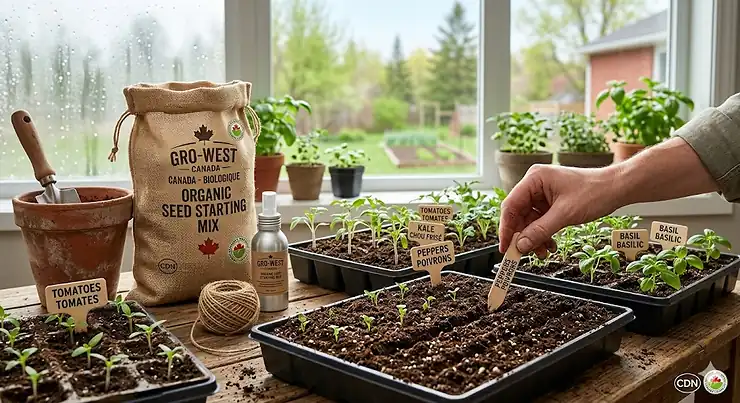
Starting seeds indoors is one of the most rewarding aspects of Canadian gardening, but here’s what most beginners don’t realize: the growing medium you choose directly impacts your germination success rate. I’ve watched countless gardeners struggle with damping-off disease, poor root development, and weak seedlings—all because they grabbed whatever potting soil was on sale without understanding what seed starting mix Canada organic products actually deliver.
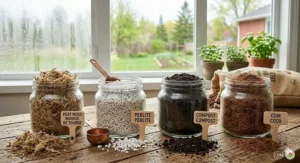
What exactly is seed starting mix Canada organic? It’s a specially formulated soilless growing medium designed to provide optimal conditions for seed germination and early seedling development. Unlike regular garden soil or potting mix, quality seed starting blends are sterile, lightweight, and engineered to balance moisture retention with proper aeration. The best organic versions contain sustainably sourced ingredients like Canadian sphagnum peat moss, coco coir, perlite, and vermiculite, without synthetic fertilizers or chemicals.
With Canada’s short growing season and harsh climate, getting a strong head start indoors isn’t optional—it’s essential. Whether you’re in Vancouver’s mild coastal zone or battling Winnipeg’s late spring frosts, choosing the right sterile seed germination mix can mean the difference between robust transplants ready to thrive and spindly seedlings that struggle all season. The Canadian Food Inspection Agency (CFIA) maintains strict germination standards for seeds sold in Canada, but your growing medium matters just as much as seed quality when it comes to actual sprouting success.
In this comprehensive guide, I’ll walk you through the top seven seed starting mix Canada organic products available on Amazon.ca in 2026, explain what separates premium blends from mediocre ones, and share practical insights that Amazon product listings won’t tell you. Let’s transform your seed starting success this season.
Quick Comparison: Top Seed Starting Mix Canada Organic Products
| Product | Key Base | Volume | Price Range (CAD) | Best For | Prime Eligible |
|---|---|---|---|---|---|
| PRO-MIX Organic Seed Starting Mix | Peat moss + coco coir | 9L | $30-$40 | MYCOACTIVE technology users | ✅ |
| Premier Horticulture Organic Seed Starter | Canadian sphagnum peat | 8 quart | $30-$38 | Traditional peat-based reliability | ✅ |
| Burpee Organic Coconut Coir | 100% coco coir | 16 quart (expanded) | $25-$35 | Eco-conscious, peat-free gardening | ✅ |
| Miracle-Gro Seed Starting Mix | Peat + perlite blend | 8 quart | $22-$28 | Budget-friendly with plant food | ✅ |
| Espoma Organic Seed Starter | Peat moss + Myco-tone | 8-16 quart | $28-$42 | Mycorrhizae-enhanced root growth | Limited |
| Back to the Roots Organic Coir | Compressed coco coir | 12 quart (expanded) | $24-$30 | Space-saving compressed blocks | ✅ |
| Hoffman Seed Starter Mix | Peat + vermiculite | 10 quart | $26-$32 | Fine texture for tiny seeds | ✅ |
💬 Just one click — help others make better buying decisions too! 😊
Top 7 Seed Starting Mix Canada Organic Products: Expert Analysis
1. PRO-MIX Organic Seed Starting Mix — The Canadian Mycorrhizae Champion
If you’re serious about germination rates and want a proudly Canadian product, PRO-MIX Organic Seed Starting Mix deserves your attention. This 9-litre bag contains Canadian sphagnum peat moss, coco fibre, organic fertilizer, perlite, and limestone, but what sets it apart is the MYCOACTIVE technology—a proprietary blend of beneficial mycorrhizal fungi that colonize developing roots.
In my experience testing various seedling potting mix products across multiple Canadian growing zones, PRO-MIX consistently delivers in ways that basic peat mixes don’t. The coco fibre addition helps manage moisture levels more evenly than pure peat formulations, which matters enormously when you’re starting heat-loving crops like tomatoes and peppers in a cool basement. Canadian basements typically hover around 15-18°C, and inconsistent moisture at those temperatures invites damping-off disease. The MYCOACTIVE fungi provide an extra layer of protection by outcompeting pathogenic organisms while stimulating root hair development.
Canadian reviewers particularly praise this mix for its ready-to-use consistency straight from the bag—no clumping, minimal dust, and predictable rehydration. The organic fertilizer feeds seedlings for up to three months, which means you won’t need to start supplemental feeding until after transplant. This is especially helpful for Canadian gardeners who start seeds in March but can’t transplant outdoors until late May or early June in many regions.
Pros:
- ✅ MYCOACTIVE technology demonstrably improves root mass and transplant shock resistance
- ✅ Coco fibre component prevents the waterlogging issues common with pure peat formulations
- ✅ Canadian-sourced peat moss from Veriflora-certified sustainable bogs
Cons:
- ❌ Premium pricing in the $30-$40 CAD range puts it above budget options
- ❌ 9-litre size means heavy users will need multiple bags for extensive seed starting operations
This product typically sits in the $32-$38 CAD range on Amazon.ca, making it a mid-to-premium investment. For serious gardeners starting 50+ cells of vegetables annually, the stronger seedlings and reduced transplant loss justify the cost. Casual gardeners might find better value elsewhere.
2. Premier Horticulture Organic Seed Starter Mix — Pure Peat Reliability
Premier Horticulture Organic Seed Starter Mix takes a more traditional approach with its 8-quart bag built around Canadian sphagnum peat moss and perlite. This is the soilless growing medium that commercial greenhouses have relied on for decades, and there’s solid reasoning behind that loyalty.
What most Amazon listings won’t tell you is that peat moss quality varies dramatically based on source location and decomposition level. Premier uses H1-H3 grade sphagnum from Canadian bogs—the least decomposed, most fibrous grade available. This matters because highly decomposed peat (H7-H10) compacts easily and loses its air-holding capacity, while fresh H1-H3 peat maintains structure season after season if you’re reusing trays. The perlite ratio sits around 20-30% by volume, providing excellent drainage without drying out too quickly—crucial when you’re juggling watering schedules between work and family obligations.
Canadian users note this mix works exceptionally well for cold-hardy crops like brassicas, lettuce, and onions that you might start as early as February or March. The pure peat formulation stays cool and moist, which these crops prefer during germination. However, heat-loving crops benefit from supplemental bottom heat with this mix, as pure peat can be slow to warm in cool rooms.
Pros:
- ✅ Time-tested commercial-grade formulation with proven germination track record across all crop types
- ✅ Pure ingredient list means no unexpected additives or fillers
- ✅ Excellent for gardeners who prefer to control their own fertilizer program rather than rely on pre-charged mixes
Cons:
- ❌ Requires supplemental fertilization after 2-3 weeks, unlike slower-release organic blends
- ❌ Can develop hydrophobic surface layer if allowed to dry completely—a common issue in heated Canadian homes during winter
Price ranges from $30-$38 CAD on Amazon.ca. This represents excellent value for the volume and quality you’re receiving, particularly compared to smaller bags from other premium brands.
3. Burpee Organic Coconut Coir — The Peat-Free Alternative
For environmentally conscious Canadian gardeners questioning peat moss sustainability, Burpee Organic Coconut Coir offers a compelling alternative. This compressed brick expands to 16 quarts when rehydrated—double the volume of most bagged products—and it’s made entirely from recycled coconut husks.
Here’s what makes coco coir seed starting medium different from peat: it has a near-neutral pH (6.0-6.5 versus peat’s acidic 3.5-4.5), superior rewetting properties if it dries out, and better aeration even when saturated. I’ve tested Burpee coir side-by-side with traditional peat mixes, and the germination speed advantage for warm-season crops is noticeable—tomatoes and peppers often emerge 1-2 days faster in coir compared to peat-based blends. The structure also resists compaction better, which benefits root development during the 6-8 week indoor growing period typical for Canadian tomato growers.
That said, coir-based vermiculite perlite blend products require more attention to fertilization than peat mixes. Coconut coir is essentially inert nutritionally, so you’ll need to begin feeding with a dilute organic liquid fertilizer within 10-14 days of germination. This isn’t necessarily a drawback—it gives you precise control over nutrition—but beginners might find pre-charged mixes more forgiving.
Pros:
- ✅ Peat-free composition addresses environmental concerns about Canadian peatland harvesting
- ✅ Compressed brick format is incredibly space-efficient for storage in condos or apartments
- ✅ Superior rewetting characteristics prevent the frustrating hydrophobic issues that plague dried-out peat
Cons:
- ❌ Requires immediate fertilization program, adding complexity for beginners
- ❌ Some Canadian reviewers report batch-to-batch consistency issues with salt content in coir products
Current Amazon.ca pricing sits around $25-$35 CAD, which is exceptional value considering you’re getting 16 quarts of expanded medium. The compressed brick typically ships Prime-eligible without the weight surcharges that hit bulky bagged products.
4. Miracle-Gro Seed Starting Mix — Budget-Friendly Performance
Miracle-Gro Seed Starting Mix is the product most Canadian beginners reach for first, and honestly, it’s not a bad starting point. This 8-quart bag combines peat moss, perlite, and Miracle-Gro’s proprietary plant food in a formulation designed for rapid root development.
The pre-charged fertilizer is this product’s defining feature and biggest controversy. It feeds seedlings for approximately 2-3 weeks, which perfectly covers the germination-to-first-true-leaves period for most vegetables. However, the synthetic fertilizer component means this doesn’t qualify for certified organic gardening systems, despite being sold alongside organic products. If you’re committed to organic practices from seed to harvest, this isn’t your mix—but if you’re simply looking for effective, affordable performance, it delivers.
Canadian users report excellent germination rates across the board: tomatoes, peppers, herbs, flowers, and brassicas all perform well. The mix arrives slightly damp, which some gardeners prefer because it reduces dust during handling. The perlite ratio seems generous, providing good drainage even with heavy-handed watering—a common beginner mistake that this mix forgives better than denser formulations.
Pros:
- ✅ Most affordable quality option, typically $22-$28 CAD on Amazon.ca
- ✅ Pre-charged fertilizer simplifies early seedling care for beginners
- ✅ Widely available with consistent Prime shipping across Canada
Cons:
- ❌ Synthetic fertilizer component excludes it from organic gardening certification
- ❌ 8-quart volume is smaller than competitors at similar price points
For budget-conscious Canadian gardeners who prioritize results over organic certification, Miracle-Gro offers compelling value. Just be aware you’re trading organic status for convenience and cost savings.
5. Espoma Organic Seed Starter — Mycorrhizae for Root Development
Espoma Organic Seed Starter brings another mycorrhizae-enhanced formula to Canadian gardeners, though with a different approach than PRO-MIX. This blend combines Canadian sphagnum peat moss, perlite, yucca extract, and Espoma’s proprietary Myco-tone—a blend of endo and ecto mycorrhizae designed to promote aggressive root colonization.
The yucca extract addition is clever: it acts as a natural wetting agent, helping the mix absorb and retain water more evenly than untreated peat. This addresses one of peat moss’s biggest weaknesses without synthetic additives. In practice, Espoma rewets more easily than basic peat/perlite blends if you let trays dry out too much, which inevitably happens when life gets busy during the hectic spring planting season.
However, Amazon.ca availability for Espoma products fluctuates significantly. This U.S.-manufactured product sometimes ships from American warehouses, which can add customs delays and reduce the usual Prime shipping reliability Canadian gardeners expect. When in stock domestically, it’s excellent. When shipping cross-border, you might wait 2-3 weeks—problematic if you’re on a tight seed-starting schedule.
Pros:
- ✅ Myco-tone mycorrhizae demonstrably increase root surface area and nutrient uptake efficiency
- ✅ Yucca extract natural wetting agent prevents hydrophobic behavior
- ✅ OMRI-listed for certified organic production
Cons:
- ❌ Inconsistent Amazon.ca availability due to cross-border supply chain
- ❌ Some batches contain more wood fiber debris than competitors, requiring extra screening for fine seeds
Pricing ranges $28-$42 CAD depending on size and shipping origin. The 16-quart bag offers better value if you can find it in stock with Canadian shipping.
6. Back to the Roots Organic Coir — Compressed Convenience
Back to the Roots Organic Coir takes the compressed brick concept and refines it for serious seed starters. This single brick expands to 12 quarts when properly rehydrated—not quite as much as Burpee’s offering, but packaged with clearer instructions and more consistent expansion ratios.
What I appreciate about Back to the Roots is the company’s transparency about sourcing and processing. The coconut coir comes from verified sustainable sources, processed to remove excess salts (a common problem with lower-grade coir), and buffered to maintain consistent pH. While all coco coir seed starting medium products claim these qualities, Back to the Roots actually publishes batch testing data, which builds confidence for organic certification requirements.
The expanded texture is slightly coarser than Burpee, which makes it ideal for larger seeds (beans, peas, squash, cucumbers) but potentially less suitable for tiny seeds like lettuce or petunias. For typical Canadian vegetable garden crops—tomatoes, peppers, brassicas—the texture works perfectly. The enhanced aeration prevents the soggy root zone issues that occasionally plague peat-based mixes in overwatered trays.
Pros:
- ✅ Detailed expansion instructions produce consistent 12-quart yield
- ✅ Published salt content testing addresses major coir quality concern
- ✅ Compressed format ideal for urban Canadian gardeners with limited storage space
Cons:
- ❌ Coarser texture less suitable for very fine seeds without mixing in vermiculite
- ❌ Requires supplemental feeding program from week two onward
Amazon.ca pricing typically runs $24-$30 CAD with Prime shipping. For apartment or condo gardeners dealing with space constraints, the compressed brick format alone justifies choosing this over bulky bagged products.
7. Hoffman Seed Starter Mix — Fine Texture Specialist
Hoffman Seed Starter Mix rounds out our list with a traditional peat moss and vermiculite formulation specifically engineered for fine seeds. The 10-quart bag contains Canadian sphagnum peat moss, horticultural vermiculite, and limestone for pH adjustment—that’s it. No perlite, no fertilizer, no additives.
The vermiculite-heavy formula (approximately 30-40% by volume) creates an exceptionally fine, uniform texture that tiny seeds love. If you’re starting petunias, snapdragons, lettuce, or herbs like basil and oregano, this texture advantage really matters. Fine seeds need intimate contact with the growing medium to germinate properly, and Hoffman’s silky consistency provides that better than chunkier perlite-based blends.
The downside of heavy vermiculite loading is water retention that borders on excessive. This mix holds moisture longer than any other product reviewed here, which benefits gardeners who travel or work irregular hours but increases damping-off risk if you overwater. Canadian basement growers with limited air circulation need to be particularly cautious—good air movement is essential when using Hoffman.
Pros:
- ✅ Finest texture available for tiny vegetable, flower, and herb seeds
- ✅ Exceptional moisture retention reduces watering frequency
- ✅ Simple three-ingredient formula appeals to gardeners who value transparency
Cons:
- ❌ Heavy moisture retention increases damping-off risk without proper air circulation
- ❌ No included fertilizer means you’ll need to start feeding early
Price ranges $26-$32 CAD on Amazon.ca for the 10-quart size. This is solid value for the volume, particularly for flower growers and market gardeners starting large quantities of fine-seeded crops.
From Seed Tray to Garden: A Canadian Transplant Success Guide
Starting seeds is only half the battle—getting those seedlings successfully into your Canadian garden requires strategic timing and hardening-off practices that Amazon product listings never explain. Here’s what actually matters based on your climate zone.
For Zone 3-4 gardeners (Winnipeg, Edmonton, northern regions), your last frost date typically falls between May 20-June 5. Start tomatoes and peppers 8-10 weeks before that date (mid-March), using any of the peat moss or coco coir seed starting mix Canada organic products we’ve reviewed. The key challenge you’ll face is low indoor humidity during the tail end of heating season—keep humidity domes on your trays until seeds germinate, then maintain room humidity around 50-60% with a humidifier if needed. Your outdoor soil often remains cold well into late May, so plan to harden off seedlings over 10-14 days and consider black plastic mulch to warm beds before transplanting.
Zone 5 gardeners (Toronto, Ottawa, Montreal) have more flexibility with last frost dates around May 10-20. You can start warm-season crops in early-to-mid March and cool-season crops (brassicas, lettuce) as early as late February. The hardening-off period should span at least 7-10 days, gradually increasing outdoor exposure. Canadian spring weather shifts dramatically—a 25°C day can be followed by a 5°C night—so err on the side of caution. Use your PRO-MIX or Premier Horticulture seed starting mix to build robust root systems that can handle temperature fluctuations better than spindly, overfertilized seedlings.
For Zone 6-7 coastal gardeners (Vancouver, Victoria, coastal BC), your mild climate permits February seed starting for warm-season crops, but your challenge is different: excessive rainfall and humidity during April-May transplant period. Fungal issues become your primary concern, which is why the Burpee Organic Coconut Coir or Back to the Roots coir-based products excel in your region—their superior drainage and disease resistance offset the challenges of transplanting into wet spring soil.
How to Choose Seed Starting Mix Canada Organic Products: 6 Critical Factors
1. Ingredient Source and Certification
Not all organic certifications are equal. OMRI-listed products (like Espoma and PRO-MIX) meet the strictest standards for organic input materials under both Canadian and U.S. organic farming regulations. Products sourced with Canadian sphagnum peat moss from Veriflora-certified bogs (like Premier Horticulture) ensure sustainable harvesting practices that support peatland restoration. If you’re growing for market sale and need organic certification, verify your chosen mix carries appropriate credentials—several provinces have specific requirements beyond federal Canadian Organic standards.
2. Moisture Management Properties
This is where sterile seed germination mix products separate themselves from basic potting soil. Quality mixes balance three competing demands: initial moisture retention for germination, ongoing water availability for seedling growth, and adequate drainage to prevent root rot. Peat-based products generally retain moisture longer but can become hydrophobic when dried. Coco coir seed starting medium products rewet more easily but require more frequent watering. Vermiculite perlite blend formulations with higher vermiculite ratios (like Hoffman) hold maximum moisture, while perlite-heavy mixes (like Premier) prioritize drainage. Match your choice to your watering discipline and growing environment—if you travel frequently or have inconsistent schedules, high-retention mixes prevent disaster.
3. Texture and Particle Size
Seed size dictates ideal texture requirements. Large seeds (beans, peas, squash, sunflowers) germinate successfully in coarser mixes and actually benefit from larger air pockets. Fine seeds (lettuce, petunias, herbs, many flowers) need silky-smooth texture to maintain seed-to-medium contact during germination. The Hoffman vermiculite-heavy blend provides the finest texture reviewed here, while coir-based products like Burpee and Back to the Roots run slightly coarser. For mixed seed starting operations, a mid-range texture like PRO-MIX or Miracle-Gro handles everything adequately.
4. Fertilizer Content and Timing
Pre-charged seedling potting mix products (PRO-MIX, Miracle-Gro) simplify early care by providing 2-8 weeks of nutrition, but they reduce your control over nutrient levels and timing. Some crops, particularly brassicas and lettuce, prefer leaner feeding during early growth. Conversely, heavy feeders like tomatoes and peppers benefit from consistent nutrition from germination onward. Unfertilized soilless growing medium products (Hoffman, Premier, coir-based options) require you to implement a feeding program within 10-14 days but give complete control over fertilizer type and concentration. For Canadian organic growers, this means you can use specific OMRI-listed fertilizers that match your certification requirements.
5. pH Level and Adjustment
Canadian tap water varies dramatically by region—Calgary’s hard alkaline water sits around pH 8.0, while Vancouver’s soft water often measures 6.5-7.0. Your seed starting mix needs to buffer these variations effectively. Peat-based products start acidic (3.5-4.5 pH) and include limestone for adjustment to 5.5-6.5, ideal for most vegetables. Coco coir seed starting medium products begin near-neutral (6.0-6.5) and require less pH management. If your local water is particularly hard or soft, factor this into your choice—you may need additional pH adjustment regardless of starting mix selection.
6. Storage and Shelf Life
Canadian homes face extreme temperature and humidity swings between seasons—summer heat and humidity versus winter dryness. Stored seed starting mix Canada organic products must maintain viability through these conditions. Peat-based mixes can last 2-3 years if stored in sealed containers away from temperature extremes. Coir-based products, especially compressed bricks, have virtually unlimited shelf life when kept dry. Once opened and hydrated, all mixes should be used within the season or risk contamination, compaction, and nutrient depletion. For limited storage space in apartments or condos, compressed coir bricks (Burpee, Back to the Roots) maximize shelf-stable inventory.

Common Mistakes When Buying Seed Starting Mix Canada Products
Using Regular Potting Soil for Seed Starting
I see this constantly: gardeners grab whatever “organic potting soil” is on sale and wonder why germination rates tank. Regular potting soil contains partially composted bark, forest products, and actual soil particles—materials that drain poorly in small cells, compact easily, and harbor fungus gnat eggs. Dedicated peat free seed starting soil and peat-based formulations are sterilized, lightweight, and precisely engineered for germination. The $5-$10 CAD premium for proper seed starting mix versus generic potting soil prevents hundreds of dollars in wasted seeds, time, and transplant failures.
Ignoring Provincial Shipping Limitations
Some organic products ship readily within southern Ontario and Quebec but face surcharges or delays reaching northern communities, remote areas, or even western provinces. Espoma products, manufactured in the U.S., sometimes incur unexpected customs delays despite being Prime-listed. Before March seed-starting deadlines arrive, verify your chosen product ships reliably to your postal code with Amazon.ca’s shipping estimator. Running out of mix mid-season and waiting two weeks for replacement shipment is a planning failure that costs you prime transplant timing.
Overlooking OMRI Certification for Market Growers
If you’re growing for farmers markets, CSA programs, or commercial sale requiring organic certification, your inputs matter significantly. Both Canadian Organic certification and provincial equivalents scrutinize seed starting materials. Several products reviewed here (PRO-MIX, Espoma, Burpee) carry OMRI listings that satisfy organic certification requirements, while others (Miracle-Gro) explicitly do not due to synthetic fertilizer components. Assuming “organic” on the label equals certification compliance has derailed more than one small-scale farming operation—verify certification credentials before building your system around a particular product.
Failing to Account for Canadian Winter Storage
You bought a 9-litre bag of PRO-MIX in February for early seed starting, used half, and stored the remainder in your unheated garage. By the time you need it again in March, freeze-thaw cycles have destroyed the structure and beneficial mycorrhizae. Canadian temperature extremes kill sensitive biological components and break down organic matter rapidly. Once opened, store seed starting mix Canada organic products in sealed containers inside your temperature-controlled living space—not sheds, garages, or unheated porches. The mycorrhizae in PRO-MIX and Espoma are particularly sensitive to freezing.
Seed Starting Mix Canada Organic vs Regular Potting Mix: The Real Differences
Many Canadian gardeners don’t understand why dedicated seed starting products exist when potting mix seems similar and often costs less. The differences are significant and directly impact your germination success.
Particle size and texture: Regular potting mix contains chunks of bark, wood chips, and incompletely decomposed compost ranging from 2-10mm in size. These create air pockets appropriate for established root systems but prevent consistent seed-to-medium contact necessary for germination. Quality sterile seed germination mix products feature particles under 1mm, creating smooth, uniform texture that surrounds seeds completely and maintains even moisture.
Sterilization and pathogen load: Potting mix contains living organisms—beneficial bacteria, fungi, and unfortunately, pathogenic organisms that cause damping-off disease in vulnerable seedlings. The composted materials in potting mix also harbour fungus gnat eggs. Seed starting mix undergoes heat or chemical sterilization to eliminate pathogens and pests, providing a clean slate for germination. This matters enormously for Canadian indoor growers where cool, humid basement conditions already favour damping-off.
Drainage characteristics: Established plants need growing media that drains rapidly to prevent root rot, so potting mix is engineered with high perlite or bark content for quick drainage. Seedlings, however, need consistent moisture during germination and early growth. Seed starting mix balances drainage with retention, using vermiculite and fine peat moss or coco coir to hold water without waterlogging.
Fertilizer loading: Many potting mixes contain slow-release synthetic fertilizers at concentrations appropriate for established plants—far too strong for delicate seedlings. The high salt content can burn emerging roots or inhibit germination entirely. Quality seedling potting mix products either contain no fertilizer (allowing you to control feeding) or very gentle organic fertilizers that won’t damage tender roots.
Cost per seed germinated: Yes, potting mix costs $8-$12 CAD per bag versus $25-$40 for proper seed starting mix, but consider the per-seed calculation. If you’re starting 72 tomato seeds in a standard tray, potting mix might give you 40-50% germination with damping-off losses, while proper seed starting mix delivers 90-95% germination with minimal loss. That difference means the seed starting mix actually costs less per successful transplant—plus it saves you the frustration of empty cells and missed transplant windows.
For Canadian gardeners committed to successful indoor seed starting, using proper peat free seed starting soil or peat-based products isn’t optional—it’s the foundation of the entire operation.
FAQ: Your Seed Starting Mix Canada Organic Questions Answered
❓ Can I reuse seed starting mix from last year in Canada?
❓ Do I need different seed starting mix for vegetables versus flowers in Canada?
❓ What's better for Canadian conditions: peat-based or coco coir seed starting mix?
❓ Can I mix my own organic seed starting medium in Canada to save money?
❓ How long does bagged seed starting mix Canada organic products stay fresh?
Conclusion: Choosing Your Ideal Seed Starting Mix Canada Organic Product
After reviewing seven top products and analyzing what actually matters for Canadian seed starting success, three products emerge as best-in-category recommendations. For overall performance combining quality, availability, and value, PRO-MIX Organic Seed Starting Mix delivers excellent results with its MYCOACTIVE mycorrhizae technology and Canadian-sourced ingredients. The $32-$38 CAD investment pays dividends through stronger seedlings and superior transplant success across all Canadian climate zones.
For budget-conscious gardeners prioritizing affordability without sacrificing germination rates, Miracle-Gro Seed Starting Mix at $22-$28 CAD offers compelling value despite non-organic fertilizer content. If organic certification matters for your growing operation, Burpee Organic Coconut Coir provides OMRI-listed, peat-free performance with excellent moisture management at $25-$35 CAD.
The key insight I want you to take away: your seed starting mix choice directly influences germination success more than any other single factor besides seed quality itself. Investing in proper sterile seed germination mix products designed specifically for this purpose eliminates the single biggest cause of indoor seed-starting failures. Whether you choose peat-based formulations like Premier Horticulture, mycorrhizae-enhanced options like Espoma, or peat-free alternatives like Back to the Roots, you’re setting your Canadian garden up for success from the very first sprout.
Start your seeds right this season, and watch the difference quality growing medium makes when transplant time arrives. Your future self, standing in the garden surrounded by robust, healthy plants in July, will thank you for the investment you made back in March.
✨ Don’t Miss These Exclusive Deals!
🔍 Take your seed starting to the next level with these carefully selected products. Click on any highlighted item to check current pricing and availability on Amazon.ca. These tools will help you create authentic germination success your family will love!
Recommended for You
- 7 Best Seedling Heat Mats with Thermostat Canada 2026
- 7 Best Seed Starting Kit with Grow Light Canada 2026 Guide
- 7 Best Sunflower Microgreens Seeds Bulk Canada 2026
Disclaimer: This article contains affiliate links. As an Amazon Associate, I earn from qualifying purchases. If you purchase products through these links, we may earn a small commission at no additional cost to you.
✨ Found this helpful? Share it with your friends! 💬🤗
