
In This Article
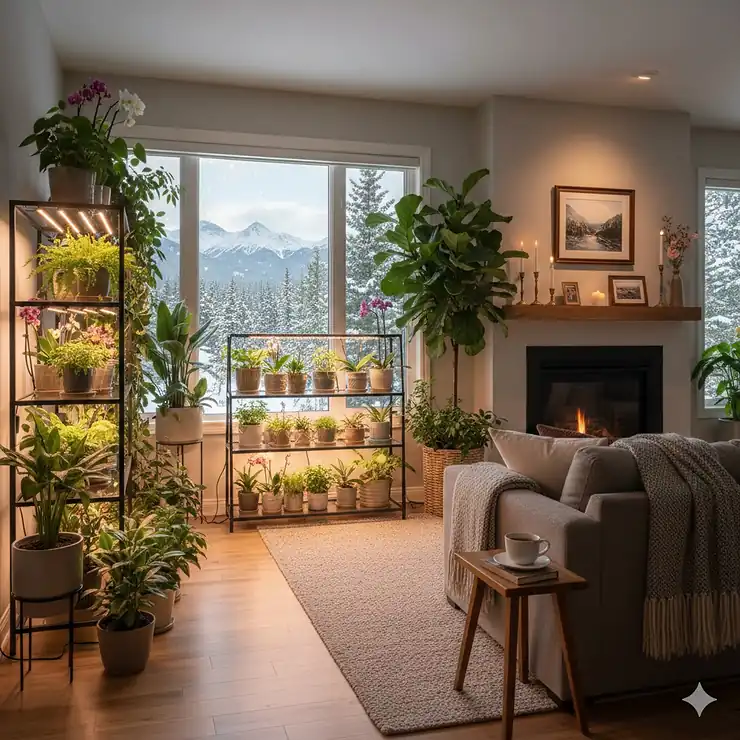
Let’s be real — Canadian winters are brutal. When you’re in Halifax in January and the sun sets before 4:30 PM, your beloved monstera and herb garden are basically being robbed of daylight. I’ve been there. One winter, my once-thriving pepper seedlings went pale and leggy, reaching desperately toward a frosted window like tiny green zombies. That’s when I finally got serious about grow lights.
Learning how to choose grow lights for indoor plants is genuinely one of the best skills you can pick up as a Canadian gardener. The right grow light doesn’t just keep your plants alive through November to March — it actively helps them thrive. Whether you’re starting seeds in February, maintaining year-round herbs in your Vancouver condo, or running a small indoor growing setup in Calgary, grow lights are your best friend.
So what exactly does how to choose grow lights for indoor plants mean in practice? It means understanding the type of light your plants need (not just brightness, but the right wavelengths), matching the fixture to your growing space, and investing in something energy-efficient enough that your electricity bill doesn’t skyrocket. The good news? In 2026, the options available on Amazon.ca are better — and more affordable — than ever. Let’s break it down.
Quick Comparison Table: Top 7 Grow Lights Available in Canada (2026)
| Product | Type | Wattage | Coverage | Price (CAD) | Rating |
|---|---|---|---|---|---|
| Barrina T8 4FT Grow Lights (6-Pack) | T8 LED Strip | 252W | 4×4 ft | ~$55–$70 | ⭐ 4.5/5 |
| LEOTER Grow Light 80 LED | Gooseneck Clip | 15W | 1–2 plants | ~$30–$40 | ⭐ 4.3/5 |
| VIVOSUN VS1000E LED | Panel LED | 100W | 2×3 ft | ~$90–$120 | ⭐ 4.6/5 |
| Spider Farmer SF1000 | Samsung LED Panel | 100W | 2×3 ft | ~$145–$175 | ⭐ 4.8/5 |
| Mars Hydro TS1000 | Panel LED | 150W | 2×3 ft | ~$130–$155 | ⭐ 4.7/5 |
| VIPARSPECTRA P1000 | Quantum Board | 100W | 2×2 ft | ~$85–$110 | ⭐ 4.6/5 |
| Barrina T10 Pro Standing | Floor Standing | 42W | 1 plant area | ~$60–$80 | ⭐ 4.4/5 |
💬 Just one click – help others make better buying decisions too! 😊
Top 7 Grow Lights for Indoor Plants in Canada: Expert Analysis
1. Barrina T8 LED Grow Lights 4FT Full Spectrum (6-Pack)
If you’re shopping on a budget and need to cover a large shelf or grow station, the Barrina T8 is one of the best-value options available on Amazon.ca. This six-pack delivers 252W total (42W per fixture) with a 5000K daylight white full spectrum — close enough to natural sunlight that your seedlings and herbs will barely notice the difference.
Specs: 252W total | 5000K Full Spectrum | V-Shape reflector | Linkable design (up to 16 units)
Price: ~$55–$70 CAD (6-Pack)
Canadian Availability:
✅ In stock on Amazon.ca with Prime shipping
Canadian buyers consistently praise the linkable design, which makes setting up multi-tier grow shelves a breeze. One reviewer from Ontario noted it transformed her winter seed-starting setup with zero fuss.
✅ Extremely affordable per fixture
✅ Linkable design for scalability
✅ Great for seed starting and herbs
❌ No built-in timer
❌ Pink/white light can look odd in living spaces
Best for: Seed starters, greenhouse shelves, vegetable growers.
2. LEOTER Grow Light for Indoor Plants (80 LED, Upgraded Version)
For small-space growers — think succulents on a shelf, a couple of pothos, or a small herb pot on your kitchen counter — the LEOTER 80 LED clip light is one of the most convenient options on Amazon.ca. It features a full spectrum plus red/blue spectrum, a flexible gooseneck, and a 3/9/12H timer built right in.
Specs: 80 LEDs | Full Spectrum + Red/Blue | 3/9/12H Timer | 10 dimmable levels
Price: ~$30–$40 CAD
Canadian Availability:
✅ Available with Amazon.ca shipping across all provinces
Buyers across Canada love how simple this is to set up — plug in, clip on, set the timer, and forget it. Multiple reviewers from British Columbia and Alberta mentioned using several of these on a single shelf system.
✅ Very budget-friendly
✅ Built-in auto timer
✅ Adjustable gooseneck and dimmable
❌ Limited coverage (1–2 small plants)
❌ Not ideal for high-light plants like fruiting tomatoes
Best for: Succulents, herbs, low-to-medium light houseplants.
3. VIVOSUN VS1000E LED Grow Light 100W
The VIVOSUN VS1000E is a popular mid-range choice that checks every important box: ETL-certified driver, full spectrum coverage (3000K, 5000K, 660nm, 750nm), and an impressive 2.5 µmol/J efficiency rating. It’s designed for 2×2 ft to 3×3 ft tents and works beautifully for both the vegetative and flowering stages.
Specs: 100W | 238 diodes | 2.5 µmol/J efficiency | IP65 waterproof | ETL certified
Price: ~$90–$120 CAD
Canadian Availability:
✅ Widely available on Amazon.ca with fast Prime delivery
Canadian growers in urban apartments particularly appreciate the quiet, fanless operation — no humming keeping you up at night. Reviewers from Quebec and Ontario say the build quality punches well above its price point.
✅ ETL-certified safety driver
✅ Fanless and quiet
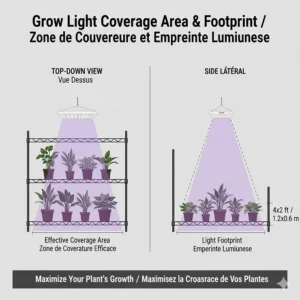
✅ Excellent for 2×2 to 3×3 ft coverage
❌ No built-in timer or dimmer
❌ May need a separate grow tent for best results
Best for: Tent growers, herb gardens, small cannabis/tomato cultivators.
4. Spider Farmer SF1000 100W Samsung LM301H EVO LED Grow Light
This is arguably the gold standard for hobbyist growers in the 100W category. The Spider Farmer SF1000 uses Samsung LM301H EVO diodes — widely regarded as among the most efficient LED chips in the industry — delivering deeper canopy penetration than most competitors at this price point. It also comes with a 5-year warranty and local Canadian service support.
Specs: 100W | Samsung LM301H EVO diodes | Full spectrum | Dimmable | 5-year warranty | Coverage: 2×2 to 3×3 ft
Price: ~$145–$175 CAD
Canadian Availability:
✅ Available on Amazon.ca; Spider Farmer also ships directly within Canada
For serious Canadian hobbyists, this is consistently rated one of the top grow lights in Canada on review sites like ProductGuide.ca. Growers appreciate the superior light distribution and the fact that Spider Farmer offers local CA maintenance support.
✅ Premium Samsung LM301H EVO diodes
✅ 5-year warranty with Canadian support
✅ Dimmable for all growth stages
❌ Higher upfront cost
❌ Needs a grow tent or dark room for best results
Best for: Serious hobbyists, premium seedlings, cannabis cultivators.
5. Mars Hydro TS1000 150W LED Grow Light
The Mars Hydro TS1000 has become a household name among Canadian indoor growers. Its patented reflector design improves light uniformity across the canopy, and its 5-level dimmer makes it one of the most flexible 150W options available. It covers a 2×3 ft footprint during flowering and a slightly larger space during vegetative growth.
Specs: 150W | Patented reflector | 5-level dimmable | Daisy chain capable | Full spectrum
Price: ~$130–$155 CAD
Canadian Availability:
✅ Available on Amazon.ca with Prime delivery
The Mars Hydro TS1000 consistently appears on Canadian gardening forums like Reddit’s r/canadagardening as a top recommendation. Canadian buyers love the build quality and the efficient heat management — critical during hot Alberta summers when you don’t want extra heat in your grow space.
✅ Patented reflector for better light spread
✅ Daisy chain-compatible
✅ Great balance of price and performance
❌ No built-in timer
❌ 150W may be overkill for a single houseplant
Best for: Grow tent users, fruiting plants, multi-plant setups.
6. VIPARSPECTRA P1000 LED Grow Light
Looking for a compact quantum board without breaking the bank? The VIPARSPECTRA P1000 is one of the most competitively priced quantum-style boards on Amazon.ca. At 100W with a full-spectrum layout and daisy chain capability, it’s a smart option for growers who want the efficiency of a quantum board at a price that doesn’t sting.
Specs: 100W | Full spectrum quantum board | Daisy chain | Dimmable | Coverage: 2×2 to 3×3 ft
Price: ~$85–$110 CAD
Canadian Availability:
✅ Available on Amazon.ca; shipping to all provinces
Reviewers across Canada point to the value-to-performance ratio as the standout feature. Growers in Saskatchewan and Manitoba particularly appreciate the reliable output during the long, dark prairie winters.
✅ Affordable quantum board design
✅ Daisy chain and dimmable
✅ Compact and easy to hang
❌ Slightly less efficient than Spider Farmer or Mars Hydro
❌ No built-in timer
Best for: Budget-conscious hobbyists, seedling trays, compact tent setups.
7. Barrina T10 Pro Standing Grow Light with Timer (42W)
Not everyone has a grow tent or a dedicated plant room. For those who keep tall floor plants or want a stylish, self-contained solution, the Barrina T10 Pro offers a free-standing floor lamp design with a built-in timer and wide vertical coverage (4 ft to 5.6 ft adjustable height). It’s a genuinely elegant option for living room growers.
Specs: 42W | 169 LEDs | Full spectrum | Foot switch | 4–5.6 ft height adjustable | Auto timer
Price: ~$60–$80 CAD
Canadian Availability:
✅ Available on Amazon.ca with Prime
Canadians with fiddle leaf figs or large monstera plants in their living rooms have given this standing light rave reviews. Multiple buyers in Toronto and Vancouver apartment communities highlight how it blends naturally into décor without looking like a grow operation.
✅ Free-standing, no hooks or hangers needed
✅ Built-in timer and foot switch
✅ Great for tall statement plants
❌ Single-plant coverage only
❌ Lower intensity than panel-style lights
Best for: Floor plants, living room setups, decorative indoor gardens.
✨ Don’t Miss These Exclusive Deals!
🔍 Take your indoor garden to the next level with these carefully selected grow lights available in Canada. Click on any highlighted product to check current pricing and availability on Amazon.ca. These lights will help you grow healthier, more vibrant plants year-round — even through the darkest Canadian winter! 🍁
Understanding Light Types: LED vs Fluorescent Grow Lights Efficiency
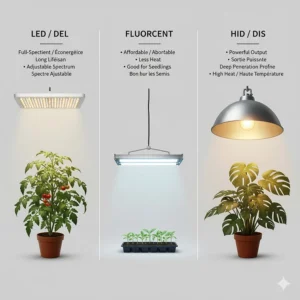
One of the most common questions I get from Canadian gardeners is: should I go LED or stick with fluorescent? The answer, in 2026, is almost always LED — but let’s understand why.
Fluorescent grow lights (T5, T8 tubes) were the go-to for decades. They’re inexpensive upfront, widely available, and produce a decent spectrum for seedlings and leafy greens. However, they use significantly more energy than modern LEDs for the same light output, and their performance degrades after 10,000–15,000 hours of use. For Canadian households where electricity costs vary dramatically (BC’s relatively low rates vs. Ontario’s time-of-use pricing), the long-term energy savings of LEDs are meaningful.
| Feature | LED Grow Lights | Fluorescent (T5/T8) |
|---|---|---|
| Energy Efficiency | High (2.0–3.1+ µmol/J) | Low–Medium (0.8–1.5 µmol/J) |
| Lifespan | 50,000+ hours | 10,000–15,000 hours |
| Heat Output | Very Low | Medium |
| Full Spectrum | ✅ Yes (most modern LEDs) | Partial |
| Upfront Cost | Medium–High | Low |
| Long-Term Value | ✅ Excellent | Fair |
| Availability in Canada | ✅ Amazon.ca + local stores | ✅ Hardware stores |
LED grow lights convert electrical energy into light far more efficiently. Premium models like the Spider Farmer SF1000 deliver over 2.7 µmol/J photon efficacy — meaning more usable photons for your plants per watt of electricity. For Canadian growers concerned about hydro bills or environmental footprint, this matters.
The verdict: unless you already have a fluorescent setup in good condition, an LED grow light is the smarter investment for the Canadian market in 2026.
Grow Light PAR vs Lumens Explained
This is where it gets nerdy — and really important. When you’re buying a grow light, you might notice some products advertise “10,000 lumens!” while others list “PPFD: 800 µmol/m²/s.” Which one should you care about?
Lumens measure brightness for human eyes — specifically, how much light the human visual system perceives. Lumens are weighted toward yellow-green wavelengths (around 555nm), which is where our eyes are most sensitive. The trouble? Plants don’t see the way we do.
PAR (Photosynthetically Active Radiation) refers to the wavelength range between 400nm and 700nm that plants actually use for photosynthesis. Within this range, plants are most efficient at absorbing blue light (around 430–450nm) and red light (around 640–680nm). A light could be extremely bright to human eyes (high lumens) but actually quite poor for plant growth if it lacks those key wavelengths.
According to Fluence’s horticulture lighting science resources, luminous metrics like lumens and lux are fundamentally the wrong tools for evaluating grow lights. The right tools are PPF and PPFD.
In summary:
- 🚫 Don’t shop by lumens for plant growth
- ✅ Look for PPFD values, PAR spectrum coverage, and PPF ratings
- ✅ Prioritize lights that show a full PAR map across the coverage area
Light Intensity Measurement Basics: What the Numbers Actually Mean
Once you’ve accepted that lumens don’t matter for plants, you’ll want to get comfortable with three key metrics. Think of it this way: if PAR is the type of food your plant needs, then these measurements tell you how much food it’s actually getting.
PPF (Photosynthetic Photon Flux): Measures the total amount of PAR light produced by your fixture every second. Expressed in µmol/s. A higher PPF means the light produces more photons — but it doesn’t tell you how many land on your plants.
PPFD (Photosynthetic Photon Flux Density): Measures how many PAR photons actually land on a specific surface area per second, expressed in µmol/m²/s. This is your most important number. According to research from LED Grow Lights Depot, light intensity drops sharply with distance — doubling the distance from your light reduces intensity by about 75% (the inverse square law). Always mount your grow light at the manufacturer’s recommended height.
DLI (Daily Light Integral): The total amount of PAR light received over a full day (mol/m²/day). A fruiting tomato plant might need a DLI of 20–30 mol/m²/day, while a low-light philodendron might be happy with 5–8 mol/m²/day.
Quick Reference: PPFD Targets for Common Indoor Plants
| Plant Type | PPFD Target (µmol/m²/s) | Daily Light Hours |
|---|---|---|
| Seedlings / Cuttings | 100–300 | 16–18 hrs |
| Leafy Greens / Herbs | 200–400 | 14–16 hrs |
| Flowering Houseplants | 400–600 | 12–16 hrs |
| Fruiting Plants (Tomatoes) | 600–1,000 | 12–14 hrs |
| Succulents / Cacti | 150–500 | 12–14 hrs |
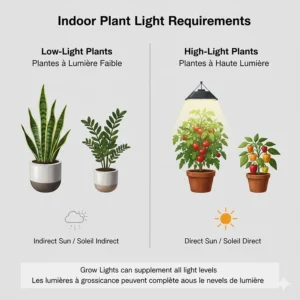
Photon Flux Density Understanding: Why It Changes Everything
One of the most surprising things new growers discover is that two lights with the same wattage can have wildly different PPFD values at the canopy. Why? Because photon flux density depends not just on power consumption but on the quality of the LED diodes, the reflector design, and the driver efficiency.
Budget LEDs might draw 100W from the wall but deliver only 60–70W as usable light. Premium fixtures like the Spider Farmer SF1000 with Samsung LM301H EVO diodes achieve photon efficacy above 2.7 µmol/J — meaning they convert a far higher proportion of electrical energy into actual photons your plants can use. This is what makes the higher upfront price worthwhile over months of Canadian winters.
A good rule of thumb: always look for a grow light manufacturer that publishes an average PPFD map across the full coverage area at a stated mounting height — not just the centre-point peak reading. Centre-point measurements can be 2–3 times higher than the canopy edges, which is misleading.
Wattage Per Square Foot Calculation: Getting It Right
So how many watts do you actually need? The old rule of thumb used to be “30–50 watts per square foot for LEDs,” and while it’s a decent starting point, it’s become somewhat outdated as LED efficiency has improved dramatically.
Here’s a more practical 2026 approach:
For a 2×2 ft (0.37 m²) growing area:
- Low-light plants: 40–60W LED
- Herbs/seedlings: 60–80W LED
- Flowering/fruiting plants: 80–100W LED
For a 3×3 ft (0.84 m²) growing area:
- Herbs/seedlings: 100–150W LED
- Fruiting plants: 150–250W LED
For a 4×4 ft (1.48 m²) growing area:
- Herbs: 200–300W LED
- Fruiting/flowering: 300–480W LED
This aligns with guidance from horticulture lighting experts who recommend 25–50 watts per square foot for most growth stages, with light-hungry flowering plants requiring up to 60W per square foot. One important note for Canadian growers: the additional heat generated by higher-wattage lights can actually be beneficial in a cool basement grow setup during winter months — but be careful in summer, particularly in BC and Ontario where indoor temps can spike.
How to Choose Grow Lights for Indoor Plants: A Step-by-Step Guide
Here’s a simple, actionable process to make the right choice on Amazon.ca:
- Identify your plant type — low light (ferns, pothos), medium light (herbs, seedlings), or high light (fruiting plants, cannabis).
- Measure your growing area — length × width in feet or metres.
- Calculate your target PPFD — use the table above as a guide.
- Select your light type — LED panels for serious growers, clip/gooseneck LEDs for small-space casual growers, T8 strips for multi-shelf setups.
- Check the efficiency rating — look for µmol/J (anything above 2.0 is good; above 2.5 is excellent).
- Review the PPFD map — not just peak numbers, but average coverage values.
- Factor in Canadian electricity costs — in Ontario, Quebec, and BC, the long-term energy savings of efficient LEDs add up significantly.
Full Spectrum Lights: What “Full Spectrum” Really Means in 2026
You’ll see “full spectrum” on nearly every grow light listing on Amazon.ca. But not all full-spectrum claims are equal. True full-spectrum light covers the entire PAR range (400–700nm) plus some IR and sometimes UV light. The University of Guelph’s Controlled Environment Systems Research Facility, one of Canada’s leading plant science research centres, has done extensive work showing that balanced spectrum coverage significantly improves both plant yield and morphology compared to narrow-band red/blue-only lights.
When shopping, look for lights that include:
- Blue spectrum (430–450nm) — for vegetative, compact growth
- Red spectrum (640–680nm) — for flowering and fruiting
- White/green light — for balanced canopy penetration
- Far-red (730nm) — accelerates flowering in many species
Avoid old-style “blurple” lights (pure red + blue LEDs only). These were the norm a decade ago, but modern white-diode full-spectrum LEDs are dramatically superior in both efficiency and plant response.
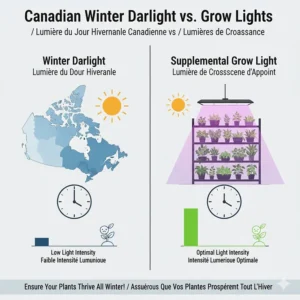
Grow Lights Canada Buying Guide 2026: Canadian-Specific Considerations 🍁
Shopping for grow lights in Canada comes with a few unique wrinkles worth knowing:
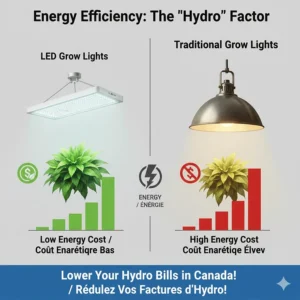
Electricity Rates Matter: Canadian electricity costs vary widely — from roughly $0.08/kWh in Manitoba to over $0.17/kWh in Prince Edward Island and parts of Ontario under time-of-use pricing. A 250W grow light running 14 hours/day costs between $8 and $18 CAD/month depending on your province. Investing in a high-efficiency LED (2.5+ µmol/J) can cut this cost meaningfully over a full Canadian winter.
Amazon.ca vs. Canadian Retailers: Most grow lights on Amazon.ca ship quickly via Prime. Brands like Spider Farmer also have Canadian-specific websites (spiderfarmer.ca) with direct shipping and local after-sales support. Canada Grow Supplies is a solid Canadian specialty retailer worth bookmarking.
Seasonal Considerations: Canadian gardeners typically ramp up grow light use from October through April — roughly 6–7 months. This makes energy efficiency a top priority. Setting timers is also essential in Canada’s variable winter photoperiod; you’re not guessing — you’re programming consistent 14–16-hour light cycles that your plants can count on.
CSA/ETL Certification: For safety, look for grow lights with ETL or UL certification, which confirms they’ve been tested to North American electrical standards. This is especially important for products purchased from overseas sellers. The VIVOSUN VS1000E is ETL certified, making it a particularly safe choice for Canadian households.
According to Natural Resources Canada’s energy efficiency resources, LED lighting products can use up to 75% less energy than traditional incandescent options — a consideration that applies directly to grow lights and electricity savings for Canadian gardeners.
✨ Don’t Miss These Exclusive Deals!
🔍 Struggling with dark Canadian winters killing your indoor garden? These carefully selected grow lights will keep every plant thriving from October through April. Click any highlighted product name to check the latest pricing on Amazon.ca — your plants will thank you! 🌿
Setting Up Your Grow Light: Distance, Duration, and Maintenance
Getting how to choose grow lights for indoor plants right is only half the battle — you also need to set it up correctly.
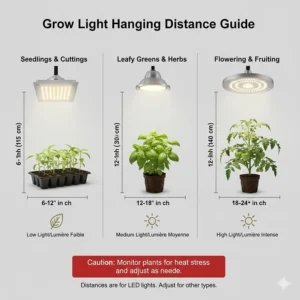
Mounting Height: Most LED panels should be mounted 30–60 cm (12–24 inches) above the canopy for optimal PPFD delivery. Check your specific model’s recommended height, as this varies considerably. Remember the inverse square law: every time you double the distance, you quarter the light intensity.
Photoperiod (Light Duration): Most flowering plants need 12–16 hours of light per day. Using a plug-in timer (often under $15 CAD on Amazon.ca) is the easiest way to automate this. Many newer lights like the Barrina T10 Pro and LEOTER 80 LED have built-in timers, which is a nice convenience feature.
Maintenance: Dust your light fixtures monthly — accumulated dust can reduce output by 5–10%. Wipe LED panels with a dry or slightly damp cloth. If you notice any discolouration in your plants (yellowing = possibly too far, bleaching or brown tips = possibly too close), adjust height accordingly.
FAQ: How to Choose Grow Lights for Indoor Plants (Canada 2026)
❓ What is the best type of grow light for indoor plants in Canada?
❓ How many watts per square foot do I need for indoor grow lights in Canada?
❓ What is the price range for grow lights in Canada?
❓ Is PPFD or lumens more important when choosing a grow light for plants?
❓ Do grow lights increase my electricity bill in Canada?
Conclusion: Make the Right Choice for Your Canadian Indoor Garden
Understanding how to choose grow lights for indoor plants doesn’t have to be overwhelming. Start with your plant’s light needs, measure your growing space, focus on PPFD over lumens, and match your budget to the right tier — budget clip lights for casual herb growers, mid-range LED panels for serious hobbyists, and premium Samsung-diode boards for those who want the absolute best results.
For most Canadians, the VIVOSUN VS1000E or VIPARSPECTRA P1000 hit the sweet spot of price and performance for a 2×3 ft setup. Step up to the Spider Farmer SF1000 or Mars Hydro TS1000 if you’re serious about fruiting plants or year-round growing through Canada’s long winters. And if you just want something simple, affordable, and effective for a shelf full of herbs? The Barrina T8 6-Pack remains one of the best-value options on Amazon.ca in 2026.
Your indoor garden shouldn’t have to hibernate from October to April just because the sun does. With the right grow light, your plants won’t even notice the Canadian winter.
✨ Don’t Miss These Exclusive Deals!
🔍 Ready to light up your indoor garden? Click any highlighted product to check current pricing and availability on Amazon.ca. From budget-friendly starter lights to premium Samsung-diode panels, there’s a perfect grow light for every Canadian gardener this season! 🍁🌱
Recommended for You
- Full Spectrum vs Purple Grow Lights Which is Better | 2026 Guide Canada
- 7 Best Seedling Grow Lights Canada Setup 2026
- 7 Best Grow Light Stands Under $100 Canada 2026
Disclaimer: This article contains affiliate links to Amazon.ca. If you purchase products through these links, we may earn a small commission at no additional cost to you.
✨ Found this helpful? Share it with your friends! 💬🤗
