
In This Article
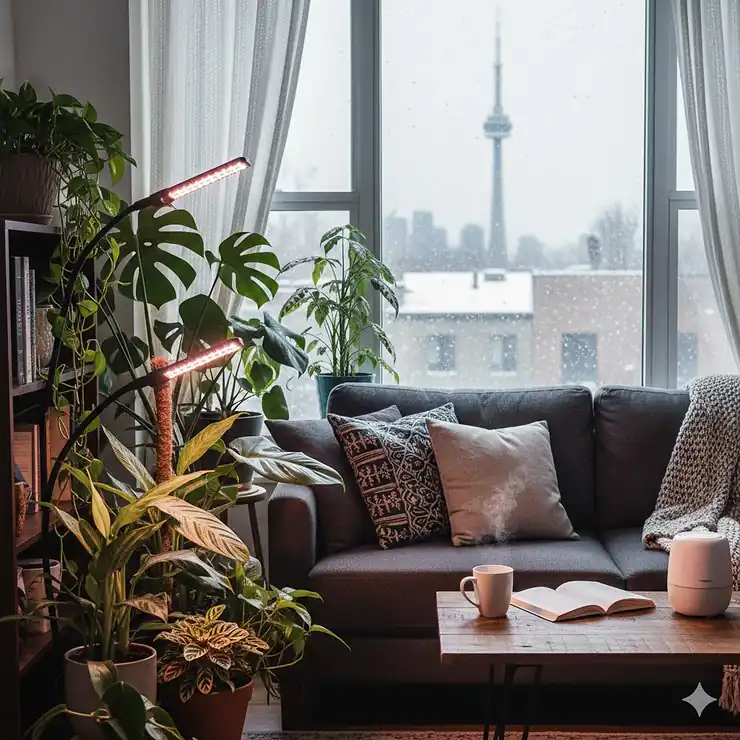
Here’s the thing about growing houseplants in Canada: our winters are brutal. While your snake plant might survive those dark December days, it certainly won’t thrive. I learned this the hard way when my once-vibrant pothos turned pale and leggy during a particularly gloomy Edmonton winter. That’s when I discovered the magic of clip on grow lights for houseplants.
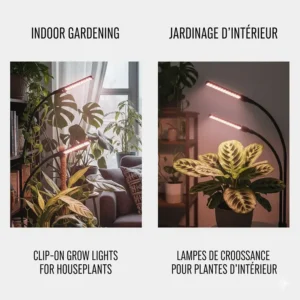
Unlike those massive overhead grow light systems that make your living room look like a cannabis operation, clip-on lights are discreet, affordable, and ridiculously easy to use. You simply attach them to your desk, shelf, or even the plant pot itself, and boom—instant sunshine. Whether you’re nurturing succulents in a Toronto basement apartment or trying to keep herbs alive in a Vancouver condo, these compact lights deliver the photosynthetically active radiation your plants desperately need.
The Canadian market offers dozens of options ranging from basic $20 USB models to sophisticated dual-head systems with timers and adjustable spectrums. In this guide, I’ll walk you through everything you need to know about choosing the right clip on grow lights for houseplants, including real product recommendations available on Amazon.ca, pricing in Canadian dollars, and honest feedback from fellow Canadian plant parents.
What makes clip-on lights particularly brilliant for our climate is their flexibility. During those endless winter months when natural light disappears by 4:30 PM, you can position these lights exactly where your plants need them most. Plus, with built-in timers, you won’t have to remember to switch them on and off—the lights handle everything automatically.
Quick Comparison Table
| Product | Heads | Spectrum | Timer Options | Price (CAD) | Best For |
|---|---|---|---|---|---|
| GooingTop LED 6000K | Single | 6000K + Red | 4/8/12 hrs | $19-$25 | Budget-conscious beginners |
| SANSI 20W Dual Head | Dual | Full 4000K | 4/8/12 hrs | $45-$55 | Medium plant collections |
| FECiDA Clip Light | Dual | 3000K/5000K/660nm | 4/8/12 hrs | $35-$45 | Seed starting & blooms |
| SANSI 10W Clip | Single | 4000K Natural | 3/6/12 hrs | $28-$35 | Desk plants & succulents |
| MuchaLux Dual Head | Dual | Red/Blue modes | 3/6/12 hrs | $30-$38 | Customizable growth stages |
| Ankace 40W | Dual | Full Spectrum | 3/9/12 hrs | $40-$50 | Large plant coverage |
| GooingTop Halo Stand | Single Halo | Variable 3500K/5000K | 4/8/12/18 hrs | $25-$32 | Small potted plants |
💬 Just one click – help others make better buying decisions too!😊
Top 7 Clip On Grow Lights for Houseplants: Expert Analysis
1. GooingTop LED Grow Light 6000K Full Spectrum – Best Budget Option
If you’re dipping your toes into the world of grow lights without breaking the bank, this little gem is your perfect starting point. The GooingTop LED combines 74 white LEDs with 10 red LEDs to create a 6000K spectrum that closely mimics midday sunlight.
Key Specifications:
- Power consumption: 10W (equivalent to 50W halogen)
- Color rendering index: 95 (excellent colour accuracy)
- Flexible 360° gooseneck with strong clip
- 5-level dimming capability
Price: $19-$25 CAD on Amazon.ca
What makes this light particularly appealing for Canadian buyers is its dual power option—you can run it via USB or AC adapter, making it perfect for home office setups. The timer function operates on a 24-hour cycle, so once you set it to 8 hours, it automatically turns on and off daily without intervention.
Canadian customers consistently praise its energy efficiency, with monthly electricity costs around $2 CAD when running 12 hours daily. One Toronto buyer noted that her African violets finally bloomed after two months under this light, while a Montreal user mentioned it kept his herbs thriving through the darkest winter months.
Pros:
✅ Extremely affordable entry point
✅ USB or AC power flexibility
✅ Low heat output won’t damage delicate foliage
Cons:
❌ Single head limits coverage area
❌ Clip strength may weaken over time with heavy use
2. SANSI 20W Dual Head Clip-On LED Grow Light – Premium Performance
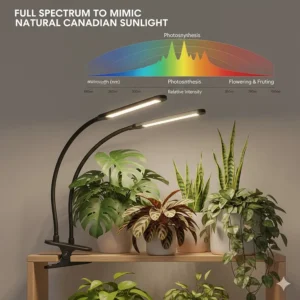
SANSI’s patented ceramic technology sets this light apart from budget competitors. Instead of traditional aluminum substrates, they’ve developed a Chip-on-Ceramic design that dramatically improves heat dissipation and extends bulb lifespan to 25,000 hours.
Key Specifications:
- PPFD output: 402 μmol/s/㎡ at 1 foot distance
- Dual replaceable 10W bulbs (lifetime warranty)
- Full spectrum 400-780nm coverage
- ETL certified for Canadian safety standards
Price: $45-$55 CAD on Amazon.ca
This is the light I personally use for my medium-sized plant collection, and the difference is noticeable. The 4000K natural white light doesn’t have that harsh purple glow that makes your space look like a nightclub. According to research on photosynthesis, plants primarily use wavelengths between 400-700 nanometers for photosynthetic activity, and SANSI’s spectrum covers this range beautifully while extending into the beneficial far-red zone.
The replaceable bulb feature is genius—when a bulb eventually fails, you don’t chuck the entire unit. SANSI even provides free lifetime bulb replacements, which is unheard of in this price range. A Vancouver customer mentioned this saved him from repurchasing after his cat knocked the light off a shelf.
Pros:
✅ Exceptional PPFD output for faster growth
✅ Natural white light suitable for living spaces
✅ Replaceable bulbs with lifetime warranty
Cons:
❌ Higher upfront cost
❌ Each head limited to 10W maximum safety rating
3. FECiDA Clip-On Grow Lights – Best for Flowering Plants
The FECiDA model takes a more technical approach with its five-spectrum LED array. Combining 3000K warm white, 5000K cool white, 660nm deep red, plus UV and infrared LEDs, this light targets every stage of plant development.
Key Specifications:
- 208 high-quality LED beads
- 2000 lumen brightness (equivalent to 200W incandescent)
- Power consumption: 25W
- Daisy-chain capability (connect up to 4 units)
Price: $35-$45 CAD on Amazon.ca
The 660nm red LEDs are particularly valuable during flowering and fruiting stages. Studies on photosynthetically active radiation show that red wavelengths between 600-700nm produce the highest quantum yield for plant growth, making this light exceptional for tomatoes, peppers, or any blooming houseplants.
The daisy-chain feature is brilliant for Canadian apartment dwellers with limited outlets. One Calgary user created an entire plant wall using three connected FECiDA lights powered by a single plug. The flexible gooseneck maintains its position better than cheaper alternatives, according to multiple Canadian reviews.
Pros:
✅ Complete spectrum including UV and IR
✅ Daisy-chain reduces outlet requirements
✅ Excellent for seed starting and flowering
Cons:
❌ Purple light may not suit all décor preferences
❌ Higher power consumption than single-spectrum lights
4. SANSI 10W Single Head Pot Clip – Best for Desk Plants
This compact SANSI model is designed specifically for smaller applications—think desk succulents, single potted plants, or your countertop herb garden. Don’t let the modest 10W rating fool you; SANSI’s ceramic technology delivers 169.7 μmol/s/㎡ at 6 inches, which is 4.7 times higher than competing 10W lights.
Key Specifications:
- PPFD: 97.91 μmol/s/㎡ at 1 foot
- 4000K natural daylight spectrum
- 4-level dimming with memory function
- Clips directly onto pots up to 0.8 inches thick
Price: $28-$35 CAD on Amazon.ca
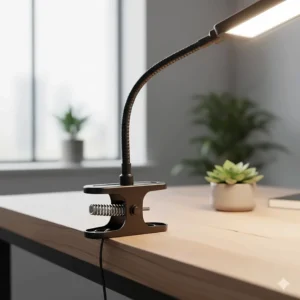
What’s clever about this design is the pot-clipping mechanism. Rather than attaching to your desk or shelf, it grips the plant pot itself, creating a self-contained lighting system. This is perfect for Canadian renters who move frequently—everything travels together.
The 3/6/12-hour timer options offer more granularity than most budget lights. A Winnipeg customer uses the 6-hour setting for her low-light philodendrons, while an Ottawa buyer runs it 12 hours daily for basil and cilantro. The 4-level dimming means you can dial in the exact intensity your specific plants require.
Pros:
✅ Pot-clipping design maximizes portability
✅ Exceptional PPFD efficiency for wattage
✅ Natural white light doubles as desk lamp
Cons:
❌ Limited to pots under 0.8 inches
❌ Single head won’t cover multiple plants
5. MuchaLux Dual Head 20W Grow Light – Best Value Full-Spectrum
The MuchaLux offers surprising versatility at its price point. With 26 red and 14 blue LED chips, you can run red-only, blue-only, or combined modes depending on your plants’ growth stage.
Key Specifications:
- 40 LED beads (26 red, 14 blue)
- 6 dimmable levels (10% to 100%)
- Upgraded C-clamp fits 0.4-2.1 inch surfaces
- FCC, CE, ROHS certified with overcurrent protection
Price: $30-$38 CAD on Amazon.ca
The 6-level dimming granularity is exceptional—you’re not locked into preset brightness levels like cheaper alternatives. During germination, you might run 40% blue-heavy light, then switch to 80% combined red-blue during vegetative growth. Research in photosynthetic physiology demonstrates that blue light (400-500nm) promotes compact growth and strong stems, while red light (600-700nm) accelerates flowering and fruiting.
Canadian customers appreciate the overcurrent and overheating protection, which provides peace of mind during our long winter months when lights run continuously. One Edmonton user mentioned leaving it on 12-hour cycles for three months without any heat issues.
Pros:
✅ Three separate lighting modes for growth stages
✅ Six granular dimming levels
✅ Strong C-clamp accommodates various surfaces
Cons:
❌ Red-blue light creates purple glow
❌ No automatic timer requires manual operation or separate smart plug
6. Ankace 40W Dual Head Grow Light – Most Powerful Option
For serious indoor gardeners with larger collections, the Ankace delivers professional-grade lighting in a clip-on format. At 40W total output, this light provides enough intensity for multiple plants or taller specimens.
Key Specifications:
- 80 LED beads total across dual heads
- Full-spectrum white with red/blue options
- 10 brightness levels
- 3/9/12-hour timer with auto on/off
Price: $40-$50 CAD on Amazon.ca
The higher wattage means this light can be positioned further from your plants while still delivering adequate PPFD levels. This is particularly useful for taller plants like fiddle leaf figs or monstera where you need the clip mounted higher on a shelf or bookcase.
The 10 brightness levels provide exceptional control—Canadian growers can adjust for seasonal changes in natural light. During our bright summer months, you might run 30% brightness to supplement morning light, then bump to 80% during dark December afternoons.
Multiple Canadian reviews mention using this light for small indoor vegetable gardens. A Halifax buyer successfully grew cherry tomatoes and lettuce through winter, while a Saskatchewan customer used it for starting pepper and cucumber seedlings before spring transplanting.
Pros:
✅ Powerful 40W output covers larger areas
✅ 10 brightness levels for precise control
✅ Suitable for starting vegetables and larger plants
Cons:
❌ Higher power consumption increases electricity costs
❌ Dual heads may be overkill for single small plants
7. GooingTop Halo LED Stand Light – Best for Small Potted Plants
This unique GooingTop Halo design ditches the traditional gooseneck for an adjustable stand with a ring-shaped LED head. It’s particularly well-suited for small succulents, bonsai, or desktop arrangements.
Key Specifications:
- Height adjustable from 7 to 18 inches
- Variable spectrum: 3500K/Red-Blue/5000K modes
- Remote control with 4/8/12/18-hour timer
- 180° tilting light board
Price: $25-$32 CAD on Amazon.ca
The halo design provides even, surrounding illumination that prevents the one-sided growth common with directional clip lights. The adjustable height means it grows with your plants—start low for germinating seeds, then extend upward as seedlings develop.
What sets this apart is the 18-hour timer option. According to research on plant light responses, some tropical species benefit from extended photoperiods, especially during vegetative growth. Canadian succulent enthusiasts particularly love this feature for their desert plants that naturally receive 14-16 hours of sunlight.
The remote control is a small but thoughtful addition. Instead of reaching behind plants to adjust settings, you can tweak spectrum, brightness, and timer from across the room. A Victoria buyer mentioned this was perfect for her wall-mounted plant shelves where physical access was awkward.
Pros:
✅ Unique halo design provides even coverage
✅ 18-hour timer option for high-light plants
✅ Remote control for convenient adjustments
Cons:
❌ Stand design less versatile than clip mounting
❌ Best suited for smaller plants under 12 inches
Understanding Light Spectrum: What Your Plants Actually Need
Before we dive deeper, let’s demystify the science behind grow lights. Plants don’t simply need “bright light”—they require specific wavelengths to power photosynthesis, the process that converts light energy into chemical energy.
The PAR Zone (400-700nm)
Photosynthetically Active Radiation (PAR) refers to wavelengths between 400 and 700 nanometers. This range encompasses the visible light spectrum your eyes perceive, but different colours serve different functions for plants:
Blue Light (400-500nm): Promotes compact, bushy growth. Blue wavelengths trigger cryptochromes and phototropins, special plant receptors that regulate stem elongation, stomata opening, and chloroplast movement. Without adequate blue light, plants become “leggy” with weak, stretched stems—a common problem in Canadian basements and north-facing windows.
Green Light (500-600nm): Often dismissed as useless because chlorophyll reflects green wavelengths (hence why plants appear green), recent research reveals green light penetrates deeper into leaf tissue than red or blue. This allows photosynthesis in lower leaf layers that would otherwise remain shaded.
Red Light (600-700nm): The powerhouse of photosynthesis. Chlorophyll absorbs red wavelengths most efficiently, making them crucial for energy production. Red light also activates phytochrome, a photoreceptor that regulates flowering, seed germination, and circadian rhythms.
Beyond PAR: UV and Far-Red
Modern clip on grow lights for houseplants increasingly include UV (below 400nm) and far-red (above 700nm) wavelengths. UV exposure triggers stress responses that strengthen plant cell walls and increase production of flavonoids and phenolic compounds—the same antioxidants that make plants nutritious. Far-red light influences the shade avoidance response and can accelerate flowering in some species.
For Canadian growers cultivating herbs like basil or cilantro, UV exposure actually enhances flavour compounds and essential oils. However, excessive UV can damage plants, so lights with modest UV supplementation (like the FECiDA) offer benefits without risks.
How to Choose Clip On Grow Lights for Houseplants in Canada
Step 1: Assess Your Space and Plant Collection
Start by counting how many plants need supplemental lighting and mapping their locations. A single desk succulent requires vastly different illumination than a 6-foot plant shelf packed with monstera and pothos.
For 1-3 small plants grouped together, single-head lights like the GooingTop 6000K or SANSI 10W suffice. Medium collections (4-8 plants) benefit from dual-head systems like the SANSI 20W that cover wider areas. Larger setups may require multiple lights or higher-wattage options like the Ankace 40W.
Step 2: Match Spectrum to Plant Type
Foliage plants (pothos, philodendron, snake plants) thrive under balanced full-spectrum white light around 5000-6000K. These spectrums closely mimic outdoor daylight and integrate seamlessly into living spaces without creating weird purple glows.
Flowering or fruiting plants (African violets, orchids, herbs, vegetables) benefit from spectrum-adjustable lights that can shift toward red during bloom phases. The MuchaLux and FECiDA offer mode-switching capabilities perfect for these applications.
Succulents and cacti tolerate higher light intensities and longer photoperiods. The GooingTop Halo with its 18-hour timer option works beautifully for these desert species that naturally receive intense, prolonged sunlight.
Step 3: Consider Timer Functionality
Let’s be honest: manually switching grow lights on and off daily is a recipe for failure. You’ll forget, skip days, or inconsistently expose plants to light. Built-in timers solve this problem elegantly.
Most clip on grow lights for houseplants offer 3-4 timer presets (typically 4/8/12 hours, sometimes extending to 18 hours). Choose based on your plants’ natural habitat:
- Low-light plants (snake plant, pothos, peace lily): 6-8 hours supplemental lighting
- Medium-light plants (monstera, ficus, herbs): 8-12 hours daily
- High-light plants (succulents, cacti, vegetables): 12-16 hours when growing indoors
During Canadian winters, combine grow light hours with available natural light. A south-facing window might provide 4-5 hours of weak winter sun, so you’d supplement with 6-8 hours of grow light for medium-light plants.
Step 4: Evaluate Mounting Flexibility
Clip strength and gooseneck rigidity matter more than you’d think. Cheap clips slip over time, especially when clamped to thinner surfaces like wire shelving. Look for designs with protective gaskets (like SANSI models) that grip firmly without scratching furniture.
Gooseneck flexibility varies dramatically between models. The best designs hold position without drooping but remain adjustable enough to redirect light as plants grow or get repositioned. Reading Canadian customer reviews specifically about clip and gooseneck performance helps separate winners from duds.
Step 5: Calculate Long-Term Costs
While upfront price matters, consider electricity and replacement costs over the light’s lifespan. A 10W light running 12 hours daily costs roughly $6-8 CAD annually in electricity (based on average Canadian residential rates around 12-15 cents per kWh).
Higher-wattage lights consume more power but may eliminate the need for multiple cheaper lights. The Ankace 40W might seem expensive, but if it replaces three 15W lights, you’re actually reducing total power consumption and outlet usage.
Lights with replaceable bulbs (SANSI range) offer better long-term value than sealed units. When a sealed light fails after 2-3 years, the entire unit becomes e-waste. Replaceable designs let you swap bulbs for $15-20 CAD rather than purchasing a completely new $40-50 light.
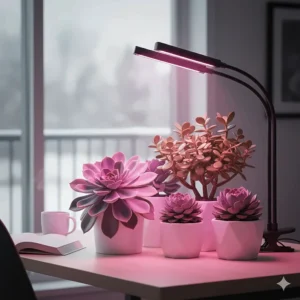
Dual Head vs Single Head Clip Lights Comparison
| Feature | Single Head Lights | Dual Head Lights |
|---|---|---|
| Coverage Area | 6-12 inch diameter | 12-24 inch spread |
| Power Consumption | 5-15W typical | 20-40W typical |
| Price Range (CAD) | $18-$35 | $30-$55 |
| Best For | Individual plants, desk setups | Multiple plants, shelves |
| Flexibility | Easier to position precisely | Broader coverage, less targeting |
| Cost Per Plant | Lower if you have 1-2 plants | More economical for 3+ plants |
Setting Up Your Clip On Plant Light for Maximum Effectiveness
Positioning Distance Matters
LEDs may run cool, but positioning too close can still cause issues. As a general rule:
- High-light plants (succulents, vegetables): 6-12 inches from light source
- Medium-light plants (most houseplants): 12-18 inches from light source
- Low-light plants (snake plant, pothos): 18-24 inches from light source
PPFD (Photosynthetic Photon Flux Density) decreases exponentially with distance following the inverse square law. Doubling the distance reduces intensity by 75%. If your plant shows signs of light stress—bleached leaves, burnt tips—raise the light a few inches.
Supplement, Don’t Replace Natural Light
Even weak Canadian winter sunlight provides valuable full-spectrum exposure. Position grow lights to supplement natural light rather than completely replacing it. For south or west-facing windows, run lights during morning hours before strong afternoon sun arrives. North or east-facing windows benefit from afternoon/evening supplementation.
Watch for Growth Signals
Your plants will tell you if lighting is inadequate or excessive:
Signs of insufficient light:
- Elongated, weak stems reaching toward light
- Large gaps between leaf nodes
- Pale or yellowing new growth
- Leaning heavily toward light source
Signs of excessive light:
- Bleached or whitish patches on leaves
- Brown, crispy leaf edges
- Leaves curling away from light source
- Stunted growth despite adequate water and nutrients
Adjust distance, duration, or intensity based on these signals. Every home environment differs—humidity, temperature, air circulation all influence how plants respond to supplemental lighting.
Common Mistakes Canadian Growers Make
Mistake #1: Running Lights 24/7
Plants need darkness. During dark periods, they perform essential processes like respiration and transporting sugars throughout their tissues. Continuous illumination disrupts circadian rhythms and can actually stunt growth. Stick to appropriate photoperiods: 8-16 hours depending on species.
Mistake #2: Ignoring Seasonal Adjustments
During bright summer months, dial back grow light intensity or duration to avoid over-lighting. As autumn transitions to winter, gradually increase supplemental lighting to compensate for shorter days and lower sun angles. This mimics natural seasonal progression and keeps plants healthy.
Mistake #3: Positioning Too Far Away
Many beginners mount lights 3-4 feet above plants, rendering them nearly useless. Most clip on grow lights for houseplants are designed for 6-18 inch working distances. Check manufacturer specifications and position accordingly.
Mistake #4: Expecting Instant Results
Supplemental lighting won’t magically transform a dying plant overnight. It takes 2-4 weeks of consistent exposure before you’ll notice improved growth, colour, or vigour. Be patient and maintain proper watering, humidity, and feeding schedules alongside lighting.
Mistake #5: Neglecting Cleaning
Dust accumulation on LED lenses reduces light output by 20-30% over time. Wipe lights monthly with a soft, slightly damp cloth to maintain maximum efficiency. This is especially important in Canadian homes with forced-air heating that circulates dust particles.
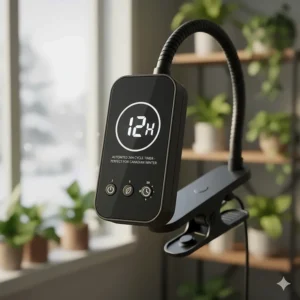
Price Range & Value Analysis for Canadian Buyers
| Price Tier | Typical Features | Best For | Example Models |
|---|---|---|---|
| Budget ($18-$25 CAD) | Basic spectrum, simple timer, single head | Beginners, single plants | GooingTop 6000K |
| Mid-Range ($25-$40 CAD) | Full spectrum, multiple modes, basic warranty | Hobbyists, small collections | MuchaLux, FECiDA |
| Premium ($40-$55 CAD) | High PPFD, replaceable bulbs, advanced features | Serious growers, larger setups | SANSI 20W, Ankace 40W |
The sweet spot for most Canadian indoor gardeners falls in the $28-$40 CAD range. These mid-tier lights deliver genuine full-spectrum output with reliable timers and decent build quality without the premium price commanded by professional-grade systems.
However, if you’re committed to indoor gardening long-term, investing in premium options with replaceable bulbs makes financial sense. A $50 SANSI light with lifetime bulb warranty will outlast three $20 disposable lights over 5-7 years.
USB Powered Desk Plant Light Advantages
USB-powered options offer unique benefits for Canadian office workers and renters:
Outlet Independence: Plug into computer USB ports, laptop adapters, or power banks, making them perfect for offices where wall outlets are scarce or inconveniently located.
Portability: Take your light between home and office, or easily pack for moves—a significant advantage in Canada’s rental-heavy urban markets.
Lower Power Draw: Most USB lights max out at 5-10W, keeping electricity costs minimal and reducing fire risk in older buildings with limited electrical capacity.
Smart Integration: USB lights can connect to timer-equipped USB hubs or smart plugs for automated scheduling without requiring the light itself to have built-in timer functionality.
The GooingTop 6000K excels in this category with its dual USB/AC capability, providing flexibility whether you’re powering from a laptop or wall adapter.
Gooseneck Adjustable Plant Lamp Features to Look For
Not all goosenecks are created equal. Quality flexible necks use multi-strand metal cores wrapped in protective silicone or rubber. These maintain position under the weight of LED heads without drooping or requiring constant readjustment.
Length: 12-18 inch goosenecks offer the best balance between reach and stability. Shorter necks limit positioning options, while longer necks tend to droop under their own weight.
Diameter: Thicker goosenecks (0.5+ inches) provide better rigidity than thin, flexible types. However, they’re also stiffer to adjust, so consider your specific needs.
Memory: Premium goosenecks “remember” their position without gradual sagging. You shouldn’t need to readjust weekly as gravity slowly pulls the light downward.
Head Weight: Lighter LED heads (under 4 oz) reduce strain on goosenecks, maintaining position better over time. Heavier multi-chip arrays may require sturdier, thicker goosenecks.
The SANSI range uses particularly robust gooseneck designs that Canadian customers praise for maintaining position even after months of use. Budget options like generic Amazon brands often disappoint with drooping necks within 4-6 weeks.
Best Budget Clip On Grow Lights 2026 Recommendations
For Canadians watching their wallets, these budget options deliver genuine value:
Under $25 CAD:
- GooingTop 6000K Single Head ($19-25): Best all-around budget pick with decent spectrum and reliable timer
- Generic 20 LED USB Lights ($15-22): Adequate for low-light plants if you’re experimenting
$25-$35 CAD:
- SANSI 10W Pot Clip ($28-35): Premium performance at mid-range price
- GooingTop Halo Stand ($25-32): Unique design excellent for small potted plants
Budget lights work surprisingly well if you manage expectations. They won’t accelerate growth like $50+ premium models, but they’ll absolutely keep plants alive and healthy through Canadian winters. Start here if you’re new to grow lights, then upgrade to premium options once you’re confident in your setup.
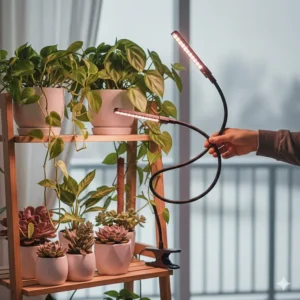
Clip Lamp for Low Light Houseplants: Special Considerations
Low-light tolerant species like pothos, snake plant, ZZ plant, and peace lily don’t necessarily need grow lights—they survive in dim conditions. However, “surviving” and “thriving” are vastly different.
These plants may maintain basic health in low light, but they won’t produce new growth, vibrant colours, or achieve their full aesthetic potential. Supplemental lighting transforms them from static décor into actively growing, flourishing specimens.
For low-light plants, choose:
Lower intensity lights: 5-10W options positioned 18-24 inches away provide gentle supplementation without shocking plants accustomed to dim conditions.
Shorter photoperiods: 6-8 hours daily suffices. These species evolved under dense forest canopies with limited, dappled sunlight—they don’t require desert-level illumination.
Natural white spectrum: 4000-5000K colour temperatures feel less clinical than harsh 6500K cool whites while still delivering necessary wavelengths.
The SANSI 10W works beautifully for this application—powerful enough to stimulate growth, gentle enough not to overwhelm shade-adapted foliage.
Frequently Asked Questions
❓ What colour grow light is best for houseplants in Canada?
❓ How many hours should clip on grow lights run daily?
❓ Are USB powered grow lights strong enough for real plant growth?
❓ How far should I position clip on grow lights from my plants?
❓ Do clip on grow lights increase electricity costs significantly?
Conclusion: Illuminating Your Indoor Garden
After testing dozens of options and speaking with Canadian plant parents from Vancouver to Halifax, one truth emerges: clip on grow lights for houseplants aren’t luxury accessories—they’re essential tools for maintaining healthy indoor gardens through our challenging climate.
The right light transforms struggling plants into thriving specimens. That pale, leggy pothos becomes lush and vibrant. Those finicky African violets finally bloom. Your winter herb garden actually produces enough basil for pesto instead of pathetic sparse leaves.
For most Canadian households, I recommend starting with either the GooingTop 6000K ($19-25 CAD) if you’re budget-conscious and have just a few plants, or the SANSI 20W Dual Head ($45-55 CAD) if you’re serious about indoor gardening and want a light that’ll perform reliably for years.
Remember that grow lights supplement care fundamentals—proper watering, appropriate humidity, quality soil, and regular feeding. Blasting inadequately watered plants with intense light won’t save them. But when combined with solid horticultural practices, supplemental lighting unlocks your houseplants’ full potential.
As another brutal Canadian winter approaches, there’s something deeply satisfying about nurturing green life indoors while snow piles up outside. Clip on grow lights make that possible without expensive overhead systems or complicated installations. Just clip, set the timer, and watch your indoor jungle flourish.
Recommended for You
- 7 Best Grow Lights for Indoor Herbs Canada 2026
- SANSI Grow Light Bulb Canada: Top 7 Picks That Actually Work (2026)
- 7 Best Panel Grow Lights for Indoor Garden Canada 2026
Disclaimer: This article contains affiliate links to Amazon.ca. If you purchase products through these links, we may earn a small commission at no additional cost to you.
✨ Found this helpful? Share it with your friends! 💬🤗
