
In This Article
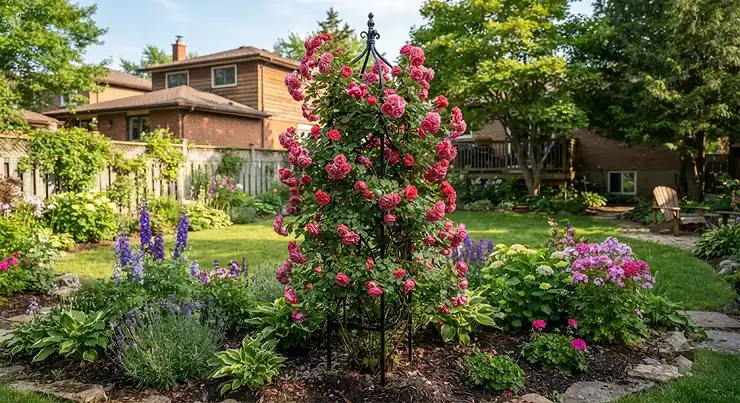
Somewhere between “plant support” and “garden sculpture” sits the obelisk — that four-legged, tapering tower that turns a floppy climbing rose into the tallest, showiest thing in the yard. If you’ve ever watched a rose cane flop sideways in July because it had nothing sturdy to grab onto, you already understand the appeal of a garden obelisk for climbing roses. It’s not just scaffolding. It’s the difference between a rose that sprawls apologetically across a flower bed and one that spirals upward like it’s auditioning for a cottage-garden postcard.
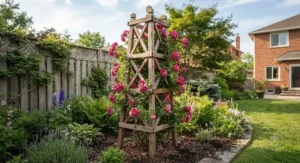
A garden obelisk for climbing roses is a freestanding, four-sided (or round) vertical frame — usually iron or coated steel — that gives a climbing rose’s long canes something to be trained around as they grow, since roses don’t actually climb on their own; they need a structure and a bit of human help with ties.
Here in Canada, that “help” matters more than in milder climates. Winters test metal finishes, spring winds test ground anchoring, and our extended growing zones (thanks to Agriculture and Agri-Food Canada’s cold-hardy Explorer rose breeding program) mean a lot of us are training genuinely vigorous, cane-heavy roses onto these structures. Below, we’ve dug into seven real obelisks sold through amazon.ca — budget, mid-range, and premium — compared their construction, and worked through what actually matters when you’re standing in your driveway trying to decide if the C$60 option or the C$300 one is the smarter buy.
Quick Comparison Table
| Obelisk | Height | Material | Best For | Price Range (CAD) |
|---|---|---|---|---|
| H Potter Garden Obelisk Trellis (GAR643) | 7 ft | Solid iron, powder-coated | Heavy climbers, permanent focal points | C$300-C$420 range |
| Gardener’s Supply Company 7-Foot Steel Obelisk | 7 ft | Powder-coated steel | Serious rose growers wanting a horticultural-brand build | C$180-C$250 range |
| Achla Designs OBL-02 (85-in) | 7.1 ft | Wrought iron | Cottage-garden height on a mid-size budget | C$150-C$210 range |
| Achla Designs OBL-01 (61-in) | 5 ft | Wrought iron | Smaller beds and container roses | C$90-C$130 range |
| Panacea 89350 Rose Tower | 60 in | Coated steel | Classic English rose-garden look, budget-mid | C$60-C$90 range |
| Trellume Garden Obelisk (69-in) | 5.75 ft | Rustproof coated pipe | Tight budgets, lighter vines and young roses | C$50-C$75 range |
| Glitzhome Tree of Life Trellis (48-in) | 4 ft | Coated metal | Container accents and small focal points | C$45-C$65 range |
Looking at the spread above, the pattern is pretty clear: height and metal mass climb together with price, and that’s not a coincidence — a taller obelisk carrying a mature climbing rose needs more steel in its legs to stay upright through a windy prairie spring. Budget picks like the Trellume Garden Obelisk and Glitzhome Tree of Life Trellis make sense for a young rose or a container planting that isn’t putting much weight on the frame yet, but if you’re training a vigorous Explorer-series climber, the extra iron in the H Potter or Gardener’s Supply Company models earns its keep over a decade of Canadian winters.
💬 Just one click — help others make better buying decisions too!😊
Top 7 Garden Obelisks for Climbing Roses: Expert Analysis
1. H Potter Garden Obelisk Trellis (GAR643) — heaviest-duty build in this roundup
At 7 feet tall and roughly 62 pounds of solid iron, this is the obelisk you buy when you’ve decided a climbing rose is a ten-year commitment, not a one-season experiment. The frame ships with 12-inch ground stakes and a charcoal-brown powder coat finished with a hand-rubbed faux patina, and H Potter — a family-run Idaho manufacturer building outdoor iron structures since 1997 — clearly designed it to be freestanding décor even before a single vine touches it. Based on the spec comparison, that 62 pounds is the real differentiator here: lightweight wire obelisks in the C$50 range can tip in a stiff gust once a mature rose loads them down with wet foliage, while this one simply doesn’t move. It’s best suited to gardeners with an established climbing rose (think a vigorous Explorer variety) who want a structure that will outlast the plant’s first few prunings and still look sharp bare in winter. Reviewers consistently report that assembly is straightforward with the included hardware, and several specifically mention confidence in windy sites once the ground spikes are seated — though a few note that two people are genuinely needed to lift and position it, given the weight.
Pros:
- ✅ Extremely stable in wind once staked properly
- ✅ Powder-coated iron resists rust and fading for years
- ✅ Doubles as a striking standalone yard feature bare
Cons:
- ❌ Heavy enough to require two people for setup
- ❌ Premium iron construction commands a premium price
At an estimated C$300-C$420 range (check current price, as figures shift), this is the splurge pick — worth it if you want to plant once and stop thinking about the structure for the next decade.
2. Gardener’s Supply Company 7-Foot Steel Obelisk — horticultural-brand engineering
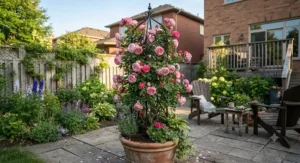
Gardener’s Supply Company has spent decades designing plant-support hardware specifically for gardeners rather than general home décor, and this 7-foot, 15.5-inch-diameter steel obelisk reflects that focus: it’s built around function first, ornament second. The narrower diameter compared to the H Potter model means it takes up less bed space while still offering full vertical height, which matters if you’re squeezing a rose obelisk into a border rather than a wide-open bed. What most buyers overlook about a purpose-built horticultural obelisk like this one is that the ring spacing and leg angle are usually engineered around actual cane-training geometry, not just visual symmetry — so ties sit more naturally as canes spiral. It’s the pick for someone who already grows other Gardener’s Supply structures (their tomato towers and raised beds show up in a lot of the same gardens) and wants matching quality without stepping up to full ornamental ironwork pricing. Aggregated feedback for this style of steel obelisk in the Gardener’s Supply lineup tends to praise the powder-coat’s weather resistance and note it’s genuinely intended for serious plant support rather than pure décor, though exact review counts for this specific SKU weren’t independently verifiable at the time of research.
Pros:
- ✅ Purpose-built ring spacing for easier cane training
- ✅ Narrower footprint fits tighter border spaces
- ✅ From a brand focused on functional garden hardware
Cons:
- ❌ Less ornamental than iron-finial competitors
- ❌ Sits in a similar price bracket to premium iron models
Expect a C$180-C$250 range at the time of research — solid mid-to-premium value for a company that designs for gardeners first.
3. Achla Designs OBL-02, 85-Inch Wrought Iron Garden Obelisk — best silhouette-to-price ratio
Achla Designs builds its obelisks from slim wrought-iron tubing finished in a graphite, corrosion-resistant powder coat, and the OBL-02 is the taller of their two obelisk sizes at just over 7 feet. The four-legged, hoop-and-finial design is intentionally airy rather than bulky — it ships flat and folds down for off-season storage, which the heavier iron models in this list simply can’t do. Here’s what to weigh: that slim profile means less metal mass than the H Potter obelisk, so it’s not the pick for a genuinely massive rambling rose, but for most repeat-flowering climbers (the kind Amazon.ca shoppers are typically training) it provides ample height and structure. The compressible, flat-pack design is honestly the standout feature — anyone who’s tried to store a welded 62-pound obelisk over winter will appreciate legs that fold flat against a garage wall.
Pros:
- ✅ Compresses flat for compact off-season storage
- ✅ Corrosion-resistant graphite finish holds up outdoors
- ✅ Tall 7+ ft height at a mid-range price point
Cons:
- ❌ Slimmer tubing than heavy-iron competitors
- ❌ Four ground legs need firm soil for full stability
Priced in the C$150-C$210 range, this is arguably the sweet spot in the whole lineup for anyone who wants real height without H Potter money.
4. Achla Designs OBL-01, 61-Inch Wrought Iron Garden Obelisk — best for smaller beds
This is the shorter sibling to the OBL-02, standing 5 feet tall in the same graphite wrought-iron finish. Based on the spec comparison, the shorter height genuinely changes the plant-matching calculus: a 5-foot obelisk suits younger climbing roses, compact repeat-bloomers, or a rose planted alongside a spring-flowering clematis (a pairing rose breeders specifically recommend for extending bloom season on modest structures). The spec sheet won’t tell you this, but user reports suggest the smaller obelisks in this style are popular for container plantings on patios and balconies, where a 7-foot tower would look comically oversized. It ships flat and assembles the same way as its taller sibling, so storage and setup are identical, just scaled down.
Pros:
- ✅ Compact height suits containers and small beds
- ✅ Same durable wrought-iron finish as larger models
- ✅ Lower price point than the 85-inch version
Cons:
- ❌ Too short for a vigorous mature climbing rose
- ❌ Four-leg base still needs anchoring in loose soil
At a C$90-C$130 range, this is a smart mid-budget pick for smaller gardens or a rose that’s still establishing itself.
5. Panacea 89350 Rose Tower Obelisk (60-Inch) — classic English cottage-garden look
Panacea has been making garden hardware for decades, and this Rose Tower leans hard into a specific aesthetic: wide rings, four upright posts, and a fleur-de-lis finial that reads as distinctly English-cottage-garden rather than modern-minimalist. What most buyers overlook about a design like this is that the wide ring spacing (versus tighter lattice-style trellises) actually makes it easier to weave a rose cane horizontally, which rose growers specifically recommend for maximizing bloom count — canes trained sideways produce more flowering laterals than canes trained straight up. It’s a strong match for anyone building a period or romantic-style garden rather than a strictly modern one, and its 60-inch height puts it between the two Achla sizes above. Reviewers of similarly styled coated-steel rose towers in this price bracket tend to flag the finish as solid for the price, with the usual caveat that any budget-tier coating benefits from an annual touch-up if scratched during assembly.
Pros:
- ✅ Wide ring spacing supports horizontal cane training
- ✅ Classic English rose-garden aesthetic
- ✅ Mid-height fits most garden bed proportions
Cons:
- ❌ Coated steel isn’t as heavy-duty as solid iron
- ❌ Finial detail is delicate compared to sturdier models
Expect around a C$60-C$90 range, making this one of the better value picks if the look matters as much as raw structural mass.
6. Trellume Garden Obelisk Trellis (69-Inch) — best true budget pick
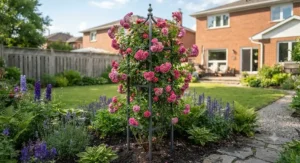
The Trellume obelisk uses rustproof, plastic-coated metal pipe with adjustable support rings — a lighter-duty construction than any of the iron models above, but genuinely functional for what most first-time obelisk buyers actually need: support for a young rose, clematis, or jasmine that hasn’t put on serious woody growth yet. Reviewers consistently note that assembly requires no tools, just rotating the sections into place, which makes it a low-friction option for a first attempt at vertical rose training. Here’s the honest trade-off: this is not the structure for a decade-old, thick-caned climber, and the brief itself says as much — it’s built for “light and small plants,” not overly large or heavy ones. But at under a hundred dollars, it’s a reasonable way to test whether an obelisk-trained rose even suits your garden before committing to a premium iron piece.
Pros:
- ✅ No-tool assembly, rotate-and-lock design
- ✅ Adjustable rings fit as the plant grows
- ✅ Lowest price point among taller options here
Cons:
- ❌ Not rated for large, heavy, or older rose canes
- ❌ Plastic coating is less durable than powder-coated iron
At a C$50-C$75 range, this is the “try it before you commit” option for a young rose bush.
7. Glitzhome Tree of Life Metal Garden Trellis (48-Inch) — best small decorative accent
At 48 inches tall, the Glitzhome Tree of Life trellis is really a decorative garden stake more than a structural obelisk, and it’s included here deliberately as the “lesser-known alternative” for a specific use case: a small climbing rose or miniature rambler in a large patio container, where a 7-foot iron tower would overwhelm the pot. The tree-of-life motif worked into the ironwork adds ornamental interest even before foliage fills in, which the spec sheet frames as a selling point in its own right. It’s not competing with the H Potter or Gardener’s Supply models on load capacity — it’s competing on the question of what looks good on a condo balcony or beside a front door where space, not plant size, is the constraint.
Pros:
- ✅ Compact size fits patios, balconies, and containers
- ✅ Decorative motif adds visual interest on its own
- ✅ Most affordable option in this comparison
Cons:
- ❌ Too small for anything beyond a young or miniature rose
- ❌ Limited stability for exposed, windy container placements
At roughly a C$45-C$65 range, it’s the entry point for anyone who wants obelisk styling without obelisk-scale commitment.
Practical Usage Guide: Installing & Training Roses on Your Obelisk
Getting an obelisk in the ground is the easy part; getting a rose to actually climb it is where most first-timers stumble, mainly because climbing roses don’t have tendrils or suckers the way clematis or ivy do — they need to be physically tied on. Start by anchoring the obelisk before you plant, sinking the ground stakes deep enough that the frame doesn’t rock when you push on it, since a wobbly structure trains a wobbly rose. Position the rose about 12-18 inches from the base rather than dead center, angling the main canes toward the nearest leg so they have an immediate point of contact.
Vine training a climbing rose is really about resisting the urge to let canes grow straight up. Roses bloom from lateral shoots, so gently spiraling the main canes around the obelisk’s rings — securing them every 12-18 inches with soft plant ties or twine — encourages far more side growth and, by extension, far more flowers than a cane left to shoot vertically. In the first 30 days after planting, the most common mistake is tying too tightly; canes thicken as they grow, so leave slack for at least an inch of expansion. From spring through fall, check ties monthly, as they loosen or snap and a heavy, unsupported cane can snap in wind. Come late winter, prune out dead or crossing wood before new growth starts, and re-secure anything that’s worked loose over the season — a five-minute check now saves a collapsed, tangled mess by July.
Real-World Scenarios: Matching the Right Obelisk to Your Garden
The condo-balcony gardener in Toronto or Vancouver: Working with a large container and maybe 15 square feet of space, a compact structure like the Achla OBL-01 or the Glitzhome Tree of Life trellis makes far more sense than a 7-foot iron tower — both are light enough to reposition and sized for a miniature or patio climbing rose rather than a full-size Explorer variety.
The Prairie acreage owner in a windy, zone 3 garden: Between exposed wind and genuinely brutal winters, this is exactly the scenario the H Potter or Gardener’s Supply Company obelisks were built for — deep ground stakes, real structural mass, and a powder coat rated for seasonal extremes matter more here than anywhere else on this list.
The budget-conscious first-time rose grower with a small backyard bed: Starting with a younger, less vigorous climber, the Trellume or Panacea Rose Tower options offer a low-cost way to establish the plant for a season or two before deciding whether to upgrade to a premium iron structure once the rose’s mature size is clearer.
Problem → Solution: Fixing Common Obelisk Headaches
Problem: The obelisk tips or leans after a windstorm. This almost always traces back to shallow staking. The fix is deeper ground spikes — H Potter’s guidance specifically recommends firmer, deeper anchoring in exposed sites, and the same logic applies to any obelisk brand.
Problem: Rust spots appear on a budget metal frame. Plastic and basic powder coatings can chip during assembly or transport. Touch up exposed metal promptly with an outdoor-rated clear sealant or matching spray paint rather than waiting for rust to spread.
Problem: The rose grows tall canes but won’t bloom. This is usually a training issue, not a plant issue — canes trained straight up put energy into height rather than flowering laterals. Re-train canes to spiral horizontally around the rings.
Problem: The rose has outgrown its obelisk. A too-small structure like the Glitzhome or Trellume options eventually gets swamped by a vigorous mature climber. At that point, it’s usually more practical to size up to a 7-foot iron model than to keep tying an overgrown plant to an undersized frame.
Problem: A container-grown obelisk keeps blowing over. Lightweight structures in pots need extra ballast — a heavier pot, added stones at the base, or switching to a model designed with a wider leg stance for container stability.
How to Choose a Garden Obelisk for Climbing Roses
What is the best way to choose a garden obelisk for climbing roses? Match the structure’s height and material weight to your rose’s mature size and your region’s wind exposure, prioritizing solid iron for vigorous or exposed plantings and lighter coated steel for young or contained roses.
- Match height to the rose’s mature size. David Austin’s own growing guidance notes obelisks generally suit roses in the 6-8 foot range — taller ramblers need arches or pergolas instead.
- Weigh material against your climate. Solid iron resists wind and holds up longer through freeze-thaw cycles than thinner coated pipe.
- Check the base footprint. A wider stance at the legs generally means better resistance to tipping than a narrow, tall silhouette.
- Consider your bed or container size. A 7-foot obelisk overwhelms a small patio pot the same way a 4-foot one gets swallowed by a large border rose.
- Look at ring spacing. Wider rings make horizontal cane training easier, which improves bloom count over time.
- Factor in storage. Flat-packing designs like Achla’s models simplify off-season storage; welded heavy iron pieces generally stay outdoors year-round.
- Budget for the whole lifespan, not just the sticker price. A cheaper structure replaced twice can cost more over a decade than one premium purchase.
Common Mistakes When Buying a Garden Obelisk for Climbing Roses
The single most common mistake is buying on height alone without checking weight or leg width — a tall, lightweight obelisk is genuinely more likely to tip once a mature rose loads it with wet foliage than a shorter, heavier one. A close second is skipping the ground-stake length in the spec sheet; 12-inch stakes anchor differently than 18-inch ones, and soil type changes the math further. Buyers also frequently underestimate how large their rose will eventually get, choosing a 4-foot decorative piece for a variety that reaches 8 feet within a few seasons. Finally, it’s easy to overlook finish quality: a basic paint job versus a proper powder coat with UV protection is the difference between a structure that looks tired in three years and one that still looks sharp after a decade of Canadian winters.
Garden Obelisk vs Rose Arch and Flat Trellis Panels
An obelisk offers 360-degree support and works as a standalone focal point in an open bed, while a flat trellis panel is designed to sit against a wall or fence and only supports growth on one face. For most freestanding beds and borders, the obelisk wins on versatility and visual interest, since it looks finished from every angle rather than only from the front. Arches, meanwhile, are built for pathways and entryways, spanning a walkway rather than standing as a single point — and rose growers specifically note that arches generally need larger, more vigorous ramblers than the roughly 6-8 foot climbers suited to obelisks. If your space is a garden bed rather than a walkway, and you want height without committing to spanning two posts, the obelisk is almost always the more practical, more adaptable choice; save the arch for a genuine entrance feature.
Weather-Resistant Materials: Features That Actually Matter (And Those That Don’t)
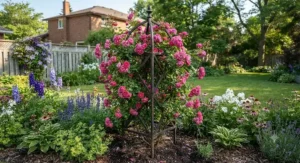
The material spec that actually matters is the combination of base metal plus coating, not just the coating alone. Solid iron with a powder coat and UV-protective sealer (the approach H Potter and similar premium brands use) resists both rust and sun-fading far longer than thin steel pipe with a basic plastic dip coat, which is why the premium options in this list carry a real price premium. What doesn’t matter nearly as much as marketing suggests: finial ornamentation and decorative flourishes look nice, but they add negligible structural value — a plain, well-anchored obelisk outperforms an ornate, thin one every time a Canadian spring windstorm rolls through. Ground-stake length matters more than most buyers assume: 18-inch stakes anchor dramatically better in loose or sandy soil than the 12-inch stakes on lighter-duty models, and that difference shows up the first time a storm hits. If scratches or nicks do occur during assembly on any model, a touch-up with clear outdoor sealant or matching spray paint protects the exposed metal before rust has a chance to start.
Creating a Garden Focal Point: Placement & Design Ideas
A garden obelisk earns its keep as a garden focal point even before a single leaf climbs it — the vertical silhouette draws the eye up out of a flat bed and gives an otherwise low planting scheme a sense of architecture. Placing one at the center of a circular bed, at the far end of a sightline from a patio, or in pairs flanking a garden entrance are all classic ways to use the structure intentionally rather than as an afterthought once the rose needs support. Because obelisks look good bare in winter — especially the heavier iron designs with finials — they’re one of the few plant supports that function as year-round garden art rather than disappearing under snow. For smaller yards, a single well-placed obelisk in a mixed border does more visual work than scattering several smaller supports around; for larger properties, matching pairs at a path’s entrance create the kind of framed, deliberate look usually reserved for much larger landscape budgets.
Garden Obelisks for Canadian Gardeners: Hardiness Zones & Rose Choices
Canada’s plant hardiness zones run from a brutal 0 in the far north up to a relatively balmy 9 on parts of Vancouver Island, and Natural Resources Canada’s updated zone mapping reflects how much regional variation actually exists across the country. That range matters directly for obelisk shopping, because it determines which climbing roses you can realistically train onto one. Gardeners in zones 2-4 — much of the Prairies, northern Ontario, and Quebec — generally do best with Agriculture and Agri-Food Canada’s cold-hardy Explorer series roses, many of which were specifically bred to survive winter lows near -35°C while still climbing vigorously enough to need real structural support. Gardeners in milder zones 6-9, largely along the coasts and southern Ontario, have far more variety choice and can lean toward classic English climbers that need less winter protection. Wherever you garden, a University of British Columbia botanical garden discussion on bed sizing for climbing roses and clematis is a useful reminder that even a perfectly chosen obelisk needs enough bed width around it — a 3-foot minimum is the general rule of thumb — for the rose’s root system to actually support all that climbing growth.
Long-Term Cost & Maintenance
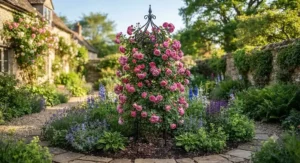
A budget coated-metal obelisk in the C$50-C$75 range might need replacing within five to eight years as coatings chip and rust sets in, especially in humid or coastal Canadian climates. A premium solid-iron structure at C$300-C$420 costs roughly four to six times as much upfront but, based on the powder-coat and UV-sealer specs manufacturers publish, is reasonably expected to last well over a decade with only occasional touch-up sealant. Run the simple math over a ten-year span and the premium option often works out cheaper per year of use, particularly once you factor in the labour of replanting a rose around a failed structure. Maintenance itself is minimal either way: an annual check of ground stakes, a spring inspection of ties, and touch-up paint on any scratches are really the whole list — obelisks are, refreshingly, one of the lower-maintenance pieces of garden hardware you’ll own.
Frequently Asked Questions
❓ How tall should a garden obelisk be for a climbing rose?
❓ Can you leave a garden obelisk outside all winter in Canada?
❓ Do climbing roses need to be tied to an obelisk?
❓ What's the difference between an obelisk and a trellis for roses?
❓ How do I stop my garden obelisk from tipping over in wind?
Conclusion
Choosing between these seven obelisks really comes down to one honest question: how big and how permanent is the rose you’re planting? A young climber in a container on a Toronto balcony has completely different needs than a decade-old Explorer-series rambler on a windswept prairie acreage, and that’s exactly why this list spans everything from the C$45 Glitzhome accent piece to the C$300-plus H Potter iron tower. If you want a structure you’ll never think about again, the heavier iron options are worth the investment. If you’re still working out whether obelisk-trained roses suit your garden at all, start with a budget pick, get a season of vine training under your belt, and upgrade once your rose tells you what it actually needs. Either way, a well-chosen garden obelisk for climbing roses does double duty as both plant support and garden focal point — good-looking even bare, better once it’s finally covered in blooms.
✨ Don’t Miss These Exclusive Deals!
🔍 Take your rose garden to the next level with these carefully selected obelisks. Click on any highlighted item to check current pricing and availability. These structures will help you create the vertical, blooming display your garden’s been missing!
Recommended for You
- Reusable Plant Clips vs Twist Ties For Gardening: 7 Best Picks 2026
- 7 Best Plant Ties For Delicate Stems In 2026 (Gentle Picks)
- 7 Best Garden Trellis Under $40 CAD For 2026
Disclaimer: This article contains affiliate links. As an Amazon Associate, I earn from qualifying purchases. If you purchase products through these links, we may earn a small commission at no additional cost to you.
✨ Found this helpful? Share it with your friends! 💬🤗
