
In This Article
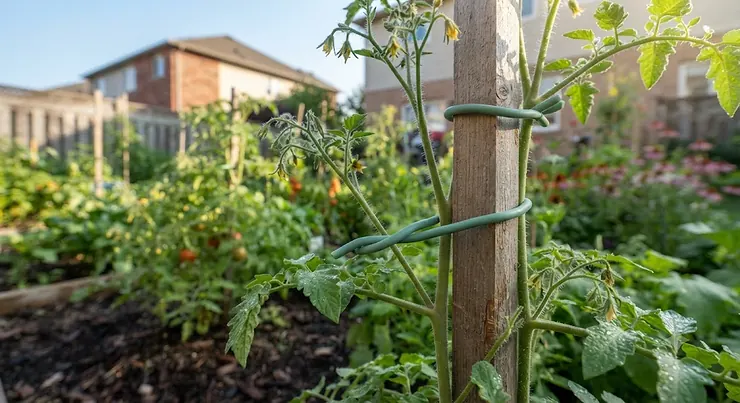
Here’s a scene every gardener knows: you check on a tomato seedling you tied up two weeks ago, and there’s a pale, pinched ring right where the twine met the stem. Nothing dramatic happened. No storm, no pest, no disease. Just an ordinary piece of string doing exactly what string does — holding tight and not budging while the plant kept growing underneath it. That’s the whole problem with picking the wrong plant ties for delicate stems: the damage is slow, quiet, and completely avoidable.
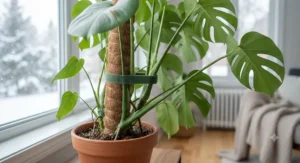
Plant ties for delicate stems are simply soft, flexible fasteners — stretch tape, foam-coated wire, hook-and-loop strips, or gentle twine — designed to support a growing stem without cutting into it. Unlike rigid wire or plastic zip ties, they give as the plant thickens, which matters enormously for tender annuals, climbing vines, and top-heavy perennials.
This guide walks through seven real, currently available options for Canadian gardeners, from budget stretch twine to reusable hook-and-loop straps, plus honest analysis on materials, technique, and the mistakes that quietly cost people their favourite plants every summer. Girdling — the technical term for a tie cutting into plant tissue — is a documented issue in horticultural literature, and it’s almost entirely preventable with the right tie and a bit of technique.
Quick Comparison Table
| Product | Material | Length | Best For |
|---|---|---|---|
| VELCRO Brand ONE-WRAP Garden Ties | Hook-and-loop, recycled plastic | 50 ft | Reusable all-purpose support |
| Bio-Stretch Soft Garden Plant Ties | Stretch fabric, biodegradable | 130 ft | Truly delicate stems that need give |
| Shintop Plant Ties | Soft twine, biodegradable | 164 ft | Budget-friendly roses and vines |
| VIVOSUN Twist Ties | PE-coated wire, with cutter | 164 ft | Quick, cut-to-length bundling |
| Oligei Plant Ties | Stretchy TPR tape | 100 ft x 2 rolls | Bulk coverage for large gardens |
| CHZKVOY Reusable Plant Ties | Hook-and-loop nylon, pre-cut | 100 pcs, 6-in | Houseplants and container gardens |
| QenFree Garden Wire | Soft coated wire | 66 ft | Lightweight seedlings and light vines |
Looking at the table, the split really comes down to how much stretch you need versus how much reuse you want. The Bio-Stretch Soft Garden Plant Ties and Oligei Plant Ties are built to expand with the stem, which matters most for anything genuinely fragile — think dahlia shoots or young pepper stalks. The VELCRO Brand ONE-WRAP Garden Ties and CHZKVOY Reusable Plant Ties trade some of that stretch for reusability and speed, which pays off if you’re tying up dozens of plants every weekend. If your budget is tight and you mostly need something soft and forgiving for a handful of pots, Shintop Plant Ties or QenFree Garden Wire get the job done without overspending.
💬 Just one click — help others make better buying decisions too!😊
Top 7 Plant Ties for Delicate Stems: Expert Analysis
Choosing among dozens of near-identical garden twist ties is genuinely confusing, so we dug into real specs, materials, and aggregated review sentiment for seven products that consistently show up as strong, currently available options. Coverage spans budget, mid-range, and reusable premium picks, with a mix of stretch tape, coated wire, and hook-and-loop styles so there’s a fit for whatever you’re staking this season.
1. VELCRO Brand ONE-WRAP Garden Ties — best all-around reusable pick
The standout here is simple: it’s Velcro, so it opens and closes as many times as you need without cutting a fresh piece every time. The 50-ft roll is made from recycled plastic and cuts to any length with scissors, and the soft hook-and-loop face means there’s no hard edge pressing into the stem the way a knotted string edge can. Because it’s adjustable rather than tied off permanently, you can loosen it in a week or two as a stem thickens — something fixed-knot twine simply can’t do without re-tying from scratch.
Based on the spec comparison, this style suits gardeners who check on their plants often and want to make micro-adjustments rather than set-and-forget ties. Reviewers of VELCRO-style garden wraps consistently report that the grip holds up well through wind and rain, though a few note the loop side can pick up soil grit over a season, which slightly reduces stickiness on reuse.
Pros:
- ✅ Fully reusable and adjustable without re-cutting
- ✅ Soft face won’t abrade stems like bare wire
- ✅ Cuts to any custom length with scissors
Cons:
- ❌ Loop material can collect debris over time
- ❌ Less stretch than fabric tape for fast-growing stems
Expect to pay somewhere in the C$12-C$16 range for a 50-ft roll, and given how many times a single roll gets reused across a season, the cost-per-tie ends up lower than most single-use twist ties.
2. Bio-Stretch Soft Garden Plant Ties — gentlest stretch tape for true delicate stems
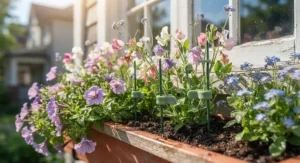
What most buyers overlook about this one is right in the name: it’s engineered to stretch, not just bend, which means it physically expands as a stem grows instead of relying on you to loosen it manually. The 130-ft (40M) roll is made from a soft, roughly 95% natural-material fabric that’s cut to length with scissors, and Amazon listing data for this line describes it degrading naturally after 18-24 months outdoors, so leftover pieces don’t need to be hunted down and removed later.
On paper, this makes it the closest thing on this list to a “set it and forget it” tie for genuinely fragile stems — think standard roses, dahlia shoots, or young tomato stalks in their fastest growth phase. Product listings for this tie include grower testimonials describing it holding rose stems securely over a full two-year growing period without cutting in, which lines up with the stretch-fabric design doing exactly what rigid ties can’t.
Pros:
- ✅ Genuinely stretches with the stem as it thickens
- ✅ Naturally degrades, so remnants don’t need removal
- ✅ Soft fabric feel reduces abrasion on tender tissue
Cons:
- ❌ Degradable material won’t last multiple seasons
- ❌ Slightly pricier per foot than basic twist ties
Priced around C$14-C$18 for the 130-ft roll, it lands in the mid-range — a reasonable trade-off if stem safety on your most delicate plants is the priority over multi-year reuse.
3. Shintop Plant Ties — softest budget twine for roses and vines
The hook here is straightforward affordability without sacrificing softness: this is an 8mm soft, stretchy garden twine sold in a 164-ft roll, and it’s explicitly marketed as gentle on delicate stems rather than a generic all-purpose string. Because it’s biodegradable, it breaks down naturally if a piece gets left behind after harvest, which matters if you’re tying directly around fruit-bearing stems you might forget about by autumn.
Here’s what to weigh: soft twine like this needs a looser hand than wire-based ties, since it has less structural stretch built in than a true elastic tape. That said, for roses, light climbing vines, and general staking where you’re checking in regularly, it’s a genuinely serviceable, low-cost option that won’t bite into skin-thin new growth. Reviewers commonly describe this style of soft garden twine as easy to tie and untie by hand, with a texture noticeably gentler than the sisal or jute twine sold in most hardware stores.
Pros:
- ✅ Very budget-friendly for a 164-ft roll
- ✅ Noticeably softer feel than traditional garden twine
- ✅ Biodegradable, so forgotten pieces break down
Cons:
- ❌ Requires more frequent re-tying as stems thicken
- ❌ Less stretch memory than TPR or fabric tape
At under C$10 for the roll, this is one of the cheapest genuinely soft options on the list, making it an easy first purchase for anyone testing whether soft ties are worth the switch from hardware-store twine.
4. VIVOSUN Twist Ties — best for quick, cut-to-length twist ties
The standout feature is the built-in cutter housed right on the dispenser, so you pull, twist, snip, and move to the next stem without hunting for scissors. It’s a PE-coated wire running 164 ft (50m), and the coating is what separates it from bare wire — the plastic layer is what actually keeps the metal from biting into a stem the way exposed wire would.
What the spec sheet won’t tell you, but user reports suggest, is that this style is fastest for high-volume tying — think a raised bed with 20 tomato plants needing weekly adjustment — because there’s no scissors, no knot, just a twist. The trade-off is that a coated wire tie has less “give” than a true stretch fabric, so it still needs to be checked and loosened periodically as the stem grows, rather than expanding on its own.
Pros:
- ✅ Built-in cutter speeds up repetitive tying jobs
- ✅ PE coating prevents bare-wire abrasion
- ✅ Reusable — untwist and reposition as needed
Cons:
- ❌ No stretch, so it needs manual loosening over time
- ❌ Coating can wear thin with repeated twisting
Typically priced in the C$10-C$13 range, it’s a solid mid-budget pick for anyone who values speed over the completely hands-off stretch of fabric tape.
5. Oligei Plant Ties — best bulk value tape for big gardens
The advantage that jumps out immediately is volume: two 100-ft rolls of half-inch stretchy tape for one purchase, which is genuinely useful if you’re tying up a full vegetable garden rather than a handful of container plants. It’s a reusable, adjustable TPR-style tape, meaning it has real elastic stretch rather than relying purely on looseness, and it’s rated for both indoor and outdoor use.
Based on the spec comparison against wire-based options on this list, the stretch factor here does meaningful work — a half-inch-wide stretchy tape distributes pressure across a wider surface than a thin wire or twine, which reduces the odds of a pressure line forming on a fast-thickening stem like a young sunflower or dahlia. Reviewers of similar TPR garden tape commonly note that the width makes it comfortable to tie snugly without the tie itself becoming the point of failure.
Pros:
- ✅ Two full rolls means genuine bulk value
- ✅ Wide, stretchy tape spreads pressure evenly
- ✅ Works well for both indoor and outdoor plants
Cons:
- ❌ Wider tape is less discreet on small stems
- ❌ Colour may fade with prolonged sun exposure
At roughly C$9-C$12 for the two-roll pack, the cost-per-foot here is among the lowest on this list, which is exactly what you want when you’re covering a large garden bed by bed.
6. CHZKVOY Reusable Plant Ties — best pre-cut ties for houseplants
The convenience factor stands out immediately: 100 pre-cut, 6-inch hook-and-loop strips means no measuring, no cutting, no dispenser to manage — just grab one and wrap it around a stem and a stake or moss pole. Built from anti-slip nylon with a hook-and-loop closure, each strip is short enough to be purpose-built for smaller plants rather than long garden runs.
Here’s what most buyers overlook: pre-cut length is actually a feature, not a limitation, for houseplants specifically. A 6-inch strip is proportioned for a philodendron stem and a slim stake, not a six-foot tomato cage, so there’s less excess material flapping around a small pot. Aggregated review sentiment for this style of reusable garden tape frequently praises the anti-slip grip holding position on smooth stakes, which is a common complaint with plain hook-and-loop tape that hasn’t been textured.
Pros:
- ✅ Pre-cut length saves prep time every use
- ✅ Anti-slip texture holds position on smooth stakes
- ✅ Reusable, so one pack lasts multiple seasons
Cons:
- ❌ Fixed 6-inch length isn’t ideal for large plants
- ❌ Less stretch than fabric or TPR tape options
Expect a price around C$9-C$12 for the 100-piece pack, which works out to pennies per tie — a genuinely low-commitment way to try hook-and-loop ties on houseplants before scaling up to garden-sized rolls.
7. QenFree Garden Wire — lightest wire tie for seedlings and light vines
The standout advantage is how fine and flexible this 3.5mm soft wire tie feels compared to heavier-gauge garden wire, which makes it well-suited to genuinely young, thin stems rather than established woody growth. At 66 ft, it’s the shortest roll on this list, but that’s proportionate to its use case — light, early-season staking rather than season-long heavy-duty support.
What most gardeners underestimate is how much gauge matters for seedlings specifically: a wire that’s too thick, even if coated, adds weight and rigidity that can bend a thin stem sideways rather than supporting it upright. Reviewers of comparably soft, thin garden wire commonly note it’s easy to shape by hand without tools, which suits quick jobs like training a young cucumber tendril toward a trellis.
Pros:
- ✅ Fine gauge suits thin, young seedling stems
- ✅ Flexible enough to shape without tools
- ✅ Reusable and easy to reposition
Cons:
- ❌ Shorter roll length than most competitors
- ❌ Not sturdy enough for heavy, mature branches
Priced under C$8 in most cases, it’s the cheapest entry point on this list — a smart add-on purchase for anyone starting seedlings indoors before the garden season fully kicks in.
Practical Usage Guide: How to Tie Delicate Stems Without Damage
Getting the tie right is only half the job — how you apply it matters just as much. Start by leaving genuine slack: a good rule of thumb is that you should be able to slide one finger between the tie and the stem after it’s secured. If it’s snug against the skin the moment you tie it, it will be tight within a week as the stem naturally swells with growth.
Tie the support material to the stake first, tightly, and then loop it loosely around the stem — never the reverse. A figure-eight pattern, where the tie crosses itself between the stake and the stem, is the classic technique for a reason: it creates a soft cushion of material between the two rather than pulling the stem flush against a hard stake edge. Check every tie every 10-14 days during active growth, since this is exactly when stems thicken fastest and outgrow a tie that felt loose just two weeks earlier.
A common first-30-days mistake is over-tying: adding a tie every few inches “just to be safe.” In reality, most single-stem plants need support at two or three points, not five or six — every extra tie point is another spot that needs monitoring and another opportunity for a missed check-in to turn into girdling. For climbing vines specifically, only tie where the plant genuinely needs directional guidance; let tendrils and twining growth do their own gripping wherever possible.
✨ Don’t Miss These Exclusive Deals! 🔍
Take your garden support setup to the next level with these carefully selected products. Click on any highlighted item to check current pricing and availability. These tools will help you create a healthier, better-supported garden your family will love!
Real-World Scenarios: Matching Ties to Your Garden
The balcony container gardener, tying up a handful of tomato and pepper plants in pots, is usually best served by something pre-cut and low-commitment — the CHZKVOY Reusable Plant Ties fit this scenario well, since there’s no dispenser or bulk roll taking up storage space, and 100 strips comfortably covers a season of container plants without waste.
The raised-bed vegetable grower managing 15-20 plants across several beds needs speed and volume more than finesse. Here, VIVOSUN Twist Ties with its built-in cutter, or the bulk Oligei Plant Ties two-roll pack, both make sense — the weekly tying-and-adjusting routine goes faster with a dispenser-style product than with pre-cut strips that run out mid-season.
The rose and perennial gardener, dealing with genuinely fragile, fast-thickening stems on dahlias, delphiniums, or standard roses, gets the most protection from something with real elastic stretch. The Bio-Stretch Soft Garden Plant Ties is purpose-built for exactly this case, since the fabric expands with the stem rather than requiring perfect timing on manual loosening.
How to Choose Plant Ties for Delicate Stems
- Match the material to the stem’s fragility. Soft, young growth — seedlings, new shoots — needs genuine stretch fabric or fine wire; established woody stems tolerate firmer ties.
- Prioritize width over thinness. A wider tie distributes pressure across more surface area, which matters more for stem health than most people assume.
- Decide between reusable and biodegradable. Reusable hook-and-loop or wire suits gardeners who check plants often; biodegradable twine suits “tie it and mostly forget it” situations where leftover material shouldn’t need removal.
- Check for a built-in cutter or pre-cut format if you’re tying dozens of plants — the time saved adds up fast across a full garden.
- Consider your climate. Outdoor ties exposed to Canadian summer sun and winter freeze-thaw cycles benefit from UV-stable or naturally degrading materials rather than cheap plastic that turns brittle.
- Buy more length than you think you need. Running out mid-project means an awkward mix of tie types on the same plant, which complicates monitoring later.
- Factor in removal. A tie that’s easy to snip off cleanly prevents the kind of forgotten, swallowed ties that cause the worst girdling damage.
As one Canadian gardening resource puts it, the material you choose matters less than applying it gently and leaving room for the stem to keep growing — a principle that holds true whether you’re staking a peony or a young tree.
Soft Plant Ties for Flowers vs Ties for Climbing Vines
These two categories overlap, but they solve genuinely different problems. Soft plant ties for flowers — think dahlias, peonies, delphiniums — mostly need to counteract gravity: a heavy flower head pulling a stem sideways or snapping it in wind and rain. The tie’s job is largely static, holding a stem against a stake in more or less one position for weeks at a time, which is why fabric stretch tape like the Bio-Stretch Soft Garden Plant Ties performs so well here — it holds firm but keeps expanding as the stem continues to thicken through the season.
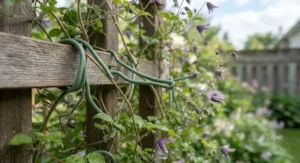
Ties for climbing vines have a different job entirely: directional guidance rather than pure support. A cucumber, pea, or morning glory is actively growing toward and around a trellis, and the tie’s role is to nudge new growth in the right direction until the plant’s own tendrils or twining habit take over. This calls for something you’ll reposition often — the VELCRO Brand ONE-WRAP Garden Ties or VIVOSUN Twist Ties both suit this better than a knotted, one-time twine tie, since climbing plants need frequent, small adjustments as they reach for the next rung of support.
The practical upshot: buying one type of tie for your whole garden usually means compromising somewhere. A gardener growing both dahlias and pole beans genuinely benefits from stocking two different tie styles rather than forcing one product to do both jobs.
Stem Damage Prevention: What Actually Causes Girdling
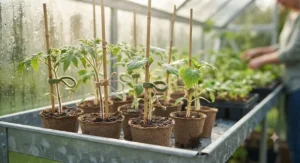
Girdling happens when a tie doesn’t move while the stem underneath it keeps growing, eventually compressing or cutting through the outer tissue that carries water and nutrients. It’s a well-documented phenomenon in horticultural science, and while it’s most often discussed in the context of trees and stakes left on too long, the same mechanism applies at a smaller scale to garden stems tied with string, wire, or rubber bands.
The three most common causes are entirely preventable: ties applied too tightly from the start, ties that are never checked or loosened as the plant grows, and materials with sharp or thin edges that concentrate pressure onto a small area of stem rather than spreading it out. A soft, wide tie with genuine give addresses all three at once — it starts looser, it stretches instead of requiring manual adjustment, and its width spreads pressure rather than digging a groove.
Practical prevention comes down to a simple habit: build tie-checking into your regular garden routine, the same way you’d check soil moisture. A calendar reminder every two weeks during peak growing season catches thickening stems before a snug tie becomes a damaging one, and it costs nothing beyond a minute of attention per plant.
Stretchable Materials Explained: Rubber, TPR, Fabric & Velcro Compared
| Material | Stretch Level | Durability | Best Use Case |
|---|---|---|---|
| Fabric stretch tape (e.g. Bio-Stretch Soft Garden Plant Ties) | High | 1-2 seasons | Fast-growing, delicate stems |
| TPR tape (e.g. Oligei Plant Ties) | Moderate-High | 2+ seasons | Bulk garden coverage |
| Hook-and-loop (e.g. VELCRO Brand ONE-WRAP Garden Ties, CHZKVOY) | Low (adjustable manually) | Multi-season | Frequent repositioning |
| Coated wire (e.g. VIVOSUN Twist Ties, QenFree Garden Wire) | None (bend, not stretch) | Multi-season | Quick, high-volume tying |
Reading the table, the key distinction is between materials that stretch on their own and materials that require you to manually re-loosen them. Fabric and TPR tape do the adjusting work for you as the stem grows, which is genuinely valuable if your garden-check schedule is inconsistent. Hook-and-loop and coated wire, by contrast, put the responsibility on the gardener — they’re not inherently worse, but they demand the habit of periodic checking described in the section above, or they lose their safety advantage entirely.
Tying Technique 101: The Figure-Eight and Other Methods That Work
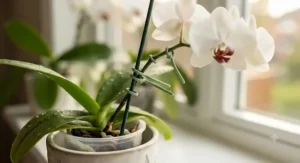
The figure-eight tie remains the gold standard for a reason: loop the tie tightly around the stake, cross it over itself, then loop it loosely around the stem before knotting or securing it back at the stake. That crossover point creates a cushion of material between stem and stake, so the two never touch directly, which is precisely where the worst rubbing damage tends to occur.
For climbing vines, a simple loose loop — no figure-eight needed — usually suffices, since the plant’s own growth habit will eventually take over the gripping job. For heavy flower heads like dahlias, a second tie point higher up the stem, applied the same loose way, prevents the classic problem of a stem snapping above a single low tie during a wind gust.
One frequently overlooked detail: tie direction matters on windy sites. Position the tie on the side of the stake facing the prevailing wind, so gusts push the stem toward the stake rather than away from it — a small adjustment that meaningfully reduces stress on both the stem and the tie itself. This lines up with expert guidance on tying-in climbing plants, which stresses checking ties regularly and loosening anything that’s started to bite in, even material that’s technically flexible or biodegradable.
Common Mistakes When Buying Plant Ties for Delicate Stems
Buying purely on length or price is the single most common misstep — a 300-ft roll of thin wire for less than a soft 50-ft tape looks like better value until you account for the fact that thin wire causes more damage on genuinely delicate stems, potentially costing you the plant itself. Another frequent error is buying only one product for an entire garden with wildly different plant types, when a mixed garden of houseplants, vegetables, and climbers genuinely benefits from two or three tie styles matched to different jobs.
Overlooking material width is another quiet mistake — a narrow tie, even a soft one, concentrates pressure more than a wide one of the same material. And skipping the “how will I remove this” question at purchase time leads directly to the forgotten, swallowed-tie scenario that causes the worst long-term damage documented in girdling research.
Long-Term Cost & Maintenance: Reusable vs Single-Use Ties
Reusable ties — hook-and-loop and coated wire — cost more per initial purchase but spread that cost across multiple seasons, since the same roll or pack gets reapplied year after year. A C$14 roll of hook-and-loop tape used across three growing seasons works out to roughly C$4.67 per season, assuming minimal loss or wear.
Biodegradable stretch tape and soft twine, by contrast, are designed for single-season use by nature of the material breaking down. The trade-off is convenience at cleanup time — no hunting for leftover ties in autumn — against a recurring annual purchase. For most home gardeners, a hybrid approach works best: reusable hook-and-loop for perennials and permanent stakes that stay in place year-round, and biodegradable tape for annual vegetables that get cleared out entirely each fall.
Plant Ties for Delicate Stems for Beginners vs Experienced Gardeners
Beginners generally do better with pre-cut, no-fuss formats — the CHZKVOY Reusable Plant Ties or a simple soft twine like Shintop Plant Ties remove the guesswork of measuring and cutting, and the forgiving stretch means a slightly-too-tight first attempt is less likely to cause real damage. Simplicity matters most when you’re still building the habit of checking on tied plants regularly.
Experienced gardeners managing larger plots tend to gravitate toward bulk, dispenser-style products with built-in cutters, since speed across dozens of plants outweighs the small learning curve. A grower who’s already internalized the figure-eight technique and a two-week check-in habit gets more value from the efficiency of VIVOSUN Twist Ties or the coverage of Oligei Plant Ties than from a beginner-friendly pre-cut pack.
Benefits vs Traditional Alternatives
| Factor | Soft Plant Ties | Traditional Twine/Wire | Plastic Zip Ties |
|---|---|---|---|
| Stem safety | High — designed to prevent girdling | Moderate — depends on material | Low — rigid, no give |
| Reusability | Often reusable or biodegradable | Reusable, but abrasive | Single-use, must be cut off |
| Ease of adjustment | Easy, especially hook-and-loop | Requires re-knotting | Not adjustable |
| Cost over a season | Low to moderate | Very low | Low, but replacement adds up |
The comparison makes the case fairly plainly: traditional twine and wire are cheaper upfront but shift more of the maintenance burden onto the gardener’s memory and habits, while plastic zip ties fail the stem-safety test outright because they simply cannot stretch or loosen. Purpose-built soft ties cost a little more than raw twine but close the gap by lasting multiple seasons or degrading safely, which usually makes them the better long-term value once girdling risk is factored in.
Frequently Asked Questions
❓ What are the best plant ties for delicate stems?
❓ How tight should a plant tie be?
❓ Do plant ties damage stems?
❓ Can I reuse plant ties season after season?
❓ What's the difference between plant ties and garden twine?
Conclusion
The right plant ties for delicate stems come down to matching material to the job: genuine stretch fabric for fast-growing, fragile stems, hook-and-loop for anything you’ll reposition often, and coated wire when speed across a large garden matters more than elasticity. None of the seven products covered here are exotic or hard to find — they’re straightforward, currently available tools that do one job well, which is exactly what a good plant tie should be.
What separates a thriving, well-supported garden from one quietly losing stems to girdling usually isn’t the specific product — it’s the habit of checking ties every couple of weeks and giving stems genuine room to grow. Pair a soft, appropriately wide tie with that simple habit, and stem damage from tying becomes almost entirely avoidable. Canadian growers looking to round out their staking kit can also browse a broader range of plant stakes and support supplies to pair with whichever tie style fits their garden best.
✨ Ready to protect this season’s plants? Browse the picks above and pick the tie that matches your garden’s biggest need right now! 🌱
Recommended for You
- 7 Best Garden Trellis Under $40 CAD For 2026
- 7 Best Trellis For Cucumbers Picks in Canada 2026
- 7 Best Trellis Netting for Climbing Vegetables in 2026 (Ranked)
Disclaimer: This article contains affiliate links. As an Amazon Associate, I earn from qualifying purchases. If you purchase products through these links, we may earn a small commission at no additional cost to you.
✨ Found this helpful? Share it with your friends! 💬🤗
