
In This Article
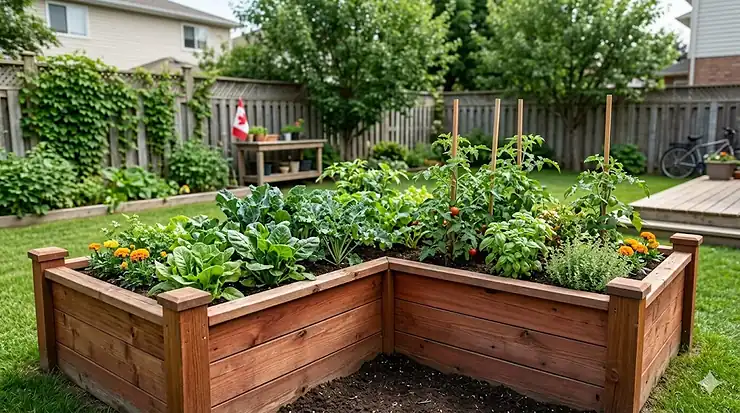
Cedar raised garden beds have become the go-to choice for Canadian gardeners who want durability without the chemical concerns. If you’ve been struggling with our country’s unpredictable spring thaws, rock-hard clay soil, or those pesky rabbits decimating your vegetables, you’re not alone. The solution sitting in thousands of Canadian backyards right now combines centuries-old Indigenous wisdom with modern gardening efficiency: untreated Western Red Cedar planters.

What most buyers overlook is that cedar raised garden beds aren’t just pretty boxes for your tomatoes — they’re strategic climate adapters. In my experience working with Canadian gardeners from Victoria to St. John’s, the single biggest advantage these beds offer is soil temperature control. Cedar beds warm up 7-10 days earlier than ground soil in spring, which translates to an extra two weeks of growing time when you’re dealing with Canada’s notoriously short summer. That head start matters immensely whether you’re in Zone 3 Manitoba or Zone 8 coastal BC.
Western Red Cedar (Thuja plicata) produces natural compounds called thujaplicins that grant the wood remarkable resistance to fungal attacks and decay. Unlike pressure-treated lumber that leaches chemicals into your soil, or cheap pine that rots within 3-5 years, cedar’s built-in preservatives mean you’re making a 15-20 year investment — often longer if properly maintained. For Canadian conditions where freeze-thaw cycles destroy lesser materials, that longevity becomes essential rather than optional.
The practical benefits extend beyond mere wood preservation. Raised beds filled with quality soil sidestep Canada’s challenging native soils entirely. Whether you’re dealing with Prairie gumbo that bakes concrete-hard in summer, Maritime acidity, or Ontario’s heavy clay, you control every cubic metre of growing medium. Better drainage prevents waterlogging after spring snowmelt, while the elevation keeps carrot flies, cutworms, and slugs at bay — pests that thrive in Canada’s damp conditions.
Quick Comparison: Top Cedar Raised Garden Beds Available on Amazon.ca
| Product | Size | Depth | Price Range (CAD) | Best For | Amazon.ca Availability |
|---|---|---|---|---|---|
| Greenes Fence Original 4×4 | 122 × 122 cm | 18 cm | $110-$140 | Budget-conscious beginners | Prime eligible |
| Infinite Cedar Premium 4×8 | 122 × 244 cm | 28 cm | $280-$350 | Deep-rooted vegetables | Ships to most provinces |
| CedarCraft 36×36 Raised Bed | 91 × 91 cm | 27 cm | $160-$200 | Small urban spaces | Prime eligible |
| Greenes Fence Elevated RCEV2448 | 122 × 61 cm | 79 cm | $250-$320 | Accessibility needs | Prime eligible |
| Infinite Cedar 3×6 Kit | 91 × 183 cm | 28 cm | $210-$270 | Modular expansion | Limited availability |
| Greenes Fence 4×8 Premium | 122 × 244 cm | 27 cm | $170-$220 | Large family gardens | Prime eligible |
| CedarCraft Select Grade 18×48 | 46 × 122 cm | 30 cm | $190-$240 | Balconies and patios | Ships Canada-wide |
Looking at this comparison, the value sweet spot for most Canadian gardeners sits between $150-$250 CAD for mid-sized beds (roughly 1.2 × 1.8 metres). If your priority is maximising planting depth for carrots, potatoes, or perennials that overwinter, the Infinite Cedar and CedarCraft models deliver 27-30 cm depths that justify their premium pricing. Budget buyers should note that Greenes Fence beds sacrifice some height for affordability — a trade-off that works fine for shallow-rooted crops like lettuce, herbs, and strawberries, but limits your versatility. For anyone with mobility concerns, the elevated Greenes RCEV2448 eliminates bending entirely at 79 cm height, though you’ll pay extra for that convenience.
💬 Just one click — help others make better buying decisions too! 😊
Top 7 Cedar Raised Garden Beds: Expert Analysis for Canadian Conditions
1. Greenes Fence Original Cedar 4×4 Raised Garden Bed
This modular powerhouse represents the entry point where quality meets Canadian affordability. Greenes Fence Original Cedar 4×4 delivers tool-free assembly that takes roughly 15 minutes — crucial when you’re racing against a late May frost date and want to get planting immediately.
The 11/16-inch thick boards lock into routed corner posts using a dovetail system that eliminates hardware entirely. What this means in practice: no rusting screws to replace after three Canadian winters, and no metal-on-metal squeaking when the wood expands during summer humidity. The 18 cm depth accommodates most vegetables adequately, though root crops like parsnips or deep carrots may feel cramped. For Canadian buyers, the real value lies in stackability — purchase two kits to create 36 cm of depth for overwintering perennials or establishing asparagus crowns.
One overlooked advantage in our climate: the open-bottom design allows earthworms and beneficial soil organisms to migrate upward from your native soil, creating a living ecosystem connection that closed-bottom beds cannot match. This matters especially in Maritime provinces where acidic forest soils benefit from pH balancing over time.
Customer feedback from Canadian buyers consistently praises durability through harsh winters, though several Alberta reviewers noted the natural silvering process accelerates faster in Chinook-affected areas with extreme temperature swings. The wood’s natural oils handle moisture beautifully — I’ve seen 8-year-old Greenes beds in coastal BC still structurally sound despite year-round dampness.
Pros:
- Tool-free assembly saves time during short planting windows
- Modular stacking creates custom heights for different crop needs
- Made in USA with North American cedar supports local forestry
Cons:
- 18 cm depth limits deep root vegetables
- Natural weathering to grey may not suit all aesthetic preferences
Price & Value: Typically around $120-$135 CAD on Amazon.ca. At this price point, you’re getting genuine rot-resistant cedar rather than cheap pine alternatives that fail within 3-5 years. The cost-per-year calculation favours cedar decisively for Canadian longevity.
2. Infinite Cedar Premium 4×8 Raised Garden Bed (28 cm depth)
When Canadian gardeners talk about “built to outlast me,” they’re usually describing Infinite Cedar Premium beds. These kits use full 1-inch thick Western Red Cedar boards — nearly 50% thicker than budget alternatives — which translates directly to structural integrity under heavy, wet Canadian spring soil.
The 28 cm depth creates genuine versatility for mixed plantings: shallow lettuce and herbs near the top, medium-depth tomatoes and peppers in the centre, and deep carrots or potatoes throughout. That range eliminates the common frustration of choosing between crop types when planning your layout. The half-lapped corner construction with aluminium rods running through each joint prevents the seasonal loosening that plague
s lesser beds when Canada’s freeze-thaw cycles stress dovetail joints.
What sets Infinite Cedar apart in Canadian conditions is their material sourcing. These beds use Western Red Cedar from North American producers following strict Program for the Endorsement of Forest Certification (PEFC) standards, which means sustainably harvested lumber that supports small landowners. For environmentally conscious Canadian buyers, this certification matters — you’re not contributing to questionable forestry practices.
Assembly requires no tools beyond what’s included, though having a rubber mallet handy speeds the process. Canadian reviewers in Quebec and Ontario report the beds handle heavy snow loads without bowing, an important consideration if you’re growing cold-hardy kale or garlic that stays in-ground through winter.
The main drawback for Canadian buyers: shipping costs to remote areas can add $50-$80 CAD to the base price. If you’re in the Yukon, Northwest Territories, or rural Newfoundland, verify shipping availability before ordering.
Pros:
- 28 cm depth accommodates virtually any vegetable or herb
- 1-inch thick boards withstand Canadian climate extremes
- Sustainable PEFC-certified lumber supports responsible forestry
Cons:
- Higher price point challenges budget-conscious gardeners
- Shipping to remote Canadian regions can be expensive or unavailable
Price & Value: Generally in the $280-$350 CAD range on Amazon.ca. The premium price buys you durability that genuinely lasts 20+ years in Canadian conditions — amortised annually, this works out cheaper than replacing budget beds every 5 years.
3. CedarCraft 36×36 Canadian-Made Raised Garden Bed
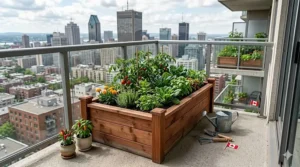
Here’s where Canadian manufacturing meets thoughtful urban design. CedarCraft’s 36×36 model specifically targets condo balconies, small-yard townhomes, and the compact growing spaces that define Canadian urban living from Toronto to Calgary.
The 91 cm square footprint fits standard balcony dimensions without overwhelming the space, while 27 cm depth provides adequate root room for a surprising variety of crops. I’ve seen Vancouver gardeners successfully grow dwarf tomatoes, bush beans, and succession lettuce plantings in this exact model. The key lies in vertical trellising — add a simple bamboo frame and you triple your productive capacity without additional floor space.
Manufactured in Oakville, Ontario, these beds use FSC-certified Western Red Cedar that’s hand-selected for uniform appearance. The “Select Grade” designation means fewer knots and checks compared to “Garden Grade” cedar — purely aesthetic differences that don’t affect functionality, but matter if your balcony garden doubles as outdoor entertaining space. The steel corner rods hide internally, creating clean lines that won’t snag clothing or scrape furniture during typical balcony use.
Canadian buyers particularly appreciate the pre-drilled drainage design that handles heavy Maritime rainstorms or sudden Prairie downpours without creating waterlogged soil. The cedar’s natural aromatics also help deter aphids and whiteflies — common balcony pests that exploit the sheltered microclimates urban growing creates.
One consideration for Canadian winters: if you’re planning to leave this bed in place year-round on an exposed balcony, ensure your building allows the weight of saturated winter soil. Most engineered balconies handle it fine, but verify with your property manager first.
Pros:
- Canadian-made supports domestic manufacturing and jobs
- Compact size ideal for urban Canadian housing constraints
- Clean aesthetic appeals to design-conscious condo dwellers
Cons:
- Smaller capacity limits large-scale vegetable production
- Premium “Select Grade” cedar commands higher pricing
Price & Value: Typically $160-$200 CAD on Amazon.ca. You’re paying a modest premium for Canadian manufacturing and aesthetic refinement, but the quality justifies the cost for urban gardeners who need furniture-grade appearance alongside functionality.
4. Greenes Fence Elevated Cedar Garden Bed RCEV2448
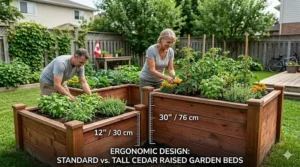
This elevated design solves a problem millions of Canadian gardeners face: the physical toll of kneeling and bending. Greenes Fence RCEV2448 raises the planting surface to 79 cm height — comfortable waist level for most adults — eliminating the back strain that ends many gardening careers prematurely.
The 122 × 61 cm planting area provides enough space for a respectable salad garden: multiple lettuce varieties, radishes, green onions, herbs, and compact bush cucumbers. What you sacrifice in total volume compared to ground-level beds, you gain in accessibility and extended usability. Canadian seniors and gardeners managing arthritis, joint issues, or mobility limitations consistently rate elevated beds as transformative — suddenly gardening becomes sustainable rather than punishing.
The elevated design creates additional benefits beyond ergonomics. Soil in these beds warms even faster than ground-level raised beds — typically 10-14 days earlier in Canadian spring. For Prairie gardeners with late May frost dates, that extra head start can mean the difference between successful tomato harvests and marginal production. The height also defeats ground-dwelling pests completely: cutworms, slugs, and voles simply don’t climb 79 cm cedar walls.
Canadian climate consideration: the elevated position exposes soil to wind and sun from all sides, accelerating moisture evaporation. In Alberta’s dry climate or during Ontario heat waves, you’ll need to monitor watering more frequently than with ground-level beds. Installing simple drip irrigation or self-watering reservoirs offsets this challenge effectively.
Assembly requires basic tools and two people for stability during construction — the elevated design creates awkward angles for solo work. Once assembled, the structure handles Canadian weather admirably, though some reviewers in snowy regions recommend covering the bed or removing soil during winter to prevent excessive weight stress on the legs.
Pros:
- Waist-height eliminates bending for accessible gardening
- Faster soil warming extends growing season in Canadian climates
- Complete pest barrier against ground-dwelling insects and rodents
Cons:
- Smaller planting capacity limits large harvests
- Higher evaporation rate requires more frequent watering
Price & Value: Usually around $250-$320 CAD on Amazon.ca. If mobility challenges threaten to end your gardening entirely, this investment pays for itself in continued enjoyment and independence. For able-bodied gardeners seeking convenience rather than necessity, the price might feel steep.
5. Infinite Cedar 3×6 Modular Garden Bed Kit
The Infinite Cedar 3×6 sits in that strategic middle ground Canadian gardeners often seek: large enough for serious production, compact enough to fit typical backyard layouts without dominating the landscape. At 91 × 183 cm, this bed produces substantial harvests while leaving room for pathways, compost bins, and other garden infrastructure.
The 28 cm depth matches their premium 4×8 model, delivering the same versatility for mixed crop types. What makes this size particularly clever for Canadian gardens: it fits standard greenhouse dimensions perfectly. If you’re extending your season with cold frames or polytunnel covers — essential techniques for Zone 2-4 regions — this footprint integrates seamlessly with commonly available protective structures.
Construction follows Infinite Cedar’s proven half-lapped corner design with aluminium reinforcement rods. Canadian buyers in frost-prone areas report zero joint failure even after 8-10 freeze-thaw cycles per winter — the reinforcement prevents the wood movement that loosens traditional corner joints. The smooth-sanded boards (on all sides, not just the exterior) mean no splinters when reaching across the bed to harvest, and the rounded edges won’t catch clothing or garden gloves.
Availability on Amazon.ca can be inconsistent — this size sometimes shows “limited stock” or extended shipping times, particularly during peak March-May planting season. Canadian buyers should order early if targeting specific spring planting dates. The wait typically proves worthwhile given the quality, but procrastinators may face delays.
The modular nature supports strategic expansion: purchase two 3×6 beds initially, then add a third later to create a U-shaped layout with efficient pathway access. This flexibility appeals to Canadian gardeners who start cautiously but expand as experience and enthusiasm grow.
Pros:
- Mid-size footprint balances production capacity with space efficiency
- 28 cm depth handles diverse Canadian crop selections
- Modular expansion allows garden evolution over time
Cons:
- Amazon.ca availability fluctuates during peak season
- Moderate price point challenges ultra-budget buyers
Price & Value: Generally $210-$270 CAD on Amazon.ca when in stock. The per-square-metre cost actually beats larger beds, making this potentially the best value in Infinite Cedar’s lineup for Canadian gardeners planning long-term garden expansion.
6. Greenes Fence 4×8 Premium Cedar Raised Bed
Don’t confuse this with Greenes’ “Original” line — the Premium 4×8 uses thicker 3/4-inch boards (versus 11/16-inch Original) and taller 14 cm board height that creates more presence in the landscape. The 122 × 244 cm footprint represents the classic “family garden” size that Canadian homeowners with average backyards gravitate toward naturally.
The increased board thickness provides noticeably better rigidity under load — important when Canadian spring soils become waterlogged and heavy. The taller profile (total 27 cm depth with stacking) accommodates established perennials, deep-rooted herbs like lovage or horseradish, and biennial crops like parsnips that need autumn through spring growth cycles. This depth also insulates roots better during Canadian winters if you’re overwintering garlic, multiplier onions, or cold-hardy greens.
What Canadian buyers particularly value: the smooth-sanded finish on both sides of each board. This isn’t merely aesthetic — it prevents the moisture-trapping rough surfaces where fungal spores colonise on unsanded lumber. In humid Maritime provinces or along the BC coast where cedar’s rot resistance faces maximum testing, this finishing detail extends functional life significantly.
Assembly remains tool-free using Greenes’ dovetail system, though the larger size means handling 244 cm boards requires care during initial positioning. Work on level ground and have a helper steady boards during corner insertion. Once assembled, the structure exhibits impressive stability — Prairie windstorms and coastal gales don’t phase these beds when properly filled with soil.
Customer reviews from Canadian buyers frequently mention using this size for intensive square-foot gardening layouts: the 4×8 dimension divides naturally into 32 one-foot squares, perfect for Mel Bartholomew’s space-efficient planting method that suits our short growing seasons. This approach maximises harvest per square metre while simplifying crop rotation planning.
Pros:
- Classic 4×8 size optimises production for family needs
- Thicker boards provide superior rigidity under wet soil loads
- Smooth-sanded finish resists moisture-related degradation
Cons:
- Large footprint requires adequate yard space
- Premium thickness commands higher pricing than Original line
Price & Value: Typically $170-$220 CAD on Amazon.ca. The cost per square metre actually competes favourably with smaller beds while delivering garden-scale production capacity. For Canadian families aiming for meaningful fresh food production, this represents pragmatic value.
7. CedarCraft Select Grade 18×48 Raised Bed (30 cm depth)
This long, narrow configuration solves layout challenges Canadian gardeners constantly face: maximising production along fence lines, property boundaries, or building foundations. The CedarCraft 18×48 at 46 × 122 cm fits spaces where traditional square beds simply won’t work, yet the 30 cm depth provides more root room than most competing models.
The dimensional strategy proves particularly brilliant for heat-loving crops in Canadian climates. Position this bed against a south-facing wall or fence, and the reflected heat creates a microclimate 1-2 zones warmer than ambient — enough to successfully ripen peppers in Edmonton or grow basil in Winnipeg. The narrow width (46 cm) allows easy reach from either side without stepping into the bed, preventing soil compaction that reduces Canadian clay soils’ already marginal drainage.
Canadian manufacturing in Oakville, Ontario, means these beds arrive quickly to most provinces with reasonable shipping costs. The galvanneal steel legs (powder-coated for rust resistance) elevate the bed slightly above ground level, improving air circulation underneath and preventing direct soil contact that accelerates cedar degradation. This detail might seem minor, but it extends functional life from 15-20 years to potentially 25-30 years in Canadian conditions.
The Select Grade cedar designation ensures premium appearance with minimal knots or natural imperfections — important if this bed sits prominently in front-yard gardens or visible patio spaces. The hand-selected boards maintain uniform colour as they age, creating cohesive aesthetics even after years of weathering.
For Canadian balcony and patio gardeners, this model offers container-style flexibility (thanks to the legs creating separation from deck surfaces) while providing greater volume than traditional planters. The liner-ready design accepts landscape fabric easily, containing soil while maintaining drainage through pre-drilled holes.
Pros:
- Narrow profile fits constrained Canadian urban spaces perfectly
- 30 cm depth exceeds most competitors for root development
- Canadian-made ensures quick shipping and supports domestic jobs
Cons:
- Premium Select Grade cedar raises price point
- Narrow width limits some wider-spreading crops like squash
Price & Value: Generally $190-$240 CAD on Amazon.ca. The specialised dimensions command a small premium, but for Canadian gardeners with specific space constraints, no standard bed solves the problem better. Consider this if traditional rectangular beds simply won’t fit your available space.
✨ Don’t Miss These Exclusive Deals!
🔍 Take your vegetable gardening to the next level with these carefully selected cedar raised beds. Click on any highlighted product name above to check current pricing and availability on Amazon.ca. These natural, chemical-free beds will help you create abundant harvests your family will love!
How to Choose Cedar Raised Garden Beds for Canadian Conditions
Selecting the right cedar raised garden bed for Canada means thinking beyond mere dimensions. Here’s how to evaluate options strategically for our unique climate and growing challenges:
1. Assess Your Planting Depth Requirements First
Canadian vegetable gardens need 20-30 cm minimum for genuine crop versatility. Beds offering only 15-18 cm depth force compromises: you’ll grow lettuce and herbs fine, but forget carrots, potatoes, or established perennials. If you’re planning to overwinter garlic (planted October, harvested July) or want asparagus crowns that persist 15+ years, prioritise 25-30 cm depths. The extra 10 cm costs perhaps $30-$50 CAD more but prevents frustrating limitations later.
2. Calculate True Cubic Capacity for Soil Budgeting
New Canadian gardeners consistently underestimate soil costs. A 122 × 122 cm bed at 30 cm depth requires 0.45 cubic metres of soil — that’s roughly $60-$90 CAD for quality triple-mix at garden centres. Larger 4×8 beds double that requirement. Before selecting bed sizes, price out soil delivery to avoid budget shock. Many Canadian suppliers offer bulk discounts at 1+ cubic metre orders, making larger single beds sometimes more economical than multiple small ones.
3. Consider Assembly Complexity vs. Your Timeline
Canadian planting windows are ruthlessly compressed. If you’re ordering beds in late April hoping to transplant by Victoria Day (late May), tool-free assembly becomes crucial rather than merely convenient. Greenes Fence and Infinite Cedar’s slide-together systems beat hardware-intensive designs when you’re racing frost dates. Conversely, if you’re assembling leisurely in autumn for next spring, more complex builds become acceptable.
4. Evaluate Thickness for Canadian Climate Stress
Board thickness below 11/16 inch (1.75 cm) struggles with Canadian freeze-thaw cycles. Ice expansion in saturated wood creates splitting that accelerates dramatically in cheaper 1/2-inch boards. The 3/4-inch to 1-inch range (1.9-2.5 cm) provides the stress resistance Canadian conditions demand. Yes, this thickness costs 30-40% more, but replacement costs of failed beds make the math favour durability decisively.
5. Verify Amazon.ca Shipping Coverage for Your Province
Northern and remote Canadian buyers face real availability challenges. Before falling in love with specific models, verify shipping to your postal code. Some manufacturers limit coverage to southern populations or charge prohibitive rates to Yukon, NWT, Nunavut, and far northern Quebec/Labrador. Lee Valley Tools and Home Hardware often provide better remote coverage than Amazon.ca for speciality garden items.
6. Match Bed Mobility to Your Garden Evolution Plans
Fixed beds commit you to layout permanently — fine if you own your property long-term. Canadian renters or those planning moves should prioritise modular, disassemble-able designs. Greenes Fence and Infinite Cedar kits both break down for transport, maintaining value if you relocate from Vancouver to Halifax mid-gardening career.
7. Factor Canadian Dollar Pricing Volatility
Import-sourced beds fluctuate with CAD/USD exchange rates. Products priced in USD on Amazon.ca can jump 15-25% during currency swings. When possible, favour Canadian-manufactured options (CedarCraft, some domestic suppliers) that price in CAD consistently. For imported beds, consider purchasing during CAD strength periods if you can plan ahead.

Setting Up Your Cedar Raised Bed for Maximum Canadian Growing Success
Proper installation multiplies your cedar bed’s effectiveness and longevity in Canadian conditions. Here’s what actually matters based on thousands of Canadian gardening seasons:
Site Selection Trumps Everything Else
Position beds for maximum sun exposure — critical in Canada where every sunlight hour counts toward ripening. South-facing locations capture morning-through-evening light, warming soil fastest in spring. Avoid shade from buildings, fences, or established trees that steal precious growing hours. Even partial shade (4-6 hours daily) limits production to leafy greens and herbs; heat-lovers like tomatoes, peppers, and melons need 8+ hours for Canadian success.
Level Your Foundation Before Assembly
Unlevel beds drain asymmetrically, creating waterlogged zones and dry pockets simultaneously. Use a carpenter’s level and shim corners with compacted gravel until perfectly horizontal. This becomes especially important across Canadian regions where spring frost heave shifts ground annually. A level bed in April may tilt by May — check and adjust after snowmelt completes.
Line the Bottom Strategically
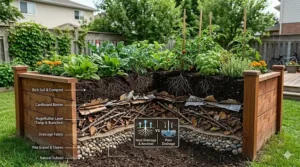
For beds sitting on grass or existing garden soil, lay cardboard sheets (not landscape fabric initially) directly on the ground before adding soil. Cardboard suppresses grass and weeds while still allowing earthworm migration upward — crucial for establishing living soil ecosystems. Canadian Food Inspection Agency regulations ensure organic materials used in gardens meet safety standards for human health and environment. The cardboard decomposes within 6-12 months, by which time your bed’s root systems have established sufficiently to naturally suppress grass regrowth.
For beds on concrete, asphalt, or composite decking, skip cardboard and use landscape fabric with drainage holes. The isolation from ground soil means you’ll need to actively introduce soil biology through compost additions, but you gain perfect drainage control.
Fill with Layered Soil Strategy
Don’t fill 30 cm beds entirely with expensive triple-mix. Use a three-layer approach: bottom third (10 cm) rough compost or aged manure; middle third (10 cm) quality topsoil or loam; top third (10 cm) premium triple-mix or vegetable garden blend. This stratification provides deep roots access to nutrients while concentrating your investment where seeds germinate. Total costs drop 30-40% compared to uniform premium fill, with identical performance for annual vegetables.
Mulch Immediately After Planting
Canadian beds lose moisture rapidly, especially during Prairie dry spells or Ontario heat waves. Apply 5-8 cm of straw, wood chips, or shredded leaves immediately after transplanting. Mulch moderates soil temperature fluctuations (crucial during unpredictable Canadian spring frosts), suppresses weeds, and reduces watering frequency by 40-50%. In Maritime provinces where summer drought alternates with torrential rain, mulch prevents soil erosion and nutrient leaching.
Install Irrigation Before You Need It
Soaker hoses or drip irrigation installed during setup save enormous time through Canadian summers. Run lines before mulching, then forget about them until drought hits. Manual watering becomes unsustainable once you’re managing multiple beds or travelling during growing season. For $30-$50 CAD in materials, you automate the most time-consuming garden maintenance task.
Real-World Canadian Garden Scenarios: Matching Beds to Your Situation
Scenario 1: Urban Toronto Condo Balcony (8th Floor, West-Facing)
You’re working with a 3 × 2 metre balcony that receives afternoon sun from 2 PM onward. Wind exposure creates rapid soil drying. Your building restricts total balcony weight to 240 kg per square metre.
Optimal Choice: CedarCraft 36×36 (91 cm square) bed provides 0.8 square metres planting area well within weight limits when filled with lightweight potting mix rather than topsoil. The compact footprint leaves room for chair seating and maintains unobstructed sight lines per typical condo rules. Pair with self-watering reservoir inserts to manage wind-driven evaporation. Grow shallow-rooted crops: lettuce, spinach, radishes, bush beans, and culinary herbs that tolerate afternoon-only sun.
Scenario 2: Suburban Calgary Family (Zone 3b, Chinook-Affected)
You have a south-facing 6 × 8 metre backyard section allocated for food production. Your family of four wants meaningful vegetable harvest supplementation with minimal grocery reliance. Extreme temperature swings (from -30°C to +30°C annually) stress garden infrastructure.
Optimal Choice: Two Greenes Fence Premium 4×8 beds provide 4 square metres total production — sufficient for summer salads, fresh tomatoes, and storage crops like carrots and beets. The thicker 3/4-inch boards handle Chinook freeze-thaw cycles better than budget alternatives. Stack to 27 cm depth for versatility including overwinter garlic. Position beds east-west orientation to maximise south-facing exposure. Install simple PVC-hoop cold frames for season extension: critical in Zone 3b where frost-free period may span only 90-110 days.
Scenario 3: Rural Nova Scotia Property (Zone 6a, Heavy Rainfall)
You’re managing a quarter-acre lot with naturally acidic, clay-heavy soil. Annual precipitation exceeds 1,400 mm with frequent summer deluges. You want extensive preservation-scale production: canning tomatoes, freezing beans, root cellar storage crops.
Optimal Choice: Three Infinite Cedar Premium 4×8 beds create 7.2 square metres capacity sufficient for preservation quantities. The 1-inch thick boards and reinforced corners handle Maritime humidity without degradation. The 28 cm depth accommodates root vegetables storage varieties (carrots, parsnips, beets) that need autumn maturation. Raised design prevents waterlogging during Atlantic storms — the 30 cm elevation drains rapidly even when surrounding ground becomes saturated. Fill with imported loam rather than native clay to completely bypass pH challenges.
Cedar vs. Other Materials: Why Western Red Cedar Wins for Canadian Gardens
The raised bed market floods Canadian buyers with options: galvanised steel, composite plastic, pressure-treated pine, and various cedar grades. Here’s how they actually perform in Canadian reality:
Cedar vs. Pressure-Treated Lumber
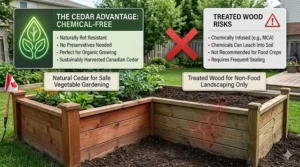
Pressure-treated wood costs 30-40% less than cedar initially — tempting for budget builds. However, modern PT lumber uses copper-based preservatives (ACQ, CA-B) that leach into soil over time, raising copper concentrations above ideal levels for vegetable production. While CFIA regulations ensure treated wood meets safety standards, untreated cedar eliminates concerns entirely for organic vegetable growing. More problematically for Canadian conditions, PT lumber handles freeze-thaw cycles poorly; the treatment doesn’t prevent checking and splitting from ice expansion. Cedar’s natural flexibility and thujaplicin content provides superior freeze-thaw performance without chemical concerns. Over a 15-year period, you’ll replace PT beds 2-3 times while cedar persists original — the math favours cedar decisively.
Cedar vs. Galvanised Steel
Metal beds offer impressive durability and modern aesthetics. They’re genuinely maintenance-free and handle Canadian weather perfectly. The challenge lies in thermal dynamics: steel beds heat rapidly in sun, potentially scorching root systems during Alberta or Ontario heat waves. In winter, they conduct cold into soil more readily than insulating cedar, reducing protection for overwintering crops. Steel also costs 40-60% more than comparable cedar beds. Choose steel if aesthetics justify the premium and you’re willing to manage temperature extremes through extra mulching and monitoring. For traditional vegetable production, cedar’s thermal moderation provides more forgiving growing conditions.
Cedar vs. Composite “Wood”
Recycled plastic composites marketed as eco-friendly alternatives carry hidden challenges. While they don’t rot, composites leach plasticisers and UV-breakdown chemicals into soil over time — studies remain ongoing regarding food safety implications. More practically, composite materials become brittle in Canadian cold; many products specifically warn against winter assembly or use below -10°C. The thermal expansion from summer heat also creates warping issues. Cedar’s natural stability through temperature extremes and proven centuries-long food-safety track record makes it the conservative choice for edible production.
Western Red Cedar vs. Eastern White Cedar
Not all “cedar” delivers equal performance. Eastern White Cedar (Thuja occidentalis) grows across Ontario and Quebec, but produces less thujaplicin than Western Red (Thuja plicata). This translates to faster decay — EWC beds last 8-12 years versus WRC’s 15-25 years in identical Canadian conditions. WRC also machines more cleanly, producing smoother boards with fewer splinters. If purchasing locally-milled Eastern cedar to support regional economy, accept the shortened lifespan trade-off. For maximum longevity, specify Western Red Cedar explicitly.
Maintaining Your Cedar Raised Beds Through Canadian Seasons
Proper maintenance extends cedar bed longevity from good to exceptional. Here’s what actually matters through Canadian climate extremes:
Spring Inspection and Repair (Late March – Early May)
After snowmelt completes, inspect corner joints for frost heave displacement. Tap any loosened boards back into position while soil remains damp and malleable. Check for winter animal damage — rabbits, porcupines, and deer sometimes chew cedar during desperate winter months. Minor gnawing doesn’t affect functionality, but deep gouges near joints warrant monitoring. Remove any accumulated leaf litter or snow mould from wood surfaces; trapped moisture against boards accelerates degradation even in rot-resistant cedar.
Summer Watering and Monitoring (June – August)
Cedar wicks moisture from soil less than synthetic materials, but it still absorbs some water. During Prairie droughts or Ontario heat waves, avoid letting wood dry completely — this causes checking (surface cracking). Maintain consistent soil moisture through regular watering or drip irrigation. The mulch layer protects both plants and wood from moisture stress. Monitor for insect activity: while cedar naturally repels most pests, carpenter ants occasionally explore in humid coastal regions. Surface activity indicates investigation needed, though structural damage remains rare.
Autumn Preparation (September – October)
After final harvest, top-dress beds with 5-8 cm fresh compost or aged manure. This replenishes nutrients leached during growing season while protecting soil biology through winter. Plant cover crops (winter rye, hairy vetch) if beds will sit fallow — their roots prevent erosion and add organic matter. For beds remaining empty, consider covering with tarps to reduce moisture accumulation in wood; excessive freeze-thaw cycles in saturated lumber stress even cedar. Empty beds weighing less also prevent soil compaction.
Winter Protection (November – March)
In regions experiencing deep snow cover (Prairies, northern Ontario, interior BC), beds essentially self-insulate beneath snowpack. No intervention needed. For coastal areas with freeze-thaw cycling but inconsistent snow (southern Ontario, Maritime provinces, lower mainland BC), consider removing deep snow accumulations that create excess weight stress. Beds managing 20-30 cm snow handle fine; 60+ cm loads strain corners unnecessarily.
Finishing Options (Optional, Every 3-5 Years)
Cedar naturally silvers to attractive grey patina within 1-2 years exposure. This weathering proves entirely cosmetic — structural integrity remains unaffected. If you prefer original honey-brown colour, apply natural tung oil or linseed oil annually to exterior surfaces. Avoid polyurethane or other film-forming finishes on food-growing beds — these trap moisture against wood, creating conditions favouring rot despite cedar’s natural resistance. Never treat interior surfaces that contact soil; preservatives can leach into root zones.
Common Mistakes Canadian Buyers Make (And How to Avoid Them)
Mistake #1: Choosing Depth Based on “Standard” Rather Than Crops
Too many first-time buyers select 15-18 cm beds because they’re common and affordable, then discover limitations when planning crops. Think backwards: list desired vegetables first, then determine required depth. Carrots, parsnips, potatoes, and established perennials need 25-30 cm minimum. If these crops feature in your plans, start with adequate depth. Upgrading later means buying entirely new beds — the extra $40-$60 CAD for proper depth initially saves hundreds in replacements.
Mistake #2: Ignoring Canadian Shipping Realities
US-based Amazon sellers frequently appear in Amazon.ca results with appealing pricing. Read shipping details carefully: “does not ship to Canada” or “import fees deposit may apply” turn apparent bargains into expensive headaches. Verify actual delivered-to-door pricing in CAD before assuming savings. Often Canadian-sourced products (CedarCraft, Greenes Fence through Canadian distributors) deliver better total value despite higher list prices.
Mistake #3: Skimping on Soil Quality After Buying Premium Beds
Investing $250 CAD in an excellent cedar bed, then filling with $25 bulk topsoil sabotages your results. The bed provides structure and drainage; soil quality determines harvest success. Budget minimum $50-$80 per cubic metre for vegetable garden blends. Better yet, create custom mix: one-third compost, one-third peat moss or coconut coir, one-third quality topsoil. Yes, this costs more initially, but transforms mediocre production into abundance.
Mistake #4: Placing Beds Before Understanding Sun Patterns
Spring sun angles differ dramatically from summer positioning. A site receiving 8 hours spring sun might drop to 5 hours by July once deciduous trees leaf out fully. Observe your intended location through at least one complete season before committing bed placement permanently. For new properties, start with a single bed in prime location; expand only after confirming sun exposure meets expectations year-round.
Mistake #5: Forgetting Canadian Winter Snow Loads
Beds filled with soil and covered by 60+ cm snow experience significant compression stress. Cedar handles this well when properly constructed, but cheaper alternatives with thin walls or weak corner joints fail. If your region receives heavy snowfall (interior BC, Quebec, Prairie regions), prioritise construction quality and board thickness over size or quantity. Two robust beds outperform four flimsy ones long-term.
Frequently Asked Questions
❓ Can cedar raised garden beds be used in Canadian winters, or should I empty them?
❓ Do I need to treat or seal cedar raised beds for Canadian weather?
❓ What's the best soil mix for cedar raised beds in Canada?
❓ How long do untreated cedar raised garden beds last in Canadian climates?
❓ Are cedar raised beds worth the extra cost compared to other materials for Canadian gardens?
Conclusion: Your Path to Successful Canadian Cedar Bed Gardening
The shift to cedar raised bed gardening represents more than mere convenience — it’s a strategic response to Canada’s challenging growing conditions that transforms frustration into abundance. Whether you’re managing Toronto’s heavy clay, Winnipeg’s short season, or Vancouver’s perpetual dampness, elevated beds filled with quality soil bypass native limitations entirely.
The products highlighted above reflect proven performers in actual Canadian gardens, not theoretical ideals. Greenes Fence delivers accessible entry points for budget-conscious beginners, while Infinite Cedar and CedarCraft provide premium longevity for serious food producers. Your optimal choice depends less on which bed is “best” universally and more on which specifications match your property constraints, physical capabilities, and production ambitions.
Start with one properly-sized bed rather than multiple inadequate ones. Master the fundamentals: full sun positioning, layered soil filling, consistent watering, protective mulching. Expand systematically as experience confirms what works in your specific microclimate. The beauty of modular cedar systems lies in this flexibility — your garden evolves alongside your growing skills and changing needs.
Most importantly, stop delaying over perfect decisions. Cedar beds perform reliably across such a wide range of Canadian conditions that almost any quality option generates better results than continuing with struggling in-ground gardens or abandoned gardening dreams entirely. Order now for late-spring delivery, prep your site properly, and experience the genuine difference elevated growing provides through our compressed but productive Canadian summers.
Recommended for You
- Metal Raised Beds vs Wood: 7 Best for Canadian Gardens 2026
- 7 Best Metal Raised Garden Beds Canada 2026
- Best 7 LED Grow Light for Seedlings Canada 2026
Disclaimer: This article contains affiliate links. As an Amazon Associate, I earn from qualifying purchases. If you purchase products through these links, we may earn a small commission at no additional cost to you.
✨ Found this helpful? Share it with your friends! 💬🤗
