

In This Article
March in most of Canada is a tease. Seed trays crowd the windowsill, the sun is out, and there’s still snow on the deck. An 8×10 greenhouse kit is the cure: a heated-by-sunshine room that lets you start tomatoes in April, nurse peppers through a cold snap and keep kale going long after the first hard frost.
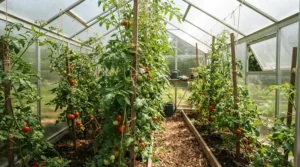
Why this size? It’s big enough to stand up, turn around and fit a potting bench. It’s small enough that most Canadian municipalities treat it as a modest backyard structure. At about 2.4 x 3.0 m (7.4 m²), an 8×10 walk-in greenhouse also lands under the common 10 m² permit threshold, which we’ll unpack later. For hobby gardening, that combination is hard to beat.
What is an 8×10 greenhouse kit?
An 8×10 greenhouse kit is a flat-packed walk-in greenhouse measuring roughly 8 by 10 feet (about 2.4 by 3.0 m). It ships with its frame, glazing panels, vents and hardware. You assemble it yourself on a prepared base, then use it to start seedlings, stretch the growing season or overwinter tender plants.
The idea is old. Greenhouses date back to Roman cucumber houses and 15th-century Korean designs, and today’s polycarbonate kits are their descendants.
This guide covers seven real 8×10 walk-in greenhouse options I researched in October 2026. It also covers how to pick, build, ventilate and legally place one in Canada. A note on method: listings and sellers rotate constantly, and verified review volume is thin for several of these kits. I flag that honestly rather than inventing praise.
8×10 Greenhouse Kit Quick Comparison
Here’s the shortlist at a glance. Prices are approximate CAD ranges converted from the listings I reviewed, so treat them as ballparks and check current price before buying.
| Kit | Frame & Glazing | Notable Feature | Approx. Price Range | Best For |
|---|---|---|---|---|
| Muchant 8×10 FT Greenhouse | Aluminum, polycarbonate | Quick-setup structure, roof vent | C$500-C$650 | Tight budgets |
| Jocisland 8x10x7 FT Polycarbonate Greenhouse | Aluminum, polycarbonate | 2 top-opening windows, 2 swing doors | C$600-C$700 | Airflow on a budget |
| Amerlife 8x10x7 FT Polycarbonate Greenhouse | Aluminum, polycarbonate | Screwed joints, anchor screws | C$650-C$750 | First-time builders |
| Garvee 8×10 FT Walk-In Greenhouse | Aluminum, polycarbonate | Gutters, anchors, sliding door | C$650-C$900 | Rain collection |
| Gulches 8x10FT Walk-In Polycarbonate Greenhouse | Heavy-duty aluminum | Drainage system | C$650-C$900 | Wet, windy yards |
| Yardenaler 8×10 FT Wooden Greenhouse | Wood, 6 mm polycarbonate | Adjustable roof vent | C$900-C$1,300 | Garden-style looks |
| Yiwa 8x10FT Wooden Greenhouse | Cedar, polycarbonate | Cedar frame | C$1,150-C$1,350 | Premium aesthetics |
Looking at the table, the aluminum kits cluster tightly between roughly C$500 and C$900. That means the real decision between them is vents, doors and base requirements, not price. The wooden kits cost noticeably more, so they need to earn it through longevity and looks. If you’re on a tight budget, the Muchant and Jocisland are the cheapest ways in, but check how many vents you’re actually getting.
💬 Just one click — help others make better buying decisions too!😊
Top 7 8×10 Greenhouse Kits: Expert Analysis
1. Muchant 8×10 FT Greenhouse — cheapest way into a walk-in
The Muchant pitches itself on speed and price: an aluminum frame, a roof vent and a “quick setup” structure. A lower price usually means thinner extrusions and fewer extras. You’re paying for the box, not the bells.
On paper, a single roof vent is fine for early-spring seed starting. In July, though, one vent in a 7.4 m² space will struggle, so plan to prop the door open or add a vent opener. Based on the spec comparison, this is a seed-starter and cool-season kit. It isn’t a tomato-jungle kit unless you add airflow.
I couldn’t find a meaningful pool of verified reviews for this listing, and the black 8×10 size showed as out of stock at one major retailer when I looked. Treat availability as an open question and read recent buyer comments before committing.
Pros:
- ✅ Lowest entry price among 8×10 walk-in kits
- ✅ Aluminum frame won’t rot or need painting
- ✅ Quick-setup design suits first-time builders
Cons:
- ❌ Single roof vent limits summer airflow
- ❌ Thin verified review evidence
Expect around C$500-C$650. Value verdict: good if you’ll use it mainly for spring starts and shoulder-season growing.
2. Jocisland 8x10x7 FT Polycarbonate Greenhouse — two doors, two vents
The Jocisland stands out for ventilation. It has two top-opening windows and two swing doors, a configuration that costs extra on many rivals. Its listing also notes screws at every joint, a small detail that matters when the first big prairie gust rattles the frame.
Why does this matter? Cross-ventilation is the difference between a greenhouse and a sauna. With two doors you can open both ends and create a through-draft. That’s the cheapest cooling system there is. At roughly 7 ft (2.1 m) tall, there’s also headroom for trellised cucumbers or a hanging basket.
Reviewers weren’t easy to verify here either. The listing shows few ratings, so my advice is to check recent buyer photos for panel fit and door alignment. Those are the two things budget kits tend to get wrong.
Pros:
- ✅ Two doors enable true cross-ventilation
- ✅ Screws at every joint for rigidity
- ✅ Tall enough for trellised crops
Cons:
- ❌ Few verified reviews to lean on
- ❌ Swing doors need clear space outside
Expect around C$600-C$700. Value verdict: arguably the best airflow per dollar in this group, which is why I’d shortlist it for hot, sunny yards.
3. Amerlife 8x10x7 FT Polycarbonate Greenhouse — clearest build-and-foundation spec
The Amerlife is the kit I’d hand a nervous first-timer. Its listing gives honest dimensions: actual size is 7.7 x 9.6 x 7.0 ft, with a recommended foundation of 8.5 x 11 ft (about 2.6 x 3.4 m). That sounds fussy, but it means you pour or level the right-sized base on the first try.
Each joint is screwed, and expansion screws are included for anchoring to a slab. A related Amerlife 8×10 variant lists a 1.5 mm rust-resistant aluminum frame, with a claim that three DIYers can erect it in about ten hours. That’s a seller claim, not a lab result, so budget a full weekend.
The review snippets I could verify are modest but encouraging. Buyers mention clear directions, undamaged delivery and sound engineering. That’s exactly what you want to hear about kit assembly.
Pros:
- ✅ Honest dimensions and foundation guidance
- ✅ Anchor screws included for slabs
- ✅ Buyers cite clear directions, undamaged delivery
Cons:
- ❌ Review pool still small
- ❌ Larger foundation than the footprint suggests
Expect around C$650-C$750. Value verdict: a strong mid-budget pick for people who value instructions over frills.
4. Garvee 8×10 FT Walk-In Greenhouse — gutters and anchors included
The Garvee is a feature-stacker. Its listing promises an aluminum frame, polycarbonate panels, a roof vent, gutters, ground anchors and a lockable sliding door. Few budget kits include all of that.
Each of those features solves a real problem. Gutters let you tuck a rain barrel beside the greenhouse, which is a gift to hobby gardening in a dry August. Ground anchors matter because an empty 8×10 greenhouse catches wind like a sail. A sliding door won’t swing into your tomato bench and stays put when a gust hits.
The trade-off is that a sliding door gives you only one opening to ventilate through. The roof vent has to pull its weight, so plan for a second vent or fan if your summers run hot. I couldn’t verify a robust review base, so scan recent Amazon.ca feedback for panel-fit comments.
Pros:
- ✅ Gutters and anchors included in the listing
- ✅ Sliding door saves swing-clearance space
- ✅ Lockable door for tools and supplies
Cons:
- ❌ Single-door airflow is limited
- ❌ Review evidence is thin
Expect roughly C$650-C$900 (check current price). Value verdict: excellent if rainwater harvesting appeals, and it’d be my pick for dry-summer regions.
5. Gulches 8x10FT Walk-In Polycarbonate Greenhouse — built for wet, wild weather
The Gulches advertises a heavy-duty aluminum frame and a drainage system for all-season use. Drainage is underrated. Water pooling at the base is how greenhouses start to rot, rust or sprout algae.
For coastal and eastern Canadian yards, that matters. Persistent rain plus condensation can leave frames wet for days. A kit that channels water away lowers maintenance over the years. A heavier frame also tends to flex less in wind, though the listing doesn’t give a load rating, so don’t assume snow-load capacity.
Verified reviews were scarce, so I can’t tell you how real buyers feel about panel fit or door hardware. What I’d do is check for photos of assembled units and look at the corner joints.
Pros:
- ✅ Drainage system built for wet climates
- ✅ Heavy-duty aluminum frame
- ✅ Marketed for all-season use
Cons:
- ❌ No published snow-load rating
- ❌ Limited verified buyer feedback
Expect roughly C$650-C$900 (check current price). Value verdict: a thoughtful choice for rainy regions, provided you clear snow by hand all winter.
6. Yardenaler 8×10 FT Wooden Greenhouse — garden-style charm with 6 mm panels
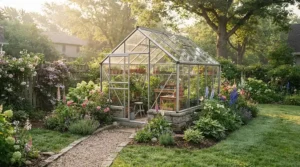
The Yardenaler swaps the industrial look for a wood frame and 6 mm multi-layer polycarbonate. The thicker, multi-wall panel is the real upgrade, since it insulates better than thin single-skin sheets. That’s helpful on a frosty April night.
It features an adjustable roof vent, a lockable door and what the listing calls a sturdy base. Wood also looks better in a perennial border than a silver box does. The catch is upkeep: you’ll want to seal or stain it every couple of years, particularly in damp provinces.
The verified review snippets are warm. One owner of the larger 8 x 16 version reports surviving two blizzards with no snow inside. Another calls their 8×10 their favourite greenhouse to date. That’s useful, if anecdotal, evidence of a solid build.
Pros:
- ✅ 6 mm multi-layer polycarbonate insulates well
- ✅ Wood frame blends into gardens
- ✅ Positive buyer reports on winter durability
Cons:
- ❌ Wood needs periodic sealing or staining
- ❌ Higher price than aluminum kits
Expect roughly C$900-C$1,300 (check current price). Value verdict: worth it if looks and insulation matter more than low maintenance.
7. Yiwa 8x10FT Wooden Greenhouse — cedar frame for the long haul
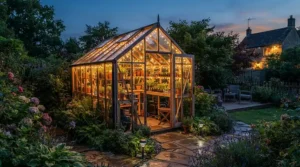
The Yiwa is the premium pick here, with a cedar frame, polycarbonate panels, an adjustable roof vent and a lockable door. Cedar is naturally resistant to rot, which is the best argument for paying more than you would for fir.
The honest case: cedar looks stunning, ages gracefully and shrugs off moisture better than most softwoods. But you’re still buying a kit with polycarbonate glazing, so the premium goes to the frame, not to better growing conditions. If your yard is visible from the kitchen window, that’s money well spent. If it’s tucked behind the garage, an aluminum model grows identical tomatoes for less.
Only a single review surfaced for this listing, so I can’t tell you anything meaningful about long-term performance. A cedar kit does warrant a closer look at the hardware quality and panel fit before you buy.
Pros:
- ✅ Cedar resists rot better than most woods
- ✅ Handsome enough for front-view gardens
- ✅ Adjustable vent and lockable door included
Cons:
- ❌ Highest price in this group
- ❌ Almost no verified review history
Expect roughly C$1,150-C$1,350 (check current price). Value verdict: pay it only if aesthetics are a priority.
How to Choose an 8×10 Greenhouse Kit
Picking an 8×10 greenhouse kit is less about brand and more about matching five or six details to your yard. Work through these in order.
- Measure your base first. Don’t trust the “8×10” label. The Amerlife lists an actual footprint of 7.7 x 9.6 ft and recommends an 8.5 x 11 ft foundation, so plan the pad for the larger number.
- Check the headroom. About 7 ft (2.1 m) of height lets you stand upright and hang baskets or trellises. Anything lower and you’ll be stooping.
- Count the vents. One roof vent is a minimum. Two vents or two doors, as on the Jocisland, make summer survivable.
- Pick a frame for your climate. Aluminum shrugs off damp. Wood, like the Yardenaler or Yiwa, needs sealing but looks better.
- Look at the glazing thickness. Thicker multi-wall panels, like the 6 mm sheets on the Yardenaler, insulate better for shoulder-season growing.
- Inventory the extras. Gutters, anchors and locks, as on the Garvee, can save you a hardware-store run.
Aluminum vs Wood: 8×10 Greenhouse Kit Frame Materials Compared
The frame decides how your greenhouse ages, so it’s worth a proper comparison before you click buy. Here’s how the three common routes stack up for a Canadian yard.
| Option | Typical Price Range | Light & Insulation | Upkeep | Best For |
|---|---|---|---|---|
| Aluminum-frame polycarbonate, such as Amerlife 8x10x7 FT | C$500-C$900 | Good light, modest insulation | Very low | Practical growers |
| Wood-frame polycarbonate, such as Yardenaler 8×10 FT and Yiwa 8x10FT | C$900-C$1,350 | Good light, better with thick panels | Moderate (seal or stain) | Garden aesthetics |
| Premium glass kit, such as Greenhouse Megastore’s Parkside | Five figures | Excellent light, glass cladding | Moderate | Showpiece builds |
The takeaway: glass is gorgeous, but a five-figure price tag for roughly the same footprint is hard to justify for hobby gardening. The Parkside, with its 3 mm tempered glass and automated solar vents, is a different category entirely. For most Canadians, the real choice is between low-fuss aluminum and good-looking wood. If you hate maintenance, go aluminum. If you’d happily oil a frame every other spring, wood rewards you with looks.
Features That Actually Matter (And Those That Don’t)
Marketing copy for any 8×10 walk-in greenhouse is a blizzard of adjectives. A handful of features genuinely change your growing season.
Ventilation tops the list. UMass Extension’s greenhouse program notes that even a light breeze can drive most air exchange in a well-designed greenhouse. In a small kit, that means vent placement matters more than vent count. Put an opening high on the roof and another low on a door, and warm air rises out while cool air flows in.
Anchoring is next. An empty greenhouse behaves like a kite, so look for ground anchors or expansion screws, as with the Amerlife.
Door design matters more than you’d think. Sliding doors, like the Garvee‘s, save space, while swing doors give wider access for wheelbarrows.
What doesn’t matter? “Heavy-duty” as a bare adjective, since it has no standard. Colour barely affects growing conditions. Extra bundled accessories often fill the box without adding value.
8×10 Greenhouse Kit Assembly: A Practical Kit Assembly Guide
Kit assembly is where most first-time owners either fall in love or lose a weekend. A little planning separates the two.
Before you open a box. Level the base. A wonky pad creates racking in the frame, and panels never fit right afterward. Lay out parts by bag number, and keep a magnetic tray for hardware.
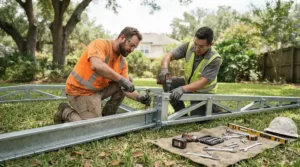
The first day. Build the base frame and square it by measuring both diagonals. They should match. One related listing claims three people can erect a similar Amerlife 8×10 in about ten hours, so don’t attempt it alone on a windy day.
Panels and vents. Install roof panels last, and don’t overtighten screws, since polycarbonate cracks around over-driven hardware. Test every door and vent before you finish.
Common mistakes in the first 30 days:
- Skipping anchors in a wind-prone yard
- Leaving doors closed on a sunny day
- Overwatering benches, then wondering why mould shows up
Maintenance schedule: wipe panels each spring, lube hinges each fall and check anchor screws after storms.
✨ Ready to build your own growing space?
🌱 Browse the 8×10 walk-in greenhouse options above and check current prices and availability on Amazon.ca. A good kit plus a free weekend can turn your backyard into a year-stretching garden room!
Real-World Scenarios: Matching an 8×10 Walk-In Greenhouse to Your Garden
Specs mean little until you picture your own yard. Here are three scenarios and the logic behind each pick.
The budget seed-starter. You’re a suburban Ontario gardener with C$600 to spend who mostly wants early tomatoes and peppers. The Jocisland gives you two doors and two vents for airflow, which is the cheapest way to avoid cooking seedlings on sunny April afternoons.
The rainy-coast grower. You’re on Vancouver Island, battling damp. The Gulches and its drainage system make sense, and the Garvee‘s gutters let you collect rain for watering. Both suit wet climates, and aluminum won’t rot.
The garden-showpiece builder. Your greenhouse sits beside the patio and doubles as a conversation piece. The Yiwa‘s cedar frame, or the Yardenaler with its 6 mm panels, fits visual goals and gives good insulation. You’ll accept some upkeep for a prettier backyard.
For all three, frequency of use matters too. A weekly visitor can tolerate manual vents. A daily visitor benefits from automatic openers, which are inexpensive add-ons.
Problem → Solution Guide: Heat, Condensation, Snow and Wind
Even the best kit has weak spots. These four problems come up most often, along with fixes.
Problem 1: Overheating in summer. Small greenhouses can spike fast. Solution: open both doors on kits like the Jocisland, add shade cloth and consider an inexpensive solar vent opener.
Problem 2: Condensation and mould. Moist air plus cool panels equals drips. Solution: ventilate every morning, water early in the day and space plants to keep air moving.
Problem 3: Snow load. None of the listings I checked published a snow-load rating, so don’t assume one. Solution: clear snow after every heavy fall, and never let it pile up against the sides.
Problem 4: Wind. Lightweight kits catch gusts. Solution: use every anchor point, as the Garvee and Amerlife are built for, and position the greenhouse out of the prevailing wind.
A greenhouse isn’t a set-and-forget appliance. It’s more like a houseplant the size of a garden shed: it rewards attention.
Permits, Setbacks and Safety: A Canadian Regulations Guide
Canada has no national greenhouse rule. Permits are set by your municipality, so the answer depends on where you live.
The good news is that an 8×10 greenhouse kit has a small footprint, around 7.4 m². The City of Pickering, for example, requires a building permit for structures larger than 10 m² and sets minimum setbacks from property lines. Other municipalities set their thresholds at 12 m² or even 16 m². An 8×10 kit generally falls under all of these, but your foundation may not, so measure the pad. A recommended 8.5 x 11 ft base (about 8.7 m²) is still under 10 m², though it’s close.
Zoning still applies even when no permit is needed. Check setbacks from fences, height limits and whether accessory buildings must sit in the back yard.
Electrical and heating safety: if you add power, hire a licensed electrician and use CSA-certified heaters and outdoor-rated fixtures. Bylaws often require separate permits for new wiring. When in doubt, call your local building department before you pour concrete.
Long-Term Cost & Maintenance
The sticker price is only the entry fee. Over a decade, upkeep and replacement parts shape what a greenhouse really costs.
| Tier | Example Kits | Price Range | Illustrative Cost Per Season* | Best For |
|---|---|---|---|---|
| Budget aluminum | Muchant 8×10 FT Greenhouse, Jocisland 8x10x7 FT Polycarbonate Greenhouse | C$500-C$700 | ~C$50-C$70 | Spring starts |
| Mid-range aluminum | Amerlife 8x10x7 FT Polycarbonate Greenhouse, Garvee 8×10 FT Walk-In Greenhouse, Gulches 8x10FT Walk-In Polycarbonate Greenhouse | C$650-C$900 | ~C$65-C$90 | All-round hobby gardening |
| Premium wood | Yardenaler 8×10 FT Wooden Greenhouse, Yiwa 8x10FT Wooden Greenhouse | C$900-C$1,350 | ~C$90-C$135 | Looks and insulation |
*Illustrative only, assuming a ten-season lifespan, which isn’t a guarantee.
The analysis: spending a bit more on mid-range aluminum buys better hardware and clearer instructions for a small per-season premium. Wood costs more up front and requires sealing every couple of years, so budget for stain or oil. Aluminum frames mostly need panel cleaning and hinge lubrication. If you plan a decade of use, the cheapest kit is only a bargain if it survives that long.
What to Expect: Real-World Performance
Specs describe a box. Weather describes what happens inside it.
On a sunny April afternoon, a polycarbonate 8×10 walk-in greenhouse will run well above outdoor air temperature. That’s the entire point, and it’s why seedlings thrive. On a clear, cold night, though, an unheated kit loses that warmth quickly. Based on the spec comparison, thin single-wall panels offer modest insulation, while thicker multi-wall panels, like the 6 mm sheets on the Yardenaler, hold heat better.
In winter, an unheated greenhouse extends the season rather than defying it. You can overwinter hardy greens and protect tender perennials from the worst frosts, but tropical plants will need a CSA-certified heater and careful monitoring. Spring and fall are where this size shines, adding weeks on both ends of your Canadian season.
Plan for humidity swings too. A closed greenhouse after a morning watering feels like a rainforest by noon. Venting early fixes most problems.
Common Mistakes When Buying an 8×10 Greenhouse Kit
A little foresight prevents the regrets reviewers mention most. Here’s what to avoid.
Skipping the permit check. Municipal rules vary, and some require permits for structures near a threshold. Cochrane, Alberta, for instance, requires permits and inspections for accessory buildings over 10 m². A quick phone call is cheaper than a fine.
Ignoring the base. Many people buy first and think about the pad later. Plan your foundation before you order, and remember that the Amerlife recommends a larger base than the kit itself.
Underestimating vents. One vent is rarely enough in July. Prioritize airflow.
Trusting “all-season” claims. The word means little without a snow-load number, and none of the listings I reviewed published one.
Believing five-star silence. Some listings, like the Yiwa, show almost no reviews. Absence of complaints isn’t proof of quality.
Forgetting maintenance. Wood needs sealing. Aluminum needs hinge care. Both need clean panels.
8×10 Greenhouse Kit for Hobby Gardening: Beginners to Season-Stretchers
An 8×10 greenhouse kit suits several kinds of hobby gardening, and each audience weighs features differently.
Beginners. Prioritize clear instructions and a forgiving price. The Amerlife and Muchant fit best here. Start with seeds and salad greens, then expand.
Season-stretchers. If your goal is earlier tomatoes and later kale, insulation and vents matter most. The Yardenaler‘s 6 mm panels and the Jocisland‘s dual-door airflow both earn a look.
Seed-savers and propagators. You need bench space and stable temperatures. Any of the aluminum kits works, but add a thermometer and a small CSA-certified fan.
Design-minded gardeners. The Yiwa and Yardenaler wooden kits turn a greenhouse into a garden feature.
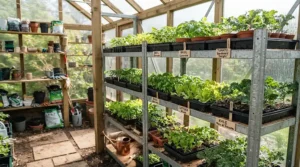
An 8×10 walk-in greenhouse gives roughly 7.4 m² of floor. That’s enough for two benches and a central aisle, which is the layout most hobbyists settle on after a season of experimentation.
FAQ
❓ How long does 8x10 greenhouse kit assembly take?
❓ Do I need a permit for an 8x10 walk-in greenhouse in Canada?
❓ Can an 8x10 greenhouse kit handle a Canadian winter?
❓ Is an aluminum or wooden 8x10 greenhouse kit better?
❓ What base do I need for an 8x10 greenhouse kit?
Conclusion
An 8×10 greenhouse kit is the rare garden upgrade that pays back in more than tomatoes. It gives you earlier springs, later falls and a quiet place to potter while the rest of the yard is under snow. The seven kits above cover the realistic Canadian shopping range, from the budget Muchant to the cedar-framed Yiwa.
If I had to sum up this 8×10 greenhouse kit review: pick the Jocisland for airflow on a budget, the Amerlife for first-time kit assembly, the Garvee or Gulches for wet, windy yards, and the Yardenaler or Yiwa when looks matter. Always check recent reviews, current prices and local permit rules before you order.
Whatever you choose, remember the greenhouse is only as good as the care it gets. Vent early, anchor well and clean the panels each spring. Your plants, and your future summer self, will thank you.
✨ Ready to start growing?
🌿 Compare the kits above, check current pricing and availability, and give your hobby gardening a head start this season!
Recommended for You
- 6×8 Greenhouse For Vegetable Growing: 7 Best Picks In 2026
- 6×8 Greenhouse Kit: 7 Best Picks For Canada, Ranked (2026)
- 7 Best Garden Obelisks For Climbing Roses In Canada (2026 Guide)
Disclaimer: This article contains affiliate links. As an Amazon Associate, I earn from qualifying purchases. If you purchase products through these links, we may earn a small commission at no additional cost to you.
✨ Found this helpful? Share it with your friends! 💬🤗
