
In This Article
Picture a late-April morning in Ontario. Frost crusts the lawn. Inside a glazed box barely bigger than a king-size mattress, your tomato seedlings are shrugging off the chill. That quiet magic is the whole appeal of a 6×8 greenhouse for vegetable growing. It measures about 1.8 m by 2.4 m (roughly 4.4 m² of floor), small enough for a suburban lot and big enough to rewrite your growing calendar.
Canada’s seasons are short and stubborn, and the size matters more than most buyers expect. Go smaller and you’re hunched over like a garden gnome. Go bigger and you’re battling permits, snow loads and a heating bill. Your starting point should be your own climate, so look up your location on Natural Resources Canada’s plant hardiness zone map, which was updated in 2025 using 1991–2020 climate data.
This guide pulls together manufacturer specs, retailer listings and the review themes that real buyers report. Where a number or review couldn’t be verified, I say so. Prices are ranges in Canadian dollars, so check current prices on amazon.ca before you buy.
What Is a 6×8 Greenhouse for Vegetable Growing?
A 6×8 greenhouse for vegetable growing is a walk-in structure of roughly 1.8 x 2.4 metres (6 x 8 feet), glazed with polycarbonate or polyethylene. It traps solar heat, shelters crops from wind, frost and rain, and extends the growing season by several weeks at each end. It suits tomatoes, peppers, cucumbers and cold-hardy winter greens.
Quick Comparison: Seven 6×8 Greenhouse for Vegetable Growing Options at a Glance
| Product | Frame | Glazing | Price Range (CAD) | Best For |
|---|---|---|---|---|
| Palram Canopia Mythos 6×8 | Aluminum + galvanized steel base | 4 mm twin-wall | C$650–C$900 | Snowy regions, long-term use |
| Palram Canopia Hybrid 6×8 (HG5508) | Aluminum + galvanized steel base | Twin-wall roof, lighter wall panels | C$1,000–C$1,400 | Sheltered yards, bright-light crops |
| GarveeLife 6×8 Walk-in Greenhouse | Aluminum | Polycarbonate | C$350–C$500 | Budget buyers, slide-in assembly |
| GDFStudio Maxwell 6×8 | Aluminum + galvanized base | 4 mm twin-wall | C$500–C$650 | Tall tomatoes, mid-range value |
| Outsunny 6′ x 8′ x 6.4′ (845-243V01) | Aluminum alloy + galvanized base | 4 mm twin-wall | C$400–C$500 | First-time greenhouse owners |
| Outsunny 6′ x 8′ Two-Panel (84H-112V00SR) | Aluminum alloy + galvanized steel | Twin-wall roof, single-wall sides | C$400–C$550 | Summer heat-lovers, bright interiors |
| Outsunny 8′ x 6′ x 7′ Portable (845-696) | Powder-coated steel tube | PE cover | Under C$250 | Seedlings, spring and fall only |
Looking at the table, the Palram Canopia Mythos 6×8 is the only option pairing a published snow rating with a multi-year warranty at a mid-range price, so it earns the “buy once” slot. The GarveeLife 6×8 Walk-in Greenhouse and Outsunny 6′ x 8′ x 6.4′ (845-243V01) compete for the budget crown, and the Outsunny trades a short warranty for clearer published specs. The Outsunny 8′ x 6′ x 7′ Portable (845-696) isn’t really a rival to the others. It’s a seasonal tool, and treating it as a four-season greenhouse is how people end up with a crumpled frame in January.
💬 Just one click — help others make better buying decisions too!😊
Top 7 Picks: 6×8 Greenhouse for Vegetable Growing, Expert Analysis
1. Palram Canopia Mythos 6×8 — best-insulated all-rounder
The headline here is the glazing: 4 mm twin-wall polycarbonate throughout, which makes this the best-insulated kit in the group.
The panels are listed at about 82% light transmission with near-total UV blocking, and they sit on a powder-coated aluminum frame with a galvanized steel base. That 82% is a deliberate trade-off. The light is diffused, so lower tomato leaves scorch less and shadows soften, which helps in a space this tight. Manufacturer guidance is a snow rating of about 15.4 lb/ft² (roughly 75 kg/m²) and a 5-year warranty. Retailers also advise building a platform 30–45 cm wider and longer than the footprint, with tie-downs in windy spots.
Based on the spec comparison, this suits growers in snowy regions who will actually sweep the roof after a dump. I couldn’t pull verified, product-specific review themes for the 6×8 size, so read the current amazon.ca review summary yourself. Look especially for comments on vent hardware and wind behaviour.
Pros:
- ✅ Twin-wall panels on every side for better insulation
- ✅ Published snow rating and 5-year warranty
- ✅ Hinged, lockable door swings fully open
Cons:
- ❌ Needs a proper platform and anchoring
- ❌ Diffused light is slightly dimmer than clear panels
Expect roughly C$650–C$900 depending on the retailer. Retailer pricing swings widely, so check current price. For cold-region growers, it’s the strongest value of the seven.
2. Palram Canopia Hybrid 6×8 (HG5508) — brightest light, premium price
The standout feature is the two-panel concept. Twin-wall panels diffuse light overhead, while lighter wall panels let in more of it.
The manufacturer lists a 15.4 lb/ft² snow load, wind resistance around 55–56 mph with the anchor kit, and a 5-year warranty. In practice, brighter side light is good news for sun-hungry peppers and eggplants. It’s less kind to night-time heat retention, because single-layer-style walls lose warmth faster than twin-wall.
The review themes are mixed. One buyer reported the roof caving in after a snowstorm despite the snow-resistance claims. Others describe top panels popping out in gusts, noisy rattling, and (in a U.K. listing) a vent mechanism that felt flimsy and a gutter that drains poorly when perfectly level. These are individual reports, not statistics, but they cluster around wind and snow, the two things a Canadian greenhouse faces most.
Pros:
- ✅ Brighter wall light for heat-loving crops
- ✅ Same 5-year warranty as the Palram Canopia Mythos 6×8
- ✅ Wide accessory ecosystem (shelving, shade, irrigation)
Cons:
- ❌ Single-layer-style walls lose heat faster overnight
- ❌ Reviewer reports of panel pop-out and snow issues
Canadian retail pricing runs around C$1,000–C$1,400. At that price, the Palram Canopia Hybrid 6×8 (HG5508) is hard to justify over the Mythos unless your yard is sheltered and light is your limiting factor.
3. GarveeLife 6×8 Walk-in Greenhouse — cheapest slide-in assembly
The standout feature is a slide-in panel system that aims to cut assembly time sharply.
The listing describes a reinforced aluminum frame, polycarbonate panels, an adjustable roof vent and a lockable door. It publishes few structural numbers I could verify, such as snow rating or panel gauge. That’s a yellow flag, not a red one. Before buying, find the panel thickness and any wind or snow rating in the full description.
This kit makes sense for a first-time grower who wants to test the greenhouse habit before spending four figures. I couldn’t verify review themes specific to this model. Buyers of similar budget 6×8 kits commonly mention picture-only instructions, flimsy shipping boxes and nervousness about the first big wind, alongside “nice inexpensive greenhouse” sentiment. Treat that as category context only.
Pros:
- ✅ Slide-in panels simplify assembly
- ✅ Lockable door and adjustable roof vent
- ✅ Lowest entry price in this lineup
Cons:
- ❌ Few verifiable structural specs
- ❌ Unclear warranty terms
Expect around C$350–C$500. The GarveeLife 6×8 Walk-in Greenhouse is a sensible gateway kit for sheltered, low-snow yards.
4. GDFStudio Maxwell 6×8 — tallest walls for vine crops
The standout is the sidewall height of about 137 cm (54 in), which gives tomatoes and cucumbers real vertical room.
The listing shows 4 mm twin-wall panels, a claimed 90% light transmission and UV blocking up to 99.9%. The footprint is about 253 x 190 cm with a 200 cm peak, on a galvanized base. The door is only about 60 cm wide. That’s fine for walking in sideways with a watering can, but a wheelbarrow won’t get through. Plan your raised beds around hand-carried soil.
On paper, the tall walls matter more than most buyers realize. Indeterminate tomatoes can climb a string trellis without hitting a sloped roof, which is how you get more fruit from the same 4.4 m². The listing I found showed no reviews yet, so there’s no sentiment to report. Verify the current reviews before purchasing.
Pros:
- ✅ Tall 137 cm sidewalls for vine crops
- ✅ 4 mm twin-wall panels
- ✅ Two-box shipment manageable by one or two people
Cons:
- ❌ Narrow 60 cm door limits tools and soil delivery
- ❌ No verified review history
Around C$500–C$650 is the likely range. The GDFStudio Maxwell 6×8 is a smart pick for trellised tomato growers who are comfortable carrying their own soil.
5. Outsunny 6′ x 8′ x 6.4′ (845-243V01) — clearest published specs under C$500
The standout feature is transparent spec-sheet honesty at a budget price.
You get 4 mm twin-wall UV-resistant polycarbonate, a powder-coated aluminum alloy frame, a galvanized base, rain gutters and a roof vent. The overall footprint is 2.44 x 1.89 m, with a 1.95 m peak. The single hinged door is about 62 cm wide and 161 cm high. The warranty is just 90 days, and the Canadian listing itself says it isn’t a super heavy-duty greenhouse and warns about leaving it up in bad weather.
That candour is useful. This is a three-season workhorse for zones with moderate snow, or a winter project if you commit to roof-clearing and anchoring. The listing carries no verified product-level review text I could quote, so look at recent buyer comments for assembly and wind notes.
Pros:
- ✅ Twin-wall glazing at a budget price
- ✅ Rain gutters for barrel collection
- ✅ Clear, detailed published dimensions
Cons:
- ❌ Only a 90-day warranty
- ❌ Manufacturer cautions against heavy-weather exposure
Plan on roughly C$400–C$500. The Outsunny 6′ x 8′ x 6.4′ (845-243V01) is the sensible first greenhouse for most Canadians.
6. Outsunny 6′ x 8′ Two-Panel (84H-112V00SR) — brighter sides, hinged door
The standout is the split glazing, with twin-wall on the roof and single-wall on the sides.
The kit pairs an aluminum alloy frame with galvanized steel, a hinged door, a 5-level roof vent and rain gutter. The foundation frame measures about 182 x 241 x 9 cm. The reasoning is simple. Overhead twin-wall panels cut intense midsummer glare, while single-wall sides pass more light. What the spec sheet won’t tell you is the cost: single-wall sides shed heat on cold nights, so this layout favours April-to-September tomatoes and peppers over winter growing.
I couldn’t verify review themes for this specific model. A good gut-check is whether other buyers praise the vent system and complain about condensation or wind rattle.
Pros:
- ✅ More side light for fruiting crops
- ✅ Five vent positions for fine humidity control
- ✅ Foundation kit included
Cons:
- ❌ Single-wall sides leak more heat overnight
- ❌ Not ideal for cold-season growing
Expect the C$400–C$550 neighbourhood. The Outsunny 6′ x 8′ Two-Panel (84H-112V00SR) is best for warm-season specialists in mild-winter regions.
7. Outsunny 8′ x 6′ x 7′ Portable (845-696) — steel-frame season stretcher
The standout is its tool-free assembly and eighteen built-in shelf slots.
The frame is powder-coated steel tube under a 140 g/m² PE cover, with a roll-up zippered door. It measures about 244 x 180 x 210 cm, and each shelf holds around 10 kg. The listing’s wind rating is level 4, below roughly 28 km/h (17.5 mph). That’s the number to remember: it will not survive a prairie gust or a snow load.
Use it for seedlings, hardening off and spring and fall protection, then take it down for winter. The shelves make it a nursery rather than a bed-growing greenhouse. Warranty is 90 days. I didn’t find reviews I could verify on the listings I reviewed.
Pros:
- ✅ Tool-free setup in a short time
- ✅ Eighteen shelves for seed trays
- ✅ Light enough to relocate
Cons:
- ❌ Wind rating of only about 28 km/h
- ❌ PE cover wears out within a few seasons
Under C$250 is typical. The Outsunny 8′ x 6′ x 7′ Portable (845-696) is cheap insurance for starts, not a replacement for a polycarbonate kit.
| Product | Footprint | Glazing | Warranty | Price Range | Best For |
|---|---|---|---|---|---|
| Palram Canopia Mythos 6×8 | ~1.85 x 2.47 m | 4 mm twin-wall | 5 years | C$650–C$900 | Snowy zones |
| Palram Canopia Hybrid 6×8 (HG5508) | ~6 x 8 ft | Mixed twin-wall and lighter walls | 5 years | C$1,000–C$1,400 | Sheltered, bright yards |
| GarveeLife 6×8 Walk-in Greenhouse | ~6 x 8 ft | Polycarbonate | Not verified | C$350–C$500 | Budget starters |
| GDFStudio Maxwell 6×8 | ~253 x 190 cm | 4 mm twin-wall | Not verified | C$500–C$650 | Trellised tomatoes |
| Outsunny 6′ x 8′ x 6.4′ (845-243V01) | 244 x 189 cm | 4 mm twin-wall | 90 days | C$400–C$500 | First-time owners |
| Outsunny 6′ x 8′ Two-Panel (84H-112V00SR) | 241 x 182 cm base | Twin-wall roof, single-wall sides | Not verified | C$400–C$550 | Warm-season crops |
| Outsunny 8′ x 6′ x 7′ Portable (845-696) | 244 x 180 cm | PE cover | 90 days | Under C$250 | Seedlings, seasonal use |
The warranty column tells the real story. Only the two Palram Canopia kits offer five years, which matters because glazing and vent hardware are where budget greenhouses typically fail first. If you’re comparing the Outsunny 6′ x 8′ x 6.4′ (845-243V01) against the Palram Canopia Mythos 6×8, you’re really weighing a C$300 or so upfront saving against years of warranty cover.
✨ Ready to Find Your Greenhouse?
🔍 Take your 6×8 greenhouse for vegetable growing plans to the next level. Click any highlighted product name to check current pricing and availability on Amazon.ca. A well-chosen kit turns a short Canadian season into a long, productive one! 🌱
Your First 30 Days: Setup and Optimization Guide
Most greenhouse disasters happen in the first month, long before a single tomato ripens. The fix is boring and effective: do the groundwork before the glass goes up.
Week 1: Site and base. Pick the sunniest, most sheltered spot and aim for six or more hours of winter sun. Avoid low pockets where cold air pools. Level the ground, then build a platform or perimeter frame roughly 30–45 cm wider than the footprint, as retailer guidance for the Palram Canopia Mythos 6×8 advises. Fasten the kit to something solid, such as patio stones, concrete or a treated-timber frame.
Week 2: Assembly and anchoring. Assemble on a calm day, because loose panels act like sails. Add tie-downs immediately if your area is windy. Level the gutters slightly so they drain toward a rain barrel.
Week 3: Ventilation and monitoring. Buy a min/max thermometer and place it at plant height, not near the roof. Open the vent when interior temperatures climb past roughly 25 °C. Shade cloth becomes essential in July.
Week 4: Soil and first crops. Fill your raised beds with a quality mix, water deeply and sow cold-tolerant starters first. Common first-month mistakes include overwatering (which invites fungus), ignoring night-time lows, and leaving the door closed on a sunny day.
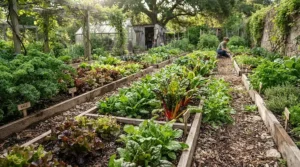
Real-World Scenarios: Three Canadian Growers, Three Greenhouses
Matching the kit to the grower is where good decisions are made.
The Saskatoon snow-belt gardener (zone 3, budget around C$900). Winters bring heavy snow and strong prairie wind. Based on the spec comparison, the Palram Canopia Mythos 6×8 is the logical pick for its twin-wall glazing and published snow rating. Anchor it to a timber base, sweep the roof after every snowfall, and focus on cold-hardy spinach, kale and early lettuce. The cheaper Outsunny 6′ x 8′ x 6.4′ (845-243V01) is workable only if you accept the manufacturer’s weather caveat.
The Ottawa suburban tomato fanatic (budget C$500). Eight indeterminate plants, a small deck and a limit of two hours a week for chores. The GDFStudio Maxwell 6×8 and its tall walls fit a trellis system nicely. Carry soil in bags through the narrow door, grow two raised beds along the sides, and rotate families each year.
The Vancouver Island beginner (budget under C$450). Mild but wet winters mean humidity and mould matter more than snow. The Outsunny 6′ x 8′ Two-Panel (84H-112V00SR) gives five vent positions and bright light, ideal for peppers and cucumbers. Pair it with an Outsunny 8′ x 6′ x 7′ Portable (845-696) for seedlings if funds allow. Prioritize airflow, spacing and morning watering.
Problem → Solution: Overheating, Condensation, Snow, Wind and Permits
Problem 1: Overheating in July. Even a 6×8 can reach 40 °C on a sunny day. Solution: open the roof vent and door, add 30–50% shade cloth, and water early. The five-level vent on the Outsunny 6′ x 8′ Two-Panel (84H-112V00SR) is helpful here.
Problem 2: Condensation and fungal disease. Humid nights make drips and mildew. Solution: vent in the morning even when it’s cold, space plants for airflow, water at soil level and avoid evening watering.
Problem 3: Snow on the roof. A listed snow rating of 15.4 lb/ft² equals about 0.74 kPa, and ground snow loads in many Canadian cities often exceed that. Solution: clear snow promptly with a soft broom, and don’t rely on ratings alone.
Problem 4: Wind. Panels pop out and frames rack. Solution: anchor to a base, add the manufacturer’s anchor kit where offered, and park the greenhouse behind a fence or windbreak.
Problem 5: Bylaws and electricity. Rules vary by municipality, so check your local accessory-structure bylaw before you build. If you add a heater or outdoor outlet, use CSA-certified equipment and have a licensed electrician handle wiring.
How to Choose a 6×8 Greenhouse for Vegetable Growing
- Match the kit to your snow and wind. Check your zone, local snow patterns and wind exposure first. This single step eliminates half the options.
- Choose glazing deliberately. Twin-wall polycarbonate insulates better and diffuses light. Single-wall passes more light but loses heat. PE cover is cheapest but short-lived.
- Verify the frame and base. An aluminum frame on a galvanized base balances rust resistance with rigidity. Look for powder coating and sealed joints.
- Check door width and vent design. Door widths of 60–62 cm limit wheelbarrows. Roof vents with multiple positions give finer humidity control.
- Plan anchoring and foundation. Budget for a platform or perimeter frame plus anchors.
- Read the warranty and parts support. Five years versus 90 days tells you how the maker sees durability.
- Design the interior before you buy. Sketch two side beds and a central aisle on graph paper, then confirm the kit’s interior width allows it.
6×8 Greenhouse for Cold Climates: What Actually Works
A 6×8 greenhouse for cold climates lives or dies on three variables: insulation, structure and thermal mass.
Insulation. Twin-wall polycarbonate roughly doubles the insulating value of single-layer glazing, which is why the Palram Canopia Mythos 6×8, the GDFStudio Maxwell 6×8 and the Outsunny 6′ x 8′ x 6.4′ (845-243V01) suit colder regions better than the Outsunny 6′ x 8′ Two-Panel (84H-112V00SR). Natural Resources Canada’s Atlas of Canada hardiness map combines seven climate variables, including snow depth and wind gusts. That mix is the right lens for judging a greenhouse site too.
Structure. Anchor aggressively and sweep snow. Ratings are lab numbers; your roof is real.
Thermal mass. Dark water barrels soak up daytime heat and release it overnight. A layer of floating row cover directly over the crops adds several degrees of frost protection without a heater. For a 6×8 greenhouse for cold climates, that’s the cheapest upgrade you can make.
Realistic expectations. An unheated 6×8 buys weeks, not months, for tomatoes. For winter, stick to hardy greens such as spinach, kale, mâche and claytonia. Add a thermostat-controlled, CSA-certified heater only if you want more, and budget for the power draw.
6×8 Aluminum Frame Greenhouse vs Steel Frame
The debate over a 6×8 aluminum frame greenhouse vs steel frame comes down to a few trade-offs.
| Feature | Aluminum Frame | Steel Frame |
|---|---|---|
| Rust | Doesn’t rust | Rusts if galvanizing is damaged |
| Stiffness | Lighter, flexes more | Stiffer, heavier |
| Heat loss through frame | Conducts heat readily | Conducts less |
| Typical 6×8 examples | Palram Canopia Mythos 6×8, GDFStudio Maxwell 6×8 | Outsunny 8′ x 6′ x 7′ Portable (845-696) |
| Best For | Permanent polycarbonate kits | Budget PE-covered seasonal use |
Most polycarbonate 6×8 kits aren’t pure either option. They use aluminum framing on a galvanized steel base, which pairs corrosion resistance with a solid footing. Steel-tube designs such as the Outsunny 8′ x 6′ x 7′ Portable (845-696) pair a stiff frame with a lightweight PE cover, but their level-4 wind rating makes them seasonal.
For the 6×8 aluminum frame greenhouse vs steel frame question, aluminum wins for long-term polycarbonate use, while steel wins on cost for temporary covers. For general background, Wikipedia’s greenhouse overview covers framing materials and glazing history.
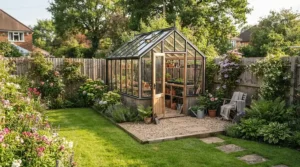
Raised Beds Inside a 6×8 Greenhouse: Layouts That Work
Raised beds inside a greenhouse solve two problems at once. They warm faster than ground soil and keep your aisle clean.
The two-bed layout. Run two beds 60 cm wide and about 2.2 m long along the long walls, leaving a 60 cm central aisle. At 30 cm deep, that’s roughly 0.8 m³ of soil in total, about a cubic yard. It’s a modest haul for a carload of bagged mix.
The U-shape. Add a small end bed 60 cm square for herbs or seedlings. You gain about 0.4 m² of growing space, but keep clear of the door swing.
Mind the door. The GDFStudio Maxwell 6×8 door is about 60 cm wide, and the Outsunny 6′ x 8′ x 6.4′ (845-243V01) door about 62 cm. Neither takes a wheelbarrow, so stage soil in buckets. Raised beds also make crop rotation practical, because each bed becomes a rotation unit.
Crop Rotation in a 6×8 Greenhouse
Crop rotation matters more under glass than in an open field. Pests and soil-borne diseases build up fast in a confined space, and nothing else there breaks the cycle.
With two or three raised beds, rotate by plant family rather than by individual crop. Nightshades (tomatoes, peppers, eggplant), cucurbits (cucumbers, squash), brassicas (kale, broccoli), legumes (peas, beans) and alliums (onions, garlic) are the standard groupings. Extension guidance often recommends keeping the same family out of the same bed for three to four years. In a 6×8 greenhouse that’s hard, so even a simple two-bed swap is better than nothing. Dalhousie University’s Organic Agriculture Centre of Canada hosts crop rotation resources for organic systems that apply directly here.
A practical three-year plan: Year one, nightshades in bed A and greens in bed B. Year two, swap them. Year three, bring in legumes to fix nitrogen. Keep a simple garden map and refresh the top 5–8 cm of soil with compost each spring.
Season Extension: What to Plant and When
Season extension is the real return on a greenhouse. It’s about shifting your calendar, not creating a tropical jungle.
Early spring (March–April). Sow lettuce, spinach and radish directly in the beds, and start tomato and pepper seedlings on shelves. An unheated 6×8 typically stays a few degrees warmer than outdoors, and a row cover adds more.
Late spring through summer. Transplant tomatoes, peppers and cucumbers once nights hold above roughly 10 °C for tomatoes and a bit warmer for peppers. Open vents daily.
Fall (September–October). Sow cold-hardy greens for winter and keep tomatoes going as long as nights allow.
Winter. Harvest spinach, kale, mâche and claytonia. Cover them on the coldest nights.
This calendar is where the Outsunny 8′ x 6′ x 7′ Portable (845-696) fits, as a temporary nursery for spring and fall. For true winter harvests, a twin-wall kit like the Palram Canopia Mythos 6×8 is the safer base.
Long-Term Cost and Maintenance
The cheapest greenhouse isn’t always the cheapest to own. Think in terms of cost per growing season.
| Tier | Example | Price Range | Ownership Logic | Best For |
|---|---|---|---|---|
| Budget | Outsunny 8′ x 6′ x 7′ Portable (845-696) | Under C$250 | Cover wears out in a few seasons | Seedlings |
| Value | Outsunny 6′ x 8′ x 6.4′ (845-243V01) | C$400–C$500 | Short warranty, moderate weather tolerance | Beginners |
| Premium | Palram Canopia Mythos 6×8 | C$650–C$900 | 5-year warranty, published snow rating | Long-term use |
If you replace a C$250 greenhouse cover repeatedly, the upfront savings shrink fast. A twin-wall kit with a five-year warranty spreads its cost across more seasons, and a bigger upfront bill often pencils out. Add the platform, anchors, shade cloth, a thermometer and soil, and budget another C$200–C$400 beyond the kit itself.
Annual maintenance: wash panels in spring, lubricate hinges, check bolts and anchors, clear gutters and replace worn weather-stripping. Doing so keeps light transmission high and the frame tight.
FAQ
❓ How many tomato plants fit in a 6x8 greenhouse for vegetable growing?
❓ Can a 6x8 greenhouse for cold climates grow vegetables all winter without heat?
❓ Do I need a permit for a 6x8 greenhouse in Canada?
❓ What kind of base does a 6x8 greenhouse for vegetable growing need?
❓ Is a polycarbonate kit better than a PE-covered one for raised beds and season extension?
Conclusion
A 6×8 greenhouse for vegetable growing is the rare garden upgrade that pays you back in both harvest and sanity. Choose by climate first, glazing second, and price last. For snowy, windy regions, the Palram Canopia Mythos 6×8 is the strongest all-round pick. The GDFStudio Maxwell 6×8 and Outsunny 6′ x 8′ x 6.4′ (845-243V01) deliver solid value for milder zones, and the GarveeLife 6×8 Walk-in Greenhouse is a low-cost gateway kit. The Outsunny 6′ x 8′ Two-Panel (84H-112V00SR) suits warm-season specialists. The Palram Canopia Hybrid 6×8 (HG5508) only makes sense in a sheltered yard where you want the brightest light, and the Outsunny 8′ x 6′ x 7′ Portable (845-696) belongs on your list as a spring and fall helper, not a winter fortress.
Whatever you buy, anchor it, vent it, rotate your crops and clear the snow. Those four habits matter more than any spec sheet.
✨ Ready to grow?
🔍 Click a highlighted product name above to check current pricing and availability on Amazon.ca, then build the 6×8 greenhouse for vegetable growing your Canadian garden deserves! 🍅🌿
Recommended for You
- 6×8 Greenhouse Kit: 7 Best Picks For Canada, Ranked (2026)
- 7 Best Garden Obelisks For Climbing Roses In Canada (2026 Guide)
- Reusable Plant Clips vs Twist Ties For Gardening: 7 Best Picks 2026
Disclaimer: This article contains affiliate links. As an Amazon Associate, I earn from qualifying purchases. If you purchase products through these links, we may earn a small commission at no additional cost to you.
✨ Found this helpful? Share it with your friends! 💬🤗
