
In This Article
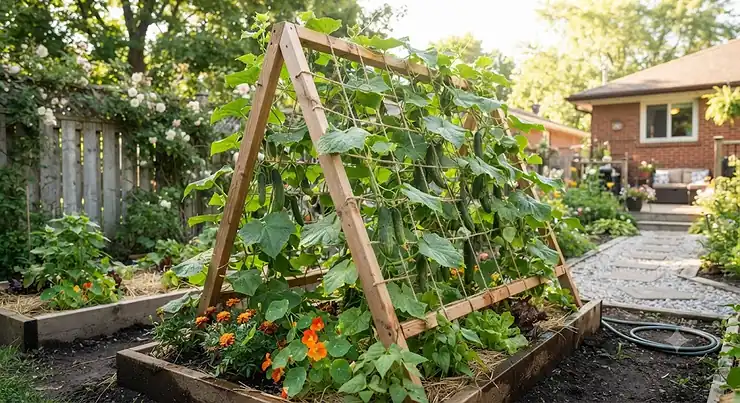
Let’s be honest: the first time most of us grow cucumbers, we let them do whatever they want. They sprawl. They tangle with the zucchini. They hide a baseball-bat-sized cuke under a leaf until it’s basically inedible. A trellis for cucumbers fixes all of that in one afternoon of assembly — it’s simply a vertical frame, net, or panel that trains vining cucumber plants to climb instead of crawl, lifting the fruit off damp soil and opening the whole plant up to sun and breeze. Sounds simple because it is, but which structure you buy matters more than you’d think.

We dug into real product listings, spec sheets, and aggregated customer feedback for seven trellises actually sold to Canadian gardeners, then stacked them against each other for sturdiness, airflow, and how much real estate they save in a raised bed or backyard plot. Whether you’re after a sturdy trellis for cucumber vines that can survive a Prairie windstorm or a compact vertical growing structure for cucumbers that tucks into a condo balcony, there’s a pick below that fits. And since downy mildew has been a serious, ongoing economic issue for Canadian cucumber growers since it first became widespread, we’re paying close attention to airflow and fruit rot prevention throughout this guide — not just price and looks.
By the end, you’ll know exactly which structure suits your garden, your budget, and your patience for assembly instructions. Let’s climb in.
Quick Comparison Table
| Trellis | Type | Approx. Price Range (CAD) | Best For |
|---|---|---|---|
| VEVOR 46″ x 32″ Foldable Trellis | A-frame metal, no-tool | around C$45–C$65 | Raised beds, quick setup |
| Gardener’s Supply Deluxe Wire Trellis | Lean-to wire panel | C$60–C$80 range | Long-term, premium build |
| DOEWORKS 56″ A-Frame (2-Pack) | A-frame with spikes | under C$40 | Budget in-ground gardens |
| VIVOSUN 5×5 ft Trellis Netting | Elastic net only | under C$25 | DIY frames, containers |
| Qinzave Raised Bed Trellis Kit | Full A-frame kit | C$50–C$70 range | Raised beds, beginners |
| Gardener’s Supply Over the Top Trellis | Flat-top 3-panel | C$75–C$95 range | Squash and cucumber combos |
| 67″ U-Frame Netting Trellis | Large U-frame + net | under C$30 | Big vine coverage, tight budget |
Looking at the spread above, the pattern is pretty clear: full metal-frame kits like the Qinzave Raised Bed Trellis Kit and VEVOR 46″ x 32″ Foldable Trellis land in the mid-range because you’re paying for pre-cut components and clips, while netting-only options like VIVOSUN 5×5 ft Trellis Netting stay cheap because you supply the frame yourself. If you already own fence posts, cattle panel, or a raised-bed frame, netting alone is the better-value route; if you’re starting from a bare patch of soil, a complete A-frame kit saves you a trip to the hardware store.
💬 Just one click — help others make better buying decisions too!😊
Top 7 Cucumber Trellises: Expert Analysis
1. VEVOR 46″ x 32″ Foldable Trellis — tool-free A-frame for raised beds
The standout here is genuinely the setup: no tools, no screws, and one person can have it standing in a raised bed in about ten minutes. The frame measures 46″ x 32″ (117 cm x 81 cm), built from a metal tube core with a rust-resistant powder coating, and it comes with plant clips to guide young vines onto the mesh before they figure out where to grab on their own. That coating matters more than it sounds — bare steel garden stakes rust and streak within a season on the West Coast or in humid Ontario summers, while a proper powder-coated finish holds up for years. On the spec sheet, the A-frame geometry means air moves freely on both sides of the structure, which is exactly the airflow around vines you want if you’ve had powdery or downy mildew problems before.
This one is best suited to raised-bed gardeners who want something they can fold flat and tuck into a shed every October, plus anyone who’d rather skip a trip to the hardware store for hardware. Based on the spec comparison against fixed-panel trellises, the foldability is the trade-off for a slightly lighter-gauge frame than the premium wire options further down this list — fine for a standard vining cucumber, but not the pick if you’re growing a squash-cucumber combo with serious fruit weight. Reviewers on major retail listings consistently note that assembly really does take minutes rather than the “some assembly required” horror stories common with cheaper A-frames, though a handful mention the accompanying stakes bending in rocky soil.
Pros:
- ✅ Genuinely tool-free, one-person assembly
- ✅ Rust-resistant coating suited to humid Canadian summers
- ✅ Folds flat for compact off-season storage
Cons:
- ❌ Lighter-gauge frame than premium wire trellises
- ❌ Stakes can bend in rocky or compacted soil
Expect this trellis to sit in the mid-C$40s to mid-C$60s range at the time of research — solid value for a raised-bed gardener who wants speed over heavy-duty capacity.
2. Gardener’s Supply Deluxe Wire Trellis — powder-coated steel built to last seasons
What most buyers overlook about this model is the lean-to design: instead of a symmetrical A, one side leans against the other, and the resulting shaded triangle underneath is prime real estate for a second, shorter crop like lettuce or spinach. Each panel measures 32″ wide by 48″ tall (81 cm x 122 cm), built from powder-coated steel with grid openings sized specifically for easy harvesting — you can reach a hand between the wires without wrestling the vine. That’s a small detail Amazon listings rarely emphasize, but it’s the difference between a five-minute harvest and a frustrated hunt for hidden cucumbers.
This is the pick for gardeners who replant the same beds year after year and want a trellis for cucumbers that outlasts a cheap import. Reviewers consistently note the powder coating resists the nicks and rust spots that plague bargain steel frames after two or three seasons, and the fold-flat storage keeps it from taking over garage space in winter. On paper, the extra sturdiness costs you a bit more up front, but the value/ROI math works out favourably if you garden for more than a couple of years, since you’re not rebuying a flimsy frame every spring.
Pros:
- ✅ Lean-to shape opens up shaded space for a second crop
- ✅ Large grid openings make harvesting genuinely easy
- ✅ Premium powder coating resists multi-season rust
Cons:
- ❌ Higher upfront cost than basic A-frame imports
- ❌ Needs stable ground or anchoring in high-wind areas
Priced in the C$60–C$80 range at most Canadian retailers, it’s a reasonable investment for anyone treating their vegetable garden as a long-term hobby rather than a one-season experiment.
3. DOEWORKS 56″ A-Frame Trellis (2-Pack) — budget-friendly with spiked legs
The short version: this is the trellis to buy if you want maximum vertical coverage for minimum spend. Each panel is 18″ wide by 56″ tall (46 cm x 142 cm), built from a 4mm plastic-coated steel core, and the two included panels combine into a 36″ x 56″ (91 cm x 142 cm) A-frame with spiked feet that push straight into loosened soil — no digging, no anchoring hardware, no fuss. The grid openings run a generous 6″ x 7.5″ (15 cm x 19 cm), which is plenty of room for a mature cucumber to hang through without pinching against the wire and scarring the skin.
Here’s what the spec sheet won’t tell you, but user reports suggest: the spiked-leg system works beautifully in loose garden soil and raised beds, but it’s noticeably less stable in heavy clay or on a windy exposed lot, where you’ll want to add a stake or lean it against a fence. Based on aggregated ratings around 4.2 out of 5 across roughly a hundred reviews on comparable retail listings, buyers are generally happy with the price-to-performance ratio, with the most common praise being how quickly it goes from box to garden bed. This is the budget-conscious gardener’s pick — students, renters, or anyone testing out vertical growing for the first time without committing serious cash.
Pros:
- ✅ Lowest price point of the metal A-frame options
- ✅ Spiked legs need no tools or anchoring hardware
- ✅ Large grid spacing reduces fruit scarring at harvest
Cons:
- ❌ Less stable in heavy clay or windy, exposed sites
- ❌ Thinner steel core than premium wire trellises
At under C$40 for the pair, this is one of the cheapest ways to get a genuinely sturdy trellis for cucumber vines without building anything yourself.
4. VIVOSUN 5 x 5 ft Elastic Trellis Netting — the DIY-friendly vertical growing structure for cucumbers
If you already have a fence, a set of bamboo poles, or an old grow-tent frame lying around, this is the cheapest way to turn it into a functional cucumber support. The netting itself measures 5 x 5 ft (1.5 m x 1.5 m), made from elastic thread with a 3.9″ x 3.9″ (10 cm x 10 cm) square mesh — large enough to prune and harvest through without cutting the netting — and it ships with four rust-resistant “S” hooks for mounting. Because it’s pure netting rather than a rigid frame, you’re buying flexibility: cut it down for a container garden, stretch it up a wall, or hang it between two T-posts for a full garden row.
Honest analytical take: this only earns its “sturdy” label when paired with a genuinely rigid support, since the netting itself has zero structural strength on its own. Reviewers frequently mention reusing the same netting for three or four seasons before the elastic starts to sag, which is well above what you’d expect from a C$15–C$25 product. It’s a strong match for gardeners who already own posts or a frame and just need the climbing surface, or for container growers who want to save space without buying a bulky standalone trellis.
Pros:
- ✅ Cheapest way to add serious climbing surface
- ✅ Cuts to size for containers or custom frames
- ✅ Reusable for multiple seasons before elastic wears out
Cons:
- ❌ Provides zero support without an existing frame
- ❌ Elastic can sag under heavy fruit load late-season
Expect to pay under C$25 for the 5 x 5 ft size, making it one of the most space-saving gardening buys on this whole list, dollar for dollar.
5. Qinzave Raised Bed Trellis Kit — comprehensive A-frame with all the hardware included
This is less a trellis and more a small construction kit: two top panels, twelve medium panels, thirty garden ties, ten garden stakes, twenty plant clips, twenty-six screws, a screwdriver, and a garden glove all show up in one box. What most first-time trellis buyers overlook is just how many small accessories (ties, clips, stakes) they end up buying separately after the fact — this kit front-loads all of that, which genuinely changes the total cost of ownership math in its favour even though the sticker price looks higher than a bare A-frame.
Key spec interpretation: the modular panel system means you can configure the width and height to match your specific raised bed rather than being locked into one fixed footprint, which is a real advantage over the single-size A-frames earlier on this list. Aggregated feedback on comparable modular kits tends to flag the included screwdriver and garden glove as a nice touch for beginners who don’t already have basic tools on hand, while the trade-off is a longer assembly time than the fold-and-plant designs. This is the pick for a gardener setting up a raised bed from scratch who’d rather buy once than piece together hardware from three different aisles.
Pros:
- ✅ All hardware and accessories included in one kit
- ✅ Modular panels adapt to custom raised-bed dimensions
- ✅ Beginner-friendly with tools included
Cons:
- ❌ Longer assembly time than pre-shaped A-frames
- ❌ Higher piece count means more to track and store
At an estimated C$50–C$70 range, it’s positioned squarely as a mid-tier option for raised-bed gardeners who value completeness over speed.

6. Gardener’s Supply Over the Top Trellis — flat-top design for cucumbers and squash together
The flat-top design is the standout feature, and it’s genuinely clever: instead of an A or a U shape, three powder-coated steel panels (each 32″ x 48″, or 81 cm x 122 cm) connect into a flat-topped structure that lets fruit hang down through the top for easy picking while leaving room underneath for shade-tolerant companion plants. At 13.5 lbs (about 6.1 kg) total, it’s the heaviest-duty option on this list, which matters if you’re also growing squash or melon vines alongside your cucumbers — both add serious weight partway through the season.
What the spec sheet won’t tell you, but the design implies, is that the flat top distributes weight more evenly across the whole structure than a single-ridge A-frame, reducing the sag you sometimes see mid-season on lighter trellises loaded with fruit. This is the premium pick for gardeners running a mixed cucurbit bed — cucumbers, squash, and melons together — who want one sturdy structure instead of three separate supports crowding the same raised bed. The trade-off, unsurprisingly, is price and a slightly more involved three-panel assembly.
Pros:
- ✅ Handles heavier squash and melon vines, not just cucumbers
- ✅ Flat top distributes weight evenly, reducing mid-season sag
- ✅ Leaves shaded growing room underneath for companion crops
Cons:
- ❌ Priciest option on this list
- ❌ Three-panel assembly takes longer than single-frame designs
Positioned in the C$75–C$95 range, this is the splurge pick for anyone treating vertical cucurbit growing as a serious, multi-crop system rather than a one-plant experiment.
7. 67″ U-Frame Trellis with Netting — largest footprint for the lowest dollar-per-square-foot
Rounding out the list is the biggest single structure here: a 67″ x 67″ (170 cm x 170 cm) U-shaped black metal frame paired with green climbing netting, built to cover a substantial run of vining plants in one purchase. The sheer surface area is the draw — where the A-frame options top out around 32″–46″ wide, this frame nearly doubles that, which means fewer individual units to buy if you’re trellising a longer row of cucumbers, tomatoes, or zucchini together.
Based on the spec comparison, the trade-off for that size is a lighter frame gauge than the premium wire trellises, so it’s better suited to a sheltered spot than an exposed, windy corner of the yard. Reviewers consistently frame this as the best budget-per-square-foot option on the market, praising how much growing surface you get for the price, while a smaller number flag that the netting can loosen slightly over a full season and benefits from an occasional re-tensioning. For anyone trellising multiple plants along a fence line or garden edge, this is the most economical way to cover serious ground.
Pros:
- ✅ Largest coverage area of any option on this list
- ✅ Strong value per square foot of climbing surface
- ✅ Works for cucumbers, tomatoes, and zucchini alike
Cons:
- ❌ Lighter frame gauge, best in sheltered spots
- ❌ Netting may need re-tensioning by late summer
At under C$30 at the time of research, it’s arguably the single best-value pick on this entire list for covering a long row.
Practical Usage Guide: Setting Up Your Trellis for Cucumbers Right
Getting the structure into the ground is only half the job — training the plant onto it in the first few weeks decides whether you get a tidy vertical wall of cucumbers or a tangled mess anyway. Set your trellis in place before you transplant seedlings, not after; disturbing established roots to wedge a frame in later sets plants back by days. Space the base legs so the frame sits roughly 30–45 cm (12–18 inches) from where you’ll actually plant, giving young stems room to reach the mesh without you having to lean the whole plant sideways.
For the first two to three weeks, gently loop the main vine through the lowest grid squares by hand every few days — cucumber tendrils are quick learners once they touch something, but they need that first nudge. A common early mistake is checking on the plant once a week; by then, a fast-growing vine has already flopped sideways and started climbing a neighbour instead. Water at the base rather than overhead once the plant is trellised, since wet foliage sitting in still air is exactly the airflow-killing condition that invites fungal problems. By midseason, a quick weekly check to redirect any vine growing away from the frame is usually all the maintenance a trellis for cucumbers needs.
Real-World Scenarios: Matching a Trellis to Your Garden
The condo balcony grower. If you’ve got a container and roughly a square metre of railing space, pair a compact frame like the VEVOR 46″ x 32″ Foldable Trellis with a large pot, or go even smaller with a cut-down piece of VIVOSUN 5 x 5 ft Elastic Trellis Netting lashed to your railing. Airflow is naturally good up high, so your main win here is simply saving floor space — a point a Vancouver-based small-space gardening specialist speaking to CBC News has made about warm-season crops like cucumbers thriving in even a modest urban plot.
The raised-bed suburban gardener. With one or two 1.2 m x 2.4 m (4 ft x 8 ft) raised beds, the Qinzave Raised Bed Trellis Kit or Gardener’s Supply Deluxe Wire Trellis fit the footprint well and give you years of reuse for a modest upfront cost.
The rural or acreage grower with a full cucurbit row. If you’re trellising cucumbers alongside squash and melons along a longer row, the Gardener’s Supply Over the Top Trellis or the budget-stretching 67″ U-Frame Trellis with Netting cover the most ground per dollar, especially if you’re setting up multiple units side by side.
Problem → Solution: Fixing Common Cucumber Trellis Headaches
Problem: Vines won’t grip the frame. Solution: use soft plant ties or the clips included with kits like Qinzave’s to anchor the first foot of growth; tendrils generally take over from there.
Problem: Fruit developing soft, rotting spots. Solution: this is almost always contact with damp soil or dense, still foliage — raise the lowest fruiting node further off the ground and thin overcrowded leaves for better circulation.
Problem: The trellis leans or tips in wind. Solution: anchor the base legs with landscape staples, or set the frame against a fence or wall on the prevailing-wind side, particularly with lighter frames like the 67″ U-Frame Trellis with Netting.
Problem: Powdery white coating on leaves by midsummer. Solution: this is classic powdery mildew — thin the canopy, water at the base only, and avoid working around wet plants, since warm, humid Canadian summers create ideal conditions for cucurbit diseases to spread quickly across a planting.
Problem: Netting sags badly by August. Solution: re-tension elastic netting like VIVOSUN’s partway through the season, or upgrade to a rigid-panel design like the Gardener’s Supply Over the Top Trellis for heavier fruit loads next year.
Buyer’s Decision Framework: Which Trellis Type Fits You
If you’re short on time and want zero assembly hassle, choose a fold-and-plant A-frame like the VEVOR 46″ x 32″ Foldable Trellis because the spiked or tool-free design gets you growing the same afternoon. If you already own posts, a fence, or a frame, choose netting alone like VIVOSUN’s because you’re only paying for the climbing surface, not structure you don’t need. If you’re growing cucumbers alongside squash or melons, choose a heavy-duty flat-top design like the Gardener’s Supply Over the Top Trellis because lighter frames will sag under combined fruit weight by midseason. If budget is the deciding factor above all else, choose the 67″ U-Frame Trellis with Netting or the DOEWORKS 56″ A-Frame, since both maximize coverage per dollar spent.
How to Choose a Trellis for Cucumbers
Picking the right structure comes down to a handful of decisions, roughly in this order of importance:
- Match height to your variety. Standard vining cucumbers can climb 1.5–2 m (5–6.5 ft); check your seed packet, since a trellis shorter than your plant’s mature height just means the vine flops over the top and defeats the purpose.
- Prioritize frame material over looks. Powder-coated steel resists rust through a Canadian rainy season far better than bare wire or plain plastic-coated options.
- Check the grid or mesh size. Openings around 10–19 cm (4–7.5 inches) let mature fruit hang through cleanly without pinching or scarring the skin.
- Consider your soil type before buying a spiked-leg design. Loose or raised-bed soil suits spikes; heavy clay usually needs a design you can anchor or stake separately.
- Decide if you need a frame, netting, or both. If you already own posts or a fence, netting alone saves money; starting from bare ground usually calls for a full kit.
- Think about storage before the season ends. Fold-flat designs save real garage or shed space over winter compared to bulky welded panels.
- Factor in what else you’re growing. A trellis rated for light cucumber vines may sag under combined squash, melon, and cucumber weight later in the season.
Common Mistakes When Buying a Trellis for Cucumbers
The single most common mistake is buying based on price alone and ending up with a frame too short for a vigorous vining variety — you’ll be retying flopped vines by July. A close second is skipping the grid-size check: tight mesh looks tidy in photos but makes harvesting a genuine wrestling match once fruit swells past the openings. Buyers also frequently underestimate wind exposure, picking a lightweight A-frame for an open, gusty yard when a heavier panel design or extra anchoring would have saved a midseason rebuild. Finally, plenty of first-time trellis shoppers forget to plan for what else shares the bed — a sturdy trellis for cucumber vines alone may not hold up once a squash vine muscles in beside it.

Trellis for Cucumbers vs Letting Vines Sprawl on the Ground
Ground-grown cucumbers aren’t wrong, exactly — some bush varieties are actually bred for it, and it costs nothing beyond seed. But for vining types, the comparison isn’t close on most of what matters. Ground-grown fruit sits in contact with damp soil, which is precisely the setup that encourages rot and gives soil-borne fungal spores a straight shot at the plant. Trellised plants keep leaves more separated and drier, meaningfully cutting disease pressure over a full season. Harvesting is the other big gap: fruit hanging visibly off a frame gets picked at the right size, while ground-sprawled cucumbers hide under leaves until they’re oversized and seedy. The one place ground-growing wins outright is upfront cost and zero assembly — a fair trade-off if you’ve got space to spare and don’t mind a lower-quality harvest.
What to Expect: Real-World Performance
On paper, a trellis sounds like a simple win, and in practice it mostly is — but there’s a real adjustment period. Expect to spend five to ten minutes every few days for the first three weeks gently guiding new growth onto the frame, since tendrils are opportunistic and will just as happily grab a neighbouring tomato cage. By week four or five, a healthy vining cucumber more or less takes over the job itself, climbing several centimetres a day in peak summer heat. Expect visibly straighter, more uniformly shaped fruit compared to ground-grown cucumbers from the same variety, along with noticeably less leaf yellowing from soil contact and splash-back. The one thing spec sheets never mention: by late season, a fully loaded trellis is heavier than it looks, so don’t be surprised if a lighter frame needs a bit of extra staking once the fruit really piles on.
Airflow Around Vines & Fruit Rot Prevention
This is where a trellis earns its keep beyond tidiness. Downy mildew management in cucumber has been a recognized federal pesticide risk reduction priority in Canada, and the underlying mechanics matter just as much in a backyard bed as a commercial field: the fungus-like pathogen spreads fastest through dense, humid canopies where leaves stay wet and still air traps moisture against the foliage. A trellis breaks that cycle mechanically — spacing leaves apart along a vertical plane lets breeze pass through the canopy and lets morning dew or overhead watering dry off faster than it would on a tangled ground mat.
Fruit rot prevention follows the same logic from a different angle: cucumbers lying on damp soil are in constant contact with the same moisture and soil organisms that cause soft spots and blossom-end issues, while a trellised fruit hangs in open air, drying quickly after rain. To get the most protection, choose a trellis with grid spacing wide enough that you’re not forced to crowd extra plants onto one small frame just to fit your garden’s footprint, and thin excess foliage through the season rather than letting the canopy fully close in. Watering at the base rather than overhead compounds the airflow benefit, since it keeps leaf surfaces dry in the first place rather than relying on breeze to fix a problem you created with the hose.
Vertical Growing Structures for Small-Space Canadian Gardens
Urban and suburban lot sizes keep shrinking, and a vertical growing structure for cucumbers is one of the highest-value moves a small-space gardener can make. Gardening extension experts recommend growing squashes, cucumbers, and pumpkins up a trellis or fence as a core strategy for maximizing limited sunlight and ground space — a single vertical frame can free up as much ground area as it occupies in height, letting you tuck a second crop like lettuce or radishes into the shaded space beneath a lean-to design. This kind of space-saving gardening isn’t just about square footage, either — it’s what makes a limited urban plot workable for heat-loving crops like cucumbers in the first place.
For balconies and postage-stamp yards, the netting-only route (like VIVOSUN’s) paired with a single sturdy post is often the most space-efficient setup of all, since there’s no bulky frame footprint at ground level once it’s mounted against an existing rail or wall. For a slightly bigger raised bed, compact A-frames like the VEVOR 46″ x 32″ Foldable Trellis or DOEWORKS 56″ A-Frame strike a good balance between coverage and a small ground print, especially since both fold flat when the season ends and storage space is at just as much of a premium as growing space.
Long-Term Cost & Maintenance
The cheapest trellis up front isn’t always the cheapest over five years, and that’s worth doing the math on before you buy. A C$25 netting-only setup paired with posts you already own is hard to beat cost-wise, but budget frames without powder-coated finishes often show rust and require replacement within two to three seasons in a wet Canadian climate, while a premium powder-coated option like the Gardener’s Supply Deluxe Wire Trellis or Gardener’s Supply Over the Top Trellis can realistically last five-plus seasons with minimal upkeep. Maintenance itself is minimal either way: a quick rinse at season’s end, touching up any nicked coating with exterior paint before storage, and making sure frames are fully dry before folding away to avoid trapped moisture accelerating rust from the inside. Factor in that a sturdier frame also means less mid-season sagging and fewer emergency stakes bought in a panic in July, and the total cost of ownership tilts further toward the higher-quality options than the sticker price alone suggests.

Frequently Asked Questions
❓ What is the best trellis for cucumbers in a small backyard?
❓ How tall should a trellis for cucumbers be?
❓ Can I use a tomato cage as a trellis for cucumbers?
❓ Do cucumbers need a special trellis, or will any garden netting work?
❓ How do I stop cucumbers from rotting on a trellis?
Conclusion
A trellis for cucumbers isn’t a luxury purchase — it’s one of the few garden upgrades that pays off in straighter fruit, fewer disease headaches, and real square footage back in a small bed, usually for less than the cost of a nice dinner out. Budget shoppers get genuine value from the DOEWORKS 56″ A-Frame or the 67″ U-Frame Trellis with Netting, mid-range gardeners land well with the VEVOR 46″ x 32″ Foldable Trellis or the all-in-one Qinzave Raised Bed Trellis Kit, and anyone treating vertical growing as a long-term system should look hard at the Gardener’s Supply Deluxe Wire Trellis or the heavier-duty Gardener’s Supply Over the Top Trellis. Whichever structure fits your space and budget, the underlying goal is the same: get those vines up, keep the air moving, and let gravity do the sorting on fruit quality for you.
✨ Ready to get your vines climbing? Browse the options above and check current prices before your next garden centre trip — your future harvest will thank you! 🥒🌿
Recommended for You
- 7 Best Trellis Netting for Climbing Vegetables in 2026 (Ranked)
- 7 Best Metal Plant Stakes for Vegetable Garden in 2026
- Plant Stakes for Tall Flowers: 7 Sturdy Picks for 2026
Disclaimer: This article contains affiliate links. As an Amazon Associate, I earn from qualifying purchases. If you purchase products through these links, we may earn a small commission at no additional cost to you.
✨ Found this helpful? Share it with your friends! 💬🤗
