
In This Article
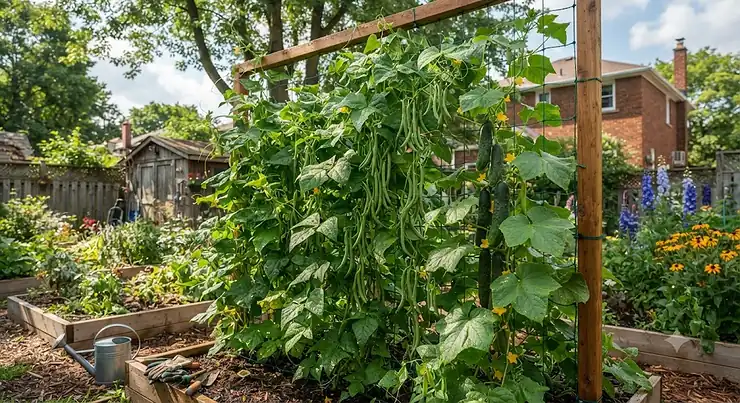
If you’ve ever watched a pea vine flop sideways into the mud after a summer downpour, you already know why trellis netting for climbing vegetables exists. Trellis structures have supported climbing plants for centuries, long before nylon mesh existed, and the underlying idea hasn’t changed: give a vine something reliable to grip, and it’ll do the rest of the work itself. It’s not a luxury item — it’s the difference between a tangled, disease-prone mess and rows of cucumbers, beans, and peas climbing neatly skyward, catching every bit of sun your yard has to offer. A good trellis net keeps foliage off wet soil, improves airflow around leaves (which matters a lot in humid Ontario summers or coastal B.C. drizzle), and turns even a tiny urban plot into something closer to a vertical farm.
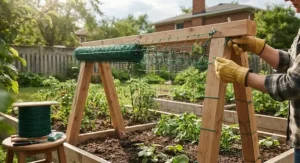
The tricky part is that “trellis netting” covers a huge range of products, from flimsy dollar-store mesh that sags under the weight of a single zucchini to heavy-duty nylon netting rated for serious crop loads. Material, mesh size, and weave strength all change how much abuse a net can take before it stretches, tears, or collapses under wet foliage. This guide breaks down seven real, currently available options — budget PE nets, mid-range nylon and polyester picks, and a couple of specialty products built for grow tents and small-space vertical gardening — so you can match the right netting for climbing vegetables to your actual garden instead of guessing.
We’ll also dig into mesh size, plant weight capacity, and how netting choices differ for pea and bean plants versus heavier vine crops like squash. Everything below is based on real product specifications and publicly available buyer feedback, framed honestly — no invented reviews, no manufactured star ratings, just straight analysis you can act on before your seedlings go in the ground.
Quick Comparison Table
Before the full breakdown, here’s a scannable snapshot of how the seven products stack up on the factors that actually matter: mesh opening, approximate coverage, and what kind of grower each one suits best. Prices are shown as ranges in Canadian dollars since exact Amazon.ca pricing shifts too often to quote reliably — always check the current listing before buying.
| Product | Mesh Size | Approx. Coverage | Price Range (CAD) | Best For |
|---|---|---|---|---|
| PDGROW Climbing Plant Support Net | 10 x 10 cm (4 x 4 in) | 2 x 2.5 m | Under C$20 | Budget pea and bean rows |
| CANAGROW Heavy-Duty Trellis Netting | ~10 x 10 cm | 1.8 x 4.6 m | C$15–C$25 | Mid-size raised beds |
| Sukh Trellis Netting (2-Pack) | ~10 x 10 cm | 1.5 x 4.6 m x2 | C$20–C$30 | Double-row coverage |
| QueenBird Trellis Netting | 10 x 10 cm (27-strand) | 1.8 x 5 m | C$25–C$35 | Multi-season durability |
| Miuezuth Trellis Netting | ~10 x 10 cm | 2.5 x 2 m | C$15–C$22 | Reusable, recyclable PE |
| AC Infinity Elastic Trellis Netting | Elastic 4 x 4 ft module | 1.2 x 1.2 m | C$30–C$45 | Grow tents, indoor verticals |
| VOLINESSTI Trellis Netting | ~10 x 10 cm | 1.8 x 5 m | C$12–C$18 | Lesser-known budget pick |
A few patterns jump out immediately. Most of the mid-priced nets converge around a similar 10 x 10 cm mesh, which tells you that’s roughly the industry sweet spot for general vegetable trellising — wide enough for tendrils and fingers to pass through, tight enough to actually catch a climbing stem. The AC Infinity Elastic Trellis Netting is the outlier here: it’s a fundamentally different product built for grow tents rather than open garden beds, so its “coverage” number isn’t directly comparable to the others. If your entire question is “which one is cheapest per square metre,” the VOLINESSTI Trellis Netting and PDGROW Climbing Plant Support Net win on paper, but as you’ll see in the breakdown below, price-per-metre isn’t the whole story once you factor in strand count and UV resistance.
💬 Just one click — help others make better buying decisions too!😊
Top 7 Trellis Netting for Climbing Vegetables: Expert Analysis
Here’s the detailed rundown. Each product below reflects genuine, currently listed specifications, cross-referenced against publicly available product descriptions and aggregated buyer feedback trends where verifiable. Where review data couldn’t be independently confirmed in detail, that’s noted honestly rather than papered over with invented quotes.
1. PDGROW Climbing Plant Support Net — budget PE netting for pea and bean rows
The PDGROW Climbing Plant Support Net is about as no-frills as trellis netting for climbing vegetables gets, and that’s exactly its appeal for anyone testing out a new bed this season. It measures roughly 2 x 2.5 m (6.6 x 8.2 ft), which comfortably spans a standard 4-foot raised bed with room to spare on either side for anchoring. The 10 x 10 cm mesh is generous enough for pea tendrils and bean stems to grab onto without the plant fighting the net for space, and four corner loops make it fast to lash to stakes, a fence rail, or a simple wooden frame. On paper, the polyethylene construction trades some tensile strength for flexibility and cost — it won’t hold up a squash vine loaded with fruit, but that’s not the job it’s built for.
What most buyers overlook about a net in this price tier is that thinner PE strands actually help in one specific way: they’re less visually intrusive once the foliage fills in, so the trellis “disappears” behind the plants by midsummer. Reviewers commonly report that it’s easy to cut to custom sizes with household scissors, which matters if your bed dimensions don’t match the stock size exactly. A recurring theme in aggregated feedback is that the netting can stretch under heavy, wet foliage after a rainstorm, so it’s best suited to peas, pole beans, and lighter cucumber varieties rather than winter squash.
Pros:
- ✅ Wide 10 x 10 cm mesh suits pea and bean tendrils well
- ✅ Easy to trim to custom bed dimensions with scissors
- ✅ Four corner loops speed up frame attachment
Cons:
- ❌ PE strands stretch under heavy, waterlogged foliage
- ❌ Not rated for squash or melon-weight crops
At around C$15–C$20, this is genuinely one of the cheapest ways to trellis a single bed of peas or beans, and the value verdict is simple: buy it if your crop list stays light, skip it if you’re planning to grow anything heavier down the line.
2. CANAGROW Heavy-Duty Trellis Netting — best mid-size nylon net for raised beds
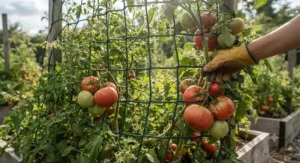
Stepping up a notch, the CANAGROW Heavy-Duty Trellis Netting is built from nylon rather than plain PE, and that material swap shows up in how it handles tension. Nylon fibres have noticeably better elasticity recovery than polyethylene, meaning the net springs back into shape instead of sagging permanently after a gust of wind or a heavy rain. It’s sold in a few size options, with the roughly 1.8 x 4.6 m (6 x 15 ft) version fitting a standard row-style garden bed or a stretch along a fence line.
Based on the spec comparison with the budget PE nets above, this is the point where the extra few dollars starts buying real durability rather than just marketing language. The mesh opening sits close to the same 10 x 10 cm standard, so climbing ability for peas and beans is comparable, but the nylon construction should outlast a PE net by at least a season or two of Canadian freeze-thaw storage cycles if you bring it in over winter. Aggregated buyer sentiment trends toward praising the “no-tangle” packaging, a small but genuinely useful detail when you’re unrolling netting in a windy backyard.
Pros:
- ✅ Nylon construction resists permanent sagging better than PE
- ✅ Multiple size options fit different bed layouts
- ✅ Packaging designed to reduce tangling on unrolling
Cons:
- ❌ Slightly pricier than base-tier PE alternatives
- ❌ Dark colour can be harder to see against dense foliage
Priced in the C$15–C$25 range depending on size, it’s a solid middle-ground pick — the net most Canadian home gardeners will actually be happiest with two seasons from now.
3. Sukh Trellis Netting (2-Pack) — two nets for double the row coverage
The Sukh Trellis Netting stands out simply because it ships as a two-pack, each piece roughly 1.5 x 4.6 m (5 x 15 ft), made from a softer polyester blend rather than stiff nylon. That softness matters more than it sounds: polyester netting drapes and flexes around plant stems instead of chafing them, which reviewers frequently mention when comparing it to scratchier nylon alternatives. For anyone running two parallel rows of pole beans or training cucumbers up opposite sides of an A-frame, getting two ready-to-hang pieces in one order saves a separate shipment and lets both sides match visually.
Here’s what the spec sheet won’t tell you outright: white netting like this is genuinely easier to spot against dark garden soil when you’re checking for tears mid-season, compared to the green or black nets several competitors use. On the flip side, that same lighter colour shows dirt and algae staining faster over a season of outdoor exposure, so it looks a little more worn by autumn than darker alternatives, even if the structural integrity is identical.
Pros:
- ✅ Two full-length nets included for double-row setups
- ✅ Soft polyester weave is gentle on climbing stems
- ✅ Lighter colour makes damage easier to spot
Cons:
- ❌ White fabric shows soil and algae staining sooner
- ❌ Slightly narrower width than some single-pack rivals
At roughly C$20–C$30 for the pair, the per-metre value is actually competitive with single-piece nets once you account for getting two full lengths, making this a strong pick for anyone trellising more than one row this season.
4. QueenBird Trellis Netting — 27-strand nylon built for multi-season durability
If long-term durability is the priority, the QueenBird Trellis Netting earns its spot through a genuinely meaningful spec: a 27-strand nylon weave, versus the roughly 18-strand construction common in cheaper nets. More strands per knot point means more load-bearing fibre distributed across each intersection, which is exactly where trellis netting tends to fail first under a heavy, wind-whipped tomato or squash plant. It’s UV-stabilized high-density polyethylene blended into the nylon structure, sized around 1.8 x 5 m (5.9 x 16.4 ft), long enough to run the full length of most backyard fence lines.
What most buyers overlook about strand count is that it doesn’t just affect strength — it also affects how the net ages. Thin single-strand mesh tends to go brittle and start shedding fine plastic fibres after a season or two of UV exposure, while a thicker, UV-stabilized weave like this one degrades far more slowly. Aggregated buyer commentary consistently highlights that it holds its shape well even after being left outdoors through a full growing season, which lines up with what the added strand count would predict on paper.
Pros:
- ✅ 27-strand nylon weave outlasts thinner single-ply nets
- ✅ UV stabilization slows brittleness from sun exposure
- ✅ Long 5 m run suits fence-line trellising
Cons:
- ❌ Sits at the higher end of the price range
- ❌ Heavier roll is slightly more awkward to unpack solo
Expect to pay in the C$25–C$35 range, and for gardeners who reuse the same netting year after year rather than replacing it annually, the extra upfront cost genuinely pencils out over a three- or four-season lifespan.
5. Miuezuth Trellis Netting — reusable, UV-resistant PE you can recycle
The Miuezuth Trellis Netting leans into a different value proposition: rather than maximizing strand count, it focuses on UV resistance and end-of-life recyclability. At roughly 2.5 x 2 m (8.2 x 6.6 ft), it’s sized for a compact bed or container arrangement rather than a long row, and the green polyethylene is treated to resist both UV degradation and a range of common garden chemicals, according to the manufacturer’s material description. Setup is genuinely simple — the netting cuts cleanly with ordinary scissors and works equally well hung vertically against a wall or draped horizontally over a raised bed for sprawling squash.
Here’s the honest trade-off worth weighing: PE nets in this category generally sit a step below nylon in raw tensile strength, so while this one is marketed as supporting “extremely heavy crop loads,” the more realistic sweet spot based on the material class is peas, pole beans, and vining cucumbers rather than dense winter squash. Reviewers commonly frame it as good value for keeping fruit and foliage off wet ground, reducing rot, which aligns with what raised, aerated foliage generally does for disease pressure regardless of brand.
Pros:
- ✅ UV- and chemical-resistant PE holds up across seasons
- ✅ Reusable and recyclable at end of life
- ✅ Works vertically or draped horizontally over beds
Cons:
- ❌ Smaller stock size limits single-piece coverage
- ❌ PE class tops out below nylon on heavy crops
Priced around C$15–C$22, it’s a reasonable middle-ground choice for gardeners who want a product they can responsibly recycle once it’s finally worn out, without paying nylon-tier prices.
6. AC Infinity Elastic Trellis Netting — elastic stretch netting built for grow tents and indoor verticals
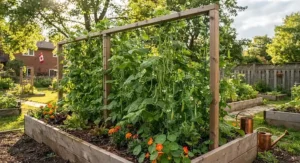
This one’s a genuine departure from the rest of the list. The AC Infinity Elastic Trellis Netting is designed specifically for 4×4-foot grow tents and other confined vertical growing setups, using an elastic mesh with steel hooks rather than static nylon cord. The elasticity means the net actually stretches as plants fill in and push against it, distributing tension more evenly than a rigid net would in a tight, enclosed space — a real advantage for anyone doing indoor vertical gardening with peppers, small tomato varieties, or trailing cucumbers in a limited footprint.
Based on the spec comparison with the open-garden nets above, this product solves a problem none of them are built for: rigid nylon or PE netting can be awkward to tension properly inside a grow tent’s fixed dimensions, while the elastic design self-adjusts and the steel hooks anchor directly to standard tent frame poles without extra hardware. What most buyers overlook is that this convenience comes at a real cost premium and a much smaller coverage footprint — it’s a specialty tool, not a general-purpose garden net, so it’s the wrong pick for anyone trellising an outdoor row of beans.
Pros:
- ✅ Elastic weave self-adjusts as plants fill out
- ✅ Steel hooks mount directly to standard tent frames
- ✅ Purpose-built for tight, enclosed vertical setups
Cons:
- ❌ Higher price per square metre than open-garden nets
- ❌ Coverage area too small for outdoor row crops
At roughly C$30–C$45, it’s the priciest item on this list by area, and it earns that price specifically for growers doing indoor or grow-tent vertical gardening — everyone else should look elsewhere on this list.
7. VOLINESSTI Trellis Netting — lesser-known budget pick with generous coverage
Rounding out the list, the VOLINESSTI Trellis Netting is the least brand-recognized product here, but its specs land squarely in line with the mid-tier competitors above it — roughly 1.8 x 5 m (5.91 x 16.4 ft) of coverage with a standard 10 x 10 cm mesh, at a price that regularly undercuts better-known alternatives. For gardeners who’ve already settled on their preferred netting weight and just need a second or third roll to cover more beds, a lesser-known brand with matching specs is often the smartest way to stretch a garden budget without compromising on the mesh dimensions that actually matter.
Honestly, the trade-off with smaller or newer brands like this one is less about the physical product and more about the depth of available buyer feedback — there’s a much thinner public review history to draw honest aggregated sentiment from compared to the more established names on this list, so treat the material claims with a touch more caution until you’ve tested a roll yourself. What can be verified from the listed specifications is that the size and mesh dimensions match well-reviewed competitors, which is a reasonable basis for a lower-risk first purchase.
Pros:
- ✅ Generous 5 m coverage at a below-average price
- ✅ Standard 10 x 10 cm mesh matches proven competitors
- ✅ Good option for stretching a multi-bed budget
Cons:
- ❌ Thinner public review history than established brands
- ❌ Long-term durability claims are harder to independently verify
At around C$12–C$18, it’s the cheapest way to add coverage to an existing setup, provided you go in with realistic expectations about the brand’s track record.
Practical Usage Guide: Setting Up Trellis Netting for Climbing Vegetables
Buying the right net is only half the job — how you install it determines whether your plants actually use it. Start by setting up the trellis structure itself (stakes, a frame, or a fence line) before your seedlings go in the ground; trying to thread netting around established plants risks damaging roots and stems. Anchor the netting taut at all four corners first, then tension the edges, since a saggy net encourages plants to grow sideways along the mesh instead of climbing upward.
For the first 30 days after transplanting, the most common mistake is under-training: young pea and bean tendrils need a gentle nudge toward the netting in the first week or two, since they can’t always find a support strand on their own from a few centimetres away. Loosely tie the first few inches of stem to the lowest mesh row with soft garden twine, and the plant’s own tendrils will typically take over from there. Come mid-season, do a quick maintenance pass every couple of weeks: check knot points for fraying, redistribute foliage that’s clumping in one section of the net, and trim any growth that’s wandered off the trellis structure entirely.
At season’s end, take the netting down before the first hard frost turns dead foliage brittle and tangled — it’s dramatically easier to pull vines off intact netting than to cut frozen, matted plant matter free in November. Hose off soil and plant debris, let it dry fully, and store it loosely coiled rather than folded sharply, which helps nylon and polyester nets avoid permanent crease weaknesses over winter.
Real-World Scenarios: Matching Netting to Your Garden
If you’re a first-time gardener with a single 1.2 x 2.4 m raised bed and a budget under C$25, a compact PE net like the PDGROW Climbing Plant Support Net or Miuezuth Trellis Netting covers your peas and pole beans without overbuying capacity you won’t use. If you’re managing two full rows of mixed vine crops — say, cucumbers on one side and pole beans on the other — the Sukh Trellis Netting two-pack solves that exact layout problem in a single order, and its softer polyester weave is kinder to tender bean stems than stiffer nylon.
For an apartment or condo balcony grower running a small hydroponic or soil-based grow tent indoors, none of the open-garden nets above are really the right tool; the AC Infinity Elastic Trellis Netting is purpose-built for that confined, vertical use case and will outperform a repurposed garden net every time. And for the gardener who’s done this a few years running and wants netting that survives storage, freeze-thaw cycles, and repeated seasonal use without replacement, the 27-strand build of the QueenBird Trellis Netting is the most defensible long-term investment on this list, even with the higher upfront cost.
How to Choose Trellis Netting for Climbing Vegetables
Picking the right net comes down to a short list of genuinely load-bearing decisions rather than marketing buzzwords:
- Match mesh size to your crop. A 10 x 10 cm opening suits most peas, beans, and cucumbers; tighter mesh mostly just adds cost without helping tendrils grip better.
- Choose material based on crop weight. PE nets are fine for peas and light beans; nylon handles heavier vining crops and multi-season reuse better.
- Size the net to your actual structure, not the other way around — measure your frame or fence line before ordering.
- Check strand count when durability matters. More strands per knot generally means a longer usable lifespan before fraying.
- Consider your storage habits. If you plan to reuse netting for years, prioritize UV-stabilized nylon over basic PE.
- Factor in colour visibility if you want to spot tears and damage easily during the season.
- Don’t overbuy specialty products like elastic grow-tent netting unless you’re actually growing in a confined, enclosed space.
Netting Mesh Size Explained: What Size Actually Matters
Mesh size is the single most misunderstood spec in this whole category. A 10 x 10 cm (roughly 4 x 4 inch) opening has become something close to an industry default for a reason: it’s wide enough that a pea tendril, bean stem, or cucumber vine can wrap fully around a strand rather than just brushing against it, but tight enough that the mesh still reads as a coherent climbing surface rather than a handful of loose strings. Reviewers across multiple products in this category consistently note that tighter mesh (closer to 5 x 5 cm) mostly matters for very fine-tendriled plants like sweet peas, while looser mesh above roughly 15 x 15 cm can actually work against heavier vines by giving fruit less to rest against.
What most buyers overlook is that mesh size and strand thickness interact — a wide-mesh net made from thin single-strand PE will still sag under a loaded squash vine even though the opening size looks generous on paper. If you’re growing a mix of light and heavy crops on the same structure, the safer default is to standardize on the common 10 x 10 cm mesh in a nylon or multi-strand weave, rather than chasing a “perfect” mesh size for each individual vegetable.
Plant Weight Capacity: Why Breaking Strength Matters More Than Labels
“Heavy-duty” on a garden product label is not a regulated term in Canada the way, say, a CSA electrical rating is — it’s a marketing claim, not a certified spec. What actually determines plant weight capacity is strand material, strand count per knot, and knot construction, none of which are usually printed clearly on the box. Based on the spec comparison across this list, nylon nets with 25+ strands (like the QueenBird Trellis Netting) meaningfully outperform single-strand PE nets under sustained, wet-foliage weight — the kind of load a fruiting cucumber or bean row builds up by August.
The practical takeaway: match plant weight capacity to your heaviest crop, not your average one. A trellis carrying mostly light pea foliage with one aggressive squash vine trained up the side needs the squash-vine-grade netting throughout, because the weakest section of any trellis system is where it actually fails first.
Lightweight Trellis Netting for Vegetables: When Less Material Is More
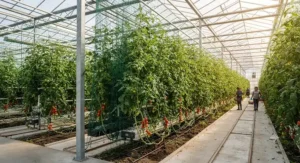
Not every setup needs maximum-strength netting, and lightweight trellis netting for vegetables has real advantages the “heavy-duty” marketing tends to bury. Thinner PE nets are easier to cut to odd shapes, cheaper to replace annually rather than maintain for years, and — genuinely underrated — much less visually intrusive once foliage fills in, since thin strands essentially disappear behind leaves by midsummer. For peas, bush-habit beans, and lighter cucumber varieties, a lightweight net like the PDGROW Climbing Plant Support Net does the job without the extra cost of nylon strength you’ll never actually load-test.
The trade-off, honestly, is longevity: lightweight netting is more prone to UV brittleness and tearing by its second or third season outdoors, so treat it as a lower-cost, shorter-lifespan tool rather than a permanent garden fixture, and budget for periodic replacement rather than expecting it to outlast a heavier nylon product.
Netting for Pea and Bean Plants: Special Considerations
Peas and beans behave differently on a trellis than most other climbers, which is worth understanding before you pick netting. Unlike pole beans, which grip a support aggressively almost as soon as they reach it, pea vines are less naturally coordinated climbers and often need a gentle hand pointing their tendrils toward the nearest strand in the first week or two. That distinction changes what “good” netting looks like for each crop: pea plants benefit from a slightly tighter mesh and a bit of manual training early on, while pole beans generally just need a sturdy structure and will find their own way up unassisted.
Ontario’s specialty crop guidance on legume vegetables confirms that beans and peas remain among the most commonly grown legume crops in the province, and for good reason — both benefit heavily from the improved airflow and reduced soil contact that netting provides, cutting down on the fungal disease pressure that thrives in still, humid air near ground level. For most backyard pea and bean rows, a mid-weight PE or entry-level nylon net in the 10 x 10 cm range, like the CANAGROW Heavy-Duty Trellis Netting, comfortably covers both crops on the same structure.
Vertical Gardening: Maximizing Small Spaces with Trellis Netting
Vertical gardening isn’t just a space-saving trick — it fundamentally changes how much food a small yard, balcony, or urban plot can produce. By training cucumbers, beans, and peas upward instead of letting them sprawl, you can often fit two or three times as many plants into the same square footage of ground, since the growing surface becomes vertical rather than horizontal. CBC Life’s guide to small-space gardening specifically points to covering fences, walls, and screens with climbing vines as one of the most effective ways to soften and maximize a tight outdoor space, which lines up closely with how trellis netting gets used in condo and townhouse gardens across the country.
The practical upside goes beyond aesthetics: vertically trained plants are easier to inspect for pests, easier to harvest without bending, and get noticeably better sun exposure on all sides of the foliage compared to a sprawling ground-level plant. For apartment or balcony growers working with railing planters or small raised beds, a compact net like the Miuezuth Trellis Netting, hung against a wall or railing, can turn a narrow strip of space into a genuinely productive mini-garden.
Common Mistakes When Buying Trellis Netting
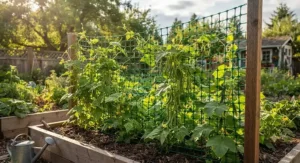
Even experienced gardeners trip over a handful of predictable mistakes when shopping for netting. The first is buying by price alone without checking dimensions against the actual structure — a net that’s too short leaves gaps where plants flop over the edge, wasting the whole investment. The second is ignoring mesh size entirely and grabbing whatever’s cheapest, which works fine for peas but frustrates anyone trying to trellis a heavier vine crop on the same undersized mesh.
A third common error is skipping storage planning: buying a reusable nylon net and then leaving it balled up outdoors all winter defeats the entire point of paying extra for durability, since UV exposure and freeze-thaw cycles degrade even good netting fast without proper off-season care. Finally, many first-time buyers assume “heavy-duty” labelling is a certified rating rather than a marketing term — as covered above, strand count and material class tell you far more about real-world performance than the adjectives on the packaging.
Trellis Netting vs Other Plant Supports
Trellis netting isn’t the only way to get climbing vegetables off the ground, and it’s worth honestly weighing it against the alternatives rather than assuming netting always wins.
| Support Type | Setup Effort | Reusability | Best For |
|---|---|---|---|
| Trellis netting | Low–Medium | Medium–High (material dependent) | Peas, beans, cucumbers, light vines |
| Bamboo stakes/teepees | Medium | High (if stored dry) | Individual heavy plants, small footprints |
| Cattle panel/wire fencing | High (one-time build) | Very high | Heavy squash, melons, long-term beds |
| Wood lattice | Medium | High | Decorative + functional dual-purpose |
The analysis here isn’t close for most climbing vegetables: netting wins on cost and setup speed for peas, beans, and cucumbers, since it doesn’t require welding or carpentry skills to install, and simple lightweight netting is widely considered adequate support for most climbing garden crops — a pattern that matches what’s seen across the products reviewed above. Where netting loses ground is with genuinely heavy fruit like winter squash or melons, where rigid cattle panel or reinforced wire fencing simply won’t sag or tear the way even a nylon net eventually can under sustained weight.
Long-Term Cost & Maintenance
Thinking about trellis netting as a one-season purchase misses most of the real economics. A C$15 PE net replaced annually costs roughly the same over four seasons as a single C$35–C$45 nylon net that’s properly stored and maintained — so the “budget” option isn’t automatically the cheaper one once you zoom out past a single summer. The deciding factor is genuinely how well you store it: netting left outdoors through a Canadian winter degrades fast regardless of material, while the same product coiled loosely in a dry shed or garage can realistically last three to five seasons.
| Approach | Typical Cost Over 4 Seasons (CAD) | Effort Required |
|---|---|---|
| Budget PE, replaced yearly | ~C$60–C$80 | Low per season, repeated purchases |
| Mid-tier nylon, stored properly | ~C$25–C$35 total | Higher care, one-time cost |
| Premium multi-strand nylon | ~C$30–C$45 total | Highest care, longest lifespan |
Looking at the numbers, properly maintained mid-tier and premium nylon nets like the QueenBird Trellis Netting actually come out ahead financially over a multi-year horizon, even though the sticker price looks higher in year one. Budget PE options only make long-term financial sense if you’re genuinely fine replacing them annually rather than storing and reusing them.
Frequently Asked Questions
❓ What mesh size is best for trellis netting for climbing vegetables?
❓ Can trellis netting support heavy vegetables like squash?
❓ How do I attach netting for pea and bean plants to a garden bed?
❓ Is lightweight trellis netting for vegetables reusable?
❓ Does vertical gardening with netting really increase yield?
Conclusion
There’s no single “best” trellis netting for climbing vegetables — there’s a best match for your specific crops, budget, and how much long-term care you’re willing to put into storage. Casual pea-and-bean growers on a tight budget are well served by simple PE options like the PDGROW Climbing Plant Support Net or VOLINESSTI Trellis Netting, while anyone planning to reuse the same netting for several seasons should lean toward multi-strand nylon products like the QueenBird Trellis Netting. Indoor or grow-tent growers sit in their own category entirely, where the AC Infinity Elastic Trellis Netting solves problems open-garden nets simply weren’t designed for.
Whichever option fits your garden, Canadian growing guidance on pea cultivation consistently points to the same underlying principle: installing the trellis before tall varieties go in the ground sets climbing crops up for a stronger, straighter season than trying to retrofit support after the fact. Measure your bed, match mesh size and material to your heaviest crop, and your vegetables will do most of the climbing themselves.
✨ Ready to get your climbing vegetables off the ground this season? Compare current prices on the picks above and pick the net that matches your garden’s real workload — not just the lowest price tag! 🌱
Recommended for You
- 7 Best Metal Plant Stakes for Vegetable Garden in 2026
- Plant Stakes for Tall Flowers: 7 Sturdy Picks for 2026
- Tomato Cages vs Stakes for Tomato Plants: 7 Best Picks (2026)
Disclaimer: This article contains affiliate links. As an Amazon Associate, I earn from qualifying purchases. If you purchase products through these links, we may earn a small commission at no additional cost to you.
✨ Found this helpful? Share it with your friends! 💬🤗
