
In This Article
Here’s a confession every Canadian gardener eventually makes: you built the perfect raised bed — cedar boards mitred at the corners, level, gorgeous — and then stood there with a shovel wondering what on earth to actually put inside it. Garden soil for raised beds isn’t the same thing as the topsoil sitting in a pile behind your local garden centre, and treating it that way is probably the single most common (and most expensive) mistake new raised-bed gardeners make. Fill a bed with straight topsoil and you’ll get a compacted brick by July; fill it with pure compost and your tomatoes will grow into leggy green monsters that never fruit.
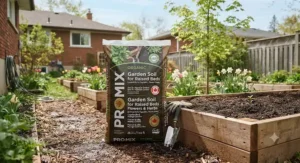
The good news is that getting this right isn’t complicated once you understand what a raised bed actually needs: a blend that drains fast, holds just enough moisture, and feeds itself over several seasons instead of collapsing into mud. In this guide, we’ll walk through seven real products sold in Canada, how bed depth changes your soil math, which amendments are worth the money, and how to solve drainage problems before they become root-rot problems. We’ll also get specific about topsoil for vegetable beds, since “topsoil” gets used as a catch-all term that hides a lot of very different products.
Affiliate Disclosure: This article contains affiliate links. As an Amazon Associate, I earn from qualifying purchases, at no extra cost to you.
What Is Garden Soil for Raised Beds?
Garden soil for raised beds is a purpose-blended growing medium — typically a mix of topsoil, compost, and aeration material like perlite or coarse sand — engineered to drain well while retaining nutrients and moisture in a container-like, above-ground structure. Unlike native ground soil, it has to perform without the surrounding earth to buffer temperature or moisture swings.
That distinction matters more than most product labels let on. As Wikipedia’s overview of raised-bed gardening explains, this style of growing typically packs vegetables into tighter geometric patterns than conventional row gardening, with the soil enriched by compost to support that density — which means the soil has to support a much denser root network per square metre than a typical garden bed. That’s the whole ballgame: raised bed soil works harder, in a smaller volume, than almost any other growing medium you’ll use outdoors.
Quick Comparison Table: Top Soil Blends for Raised Beds at a Glance
| Product | Type | Best For | Approx. Price Range (CAD) |
|---|---|---|---|
| Schultz Black Earth Topsoil | Straight topsoil | Base-layer filler, budget builds | Under C$15 per bag |
| PRO-MIX Organic Moisture Mix (112L) | Peat-based potting mix | Deep beds, moisture-hungry crops | C$50-C$70 range |
| Miracle-Gro Potting Mix Plus (18L) | All-purpose enriched mix | Small beds, containers, top-ups | C$25-C$35 range |
| All-Purpose Top Soil (25L bags) | Blended landscaping topsoil | Bulk-filling large new beds | C$10-C$18 per bag |
| Organic Living Soil Mix (10L) | Living/organic amended soil | Organic growers, herbs & greens | C$20-C$30 range |
| Perlite & Vermiculite Mix (4L+4L) | Aeration amendment | Fixing drainage, lightening dense soil | Under C$25 |
| Elemental Essentials Dolomite Lime | pH amendment | Correcting acidic soil, calcium boost | Under C$15 |
This table only tells half the story, though. The three “straight” soils (Schultz Black Earth Topsoil, the All-Purpose Top Soil, and to a lesser extent PRO-MIX Organic Moisture Mix) are built to be blended with something else, not used alone — a mistake that trips up a lot of first-time raised-bed builders who assume a bag labelled “garden soil” is ready to plant straight from the bag. The two amendments (Perlite & Vermiculite Mix and Elemental Essentials Dolomite Lime) aren’t stand-alone growing media at all; they’re the fine-tuning tools you add in small ratios once your base mix is already in the bed. Keep that distinction in mind as you shop, because buying seven bags of the same “complete” mix is often a more expensive path to worse results than buying a smart combination of a few.
💬 Just one click — help others make better buying decisions too!😊
Top 7 Garden Soil Products for Raised Beds: Expert Analysis
1. Schultz Black Earth Topsoil — reliable budget base layer
Schultz Black Earth Topsoil is the bag most Canadian gardeners have grabbed at least once, and there’s a reason it’s stocked at nearly every hardware store from Halifax to Victoria. It’s marketed as a ready-to-use garden soil, but the honest read is that it performs best as a base or bulk-fill layer rather than your entire raised bed recipe. The texture is fine and dense — good for water retention, less good for aeration on its own — so it needs help from compost or perlite before it goes anywhere near seedling roots. What most buyers overlook about this product is that its dark colour, while visually appealing, comes from organic content that varies batch to batch, so results can shift slightly from bag to bag depending on the harvest season it was sourced from. Reviewers consistently note that it works well when layered with compost rather than used as a standalone fill, and several mention it compacting over a season if not amended with something coarse. For a raised bed specifically, treat this as roughly one-third to one-half of your total volume, not the whole recipe.
Pros:
- ✅ Widely available across Canadian retailers and Amazon.ca
- ✅ Affordable enough to fill large beds without breaking budget
- ✅ Dense texture holds moisture well in hot summer stretches
Cons:
- ❌ Compacts if used alone without aeration amendments
- ❌ Batch consistency varies by season and sourcing
Priced under C$15 per bag at the time of research, Schultz Black Earth Topsoil delivers solid value as a volume-filler, provided you budget for compost and perlite alongside it rather than expecting one bag to do everything.
2. PRO-MIX Organic Moisture Mix (112L) — best for deep beds and thirsty crops
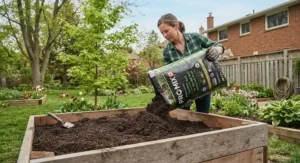
If you’re filling a genuinely deep bed — think 30 cm (12 inches) or more — buying in bulk stops being optional, and PRO-MIX Organic Moisture Mix is one of the more efficient ways to do that without driving to a landscape supply yard. This is a peat-based, organically certified mix engineered by a Canadian horticultural company with decades in commercial greenhouse supply, which shows in the consistency: it’s far more uniform, bag to bag, than a straight topsoil product. The formula includes moisture-retention additives that reduce how often you need to water during a July heatwave, which matters a lot if your raised bed sits somewhere you can’t get to daily. Based on the spec comparison with lighter potting mixes, this one leans heavier and holds water longer, making it a strong pick for thirsty crops like squash, cucumbers, and tomatoes but a riskier choice for drought-tolerant herbs like rosemary or thyme, which prefer things drier. Reviewers who use it for raised vegetable beds frequently mention faster, more even germination compared to native soil, along with a noticeably lighter feel when digging than plain topsoil.
Pros:
- ✅ Large 112L volume covers most beds in one or two bags
- ✅ Organic certification suits chemical-averse growers
- ✅ Strong moisture retention reduces watering frequency
Cons:
- ❌ Can stay too wet for drought-tolerant herbs
- ❌ Higher upfront cost than straight topsoil
At roughly C$50-C$70 per bag depending on retailer, the per-litre value is actually competitive once you account for how much ground one bag covers — a genuine ROI win for anyone filling more than one bed.
3. Miracle-Gro Potting Mix Plus (18L) — best convenient enriched mix for small beds
Miracle-Gro Potting Mix Plus is the mix most people already know by name, and that familiarity is honestly part of its appeal — you know roughly what you’re getting before you open the bag. It’s an all-purpose enriched mix with built-in extended-feed plant food, which the brand states feeds for up to six months, cutting down on how often you need to fertilize separately during the growing season. What most buyers overlook is that this convenience comes at a density cost: it’s formulated more for containers and smaller beds than for filling a large raised bed from scratch, where the cost per litre climbs fast if you’re covering a big volume. Reviewers frequently praise the consistent moisture control and the fact that plants establish quickly, though a recurring theme in aggregated feedback is that gnats can become a nuisance if beds stay consistently damp, a common issue with peat-heavy enriched mixes. For a small 1.2m x 1.2m raised bed or a partial top-up on an established bed, it’s genuinely one of the easiest “just add and plant” options on this list.
Pros:
- ✅ Built-in extended feed reduces fertilizer maintenance
- ✅ Consistent, predictable texture bag to bag
- ✅ Ideal for smaller beds or seasonal top-ups
Cons:
- ❌ Expensive per litre for filling large beds
- ❌ Can attract fungus gnats if overwatered
In the C$25-C$35 range for 18L, it’s best treated as a convenience premium — worth paying for a starter bed or annual refresh, less so for a full multi-bed build.
4. All-Purpose Top Soil (25L Bags) — best bulk-fill for large new beds
For anyone tackling a big build — multiple beds, or one long bed running the length of a fence line — All-Purpose Top Soil in 25L bags is the workhorse option that keeps per-litre cost manageable. This is a blended landscaping topsoil rather than a pure organic mix, positioned for general gardening, lawn repair, and flower beds as much as vegetable growing, so the nutrient profile is more of a blank canvas than a finished product. Here’s what the spec sheet won’t tell you, but experienced growers already know: “all-purpose” topsoil like this is meant to be roughly one component of a three-part blend (soil, compost, aeration material), not the entire bed. Used that way, it’s excellent — the mineral structure gives roots something to anchor into that pure compost can’t provide on its own. Aggregated reviewer sentiment tends to split along expectation lines: buyers who used it as a base layer report strong results, while those expecting a ready-to-plant mix straight from the bag report disappointment with drainage and nutrient content.
Pros:
- ✅ Lowest cost per litre for large-volume fills
- ✅ Solid mineral base anchors root structure
- ✅ Widely stocked, easy to buy in bulk quantities
Cons:
- ❌ Needs compost and amendment before planting
- ❌ Nutrient content is minimal on its own
Typically priced C$10-C$18 per bag, this is the product to lean on when volume matters more than a finished, ready-to-plant formula — pair it with compost and you’ve got an economical base for a large bed.
5. Organic Living Soil Mix (10L) — best for organic herb and green growers
Organic Living Soil Mix takes a different philosophy than the enriched synthetic-feed mixes above: it leans on worm castings, peat, and natural fertilizers rather than manufactured slow-release pellets, aiming for a soil that stays biologically active — meaning the microbial life doing the actual nutrient cycling — rather than one that’s just chemically fed on a timer. That’s a meaningful distinction for organic growers who care as much about how food is grown as what’s in it. Based on the ingredient list, this mix is particularly well-suited to shallow-rooted crops like lettuce, spinach, and herbs, where a smaller volume of rich, living soil does more work than a large volume of neutral filler. Reviewers who use it in raised beds and containers alike report vigorous early growth and note the soil stays loose and workable through the season rather than crusting over, a common complaint with cheaper peat-heavy mixes. The tradeoff is scale: at 10L per bag, filling anything beyond a small or medium bed gets expensive quickly.
Pros:
- ✅ Living, microbially active formula for organic growing
- ✅ Excellent for shallow-rooted herbs and greens
- ✅ Stays loose and workable through the season
Cons:
- ❌ Small bag size makes large beds costly
- ❌ Premium organic ingredients raise the price point
At around C$20-C$30 for 10L, this is best reserved for smaller dedicated herb or salad beds where quality per litre matters more than covering maximum square footage.
6. Perlite & Vermiculite Mix (4L+4L, Made in Canada) — best drainage amendment
Not every product on this list is meant to be a complete soil — Perlite & Vermiculite Mix is a two-in-one amendment, and it might be the single most underrated purchase on this page. Perlite is the lightweight white volcanic material that creates air pockets and drainage channels in dense soil; vermiculite does the opposite job, holding onto moisture and nutrients so they don’t wash straight through. Blending both into a topsoil-and-compost base solves the two most common raised-bed soil complaints at once: waterlogging in spring and drying out too fast in August. What most buyers overlook is that this isn’t a fertilizer or a nutrient source at all — it’s structural, and skipping it is often the actual root cause behind “my soil turned to concrete” complaints that people otherwise blame on the topsoil itself. Being made in Canada also means the vermiculite is more likely to meet Canadian sourcing and safety standards, which matters given the asbestos-contamination concerns that affected some vermiculite products globally in past decades.
Pros:
- ✅ Fixes both drainage and moisture retention at once
- ✅ Small quantity treats a large volume of base soil
- ✅ Canadian-made sourcing adds a safety reassurance
Cons:
- ❌ Not a standalone soil — must be blended in
- ❌ Vermiculite can compress over multiple seasons
At under C$25 for the combined 8L, this is one of the best value-for-impact purchases on this list — a small addition that measurably changes how your whole bed performs.
7. Elemental Essentials Granular Dolomite Lime — best pH-correcting amendment
Rounding out the list is a product most raised-bed gardeners don’t think about until something goes wrong: Elemental Essentials Granular Dolomite Lime. This is a soil amendment, not a soil, delivering calcium and magnesium while gently raising pH in soils that have drifted acidic — a common issue in regions with a lot of peat-based mix or heavy rainfall, both of which push pH downward over time. The practical impact of this is bigger than it sounds: many “my plants won’t grow” problems in raised beds trace back to a pH that’s locked nutrients out of reach for roots rather than an actual nutrient deficiency, and lime is often the cheapest fix available. Reviewers using it in vegetable beds report noticeably better growth in crops like brassicas and asparagus, which are particularly pH-sensitive, after a single application worked into the top few centimetres of soil. The honest caveat here is that lime isn’t a universal fix — applying it without testing your soil pH first can push things too far alkaline, which creates its own set of nutrient-lockout problems.
Pros:
- ✅ Corrects acidic soil common in peat-heavy mixes
- ✅ Adds calcium and magnesium for stronger plants
- ✅ Inexpensive relative to the problems it prevents
Cons:
- ❌ Overapplication risks pushing pH too alkaline
- ❌ Best used only after testing soil pH first
Priced under C$15 for a 1.36 kg container, this is a low-cost insurance policy — but check current price and pair it with an actual pH test rather than applying it blindly.
💬 Found a mix that fits your bed size? Save this comparison and share it with a fellow gardener planning their own build!
Getting Bed Depth Right Before You Buy Soil
Soil volume math starts with depth, and getting this wrong is the most expensive mistake on this whole list — buy too little soil for a shallow bed and roots stay stunted; buy a deep bed’s worth of soil for a shallow frame and you’ve wasted a meaningful amount of money. Multiple horticultural sources converge on similar depth ranges depending on what you’re growing. General guidance suggests most vegetables need a minimum of about 20 cm (8 inches) of soil depth, with 20-30 cm (8-12 inches) suiting most gardening situations, while deep-rooted crops like carrots, parsnips, and potatoes benefit from 30-45 cm (12-18 inches) or more.
Local growing conditions shift this math further. Toronto-area landscaping specialists note that for most vegetables, a depth of 30-45 cm (12-18 inches) is the sweet spot, but recommend going as deep as 60 cm (24 inches) when building over concrete or very hard-packed clay to accommodate deep-root crops — a scenario that’s genuinely common in Canadian cities where backyards sit over dense, poorly draining clay subsoil. And for the more space-conscious layouts common in urban gardens, Toronto Master Gardeners’ guide to growing urban vegetables recommends raised beds be no more than 1.3 metres wide if accessible from both sides, which keeps the whole bed reachable without ever stepping on — and compacting — the growing soil.
Here’s the practical takeaway: measure your bed’s actual depth before ordering soil, calculate volume in cubic metres or cubic feet (length × width × depth), and add roughly 10% extra to account for settling over the first season, since fresh soil mix compresses noticeably after its first few waterings.
Building the Right Soil Recipe: Ratios That Actually Work
A workable general-purpose raised bed recipe leans on roughly equal thirds: topsoil for mineral structure, compost for nutrients and biological activity, and a coarser aeration component for drainage. General horticultural guidance recommends mixing 25-50% compost into a balanced loam base, since healthy soil is alive with worms, fungi, and beneficial bacteria that break down organic matter and feed plants — a range wide enough to adjust for what you’re growing (skew toward the higher compost percentage for heavy feeders like tomatoes and squash, lower for root vegetables that prefer looser, less rich soil). Ontario’s provincial soil fertility handbook goes deeper into the science behind organic matter and nutrient management if you want to nerd out on the details.
One product worth naming here specifically: Canadian sphagnum peat moss, which is almost entirely natural peat, helps break up compacted soils, aerate roots, and improve drainage when blended into a topsoil-heavy mix, making it a solid supplementary purchase if your base topsoil (like the Schultz Black Earth Topsoil or All-Purpose Top Soil covered above) is running dense.
A commonly used ratio structure looks like this once you translate it to a shopping list:
- 40-50% topsoil or triple mix — your mineral backbone (e.g., All-Purpose Top Soil or Schultz Black Earth Topsoil).
- 25-30% compost — nutrient and biological driver; not covered as a standalone product here since it’s best sourced locally or made at home, but it’s non-negotiable in the recipe.
- 15-20% aeration material — perlite, vermiculite, or coarse sand (this is where Perlite & Vermiculite Mix does its job).
- A small pH-correction step as needed — tested, not assumed, using something like Elemental Essentials Dolomite Lime.
Benefits vs. Traditional Alternatives
| Approach | Drainage | Nutrient Control | Upfront Cost | Long-Term Effort |
|---|---|---|---|---|
| Raised bed with blended mix | Excellent | High (you control every input) | Moderate-High | Low after year one |
| Native in-ground garden | Depends on soil type | Low-Moderate | Low | High (ongoing amendment) |
| Straight bagged topsoil, no blend | Poor (compacts) | Low | Low | High (frequent replacement) |
| Container gardening | Very good | High | Low-Moderate | Moderate (frequent watering) |
Looking at the table, the clearest tradeoff is between upfront cost and long-term labour: native in-ground gardening costs the least to start but demands the most ongoing intervention, especially in regions with heavy clay, while a properly blended raised bed costs more on day one but essentially runs itself for several seasons. Straight bagged topsoil sits in a bit of a trap — it looks like the cheap option, but the compaction and drainage problems it creates typically mean re-buying or heavily amending it within a year, which erases most of the initial savings.
✨ Don’t Miss These Exclusive Deals!
🔍 Take your raised bed to the next level with a soil combo that actually performs. Click through to check current pricing and availability on the mixes above — your future harvest will thank you.
Practical Setup Guide: Filling and Prepping a New Raised Bed
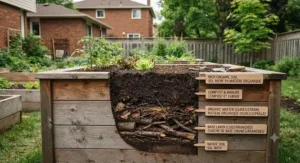
Filling a raised bed correctly the first time saves you from redoing it — a genuinely common regret among first-year gardeners who rush this step. Start by lining the bottom of the bed only if you’re on a hard surface like concrete or a patio; over grass or native soil, skip the liner entirely, since roots benefit from being able to reach down into the ground below. If you dug up sod to make the bed, flip the pieces upside-down at the base instead of throwing them away — it decomposes into free organic matter over the season.
Layer your components rather than dumping everything in at once: coarser material like twigs or partially broken-down organic matter at the very bottom (a passive version of hügelkultur), your soil-compost-amendment blend on top, filled to within about 5 cm (2 inches) of the bed’s rim to leave room for mulch and watering without overflow. Water the whole bed thoroughly before planting — not just to moisten it, but to reveal how it settles, since fresh mix commonly drops by 5-10% in volume after its first deep soak. Top up with a bit more soil if needed before you plant anything.
The most common first-30-days mistake is planting immediately into freshly mixed, un-watered soil, which leads to air pockets around root balls and inconsistent moisture that stresses new transplants. Give the bed at least one full watering cycle and 24-48 hours to settle before putting anything in the ground.
Real-World Scenarios: Matching Soil to Your Situation
The condo-balcony herb grower: A small 60cm x 90cm raised planter, part-sun exposure, watering every other day. This profile is well served by Organic Living Soil Mix, since the smaller bag size isn’t a drawback at this scale, and the living, microbially rich formula suits shallow-rooted herbs perfectly without the waste of buying a bulk bag that’s mostly unused.
The suburban family with a 4×8-foot vegetable bed: Deep soil needs (30cm+), moderate budget, growing tomatoes, peppers, and squash for a family of four. This calls for a blended approach — All-Purpose Top Soil as the bulk base, layered with compost and finished with Perlite & Vermiculite Mix for drainage insurance, since this bed size needs volume more than it needs a premium single-bag solution.
The GTA gardener building over clay or concrete: Poor native drainage, needs a deeper bed (45cm+) and heavier reliance on bagged mix since native soil can’t be relied on to buffer moisture. PRO-MIX Organic Moisture Mix in bulk 112L bags makes the most economic sense here, since the volume needed makes per-bag efficiency the priority, and the moisture-retention formula compensates for the fast-draining nature of a fully bagged-soil bed.
How to Choose Garden Soil for Raised Beds
- Measure your bed’s volume first. Depth × width × length tells you exactly how much soil to budget for — guessing leads to either wasted money or a mid-project trip back to the store.
- Decide your compost source before buying bagged soil. If you’re making your own compost, buy less pre-blended mix and more straight topsoil; if not, factor bagged compost or an enriched mix into your budget.
- Match moisture retention to your watering habits. If you can’t water daily, lean toward moisture-retentive mixes like PRO-MIX Organic Moisture Mix; if you’re around often, lighter mixes work fine.
- Prioritize drainage amendments over “complete” bagged soil for large beds. A bag of Perlite & Vermiculite Mix stretched across a large volume of cheaper topsoil often outperforms an all-in-one premium bag at the same price.
- Test pH before adding lime or sulfur. Don’t guess — a basic soil pH test kit costs less than a bag of amendment and prevents overcorrection.
- Account for settling. Buy roughly 10% more soil volume than your bare bed measurement suggests.
- Factor in your climate zone. Colder regions with shorter growing seasons benefit from darker, heat-retentive topsoil blends; warmer, drier regions lean more toward moisture-retentive mixes.
Common Mistakes When Buying Soil for Raised Beds
The single biggest mistake is treating “garden soil” and “topsoil” as interchangeable with “raised bed soil” — they’re related but not the same product, and using straight topsoil alone leads to compaction almost every time. A close second is underestimating volume needs and running out mid-fill, which often results in mismatched soil layers that don’t blend evenly. Toronto Master Gardeners specifically warn against using garden soil, top soil, or triple mix in containers, noting these products will be too compacted, and recommend a soilless mix with at least 30% compost, peat moss or an alternative, and some sand, vermiculite, or perlite instead — advice that scales down well to smaller raised planters and pots even outside strict container gardening.
Another frequent misstep: skipping a pH test and applying lime or sulfur based on guesswork, which can push soil in the wrong direction entirely. And finally, many first-time builders forget that fresh soil mix settles significantly after its first deep watering, leaving beds looking underfilled within days of planting — buy a little extra rather than filling to the exact brim on day one.
Garden Soil vs. Potting Soil vs. Topsoil: What’s the Real Difference?
These three terms get used almost interchangeably in casual conversation, but they’re formulated for genuinely different jobs. Topsoil is the mineral-heavy upper layer of native or blended earth — it has structure but often minimal nutrients on its own. Potting soil (or “potting mix”) is typically soilless or nearly so, built from peat, coir, perlite, and compost specifically to stay light and well-drained in an enclosed container where roots can’t spread beyond the pot’s walls. Garden soil sits in between: usually topsoil blended with some organic matter, meant to be worked into existing ground or used as one component of a larger raised-bed recipe rather than as a complete standalone growing medium.
For raised beds specifically, the ideal approach borrows from all three: the mineral backbone of topsoil, the aeration properties of potting mix ingredients, and the nutrient density gardeners associate with “garden soil,” blended together rather than relying on any single bagged product labelled with just one of these names.
What to Expect: Real-World Performance Through a Growing Season
Specs on a bag only tell part of the story — here’s how these differences actually show up once plants are in the ground. A well-blended bed with good drainage warms up faster in spring than native ground soil, often letting Canadian gardeners get seedlings in the ground a week or two earlier than an in-ground bed in the same yard. Through the height of summer, a bed with adequate compost and moisture-retentive components needs less frequent watering than one filled with straight topsoil, which tends to either crust over (shedding water rather than absorbing it) or dry out unevenly.
By late summer, nutrient depletion becomes the dominant factor — even a well-built bed’s compost component gets consumed by heavy feeders like tomatoes and squash over a full season, which is why a mid-season top-up of compost or a balanced organic fertilizer often makes a visible difference in late-season yield. Going into fall, beds with good drainage handle the season’s heavier rainfall without waterlogging root systems, while poorly amended beds are far more prone to the yellowing leaves and stunted growth associated with soggy, oxygen-starved roots.
Long-Term Cost & Maintenance: What Raised Bed Soil Really Costs Over Time
The upfront cost of filling a raised bed is real, but it’s a one-time (or near-one-time) expense rather than a recurring one, which changes the math compared to what it might look like on a single receipt. A 4×8-foot bed at 30cm depth needs roughly 1 cubic metre of soil — filled with a mix of the products above, that’s a meaningful but not enormous investment, typically landing somewhere in the low hundreds of dollars in the C$150-C$300 range depending on which mixes you choose and how much you supplement with homemade compost.
After that initial fill, ongoing costs drop sharply: an annual top-up of compost (often free or low-cost if you compost at home), occasional pH correction with something like Elemental Essentials Dolomite Lime, and periodic replenishment of aeration material as organic components break down over multiple seasons. Compare that to the ongoing cost of amending poor native soil year after year — repeated tilling, repeated compost additions with no lasting structural improvement, and often lower yields throughout — and the raised bed’s higher day-one cost tends to pay for itself within two to three growing seasons for anyone gardening seriously rather than casually.
Features That Actually Matter (And Those That Don’t)
Marketing copy on soil bags loves to lean on terms like “premium,” “enriched,” and “professional-grade,” which sound meaningful but tell you almost nothing concrete. What actually matters: the compost-to-mineral ratio (even if it’s not printed exactly, ingredient order on the label gives you a rough sense), whether aeration material like perlite or vermiculite is included, and whether the product is explicitly formulated for raised beds versus general landscaping. What matters less than the marketing suggests: fancy packaging, added “myco-tone” or biological boosters (nice-to-haves, not essential, since healthy compost already carries beneficial organisms), and brand name recognition on its own, since several lesser-known Canadian suppliers produce genuinely comparable quality to bigger national brands at a lower price point.
Safety, Regulations & Soil Sourcing in Canada
Soil quality and sourcing aren’t purely a performance question in Canada — they intersect with a few practical safety considerations worth knowing before you fill a bed, especially in urban areas. Older urban lots, particularly in cities with a long industrial history, can carry legacy soil contamination such as lead, which is part of why raised beds filled with clean, sourced-in soil have become such a popular way to grow food safely over compromised urban ground rather than digging directly into it. Public Health Sudbury & Districts’ guidance on lead in soil and home gardening lays out exactly this strategy — building raised beds filled with clean, tested soil — as one of the most effective ways Canadian gardeners can sidestep contaminated native ground entirely. If you’re building a raised bed specifically because of concerns about your yard’s native soil history, bagged or bulk-delivered soil from a known, reputable source is generally the safer starting point over digging into unknown ground.
On the amendment side, it’s worth knowing that vermiculite products have occasionally been the subject of asbestos-contamination concerns tied to specific historical mining sources, which is part of why sourcing — like the Canadian-made Perlite & Vermiculite Mix covered above — is worth paying attention to rather than treating all amendment bags as interchangeable commodities. None of this should discourage anyone from building a raised bed; if anything, it’s one of the strongest arguments in favour of raised beds over in-ground gardening in older urban neighbourhoods.
Problem → Solution: Fixing Common Raised Bed Soil Issues
Problem: Water pools on the surface instead of soaking in. This usually points to compacted or clay-heavy soil with insufficient aeration material. Solution: work Perlite & Vermiculite Mix into the top 15-20 cm of soil, and check that your bed frame actually has adequate gaps or drainage at the base rather than sitting on an impermeable surface.
Problem: Soil dries out within a day of watering. Likely too much sand or perlite relative to compost, or a bed that’s shallower than your crops need. Solution: increase the compost percentage and consider a moisture-retentive mix like PRO-MIX Organic Moisture Mix for at least part of the blend.
Problem: Plants are stunted despite regular watering and feeding. Often a pH issue locking out nutrients rather than an actual deficiency. Solution: test soil pH before adding anything else, and correct gradually with Elemental Essentials Dolomite Lime if the soil has drifted acidic.
Problem: Soil level has dropped noticeably by midsummer. Normal settling plus organic matter breakdown. Solution: top up with a thin layer of compost or Schultz Black Earth Topsoil rather than replacing the whole bed’s contents.
Problem: Fungus gnats or a persistent damp smell. Usually overwatering combined with a peat-heavy mix that isn’t draining fast enough. Solution: let the top few centimetres dry out between waterings, and consider blending in more aeration material for next season.
Buyer’s Decision Framework
If you’re filling a brand-new large bed on a budget, choose a topsoil-and-compost blend built from All-Purpose Top Soil or Schultz Black Earth Topsoil, because bulk cost efficiency matters more than a premium single-bag formula at that scale. If you’re topping up an established small bed or container, choose Miracle-Gro Potting Mix Plus or Organic Living Soil Mix, because convenience and smaller bag sizing outweigh bulk savings for a quick refresh. If your bed sits over clay, concrete, or generally poor-draining ground, prioritize Perlite & Vermiculite Mix alongside whatever base soil you choose, because drainage is your limiting factor regardless of nutrient content. If you’re growing organically and prioritize soil biology over convenience, lean toward Organic Living Soil Mix and skip synthetic slow-release feeds entirely.
Frequently Asked Questions
❓ What is the best soil mix for a raised garden bed?
❓ How much soil for raised garden beds do I need for a 4x8 bed?
❓ Can I use topsoil for vegetable beds on its own?
❓ What bed depth do vegetables actually need?
❓ How do I fix drainage in an existing raised bed?
Conclusion
Getting garden soil for raised beds right comes down to treating it as a recipe, not a single purchase — a blend of structure, nutrients, and drainage rather than one magic bag that does everything. Whether you lean toward the budget efficiency of All-Purpose Top Soil and Schultz Black Earth Topsoil, the convenience of Miracle-Gro Potting Mix Plus, or the deeper investment of PRO-MIX Organic Moisture Mix for a large bed, the underlying principles stay the same: measure your bed depth honestly, budget for compost and aeration amendments like Perlite & Vermiculite Mix, and test before you correct pH with something like Elemental Essentials Dolomite Lime rather than guessing.
None of this needs to be complicated, and it definitely doesn’t need to be expensive to get right. A thoughtfully blended bed built this season should keep performing well for several years with only modest annual top-ups — which, compared to the ongoing headache of fighting compacted native clay every spring, makes the raised bed approach one of the better investments a Canadian gardener can make in their own backyard.
✨ Ready to build your best growing season yet? Compare current pricing on the soil mixes and amendments above and get your bed filled before the next planting window closes! 🌱
Recommended for You
- Organic Potting Mix vs Regular Potting Soil: 7 Picks for 2026
- Potting Soil for Vegetable Garden: 7 Top Picks for 2026
- Potting Soil for Indoor Plants: 7 Top Picks for 2026
Disclaimer: This article contains affiliate links. As an Amazon Associate, I earn from qualifying purchases. If you purchase products through these links, we may earn a small commission at no additional cost to you.
✨ Found this helpful? Share it with your friends! 💬🤗
