
In This Article
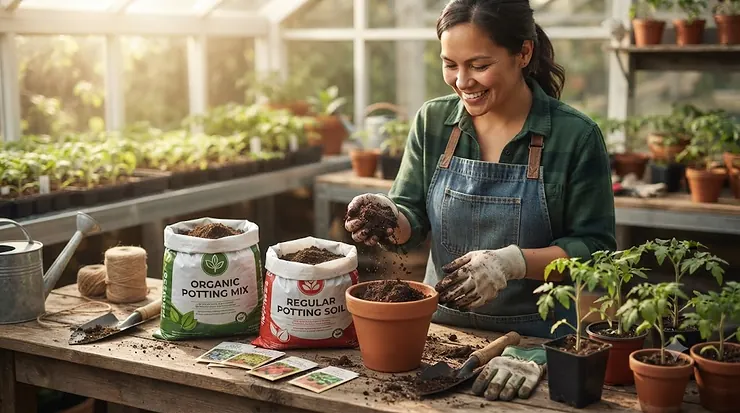
Stand in the soil aisle of any Canadian garden centre in spring and you’ll see it: two walls of bags, one labelled “organic,” the other just… soil. They look almost identical. They cost roughly the same. And yet gardeners argue about the difference like it’s a religious matter. So let’s settle it properly. The organic potting mix vs regular potting soil debate isn’t really about which bag is “better” in some abstract sense — it’s about what’s actually inside, how your plants access nutrients, and what you’re willing to trade off for convenience or peace of mind.
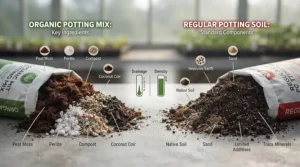
Here’s what most buyers overlook: the word “soil” on a bag of potting soil is a bit of a con. Almost nothing sold as potting soil or potting mix in Canada actually contains dirt from a field. It’s a manufactured blend of peat moss, coir, bark, and perlite, fortified with either synthetic fertilizer salts or organic-approved inputs like feather meal and kelp. That distinction — synthetic versus organic-approved feeding — is the entire ballgame, and it changes everything from how often you water to how your tomatoes taste in August.
This guide walks through seven real, currently available products spanning budget to premium, breaks down what “OMRI certification” actually verifies, and gives you a decision framework so you’re not standing in the aisle Googling on your phone. We’ll also get into soil pH, why synthetic fertilizers aren’t automatically villains, and where chemical-free soil for gardening genuinely pulls ahead. According to the Canadian Wildlife Federation’s reporting on peat bog restoration, even the “regular” peat-based bags carry more environmental nuance than either side of this debate usually admits.
Quick Comparison Table
| Product | Type | Price Range (CAD) | Best For |
|---|---|---|---|
| Pro-Mix Premium Potting Mix | Conventional (slow-release synthetic) | C$25-C$35 | Budget mixed containers |
| Pro-Mix Organic Vegetable & Herb Mix | OMRI-listed organic | C$18-C$25 | Canadian-grown edibles |
| FoxFarm Ocean Forest | Natural, heavily fed | C$45-C$60 | Heavy-feeding premium plants |
| Espoma Organic Potting Mix | OMRI-listed organic | C$20-C$30 | Beginners, houseplants |
| Miracle-Gro Organic Choice | OMRI-listed organic | C$15-C$22 | Budget-conscious organic buyers |
| Miracle-Gro Moisture Control | Conventional (synthetic) | C$12-C$18 | Forgetful waterers |
| Black Gold Natural & Organic | OMRI-listed organic | C$20-C$28 | All-purpose vegetable containers |
Look at that spread for a second. Notice that the cheapest bag on the list (Miracle-Gro Moisture Control) and one of the priciest (FoxFarm Ocean Forest) sit at opposite philosophical poles, while three of the seven land in OMRI-listed organic territory at nearly the same price as their conventional cousins. That tells you something important right off the bat: going organic doesn’t automatically mean paying double. It usually means accepting a slower, gentler feeding schedule in exchange for skipping synthetic fertilizer salts — a trade some gardeners will pay a premium for and others won’t think twice about.
💬 Just one click — help others make better buying decisions too!😊
Top 7 Organic Potting Mix and Regular Potting Soil Picks: Expert Analysis
1. Pro-Mix Premium Potting Mix — best budget-friendly all-rounder for mixed containers
Made by Premier Tech, a Quebec-based company that’s been formulating growing media since 1968, this is the bag most Canadian gardeners already have in their shed without thinking twice about it. The MYCOACTIVE technology blends mycorrhizal fungi into a peat-based mix, which in practice means roots form symbiotic partnerships that extend their effective reach into the soil — you get better water and nutrient uptake without doing anything extra. The included slow-release fertilizer feeds for up to nine months, which is genuinely impressive for a mix at this price point, though that fertilizer is synthetic rather than organic-approved.
Who should reach for this one? Honestly, most casual container gardeners — hanging baskets, patio tomatoes, annual flower pots — because the mycorrhizae technology does real work regardless of your organic preferences. What most buyers overlook is that Premier Tech’s peat is harvested under Veriflora sustainability certification, so even the “regular” option here isn’t a free-for-all on peatland extraction. Reviewers across Canadian garden centres consistently mention strong first-season growth and note that the coir-based moisture cell (a Canada-only formulation) reduces watering frequency compared to older peat-only recipes.
Pros:
- ✅ Nine-month slow-release feeding cuts down fertilizing chores
- ✅ Mycorrhizae boosts root development in almost any container
- ✅ Widely available at Canadian retailers like Home Depot Canada
Cons:
- ❌ Contains synthetic fertilizer, not suited to certified organic growing
- ❌ Bags vary in peat-to-perlite ratio between production runs
Priced in the C$25-C$35 range for a large bag, this is solid value if organic certification isn’t your priority — check current price before buying, as garden centre pricing shifts seasonally.
2. Pro-Mix Organic Vegetable & Herb Mix — best Canadian-made organic pick for edibles
This is Premier Tech’s answer to the organic crowd, and it’s worth knowing it exists because most “organic” shelf space in Canada is dominated by American imports. Formulated with 100% natural ingredients and an organic fertilizer that feeds gradually rather than in one synthetic burst, it’s purpose-built for vegetable and herb containers rather than general ornamental use. The gradual feed matters more than it sounds — a fast synthetic hit can push leafy growth at the expense of fruit set in tomatoes and peppers, while organic-approved inputs like feather meal release more slowly as soil microbes break them down.
Based on the ingredient list, this mix leans on the same peat-and-perlite structure as its conventional sibling but swaps the fertilizer package for organic-approved amendments. That makes it a strong match for anyone growing food they actually plan to eat without wondering what’s leaching into it. Aggregated feedback from Canadian hardware store listings suggests gardeners like the consistency for tomatoes and peppers specifically, though a few note it can dry out faster than heavier conventional mixes in full summer sun.
Pros:
- ✅ Genuinely Canadian-formulated, not a rebranded import
- ✅ Gradual organic feed suits fruiting vegetables well
- ✅ Backed by Premier Tech’s decades of substrate research
Cons:
- ❌ Smaller bag sizes mean more trips for big container gardens
- ❌ Dries faster than heavier peat blends in hot weather
At around C$18-C$25 depending on bag size, it’s one of the more affordable certified-adjacent organic options on this list — a smart choice if certified organic potting mix matters to your growing philosophy but you don’t want premium pricing.
3. FoxFarm Ocean Forest — best premium pick for heavy-feeding plants
If potting mixes had a cult following, this would be it. FoxFarm built its reputation on Ocean Forest’s ingredient list alone: earthworm castings, bat guano, sea-going fish and crab meal, composted forest humus. It reads like a chowder recipe, and that’s sort of the point — it’s an aggressively fed mix meant for plants that eat like teenagers. The pH is factory-adjusted to 6.3-6.8, which matters because most nutrients (nitrogen, phosphorus, potassium especially) become locked out of reach for roots outside that slightly acidic window.
Here’s what the spec sheet won’t tell you, but growers consistently report: Ocean Forest runs “hot” for very young seedlings, meaning the nutrient concentration can actually stress delicate new roots before they’re established. Wait a couple of weeks after germination, or step seedlings up from a lighter starter mix first. For anything past the seedling stage — tomatoes, peppers, tropical houseplants, anything you want growing fast — reviewers repeatedly cite visibly faster growth compared to lighter organic blends, alongside a strong, earthy smell some people love and others find overwhelming indoors.
Pros:
- ✅ Extremely nutrient-dense for fast, vigorous growth
- ✅ Factory pH-adjusted for optimal nutrient uptake
- ✅ Cult-favourite reputation backed by consistent grower feedback
Cons:
- ❌ Too “hot” for very young seedlings without dilution
- ❌ Premium pricing compared to other organic options here
Expect to pay in the C$45-C$60 range given import costs into Canada — steep, but reviewers largely say the growth results justify it for serious container growers.
4. Espoma Organic Potting Mix — best mycorrhizae-boosted starter for beginners
Espoma has been making organic garden products since 1929, which is longer than most of us have been gardening, arguing, or even alive. Their potting mix is OMRI Listed and built from 35-45% sphagnum peat moss blended with regionally sourced aged forest products, humus, composted rice hulls, perlite, and limestone (the limestone’s job is buffering pH, not feeding anything). Like the Pro-Mix line, it includes Myco-tone, a proprietary blend of endo and ecto mycorrhizae, which — again — means better root-to-soil contact and improved drought resilience.
What most buyers overlook about Espoma specifically is the brand’s multi-generational track record; that’s E-E-A-T in potting soil form, not marketing fluff. Based on the spec comparison with Pro-Mix Organic, Espoma sits slightly heavier and holds moisture a touch longer, which analysts and reviewers alike suggest makes it more forgiving for first-time container gardeners who occasionally forget to water. A common theme in aggregated customer feedback is that the smaller bag sizes make the per-litre cost less competitive than buying in bulk, but the consistency between bags is frequently praised.
Pros:
- ✅ OMRI Listed with a long-standing organic brand pedigree
- ✅ Mycorrhizal blend supports strong early root systems
- ✅ Forgiving moisture retention for beginner gardeners
Cons:
- ❌ Smaller bags mean higher cost per litre than bulk options
- ❌ Contains peat moss, so not a peat-free choice
Priced around C$20-C$30, it lands in comfortable mid-range territory — a sensible entry point if you’re testing organic potting mix vs regular potting soil for the first time and want a trusted name.
5. Miracle-Gro Organic Choice Potting Mix — best budget OMRI Listed organic option
Scotts Miracle-Gro is the brand most associated with synthetic lawn and garden chemicals, which makes their organic line a genuinely interesting case study. Miracle-Gro’s Organic Choice and Organic Indoor Potting Mix lines are OMRI Listed, built from responsibly sourced sphagnum peat moss, coir, and a “quick-start natural fertilizer” rather than the synthetic feed found in their flagship Moisture Control line. It’s proof that certified organic potting mix doesn’t require a boutique brand or an inflated price tag.
Based on the ingredient breakdown, the natural fertilizer here releases faster than the feather-meal-and-kelp blends used by Espoma or Pro-Mix Organic, which reviewers note translates to quicker visible feeding but a shorter effective window — expect to supplement sooner than with slower-release organic competitors. For budget-focused gardeners who still want the OMRI certification checkbox ticked, this is arguably the most accessible entry point on Canadian shelves, often shelved right beside the company’s conventional bags for an easy side-by-side comparison.
Pros:
- ✅ OMRI Listed at genuinely budget-friendly pricing
- ✅ Widely stocked, easy to find in most garden centres
- ✅ Quick-start natural fertilizer shows early results
Cons:
- ❌ Faster-release feed means shorter window before refeeding
- ❌ Formulation quality reported as less consistent bag-to-bag
At roughly C$15-C$22, this is the least expensive genuinely organic option on the list — a strong pick if chemical-free soil for gardening matters to you but premium pricing doesn’t fit the budget.
6. Miracle-Gro Moisture Control Potting Mix — best for plants owned by forgetful waterers
This is the “regular potting soil” half of our comparison, and it’s worth including precisely because it’s what most Canadians already have in their garage. It’s built around AquaCoir, a coconut coir-based technology engineered to absorb roughly a third more water than basic potting soil, cutting the risk of both over- and under-watering. The fertilizer package is synthetic, feeding for up to six months, and the mix skews slightly acidic (pH 6.3-6.8) — the same target range most organic mixes aim for, incidentally, because plant biology doesn’t care whether the nitrogen came from a factory or a fish.
Here’s the honest analytical take: synthetic fertilizers aren’t inherently harmful to plants — nitrogen is nitrogen at the molecular level regardless of source — but they do bypass the slow, microbe-fed nutrient cycling that organic inputs encourage, and they can build up as mineral salts in containers over repeated feedings if you’re not flushing occasionally. Reviewers overwhelmingly praise the moisture retention for vacation-prone or inconsistent waterers, with a recurring complaint being that the coir can look deceptively dry on the surface while still holding water deeper down, tempting people to overwater on top of it.
Pros:
- ✅ Excellent moisture buffering for inconsistent watering habits
- ✅ Six months of synthetic feeding built in
- ✅ Cheapest option on this list by a comfortable margin
Cons:
- ❌ Synthetic fertilizer disqualifies it from organic growing
- ❌ Surface can look dry while still holding excess moisture below
Typically found in the C$12-C$18 range, it’s the budget workhorse of the bunch — genuinely useful, just not the pick if certified organic status matters to your garden.
7. Black Gold Natural & Organic Potting Soil — best all-purpose organic pick for vegetable containers
Black Gold, a Pacific Northwest brand with strong distribution into Western Canada, built its potting soil specifically with vegetable container growing in mind. The formula leans on high humus content alongside earthworm castings and other organic-approved amendments, aiming for a texture that resists compaction better than lighter peat-only blends — compaction being the silent killer of container roots, since compacted soil squeezes out the oxygen roots need almost as much as water.
What most buyers overlook here is how well this mix bridges the gap between FoxFarm’s aggressive feeding and Espoma’s gentler approach — it’s the “goldilocks” option, appropriately enough. Based on the spec comparison, its humus content suggests better long-term structure retention across a growing season than lighter mixes, meaning less mid-summer compaction and fewer repotting emergencies. Aggregated reviews consistently describe strong results for tomatoes, peppers, and squash specifically, with a recurring note that it performs best topped up with extra perlite in very large containers.
Pros:
- ✅ Compaction-resistant texture holds structure all season
- ✅ OMRI-listed with vegetable-specific formulation
- ✅ Strong reputation across Western Canadian retailers
Cons:
- ❌ Benefits from added perlite in large containers
- ❌ Regional availability weaker in some Eastern Canadian markets
Priced around C$20-C$28, it’s a genuinely well-rounded organic pick — check current price and regional stock before making the trip.
Practical Usage Guide: Getting the First 30 Days Right
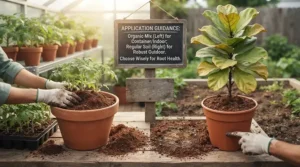
Whichever bag you land on, the first month in a new pot is where most container failures happen — and it’s almost never the mix’s fault. Start by moistening the mix before planting; both peat and coir resist water when bone dry, and you’ll waste water pooling on top of a hydrophobic surface otherwise. Water thoroughly at planting, then let the top few centimetres dry between waterings — sticking a finger in is still the most reliable soil pH-adjacent moisture test ever invented, and it costs nothing.
For organic mixes with slow-release organic fertilizer, resist the urge to add more feed in the first few weeks; microbial activity needs time to ramp up, and impatience here just means wasted product. For synthetic mixes like Moisture Control, watch for a white mineral crust on the surface after a few weeks — that’s fertilizer salt buildup, and flushing the container with plain water occasionally prevents root burn. Common first-month mistakes include potting into a container with no drainage holes (a death sentence regardless of mix quality), packing the mix down too firmly, which squeezes out the air pockets roots need, and placing sun-loving plants in a mix that’s still too wet from over-eager watering. Set a two-week reminder to check for roots peeking through drainage holes — your cue that it’s time to think about repotting or feeding.
Real-World Scenarios: Matching the Mix to the Gardener
Consider three fairly different Canadian gardeners. First, the balcony herb grower in a Toronto condo, growing basil and mint in 20cm pots with zero outdoor space and modest sunlight — Espoma Organic Potting Mix suits this scenario well, since its forgiving moisture retention tolerates inconsistent watering schedules and its mild organic feed won’t overwhelm small, slow-growing herbs. Second, the backyard vegetable enthusiast in Alberta with raised containers of tomatoes and peppers on a tight budget who still wants OMRI certification — Miracle-Gro Organic Choice or Pro-Mix Organic Vegetable & Herb Mix both fit, depending on whether Canadian manufacturing or shelf availability matters more to them.
Third, the serious hobbyist in coastal British Columbia growing tropical houseplants and heavy-feeding annuals who wants maximum growth and isn’t watching every dollar — FoxFarm Ocean Forest is the obvious match, given its nutrient density and the grower’s apparent tolerance for premium pricing. None of these are universal truths, of course; a gardener’s frequency of use, container size, and patience for feeding schedules all shift the calculus. But mapping mix to lifestyle like this beats picking whatever bag is closest to the store entrance.
Problem → Solution: Fixing Common Potting Mix Headaches
Fungus gnats swarming your houseplants? They breed in consistently damp surface soil — let the top layer dry out more aggressively between waterings, and consider a mix with more bark or perlite for faster surface drying. Yellowing leaves despite regular watering? That’s often a pH lockout issue rather than a feeding problem; if your mix has drifted outside the 6.0-6.8 range most plants prefer, a fresh repot with pH-adjusted mix like FoxFarm Ocean Forest solves it faster than adding more fertilizer ever will.
White crust forming on the soil surface or pot rim? That’s mineral salt buildup from synthetic fertilizer, common with mixes like Miracle-Gro Moisture Control — flush thoroughly with plain water until it runs clear from the drainage holes. Mix compacting into a dense brick by midsummer? That’s usually a peat-heavy formula breaking down faster than expected; Black Gold Natural & Organic resists this better, or you can mix in extra perlite to any bag. Slow or stalled growth in an organic mix after two months? That’s simply the nature of gradual organic feeding running its course — it’s not a defect, just a cue to top-dress with compost or a liquid organic feed rather than switching mixes entirely.
How to Choose Organic Potting Mix vs Regular Potting Soil
Making this decision doesn’t need to be complicated. Work through these seven criteria in order, and the right bag usually becomes obvious by step four or five.
- Decide what you’re growing. Edibles you’ll eat raw (herbs, lettuce, strawberries) lean organic; purely ornamental annuals care less about fertilizer source.
- Check for OMRI certification if organic matters to you. Not every “natural” claim is verified — look for the actual seal, not just the word “organic” on the front.
- Match feeding style to your patience. Synthetic mixes feed fast and predictably; organic mixes feed slower but build longer-term soil biology.
- Consider your watering habits honestly. Forgetful waterers benefit more from moisture-control formulas than from any organic-versus-synthetic distinction.
- Factor in container size. Larger containers benefit from denser, compaction-resistant mixes like Black Gold; small pots do fine with lighter blends.
- Weigh cost per litre, not just sticker price. A pricier bag that covers more containers can beat a cheap bag you need three of.
- Check regional availability before falling in love with a specific brand. Some products, like FoxFarm, ship less consistently to Eastern Canada than Western.
Organic Potting Mix vs Regular Potting Soil: What Actually Separates Them
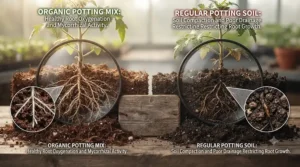
Organic potting mix vs regular potting soil, in a strict 50-word sense: organic potting mix uses OMRI-approved, non-synthetic inputs like compost, kelp, and feather meal to feed plants gradually through microbial breakdown, while regular potting soil typically relies on synthetic, fast-release fertilizer salts. Both usually share the same base structure of peat, coir, bark, and perlite — the difference lives entirely in the feeding ingredients.
That base-structure similarity is the part that trips people up. Pro-Mix Premium and Pro-Mix Organic Vegetable & Herb Mix come from the same company using nearly identical peat-perlite structure — the entire distinction is the fertilizer package folded in. Synthetic fertilizers deliver nutrients in an immediately plant-available ionic form, which is why conventional mixes often show faster initial growth. Organic inputs need soil microbes to break them down first, releasing nutrients more slowly but, according to soil scientists, supporting a richer microbial ecosystem in the container over time — one reason repeated organic feeding tends to improve mix structure season over season, while synthetic-only mixes can gradually degrade without that biological activity.
The environmental angle matters too, and it’s more nuanced than either side likes to admit. Both organic and conventional potting mixes in Canada are overwhelmingly peat-based, and Quebec-based peatland researchers have long argued that while peat isn’t strictly a renewable resource, sphagnum moss cultivation techniques are helping make harvesting more sustainable over time. Choosing “organic” doesn’t automatically mean choosing peat-free — for that, you’d want a coir-forward mix like FoxFarm’s Coco Loco line specifically. The honest takeaway: organic buys you slower, biology-friendly feeding and a fertilizer package free of synthetic salts; it doesn’t automatically buy you a lighter environmental footprint on the substrate itself.
Common Mistakes When Buying Potting Mix
The single biggest mistake is assuming “natural” on the front label means the same thing as OMRI certification on the back — it doesn’t, and manufacturers know the word “natural” carries zero regulatory weight. A close second is buying based on price per bag rather than price per litre; a small premium bag can actually cost less per container than a bulk conventional bag once you do the math. Gardeners also frequently reuse old potting mix indefinitely, not realizing that structure breaks down and nutrients deplete regardless of organic or synthetic origin — most mixes need refreshing or amending after one to two growing seasons in the same container.
Another common misstep: choosing an aggressively fed mix like Ocean Forest for delicate seedlings, then wondering why germination rates dropped. And plenty of buyers skip checking pH entirely, assuming any bag off the shelf is automatically suited to acid-loving plants like blueberries or azaleas — most all-purpose mixes sit in the 6.0-6.8 range, which is too high for genuinely acid-loving species without amendment.
What to Expect: Real-World Performance
Specs on a bag don’t tell you what week three actually looks like. With a synthetic slow-release mix like Pro-Mix Premium, expect vigorous, fairly uniform growth from day one, tapering as the fertilizer coating depletes around month six — a visible cue that it’s feeding time again. With organic mixes like Espoma or Black Gold, expect a slightly slower first two to three weeks as microbial activity establishes, followed by steadier, less dramatic growth that tends to keep going a bit longer before nutrients run thin.
Heavy feeders like FoxFarm Ocean Forest show the most dramatic real-world difference — reviewers consistently describe noticeably darker foliage and faster branching within the first month compared to lighter mixes. The trade-off, as noted earlier, is that this vigour can overwhelm seedlings, so real-world performance depends heavily on matching the mix’s intensity to the plant’s actual growth stage, not just its species.
Soil pH, Synthetic Fertilizers, and Why Chemical-Free Doesn’t Automatically Mean Weaker
Soil pH is the single most underrated factor in container gardening, and it applies identically whether you’ve chosen organic or synthetic feeding. Most potting mixes, organic or not, are formulated in the 6.0-6.8 range because that’s where phosphorus, potassium, and micronutrients like iron and manganese remain most available to roots; stray too far outside it and nutrients effectively lock away even if they’re technically present in the mix. Limestone is the quiet workhorse here — it appears in nearly every bag on this list, organic or conventional, purely to buffer pH rather than to feed anything.
Synthetic fertilizers get an unfairly harsh reputation in casual conversation, but the honest analysis is more nuanced: a nitrogen molecule behaves identically to plant roots regardless of whether it came from a factory or a fish carcass. The real distinction is release speed and soil biology impact — synthetic salts feed fast and can build up if overused, while organic-approved inputs feed slowly through microbial digestion and tend to improve soil structure over repeated seasons. Chemical-free soil for gardening genuinely does deliver a meaningful benefit for anyone growing food they’ll eat with the skin on, or anyone concerned about fertilizer runoff from container drainage, but it’s not automatically a “stronger” or “safer” growth outcome in every measurable sense — just a different one, worth choosing deliberately rather than by default.
Certified Organic Potting Mix and OMRI Certification Explained
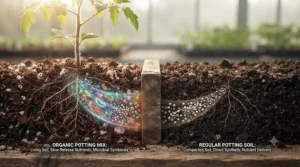
Here’s what most shoppers get wrong: the word “organic” printed on a bag is not, by itself, independently verified in Canada the way it is for food. Input products claiming to be “organic” or “natural” aren’t certified under any federal law the way food products are, which is exactly the gap the Organic Materials Review Institute exists to fill — OMRI launched a Canada-specific program in 2013 to review products against Canadian Organic Standards. As the Canada Organic Trade Association explains, the program gives Canadian organic certifiers, farmers, and gardeners an independent review of inputs intended for organic production.
In practical terms: if a bag carries the actual OMRI Listed seal, its full ingredient list has been checked against permitted-substances rules, not just glanced at by a marketing team. Espoma, Miracle-Gro Organic Choice, Black Gold, and Pro-Mix Organic Vegetable & Herb Mix all qualify here. FoxFarm Ocean Forest, despite its natural-leaning ingredient list, is worth double-checking on current OMRI listings before assuming certified status, since formulations and certifications can shift between production runs. For a certified organic potting mix to genuinely support organic growing goals — whether that’s a backyard vegetable patch or a certified organic microfarm — checking for the seal itself, not just the word on the front, is the only reliable verification method.
Long-Term Cost & Maintenance
Sticker price tells you almost nothing about total cost of ownership here. A Miracle-Gro Moisture Control bag at C$12-C$18 looks like the obvious budget winner, but its synthetic feed runs out around six months, meaning a second growing season likely needs supplemental fertilizer purchases. Compare that against Pro-Mix Premium at a similar price point with nine months of built-in feeding, and the “cheaper” option can actually cost more over a full season once you add liquid feed to the tally.
Organic mixes complicate the math further, but usually favourably for long-term container gardeners: because organic inputs feed soil biology rather than just the current crop, mixes like Black Gold and Espoma tend to need less complete replacement between seasons — a top-dress of compost or organic liquid feed often refreshes them rather than requiring a full repot. Factor in that a well-maintained organic mix can carry a perennial container plant through two or three seasons with amendments alone, and the C$5-C$10 premium many organic bags carry upfront starts looking like the better long-term value, not the indulgent one.
Safety, Regulations & Canadian Compliance
Potting mixes sold in Canada that include fertilizer components fall under the Canadian Food Inspection Agency’s labelling requirements, not a loose honour system. Under those rules, ingredients used purely as substrates or pH buffers — including peat moss, coconut coir, perlite, and dolomite — don’t need to be individually guaranteed on the label, which is why you’ll rarely see exact percentages for the “filler” components even on premium bags. This matters practically: if a bag’s label focuses heavily on NPK numbers and light on substrate detail, that’s standard practice, not something to be suspicious of.
For anyone growing food commercially or semi-commercially under organic claims, a growing medium generally must contain exclusively ingredients from an approved permitted-substances list, produced according to approved practices, to be legitimately suitable for organic agriculture — a much stricter bar than casually calling a bag “natural” on the shelf. For home gardeners, the practical safety takeaway is simpler: wear gloves when handling any potting mix (dust from perlite and peat can irritate lungs with repeated exposure), and store organic mixes in a cool, dry spot, since their biological activity means they can develop mould faster than inert synthetic-only blends if left open in humid conditions.
✨ Ready to Get Growing?
🌱 Whichever mix you’ve landed on, don’t let indecision cost you the whole planting season. Click through to check current pricing and availability on any of the seven picks above — your containers (and your tomatoes) will thank you.

FAQ
❓ Is organic potting mix better than regular potting soil for vegetables?
❓ Does OMRI certification guarantee a potting mix is 100% organic?
❓ Can I mix organic and regular potting soil together?
❓ What soil pH is best for most container plants?
❓ How often should I replace potting mix in containers?
Conclusion
Organic potting mix vs regular potting soil isn’t really a battle with a single winner — it’s a set of trade-offs dressed up as a rivalry. Synthetic-fed mixes like Pro-Mix Premium and Miracle-Gro Moisture Control deliver fast, predictable, budget-friendly growth. OMRI-listed organic options like Espoma, Black Gold, Pro-Mix Organic Vegetable & Herb Mix, and Miracle-Gro Organic Choice trade a bit of speed for chemical-free feeding and better long-term soil biology. And premium natural mixes like FoxFarm Ocean Forest sit somewhere in their own aggressively-fed category entirely.
The right choice depends on what you’re growing, how patient you are with feeding schedules, and whether the OMRI seal genuinely matters to your gardening philosophy — not on which bag has the prettier label. Start with the decision framework above, match a product to your actual containers and growing habits, and you’ll skip the trial-and-error season most container gardeners go through their first year.
Recommended for You
- Potting Soil for Vegetable Garden: 7 Top Picks for 2026
- Potting Soil for Indoor Plants: 7 Top Picks for 2026
- Cedar Mulch for Garden Beds: 7 Top Picks for 2026
Disclaimer: This article contains affiliate links. As an Amazon Associate, I earn from qualifying purchases. If you purchase products through these links, we may earn a small commission at no additional cost to you.
✨ Found this helpful? Share it with your friends! 💬🤗
