
In This Article
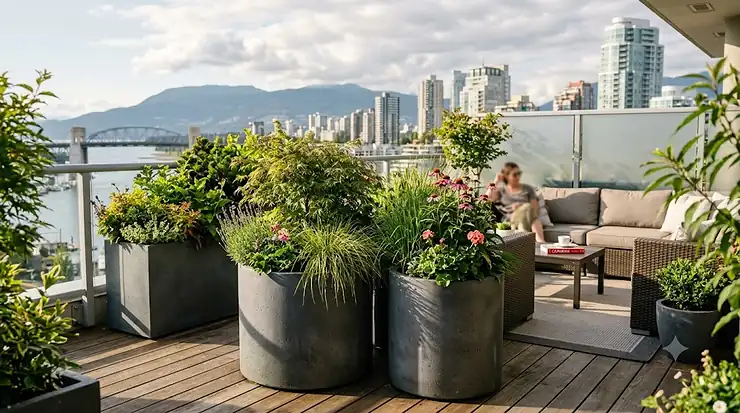
You know that feeling when you walk up to a house and a stunning pair of giant planters flanking the front door just stops you in your tracks? That’s the power of going big — and it’s exactly what extra large outdoor planters can do for your porch, patio, or backyard. But here in Canada, buying the wrong oversized planter means watching it shatter after the first hard freeze, losing your investment before spring even arrives.
I’ve spent considerable time researching what’s actually available on Amazon.ca, digging into real Canadian buyer feedback, and stress-testing what materials hold up when the thermometer dips to −20°C (−4°F) in January. The result is this guide. Whether you’re looking for big planters for your front porch, architectural plant pots to anchor a patio redesign, or jumbo garden containers to grow dwarf trees and ornamental grasses, there’s a right product — and a wrong one — for every Canadian budget and climate zone.
Extra large outdoor planters are generally defined as containers measuring 60 cm (24 inches) or more in diameter or height, offering enough root volume to support shrubs, small trees, ornamental grasses, or dramatic thriller-filler-spiller arrangements. As Toronto Master Gardeners note, the most critical starting point is using a container that is as large as possible — the more soil it holds, the more insulation it provides against our freeze-thaw cycles.
In this guide, we’ll cover seven of the best picks available on Amazon.ca in 2026, complete with Canadian climate commentary, real-world performance insights, and everything you need to make a decision you won’t regret come March.
Disclaimer: This article contains affiliate links. As an Amazon Associate, I earn from qualifying purchases. If you purchase products through these links, we may earn a small commission at no additional cost to you.
Quick Comparison: Extra Large Outdoor Planters at a Glance
| Product | Material | Size (approx.) | Key Feature | Best For | Price Range (CAD) |
|---|---|---|---|---|---|
| Veradek Demi Series Round Planter | Plastic-stone composite | 60 cm (24 in) H | Made in Canada, all-weather | Year-round porch display | $80–$130 |
| Veradek Block Series Span Planter | Plastic-stone composite | Tall rectangular | Removable insert bucket | Modern patios, shrubs | $110–$160 |
| Mayne Wyndham 24-Inch Tall Planter | UV-resistant polyethylene | 61 cm (24 in) H | Built-in self-watering reservoir | Entryways, beginners | $90–$140 |
| Algreen Products Madison Planter | Charcoalstone resin | 88 cm (34.5 in) H | Made in Canada, self-watering | Tall statement piece | $120–$180 |
| WORTH Garden 28-Inch Tall Planters (Set of 2) | Heavy-duty plastic | 71 cm (28 in) H | Drainage tray included | Budget-friendly pairs | $90–$150 |
| Keter Stone-Look Tall Planter | High-density resin | 67 cm (26.4 in) H | Under 4.5 kg per pot | Easy rearranging | $100–$160 |
| Veradek Mason Series Vega Planter | Plastic-stone composite | Multiple sizes | Round modern silhouette | Contemporary gardens | $70–$120 |
What this table really tells you: For budget-conscious Canadians, the WORTH Garden set delivers two planters for roughly the same price as one mid-range option — but you trade off visual sophistication. If you’re after genuine Canadian craftsmanship and architectural presence, both Veradek and Algreen are manufactured in Canada and have long track records in our climate. The Mayne Wyndham’s self-watering reservoir is underrated — in summer, a 60 cm (24 in) planter in full sun can dry out in under 24 hours without it, and nobody wants to water planters twice a day.
💬 Just one click — help others make better buying decisions too! 😊
✨ Don’t Miss These Exclusive Deals!
🔍 Take your outdoor space to the next level with these carefully selected products. Click on any highlighted item to check current pricing and availability on Amazon.ca. These planters will help you create a stunning entrance and garden your neighbours will admire all season long!
Top 7 Extra Large Outdoor Planters: Expert Analysis
1. Veradek Demi Series Round Planter
If you’ve walked into a Canadian garden centre in the last few years and admired a sleek, modern planter that looked like polished concrete but weighed almost nothing, there’s a good chance it was a Veradek. The Demi Series Round Planter is built from a patented plastic-stone composite that convincingly mimics natural stone while remaining frost-resistant through Canadian winters.
At roughly 60 cm (24 in) tall with a wide, rounded body and soft fluted edges, this is a genuine feature planter — the kind that anchors a front entry or patio corner with real presence. What makes it especially relevant for Canadian buyers is that Veradek is designed and made in Canada, meaning the construction accounts for our extreme freeze-thaw cycles rather than being engineered for a milder California climate. The composite material expands and contracts with temperature changes without cracking — something ceramic and terracotta simply cannot do reliably at −15°C (5°F).
The removable insert shelf simplifies planting dramatically: instead of filling a 60 cm pot with 40+ litres of soil you’ll need to excavate come fall, you can work with a smaller inner planter. Built-in drainage holes prevent root rot, which becomes critical in regions like Vancouver’s wet winters or Ontario’s spring thaw.
In my assessment, this planter is ideal for Canadian homeowners who want a permanent, year-round statement piece — the kind you invest in once and don’t replace. It suits condos and modern homes in Toronto, Calgary, or Victoria equally well.
✅ Made and designed in Canada
✅ Frost-resistant composite material
✅ Removable insert for easy seasonal replanting
❌ Higher price point than basic plastic options
❌ Stone-look finish can show water marks in very rainy climates
Price range: around $80–$130 CAD — excellent value for a Canadian-engineered product with long-term durability.
2. Veradek Block Series Span Planter
Where the Demi Series leans round and organic, the Block Series Span goes full architectural. This tall rectangular planter brings clean, grid-line geometry that looks equally at home flanking a minimalist townhouse in Vancouver’s Mount Pleasant as it does on a Calgary new-build patio. The “Span” configuration is extra long, making it ideal as a privacy screen base or a planter box that divides patio zones.
The same plastic-stone composite construction applies here, with all-weather durability built in. The standout feature is the removable insert bucket: you can swap seasonal plants in and out without disturbing the outer planter at all. That’s a genuinely smart design for Canadian gardeners who plant annuals in summer and want to refresh the look without hauling 25 kg of soil. Drainage holes are integrated, and the material is rated for sub-freezing temperatures.
Who is this for? Primarily urban Canadians who treat their outdoor space as an extension of their interior design — people who would use the word curated to describe their patio. It’s also a strong choice for commercial properties like restaurants, hotels, or boutique storefronts that need oversized patio planters with a high-end look but manageable weight for seasonal moves.
Customer feedback on Amazon.ca consistently highlights how realistic the stone texture looks and how the proportions photograph beautifully — useful context if you’re designing a space with Instagram or a home sale in mind.
✅ Architectural rectangular silhouette
✅ Removable insert bucket for easy seasonal updates
✅ Pairs perfectly with other Veradek pieces for a cohesive look
❌ Long rectangular form isn’t suited to all entry configurations
❌ Top end of the price range for plastic-composite planters
Price range: $110–$160 CAD — justified if you want the full architectural look.
3. Mayne Wyndham 24-Inch Tall Planter
Mayne has been making outdoor planters for North American gardens for decades, and the Wyndham 24-inch tall planter is where classic colonial styling meets clever Canadian practicality. The tapered, panel-moulded polyethylene body reads as traditional — it suits craftsman bungalows, Victorian detached homes in Hamilton or Ottawa, and cottage-style entryways beautifully. But the real reason Canadian gardeners swear by it is the built-in self-watering reservoir.
Here’s something most spec sheets won’t tell you: a 60 cm (24 in) planter sitting in full summer sun in Southern Ontario or the BC Interior will need 4–7 litres of water daily when temperatures exceed 30°C (86°F). Without a reservoir, that means daily attention or wilting plants. The Wyndham’s integrated reservoir wicks water upward to plant roots as needed, reducing watering frequency significantly — critical for anyone who travels in summer or simply doesn’t want watering to become a daily chore.
The UV-resistant polyethylene construction means you won’t see colour fading after a single Prairie summer. It’s available in multiple colours including white, black, and brown, which is more flexibility than most competitors offer. At 24 inches tall, it commands presence at a front porch without overwhelming smaller entry areas.
This is the planter I’d recommend to first-time large-container gardeners — it’s forgiving, maintenance-friendly, and available in pairs for symmetrical entry placements.
✅ Built-in self-watering reservoir reduces daily watering
✅ UV-resistant, fade-resistant polyethylene
✅ Multiple colour options for diverse home styles
❌ Classic moulded aesthetic won’t suit ultra-modern homes
❌ Polyethylene has less visual weight than composite or resin options
Price range: $90–$140 CAD — strong value for the self-watering functionality.
4. Algreen Products Madison Planter
If you want sheer dramatic height — the kind that makes guests look up when they approach your door — the Algreen Madison Planter delivers. At nearly 88 cm (34.5 in) tall with a 50 cm (20 in) square footprint, this is a genuine jumbo garden container that can accommodate ornamental grasses, small columnar shrubs, or a dramatic single-trunk standard (a round-headed topiary on a single stem).
Critically, Algreen Products is a Canadian company that manufactures many of its planters in North America. The charcoalstone finish is a composite resin that provides a convincing stone or concrete aesthetic at a fraction of the weight and cost of actual concrete — and without the cracking risk in freeze-thaw cycles. Many of Algreen’s resin products are also BPA-free, which is relevant if you’re planning to grow edibles in your oversized planter.
What the spec sheet won’t tell you: at nearly 90 cm tall, this planter creates the illusion that even small front stoops have grand, estate-level proportions. I’ve seen them used symmetrically at entrance pillars on suburban semis in Mississauga and the effect is genuinely striking. The self-watering insert keeps moisture levels consistent, which matters at that height — taller planters tend to dry out from the bottom up as capillary action has further to travel.
Availability on Amazon.ca is confirmed, and Prime-eligible shipping makes delivery straightforward across most of Canada.
✅ Near-90 cm height creates real architectural presence
✅ Canadian company with North American manufacturing
✅ Self-watering compatible and BPA-free options available
❌ Large footprint requires adequate entry space
❌ Heavier than pure resin options when filled
Price range: $120–$180 CAD — worth every dollar for the statement it makes.
5. WORTH Garden 28-Inch Tall Planters (Set of 2)
Not every Canadian budget stretches to $150+ per planter, and the WORTH Garden set of two 28-inch tall tapered planters addresses that reality directly. At roughly 71 cm (28 in) tall with a modern taper profile, these heavy-duty plastic planters punch well above their price class aesthetically — from a distance, they read cleanly and boldly enough for any porch update.
The 100 drainage holes at the base aren’t marketing hyperbole: that level of drainage genuinely makes a difference in root health, preventing the waterlogged conditions that cause root rot — a serious risk in regions like Metro Vancouver or Southern Quebec that receive heavy rainfall in spring and fall. The dual-purpose drainage tray catches excess water and doubles as a saucer when you need contained drainage on a deck or patio surface.
What distinguishes these from cheap big-box planters is the 4mm-thick heavy-duty plastic construction. Most bargain planters use 2–2.5mm walls that buckle under soil pressure in summer heat and crack at the seams in sub-zero winters. The extra wall thickness makes a real durability difference, though I’d still recommend moving them to a sheltered location or unplanted garage storage during the harshest January–February deep-freeze periods in Prairie provinces or Northern Ontario.
For Canadian buyers who want two matching big planters for their front porch — symmetrical placement that frames a door — this set is the most cost-effective starting point on Amazon.ca.
✅ Set of 2 delivers pair-planting value
✅ 100 drainage holes for superior water management
✅ 4mm thick walls for enhanced cold-weather durability
❌ Pure plastic aesthetic lacks the visual warmth of composite materials
❌ Recommended to shelter during extreme Prairie or Northern winters
Price range: $90–$150 CAD for the pair — outstanding value per planter.
6. Keter Stone-Look Tall Planter
Keter is a globally recognized brand in weather-resistant outdoor products, and their stone-look tall planter line earns its reputation with one standout quality: they look like heavy natural stone but weigh under 4.5 kg (10 lbs) each. For Canadian homeowners who need to bring planters in before a hard frost — or who live in condos with weight-restricted balconies — that combination of visual heft and physical lightness is genuinely practical.
At approximately 67 cm (26.4 in) tall with a 12.2-gallon soil capacity, these planters give shrubs and small trees enough root room to establish themselves through a full growing season. The cream stone-look finish works across a wide range of home styles — from century-old brick semis in Toronto’s Riverdale to newer stucco builds in Kelowna. The drillable base is a thoughtful touch: rather than prescribing drainage, it lets you customize based on your specific plants and climate zone, which is especially useful in rainy coastal regions where drainage control matters more than in the drier Prairie climates.
Keter’s resin construction is rated for sub-freezing temperatures, but the flippable design detail — two distinct display orientations from the same pot — is the kind of practical design thinking that Keter does well. Canadian buyers on Amazon.ca consistently highlight durability through multiple freeze-thaw seasons and the surprisingly realistic stone texture.
✅ Under 4.5 kg per pot — easy to move before hard frost
✅ Drillable base for customizable drainage
✅ Flippable design provides two display options
❌ Cream/stone tones show dirt more than darker colourways
❌ Lower soil capacity than some similarly sized competitors
Price range: $100–$160 CAD — strong value for the lightweight-plus-aesthetic combination.
7. Veradek Mason Series Vega Planter
Rounding out this list is the Veradek Mason Series Vega, a round tall planter that splits the difference between casual garden pot and formal architectural plant pot. Its circular silhouette and smooth, muted finish in black or charcoal work exceptionally well as standalone feature planters or in grouped arrangements — three Vega planters at varying heights on a deck creates an entire vertical garden moment.
Made from the same plastic-stone composite as other Veradek products (and designed in Canada), the Vega handles four-season exposure without complaint. Its round form tends to suit front door placements where rectangular boxes might feel too formal, and it’s available in multiple sizes within the Mason Series so you can mix oversized patio planters with smaller accent pots for a cohesive, scalable look.
The practical case for the Vega: it accommodates ornamental grasses brilliantly — the dramatic movement of Karl Foerster feather reed grass or Blue Oat grass cascading over a round planter edge is one of the most visually effective low-maintenance garden moments you can create in Canada. Grasses are also highly winter-tolerant and look striking even when dormant in November.
✅ Round silhouette suits a wider range of entry configurations
✅ Scales within the Mason Series for cohesive mixed arrangements
✅ Designed in Canada; all-weather composite construction
❌ Smooth finish shows water spots in mineral-heavy municipal water areas
❌ Available colourways skew dark — less flexibility for lighter home aesthetics
Price range: $70–$120 CAD — the most accessible entry point for a Veradek-quality planter.
How to Winter-Proof Your Extra Large Outdoor Planters in Canada 🇨🇦
This is the section Amazon product listings will never include — and it’s arguably the most valuable information a Canadian gardener can have.
The material decision is everything. As the Toronto Master Gardeners emphasize, freeze-thaw resistant containers are essential for Canadian conditions. Ceramic and clay pots crack when trapped moisture expands during freezing — sometimes as spectacularly as a loud crack at 2 a.m. after the first hard frost. Resin, high-density polyethylene, and plastic-stone composite materials expand and contract with temperature shifts without structural failure. Every product on this list qualifies; the key is knowing your limits.
The double-potting technique is a game-changer for borderline-hardy plants. Place your valuable plant inside a smaller nursery pot, set that inside your large feature planter, and stuff the gap between them with burlap or landscape fabric. BC Living’s container gardening guide notes that potted plants are effectively exposed to two extra hardiness zones of cold versus in-ground counterparts — a zone 5 plant in a pot experiences zone 7 conditions. That insulation layer counteracts this dramatically.
Drainage before the freeze season — September in Northern Ontario, October in most of the rest of Canada — is critical. Sitting water in a sealed planter freezes, expands, and splits the container or compacts roots fatally. Ensure drainage holes are clear, and consider tilting planters slightly forward if drainage seems slow.
Soil topping matters more than you think. A 5–7 cm (2–3 in) layer of bark mulch or shredded leaves on the soil surface of your oversized planter acts as a temperature buffer for roots through November and March — the transitional months where day/night freeze-thaw cycling is most damaging.
Provincial considerations: In Alberta and Saskatchewan, where lows can hit −35°C (−31°F), even the most frost-resistant planters benefit from moving to an unheated garage between December and February. In BC and the Maritimes, where winters are wetter and milder, keeping planters under eaves to prevent waterlogging is the primary winter concern.
Real Canadian Buyer Scenarios: Finding Your Perfect Match
Scenario 1 — The Toronto Condo Dweller with a Balcony Priya lives on the 8th floor in Leslieville. Her 10 ft × 8 ft (3 m × 2.4 m) balcony gets full afternoon sun, and the building management allows container gardens but has a weight limit. Her ideal pick: the Keter Stone-Look Tall Planter — under 4.5 kg each, dramatic stone appearance, and the drillable base lets her control drainage carefully on a surface where she can’t afford puddles. Budget: under $130 CAD delivered with Prime.
Scenario 2 — The Suburban Ottawa Homeowner Creating Curb Appeal David and Lin are prepping their 1980s semi-detached for a potential sale in spring 2027. They want a matching pair of big planters for their front porch that look high-end in listing photos. Their pick: the Algreen Products Madison Planter or the Mayne Wyndham, both in black. The height of the Madison adds the visual gravitas that reads well in photography; the Mayne’s self-watering reservoir means plants stay lush even when the couple is at the cottage in July. Budget: $150–$200 CAD for the pair.
Scenario 3 — The Kelowna Retiree Growing Small Trees Margaret grows ‘Northstar’ dwarf cherry trees and ‘SkyHigh’ columnar apple trees in containers in Kelowna’s Okanagan climate — hot, dry summers and cold but manageable winters. She needs jumbo garden containers with serious root volume and drainage. Best fit: the Veradek Block Series Span Planter or Veradek Demi Series, which offer the largest effective soil volume in composite materials and can be moved with a furniture dolly before the first hard freeze in late October. Budget: $110–$160 CAD per planter.
Scenario 4 — The Halifax First-Time Homeowner on a Budget James just bought his first home and wants to add instant curb appeal before his housewarming. He has no existing planters, needs two to frame a modest entry, and is working with under $150 CAD total. The WORTH Garden 28-Inch Set of 2 is the obvious recommendation — a complete matching pair within budget, with better-than-expected wall thickness for Atlantic Canada’s wet winters. Add a bag of quality potting mix and a flat of fall mums for under $200 CAD total investment.
How to Choose Extra Large Outdoor Planters in Canada: 6 Expert Criteria
1. Prioritize frost-resistant materials above all else. Resin, polyethylene, polypropylene, and plastic-stone composites are your safest choices across most of Canada. If you’re in USDA hardiness zone 6 or higher (Southern BC, GTA, Windsor) you may get away with thick glazed ceramic — but even then, drainage management is essential.
2. Match size to plant ambition, not just aesthetics. A 60 cm (24 in) planter seems enormous until you put a 90 cm (36 in) ornamental grass in it and realize the proportions are perfect. General rule: the planter should be at least one-third the height of the mature plant.
3. Weight matters — both empty and filled. A 60 cm resin planter might weigh 4–6 kg empty but 25–35 kg when filled with moist soil. If you need to move it before frost, can you manage that? Lighter empty planters win in apartments and for solo gardeners; heavier planters win in windy exposures.
4. Drainage is non-negotiable for Canadian outdoor use. Standing water in any container freezes, expands, and damages both roots and container walls. Confirm drainage holes exist before buying. If they don’t (as is the case with some decorative pots), you’ll need to drill them — confirmed by every expert source including the Canadian Wildlife Federation’s container planting guide.
5. Check Amazon.ca Prime eligibility and shipping zone. Some oversized patio planters ship free to major Canadian urban centres but carry significant freight surcharges to Northern Ontario, Yukon, NWT, or Nunavut. Always confirm your postal code in the cart before completing a large purchase.
6. Consider the colour and finish longevity in your specific climate. Dark planters absorb heat, warming the root zone faster in our cool Canadian springs — a genuine advantage for tomatoes and warm-season annuals. Light planters reflect heat, keeping roots cooler in hot BC summers. UV-resistant coatings prevent the chalky fading that turns a black planter grey after two summers.
Common Mistakes When Buying Big Planters for Your Front Porch
Using terracotta or unglazed ceramic outdoors in Canada. This is the single most common expensive mistake. Unglazed porous materials absorb water, and when that water freezes, it expands inside the material, cracking it from within. You’ll often discover the damage in March when you bring the pot back outside. Replace with composite or resin if you want longevity.
Buying based on appearance alone without checking drainage. Gorgeous architectural plant pots exist that have zero drainage — designed for indoor use only. Buying one for your porch and planting in it directly will result in root rot by midsummer. Check the listing specifications carefully: “indoor/outdoor” should always be paired with confirmed drainage holes.
Going too small because the price seems safer. A 40 cm (16 in) planter looks grand in a product photo but can appear underwhelming when placed against an actual front door. The most common buyer regret in planter purchasing is not going large enough. If you’re uncertain between two sizes, choose the larger one — you’ll thank yourself.
Ignoring the soil volume requirements. Jumbo garden containers need quality potting mix, not garden soil. Regular garden soil compacts in containers, cutting off oxygen to roots. A quality peat-free or coco-coir based mix retains moisture without compaction and is available at any Canadian Tire or garden centre across Canada.
Placing heavy planters on wood decks without protection. A 30 kg filled planter sitting directly on a pressure-treated deck board traps moisture, accelerating rot. Use pot feet (small risers, around $10–$15 CAD at any hardware store) to elevate the base 1–2 cm, allowing airflow underneath. This simple step extends both the planter’s and the deck’s lifespan significantly.
Skipping UV protection in Prairie and BC Interior climates. In regions where summer sun is intense and growing seasons are compressed, UV degradation turns resin and plastic planters brittle within three to four years. Always look for “UV-resistant” in product descriptions, especially for dark-coloured pots that absorb more solar radiation.
Oversized Patio Planters vs. In-Ground Garden Beds: The Real Comparison
| Factor | Oversized Patio Planters | In-Ground Garden Beds |
|---|---|---|
| Startup cost (CAD) | $70–$180 per planter | $50–$300 for raised bed framing |
| Portability | Move for frost protection or redesign | Permanent |
| Soil warming in spring | Faster — containers warm 2–3 weeks earlier | Slower — ground stays cold longer |
| Pest and weed control | Much easier to manage | Ongoing annual maintenance required |
| Watering demands | Higher — containers dry out faster | Lower — ground retains more moisture |
| Winter survival of perennials | Challenging without protection | Generally reliable in appropriate zones |
| Best For | Urban, condo, patio, rental, high-visibility display | Suburban/rural, long-term vegetable gardens |
The data here shows an important nuance most gardeners miss: GrowersGuide.ca’s 2026 container gardening research confirms that containers warm up 2–3 weeks faster than ground soil in spring — a meaningful head start in Canada’s compressed growing season. For zones 4 and below (most of the Prairies and Northern regions), that translates to earlier harvests and a longer productive window. However, the watering demands of large planters in Canadian summers are real: a 60 cm pot in full sun needs checking daily in July and August.
The verdict: for Canadians who want high-visibility impact at a front porch or patio without long-term commitment, oversized planters win. For those growing vegetables or perennials over many years in a yard, in-ground or raised beds offer lower long-term maintenance.
✨ Don’t Miss These Exclusive Deals on Amazon.ca!
🔍 Ready to transform your outdoor space? Click on any highlighted product name in this article to check current pricing and availability on Amazon.ca. Many of these planters are Prime-eligible for fast, free shipping across Canada. Make your porch the envy of the street this season!
What to Expect: Real-World Planter Performance in Canadian Conditions
Spring (April–May): The ground is still cold, but your big planters have already thawed and started warming their soil. This is when composite and resin planters pay off versus ceramic — no cracks to discover, no replacements to buy. Plant annuals in May after your last frost date; check Environment and Climate Change Canada’s regional frost date maps at climate.weather.gc.ca for your city.
Summer (June–August): Peak beauty, but also peak maintenance. Expect daily watering for any planter over 50 cm (20 in) in full sun during July and August heat waves. Self-watering models (Mayne Wyndham, Algreen Madison) earn their keep here. Fertilize every two weeks with a balanced water-soluble fertilizer — container plants need regular feeding since watering flushes nutrients from the soil.
Fall (September–October): Canadian gardens’ most underrated season. Ornamental kale, cold-tolerant mums, and Swiss chard look spectacular in oversized planters well into November in most provinces. This is also preparation season: drain self-watering reservoirs, remove annual root balls, and clean planters before storage or winter exposure. The Canadian Wildlife Federation recommends bringing clay pots inside before freezing weather to prevent cracking.
Winter (November–March): Frost-resistant planters on the list can generally stay outdoors in zones 5–7 (Southern Ontario, BC coast, Maritimes). In zones 3–4 (Prairies, Northern Ontario, Quebec City region), move planters to a sheltered location or garage during the coldest months. Unplanted, cleaned planters left outside in extreme cold are at less risk than planted ones, since soil moisture is the primary cracking driver.
Long-Term Cost & Maintenance in Canada 💰
Let’s talk total cost of ownership — because a $60 CAD planter that cracks after one winter is far more expensive over five years than a $130 CAD composite planter that lasts a decade.
Five-year cost comparison:
- Budget plastic (replaces every 2–3 years): ~$120–$180 CAD over five years
- Quality composite/resin (one purchase): ~$100–$180 CAD over five years
- Ceramic (one replacement after cracking): ~$140–$240 CAD over five years
Annual maintenance costs:
- Potting mix refresh (top third of container annually): ~$20–$35 CAD
- Fertilizer (seasonal supply): ~$15–$25 CAD
- Winter storage/cover (if applicable): $0–$20 CAD
- Plants/annuals: Variable, typically $30–$80 CAD per planter per season
The hidden cost most Canadian buyers overlook is soil. A 60 cm (24 in) planter holds 40–60 litres of mix — that’s a large bag of premium potting soil ($25–$40 CAD) at minimum. Budget for this upfront. Quality soil pays dividends in plant health and reduces watering frequency, which is a real time and water bill consideration over a Canadian summer.
If you’re ordering on Amazon.ca, watch for the $35 CAD free shipping threshold for non-Prime members. Most planters in the $90+ range qualify automatically for free shipping to major Canadian cities; if you’re ordering a smaller planter below that threshold, adding a bag of fertilizer or a pair of pot feet to your cart brings you over the threshold conveniently.
FAQ: Extra Large Outdoor Planters in Canada
❓ What is the best material for extra large outdoor planters in Canada?
❓ Can I leave oversized patio planters outside in winter in Canada?
❓ Are big planters for front porch available with free shipping on Amazon.ca?
❓ What size planter do I need for a small tree or large shrub?
❓ Do jumbo garden containers need drainage holes for Canadian outdoor use?
Conclusion: Go Big, Go Canadian 🇨🇦
There’s a reason experienced Canadian gardeners often say the single best upgrade to any outdoor space is going larger with planters. Extra large outdoor planters don’t just hold plants — they define spaces, anchor architecture, create privacy, and carry seasonal displays through all of our four very distinct Canadian seasons.
The seven products in this guide represent the best balance of Canadian availability, frost-resistant construction, and genuine aesthetic range currently on Amazon.ca. If you want a Canadian-made option with architectural credentials, Veradek and Algreen are your go-tos. If self-watering functionality is the priority, the Mayne Wyndham is hard to beat. If you’re on a budget and need a matching pair immediately, the WORTH Garden set delivers impressive value.
Whatever you choose, invest in quality potting mix, confirm drainage before planting, and take five minutes each fall to prep your planters for winter. That small habit is what separates the Canadians whose planters look stunning spring after spring from those replacing cracked pots every March.
✨ Ready to Transform Your Outdoor Space?
🔍 Check current pricing and availability on Amazon.ca for all seven planters above. These are some of the best-reviewed jumbo garden containers available to Canadian buyers this season — Prime-eligible options ship fast to most provinces, so you can have your new planters on the porch before your next long weekend. 🌿🏡
Recommended for You
- Best Self-Watering Planters for Vacation in Canada 2026
- 7 Best Self-Watering Planters Canada 2026 (Expert Picks)
- 7 Best Large Ceramic Planters for Patio in Canada (2026 Guide)
Disclaimer: This article contains affiliate links. As an Amazon Associate, I earn from qualifying purchases. If you purchase products through these links, we may earn a small commission at no additional cost to you.
✨ Found this helpful? Share it with your friends! 💬🤗
