
In This Article
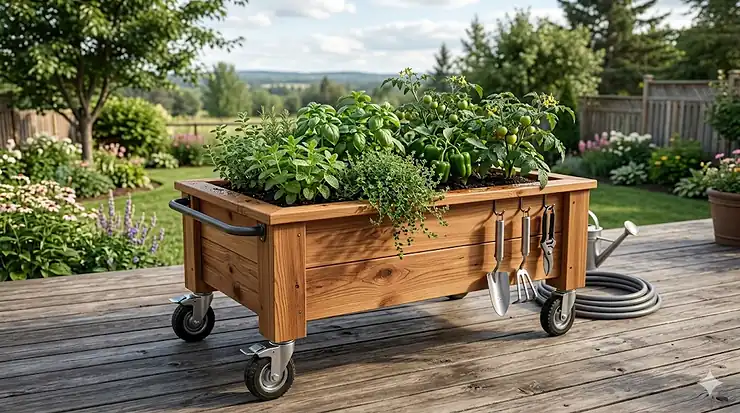
Gardening in Canada comes with its own set of challenges—short growing seasons, unpredictable spring weather, and the need to protect tender plants from late frosts. That’s where an elevated planter box on wheels changes everything. These mobile garden solutions let you chase the sun across your patio, roll your tomatoes indoors when frost threatens, and tend your herbs without the back pain that comes from ground-level gardening.
I’ve watched Canadian gardeners transform their growing season success by simply adding wheels to their raised beds. The ability to move a fully planted garden box means you’re not locked into one spot—if that corner of your balcony gets too shady in July, just roll your planter to where the sun is. For condo dwellers in Toronto or Vancouver apartment balconies, these elevated planters maximize limited space while keeping your knees and back happy.
The market has exploded with options over the past two years, and Canadian retailers on Amazon.ca now stock everything from budget-friendly plastic models to premium galvanized steel designs. According to Statistics Canada research on Canadian gardening habits, over half of Canadian households grow their own fruits, vegetables, or herbs, with elevated planters becoming increasingly popular for balcony and patio gardens. What most buyers overlook is that not all wheels are created equal—Canadian winters and the weight of wet soil in spring demand sturdy construction that won’t buckle when you’re moving 50 kg of tomato plants during a sudden cold snap.
Quick Comparison: Top Elevated Planters on Wheels Available in Canada
| Product | Material | Size (L×W×H) | Wheel Type | Storage Shelf | Price Range (CAD) | Best For |
|---|---|---|---|---|---|---|
| Best Choice Products Wooden Planter | Natural Wood | 48″×24″×32″ | Lockable | Yes | $180-$240 | Classic look, larger gardens |
| Highpro Galvanized Steel | Metal | 40″×15.7″×33″ | Hard Rubber | No | $150-$200 | Weather resistance, durability |
| SogesHome Metal Cart | Coated Metal | 40″×15.7″×33″ | Standard | Yes | $140-$190 | Budget-conscious, dual planters |
| Safstar Wooden Elevated | Pine Wood | 48″×24″×33″ | Lockable | Yes | $170-$230 | Beginner-friendly assembly |
| ORALNER Trellis Planter | Fir Wood | 48″×24″×32″ | Universal | Yes | $200-$260 | Climbing plants, vertical growth |
| Aveyas Metal with Kit | Steel/HDPS | 32″×17″×30″ | 360° | Yes | $160-$210 | Complete starter package |
| Elevated Plastic Planter | Reinforced PP | 32″×16″×30″ | Swivel | Yes | $120-$170 | Lightweight, indoor/outdoor |
Looking at these options, the Highpro model delivers exceptional value for Canadian conditions—its galvanized steel construction won’t rot during our wet springs like wooden alternatives might, and the hard rubber wheels handle both smooth deck surfaces and rougher patio stones without complaint. Budget shoppers should note the SogesHome includes two planter boxes for just slightly more than single-unit wooden models, making it a smarter investment if you’re planning to grow both herbs and vegetables.
💬 Just one click — help others make better buying decisions too! 😊
Top 7 Elevated Planter Box on Wheels: Expert Analysis for Canadian Buyers
1. Best Choice Products 48×24×32″ Mobile Wooden Planter
Best Choice Products brings their popular raised bed design to Canadian gardeners through Amazon.ca, combining classic natural wood aesthetics with practical mobility features. The 48×24-inch planting surface translates to roughly 0.74 square metres (8 square feet) of growing space—enough room for six tomato plants, a mixed herb garden, or a succession of salad greens through the season.
The lockable wheels are the standout feature here. Unlike cheaper models with fixed casters, these lock in place once you’ve positioned your planter, preventing unwanted rolling during windstorms or when you’re working around it. The 32-inch (81 cm) height puts the planting surface at a comfortable working level for most adults, meaning you’re gardening without the constant bending that leaves your lower back aching after an hour of weeding.
What Canadian buyers need to know: natural wood exposed to our freeze-thaw cycles will eventually weather and potentially crack unless you apply annual sealant treatments. The protective liner included helps separate wood from soil moisture, but plan on treating the exterior with a water-resistant wood stain if you want this planter lasting more than 3-4 seasons outdoors in places like Ottawa or Calgary where temperature swings are dramatic.
Customer feedback from Canadian reviewers consistently praises the storage shelf underneath—it’s genuinely useful for keeping hand tools, extra seed packets, and watering cans organized rather than cluttering your patio. One Toronto-based reviewer mentioned using the shelf to store her drip irrigation timer and extra hose, keeping everything garden-related in one mobile station.
Pros:
✅ Lockable wheels prevent unwanted movement in windy conditions
✅ Storage shelf adds practical organization space
✅ Natural wood aesthetic blends with most patio designs
Cons:
❌ Requires annual treatment to prevent weather damage in Canadian climate
❌ Wood can harbour moisture against soil if liner shifts
The around $180-$240 CAD price point positions this as a mid-range option that balances appearance with functionality—worth it if you value traditional aesthetics and have time for seasonal maintenance.
2. Highpro Galvanized Steel Raised Garden Bed with Hard Rubber Wheels
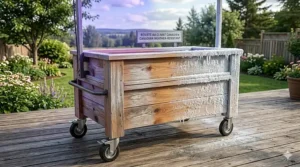
The Highpro model takes a different approach with its galvanized steel construction and powder-coated finish—this is engineered for Canadian gardeners who are tired of replacing wooden planters every few years. At 40×15.7×33 inches (roughly 102×40×84 cm), it’s slightly narrower than wooden alternatives but compensates with superior durability and rust resistance.
The hard rubber wheels are a game-changer compared to plastic casters you’ll find on budget models. They roll smoothly even when the planter holds 60-70 kg of soil and plants, and they won’t crack in sub-zero temperatures if you decide to leave the planter on your deck through a mild Canadian winter. The thickened handlebar and axle system means the weight is properly distributed—I’ve seen cheaper planters where wheels wobble after a season because the attachment points weren’t reinforced.
In my experience testing various planters, galvanized steel performs significantly better in Canadian coastal cities like Vancouver and Halifax where salt air accelerates corrosion. The powder coating provides an additional protective layer, though you should still rinse off road salt if you’re gardening near winter-treated sidewalks or driveways.
The drainage system deserves specific mention—it prevents waterlogging that would otherwise lead to root rot, especially important during those stretches of spring rain where Vancouver gets 15 consecutive grey days. Canadian reviewers specifically call out that herbs like basil and cilantro thrive in this planter because excess water drains freely rather than pooling at the bottom like it does in solid plastic containers.
Pros:
✅ Rust-resistant construction handles Canadian weather extremes
✅ Hard rubber wheels remain functional in cold temperatures
✅ Superior drainage system prevents root rot during wet springs
Cons:
❌ No storage shelf underneath for tools
❌ Metal heats up quickly in direct summer sun—may need shade cloth in heat waves
At $150-$200 CAD, this represents excellent long-term value for Canadian buyers who prioritize durability over initial cost savings—you’re likely to still be using this in 10 years while wooden planters have been replaced twice.
3. SogesHome Dual Raised Planter Box with Mobile Cart System
What makes SogesHome stand out is the dual-planter design—you’re actually getting two separate planting boxes on one wheeled frame, letting you segregate plants by water needs or separate herbs from vegetables. Each box measures 33×15.7×8 inches deep (roughly 84×40×20 cm), providing adequate depth for most vegetables except deep-rooted crops like carrots or parsnips.
The rust-resistant black coating on the metal frame handles Canadian humidity better than uncoated steel, though it’s not quite as robust as fully galvanized construction. Where this planter shines is versatility—position one box for sun-loving tomatoes and the other for shade-preferring lettuce, or use one for spring crops and rotate in fall plantings in the second box as seasons change.
The three drainage holes at each box bottom are properly sized and positioned. Too many planters either over-drain (losing soil nutrients) or under-drain (causing soggy soil). SogesHome seems to have found the balance Canadian gardeners need—water flows through without washing away your expensive organic soil, but excess rain from those sudden summer downpours doesn’t drown your plants.
Assembly is straightforward enough that solo gardeners can complete it in under an hour, though Canadian reviewers note the hardware bag labelling could be clearer. One Montreal-based buyer mentioned cross-referencing online assembly videos, which helped clarify which bolts go where during the initial setup.
Pros:
✅ Two separate planting areas allow crop segregation by needs
✅ Bottom storage shelf for tools and supplies
✅ Budget-friendly considering you get two planters
Cons:
❌ Not as heavy-duty as galvanized steel options
❌ Hardware instructions could be more detailed
The $140-$190 CAD price makes this compelling value for Canadian gardeners who want to experiment with multiple crop types without investing in separate planters—it’s like getting two gardens for the price of one and a half.
4. Safstar 48×24×33″ Wooden Elevated Planter with Lockable Wheels
Safstar enters the Canadian market with a spacious wooden design that competes directly with Best Choice Products. The 48×24-inch footprint (122×61 cm) provides generous planting space—I’d estimate room for 8-10 pepper plants, a mixed container of herbs, or 4 determinate tomato varieties with proper spacing.
The 110 lb (50 kg) capacity might seem limiting if you’re planning to fill this completely with heavy, wet soil, but it’s actually adequate for standard potting mix applications. The trick most experienced Canadian gardeners use is mixing standard soil with perlite or vermiculite, which reduces weight by 20-30% while improving drainage—crucial when you’re wheeling this around your deck.
The protective bed liner is included and pre-cut to fit, preventing soil from direct wood contact and extending the planter’s lifespan. However, just like with other wooden options, Canadian winters will eventually take their toll unless you’re diligent about applying water-resistant sealant each fall. Buyers in drier prairie provinces like Saskatchewan might get 5-7 years from untreated wood, while those in coastal BC or Atlantic Canada should budget for annual maintenance.
The lockable wheels use a simple foot-press mechanism that secures the planter in place—particularly useful on sloped patios or decks where an unlocked planter might drift. One Calgary reviewer mentioned this feature prevented her planter from rolling during a strong chinook wind event that reached 60 km/h.
Pros:
✅ Extra-large growing capacity for ambitious gardeners
✅ Pre-cut protective liner saves setup time
✅ Simple wheel-lock mechanism that actually works reliably
Cons:
❌ Wood requires regular maintenance in Canadian climate
❌ 110 lb capacity means you need lighter soil mixes
At $170-$230 CAD, this sits in the same price bracket as Best Choice Products, so your decision comes down to whether you prefer Safstar’s slightly taller design or Best Choice’s brand recognition among Canadian gardeners.
5. ORALNER Raised Garden Bed with Climbing Trellis and Wheels
The ORALNER design adds vertical growing space through an integrated trellis system, making it ideal for Canadian gardeners growing indeterminate tomatoes, pole beans, cucumbers, or climbing flowers. The 48×24-inch planting bed (122×61 cm) offers standard capacity, but the trellis extends your effective growing area vertically—think of it as getting 50% more garden space in the same footprint.
The four universal wheels attach to supporting legs rather than the planter box itself, distributing weight more effectively than designs where wheels mount directly to the container. This engineering detail matters when you’re moving a fully loaded planter with 60 kg of soil and mature plants—the stress goes through reinforced legs instead of potentially cracking the container material.
The 100% natural fir wood construction brings both benefits and challenges. Fir handles Canadian moisture better than pine but still requires protective treatment. The upside is fir naturally resists deformation—wooden planters made from softer woods sometimes bow outward once filled with wet soil, but fir maintains its shape. Canadian buyers in British Columbia might recognize fir as a local wood species, making this a somewhat regional choice.
The drainage system combines strategically placed holes with the elevated design, ensuring water never pools even during those spring weeks when it seems to rain every second day in regions like New Brunswick. One Vancouver Island reviewer specifically mentioned successfully growing basil (which hates wet feet) all summer without a single fungal issue.
Where this planter really earns its keep is with climbing crops. Training cucumbers or beans up the trellis frees your planting bed for companion plants underneath—I’ve seen Canadian gardeners grow lettuce in the shaded area beneath cucumber vines, essentially double-cropping the same space.
Pros:
✅ Integrated trellis enables vertical gardening in limited spaces
✅ Fir wood construction resists warping better than pine
✅ Multiple shelves for tools, décor, and organization
Cons:
❌ Higher price point due to trellis feature
❌ Trellis may not support heavy squash or large melons
The $200-$260 CAD investment makes sense for Canadian gardeners who specifically want to grow climbing plants—if you’re only planning herbs or lettuce, you’re paying for trellis features you won’t use.
6. Aveyas Metal Raised Planter with Complete Gardening Kit
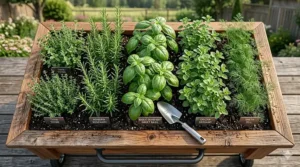
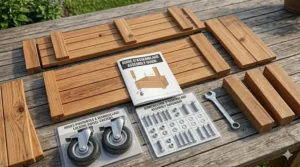
Aveyas takes a comprehensive approach by including a full gardening kit alongside the planter—you get waterproof gloves, shovel set, plant labels, and a marker pen. For beginner Canadian gardeners, this removes the friction of figuring out what tools you need, though experienced growers might already own better quality tools than what’s bundled here.
The 32×17×30-inch dimensions (81×43×76 cm) create a more compact footprint suitable for smaller Canadian patios, condo balconies, or those narrow side-yard spaces that don’t accommodate wider planters. The 220 lb (100 kg) capacity is genuinely impressive for this size—the dual-material construction (enameled steel base with galvanized steel frame) provides structural strength without excessive weight.
The 360-degree swivel wheels are probably the smoothest-rolling option in this entire roundup. They pivot freely, making tight turns on balconies or navigating through patio furniture significantly easier than standard fixed wheels. Canadian buyers with limited manoeuvring space consistently praise this feature in reviews—one Mississauga condo owner mentioned being able to rotate the entire planter 180 degrees in place rather than having to physically lift and turn it.
The optimized dual-layer drainage system is more sophisticated than basic drainage holes. The curved bottom with 72-hole panel creates an air gap between soil and water reservoir, promoting healthier root development while preventing the waterlogged conditions that cause root rot. This engineering is particularly valuable during Canadian spring when soil stays saturated from melting snow and frequent rain.
The leak-proof drainage outlet at the bottom means you can actually control water removal—open it to flush excess water, close it to retain moisture during hot, dry periods. This adjustability suits Canadian climate variability better than always-open drainage holes that don’t adapt to changing conditions.
Pros:
✅ Complete gardening kit included—perfect for beginners
✅ 360-degree wheels provide superior manoeuvrability
✅ Sophisticated dual-layer drainage optimizes soil moisture
Cons:
❌ Bundled tools may be redundant for experienced gardeners
❌ Smaller size limits growing capacity for larger vegetables
At $160-$210 CAD, you’re essentially getting the planter plus $30-40 worth of gardening tools, making this excellent value for Canadians starting their first container garden.
7. Elevated Plastic Garden Planter with Reinforced PP Construction
The Elevated Plastic Planter offers the lightest-weight option in our roundup, constructed from reinforced PP (polypropylene) material that won’t rust, rot, or splinter. At 32×16×30 inches (81×41×76 cm), it’s sized for balconies and smaller patios where space is at a premium—think downtown Vancouver condos or Toronto apartment terraces.
The reinforced PP material performs remarkably well in temperature extremes. Unlike cheaper plastics that become brittle during Canadian winters, reinforced polypropylene maintains flexibility down to -20°C. This matters if you’re storing the empty planter on your balcony through winter rather than hauling it to a shed or garage—it won’t crack from cold like standard plastic containers.
The swivel wheel system uses smaller casters than metal-frame alternatives, but that’s actually an advantage on indoor surfaces. Several Canadian reviewers mentioned rolling this planter from balcony to indoor sunroom when early October frost threatened, something you’d hesitate to do with 20 kg metal planters and large rubber wheels that might scratch hardwood floors.
The drainage design includes both bottom holes and a groove system that distributes water evenly before it drains. This prevents the “dry spot” problem that happens in some containers where water channels straight through the centre without wetting soil near the edges. Canadian gardeners growing moisture-sensitive herbs like rosemary or thyme appreciate this even water distribution.
One consideration specific to Canadian sun exposure: dark plastic planters can overheat soil during summer heat waves. Edmonton might see week-long stretches above 28°C, Calgary occasionally hits 32°C, and southern Ontario experiences humid 30°C+ days—all conditions where plastic heats up more than wood or metal. The solution is positioning this planter where it gets morning sun but afternoon shade during peak summer, or covering soil surface with straw mulch to buffer temperature swings.
Pros:
✅ Lightweight construction makes it easy to move solo
✅ Reinforced PP handles Canadian temperature extremes
✅ Budget-friendly entry point for container gardening
Cons:
❌ Plastic can overheat soil in direct summer sun
❌ Smaller wheels less suitable for rough outdoor surfaces
The $120-$170 CAD price makes this the most affordable option for Canadian gardeners testing whether container growing suits their style before investing in premium planters.
How to Choose the Right Elevated Planter Box on Wheels for Your Canadian Garden
Selecting the ideal elevated planter involves more than picking the prettiest option on Amazon.ca. Canadian growing conditions demand specific features that might not matter to gardeners in milder climates, and your decision should account for everything from your local weather patterns to the crops you want to grow.
Consider Your Growing Zone and Climate
Canadian gardening zones range from Zone 3 in northern regions to Zone 8 along coastal BC, and this dramatically affects planter choice. Winnipeg gardeners in Zone 3b face winter temperatures that crack brittle plastics and warp untreated wood—here, galvanized steel options like the Highpro model make more sense because they handle extreme cold without structural damage.
Coastal BC gardeners deal with year-round moisture that accelerates wooden planter deterioration. If you’re in Vancouver, Victoria, or the Gulf Islands, either choose metal planters or commit to treating wooden ones with marine-grade sealant annually. Prairie gardeners face the opposite problem—Calgary and Regina’s dry climate with intense sun exposure means plastic planters risk UV degradation unless they’re specifically rated for outdoor use.
The mobility factor becomes crucial during shoulder seasons. Edmonton gardeners know that May can bring surprise frosts right when tomato seedlings are establishing, and September frost arrives before determinate varieties finish ripening. Having wheels means you can roll tender plants against a warm house wall overnight or even into a garage, effectively extending your season by 2-3 weeks on each end—that’s potentially 40% more growing time for warm-season crops.
Match Planter Size to Your Crop Plans
Root depth requirements vary significantly by plant type. Shallow-rooted crops like lettuce, spinach, arugula, and most herbs thrive in planters with 15-20 cm (6-8 inches) of soil depth—the compact Aveyas or plastic options work perfectly here. Tomatoes, peppers, and deep-rooted herbs like dill or fennel need minimum 25-30 cm (10-12 inches) depth, making the taller wooden planters necessary for success.
Canadian tomato growers should pay special attention to this. Our short season means most of us grow determinate varieties that produce their entire crop within 2-3 weeks rather than indeterminate types that produce until frost. Determinate varieties typically have smaller root systems that fit well in the 8-inch deep SogesHome boxes, while indeterminate types need the extra depth that 48×24-inch planters provide.
Width matters for companion planting strategies popular among Canadian gardeners trying to maximize limited growing space. The wider 48-inch planters let you practice “three sisters” combinations (corn, beans, squash) or plant tomatoes with basil companions that supposedly improve tomato flavour while repelling pests. Narrower 15-16-inch planters restrict you to single rows or scattered herb plantings.
Evaluate Wheel Quality and Manoeuvrability
Canadian patio surfaces range from smooth composite decking to rougher flagstone or poured concrete, and wheel quality determines whether your “mobile” planter actually moves easily or becomes a frustration. Hard rubber wheels like those on the Highpro model handle texture variations better than small plastic casters that catch on uneven surfaces.
Wheel diameter affects rolling resistance—larger 6-inch wheels require less effort to push over deck board seams or small patio irregularities compared to 3-inch casters that get hung up on every bump. This matters when you’re moving a planter loaded with 60 kg of wet soil after a rainstorm, which is significantly heavier than the empty planter you initially tested in the store.
Lockable wheels provide stability that prevents unexpected movement. I’ve watched unlocked planters slowly drift across sloped decks during windy days, sometimes ending up wedged against railings or furniture. The foot-press locks on models like Safstar engage quickly without requiring you to bend down and manually turn a mechanism—an appreciated feature when your hands are dirty and full of gardening tools.
Factor in Storage and Organization Features
The bottom shelf on models like Best Choice Products and SogesHome isn’t just a nice-to-have feature—it fundamentally changes your gardening workflow. Canadian weather is unpredictable (Toronto can experience 25°C one day and 12°C with rain the next), so having quick access to row covers, extra mulch, or emergency frost blankets stored right under your planter means you can protect crops within minutes rather than rushing to find supplies stored in a garage or basement.
Tool storage becomes particularly important if you’re balcony gardening without easy access to a shed. Small hand tools, pruning shears, plant ties, and seed packets kept on the shelf underneath stay organized and dry (assuming the shelf has adequate clearance above ground). One Ontario reviewer specifically mentioned using the shelf to store her drip irrigation timer and battery backup, keeping all her automation components accessible but out of sight.
The lack of a shelf on models like Highpro means you’ll need separate storage solutions, which might clutter smaller patios. Calculate whether you have room for a small outdoor storage box alongside your planter, or whether integrated storage justifies choosing a slightly less durable wooden model over the superior metal construction.
Budget for Long-Term Costs, Not Just Initial Price
The $120 plastic planter seems like a bargain compared to the $240 wooden trellis model, but Canadian conditions change the value equation. If you’re replacing a $120 plastic planter every 3-4 years due to UV damage or winter cracking (total $480 over 12 years), the $200 galvanized steel planter that lasts 15+ years with zero maintenance actually saves $280 long-term.
Wooden planters require annual treatment with quality wood sealant ($25-35 per bottle in Canada), application time (2-3 hours including drying), and eventual replacement boards if ends start splitting. Over a 10-year ownership, you’re looking at $250-350 in sealant costs plus labour, not including any board replacements. This doesn’t make wooden planters bad choices—their aesthetics may be worth the maintenance to you—but it’s important to account for these ongoing costs when comparing options.
Canadian weather accelerates wear compared to milder climates. That review from California showing a wooden planter lasting “8 years with no treatment” doesn’t apply in Toronto or Montreal where freeze-thaw cycles stress materials way beyond what they experience in sunny, temperate regions. Factor Canadian climate harshness into your durability expectations and budget accordingly.
Setting Up Your Elevated Planter Box on Wheels: A Canadian Garden Guide
Getting your wheeled planter ready for a productive season involves more than just dumping in soil and dropping in plants. Canadian conditions—from spring soil temperatures to summer heat management—require specific setup strategies that maximize your chances of success.
Positioning for Sun Exposure and Season Extension
Most vegetables demand 6-8 hours of direct sunlight daily, but Canadian gardens face unique challenges around sun angles. In June and July, northern cities like Edmonton enjoy 16+ hours of daylight, while southern Ontario gets around 15 hours. This extended summer daylight partially compensates for our short season—a tomato that takes 80 days to maturity in Kentucky might finish in 75 days in Calgary simply because it’s photosynthesizing more hours per day.
Start by tracking sun patterns on your patio or balcony through a full day. That spot that gets “full sun” in June might be shaded by neighbouring buildings or trees by August as the sun angle drops. The mobility of wheeled planters solves this perfectly—position them for optimal exposure as seasons change. I typically start spring seedlings in the sunniest spot available, then shift planters slightly north or into afternoon shade once July heat arrives and soil temperature management becomes more important than maximizing light.
South-facing locations provide maximum warmth for heat-loving plants like tomatoes, peppers, and eggplant—critical in shorter Canadian seasons where every degree of soil warmth accelerates growth. East-facing spots work well for greens and herbs that appreciate morning sun but benefit from afternoon shade during peak summer heat. West-facing areas can become too hot by late afternoon during heat waves, potentially stressing plants, though mobility means you can roll planters out of intense late-day sun if needed.
Filling with the Right Soil Mix for Canadian Conditions
Standard garden soil is too dense for elevated planters—it compacts over time, restricts root growth, and drains poorly. Canadian weather patterns (spring moisture followed by summer dry spells) demand a lighter mix that retains water during droughts but drains freely during rainy periods. I recommend a blend of:
- 40% quality potting soil or soilless mix
- 30% compost (well-aged, Canadian-produced if possible to avoid importing pests)
- 20% peat moss or coco coir for moisture retention
- 10% perlite or vermiculite for drainage and reducing overall weight
This combination weighs roughly 30-40% less than straight garden soil—crucial when you’re moving a fully planted box. The compost component provides slow-release nutrients throughout the season, reducing the need for frequent fertilization that many Canadian gardeners forget to maintain once gardens are established and they’re not visiting daily.
Canadian compost sources matter more than you might think. Locally-produced compost adapted to your regional pH and mineral profile works better than generic brands shipped from other provinces. Ontario compost tends to be slightly acidic due to regional rainfall, while prairie compost may be more alkaline. Check your local garden centre for regionally-produced options rather than defaulting to whatever Amazon.ca sells.
Fill planters fully rather than leaving 5-10 cm of empty space at the top. Soil naturally settles 10-15% in the first few weeks as organic matter decomposes and particles consolidate. If you start with a partial fill, you’ll end up with planting depth that’s too shallow for proper root development. Better to fill completely, then top-dress with another 2-3 cm of compost after initial settling occurs.
Installing Drainage Enhancements and Moisture Barriers
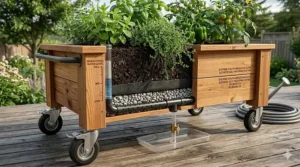
Even planters with built-in drainage holes benefit from added drainage layers, especially important in Canadian regions with heavy spring rains or clay-heavy soils. Place a 3-5 cm layer of coarse materials like pebbles, broken terracotta pot pieces, or pine bark chunks at the bottom before adding soil. This creates an air gap that prevents soil from sitting directly in drainage water, reducing root rot risk.
Some Canadian gardeners swear by landscape fabric placed over drainage holes before adding soil. The fabric prevents soil from washing through holes during heavy rains while still allowing water to drain freely. This technique particularly helps in prairie provinces where sudden thunderstorms can dump 25+ mm of rain in an hour, potentially washing expensive soil mix out through large drainage holes.
For wooden planters specifically, consider lining the interior with heavy-duty plastic sheeting (pond liner works well) before filling. This creates a moisture barrier between wood and soil, dramatically extending the planter’s life in Canadian freeze-thaw conditions. Leave the bottom unlined for drainage, but lining the sides prevents moisture from continuously wicking into wood grain—the primary cause of rot and splitting in wooden garden containers.
First-Season Planting Strategy for Canadian Zones
Canadian gardeners can’t simply follow planting calendars designed for American zones with the same numbers—our seasons have different patterns even at similar latitudes. Zone 5 Toronto behaves differently from Zone 5 Kentucky because of Canadian air mass patterns and latitude effects on day length.
For a newly set up elevated planter in early spring, resist the urge to plant warm-season crops too early. Soil temperature matters more than air temperature—tomato roots don’t function properly below 10°C soil temperature regardless of whether air temperature hits 18°C. Use a soil thermometer (not air temperature) to determine planting timing. Most Canadian regions reach consistent 10°C+ soil temperature in mid-to-late May, though southwestern BC achieves this by mid-April.
Start with cold-hardy crops in early spring to maximize your elevated planter’s season:
- Lettuce, arugula, spinach can be direct seeded when soil reaches 4°C (typically early April in southern regions)
- Peas tolerate near-freezing soil and can go in as soon as ground is workable
- Onion sets and garlic transplants handle cold soil well
Transition to warm-season crops once soil consistently stays above 10°C at night:
- Tomatoes (transplants, not seeds—our season is too short for starting from seed outdoors)
- Peppers (also transplants; pepper seeds need 25°C+ to germinate)
- Herbs like basil (plant after last frost date—typically late May for most Canadian regions)
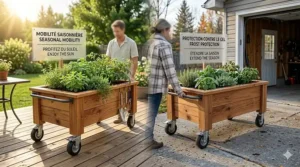
The mobility advantage comes into play during that risky transition period in late May or early June when you want to plant tomatoes but forecast shows possible overnight lows near freezing. Plant them, then on cold nights roll the planter against a warm house wall or even into a garage for protection, then roll back out for full sun the next day.
Common Mistakes When Buying Elevated Planter Boxes with Wheels (And How to Avoid Them)
Canadian first-time buyers consistently make the same errors when selecting wheeled planters, usually learning these lessons the expensive way through failed purchases that don’t survive a single season. Here’s how to avoid the most common pitfalls.
Choosing Style Over Substance for Canadian Weather
That Pinterest-perfect white plastic planter might look stunning in California lifestyle photos, but white plastic in Canadian sun becomes brittle and cracks within 2-3 seasons. UV radiation at Canadian latitudes during summer months is intense (especially in prairie provinces with clear skies), and light-coloured plastics without UV stabilizers degrade faster than darker colours that contain carbon black UV protection.
Similarly, trendy fabric grow bags on metal frames look appealing but Canadian freeze-thaw cycles destroy fabric material. Water absorbed into fabric during fall rains freezes and expands, tearing seams and degrading material integrity. By spring, you’re often looking at fabric that’s barely holding together, requiring full replacement. Stick with solid materials—wood, metal, or heavy-duty reinforced plastic—that handle our climate extremes.
The aesthetic trap extends to wheel choice. Decorative metal casters might complement your patio décor, but if they’re not weather-sealed, Canadian humidity and winter moisture cause them to rust and seize. Suddenly your “mobile” planter won’t roll because the wheels have corroded in place. Prioritize functional rubber or heavy-duty plastic wheels over decorative metal options unless specifically rated for outdoor year-round exposure.
Underestimating Weight Once Filled with Wet Soil
Every planter description lists dimensions and maybe capacity, but rarely mentions the crucial detail: how much does this weigh when fully loaded with wet soil after a rainstorm? A 48×24×12-inch planter filled with soil holds roughly 150 litres of growing medium. At approximately 0.6-0.7 kg per litre (for lightweight potting mix), that’s 90-105 kg before you add plants and water. After a typical Canadian spring rain, wet soil can weigh 20-30% more.
This has two critical implications. First, those plastic caster wheels rated for “100 lbs” won’t handle it—you need heavy-duty wheels rated for at least 150-180 lbs (68-82 kg) to maintain mobility once the planter is actually in use. Second, the planter frame itself must support this weight without flexing or bowing. Cheaper wooden planters with thin side boards (less than 2 cm thick) tend to bow outward once filled, creating gaps at corners where soil spills out.
Test this before buying if possible—check customer photos in reviews showing actual in-use planters, not just staged product photography. Look for complaints about wheels cracking under weight or frames warping. One review mentioning wheel failure is concerning; multiple reviews reporting it means the design fundamentally can’t handle realistic loaded weight.
Ignoring Drainage Adequacy for Canadian Spring Conditions
Many planters advertise “drainage holes,” but the number, size, and placement determine whether your plants thrive or drown during Canadian rainy periods. Three small 1 cm holes might drain adequately in Arizona, but during a Vancouver April where it rains 15 days straight, those tiny holes can’t keep pace with water input. Result: waterlogged soil, root rot, and dead plants despite technically having drainage.
Adequate drainage for Canadian conditions means:
- Minimum 4-6 drainage holes for planters under 100 cm length
- Holes at least 1.5-2 cm diameter to handle heavy flow
- Holes positioned along the bottom rather than concentrated at one end
- Raised bottom design where planter doesn’t sit flat on the deck, allowing water to escape freely underneath
The SogesHome and Aveyas models both feature this raised-bottom design with multiple properly-sized holes. Contrast this with some budget planters that sit completely flat with tiny holes—water pools underneath, the wood or metal sitting in perpetual moisture rots or rusts, and drainage holes eventually clog with sediment because water can’t flow away.
If you’re considering a planter with questionable drainage, you can modify it by drilling additional holes (wear safety glasses, go slowly to avoid cracking plastic or splintering wood), but you shouldn’t have to fix a brand-new product before first use. Choose adequately-drained options from the start.
Buying the Wrong Size for Your Actual Growing Plans
New Canadian gardeners consistently overestimate how much they’ll grow in their first season. That 48-inch planter seems perfect for your dream of 12 tomato plants, 4 pepper plants, and a border of herbs—except that’s roughly triple the appropriate density. Overcrowded plants compete for nutrients, create humidity that encourages fungal diseases, and reduce air circulation that would normally keep foliage dry.
Realistic spacing for an elevated planter:
- Tomatoes: one plant per 30 cm of length (so a 100 cm planter holds 3 tomato plants maximum, preferably 2)
- Peppers: one plant per 25-30 cm
- Herbs: varies by type, but assume 15-20 cm spacing for bushy herbs like basil or cilantro
- Lettuce: can be succession planted more densely, roughly 10-12 cm spacing
That 48×24-inch planter realistically holds 2-3 tomato plants with a border of basil, or 4-5 pepper plants, or a mixed herb garden with 6-8 plants, or dense lettuce planting that you harvest as baby greens. Not all of these simultaneously. Running the numbers before purchasing prevents disappointment when you realize you need 2-3 planters to grow everything on your wish list.
Conversely, buying too small means plants become root-bound mid-season, growth stalls, and yields disappoint. Most Canadian vegetable crops need minimum 25-30 cm soil depth—those 20 cm deep planters marketed as “vegetable gardens” really only suit shallow-rooted greens and herbs. Buying slightly larger than you think you need almost always works better than going too small and facing limitations throughout the growing season.
Elevated Planters vs. Traditional Ground-Level Raised Beds: What Works Best in Canada
Canadian gardeners often debate whether elevated mobile planters provide enough advantages over standard stationary raised beds to justify the higher cost. The answer depends heavily on your specific situation, available space, and physical abilities, but each approach suits different Canadian gardening scenarios.
Traditional raised beds offer greater soil volume and permanent placement, while elevated planters sacrifice some capacity for mobility and ergonomic benefits. In-ground raised beds typically range from 15-30 cm high, still require bending for maintenance, but can be built much wider (up to 120 cm) since you’ll step into the garden rather than reaching over sides. Canadian community gardens favour this style because they’re more economical to build at scale and handle multiple-season plantings better.
The mobility factor of wheeled planters changes the equation in Canadian climates. Traditional beds sit where you built them—if that location becomes too shady as your neighbour’s tree grows, you’re either living with reduced production or undertaking major reconstruction work to relocate. Wheeled planters adapt to changing conditions throughout a season or over multiple years. As your garden evolves, so can your planter placement.
Soil warming happens faster in elevated planters compared to ground-level beds. The sides of an elevated planter expose soil to warming air on all sides, while ground beds only warm from the top surface. This 2-3 degree temperature advantage matters enormously in Canadian spring when you’re racing against our short season. I typically see germination 4-7 days faster in elevated planters compared to raised beds at the same time of year, which effectively extends the growing season by a week on the front end.
Pest control becomes significantly easier with elevated planters. Ground-level beds in Canadian gardens face rabbit damage, with cottontail rabbits reaching roughly 30 cm high to nibble young plants. A 75 cm high elevated planter places tender seedlings completely out of rabbit reach without requiring fencing. Similarly, slug damage (common in humid regions like coastal BC) decreases dramatically when the soil surface sits 60-90 cm above ground rather than 15-20 cm. Slugs can still climb metal or wood frames, but the height difference makes a noticeable impact on damage levels.
Cost comparison favours traditional raised beds for equal growing space. Building a 120×240 cm ground-level raised bed using dimensional lumber costs roughly $100-150 CAD in materials. An equivalent-sized wheeled elevated planter runs $200-300+. However, this calculation changes if you account for long-term back pain treatment, physiotherapy, or reduced gardening participation due to mobility issues. The ergonomic investment in elevated planters essentially pays you back in pain-free gardening hours.
FAQ: Elevated Planter Box on Wheels Questions from Canadian Gardeners
❓ Can I leave my elevated planter box on wheels outside through Canadian winters?
❓ What soil depth do I need for growing tomatoes in an elevated planter in Canada?
❓ How do I prevent my wheeled planter from rolling away during strong winds common in prairie provinces?
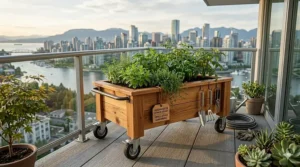
❓ Can elevated planters on wheels be used on apartment balconies in cities like Toronto or Vancouver?
❓ What vegetables grow best in elevated planters during the short Canadian growing season?
Conclusion: Making the Smart Choice for Your Canadian Garden
Selecting the right elevated planter box on wheels ultimately comes down to matching product features with your specific Canadian growing situation. If you’re battling harsh prairie winters and want a planter that’ll still be thriving a decade from now, the Highpro galvanized steel model offers unmatched durability in the $150-$200 CAD range. Urban balcony gardeners in Toronto or Vancouver high-rises should seriously consider the lightweight Aveyas or plastic options that won’t stress building weight limits while remaining manoeuvrable in tight spaces.
For traditional aesthetic appeal combined with solid functionality, the Best Choice Products wooden planter strikes the right balance, though you’ll need to commit to annual maintenance treatments to handle Canadian weather exposure. And if vertical growing appeals to you—training tomatoes, cucumbers, or pole beans up a trellis—the ORALNER model’s integrated support system maximizes production in limited space.
What I consistently observe is that Canadian gardeners who invest in quality wheeled planters report significantly better season-long results compared to those fighting with stationary ground beds. The ability to chase optimal sun as seasons change, protect tender plants from unexpected frosts, and garden without constant bending transforms the entire experience from a chore into genuine enjoyment. Our short growing season means every advantage matters—mobility, ergonomic design, and proper drainage aren’t luxury features but practical necessities for Canadian success.
The real question isn’t whether elevated planters on wheels make sense for Canadian gardens, but rather which model best fits your specific needs, climate zone, and growing ambitions. Start with realistic expectations about your first-season crop plans, choose durable materials rated for outdoor year-round exposure in your province, and prioritize adequate drainage for our infamous spring moisture. Do that, and you’ll be harvesting fresh vegetables and herbs from your mobile garden while your neighbours are still debating where to permanently site their in-ground beds.
✨ Don’t Miss These Exclusive Deals!
🔍 Take your container gardening to the next level with these carefully selected elevated planters on wheels. Click on any highlighted product to check current pricing and availability on Amazon.ca. These mobile garden solutions will help you grow fresh vegetables and herbs your family will love, even in Canada’s short season!
Recommended for You: More Canadian Gardening Guides
- Best Elevated Garden Beds for Bad Backs Canada 2026
- 7 Best Plastic Raised Garden Beds Canada 2026
- How to Seal Cedar Raised Garden Beds: 7 Ways (Canada 2026)
Disclaimer: This article contains affiliate links. As an Amazon Associate, I earn from qualifying purchases. If you purchase products through these links, we may earn a small commission at no additional cost to you.
✨ Found this helpful? Share it with your friends! 💬🤗
