
In This Article
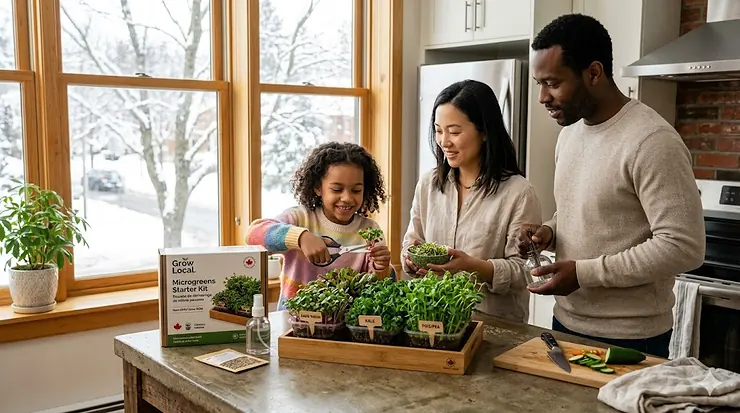
If you’ve scrolled through your social media feed lately, you’ve probably noticed the explosion of tiny greens garnishing everything from smoothie bowls to gourmet sandwiches. But microgreens aren’t just another food trend—they’re a practical solution for Canadian home gardeners who want fresh, nutrient-dense produce year-round, even when there’s 30 cm of snow outside.
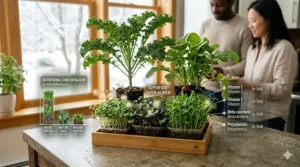
What most people don’t realize is that microgreens can contain up to 40 times more vitamins and minerals than their mature counterparts, according to recent research published by the National Institutes of Health. That means a handful of broccoli microgreens delivers more nutrients than an entire head of mature broccoli. For Canadian families looking to maximize nutrition during our long winters when fresh local produce is scarce, that’s a game-changer.
The beauty of a microgreens starter kit is that it removes the guesswork entirely. You don’t need a green thumb, a backyard, or even much counter space. Most kits fit comfortably on a kitchen windowsill and deliver harvest-ready greens in 7-14 days. Whether you’re in a downtown Toronto condo or a rural Alberta farmhouse, these compact growing systems work beautifully in Canadian homes—no special equipment required.
Quick Comparison: Top Microgreens Starter Kits Available in Canada
| Kit Name | Best For | Approximate Price (CAD) | Harvest Time | Key Feature |
|---|---|---|---|---|
| HAMAMA Growing Kit | Beginners | $65-$85 | 7-10 days | Pre-seeded quilts, zero soil |
| ZestiGreens Organic Kit | Dual growers | $45-$60 | 7-10 days | Hydroponic + soil options |
| Mountain Valley Mini Kit | Budget buyers | $10-$15 | 10-14 days | Compact 6-variety pack |
| Aquager Starter Kit | Organic enthusiasts | $55-$75 | 7-25 days | Canadian hemp grow mats |
| EZ-Gro Self-Watering | Low-maintenance | $35-$50 | 7-12 days | Pre-seeded convenience |
| True Leaf Market Deluxe | Serious growers | $140-$180 | 10-21 days | Hydroponic + soil systems |
| The Micro Farmers Kit | Eco-conscious | $50-$70 | 14-21 days | Made-in-Canada hemp mats |
💬 Just one click — help others make better buying decisions too! 😊
✨ Don’t Miss These Exclusive Deals!
🔍 Take your indoor gardening to the next level with these carefully selected products. Click on any highlighted item to check current pricing and availability on Amazon.ca. These tools will help you create authentic homegrown nutrition your family will love!
Top 7 Microgreens Starter Kits: Expert Analysis for Canadian Growers
1. HAMAMA Microgreens Growing Kit
If you’ve never grown microgreens before and the thought of dealing with soil, seeds, and proper watering schedules feels overwhelming, HAMAMA removes every possible pain point. Their signature “seed quilts” arrive pre-seeded—you literally just place them on water and wait. This is particularly brilliant for busy Canadian families juggling work, kids, and the chaos of everyday life.
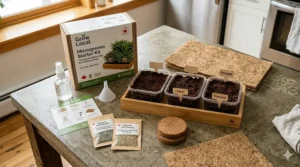
The system includes a ceramic growing tray (which looks elegant enough to keep on your counter), three seed quilt varieties, and a blackout cover for the germination phase. Each quilt is embedded with organic seeds in a biodegradable mat, so there’s zero measuring, zero mess, and virtually zero chance of failure. The varieties typically include broccoli, kale, and a salad mix—all powerhouse greens packed with sulforaphane and vitamins.
What makes this exceptional for Canadian conditions is the self-watering feature. You fill the tray once, and the quilt wicks moisture as needed for 7-10 days. This means if you’re away for a long weekend visiting family in Banff or cottage country, your microgreens won’t die of thirst. During Canadian winters when indoor air is bone-dry from heating systems, this consistent moisture delivery prevents the wilting issues that plague traditional soil-based growing.
Canadian customers consistently praise the “set it and forget it” nature, though some note the per-harvest cost runs higher than buying seeds separately. At around $70-$85 CAD for the starter kit (which includes three harvests), you’re paying for convenience and guaranteed results. Refill quilts run about $20-$25 CAD for a three-pack.
Pros:
✅ Absolute beginner-friendly—no gardening experience needed
✅ Beautiful design that complements modern Canadian kitchens
✅ Consistent germination rates even in dry winter conditions
Cons:
❌ Higher per-harvest cost compared to traditional seed-buying
❌ Limited variety selection in Canadian market (fewer options than US)
Best for: Time-strapped Canadian families, apartment dwellers, or anyone who’s killed every houseplant they’ve ever owned. The foolproof nature makes this ideal for getting kids involved in food growing—my neighbour’s eight-year-old successfully harvests weekly batches for their family’s smoothies.
2. ZestiGreens Organic Self-Watering Kit
The ZestiGreens kit stands out because it accommodates both hydroponic and soil-based growing, making it perfect for Canadian growers who want to experiment before committing to one method. The 30 cm × 15 cm bamboo-framed tray looks far more polished than typical plastic growing containers, and the self-watering insert prevents the overwatering issues that plague beginners.
This kit ships with two organic seed varieties (typically broccoli and a salad superfood mix containing kale, kohlrabi, arugula, and cabbage), two hemp grow mats, and a comprehensive 16-page illustrated guide. What Canadian growers particularly appreciate is the flexibility—you can remove the hydroponic insert and add soil for larger seeds like sunflower, pea, or cilantro microgreens that prefer root depth.
In terms of real-world performance, the blackout felt lid creates ideal germination conditions even if your Vancouver apartment faces north and gets limited natural light. The self-watering reservoir holds enough moisture for 7-10 days, though in Alberta’s extremely dry winter air, you might need to top up around day 5-6. The hemp mats are sustainably produced and fully compostable—a nice touch for eco-conscious Canadians.
The pricing sits in the mid-range sweet spot at $45-$60 CAD, and replacement hemp mats are readily available through Amazon.ca. One minor frustration Canadian buyers mention is that the seed varieties aren’t always clearly labelled for Canadian growing conditions, so you might need to experiment with placement near heat sources during particularly cold winter nights.
Pros:
✅ Versatility to grow both hydroponic and soil-based microgreens
✅ Sustainable, compostable materials align with Canadian environmental values
✅ Bamboo frame is attractive enough for permanent kitchen display
Cons:
❌ Learning curve to optimize watering for Canadian climate extremes
❌ Limited seed variety in Canadian shipments (often just 2 types)
Best for: Mid-level gardeners who want to test different growing methods, environmentally conscious Canadians, or anyone living in regions with temperature extremes who need adaptable systems.
3. Mountain Valley Seed Company Mini Growing Kit
Don’t let the budget-friendly pricing fool you—this compact kit delivers impressive variety for under $15 CAD. You get six different seed types (arugula, radish, pea shoots, sunflower, red streaks mizuna mustard, and salad mix), a growing container with humidity lid, a compressed soil puck, organic seeds, and a mist sprayer. For Canadians dipping their toes into microgreens without major investment, this is hard to beat.
The soil puck expands when you add water, eliminating the mess of handling loose potting mix in your kitchen. The six seed varieties let you discover which flavours your family prefers without buying full-size seed packets you might never use. Pea shoots deliver a sweet, crunchy addition to stir-fries, while the mizuna mustard adds a peppery kick that’s perfect for topping pizza or pasta.
Where this kit shines for Canadian conditions is the simplicity—it’s genuinely designed for kitchen countertop growing, so it works beautifully in apartments, condos, or anywhere space is limited. The humidity dome maintains moisture levels even in the dry air created by forced-air heating systems that most Canadian homes rely on during winter.
The trade-off is capacity. Each container grows enough microgreens for 3-4 salads, so if you’re feeding a family of four who eats microgreens daily, you’ll need multiple kits running simultaneously. At this price point though, buying 3-4 kits still costs less than many premium single-harvest systems. Replacement seeds are available on Amazon.ca, typically $8-$12 CAD for variety packs.
Pros:
✅ Unbeatable value for variety and experimentation
✅ Compact size perfect for small Canadian apartments
✅ Great for determining which microgreens your family actually likes
Cons:
❌ Small yield requires multiple kits for regular family consumption
❌ Basic plastic construction won’t win design awards
Best for: Budget-conscious Canadians, first-time growers who want to test the waters, students in dorms, or anyone with extremely limited kitchen space who still wants fresh greens.
4. Aquager Microgreens Starter Kit with Canadian Hemp Mats
What caught my attention about Aquager’s kit is the Canadian-made terra fibre grow mats—these hemp-based mats are produced domestically and provide excellent moisture retention while preventing the mould issues that sometimes plague soil-based growing. The kit includes a reusable nursery tray with adjustable humidity vents, five organic compost able grow mats, and five seed varieties: lemon basil, field pea shoots, kalefetti mix, broccoli, and garnet red amaranth.
The adjustable vents are genuinely useful for Canadian growers dealing with seasonal humidity swings. During dry prairie winters, you keep vents closed to trap moisture. In humid coastal British Columbia summers, you crack them open to prevent excess condensation. This level of control makes the difference between thriving microgreens and disappointing, mouldy failures.
Each seed variety comes with detailed growing instructions, and the harvest timeline varies from 7 days (broccoli) to 2-3 weeks (pea shoots). The kalefetti mix—a blend of kale varieties—develops beautiful purple and green colours that make your dishes Instagram-worthy while delivering concentrated nutrition. Canadian reviewers particularly love the lemon basil for its intense citrus flavour that brightens winter meals when fresh herbs are expensive at grocery stores.
At $55-$75 CAD, this sits in the premium-but-reasonable category. The reusable tray should last for years with proper care, and replacement hemp mats plus seeds run about $25-$30 CAD for a five-pack. The Canadian manufacturing means faster shipping for most provinces and supports our domestic agricultural innovation.
Pros:
✅ Canadian-made grow mats support domestic economy
✅ Adjustable ventilation adapts to regional climate differences
✅ Unique seed varieties not commonly found in basic kits
Cons:
❌ Longer harvest times for some varieties (pea shoots take 2-3 weeks)
❌ Premium pricing compared to imported alternatives
Best for: Canadians who prioritize buying domestic products, growers in regions with extreme humidity variations, or anyone seeking gourmet microgreen varieties beyond basic broccoli and radish.
5. EZ-Gro Pre-Seeded Microgreens Growing Kit
EZ-Gro eliminates the tedious seeding process entirely—their grow mats arrive pre-seeded with optimal spacing already handled. This is similar to HAMAMA’s concept but typically available at lower price points on Amazon.ca ($35-$50 CAD for a starter kit with four mats). Varieties include organic basic salad mix, spicy salad mix, broccoli, kale, arugula, radish, and mustard.
The self-watering reservoir tray is the standout feature here. You fill the bottom reservoir, and the capillary mat draws water upward as needed. For Canadian growers who travel frequently for work or take week-long ski trips to Whistler, this hands-off watering approach means you return home to thriving microgreens rather than crispy brown remnants.
The blackout cover mimics the underground germination environment, encouraging strong root development before the cotyledons emerge. Once you remove the cover (usually day 3-4), the greens green up quickly in natural or artificial light. Canadian users in northern regions where winter daylight is limited report good results even without supplemental grow lights, though placing trays near south-facing windows helps.
Quality control seems consistent based on Canadian customer feedback—germination rates typically exceed 85%, which is solid for pre-seeded products. The main limitation is variety selection on Amazon.ca; you’ll find fewer exotic options compared to what’s available on the company’s US website. Still, for mainstream favourites like broccoli and radish, this delivers reliable results with minimal effort.
Pros:
✅ Pre-seeded convenience eliminates beginner mistakes
✅ Self-watering system handles Canadian travel schedules
✅ Good germination rates even in variable home temperatures
Cons:
❌ Limited variety selection in Canadian market
❌ Pre-seeded mats create ongoing costs higher than buying bulk seeds
Best for: Busy professionals, frequent travellers, seniors who want fresh greens without physical seeding demands, or anyone frustrated by failed traditional gardening attempts.
6. True Leaf Market Deluxe Microgreens Kit
This is the serious grower’s choice—a comprehensive system priced around $140-$180 CAD that includes both hydroponic and traditional soil-growing components. You get multiple 25 cm × 50 cm growing trays, a variety of seed types (typically 8-12 varieties), growing medium options, and detailed cultivation guides that go beyond the basics into optimization techniques.
What justifies the premium pricing is versatility. The kit supports experimenting with different growing mediums—hemp mats, coconut coir, soil-based, or pure hydroponic setups. For Canadian growers who want to find the perfect system for their specific conditions (dry Calgary apartments versus humid Halifax basements), this trial-and-error approach saves money long-term by preventing investment in the wrong method.
The larger tray size means substantially higher yields. You can harvest enough microgreens weekly to supply a family of four’s daily smoothies, salads, and sandwich toppings. The company has been operating since 1974 and sources many seeds from US suppliers with high germination standards—Canadian customers report consistent quality even though these aren’t specifically certified for Canadian growing conditions.
One practical consideration for Canadian buyers: shipping costs can add $15-$25 CAD depending on your location, and customs occasionally flags larger shipments. Ordering during their periodic sales (often around January for New Year’s resolution gardeners and March for spring planting season) can offset these extras. The system pays for itself within 3-4 months compared to buying microgreens at Canadian grocery stores, where a tiny clamshell often costs $5-$7 CAD.
Pros:
✅ Professional-grade system scales for serious production
✅ Extensive variety selection supports experimentation
✅ Reusable components last for years with proper maintenance
Cons:
❌ Significant upfront investment compared to starter kits
❌ Learning curve requires commitment to master all components
Best for: Experienced gardeners transitioning to microgreens, Canadians planning to sell at farmers’ markets, health-focused families committed to daily microgreen consumption, or anyone with space for a dedicated growing area.
7. The Micro Farmers Windowsill Growing Kit
This Canadian company based in British Columbia offers growing kits specifically designed for our northern climate. Their starter kits include reusable 10 cm × 15 cm trays that fit perfectly on most Canadian windowsills, Canadian-made hemp grow mats, organic seed selections, and bilingual English-French grow guides that meet federal labelling requirements.
What makes The Micro Farmers special is the Canadian-specific growing advice. They understand that “place in indirect sunlight” means something entirely different in Yellowknife in January versus Victoria in July. Their guides include seasonal adjustments for light exposure, temperature management, and even suggestions for which varieties tolerate the heat fluctuations from baseboard heaters common in older Canadian homes.
The kit pricing runs $50-$70 CAD depending on configuration, with refill options readily available through their website and sometimes through Amazon.ca. Seed varieties lean toward culinary favourites: broccoli, radish, pea shoots, and specialty mixes designed by Canadian chefs. The pea shoot variety is particularly well-suited to Canadian growing conditions and delivers consistently even during our darkest winter months.
Canadian customer service is a genuine advantage here—if you run into issues, you’re dealing with a team familiar with Canadian postal codes, provincial regulations, and our unique climate challenges. The company also provides ongoing email support and seasonal growing tips, which helps beginners troubleshoot problems specific to their region.
Pros:
✅ Canadian company understands our specific growing challenges
✅ Bilingual instructions comply with federal requirements
✅ Excellent customer support during Canadian business hours
Cons:
❌ Limited distribution—not always available on Amazon.ca
❌ Smaller tray size means lower yields per harvest
Best for: Canadians who prefer supporting domestic businesses, growers in extreme climate zones needing region-specific advice, Quebec residents appreciating bilingual resources, or anyone frustrated by generic growing guides written for California conditions.
How to Choose the Perfect Microgreens Starter Kit for Canadian Conditions
Selecting the right kit involves balancing your experience level, available space, budget, and Canadian-specific factors like winter light availability and indoor humidity extremes. Here’s how to make the smartest choice for your situation.
Consider Your Winter Light Situation
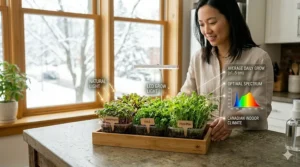
Canadian winter light varies dramatically by region and apartment orientation. If you’re in southern Ontario with decent south-facing windows, most kits work well with natural light alone. But if you’re in northern Saskatchewan where December brings only 6-7 hours of weak daylight, factor in the cost of a supplemental LED grow light ($25-$50 CAD on Amazon.ca). Some kits like HAMAMA and ZestiGreens tolerate lower light better than others.
Match Kit Capacity to Consumption Habits
A single-tray kit produces roughly 50-100 grams of microgreens per harvest—enough for 3-5 salads or 7-10 smoothie additions. If your family of four wants daily microgreens, you’ll need 2-3 kits running on staggered schedules or a larger multi-tray system like True Leaf Market’s offering. Budget buyers often start with one Mountain Valley kit to test interest before scaling up.
Evaluate Long-Term Costs in Canadian Dollars
Pre-seeded convenience kits like HAMAMA cost about $7-$9 CAD per harvest, while buying bulk organic microgreens seeds and grow mats brings costs down to $1-$2 CAD per harvest. Over a year of weekly growing, that’s the difference between $365-$470 CAD versus $50-$100 CAD. If you’re committed long-term, the savings favour buying a quality reusable kit and bulk supplies.
Account for Canadian Climate Challenges
Prairie growers face bone-dry winter air that requires more frequent misting. Coastal British Columbia growers battle excess humidity that can cause mould. Quebec growers need bilingual instructions for legal compliance if selling at markets. Choose kits with adjustable features (like Aquager’s ventilation system) that adapt to your specific regional challenges.
Check Amazon.ca Availability and Shipping
Many top-rated American microgreens kits either don’t ship to Canada or charge prohibitive $30-$50 CAD cross-border fees. Always verify the product ships from Amazon.ca or includes free shipping. Some brands list Canadian availability but actually ship from US warehouses, adding 2-3 weeks delivery time plus potential customs delays.
First Harvest Success: Your Week-by-Week Growing Guide
Days 1-2: Setup and Blackout Phase
Soak your grow mat thoroughly with room-temperature water (letting it warm up for 30 minutes if your Canadian tap water runs ice-cold in winter). Sprinkle seeds evenly—about 2 tablespoons per 25 cm × 25 cm tray for small seeds like broccoli, 3-4 tablespoons for larger seeds like sunflower. Cover with the blackout lid or a damp cloth, and place somewhere consistently warm—top of the refrigerator works perfectly in Canadian homes.
Days 3-5: Germination and Light Introduction
Check daily for sprouting. Once you see tiny white roots and stems pushing up (usually day 3-4), remove the blackout cover and move to indirect light. Don’t blast them with direct summer sun through a south-facing window—the tender shoots can scorch. Mist 2-3 times daily to maintain moisture, especially if you’re running forced-air heating.
Days 6-10: Growth and Greenery
Your microgreens will transform from pale yellow-white to vibrant green as chlorophyll develops. This is when differences between varieties become obvious—broccoli develops tiny serrated leaves, radish shows distinct round cotyledons, and pea shoots send up curling tendrils. Keep the mat consistently moist but not waterlogged. If you see any white fuzz at the base, increase airflow—it’s usually harmless root hairs, not mould, but extra ventilation prevents actual mould in Canadian humidity extremes.
Days 10-14: Harvest Window
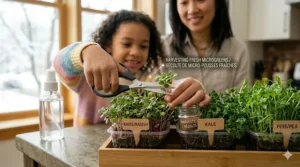
Most microgreens are ready when the first true leaves appear beyond the initial cotyledons. Use clean scissors to cut just above the mat level, rinse gently in cold water, and spin dry in a salad spinner. They’ll keep refrigerated in an airtight container for 5-7 days, though flavour and nutrient content peak within 2-3 days. Canadian winters are actually ideal storage conditions—your refrigerator stays consistently cold without the summer brownouts that can affect food safety.
Common Mistakes Canadian Microgreen Growers Make (And How to Avoid Them)
Ignoring Winter Humidity Levels
Canadian homes with forced-air heating can drop to 15-20% humidity in January—brutal for moisture-loving microgreens. Don’t rely solely on the kit’s water reservoir; mist greens morning and evening, or run a small humidifier nearby. Conversely, coastal regions in winter can spike to 70% humidity, creating mould risks. Increase airflow with a small fan on low speed.
Overheating from Baseboard Radiators
Placing your growing tray directly on or near baseboard heaters creates temperature swings that stress microgreens. They prefer consistent 18-24°C (65-75°F). If your only windowsill sits above a radiator, place a wooden cutting board underneath the tray as insulation, or move the kit to a bathroom where steam from showers provides humidity and temperature stays moderate.
Assuming “Organic” Equals “Canadian-Certified”
Many kits advertise organic seeds without specifying certification standards. USDA Organic doesn’t automatically meet Canadian Organic Standards, though most high-quality American seeds still work perfectly. If you’re concerned about certification (especially for resale at farmers’ markets), verify seeds meet Canadian Food Inspection Agency requirements or source from Canadian suppliers like William Dam Seeds or West Coast Seeds.
Underestimating Seed Quantity Needs
Beginners often seed too sparsely, resulting in disappointing yields. For dense, restaurant-quality microgreens, you want seeds nearly touching—about 10-15 grams per standard 25 cm × 25 cm tray for small seeds like broccoli, 30-40 grams for larger seeds like sunflower. Canadian suppliers sometimes package smaller quantities than American counterparts, so double-check weights when comparing prices.
Health Benefits: Why Microgreens Pack a Nutritional Punch
Microgreens aren’t just garnishes—they’re concentrated nutrition powerhouses that particularly benefit Canadians during our long winters when fresh local produce is scarce and expensive. Research published by Scientific Reports in 2025 found that red beet microgreens contain exceptional levels of organic acids and flavonoids supporting antioxidant activity, while broccoli microgreens delivered high phenolic compounds critical for red blood cell production.
The timing of harvest matters tremendously for nutrient density. Microgreens are cut at their nutritional peak—7-21 days after germination when cotyledons are fully expanded but before true leaves fully mature. At this stage, the plant has mobilized all its stored seed energy into growth, creating nutrient concentrations that rival or exceed mature vegetables. For Canadian families trying to maintain vitamin D and C levels during dark winters, adding microgreens to daily smoothies provides a measurable nutritional boost.
According to the Ontario government’s food safety guidelines, proper handling prevents contamination risks. Unlike sprouts which are eaten root-and-all and have higher bacterial contamination potential, microgreens are cut above the soil line, significantly reducing foodborne illness risk when rinsed properly before consumption.
Seasonal Growing Strategies for Canadian Climate Zones
Prairie Provinces (Alberta, Saskatchewan, Manitoba) — Extreme Dry Cold
Winter indoor air can drop below 20% humidity. Combat this by running a small humidifier near your microgreens, misting 3-4 times daily, and covering trays with clear plastic domes to trap moisture. Sunlight is abundant even in winter, so south-facing windows work beautifully. Summer brings opposite challenges—intense UV through windows can scorch tender greens, so use sheer curtains or move trays to east-facing windows during June-August.
Coastal British Columbia — Mild, Humid Winters
Your challenge is excess moisture and mould potential. Prioritize kits with ventilation features like Aquager’s adjustable vents. Run a small fan on low speed to keep air circulating, and avoid overwatering—the ambient humidity often provides enough moisture. Year-round growing is easy with your mild temperatures, making this region perfect for continuous production.
Atlantic Canada — Maritime Climate Variables
Expect rapid weather changes affecting indoor humidity and temperature. Versatile kits like ZestiGreens that accommodate both hydroponic and soil methods let you adapt to conditions. During humid summer months, switch to soil-based growing with better airflow. In dry winter heating season, hydroponic mats maintain consistent moisture better.
Quebec and Eastern Ontario — Hot Summers, Cold Winters
Bilingual growing instructions (like those from The Micro Farmers) aren’t just legally required for commercial sales—they’re helpful for family gardening too. Your four-season extremes demand adaptable systems. Summer might require moving kits away from hot windowsills to cooler locations, while winter benefits from supplemental LED grow lights during short December days.
Northern Territories — Extreme Light Variation
Summer’s 20+ hour daylight creates amazing growing conditions, but winter’s limited light requires investment in quality LED grow lights ($40-$80 CAD). Choose kits with smaller footprints to keep electricity costs reasonable. The extremely dry indoor air during heating season means multiple daily mistings are non-negotiable.
❓ Frequently Asked Questions
❓ Can I grow microgreens in a Canadian apartment without a yard?
❓ How do microgreens perform during Canadian winter with limited sunlight?
❓ Are microgreens seeds organic variety packs worth buying for Canadian growers?
❓ What's the difference between buying a kit versus buying individual components?
❓ Do I need special permits to grow microgreens at home in Canada?
Conclusion: Start Your Canadian Microgreens Journey Today
Growing microgreens at home transforms how Canadian families approach fresh produce during our challenging climate. Whether you’re in a Halifax apartment facing Atlantic storms or a Calgary house enduring prairie winters, a quality microgreens starter kit delivers nutrient-dense greens year-round without dependence on expensive, imported grocery store options.
The kits reviewed here represent the best available to Canadian buyers in 2026, from budget-friendly Mountain Valley options under $15 CAD to professional-grade True Leaf Market systems around $180 CAD. Match your choice to your experience level, consumption goals, and regional climate challenges, and you’ll be harvesting your first crop within two weeks.
Start with one kit to test the waters, discover which varieties your family loves, then scale up to meet your weekly consumption. The initial investment pays for itself within months compared to buying pre-packaged microgreens at Canadian grocery stores, and the nutritional benefits—particularly during our long winters—make this one of the smartest home growing investments you can make.
Recommended for You
- 7 Best Slow Bolt Cilantro Seeds Canada 2026
- 7 Best Perennial Herb Seeds Zone 4 Canada 2026
- Best Basil Seeds for Indoor Growing Canada 2026
Disclaimer: This article contains affiliate links. As an Amazon Associate, I earn from qualifying purchases. If you purchase products through these links, we may earn a small commission at no additional cost to you.
✨ Found this helpful? Share it with your friends! 💬🤗
