
In This Article
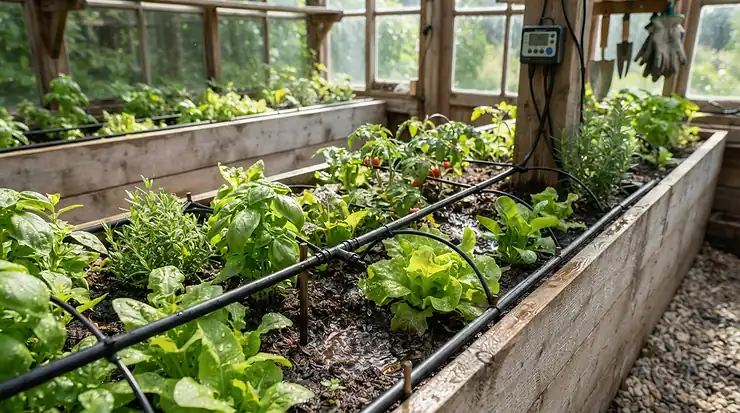
An 8×10 greenhouse for small farms is a compact walk-in structure of about 2.4 × 3.0 metres (roughly 7.4 m²). It is usually a polycarbonate-panelled aluminum or steel kit. Small-scale growers use it to start transplants, extend the season, and shield high-value crops from frost, wind and hail. It is not a mini-farm. It is a very effective tool.
Let’s be honest about the size. A greenhouse this small won’t replace your fields. What it does is protect your most valuable square metres. Tomato starts, early lettuce, microgreens, cut-flower seedlings and the first pepper plants are worth far more per square metre than anything else you grow. They are also the crops that die first when a May frost shows up uninvited.
That’s why the 8×10 footprint has become a quiet favourite on market-garden operations. It is cheap enough to buy outright and small enough to anchor properly. It is also large enough to stand in and work in comfortably.
One word of caution before we start. Kit specs vary wildly, and the difference between “heavy duty” in a product title and heavy duty in a Canadian January is huge. So this guide leans on real specifications, real building-code context, and honest analysis. Where I couldn’t verify something, such as a model’s customer review pool, I say so. Prices are ranges in Canadian dollars, so check current pricing before you buy.
Here’s the short list, then the deep dive.
Quick Comparison: The 7 Best 8×10 Greenhouse for Small Farms Options
| Product | Frame | Standout Feature | Best For |
|---|---|---|---|
| Senfot 8×10 Walk-in Greenhouse | Aluminum | Entry-level price | First-time growers |
| MUCHANT 8×10 FT Greenhouse | Aluminum | Quick setup, two colours | Weekend builders |
| Gulches 8x10FT Polycarbonate Greenhouse | Aluminum | Drainage system | Wet coastal climates |
| Garvee 8×10 FT Walk-In Greenhouse | Aluminum | Lockable sliding door | Roadside and shared sites |
| Kosynda 8′ x 10′ Polycarbonate Greenhouse | Powder-coated aluminum | Double door | Wheelbarrow-heavy workflows |
| IDEALHOUSE 8X10 FT Greenhouse | Aluminum-steel | Side and diagonal reinforcement | Windy, snowy yards |
| TMG Heavy Series GH811 | Galvanized steel | Steel frame | Prairie and snow-belt farms |
Looking at the table, the pattern is clear. Six of the seven kits are aluminum, so your real choice is “light and rustproof” versus “stiff and heavy.” The IDEALHOUSE 8X10 FT Greenhouse and the TMG Heavy Series GH811 are the two that lean into structural durability. For frost protection and seedling work in mild-winter regions, the cheaper aluminum kits make sense. If snow load keeps you up at night, start with those two.
💬 Just one click — help others make better buying decisions too!😊
Top 7 8×10 Greenhouse for Small Farms: Expert Analysis
Every product below was assessed from its published specifications and the way each feature plays out in practice. The comparison table comes first, and the full write-ups follow.
| Product | Frame | Roof Vent / Door (as listed) | Est. Price (CAD) | Review Status | Best For |
|---|---|---|---|---|---|
| Senfot 8×10 | Aluminum | Roof vent | C$650–C$850 | Verify on listing | Budget starts |
| MUCHANT 8×10 | Aluminum | Roof vent | C$800–C$1,200 | Verify on listing | Quick builds |
| Gulches 8×10 | Aluminum | Not confirmed | C$800–C$1,200 | Verify on listing | Rain-heavy sites |
| Garvee 8×10 | Aluminum | Roof vent, lockable sliding door | C$800–C$1,200 | Verify on listing | Unattended sites |
| Kosynda 8×10 | Aluminum | Roof vent, double door | C$900–C$1,300 | Verify on listing | Cart access |
| IDEALHOUSE 8×10 | Aluminum-steel | Adjustable skylight, lockable door | C$900–C$1,300 | Verify on listing | Wind and snow |
| TMG GH811 | Galvanized steel | Not confirmed | C$1,350–C$1,600 | Verify on listing | Heavy snow regions |
A caveat on the price column. These are estimates based on comparable 8×10 listings I saw at other retailers, converted loosely to CAD. They are not Amazon.ca quotes. Treat them as a planning band, and always check the current price. The review column says “verify” on every row because I could not confirm a reliable pool of Amazon.ca reviews for any of them.
The takeaway is that the price spread between the cheapest and the priciest kit is about C$900. That’s small compared with the cost of replacing a collapsed roof in February. If you farm somewhere snowy, spend toward the right side of this table.
1. Senfot 8×10 Walk-in Greenhouse — lowest-cost way into polycarbonate
If you simply need a roof over your seedlings before the next frost, the Senfot 8×10 Walk-in Greenhouse is the entry ticket. Its listing sat at the cheaper end of the 8×10 kits I came across.
It pairs a heavy-duty aluminum frame with polycarbonate panels, a roof vent and a quick-setup system. It’s offered in green and black. Aluminum won’t rust, which matters in a structure that spends all spring dripping with condensation. The roof vent is the spec to watch. A single vent in an 80-square-foot box is borderline once April sun hits. Plan on a second vent or an automatic vent opener.
The honest take: this kit suits transplant production and shoulder-season protection, not snow country. The panel thickness wasn’t confirmed in the listing I found. Many kits in this class use 4 mm twin-wall panels, so confirm that before ordering.
I couldn’t verify a meaningful pool of Amazon.ca reviews for this specific model. When you read the listing, look for repeat comments about panel fit, missing hardware and bent frame pieces, because those are the usual failure points for kits at this price.
Pros:
- ✅ Lowest entry cost in this group
- ✅ Rustproof aluminum frame
- ✅ Quick-setup assembly system
Cons:
- ❌ One roof vent is thin for 80 square feet
- ❌ Snow-load rating isn’t clearly stated
Estimated at C$650–C$850: good value for a first greenhouse, but not a long-term snow-country structure.
2. MUCHANT 8×10 FT Greenhouse — fast setup with two colour choices
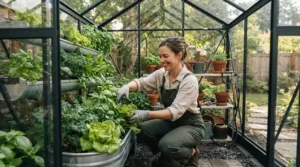
The MUCHANT 8×10 FT Greenhouse is built around one promise, and it’s all about speed. Its listing emphasizes a quick-setup structure, and it comes in black or silver aluminum.
The aluminum frame plus a roof vent covers the basics. Fast assembly matters more than people admit. If you’re racing a planting date, a kit you can raise in a weekend beats a better kit that needs two weekends. The colour choice is cosmetic, but a darker frame warms faster in spring sun while silver reflects a bit more heat. That’s a small point to weigh if you farm somewhere with scorching summers.
Based on the spec sheet, this is a competent middle-of-the-pack kit. Nothing in the listing pushes it into “heavy-snow” territory, so I’d place it with the mild-winter and shoulder-season group. Anchoring is the key detail. Any light aluminum greenhouse needs a proper base and ground anchors, because wind lifts these structures long before snow flattens them.
I couldn’t verify reliable Amazon.ca review data. When you check the listing, look specifically for comments on whether the quick-setup claim held up for first-time builders.
Pros:
- ✅ Quick-setup structure saves labour
- ✅ Black or silver finish options
- ✅ Roof vent included
Cons:
- ❌ No stated snow-load rating
- ❌ Single vent limits summer airflow
Estimated at C$800–C$1,200: a fair middle-tier pick if time is your scarcest resource.
3. Gulches 8x10FT Polycarbonate Greenhouse — built-in drainage for wet climates
Water is the unglamorous enemy of every greenhouse, and the Gulches 8x10FT Polycarbonate Greenhouse advertises a drainage system aimed squarely at it. It has a heavy-duty aluminum frame and is sold as an all-season kit.
A gutter or drainage channel does real work. It moves meltwater and rain away from the base, so you’re not standing in a mud pit at the door. On the wet coast or in the Maritimes, that’s more than a convenience. Pooled water around anchors speeds corrosion on anything that isn’t aluminum and softens the ground under your foundation.
My read: this is the kit for wet-climate market gardeners who care more about site drainage than extreme cold. “All season” is a marketing phrase. Without a stated panel thickness or snow rating, treat it as “three-season plus,” then upgrade the glazing or add insulation if you want to push into winter.
Vent details weren’t confirmed in the excerpt I found, so check that before purchase. A greenhouse without good venting turns into a tomato sauna by June.
I couldn’t verify a trustworthy Amazon.ca review set. Scan any reviews for water-tightness around the panel joints and for how the drainage connects to the ground.
Pros:
- ✅ Drainage system for wet sites
- ✅ Heavy-duty aluminum frame
- ✅ Won’t rust in damp conditions
Cons:
- ❌ Vent details unclear in listing
- ❌ “All season” claim needs verifying
Estimated at C$800–C$1,200: a sensible pick for rainy regions, as long as you confirm the ventilation.
4. Garvee 8×10 FT Walk-In Greenhouse — lockable sliding door for roadside farms
Security rarely makes the spec-sheet headlines, but the Garvee 8×10 FT Walk-In Greenhouse puts a lockable sliding door front and centre. It also includes an aluminum frame, polycarbonate panels, a roof vent, gutters and ground anchors.
A lockable door sounds minor until you farm near a road or share a property. Seedling trays, a small heater, a fan and tools add up fast, and an unlocked greenhouse is an easy target. A sliding door also saves swing room. In an 80-square-foot footprint, a hinged door that sweeps across your bench space is a genuine annoyance.
My assessment: this is one of the more complete packages for the money, since gutters and anchors come bundled instead of being afterthoughts. Sliding doors do have a known quirk, though. The track can collect debris and ice, so plan on cleaning it in winter.
The kit is best suited to growers who want a ready-to-use structure without buying extras. The listing doesn’t state a snow-load figure, so apply the same caution as with the other aluminum kits.
I couldn’t verify Amazon.ca review data for this model. Check reviews for how smoothly the sliding door runs after a few months, which is the real test.
Pros:
- ✅ Lockable sliding door
- ✅ Gutters and ground anchors included
- ✅ Saves swing space inside
Cons:
- ❌ Door track needs winter maintenance
- ❌ No stated snow-load rating
Estimated at C$800–C$1,200: strong value if site security is part of your plan.
5. Kosynda 8′ x 10′ Polycarbonate Greenhouse — double doors for wheelbarrow traffic
The Kosynda 8′ x 10′ Polycarbonate Greenhouse answers a question most buyers forget to ask: how do I get a loaded cart inside? It features a double door, ground anchors, a rain gutter and a roof vent. The aluminum frame is powder-coated, and the kit comes in black.
On a working farm, door width is a daily-use spec. Hauling soil bags, flats and compost through a narrow single door gets old by week two. A double door lets you roll a wheelbarrow straight in and ventilate the whole front on hot days. The powder coating adds a protective layer over bare aluminum, which helps the finish resist scratches during handling.
My take: this is the practical workhorse for growers who move a lot of material. The trade-off with any double-door design is the extra seam. Doors are where heat and cold sneak in, so weatherstripping becomes a worthwhile cheap upgrade for winter.
For four-season ambitions, look at how the doors seal rather than how they open. I couldn’t verify a trustworthy Amazon.ca review pool, so check reviews for comments on door alignment after assembly.
Pros:
- ✅ Double door fits carts and wheelbarrows
- ✅ Powder-coated aluminum frame
- ✅ Gutter and anchors included
Cons:
- ❌ Door seams leak heat in winter
- ❌ Snow-load figure isn’t stated
Estimated at C$900–C$1,300: a smart upgrade if your workflow involves heavy hauling.
6. IDEALHOUSE 8X10 FT Greenhouse — braced frame for heavy weather
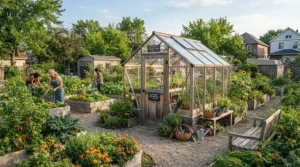
Of the aluminum-style kits, the IDEALHOUSE 8X10 FT Greenhouse makes the strongest structural claims. Its listing describes an aluminum-steel frame with reinforcement bars along the sides and diagonals. It also uses 720 g/m² polycarbonate panels, a sloped roof, a water gutter system and an adjustable skylight.
Diagonal bracing is the feature that matters here. Rectangular frames rack, meaning they skew sideways under wind. Diagonals resist that, which is exactly the failure that tears panels loose. The sloped roof sheds snow, and the adjustable skylight gives you real venting control. The brand says its slide-in panels assemble faster than traditional methods, but treat that as a manufacturer claim.
The analysis: this is the kit I’d shortlist first for windy or snowy sites among the aluminum-framed options. One practical note from the listing is that it ships in two boxes that may arrive separately. Don’t schedule your build day until both have shown up.
I couldn’t verify Amazon.ca review data. Look through reviews for any mention of bent bracing or missing diagonal pieces, since those parts carry the structural value.
Pros:
- ✅ Reinforcement bars and diagonal bracing
- ✅ Adjustable skylight for venting
- ✅ Sloped roof sheds snow
Cons:
- ❌ Ships in two separate boxes
- ❌ Snow rating still not published
Estimated at C$900–C$1,300: the best structural value among the aluminum-style kits.
7. TMG Heavy Series GH811 — galvanized steel for snow country
The TMG Heavy Series GH811 is the outlier. It’s the only galvanized steel frame in this lineup, paired with a 4 mm twin-wall UV-protected polycarbonate roof and crystal-clear walls.
Steel is stiffer and stronger per section than aluminum, so it deflects less under a wet-snow load. The clear walls pass more light than twin-wall sides, which helps winter growing when daylight is scarce. The twin-wall roof carries the insulation job. It’s a sensible split: insulate the part that loses the most heat, and keep the walls bright.
The honest trade-offs: steel is heavier to handle, and galvanizing is a coating. Cut ends and deep scratches expose bare steel, so touch them up with zinc-rich paint during assembly. Do that, and a steel frame can last a very long time.
This is my pick for prairie and snow-belt operations. Vent details weren’t confirmed in the listing excerpt, so verify them. I couldn’t verify Amazon.ca reviews either, so look for reports on rust at fasteners after a couple of winters.
Pros:
- ✅ Galvanized steel frame stiffness
- ✅ Clear walls maximize winter light
- ✅ Twin-wall roof for insulation
Cons:
- ❌ Heavier and harder to assemble
- ❌ Coating needs touch-ups at cut edges
Estimated at C$1,350–C$1,600: the premium pick, and worth it if snow is your biggest threat.
How to Choose an 8×10 Greenhouse for Small Farms
The best 8×10 greenhouse for small farms is the one that matches your winter, not the one with the longest feature list. Here’s the process.
- Start with your snow and wind. Look up your local ground snow load in the National Building Code tables or ask your municipality. Everything else depends on this number.
- Pick the frame by climate. Mild, wet winters favour aluminum. Heavy snow and gusty prairies favour steel or heavily braced frames.
- Check panel thickness. Four-millimetre twin-wall is the budget tier. Six to ten millimetres insulates and resists loads better, but costs more.
- Count the vents. One roof vent in 80 square feet is thin. Aim for two openings or plan an automatic opener.
- Match the door to your workflow. Carts need double doors, and tight sites benefit from sliding ones.
- Verify the warranty and the hardware. A short warranty on a structure that sits outdoors year-round tells you how much the maker trusts it.
For deeper background on protected-growing systems, the Organic Agriculture Centre of Canada at Dalhousie University maintains a useful season extension resource hub. It covers greenhouse and high tunnel production for organic growers.
8×10 Steel Frame Greenhouse vs Aluminum Frame: The Real Difference
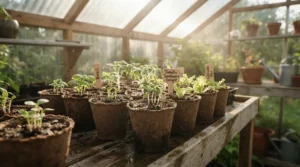
The 8×10 steel frame greenhouse vs aluminum frame debate comes down to three things: strength, corrosion and heat.
On strength, steel wins. It’s stiffer, so it flexes less when wet snow piles up. Aluminum is lighter and easier to carry, but thin sections can buckle sooner. Gauge matters more than metal. One smaller Outsunny walk-in greenhouse sold in Canada lists a 1 mm aluminum frame on a 0.6 mm galvanized base. Another listing in that line carries a note that it isn’t suited to extreme weather such as heavy snow. That’s an honest warning most brands skip.
On corrosion, aluminum never rusts. Galvanized steel resists rust until the zinc coating breaks, then it needs attention. On heat, aluminum conducts it several times better than steel. A bare aluminum frame acts as a thermal bridge, so cold travels through it in winter.
Here is how each option stacks up against the alternatives.
| Option | Strength | Rust Risk | Cost | Best For |
|---|---|---|---|---|
| Galvanized steel kit | High | Low until coating breaks | Higher | Snow-belt farms |
| Aluminum kit | Moderate | Very low | Moderate | Mild or wet climates |
| Plastic-film hoop house | Low to moderate | Low | Lowest | Large seasonal areas |
| Glass greenhouse | High (heavy) | Low | Highest | Permanent installations |
Read across the rows and the logic is simple. Steel and aluminum kits sit in the practical middle. Glass is overkill for an 80-square-foot starter, and film hoop houses win on cost per square metre but lose on longevity. For most small farms, a braced aluminum or a steel frame is the right call.
Structural Durability: Snow, Wind and the Canadian Reality
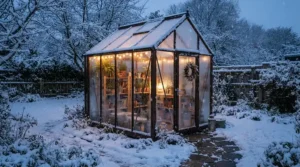
Structural durability is where cheap kits get exposed. Wind lifts light frames, and wet snow crushes thin ones.
Here are real reference points. The Palram Canopia Bella is advertised in Canada with a rating of about 20.5 lb/ft² of snow load and 100 km/h wind resistance. My conversion puts that near 1.0 kPa. A worked National Building Code example for Calgary uses a ground snow load of 1.10 kPa. And code examples elsewhere in Canada show values several times higher in the snowiest regions.
Small structures get a basic roof snow load factor of 0.80, which helps. But ground values vary enormously across the country. Researchers working on updated Canadian snow loads report a national range from about 0.4 to 20 kPa. So “heavy duty” means nothing without a stated rating for your region.
Here’s the practical checklist for structural durability:
- Anchor to a timber frame or concrete footings, never just stakes in soil.
- Add interior bracing or extra purlins if your region sees heavy snow.
- Clear snow gently with a soft broom, never a shovel.
- Check with your municipality, because rules for small farm structures vary.
If a manufacturer won’t publish a snow rating, assume it’s low and plan around that.
8×10 Greenhouse for Four-Season Growing: What to Expect
An 8×10 greenhouse for four-season growing is possible, but the phrase needs unpacking. It rarely means tropical tomatoes in January.
Reporting in the Western Producer notes that cold-hardy crops like spinach can grow through winter without supplemental heat or light. Light intensity is far lower in December and January, and even a single plastic layer cuts it by about 15 per cent. East-west orientation captures the most winter sun, and avoiding shade from trees and buildings matters. Ventilation matters year-round, so cracking the end doors on milder days reduces humidity. The grower interviewed also gave blunt advice: have a market before you start winter growing.
Here’s how that plays out in an 80-square-foot kit:
- Winter (unheated): hardy greens such as spinach, kale and mâche, with slow growth in the darkest weeks.
- Early spring: transplants for tomatoes, peppers and flowers, typically six to eight weeks ahead of the field.
- Summer: shade cloth and aggressive venting, or use it as a curing space.
- Fall: a second round of greens and protection for late tomatoes.
Row covers inside the greenhouse create a “greenhouse within a greenhouse” for sensitive crops. For heating, use only CSA-certified equipment sized for the space.
Market Gardening in 80 Square Feet: Making the Math Work
Market gardening on this footprint is about choosing the right crops. At roughly 7.4 m², you can’t compete on volume, so you compete on value per square metre.
Here’s the arithmetic. A standard 1020 seedling tray is about 10 × 20 inches. Put benches 60 cm wide along both long walls, leave a central aisle, and you’ll fit roughly 25 to 30 trays on a single tier. Add a second tier and you approach 50-plus. That’s an entire spring’s worth of transplants for a small market operation, a number I derived from the geometry. Your results will vary with bench design.
The best-fit crops for market gardening in this size:
- Transplants: tomatoes, peppers, flowers, and herbs to sell at your stand.
- Microgreens: high value, quick turnaround, and year-round demand.
- Early crops: radishes, baby greens and spinach for the first market weeks.
- Specialty items: ginger, turmeric or heat-lovers that struggle outdoors.
Treat the structure like a nursery plus a bonus crop zone. It pays for itself by getting your first harvests to market earlier and protecting your best plants. That’s more profitable than filling it with ordinary field crops.
Features That Actually Matter (And Those That Don’t)
Marketing copy loves buzzwords. Here’s my filter.
Features that matter:
- Stated snow and wind ratings. A real number beats a vague claim.
- Panel thickness and type. Thicker twin-wall means better insulation and strength.
- Frame bracing and gauge. Diagonals and thicker walls resist racking and buckling.
- Vent count and size. Overheating kills more seedlings than cold does.
- Anchoring provisions. A base with pre-drilled anchor holes saves headaches.
Features that matter less:
- Colour. Black or silver is cosmetic, apart from a small thermal effect.
- “All season” labels. Without ratings, it’s just a slogan.
- Quick-setup claims. Nice, but they say nothing about durability.
- Rain gutters. Useful, but not structural.
The rule of thumb: spend your money on structure and ventilation, then treat everything else as a bonus. A greenhouse that stands in March and vents in July will outlast one with prettier trim.
Long-Term Cost & Maintenance
The sticker price isn’t the cost. Over several seasons, replacement parts and replaced structures matter more.
To show the logic, here are illustrative scenarios, not measured data.
| Scenario | Upfront (CAD) | Assumed Life | Cost per Year |
|---|---|---|---|
| Budget aluminum kit | ~C$900 | 6 years | ~C$150 |
| Mid-range braced kit | ~C$1,100 | 10 years | ~C$110 |
| Galvanized steel kit | ~C$1,450 | 15 years | ~C$97 |
| Palram Canopia Glory (8 ft class) | ~C$3,500 | 20 years | ~C$175 |
The takeaway is that longer-lasting kits can cost less per year, and a premium brand isn’t always cheaper over time. The Palram Canopia Glory uses 10 mm twin-wall panels and an extra thick aluminum frame, and retail listings in the mid-C$3,000s for 8-ft sizes reflect that. It also comes in 8×6, 8×8 and 8×12 formats rather than 8×10. For most small farms, the budget-to-mid steel or braced kits hit the sweet spot.
Maintenance is modest:
- Tighten bolts each spring.
- Wash panels twice a year with mild soap.
- Re-seal panel edges and door gaskets.
- Touch up any scratched galvanizing right away.
Setup Guide: Your First 30 Days
A good kit assembled badly performs like a bad kit. Follow this sequence.
Week 1: site and base. Pick a level, well-drained spot with full sun, away from tree shade. Build a timber or concrete base, and make it square by measuring diagonals. If the diagonals match, the base is square.
Week 2: frame and panels. Assemble on a calm day, because a half-built frame acts as a sail. Install anchors early. Slide panels in carefully and never force them.
Week 3: fit-out. Add benches, shade cloth rails and a thermometer with min-max memory. Seal door gaps with weatherstripping. If you plan to heat, hire an electrician for a proper outdoor circuit and use CSA-certified gear.
Week 4: first crops and monitoring. Start with hardy transplants. Track temperatures daily and adjust venting.
Common first-month mistakes include under-venting, skipping anchors, overwatering in cold weather and cramming trays too tightly. For a practical Canadian example of heated shoulder-season use, McGill University’s season extension project describes a greenhouse used from October to December and again from March to May. It also served as a curing space for fall squash and garlic.
Real-World Scenarios: Which Kit for Which Farm?
Three profiles show how the analysis works in practice.
Scenario 1: The prairie flower farmer. She sells cut flowers and transplants at a Saturday market. Winters bring heavy, drifting snow and strong wind. She uses the greenhouse from March to October, but it stands all winter. Budget is flexible, and snow load is the priority. The TMG Heavy Series GH811, with its steel frame, fits best. The IDEALHOUSE 8X10 FT Greenhouse is the alternative if she prefers aluminum.
Scenario 2: The coastal market gardener. He farms on Vancouver Island, where it rains constantly and rarely freezes hard. He wants to start tomatoes early and grow winter greens. The Gulches 8x10FT Polycarbonate Greenhouse suits him, since drainage matters more than snow. He should add a second vent.
Scenario 3: The roadside stand starter. She’s testing a small farm business on rented land beside a rural road. Budget is tight, and theft is a worry. The Garvee 8×10 FT Walk-In Greenhouse gives her a lockable door. If cash is tighter, the Senfot 8×10 Walk-in Greenhouse gets her started. She should plan to upgrade once the business proves itself.
The lesson across all three: let your biggest risk choose the kit.
Common Mistakes When Buying an 8×10 Greenhouse for Small Farms
Most disappointments trace back to a handful of avoidable errors.
Trusting “heavy duty” labels. The phrase is unregulated. Look for numbers: kPa, lb/ft², wind speed.
Ignoring local rules. Municipal and farm-building rules vary by province and municipality. Check before you pour a base.
Skipping the foundation. A greenhouse is only as stable as what it sits on. Anchor it properly.
Under-ventilating. Heat kills more seedlings than cold. Plan for two vents or an automatic opener.
Buying for summer, living through winter. A kit that survives July may fail in January. Shop for your worst month.
Assuming reviews tell the whole story. Reviews written in the first summer can’t reveal how a frame handles its first snowfall. Look for reports from owners who’ve been through at least one winter.
One last note. Never confuse a high tunnel with a greenhouse. They’re different tools with different strengths, and a rigid kit like this one offers better insulation and security than a film tunnel.
FAQ
❓ Is an 8x10 greenhouse big enough for a small farm business?
❓ Do I need a permit to build an 8x10 greenhouse in Canada?
❓ How much snow can a polycarbonate 8x10 greenhouse handle?
❓ Is a steel frame better than aluminum for heavy snow?
❓ How do I anchor an 8x10 greenhouse on a working farm?
Conclusion
An 8×10 greenhouse for small farms won’t turn a hobby plot into a commercial operation. What it will do is protect your highest-value plants, push your first harvest earlier and give your market stand a reliable head start.
Choose by risk. If snow is your threat, the TMG Heavy Series GH811 or the IDEALHOUSE 8X10 FT Greenhouse deserve your attention. If you farm somewhere wet, the Gulches 8x10FT Polycarbonate Greenhouse targets your problem. If cart access matters, the Kosynda 8′ x 10′ Polycarbonate Greenhouse has the doors. If security worries you, the Garvee 8×10 FT Walk-In Greenhouse locks. And if you want the cheapest start, the Senfot 8×10 Walk-in Greenhouse and MUCHANT 8×10 FT Greenhouse cover the basics.
Whatever you choose, insist on real numbers for snow load, panel thickness and vent count. Anchor it properly. Treat structural durability as the first spec, not the last.
Recommended for You
- 8×10 Greenhouse Kit: 7 Best Picks For Canadian Gardens (2026)
- 6×8 Greenhouse For Vegetable Growing: 7 Best Picks In 2026
- 6×8 Greenhouse Kit: 7 Best Picks For Canada, Ranked (2026)
Disclaimer: This article contains affiliate links. As an Amazon Associate, I earn from qualifying purchases. If you purchase products through these links, we may earn a small commission at no additional cost to you.
✨ Found this helpful? Share it with your friends! 💬🤗
