
In This Article
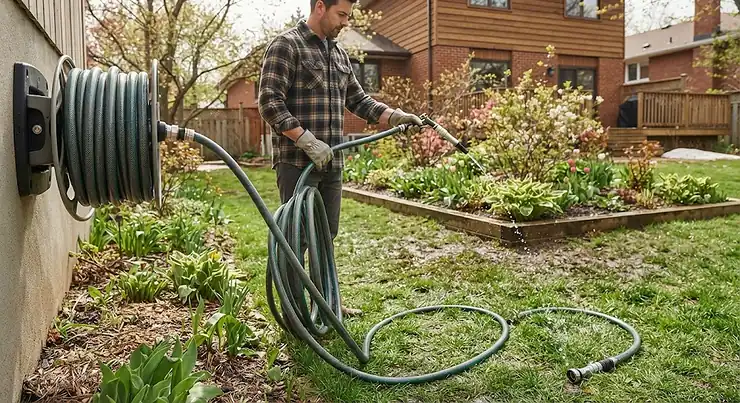
A garden hose that doesn’t kink sounds like it should be the easiest purchase in the hardware aisle, and yet somehow it’s the one that sends the most Canadians back to the store, muttering, every single spring. You uncoil it, walk ten steps toward the tomatoes, and the whole thing seizes up like a garter snake that’s just spotted a hawk. Water sputters. You backtrack, shake out the loop, and by the time you’ve “fixed” it, the seedlings have wilted a little more than they should have. This is not a you problem. It’s a materials-engineering problem, and it has a real answer.
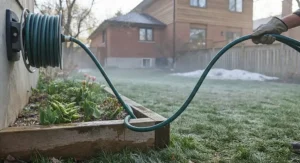
What is a garden hose that doesn’t kink? In practical terms, it’s a hose built from a material — hybrid polymer, polyurethane, or reinforced rubber — engineered without the “shape memory” that causes standard PVC and rubber hoses to permanently crease and collapse under water pressure after being coiled tightly.
Below, we’ve dug into real specs, verified aggregated review sentiment, and pricing patterns across amazon.ca to compare seven genuine kink-resistant hoses, from featherweight polymer options to contractor-grade rubber builds, so you can pick the one that actually survives a Canadian backyard — clay soil, gravel driveways, and all.
Quick Comparison Table
| Hose | Material | Best For | Length Options | Price Range (CAD) |
|---|---|---|---|---|
| Teknor Apex Zero-G | Hybrid polymer | Lightest overall kink resistance | 25, 50, 75, 100 ft | C$45-C$95 |
| Flexzilla | Hybrid polymer | All-season flexibility | 25-100 ft | C$65-C$120 |
| Water Right 600 Series | Polyurethane | Drinking-water-safe watering | 25-100 ft | C$95-C$170 |
| Gilmour Flexogen | 8-ply rubber/vinyl | Heavy-duty contractor use | 25-100 ft | C$55-C$100 |
| Dramm ColorStorm | Premium rubber | Extra-long large-yard runs | 25-330 ft | C$85-C$220 |
Looking across the table, the pattern is clear: the lighter, polymer-based hoses (Teknor Apex Zero-G, Flexzilla) win on manoeuvrability and are the easiest sell for anyone who’s fought a rubber hose up a set of deck stairs, while Gilmour Flexogen and Dramm ColorStorm trade some of that lightness for raw durability and burst-pressure headroom. If drinking-water safety or chemical sensitivity matters to your household — say you’re filling a pet bowl or a rain barrel used for edible gardens — the polyurethane build of the Water Right 600 Series is worth the premium even though it’s the priciest entry here.
💬 Just one click — help others make better buying decisions too!😊
Top 7 Garden Hoses That Don’t Kink: Expert Analysis
1. Teknor Apex Zero-G — featherweight build that resists kinking under pressure
The Zero-G’s headline trick is weight: it’s built roughly 50% lighter than a comparable vinyl garden hose, and that alone changes how it behaves when you drag it around a flower bed. Under the hood, it uses a pressurized, semi-collapsible core wrapped in a tightly woven fabric casing, rated to a 600 PSI burst pressure — well above what any residential tap will ever throw at it. In practice, that inner-core design is what keeps the hose from developing the permanent crease that plagues cheap PVC once it’s been coiled for a season.
Based on the spec comparison, this is the pick for condo dwellers, balcony gardeners, and anyone hauling a hose up and down stairs, since its low weight-per-foot means less fatigue on long watering sessions. Reviewers consistently report that it coils into a remarkably small footprint and drapes over obstacles instead of catching on them, though independent testers have also noted it’s currently offered in a limited spread of lengths and that the aluminum fittings can bend under rough handling over multiple seasons.
Pros:
- ✅ About 50% lighter than standard vinyl hoses
- ✅ Pressurized core actively resists permanent kink creases
- ✅ Compact coiling footprint for small-space storage
Cons:
- ❌ Fewer length choices than most competitors
- ❌ Aluminum fittings can weaken with rough, repeated use
At around C$45-C$95 depending on length, the Teknor Apex Zero-G is a strong mid-range value pick for anyone prioritizing manoeuvrability over sheer toughness — check current price before buying, since retailer pricing shifts with promotions.
2. Flexzilla — stays pliable through Canadian temperature swings
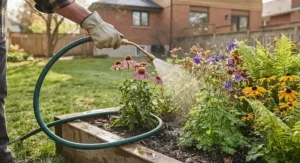
Flexzilla‘s hybrid polymer formulation is the standout feature here: it’s engineered to stay soft and bendable across a wide temperature range, which matters enormously in a country where a hose might see 30°C in July and get left out through a surprise October frost. The 5/8-inch diameter version maintains close to full-flow performance, and the fittings are built with a crush-resistant coating designed to survive being stepped on or run over by a wheelbarrow.
What most buyers overlook about this model is that its cold-weather flexibility isn’t just a “nice to have” — it’s directly tied to kink prevention, because stiff, cold PVC is far more prone to creasing than a hose that stays rubbery down toward the freezing mark. On the review side, homeowner surveys have repeatedly named it a consensus pick for kink resistance among hybrid polymer hoses, and forum discussions among long-term owners describe multi-year use with no failures at the fittings, though a handful note the outer jacket picks up soil staining that a hose brush can’t fully lift.
Pros:
- ✅ Remains flexible in both hot and near-freezing conditions
- ✅ Crush-resistant coupling design at both ends
- ✅ Widely reported multi-year durability from long-term owners
Cons:
- ❌ Heavier per foot than the slimmest polymer options
- ❌ Outer jacket shows dirt and staining over time
Priced around C$65-C$120 depending on length, Flexzilla earns its place as an all-rounder for households that leave hoses outdoors through shoulder-season weather rather than storing them the moment it cools off.
3. Craftsman ExoShield Heavy-Duty Fabric Hose — ultra-packable jacket for tight storage spots
The Craftsman ExoShield trades bulk for portability. Its flexible fabric jacket compresses down small enough to fit in a bucket or a narrow shed shelf, which is a genuine advantage for anyone gardening on a townhouse lot with no room for a full-size reel cart. The standard 5/8-inch diameter keeps flow rate close to what you’d get from a traditional rubber hose, so you’re not sacrificing pressure for the packable design.
Here’s what to weigh: fabric-style hoses like this one are lighter and coil tighter than rubber or vinyl, which is exactly why they resist kinking better than rigid alternatives — but that same lightweight jacket construction is also the category’s known weak point. Independent testing from a major consumer outlet found the coupling assembly to be the hose’s Achilles’ heel, with the fitting’s plastic cover slipping loose and the connection leaking from first use, and separately noted the light-coloured jacket looked noticeably weathered and dirty within weeks of outdoor use. If you go this route, treat the couplings as the part to inspect most carefully before each season.
Pros:
- ✅ Compresses down to a very small storage footprint
- ✅ Genuinely kink-resistant compared with rigid fabric alternatives
- ✅ Lightweight enough for one-handed dragging around beds
Cons:
- ❌ Coupling/fitting assembly reported as a durability weak point
- ❌ Light jacket colour shows dirt and wear quickly
At roughly C$40-C$55, the Craftsman ExoShield is a budget-friendly option best suited to light-to-moderate seasonal use rather than daily heavy-duty watering.
4. Gilmour Flexogen — 8-layer construction built for contractor-grade abuse
The Gilmour Flexogen is where “heavy-duty garden hose” stops being marketing copy and starts being a literal spec sheet. It’s built from eight layers of reinforced rubber-and-vinyl material, rated to a 500 PSI burst strength, with crush-resistant aluminum fittings designed to shrug off being backed over by a mower or dropped on concrete. That extra layering does real work: it’s the reason this hose resists both kinking and abrasion cuts on rough surfaces like gravel driveways or exposed rock beds, something thinner single-layer hoses can’t match.
Based on verified customer feedback across major retailers, owners consistently describe this hose surviving repeated seasons of use where cheaper hoses failed within a single summer, and several specifically call out that it held up under conditions where lightweight fabric or plastic-coupling hoses kinked and cut off water flow entirely. The trade-off, unsurprisingly, is heft — this is not the hose you want if you’re hauling it up three flights to a rooftop garden.
Pros:
- ✅ 8-layer reinforced build with 500 PSI burst rating
- ✅ Crush-resistant aluminum fittings survive rough handling
- ✅ Smooth exterior resists snagging on obstacles
Cons:
- ❌ Noticeably heavier than hybrid polymer alternatives
- ❌ Stiffens more than polymer hoses in cold weather
Expect to pay around C$55-C$100 depending on length, which is genuinely reasonable for a hose engineered for landscaping-crew-level durability rather than light home use.
5. Teknor Apex NeverKink Contractor-Duty — memory-free vinyl core for reel storage
The Teknor Apex NeverKink takes a different materials approach than the polymer hoses above: it’s built from a specially formulated vinyl designed not to hold the tight “memory” curl that regular vinyl develops when wound on a reel season after season. That matters specifically for households that store their hose on a wall-mounted or cart-style reel, since reel storage is one of the biggest causes of permanent kink-creasing in ordinary hoses. It ships with comfortable-grip aluminum couplings and a mildew- and mold-resistant compound in the vinyl itself.
What the spec sheet won’t tell you, but testing labs consistently report, is that the “kink-free” branding is aspirational rather than absolute — testers who ran the hose over repeated real-world use noted it withstood being driven over by vehicles without bursting, yet still developed occasional kinks in tight-radius turns despite the name. That’s a useful reality check: even the best memory-resistant vinyl isn’t immune to a sharp 90-degree bend around a corner post.
Pros:
- ✅ Vinyl formulated to resist reel-storage memory creasing
- ✅ Withstood vehicle weight in independent durability testing
- ✅ Mildew- and mold-resistant material composition
Cons:
- ❌ Still kinks occasionally on very tight bends, despite the name
- ❌ Not rated for outdoor winter storage in freezing climates
Priced around C$60-C$95, the Teknor Apex NeverKink is the strongest choice specifically for anyone who stores their hose on a reel between uses rather than coiling it loosely on the ground.
6. Water Right 600 Series — drinking-water-safe polyurethane with zero lead or phthalates
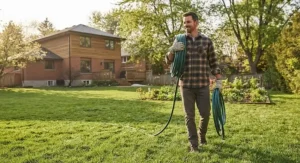
The Water Right 600 Series is built from 100% virgin polyurethane rather than PVC or rubber, and that single material choice does two jobs at once: it eliminates the shape-memory problem that causes kinking, and it means the hose is certified free of lead, BPA, and phthalates — chemicals that Health Canada has specifically flagged as substances Canadians can be exposed to through contact with plastic consumer items. That’s directly relevant if you use your hose to fill a kiddie pool, a pet’s water bowl, or a rain barrel feeding a vegetable patch.
On paper this means genuinely strong flow performance too: the 5/8-inch version is rated for roughly 9 gallons (34 litres) per minute at 40 PSI, and the strain-relief design at both hose ends specifically targets the connection points where most kinking and cracking actually originates. Reviewers on the brand’s own verified purchase pages repeatedly single out the “no kinks, no cracks” performance as matching the marketing claim, which is unusually consistent for this product category, though the premium materials come with a correspondingly premium price tag compared to mainstream vinyl or rubber options.
Pros:
- ✅ Drinking-water-safe polyurethane, free of lead and phthalates
- ✅ Strain-relief ends target the most kink-prone connection points
- ✅ Strong 9 GPM flow rating at 40 PSI
Cons:
- ❌ Priced well above mainstream vinyl and rubber hoses
- ❌ Slimmer-diameter versions trade flow for extra-light weight
At roughly C$95-C$170 depending on length, the Water Right 600 Series is the pick for households that specifically want to avoid plastic-leaching hose materials, even at a premium over standard options.
7. Dramm ColorStorm Premium — nickel-plated fittings and near-unlimited length options
The Dramm ColorStorm Premium is a rubber-construction hose aimed squarely at large properties, and its standout feature is availability: while most kink-resistant hoses top out around 100 feet, this one can be custom-ordered in lengths up to 330 feet (100 metres), which matters enormously if you’re trying to reach the back of an acreage lot without daisy-chaining three separate hoses together (and multiplying your kink-prone connection points in the process). Its couplings are nickel-plated rather than standard brass or aluminum, which resists the pitting corrosion that eventually causes leaks at hose connections.
Based on the spec comparison, the extra weight of a full rubber build versus a hybrid polymer hose is a fair trade for durability on properties where the hose gets dragged across driveways, gravel paths, or exposed rock — surfaces that are hard on lighter-weight jackets. Reviewers highlight the crush-proof coupling design specifically, and long-term forum discussion among hose enthusiasts consistently ranks Dramm alongside Teknor Apex as one of the few brands that reliably delivers on its kink-resistance claims across multiple seasons of outdoor storage.
Pros:
- ✅ Custom lengths up to 330 ft for large-acreage properties
- ✅ Nickel-plated couplings resist corrosion pitting
- ✅ Consistently praised for multi-season kink resistance
Cons:
- ❌ Heavier per foot than hybrid polymer alternatives
- ❌ Premium pricing versus standard rubber garden hoses
Priced from roughly C$85 for shorter lengths up to C$220 for the longest custom runs, the Dramm ColorStorm Premium is best suited to large-yard and acreage owners who value reach and corrosion resistance over lightweight handling.
Top 7 Products Comparison
| # | Product | Material | Burst Rating | Best For | Price Range (CAD) |
|---|---|---|---|---|---|
| 1 | Teknor Apex Zero-G | Hybrid polymer | 600 PSI | Lightest overall handling | C$45-C$95 |
| 2 | Flexzilla | Hybrid polymer | 500+ PSI | All-season temperature swings | C$65-C$120 |
| 3 | Craftsman ExoShield | Fabric jacket | Moderate | Compact apartment/townhouse storage | C$40-C$55 |
| 4 | Gilmour Flexogen | 8-ply rubber/vinyl | 500 PSI | Contractor-grade abuse resistance | C$55-C$100 |
| 5 | Teknor Apex NeverKink | Reinforced vinyl | Moderate-high | Reel storage without memory creasing | C$60-C$95 |
| 6 | Water Right 600 Series | Polyurethane | 300 PSI | Drinking-water-safe use | C$95-C$170 |
| 7 | Dramm ColorStorm | Premium rubber | High | Extra-long large-yard runs | C$85-C$220 |
The clearest takeaway from this table is that burst-pressure rating and price don’t move in lockstep — the Teknor Apex Zero-G actually posts the highest PSI number here despite sitting in the middle of the price range, because polymer hoses can achieve high burst strength without the material bulk that drives up rubber-hose pricing. If your yard has hard, uneven terrain, weight the Gilmour Flexogen and Dramm ColorStorm more heavily even though they cost more per foot, since abrasion resistance matters as much as burst pressure once you’re dragging a hose over gravel weekly.
✨ Don’t Miss These Exclusive Deals!
🔍 Take your garden hose shopping to the next level with these carefully selected picks. Click on any highlighted item to check current pricing and availability on amazon.ca. The right hose will save you a season of frustrating, water-wasting kinks.
Practical Usage Guide: Setup, First 30 Days, and Maintenance
Even the best kink-resistant hose can develop bad habits if it’s set up wrong on day one. Start by running water through the hose for 30 seconds before attaching a nozzle — this clears manufacturing residue and lets you check both couplings for leaks under real pressure. When connecting to the spigot, hand-tighten only; over-tightening with a wrench is one of the most common causes of stripped threads in the first month of ownership, and it happens more often than most first-time buyers expect.
For the first 30 days, resist the urge to coil the hose in tight, uniform loops the way you might see on a store display — that’s actually the motion that trains “memory” creases into vinyl and rubber hoses. Instead, use loose figure-eight coiling or a reel with a guide track, which distributes bend stress more evenly. A common early mistake is dragging the hose around sharp corners like a fence post or raised garden bed edge; lifting the hose slightly and walking it around the obstacle avoids the tight-radius bends that cause most kinking. Drain the hose fully after each use in shoulder-season weather, and store it somewhere shaded, since UV exposure accelerates material stiffening even in kink-resistant formulations.
Real-World Scenarios: Matching a Hose to Your Yard
Picture three very different Canadian households, each shopping for the same keyword and landing on very different products. First, there’s a downtown Toronto condo owner with a 20-square-metre balcony garden and zero storage space — for them, the Craftsman ExoShield‘s pack-flat design and light weight solves the actual problem (storage), even though it isn’t the most rugged option on this list. Second, consider a family on a half-acre suburban lot in Calgary with a vegetable garden, a dog, and kids who leave the hose out through July heat and the occasional early frost — the Flexzilla or Teknor Apex Zero-G fit that use case well, since both prioritize flexibility across temperature swings without demanding a big storage footprint.
Third, picture a rural property near Kingston with two acres to water and a well system feeding an edible garden — here, reach and chemical safety both matter, making the Dramm ColorStorm‘s extra-long custom lengths or the Water Right 600 Series‘s drinking-water-safe polyurethane the more sensible picks, even at a higher price point, because replacing a burst hose halfway through a long run is a bigger hassle than the upfront cost difference.
Buyer’s Decision Framework
If you’re short on storage space and mostly hand-water containers, choose a fabric-jacket hose like the Craftsman ExoShield, because compressibility matters more than raw durability for that use case. If your yard has gravel paths, exposed rock, or a driveway the hose regularly crosses, choose a reinforced rubber build like the Gilmour Flexogen or Dramm ColorStorm, because abrasion resistance outlasts lighter jackets on rough terrain. If you fill a pet bowl, kiddie pool, or edible-garden rain barrel from the hose directly, choose a polyurethane option like the Water Right 600 Series, because drinking-water-safe materials remove a genuine chemical-exposure question. And if your priority is simply the lightest possible hose that still resists kinking under normal backyard use, choose the Teknor Apex Zero-G or Flexzilla, since both consistently rank among the most manoeuvrable hybrid polymer options available.
How to Choose a Garden Hose That Doesn’t Kink
Choosing the right kink-resistant hose comes down to a handful of decision points, each worth weighing before you buy:
- Check the core material first. Hybrid polymer and polyurethane hoses resist permanent creasing far better than standard PVC, because they lack the “shape memory” that causes rigid plastics to hold a bent shape.
- Match diameter to your water pressure. A 5/8-inch hose balances flow and flexibility for most homes; 3/4-inch hoses move more water but are stiffer and heavier to manage.
- Consider your storage method. If you use a reel, prioritize a hose specifically rated to resist reel-memory creasing, like the Teknor Apex NeverKink.
- Weigh burst-pressure rating against your water source. Municipal pressure rarely exceeds 80 PSI, so any hose rated 300 PSI or higher has ample safety margin.
- Factor in terrain. Gravel, rock, and concrete surfaces call for a thicker, more abrasion-resistant jacket than a lawn-only setup needs.
- Decide if drinking-water safety matters to you. If the hose touches pet bowls, pools, or edible gardens, polyurethane options avoid the phthalate and lead exposure concerns tracked by Health Canada.
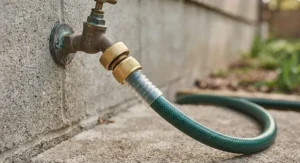
- Read the coupling material, not just the hose body. Aluminum, brass, and nickel-plated fittings each resist corrosion differently, and fitting failure — not hose-body failure — is the most common point of leaks.
Common Mistakes When Buying a Garden Hose That Doesn’t Kink
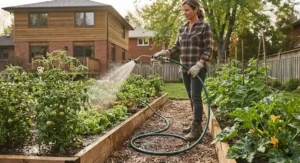
The single most common mistake is buying based on the words “kink-free” on the packaging without checking the core material — as several of the products above demonstrate, marketing language and lab-tested reality don’t always line up perfectly, and even genuinely kink-resistant hoses can still crease under a sufficiently tight bend. A second frequent error is buying a hose diameter that doesn’t match household water pressure; a 3/4-inch hose on a low-pressure well system can actually deliver less usable flow at the nozzle than a well-matched 5/8-inch hose, because pressure drops faster across the larger internal volume.
Buyers also routinely skip checking coupling material, focusing entirely on the hose body — yet fitting failure at the spigot or nozzle end is a more common cause of leaks than the hose material itself giving out. Finally, many people underestimate how much winter storage habits affect kink resistance: leaving any hose, even a premium one, coiled tightly outdoors through a Canadian freeze accelerates stiffening and cracking regardless of the material claims on the box.
Heavy-Duty Garden Hoses: When Standard-Duty Isn’t Enough
A heavy-duty garden hose earns that label through layer count and coupling material, not just thickness. The Gilmour Flexogen‘s 8-layer rubber-vinyl construction is a textbook example — each additional layer adds a small amount of weight but meaningfully increases resistance to punctures, abrasion, and the internal pressure spikes that happen when a nozzle is shut off suddenly. Reviewers consistently note that heavy-duty hoses in this category survive being run over by vehicles or dragged across gravel driveways in ways that standard-duty vinyl hoses simply can’t.
Here’s what to weigh: heavy-duty doesn’t automatically mean better for every household. If your yard is flat grass with no rough surfaces, the added weight of a heavy-duty hose is pure downside — more fatigue, more storage bulk, no functional benefit. Reserve the heavy-duty category for landscaping businesses, acreage properties, construction-adjacent use, or households with pets and kids who are genuinely tough on outdoor equipment.
Durable Garden Hose for Large Yards
A durable garden hose for large yards is really a reach-and-longevity problem disguised as a durability problem. The core issue with covering a big property isn’t just material toughness — it’s minimizing the number of connection points, since every coupling you add by daisy-chaining shorter hoses together is another spot that can leak, catch on a shrub, or kink at the joint. That’s exactly why the Dramm ColorStorm‘s up-to-330-foot custom lengths matter more on a large lot than raw material toughness alone.
On paper, this means large-yard buyers should prioritize single-length coverage and corrosion-resistant couplings — nickel-plated or solid brass — over marginal gains in layer count. Municipal watering restrictions also matter more on bigger properties: many Canadian regions, including large parts of the York Region area, run scheduled outdoor water-use bylaws through the growing season, so a hose long enough to reach every zone in one uninterrupted run also makes it easier to actually finish watering within your assigned window.
Hose Reels: The Overlooked Partner to Kink-Free Watering
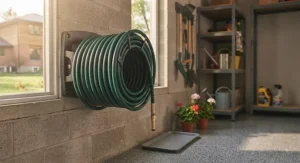
No garden hose stays kink-free forever if it’s stored badly, and that’s where hose reels earn their keep. A wall-mounted or cart-style reel with a guide track — the kind found on models from brands like Suncast and Eley — evenly distributes the hose’s curve across the spool instead of letting it coil into tight, overlapping loops on the ground. That single change in storage geometry is one of the most effective, and most overlooked, ways to extend a hose’s kink-resistant lifespan.
What most buyers overlook about reels specifically is that not every “kink-free” hose is actually rated for reel storage; the memory-resistant vinyl formulation used in hoses like the Teknor Apex NeverKink is purpose-built to avoid the tight-radius creasing that ordinary vinyl develops on a reel, while a standard rubber hose may still develop a slight curl-memory over a season of reel storage even if it resists kinking during active use. If you’re investing in a reel, match reel capacity to hose length precisely — an oversized hose crammed onto an undersized reel recreates the exact tight-bend problem a good reel is supposed to solve.
Water Pressure and Flow Rate: What Actually Matters
Water pressure gets blamed for a lot of hose problems that are really about diameter and kinking instead. Most Canadian municipal water systems deliver somewhere between 40 and 80 PSI at the tap, which is comfortably within the burst rating of every hose on this list — even the lowest-rated option here, at 300 PSI, has roughly four times the safety margin a typical home needs. The real performance variable buyers should watch is flow rate, measured in gallons or litres per minute, which depends on internal diameter far more than it depends on pressure rating.
Based on the spec comparison across this list, a 5/8-inch hose at 40 PSI typically delivers somewhere in the 8-10 gallon (30-38 litre) per minute range, while slimmer 7/16-inch or 1/2-inch designs — prized for their light weight — can drop to 3-5 gallons per minute at the same pressure. That’s a meaningful trade-off: if you’re filling a pool or running a sprinkler system that depends on volume, a slim lightweight hose can genuinely starve the system even though it’s technically “kink-free” and functioning exactly as designed.
UV Resistance: Why Hoses Fail in Direct Sunlight
UV resistance rarely makes it onto a shopper’s checklist, but it’s arguably as important as kink resistance for any hose that lives outdoors through a Canadian summer. Environment and Climate Change Canada notes that the UV Index across Canada can reach 3 or higher for much of the day through spring and summer, and that same UV radiation that damages skin also breaks down polymer chains in plastic and rubber hose jackets over time, causing brittleness, fading, and surface cracking that eventually turns into leaks.
What the spec sheet won’t tell you, but material science explains clearly, is that UV degradation and kink resistance are connected: a hose that’s gone brittle from sun exposure loses the flexibility that prevented kinking in the first place, so a UV-damaged “kink-free” hose can start creasing again in its second or third season even though nothing about its core design changed. Look for hoses with UV-stabilized outer jackets — several products on this list, including the Teknor Apex Zero-G, are explicitly rated UV-resistant — and store any hose out of direct sun between uses whenever that’s practical, since shade adds years to jacket lifespan regardless of the underlying material.
Long-Term Cost & Maintenance
A cheap hose that needs replacing every season isn’t actually cheap once you tally it up. A C$20 big-box vinyl hose replaced three times over three years costs roughly the same as a single C$60 hybrid polymer hose that lasts the same span — and that math doesn’t even account for the wasted water and interrupted watering sessions caused by mid-task kinking. Total cost of ownership for a garden hose really comes down to three variables: material longevity, coupling durability, and how the hose is stored between seasons.
Maintenance itself is minimal but matters: rinse grit out of threads before storage, keep couplings lightly lubricated with plumber’s tape or an anti-seize compound to prevent them from seizing over winter, and avoid leaving any hose connected and pressurized at the spigot when temperatures drop toward freezing. Followed consistently, these habits routinely stretch a mid-range kink-resistant hose’s working life to five years or more, which is where the long-term value case for spending a bit more upfront really pays off.
Frequently Asked Questions
❓ What garden hose doesn't kink?
❓ How do I stop my garden hose from kinking?
❓ Are polyurethane hoses better than rubber for kinking?
❓ What water pressure does a garden hose need?
❓ Do UV-resistant hoses cost more?
Conclusion
There’s no single “best” garden hose that doesn’t kink for every Canadian yard — there’s a best one for your yard, your storage setup, and your water source. If you’re working with a small balcony, the Craftsman ExoShield‘s pack-flat design solves the real problem. If your property is rough, large, or contractor-adjacent, the Gilmour Flexogen or Dramm ColorStorm earn their higher price tags through sheer abrasion resistance and reach. And if you just want the lightest, easiest hose to live with day to day, the Teknor Apex Zero-G and Flexzilla remain hard to beat.
What ties all seven picks together is that they solve kinking at the material level, not through gimmicks — which is exactly the distinction worth paying attention to next time a hose display promises “kink-free” without explaining why. Check current pricing on amazon.ca before you buy, since promotions shift regularly, and match the hose to the yard you actually have rather than the one in the catalogue photo.
Recommended for You
- Perlite for Succulents and Cacti: 7 Best Picks to Try in 2026
- Peat Moss vs Coco Coir for Potting Mix: 7 Picks for 2026
- Bagged Compost for Gardens: 7 Best Picks; Buying Guide (2026)
Disclaimer: This article contains affiliate links. As an Amazon Associate, I earn from qualifying purchases. If you purchase products through these links, we may earn a small commission at no additional cost to you.
✨ Found this helpful? Share it with your friends! 💬🤗
