
In This Article
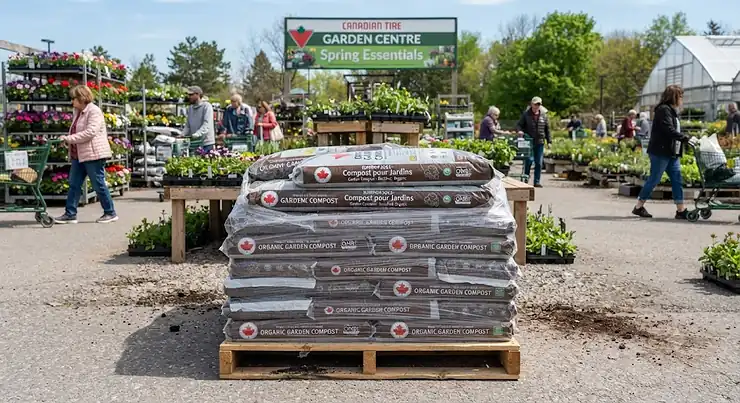
Every Canadian gardener eventually hits the same wall in April: the soil in your beds looks tired, your tomatoes sulked last summer, and the internet is telling you to “just add compost” like that solves everything. It does help — a lot, actually — but only if you buy the right bag for your actual soil, not the one with the prettiest label at the garden centre. Bagged compost for gardens is the fastest, least messy way to rebuild depleted soil without hauling a truckload of bulk material into a backyard that barely fits a wheelbarrow.

So, what is bagged compost for gardens? It’s decomposed organic matter — plant material, manure, bark, or a blend of these — packaged and sold ready to dig into your beds, unlike bulk compost, which is delivered loose by the cubic yard. It adds nutrients, improves drainage in clay soil, and helps sandy soil hold water and food for longer.
This guide skips the marketing fluff and gets into the specifics: seven real products sold in Canada, what their guaranteed analysis numbers actually mean once they’re in the ground, and how much you genuinely need to spread per square metre. We’ll cover compost for vegetable gardens specifically, because a bag meant for perennials isn’t automatically safe for edibles. Along the way, we’ll dig into organic compost bags, manure-based compost, soil enrichment strategy, and the application rate math that most product labels gloss over. By the end, you’ll know exactly which bag belongs in your cart — and, just as importantly, which ones to skip.
Quick Comparison Table: Bagged Compost for Gardens at a Glance
Before the deep dives, here’s the short version for anyone standing in a garden centre aisle right now, phone in hand, trying to decide fast.
| Category | Winner | Why It Wins | Best For |
|---|---|---|---|
| Best Overall | Fafard BIOFOR Compost with Peat and Bark | Balanced nutrient profile, Canadian-made | All-purpose beds and borders |
| Best Budget | Black Kow Composted Cow Manure | Lowest cost per litre of organic matter | New raised beds on a budget |
| Best Canadian Big-Box Pick | Garden Club Composted Cattle Manure | Widely stocked, weed-free claim | First-time gardeners |
| Best for Vegetable Gardens | Miracle-Gro Organic Raised Bed & Garden Soil | OMRI listed, ready out of the bag | Edibles and raised beds |
| Best Splurge | Coast of Maine Quoddy Blend Organic Lobster Compost | Unique marine-derived micronutrients | Perennial beds and containers |
Here’s the pattern worth noticing: the cheapest bags per unit (manure-based composts like Black Kow and Garden Club) tend to deliver more raw organic matter for your dollar, but the pricier, more processed blends (Fafard, Coast of Maine) usually arrive with a more consistent, weed-seed-free texture straight out of the bag. Neither approach is objectively “better” — it depends on whether you’re rebuilding a whole bed from scratch or topping up soil that’s already decent.
💬 Just one click — help others make better buying decisions too!😊
Top 7 Bagged Compost Products for Gardens: Expert Analysis
Seven real products, spanning budget manure blends to premium marine composts, all commonly available through Amazon.ca or major Canadian retailers. Each one gets an honest look at what’s actually in the bag versus what you’re paying for.
1. Fafard BIOFOR Compost with Peat and Bark — best Canadian-made all-rounder
Fafard BIOFOR Compost with Peat and Bark has been a fixture in Quebec and Ontario garden centres since the company’s founding in 1940, and the formula reflects decades of tweaking rather than a trend-chasing relaunch. Guaranteed analysis sits around 1.2% nitrogen, 0.8% available phosphoric acid, and 0.5% soluble potash, with a minimum 33% organic matter content — modest numbers, but that’s the point of a soil conditioner rather than a fertilizer. In practice, this means the bag is doing structural work — loosening clay, adding water-holding capacity — while the nutrient boost is a bonus, not the headline. It’s built for gardeners layering it into vegetable beds and flower borders at a one-part-compost-to-four-parts-soil ratio, which makes it forgiving for beginners who’d otherwise over-apply a hotter, more concentrated manure product. Reviewers at Canadian garden centres consistently describe the texture as fine and easy to rake in, without the chunky bark pieces that plague cheaper blends. What most buyers overlook is that a single 30-litre bag only covers about 3 square metres at a proper topdressing thickness, so budgeting two to three bags per average vegetable bed is realistic, not excessive.
Pros:
- ✅ Consistent, screened texture with minimal debris
- ✅ Balanced N-P-K works for both beds and borders
- ✅ Widely stocked across Ontario and Quebec garden centres
Cons:
- ❌ Coverage per bag is modest for larger beds
- ❌ Less available west of Ontario compared to national brands
Priced in the C$10–C$15 range per 30-litre bag at the time of research, Fafard BIOFOR Compost with Peat and Bark earns its spot as the default pick when you want one dependable bag without researching seven others first.
2. Black Kow Composted Cow Manure — best budget manure-based pick
Black Kow Composted Cow Manure is about as unglamorous as bagged soil amendments get, and that’s precisely its appeal. It’s 100% composted cattle manure, aged until it’s dark, crumbly, and — critically — odourless, which matters more than marketing copy usually admits when you’re working three feet from your patio door. The guaranteed nutrient ratio runs around 0.5-0.5-0.5, low enough that overapplication won’t torch tender seedlings the way fresh manure would. Based on the spec comparison with pricier composts, what you’re really buying here is volume: a 35 lb bag delivers a meaningful amount of organic matter per dollar, which is why it shows up so often in raised-bed setup guides. Reviewers online repeatedly note that it noticeably improves clay soil drainage within a single season and rarely introduces the weed seeds that plague some cheaper “black earth” products. The trade-off, and it’s a real one, is that manure-only composts like this one are lighter on structural bulk than peat-and-bark blends, so they work best mixed into existing soil rather than used as a standalone raised-bed filler.
Pros:
- ✅ Very low cost per litre of organic matter
- ✅ Odourless once fully composted and bagged
- ✅ Won’t burn roots even with generous application
Cons:
- ❌ Thinner texture than bark-based composts
- ❌ Cross-border pricing can push cost up on Amazon.ca
At around C$25–C$35 for a 35 lb bag imported through Amazon.ca, Black Kow Composted Cow Manure is best treated as a nutrient booster mixed into existing beds rather than the sole ingredient in a new one.
3. Garden Club Composted Cattle Manure — best Canadian big-box staple
Garden Club Composted Cattle Manure, sold through Canadian Tire in 12.5 kg bags, is the compost most Canadian gardeners have actually stepped over in a parking lot at some point every spring. It’s marketed as weed-free composted cattle manure, and for a big-box private-label product, the specs hold up reasonably well as a soil conditioner rather than a nutrient-dense fertilizer. Here’s what the spec sheet won’t tell you outright: because it’s a nationally distributed private-label product, batch consistency varies more than with a boutique brand, and that shows up in the review data. Aggregated customer reviews are genuinely mixed — several reviewers report excellent results at a fair price, while others describe unwanted debris like woodchips, small rocks, or the occasional weed seedling in specific batches. This isn’t unusual for large-volume manure composts sourced regionally, but it’s worth knowing going in rather than discovering it after you’ve already dug it into a new bed. On the upside, it’s stocked nearly everywhere in the country, which counts for a lot when you need three bags on a Saturday afternoon and don’t want to drive across town.
Pros:
- ✅ Extremely convenient nationwide availability
- ✅ Competitive price point for the bag size
- ✅ Suitable for lawns, beds, and vegetable gardens alike
Cons:
- ❌ Batch consistency varies by region and season
- ❌ Some reviewers report debris in certain bags
At under C$10 per 12.5 kg bag, Garden Club Composted Cattle Manure offers real value provided you inspect the bag contents before spreading — a two-minute check that avoids most of the complaints above.
4. Miracle-Gro Organic Raised Bed & Garden Soil — best for vegetable gardens
Miracle-Gro Organic Raised Bed & Garden Soil takes a different approach than the manure-only options above: it’s a peat-free blend built specifically around aged compost, designed to be dug straight into new or existing raised beds without additional mixing. It’s OMRI listed, which matters if you’re growing edibles and want third-party confirmation the inputs meet organic standards rather than taking a marketing claim at face value. The formula includes a quick-release natural fertilizer that feeds plants for roughly two months after application, meaning it does double duty as both a soil enrichment product and a light feeding schedule for spring plantings. Reviewers consistently note a visible improvement in root development and overall vigour within the first month, particularly in raised beds that started with poor-quality fill soil. What separates this from a straightforward compost is that it’s formulated closer to a garden soil-compost hybrid, so gardeners expecting pure compost texture sometimes find it slightly denser than anticipated. For anyone building a new vegetable garden from scratch this season, this is the bag that most directly earns its “for vegetable gardens” claim rather than just repurposing an all-purpose blend.
Pros:
- ✅ OMRI listed for certified organic gardening
- ✅ Ready to use with no additional soil mixing required
- ✅ Includes a natural fertilizer boost for spring planting
Cons:
- ❌ Denser texture than a straight compost product
- ❌ Premium pricing compared to manure-only options
Typically priced in the C$20–C$30 range depending on bag size, Miracle-Gro Organic Raised Bed & Garden Soil is the strongest pick specifically for new vegetable beds where soil quality is starting from zero.
5. Espoma Organic Chicken Manure — best nitrogen boost for heavy feeders
Espoma Organic Chicken Manure is a different animal from the cattle-manure options on this list — pun intended — because poultry manure runs significantly higher in nitrogen once composted. This makes it particularly well-suited to nitrogen-hungry crops like leafy greens, corn, and heavy-feeding tomatoes that stall out on lower-nutrient soil conditioners. On paper, this means a smaller quantity goes further than an equivalent volume of cattle manure compost, which is worth factoring into any price-per-application comparison rather than just price-per-bag. The composting process reduces the risk of nitrogen burn that fresh poultry manure carries, though reviewers still recommend working it into soil several weeks before transplanting rather than applying it right at planting time. Aggregated review sentiment describes noticeably darker green foliage and faster establishment in vegetable transplants, which tracks with what agronomists would expect from a nitrogen-forward amendment. The honest caveat here: because it’s more concentrated than a general soil conditioner, it’s easier to overapply by volume if you’re used to spreading manure-based compost by eye rather than by the label’s stated rate.
Pros:
- ✅ Higher nitrogen content than cattle-based composts
- ✅ Fully composted, reducing burn risk versus fresh manure
- ✅ Ideal for nitrogen-hungry vegetable crops
Cons:
- ❌ Easier to overapply than lower-nutrient blends
- ❌ Not ideal as a general all-purpose soil conditioner alone
At roughly C$25–C$35 for a 25 lb bag, Espoma Organic Chicken Manure earns its place as a targeted nitrogen top-up rather than an everyday go-to compost.
6. Wiggle Worm 100% Pure Organic Worm Castings — best premium pick for seedlings
Wiggle Worm 100% Pure Organic Worm Castings sits in a different category entirely from the manure and bark composts above — it’s pure vermicompost, meaning it’s been processed through earthworms rather than simply aged. That processing produces a finer, more nutrient-available product with a notably high beneficial microbe count, which is why it shows up so often in seed-starting and transplant guides rather than broad-acre bed prep. A 30 lb bag works up to roughly 1 cubic foot of soil, and it’s commonly used as a light top-dressing rather than a bulk amendment, since worm castings are concentrated enough that a little genuinely goes a long way. Here’s what most buyers overlook about this category: worm castings are gentle enough to use directly around seedling roots without burn risk, something you can’t say for most manure-based composts regardless of how well they’re aged. Reviewers frequently describe it as their go-to for starting transplants indoors and then transitioning outside, citing stronger root systems compared to standard potting mix alone. The obvious downside is price — you’re paying a significant premium over cattle or poultry manure composts for a product that, gram for gram, does more precise work rather than bulk soil-building.
Pros:
- ✅ Gentle enough for direct seedling and transplant use
- ✅ High beneficial microbial activity
- ✅ Concentrated, so a little covers a lot of ground
Cons:
- ❌ Significantly pricier per pound than manure composts
- ❌ Not practical as a bulk soil-building amendment
Running around C$45–C$60 for a 30 lb bag, Wiggle Worm 100% Pure Organic Worm Castings makes the most sense as a finishing touch rather than your entire soil enrichment budget.
7. Coast of Maine Quoddy Blend Organic Lobster Compost — best splurge pick
Coast of Maine Quoddy Blend Organic Lobster Compost is the wildcard on this list, blending sphagnum peat moss with composted lobster and crab shells sourced from the Atlantic seafood industry. The shellfish component is the interesting part: it introduces chitin, which some research suggests can support beneficial soil organisms that compete with certain plant pathogens, alongside a useful calcium boost from the shell material itself. Based on the spec comparison with other premium composts on this list, the standout feature isn’t raw nutrient density — it’s the well-draining, water-managing texture that comes from blending marine material with peat, which suits perennial beds and containers that need consistent moisture without waterlogging. Reviewers describe it as one of the more distinctive-smelling composts on the market — a mild ocean note rather than an unpleasant one — and note visibly improved flowering and root vigour in perennial beds after a season of use. It’s a genuinely regional Atlantic Canadian-adjacent product line with a loyal following among gardeners who’ve tried the more common manure and bark options and want something with a different mineral profile. The catch is availability: it’s not stocked as widely as the national brands on this list, and cross-border sourcing through Amazon.ca can add to the cost.
Pros:
- ✅ Unique marine-derived calcium and chitin content
- ✅ Excellent water management for containers and beds
- ✅ Strong reviewer sentiment on perennial flowering results
Cons:
- ❌ Less widely stocked than national compost brands
- ❌ Premium price for a niche, regional product
At approximately C$25–C$35 per 1 cubic foot bag, Coast of Maine Quoddy Blend Organic Lobster Compost rewards gardeners willing to pay a little more for a genuinely different soil-building approach.
Full Product Comparison: Specs, Price Range & Best Use
| Product | Type | Approx. Price Range (CAD) | Best For |
|---|---|---|---|
| Fafard BIOFOR Compost with Peat and Bark | Peat & bark blend | C$10–C$15 | General beds and borders |
| Black Kow Composted Cow Manure | Cattle manure | C$25–C$35 | Budget-friendly bed building |
| Garden Club Composted Cattle Manure | Cattle manure | Under C$10 | Convenient nationwide top-up |
| Miracle-Gro Organic Raised Bed & Garden Soil | Compost-soil hybrid | C$20–C$30 | New vegetable and raised beds |
| Espoma Organic Chicken Manure | Poultry manure | C$25–C$35 | Nitrogen-hungry vegetable crops |
| Wiggle Worm Organic Worm Castings | Vermicompost | C$45–C$60 | Seedlings and transplants |
| Coast of Maine Quoddy Blend | Marine-peat blend | C$25–C$35 | Perennial beds and containers |
Looking at the table above, two clusters emerge: the manure-based budget group (Black Kow, Garden Club, Espoma) built for bulk soil improvement, and the specialty group (Miracle-Gro, Wiggle Worm, Coast of Maine) built for a specific job — new beds, seedlings, or perennials, respectively. Fafard sits in the middle as the closest thing to a genuine all-rounder on this list. If you’re only buying one bag this season, match it to the job rather than the price tag; a C$10 bag of the wrong type of compost is a worse deal than a C$25 bag of the right one.
✨ Ready to compare current pricing on any of these picks? Check availability on Amazon.ca before your next garden centre run.
Practical Usage Guide: Getting Bagged Compost Into the Ground Correctly
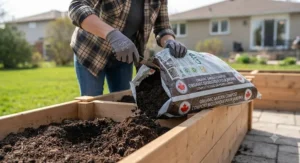
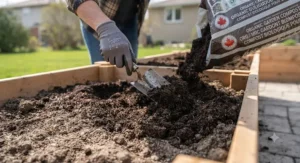
Buying the right bag is half the job — application is where most of the value gets lost or gained. Start by timing it right: early spring, once soil is workable but before planting, or fall after harvest, gives compost time to integrate before roots need it. For new beds, work compost into the top 15–20 cm (6–8 inches) of soil at roughly a one-part-compost-to-four-parts-existing-soil ratio, which mirrors the mixing guidance on most Canadian compost labels. For established beds, a simpler topdressing approach works fine: spread a 2.5–5 cm (1–2 inch) layer over the surface and lightly rake it in without disturbing established root systems.
A mistake worth flagging early: don’t pile fresh-smelling manure-based compost directly against plant stems, even composted product, since concentrated contact can still stress tender roots. Water thoroughly after application regardless of product type — this activates microbial activity and helps nutrients move into the root zone rather than sitting on the surface. For maintenance, most Canadian garden soils benefit from a fresh compost application every 12–24 months, depending on how heavily the bed is planted and how sandy or clay-heavy your native soil runs. Skipping this step for several years in a row is the single most common reason gardeners see declining yields despite watering and weeding diligently.
Real-World Scenarios: Matching Compost to Your Garden
Consider three common situations. First, a first-year condo-balcony container gardener in Toronto growing tomatoes and herbs in three large pots — here, Wiggle Worm Organic Worm Castings mixed lightly into potting soil makes sense, since the concentrated, gentle nutrient profile suits container volumes without the bulk a manure product would demand. Second, a family in Manitoba converting a 20-square-metre section of lawn into a new vegetable garden from scratch — this calls for a bulk approach using Black Kow Composted Cow Manure or Garden Club Composted Cattle Manure mixed generously into the existing soil, since volume and cost-per-square-metre matter more than premium texture at this scale. Third, a retired gardener in Nova Scotia maintaining decades-old perennial beds that just need a seasonal refresh — Coast of Maine Quoddy Blend or Fafard BIOFOR as a light annual topdressing preserves what’s already working without disrupting established plantings.
The common thread across all three: budget, garden size, and frequency of use should drive the compost choice far more than which bag has the flashiest label at the garden centre.
Problem → Solution: Fixing Common Soil Issues With Bagged Compost
Heavy clay soil that puddles after rain responds well to Fafard BIOFOR or any peat-and-bark blend worked into the top layer, since the bark fraction physically breaks up compaction over a season or two. Sandy soil that drains too fast and leaves plants thirsty benefits more from manure-based composts like Black Kow, which add organic matter that holds both moisture and nutrients between waterings. Pale, slow-growing vegetable seedlings usually point to a nitrogen deficiency, and Espoma Organic Chicken Manure addresses that directly rather than through a slower-release general conditioner. New raised beds filled with cheap fill dirt or contractor topsoil need a genuine soil-building product rather than a light topdressing — Miracle-Gro Organic Raised Bed & Garden Soil is formulated for exactly that scenario. Finally, container plants that seem to stall despite regular watering and fertilizer often just need fresh organic matter, since potting mix breaks down faster than garden soil — a light mix of Wiggle Worm worm castings refreshes that without overwhelming a confined root zone.
How to Choose Bagged Compost for Gardens
Here’s a fast, practical checklist for narrowing down the right bag for your situation:
- Identify your soil type first. Clay needs structure (bark-based blends); sandy soil needs moisture retention (manure-based blends).
- Match the product to the crop. Heavy feeders like tomatoes and corn benefit from nitrogen-forward options such as poultry manure compost.
- Check for OMRI or organic certification if you’re growing edibles and want confirmation of organic input standards.
- Calculate coverage before you shop, not after — most bags cover far less area than gardeners assume at a proper application depth.
- Read the ingredient list, not just the front label. A good composter states exactly what went into the bag, with no vague “organic materials” wording.
- Consider your budget per square metre, not per bag — a cheaper bag that covers less area can cost more overall.
- Factor in how often you’ll reapply. Lower-nutrient conditioners need more frequent topdressing than concentrated manure blends.
What to Expect: Real-World Performance
Specs on a bag rarely translate directly into what happens in your actual backyard, so here’s the honest version. In the first few weeks after application, expect improved soil texture — visibly darker, more crumbly ground — well before any dramatic plant growth shows up. Nutrient release from composted (as opposed to synthetic) sources is gradual, so most gardeners notice meaningful growth differences over four to six weeks rather than overnight. Drainage improvements in heavy clay soil are often the most immediately noticeable change, since water no longer pools on the surface after a rain. By the following season, the real payoff shows up: better root establishment, more consistent watering needs, and vegetable yields that reviewers across nearly every product on this list describe as a genuine step up from untreated soil — not a miracle transformation, but a measurable one.
Organic Compost Bags vs Bulk & Homemade Compost
Organic compost bags win on convenience, consistency, and small-garden practicality — you buy exactly what you need, when you need it, with no minimum delivery quantity and no truck access required. Bulk compost delivered by the cubic yard is significantly cheaper per litre if you’re covering a large area, but it requires space to dump it, a way to move it, and — frankly — a driveway your neighbours won’t mind seeing covered in soil for a weekend. Homemade compost from kitchen and yard waste costs almost nothing beyond a bin, but it takes months to mature properly and the nutrient content varies wildly depending on what went in. For most urban and suburban Canadian gardeners working with beds under 30 square metres, bagged compost simply makes more sense logistically, even at a higher per-litre cost, because the alternative — coordinating a bulk delivery for a small backyard bed — often isn’t practical at all. Larger rural properties or serious vegetable growers, on the other hand, usually outgrow bagged compost financially within a season or two and switch to bulk sourcing.
Manure-Based Compost for Vegetable Gardens
Manure-based compost deserves its own conversation because vegetable gardens have different tolerance thresholds than ornamental beds. Well-composted manure — properly aged until it no longer smells strongly and has broken down into a crumbly, dark texture — is safe and genuinely beneficial for edible gardens, supplying nitrogen, phosphorus, and potassium in forms plants can access gradually rather than in an overwhelming burst. The key word is composted, not fresh: Ontario’s guidance on soil management for produce growers notes that proper composting requires the pile to reach roughly 55°C for several consecutive days to reliably reduce pathogen levels, and that fresh, uncomposted manure shouldn’t touch soil where crops will be harvested within about 120 days. This is exactly why products like Black Kow, Garden Club Composted Cattle Manure, and Espoma Organic Chicken Manure specify that they’re fully composted on the label — that claim isn’t just marketing, it’s a food-safety distinction that matters for anything you’re planning to eat. Applied correctly, manure-based compost worked into vegetable beds several weeks before planting is one of the most cost-effective ways to build fertility season after season.
Soil Enrichment & Application Rate: How Much Compost Your Garden Actually Needs
This is where most gardeners either underspend or overspend without realizing it. As a general soil enrichment rule, new beds need a heavier initial application — roughly one part compost worked into four parts existing soil across the top 15–20 cm — while established beds only need a light annual topdressing of 2.5–5 cm spread across the surface. Translated into bags, a 30-litre bag of a typical blend like Fafard BIOFOR covers approximately 3 square metres at proper topdressing thickness, meaning an average 10-square-metre vegetable bed needs three to four bags for a full seasonal refresh — not the single bag many gardeners instinctively grab. Manure-based composts follow similar coverage math but can be applied slightly more heavily without nutrient burn, given their lower guaranteed analysis numbers compared to more concentrated products like poultry manure compost. If precision matters to you — say, you’re managing a larger vegetable operation — a basic soil test before applying anything will tell you whether you actually need a nitrogen-forward option like Espoma or a general conditioner is sufficient. Overapplying rarely causes serious harm with composted (versus fresh) products, but it does waste money, so measuring your bed area before shopping saves both.
Common Mistakes When Buying Bagged Compost
The most frequent error is buying based on bag price alone without checking coverage area, which often means the “cheaper” bag actually costs more per square metre once you account for how little ground it covers. A close second is assuming all compost is interchangeable — using a nitrogen-heavy poultry manure compost as a general conditioner, for instance, can overfeed some plants while underdelivering the structural benefits a bark-based blend would provide. Gardeners also frequently skip reading the ingredient list, missing details like whether a product is safe for edible gardens or better suited to ornamental beds only. Another common misstep is applying compost right before planting rather than several weeks ahead, particularly with manure-based products, which benefit from a short integration period. Finally, many gardeners buy once and forget to reapply — treating compost as a one-time fix rather than a recurring part of soil enrichment, which is really the whole point of the practice.
Safety, Regulations & Compliance Guide
In Canada, all fertilizers and supplements — including bagged compost — sold or imported for use fall under the federal Fertilizers Act, administered by the Canadian Food Inspection Agency, which requires products to be safe for human, animal, and plant health, and accurately labelled to prevent misrepresentation in the marketplace. This is worth knowing because it means the guaranteed analysis numbers printed on a legitimate Canadian compost bag aren’t just marketing copy — they’re subject to federal oversight, including limits on cumulative metal content added to soil over time. At the provincial level, Ontario’s compost quality standards classify processed organic material into quality categories, with the highest grades approved for unrestricted use in home gardens, giving consumers a rough quality benchmark even outside Ontario. Practically speaking, this means reputable bagged products from established Canadian and cross-border brands — the kind sold through major retailers and Amazon.ca — are held to meaningfully higher accountability standards than compost sourced informally or without clear labelling. When in doubt, favour products with a clear ingredient list and guaranteed analysis over anything vague about its origin.
Frequently Asked Questions
❓ Is bagged compost the same as garden soil?
❓ How much bagged compost do I need for a vegetable garden?
❓ Can I use manure-based compost directly on vegetables?
❓ What's the difference between organic compost bags and regular bagged compost?
❓ How often should I apply compost for soil enrichment?
Conclusion
There’s no single best bagged compost for every Canadian garden — there’s a best one for your soil, your budget, and what you’re actually growing. If you want one dependable, all-purpose bag, Fafard BIOFOR Compost with Peat and Bark covers the most bases. If you’re building a new bed on a tight budget, Black Kow Composted Cow Manure and Garden Club Composted Cattle Manure deliver the most organic matter per dollar. For a serious vegetable garden starting from scratch, Miracle-Gro Organic Raised Bed & Garden Soil earns its name honestly, while Espoma Organic Chicken Manure solves the specific problem of nitrogen-hungry crops. And if you want to treat your soil to something a little more specialized, Wiggle Worm Organic Worm Castings and Coast of Maine Quoddy Blend both reward the extra spend with results manure alone won’t match.
Whichever bag you pick, the application rate matters as much as the product — measure your bed, buy accordingly, and give it a few weeks to work before judging results. Soil enrichment isn’t a one-season fix; it’s a habit that compounds every year you keep it up.
Recommended for You
- Compost vs Garden Soil for Vegetable Beds: 7 Best Picks (2026)
- Garden Soil for Raised Beds: 7 Top Picks for 2026
- Organic Potting Mix vs Regular Potting Soil: 7 Picks for 2026
Disclaimer: This article contains affiliate links. As an Amazon Associate, I earn from qualifying purchases. If you purchase products through these links, we may earn a small commission at no additional cost to you.
✨ Found this helpful? Share it with your friends! 💬🤗
