
In This Article
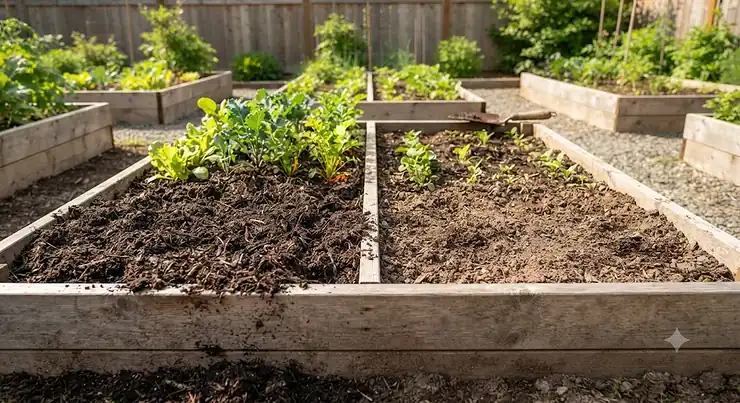
Every spring, somebody stands in the soil aisle at their local garden centre, holding one bag that says “compost” and another that says “garden soil,” wondering if they’re about to waste twenty bucks on the wrong one. Fair question. The debate over compost vs garden soil for vegetable beds isn’t just marketing noise — the two products behave differently in your beds, feed your plants on different timelines, and solve different problems. Compost is decomposed organic material, dense with microbial life and short-term nutrition. Garden soil is a bulkier blend — usually native-style soil, sand, and some organic content — built to fill volume and hold a bed’s structure together. Get the ratio wrong and you’ll either starve your tomatoes or drown them in a soggy, nutrient-heavy mush that burns young roots.
This guide breaks down exactly where these two products overlap, where they diverge, and how Canadian growers — from a Calgary raised bed to a Halifax backyard plot — can combine them properly. We dug into real product specs, aggregated review themes, and Canadian composting regulations to build an honest, practical comparison rather than a rehashed spec sheet. Along the way, you’ll find seven real amazon.ca products worth considering, a mixing ratio you can actually use this weekend, and a decision framework for when one product beats the other outright. Whether you’re filling a brand-new raised bed or just topping up a tired one, by the end you’ll know precisely what to buy — and why.
Quick Comparison Table
| Factor | Compost | Garden Soil |
|---|---|---|
| Primary role | Feeds soil biology, adds nutrients fast | Fills volume, builds structure |
| Nutrient content | High but variable, releases quickly | Lower, often slow-release/blended |
| Best used as | An amendment, mixed in (10-30% of bed volume) | A base layer or bulk filler |
| Typical price range (CAD) | C$15-C$45 per bag depending on size/brand | C$20-C$55 per bag depending on size/brand |
| Best For | Boosting worn-out beds, feeding heavy vegetables | New raised beds, in-ground plots needing bulk |
Looking at the table, the split is pretty clean: compost is concentrated fuel, garden soil is the foundation you pour that fuel into. Neither one works as a complete standalone solution for a serious vegetable bed — compost alone can be too rich and unstable, while garden soil alone (especially bagged “top soil” or triple mix) tends to compact hard by midsummer, choking root growth. Most experienced growers treat this less as compost vs garden soil for vegetable beds and more as compost plus garden soil, blended at a ratio that matches their crop and bed type.
💬 Just one click — help others make better buying decisions too!😊
Top 7 Compost and Garden Soil Products for Vegetable Beds: Expert Analysis
We looked at budget bagged soils, premium organic blends, and pure compost amendments so you can match the product to your bed size, your crop list, and your patience for DIY mixing. Prices below are CAD ranges researched at the time of writing — always check current pricing on the product page, since garden retail pricing shifts constantly with season and shipping costs.
1. Miracle-Gro Garden Soil Vegetables & Herbs — budget-friendly all-in-one base layer
Miracle-Gro Garden Soil Vegetables & Herbs is the bag most Canadians grab first, and there’s a reason it dominates the big-box shelves every May. It’s formulated specifically for in-ground vegetable beds rather than containers, which matters more than it sounds like. The blend includes a continuous-release plant food rated to feed for up to three months, plus a moisture-control component designed to buffer against the classic rookie mistakes of over- and under-watering. In practice, that moisture buffering is the standout feature — it forgives an irregular watering schedule better than a straight compost mix would. Spec-wise, you’re meant to spread 2-3 inches over your planting area and work it into the top 6-8 inches of native soil, which tells you this product is designed as an amendment to existing ground, not a full raised-bed fill. Based on the formulation, this is a strong pick for beginners converting a patch of lawn or clay-heavy yard into a vegetable bed for the first time, since it does double duty as both soil conditioner and light feeder. Reviewers across retail platforms consistently note that plants establish faster in the first month compared to unamended native soil, though several also mention the bag runs damp and heavy, making it awkward to haul solo. It’s not a substitute for real compost when you need heavy organic matter, but as a foundational layer it’s hard to beat for the price.
Pros:
- ✅ Feeds vegetables for up to three months on one application
- ✅ Moisture-control formula reduces watering guesswork
- ✅ Widely available across Canadian garden retailers
Cons:
- ❌ Bags are heavy and awkward for solo transport
- ❌ Lower organic matter than true compost blends
At around C$20-C$30 per 1.5 cu ft bag, Miracle-Gro Garden Soil Vegetables & Herbs is a solid value pick for amending existing ground rather than filling a brand-new raised bed from scratch.
2. Espoma Organic Vegetable & Flower Garden Soil — organic in-ground blend with real compost content
Espoma Organic Vegetable & Flower Garden Soil leans harder into the “organic” side of garden soil than most mainstream competitors, and the ingredient list backs that up. It’s regionally formulated using a mix of Canadian sphagnum peat moss, aged forest products or composted rice hulls, limestone for pH balance, earthworm castings, and alfalfa meal — a genuinely compost-adjacent blend rather than a straight fill dirt. What that composition means practically is better moisture retention than a sandy garden soil, along with a slower, steadier nutrient release from the composted inputs rather than a synthetic fertilizer spike. Based on the spec sheet, this product suits gardeners who want the bulk-filling job of garden soil without sacrificing the biological richness compost normally provides. It’s also OMRI-adjacent in its organic positioning, appealing to anyone gardening under a no-synthetics rule. Aggregated feedback from garden forums and retail reviews suggests it performs particularly well for tomatoes and peppers, where consistent moisture matters as much as raw nutrition, while a recurring complaint is that the 1 cubic foot bag size means you’ll need several bags for anything beyond a small bed. If you’re building out multiple 4×8 raised beds, budget for the cost of buying it by the pallet rather than the single bag.
Pros:
- ✅ Genuine compost-style ingredients, not just filler dirt
- ✅ Slow, steady nutrient release suits sensitive vegetables
- ✅ OMRI-adjacent organic formulation for chemical-free gardens
Cons:
- ❌ Small 1 cu ft bags mean higher cost per large bed
- ❌ Peat-heavy mix needs occasional aeration in clay soils
Expect to pay roughly C$25-C$35 per 1 cu ft bag, making Espoma Organic Vegetable & Flower Garden Soil a mid-range choice for growers who want organic credibility without stepping up to a full premium blend.
3. Coast of Maine Organic & Natural Planting Soil for Vegetables & Tomatoes — compost-forward blend built for heavy feeders
Where the previous two entries lean toward the “garden soil” end of the spectrum, Coast of Maine Organic & Natural Planting Soil for Vegetables & Tomatoes shifts noticeably toward compost. It’s built around composted manure and sphagnum peat moss, hand-crafted specifically for tomato and vegetable beds rather than general landscaping. The manure-forward composting process means a genuinely higher nitrogen load than a standard bagged garden soil, which matters if you’re growing nitrogen-hungry crops like tomatoes, squash, or corn. What most buyers overlook about manure-based composts like this one is that the “hot” nutrient release can actually stress transplants if applied at full strength right at planting time — it’s better mixed into the top few inches a couple of weeks before you put seedlings in the ground. OMRI listing confirms it qualifies for certified organic use, which is worth knowing if you sell produce or simply prefer a documented organic chain. Aggregated review sentiment from gardening communities points to noticeably darker foliage and heavier tomato yields when this is worked into raised beds, alongside occasional notes about a stronger initial odour typical of manure-based composts, which usually fades within a week outdoors.
Pros:
- ✅ Manure-based compost delivers strong nitrogen for heavy feeders
- ✅ OMRI listed for certified organic gardening
- ✅ Purpose-built for tomatoes and vegetables specifically
Cons:
- ❌ Stronger odour on first application than peat-based blends
- ❌ Can be too “hot” for direct-seeding without curing time
Priced around C$20-C$28 for a 20 quart bag, Coast of Maine Organic & Natural Planting Soil for Vegetables & Tomatoes earns its place as the compost-heavy option on this list for growers chasing bigger tomato and squash harvests.
4. Gaia Green Living Soil — Canadian-made premium blend with active microbial life
Gaia Green Living Soil stands apart on this list simply because it’s manufactured in British Columbia, which matters for freight costs and for gardeners who prioritize buying Canadian. The formulation combines worm castings, insect frass, and composted inputs with peat, perlite, and coco coir, aiming for a light, well-draining structure that still carries real biological activity rather than being biologically inert filler. That combination of composted nutrition plus aeration materials is exactly the blend serious raised-bed growers try to recreate by hand-mixing compost and garden soil themselves — Gaia Green essentially pre-does that work for you. Based on the ingredient profile, this is less a “garden soil” in the traditional bulk-fill sense and more a hybrid product sitting squarely between compost and soil, which explains its premium price point. It’s CDFA-registered and free of synthetic chemicals, appealing to growers running a fully organic operation. Reviewers on Canadian gardening forums frequently cite strong root development and consistent moisture control in raised beds, particularly in coastal BC’s damp spring conditions, though a few note the smaller bag sizes mean the cost per cubic foot runs noticeably higher than a big-box garden soil.
Pros:
- ✅ Made in Canada, reducing shipping-related cost and emissions
- ✅ Biologically active blend with worm castings and insect frass
- ✅ Light, well-draining texture ideal for raised beds
Cons:
- ❌ Premium price per cubic foot versus mainstream brands
- ❌ Smaller bag sizes require more units for large beds
At roughly C$40-C$55 for a 30L bag, Gaia Green Living Soil is the premium pick here — worth it if you value a Canadian-made, biologically rich hybrid over straight bulk filler.
5. Espoma Organic Raised Bed Mix — purpose-built for raised bed structure and drainage
Raised beds behave differently than in-ground plots, and Espoma Organic Raised Bed Mix is engineered specifically around that difference. Standard in-ground garden soil, when poured straight into a raised frame, tends to compact and drain poorly because it lacks the aeration components a contained bed needs. This mix instead blends organic compost with materials designed to keep pore space open even after a full season of watering and settling. The practical payoff is fewer drainage issues in the first year — a genuinely common raised-bed failure mode that new gardeners run into when they simply dump garden soil into a frame and call it done. Based on the formulation, it strikes a deliberate middle ground: richer in organic matter than a typical bagged garden soil, but not so compost-dense that it collapses and over-compacts by August. Aggregated feedback from raised-bed gardening communities suggests it performs particularly well in its first season, with some noting they still top-dress with additional compost the following spring to maintain fertility, which is standard practice for any raised bed regardless of the initial fill product.
Pros:
- ✅ Engineered specifically for raised bed drainage and structure
- ✅ OMRI-listed organic ingredients throughout
- ✅ Balanced richness avoids over-compaction by midsummer
Cons:
- ❌ Requires seasonal top-dressing to maintain nutrient levels
- ❌ 1.5 cu ft bags mean multiple purchases for larger frames
Budget around C$30-C$40 per 1.5 cu ft bag; Espoma Organic Raised Bed Mix is the smartest single-product choice on this list if you’re filling a new raised frame and want to skip the DIY blending step entirely.
6. Wiggle Worm 100% Pure Organic Worm Castings Fertilizer — the purest compost amendment on this list
Wiggle Worm 100% Pure Organic Worm Castings Fertilizer isn’t a garden soil at all — it’s pure compost in its most concentrated, gentlest form. Worm castings are essentially compost that’s already passed through an earthworm’s digestive system, which breaks nutrients down into a form plants can access almost immediately without the risk of burning tender roots the way fresh manure-based compost sometimes can. The manufacturer’s own application guidance — line planting holes with 1-2 inches, or blend at roughly one part castings to four parts existing soil — tells you this product is meant to be a booster mixed into other material, not a standalone bed fill. What that means practically is you’d pair this with a garden soil base rather than buying it as your only product, which is precisely the DIY approach to mixing compost and garden soil that experienced growers rely on. It’s OMRI listed and marketed as odour-free, which reviewers on retail platforms consistently confirm, contrasting it favourably against manure-based composts for anyone gardening near a patio or balcony. The mineral-dense formula is also frequently credited with improving soil aeration in compacted clay beds, a structural benefit beyond pure nutrition.
Pros:
- ✅ Non-burning, gentle enough for seedlings and transplants
- ✅ Odour-free — a genuine advantage for small urban beds
- ✅ OMRI listed and mineral-dense for aeration benefits
Cons:
- ❌ Not a standalone soil — always needs a base to mix into
- ❌ Higher cost per pound than bulk bagged compost
At roughly C$25-C$40 depending on bag size, Wiggle Worm 100% Pure Organic Worm Castings Fertilizer is the go-to amendment when you already have garden soil in place and just need a concentrated, safe nutrient boost.
7. Coast of Maine Organic & Natural Castine Blend Soil — premium raised bed blend with mycorrhizae and biochar
Rounding out the list at the premium end, Coast of Maine Organic & Natural Castine Blend Soil targets raised bed and container growers who want enhanced drainage and aeration engineered directly into the bag. The standout feature here is the inclusion of mycorrhizae and biochar alongside the compost base — mycorrhizal fungi form symbiotic relationships with vegetable roots that extend their effective reach for water and nutrients, while biochar improves long-term soil structure and helps retain nutrients that would otherwise leach out after heavy rain. Based on that formulation, this product is aimed less at gardeners chasing a quick single-season fix and more at those building a raised bed they intend to maintain and improve for years. The compost-and-peat-moss base still provides the organic matter and nutrient content you’d expect, but the added biochar changes the long-term structural story in a way most bagged blends don’t attempt. Reviewers on gardening platforms frequently point to improved drainage in the first heavy rain of the season as the most noticeable early benefit, with root development improvements becoming apparent later in the growing cycle as the mycorrhizal network establishes.
Pros:
- ✅ Mycorrhizae inoculant supports long-term root development
- ✅ Biochar improves nutrient retention and drainage over years
- ✅ Purpose-built for raised bed and container aeration needs
Cons:
- ❌ Premium pricing compared to standard compost-soil blends
- ❌ Benefits from mycorrhizae take a season to fully show
Expect to pay in the C$45-C$65 range for a 2 cu ft bag; Coast of Maine Organic & Natural Castine Blend Soil is worth the premium if you’re building a raised bed meant to perform well for several years, not just one growing season.
What Is Compost vs Garden Soil for Vegetable Beds?
Compost is fully decomposed organic matter — kitchen scraps, yard waste, or manure broken down by microbes — used to add nutrients and biological activity to existing ground. Garden soil is a bulkier, often blended product used to fill volume and establish structure in a bed, typically containing less concentrated organic content than pure compost.
The distinction matters because these two products get marketed side by side, sometimes even in the same aisle, without retailers explaining that they’re solving different problems. Compost is what a bed eats; garden soil is closer to what a bed is made of. As the Toronto Master Gardeners point out in their urban vegetable growing guide, plain garden soil or “triple mix” on its own tends to compact too densely for container and raised-bed use, which is exactly why blending in compost or a compost-rich soil mix consistently outperforms either product used alone.
Nutrient Content: Where Compost and Garden Soil Actually Differ
Nutrient content is where the compost vs garden soil for vegetable beds debate gets concrete. Compost typically carries a higher, faster-available nutrient load because decomposition has already broken organic material into plant-accessible forms — nitrogen, phosphorus, potassium, plus a wide spread of micronutrients that synthetic fertilizers don’t replicate. Garden soil, by contrast, is usually formulated for a slower nutrient curve, either through blended synthetic continuous-release granules or a lighter compost content diluted across a larger bulk volume.
Here’s what that means for your beds: heavy feeders like tomatoes, squash, and corn benefit from compost’s concentrated nutrient content, especially mixed in a few weeks before transplanting. Lighter feeders like herbs and root vegetables can actually suffer in overly rich compost, developing lush foliage at the expense of the root or bulb you’re trying to grow. Garden soil’s more measured nutrient profile suits those crops better as a standalone base.
Soil Structure: How Compost and Garden Soil Change Your Bed
Soil structure — the physical arrangement of particles, pore space, and drainage capacity — is arguably the more underrated factor in this comparison. Compost improves structure by adding organic material that binds sandy soils together while simultaneously loosening clay-heavy soils, a genuinely dual-direction benefit few amendments offer. Garden soil’s structural contribution depends entirely on its own composition; a sandy, poorly blended garden soil can actually worsen structure in a bed that’s already draining too fast.
What the spec sheet won’t tell you, but longtime growers note, is that structure problems compound over a season. A bed that starts slightly too dense will compact further under watering and foot traffic, while a bed with good organic matter content resists that compaction because the material itself creates air pockets that persist. This is the core structural argument for blending rather than choosing one product exclusively.
Soil Amendment for Vegetable Beds: When One Product Isn’t Enough
Most experienced Canadian vegetable gardeners eventually stop thinking in terms of “compost or garden soil” and start thinking in terms of soil amendment for vegetable beds as an ongoing practice rather than a one-time purchase decision. A bed filled once with either product will decline in fertility and structure within one to two growing seasons regardless of which product you chose initially, simply because vegetables draw down nutrients and organic matter breaks down over time.
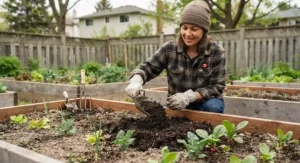
The practical takeaway: budget for annual amendment, not just initial fill. A thin layer of compost worked into the top few inches each spring — roughly 1-2 inches across the bed — maintains both the nutrient content and the soil structure gains from your original fill. According to Ontario’s compost quality standards guidance, quality compost applied at appropriate rates measurably improves the physical condition of soil over repeated seasons, which is exactly the compounding benefit gardeners are chasing with annual amendment.
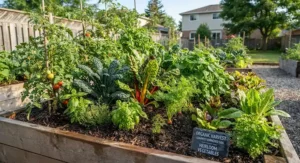
Mixing Compost and Garden Soil: A Practical Ratio Guide
Mixing compost and garden soil correctly comes down to ratio, timing, and bed type — get those three right and you’ll avoid the two most common failure modes: nutrient burn from too much compost, or compacted, hungry beds from too little.
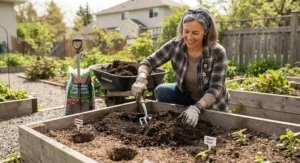
For a new raised bed, a widely used starting ratio is roughly 60% garden soil or a soil-based blend to 40% quality compost, adjusted toward more compost if your native soil or base blend is sandy and drains fast, or less compost if you’re working with a heavier, clay-rich base that already retains moisture and nutrients well. For an established in-ground bed, work 1-2 inches of compost into the top 6-8 inches of existing soil each spring rather than trying to replace the whole bed — this mirrors the raised-bed gardening structural principle that soil should be enriched incrementally rather than fully replaced each season.
Timing matters too: mix compost in two to three weeks before planting whenever possible, giving hotter, manure-based composts time to mellow so they don’t stress young transplants. Container and raised beds under 12 inches deep should lean slightly lighter on compost since drainage and aeration matter more in a confined volume than raw nutrient density.
Real-World Scenarios: Matching the Right Mix to Your Garden
Picture three different Canadian gardeners, each solving a slightly different problem. First, a first-time balcony grower in a Toronto condo with two 12-inch containers, budget under C$60 total, wanting low-odour and low-mess — Wiggle Worm 100% Pure Organic Worm Castings Fertilizer mixed into a bag of Espoma Organic Vegetable & Flower Garden Soil solves both the odour concern and the nutrient need without overwhelming a small container.
Second, a family in suburban Calgary building two new 4×8 raised beds from scratch, prioritizing structure and long-term value over the fastest possible harvest — Espoma Organic Raised Bed Mix as the primary fill, topped with a seasonal layer of Coast of Maine Organic & Natural Planting Soil for Vegetables & Tomatoes each spring, builds exactly the kind of compounding fertility discussed above.
Third, an established gardener in coastal BC with an existing in-ground plot that’s producing smaller yields year over year — a straightforward annual amendment of Coast of Maine Organic & Natural Castine Blend Soil worked into the top layer addresses both the declining structure and nutrient content without a full bed rebuild.
✨ Ready to build your own bed plan? Match your garden’s size and budget to the picks above before prices change! 🥕
Common Mistakes When Buying Compost or Garden Soil
The single most common mistake is buying “top soil” or unlabelled “garden soil” expecting compost-level nutrition — cheap fill dirt products are often nutrient-poor and sometimes contain weed seed or debris that a properly composted product wouldn’t. A second frequent error is dumping fresh, uncomposted manure straight into a bed close to harvest time; proper composting requires sustained heat to reduce pathogen risk, and skipping that step creates a genuine food-safety concern for vegetables. Third, gardeners often over-apply compost, assuming more nutrients automatically means better growth, when in reality excess nitrogen from over-composting produces leafy, unproductive plants at the expense of fruit and root development. Finally, many first-time raised-bed builders skip amendment planning entirely, filling a bed once and never budgeting for the annual top-up that maintains fertility — a mistake that shows up as steadily declining yields by year two or three.
How to Choose Between Compost and Garden Soil
- Assess your starting point — sandy, clay, or an empty raised bed frame each call for different ratios.
- Identify your crop type — heavy feeders like tomatoes want more compost; root vegetables and herbs want a lighter, more balanced garden soil base.
- Check bed depth — shallow containers under 12 inches need lighter, better-draining mixes with less concentrated compost.
- Set a realistic budget — factor in annual top-up compost, not just the initial fill cost.
- Consider timing — buy compost early enough to let hot, manure-based blends cure before transplanting.
- Prioritize organic certification if it matters to you — OMRI-listed products confirm a documented organic supply chain.
- Plan for maintenance — decide now whether you’ll amend annually or attempt a longer-lasting premium blend with biochar or mycorrhizae.
Long-Term Cost & Maintenance: Compost vs Garden Soil Over Time
Sticker price tells only part of the story. A budget garden soil might cost less upfront but typically needs more frequent compost top-ups to maintain productivity, while a premium blend with biochar or mycorrhizae costs more initially but can extend the interval between major amendments. Calculated over a three-year window, a raised bed filled with a mid-range organic garden soil and topped annually with a modest compost layer often lands in a similar total cost range to a single premium fill — the difference is mostly about how you’d rather spend the money, upfront or incrementally. Worm castings and other concentrated compost amendments offer strong value per application since a little goes a long way, making them a cost-efficient top-up choice regardless of which base product you started with.
Safety, Regulations & Compliance for Canadian Gardeners
Compost sold in Canada is regulated under the Fertilizers Act, and products must meet defined compositional and safety criteria before they can legally be labelled “compost” — a product can’t carry that name if it doesn’t actually meet the regulatory definition. According to the Canadian Food Inspection Agency’s trade memorandum on compost regulation, compost products must meet safety standards addressing ingredients and contaminants of concern, and application rates must be sufficient to measurably improve soil condition or aid plant growth. For home gardeners, the practical safety takeaway is simpler: avoid applying fresh, uncomposted manure to vegetable beds close to harvest, since proper composting requires sustained heat to reduce pathogen levels, and always favour bagged products from established Canadian retailers with clear ingredient labelling over unregulated bulk sources of unknown origin.
FAQ
❓ Is compost better than garden soil for a vegetable garden?
❓ Can I use only compost to fill a raised bed?
❓ How often should I add compost to an established vegetable bed?
❓ What is the best soil amendment for vegetable beds in raised planters?
❓ Does mixing compost and garden soil actually improve yields?
Conclusion
The compost vs garden soil for vegetable beds question doesn’t really have a single winner, and honestly, that’s good news — it means you’re not locked into buying one “correct” product. Compost brings concentrated nutrient content and biological life; garden soil brings the bulk and structure your bed needs to hold together through a Canadian growing season of freeze-thaw cycles and heavy spring rain. The seven products covered here span that whole spectrum, from budget-friendly all-purpose garden soils to biochar-enriched premium blends built for years of use. Whichever combination you land on, treat soil amendment for vegetable beds as an ongoing practice rather than a one-time purchase — a spring top-up of quality compost, worked properly into existing garden soil, is consistently what separates a mediocre harvest from a genuinely productive one.
✨ Don’t Miss These Exclusive Deals!
🔍 Take your vegetable bed to the next level with the compost and garden soil picks above. Click through to check current pricing and availability before you head out to plant. The right mix this season means a healthier, more productive harvest your family will actually taste the difference in!
Recommended for You
- Garden Soil for Raised Beds: 7 Top Picks for 2026
- Organic Potting Mix vs Regular Potting Soil: 7 Picks for 2026
- Potting Soil for Vegetable Garden: 7 Top Picks for 2026
Disclaimer: This article contains affiliate links. As an Amazon Associate, I earn from qualifying purchases. If you purchase products through these links, we may earn a small commission at no additional cost to you.
✨ Found this helpful? Share it with your friends! 💬🤗
