
In This Article
Picture this: it’s late August in Saskatchewan, and while your neighbours are still nursing green tomatoes, you’re already harvesting baskets of ripe, juicy beauties. The secret? Choosing the right short season tomato seeds zone 3 varieties that laugh in the face of Canada’s short growing season.
If you’re gardening in zone 3—which covers much of Alberta, Saskatchewan, parts of Manitoba, and northern regions—you know the struggle is real. According to Natural Resources Canada’s Plant Hardiness Map, zone 3 gardeners deal with frost-free periods as short as 60-90 days. That’s barely enough time for traditional tomato varieties to even think about ripening!
But here’s the good news: cold-hardy, early-maturing tomato varieties exist specifically for northern climates. These specially bred cultivars were developed in places like Alberta, Siberia, and Sweden—regions that understand what it means to battle short summers and unexpected frost. The Glacier tomato variety, for instance, produces ripe fruit in just 55 days from transplant, giving zone 3 gardeners a fighting chance at homegrown tomatoes.
Whether you’re in Calgary dealing with unpredictable spring weather, farming in rural Saskatchewan, or maintaining a backyard garden in Winnipeg, this guide covers everything you need to know about 60 day tomato varieties Canada can count on. We’ll explore early maturing tomato seeds Alberta gardeners swear by, cold hardy tomato seeds Saskatchewan winters can’t intimidate, and sub arctic tomato seeds that produce where others fail.
Ready to transform your short-season garden from disappointing to abundant? Let’s dig into the varieties that’ll have you enjoying fresh tomatoes weeks before anyone else on your block.
Quick Comparison Table of Top Zone 3 Tomato Seeds
| Variety | Days to Maturity | Fruit Size | Growth Type | Best Feature | Price Range (CAD) |
|---|---|---|---|---|---|
| Glacier | 55 days | 2-3 oz | Determinate | Earliest harvest | $3-6 |
| Sub Arctic Plenty | 42-62 days | 2-4 oz | Determinate | Extreme cold tolerance | $3-8 |
| Siberian | 48-60 days | 2-5 oz | Indeterminate | Sets fruit at 38°F | $3-7 |
| Early Girl | 57-60 days | 4-6 oz | Indeterminate | Large fruit for early type | $4-9 |
| Stupice | 60-65 days | 2-3 oz | Indeterminate | Superior flavour | $4-8 |
| Beaverlodge Slicer | 54-60 days | 2-3 oz | Determinate | Canadian heritage | $3-6 |
| Moskovich | 60-65 days | 4-6 oz | Indeterminate | Siberian resilience | $4-7 |
💬 Just one click – help others make better buying decisions too!😊
Top 7 Short Season Tomato Seeds Zone 3: Expert Analysis
1. Glacier Tomato Seeds – The Speed Champion
The Glacier variety isn’t just fast—it’s borderline miraculous for zone 3 gardeners. Developed in Sweden and popularized in Calgary, this determinate tomato reaches maturity in a stunning 55 days from transplant, making it one of the absolute earliest varieties available in Canada.
Key Specifications:
- Maturity: 55 days (determinate)
- Fruit size: 2-3 oz, reddish-orange globes
- Height: 24-30 inches (perfect for containers)
What sets Glacier apart is its compact growth habit combined with legitimate tomato flavour. Unlike some ultra-early varieties that sacrifice taste for speed, Glacier delivers sweet, well-balanced fruit with minimal cosmetic defects. The plants feature distinctive potato-leaf foliage and can start flowering when only 4 inches tall—talk about eager!
Canadian gardeners report that Glacier tomato seeds perform exceptionally well when started indoors 6-8 weeks before the last frost date. The compact plants work brilliantly in raised beds, containers, or even on balconies, making them ideal for urban Canadian gardeners with limited space.
Availability: Widely available on Amazon.ca from sellers like Incredible Seeds and West Coast Seeds, with prices ranging $3.50-$6 CAD per packet. Canadian customers consistently rate these seeds highly for germination rates exceeding 90%.
✅ Pros:
- Fastest maturity of any full-sized tomato
- Compact growth suits containers and small gardens
- Sets fruit reliably even in cool weather
- Excellent flavour for an early variety
- Well-adapted to Canadian prairie conditions
❌ Cons:
- Smaller fruit size than beefsteak types
- Determinate habit means concentrated harvest rather than continuous production
2. Sub Arctic Plenty Tomato Seeds – The Military-Grade Survivor
When Canadian military researchers needed tomatoes that could grow in Greenland, they developed Sub Arctic Plenty—and that tells you everything about this variety’s toughness. Created at the Beaverlodge Research Station in Alberta specifically for extreme northern climates, this is one of the world’s earliest fruiting tomatoes.
Key Specifications:
- Maturity: 42-62 days (determinate)
- Fruit size: 2-4 oz red tomatoes
- Height: 48-60 inches (bushy, upright plants)
The Sub Arctic Plenty produces bountiful clusters of sweet tomatoes on disease-resistant, cold-tolerant plants. It’s been proven to perform successfully in Canada’s southern Yukon territory—if it can handle that, your Saskatchewan garden is a vacation spot by comparison.
This variety sets fruit at lower temperatures than most tomatoes, making it ideal for early spring planting or areas with consistently cool summers. The determinate growth habit means you don’t need elaborate staking systems, though some support prevents heavy branches from flopping.
Availability: Available on Amazon.ca through multiple sellers including McKenzie Seeds (a trusted Canadian company). Prices range $2.50-$8 CAD depending on packet size. Look for Canadian-packaged options to avoid customs delays.
✅ Pros:
- Proven performance in extreme northern climates
- No staking required (determinate growth)
- Disease resistant (V, F tolerance)
- Developed specifically for Canadian prairie conditions
- Handles temperature swings well
❌ Cons:
- Flavour adequate but not exceptional compared to heirlooms
- Some years show yellow shoulders on fruit
3. Siberian Tomato Seeds – The Cold-Weather Champion
Don’t confuse this with the “Siberia” variety (different plant)—the Siberian tomato was introduced to Canadian seed trade in 1967 by Ontario seedsman Edward Lowden, who sourced it from Ukrainian germplasm. This fascinating heirloom has even been successfully grown in the Arctic on Baffin Island!
Key Specifications:
- Maturity: 48-60 days (indeterminate)
- Fruit size: 2-5 oz bright red ovals
- Height: 48-60 inches (requires staking)
What makes Siberian truly remarkable is its ability to set fruit at temperatures as low as 38°F (3°C)—critical for Canadian springs when you’re eager to get plants out early. The potato-leaf plants produce heavily throughout the season with sweet, flavourful fruit that balances acid and sugar beautifully.
This indeterminate variety requires support through cages or stakes, but rewards that effort with continuous production until frost. Heritage Harvest Seed in Manitoba offers certified organic Siberian tomato seeds Canada specifically, maintaining the line’s cold-hardy genetics.
Availability: Widely available from Canadian retailers including Revival Seeds, Common Sense Seeds, and imported options on Amazon.ca. Prices typically $3-$7 CAD per packet. Canadian seed savers have maintained this variety for decades, ensuring locally-adapted genetics.
✅ Pros:
- Sets fruit at remarkably low temperatures (38°F/3°C)
- Continuous harvest from indeterminate growth
- Exceptional cold tolerance proven across Canadian territories
- Rich, traditional tomato flavour
- Strong Canadian heritage variety
❌ Cons:
- Requires staking and pruning
- Slightly longer season than truly ultra-early types
- Can become large and unwieldy without proper support
4. Early Girl Tomato Seeds – The Reliable Performer
Early Girl might be the most famous early tomato in North America, and there’s good reason for its popularity among Canadian gardeners from British Columbia to Nova Scotia. This hybrid combines earliness with respectable fruit size—a rare achievement in the tomato world.
Key Specifications:
- Maturity: 57-60 days (indeterminate)
- Fruit size: 4-6 oz red slicing tomatoes
- Height: 6-7 feet (requires strong support)
What sets Early Girl apart in the zone 3 context is disease resistance. It shrugs off Fusarium wilt races 1 and 2, Verticillium wilt, and newer strains include Tomato Spotted Wilt Virus resistance—crucial when your short growing season leaves no time for plant recovery from disease setbacks.
The plants produce heavily throughout summer on vigorous vines, making them perfect for gardeners who want continuous harvest rather than one big flush. West Coast Seeds in British Columbia recommends Early Girl specifically for coastal Canadian growers looking to beat Late Blight, which typically strikes mid to late summer after Early Girl has already produced most of its crop.
Availability: Available on Amazon.ca through various sellers, with organic options from NE Seed and West Coast Seeds. Prices range $4-$9 CAD depending on organic certification and packet size. Widely available at Canadian Tire and local garden centres across Canada during spring.
✅ Pros:
- Larger fruit than most early varieties
- Excellent disease resistance package
- Proven performance across all Canadian zones
- Continuous production until frost
- Tolerates both cool and hot conditions
❌ Cons:
- Requires significant staking support
- More expensive than open-pollinated varieties
- Hybrid means you can’t save seeds successfully
5. Stupice Tomato Seeds – The Flavour King
If you’re tired of early tomatoes tasting like cardboard, Stupice (pronounced “stu-peach-ka”) will restore your faith. This Czech heirloom consistently ranks at the top of taste tests while maintaining impressive earliness—the holy grail combination for discerning zone 3 gardeners.
Key Specifications:
- Maturity: 60-65 days (indeterminate)
- Fruit size: 2-3 oz deep red fruits
- Height: 4-6 feet (requires caging/staking)
Created by Czech breeder Milan Sodomka in 1976, Stupice was specifically developed for cold tolerance and early production. The potato-leaf plants produce extraordinary yields—some growers report up to 85 fruits per plant—of sweet, slightly oval tomatoes that deliver rich, complex flavour rare in short-season varieties.
BC Eco Seed Co-op offers certified organic Stupice seeds specifically selected for Canadian growing conditions, with germination rates that consistently exceed industry standards. The variety performs particularly well when given consistent moisture and moderate feeding.
Availability: Available from BC Eco Seed Co-op (certified organic), Renee’s Garden, Territorial Seed, and various sellers on Amazon.ca. Prices range $4-$8 CAD per packet, with organic options at premium pricing. Canadian seed savers associations frequently include this variety in seed swaps.
✅ Pros:
- Outstanding flavour for an early tomato
- Exceptionally high yields per plant
- Cold-tolerant with proven European breeding
- Continuous production throughout growing season
- Excellent for fresh eating and salads
❌ Cons:
- Smaller fruit size
- Requires consistent support and pruning
- Some reviews note variable performance in extremely hot conditions
6. Beaverlodge Slicer Tomato Seeds – The Prairie Heritage Star
Named after the legendary Beaverlodge Research Station in Alberta (now closed), the Beaverlodge Slicer represents genuine Canadian tomato breeding heritage. Developed specifically for prairie conditions, this variety understands what Alberta and Saskatchewan gardeners face.
Key Specifications:
- Maturity: 54-60 days (determinate)
- Fruit size: 2-3 oz red slicing tomatoes
- Height: 24-30 inches (compact, sturdy plants)
The Beaverlodge Slicer produces smooth, crack-resistant fruit on compact plants that don’t require staking—a practical advantage when dealing with prairie winds that can topple unsupported plants. The determinate habit delivers a concentrated harvest perfect for sauce-making or canning sessions.
Heritage Harvest Seed in Manitoba maintains this variety as part of their Canadian heritage collection, ensuring that genetics developed specifically for prairie conditions remain available to modern gardeners. The variety shows particular resilience to temperature swings common in Alberta and Saskatchewan springs.
Availability: Heritage Harvest Seed (Manitoba) and select Canadian seed savers. Less commonly available than commercial varieties, but worth seeking out for authentic prairie-adapted genetics. Prices typically $3-$6 CAD per packet when available.
✅ Pros:
- Authentic Canadian prairie breeding
- Compact growth suits windy locations
- No staking required
- Crack-resistant fruit
- Concentrated harvest ideal for preserving
❌ Cons:
- Limited commercial availability
- Smaller fruit than beefsteak types
- Short harvest window (determinate)
7. Moskovich Tomato Seeds – The Siberian Powerhouse
Moskovich (sometimes spelled Moskovitch) brings authentic Russian cold-climate breeding to Canadian gardens. Developed in Siberia where summer temperatures rarely exceed what we’d consider comfortable, this variety treats zone 3 conditions as perfectly normal.
Key Specifications:
- Maturity: 60-65 days (indeterminate)
- Fruit size: 4-6 oz red fruits
- Height: 5-6 feet (requires staking)
What makes Moskovich stand out is the combination of earliness with fruit size—most varieties this early produce cherry-sized tomatoes, but Moskovich delivers proper slicing tomatoes you can use for sandwiches. The fruits show good acid-sugar balance with classic tomato flavour.
The indeterminate vines produce continuously until frost, with strong disease resistance and cold tolerance bred into the variety over generations of Russian selection. TomatoFest and several heritage seed companies offer Moskovich seeds selected from productive strains.
Availability: Available through TomatoFest, select heritage seed companies, and occasionally on Amazon.ca through specialty sellers. Prices range $4-$7 CAD per packet. Some Canadian seed libraries maintain Moskovich in their collections.
✅ Pros:
- Larger fruit for an early variety
- Siberian breeding ensures cold tolerance
- Continuous production
- Good disease resistance
- Classic balanced tomato flavour
❌ Cons:
- Requires substantial support
- Can become unwieldy without pruning
- Less common than mainstream varieties
✨ Don’t Miss These Exclusive Deals!
🔍 Take your zone 3 gardening to the next level with these carefully selected short season tomato seeds zone 3 options available in Canada. Click on any highlighted product above to check current pricing and availability on Amazon.ca. These cold-hardy varieties will help you create authentic homegrown harvests your family will love!
Understanding Canada’s Plant Hardiness Zone 3
Before diving deeper into variety selection, let’s clarify what zone 3 actually means for Canadian gardeners—and why it matters when choosing your short season tomato seeds zone 3.
What Defines Zone 3 in Canada?
According to Natural Resources Canada’s official plant hardiness mapping, Canada’s hardiness zones differ significantly from the USDA system used in the United States. The Canadian system considers seven climate variables including minimum winter temperatures, length of frost-free period, summer rainfall, maximum temperatures, snow cover, January rainfall, and wind speed.
Zone 3 in Canada encompasses:
- Much of Alberta (including Calgary, Red Deer, and rural areas)
- Central and northern Saskatchewan (Saskatoon, Prince Albert)
- Western Manitoba (Brandon area)
- Parts of northern Ontario and Quebec
- Interior British Columbia at higher elevations
- Northwest Territories southern regions
Critical Zone 3 Characteristics:
- Frost-free period: typically 60-90 days
- Last spring frost: late May to early June
- First fall frost: late August to mid-September
- Minimum winter temperatures: -35°C to -40°C
- Short, intense summers with long daylight hours
Why Zone 3 Demands Special Tomato Varieties
The Wikipedia entry on tomatoes (Solanum lycopersicum) explains that tomatoes originated in western South America and were domesticated in regions with long, warm growing seasons. Standard tomato varieties require 80-100 days from transplant to harvest—far longer than zone 3’s frost-free window allows.
This is where early maturing tomato seeds Alberta and Saskatchewan gardeners rely on become essential. These varieties were specifically bred or selected to:
- Germinate and grow in cooler soil temperatures
- Set fruit at temperatures as low as 10-13°C (50-55°F)
- Mature fruit quickly before fall frost
- Tolerate temperature fluctuations common in prairie climates
- Maximize production during the short available window
The Zone 3 Advantage: Longer Summer Days
Here’s the silver lining: zone 3’s northern latitude provides extended summer daylight. During June and July, many zone 3 locations enjoy 16-17 hours of daylight compared to 14-15 hours in southern regions. This extra light energy helps cold hardy tomato seeds Saskatchewan gardens produce remarkably well when matched with appropriate varieties.
How to Choose the Best 60 Day Tomato Varieties Canada
Selecting the right short season tomato seeds zone 3 involves more than just checking the days to maturity. Here’s your comprehensive decision framework:
1. Match Maturity to Your Actual Frost-Free Period
First, determine your specific location’s frost dates using Agriculture Canada’s frost date calculator or local agricultural extension data. Count the days between your average last spring frost and first fall frost—that’s your working window.
Example: If your last frost averages June 1 and first fall frost September 10, you have approximately 100 days. Subtract 10-14 days as a safety buffer for unexpected early frost, leaving 86-90 days for tomato production.
2. Account for Indoor Starting Time
Remember that “days to maturity” on seed packets counts from transplant date, not seeding date. Add 6-8 weeks for indoor seedling growth:
- Seed starting: Mid-March to early April
- Transplanting outdoors: Late May to early June
- First harvest from 55-day variety: Late July to early August
- Continued harvest until frost: September
3. Consider Growth Habit for Your Space
Determinate varieties (Bush tomatoes):
- Grow to fixed height (2-4 feet typically)
- Produce all fruit within 2-3 weeks
- Don’t require extensive staking
- Ideal for: Small gardens, containers, canning projects
- Examples: Glacier, Sub Arctic Plenty, Beaverlodge Slicer
Indeterminate varieties (Vining tomatoes):
- Continue growing and producing until frost
- Require substantial support
- Provide continuous harvest
- Ideal for: Fresh eating throughout season, larger gardens
- Examples: Siberian, Early Girl, Stupice, Moskovich
4. Balance Fruit Size Against Growing Season
In zone 3, there’s an inverse relationship between fruit size and reliability:
- Cherry/grape tomatoes (1-2 oz): Almost always succeed
- Salad tomatoes (2-4 oz): Reliable with proper varieties
- Slicing tomatoes (4-8 oz): Achievable with early varieties
- Beefsteak tomatoes (8+ oz): Challenging, requires longest season varieties or greenhouse
For guaranteed success, choose at least one ultra-early cherry type (like Glacier) alongside your larger-fruited varieties.
5. Prioritize Canadian-Tested Genetics
Varieties developed in or tested extensively in Canadian conditions bring genetic advantages:
- Sub Arctic Plenty: Developed at Beaverlodge Research Station, Alberta
- Glacier: Popularized by Calgary horticulture teacher Ron Driskill
- Siberian: Maintained by Canadian seed savers since 1967
- Beaverlodge Slicer: Prairie-bred specifically for Alberta conditions
These varieties have been selected over multiple Canadian growing seasons, ensuring genetics that understand our unique challenges.
6. Plan for Crop Diversity
Plant multiple varieties with staggered maturity dates:
- Ultra-early (50-55 days): Insurance against short seasons
- Early (55-65 days): Main crop for fresh eating
- Mid-early (65-70 days): Extended harvest if weather cooperates
This strategy ensures you’ll have tomatoes even in difficult years while maximizing harvest in favourable seasons.
7. Don’t Overlook Disease Resistance
Short growing seasons mean you can’t afford setbacks from disease. Look for resistance to:
- Verticillium Wilt (V): Common in Canadian soils
- Fusarium Wilt (F): Increasingly prevalent
- Tobacco Mosaic Virus (TMV): Can devastate plants quickly
Early Girl, for instance, offers V, F, and TMV resistance—valuable insurance in time-limited growing seasons.
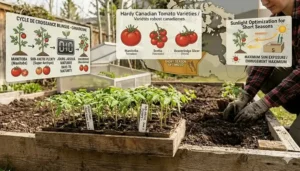
Essential Growing Tips for Sub Arctic Tomato Seeds Success
Successfully growing short season tomato seeds zone 3 requires more than just planting them and hoping for the best. These proven strategies maximize your chances of a bountiful harvest.
Start Seeds Indoors at the Right Time
Timing is everything when working with sub arctic tomato seeds. Start too early and seedlings become leggy and root-bound before outdoor temperatures permit transplanting. Start too late and you sacrifice valuable growing days.
Optimal Indoor Starting Timeline:
- Ultra-early varieties (Glacier, Sub Arctic): 6 weeks before last frost
- Early varieties (Siberian, Early Girl): 6-8 weeks before last frost
- Mid-early varieties (Stupice, Moskovich): 8 weeks before last frost
For most zone 3 locations with last frost dates around May 25-June 5, this means starting seeds in early to mid-April. Use quality seed-starting mix, maintain soil temperature at 21-27°C (70-80°F) for germination, and provide strong lighting (grow lights or very bright south-facing windows).
Harden Off Properly for Canadian Conditions
Zone 3’s temperature swings demand thorough hardening off. Begin 7-10 days before transplanting:
Days 1-3: Place seedlings outdoors in shade for 1-2 hours
Days 4-5: Increase to 3-4 hours, introduce some morning sun
Days 6-7: Full day in partial sun, bring in overnight
Days 8-9: Leave out overnight if temperatures stay above 10°C
Day 10: Ready for transplanting
This gradual acclimatization builds stronger plants better equipped to handle prairie weather variability.
Warm Soil Before Transplanting
Cold soil (below 13°C/55°F) stresses tomato seedlings and can stunt growth permanently. Warm zone 3 soils using these methods:
- Black plastic mulch: Lay over planting area 2-3 weeks before transplanting
- Row covers: Creates mini-greenhouse effect, raises soil temperature 3-5°C
- Raised beds: Warm faster than ground-level beds due to increased sun exposure
- South-facing locations: Choose planting spots receiving maximum sun exposure
Don’t rush transplanting. A plant set out May 20 in warm soil will outperform one set May 10 in cold soil every time.
Maximize Heat Units with Smart Placement
Cold hardy tomato seeds Saskatchewan and Alberta varieties still perform best with maximum heat:
- Against south-facing walls: Absorbed heat radiates back at night, adding 5-10°C
- In raised beds: Dark soil warms faster and drains excess moisture
- With reflective mulch: Silver/aluminum mulch reflects additional light onto plants
- Protected from wind: Wind strips heat and causes physical damage
Provide Optimal Nutrition
60 day tomato varieties Canada depends on can’t afford slow growth from nutrient deficiencies. Mix into planting holes:
- 1 cup compost or well-rotted manure
- 1 tablespoon bone meal (phosphorus for flowering/fruiting)
- 1 tablespoon kelp meal (micronutrients and cold tolerance)
- Handful of crushed eggshells (calcium prevents blossom end rot)
Follow with liquid fertilizer every 2 weeks once flowering begins. Choose balanced formulas (like 10-10-10) or tomato-specific blends slightly higher in phosphorus.
Water Consistently and Deeply
Inconsistent watering causes blossom end rot, cracked fruit, and stress that slows maturity—problems you can’t afford in a short season. Water deeply (4-6 inches into soil) 2-3 times weekly rather than daily shallow watering.
Drip irrigation or soaker hoses deliver water to roots without wetting foliage (which encourages disease). Mulch with straw or grass clippings after soil warms to conserve moisture and regulate soil temperature.
Extend the Season at Both Ends
Squeeze extra weeks from your growing season:
Early season protection:
- Wall O’ Water or similar water-filled sleeves add 2-4 weeks
- Cold frames or cloches protect from late spring frost
- Row covers provide 2-3°C frost protection
Late season protection:
- Monitor weather forecasts religiously in August-September
- Cover plants on frost-threatened nights
- Harvest green tomatoes before hard frost, ripen indoors
- Floating row covers extend season 1-2 weeks into fall
Some dedicated zone 3 gardeners harvest ripe tomatoes into October using these techniques with early maturing tomato seeds Alberta varieties.
Common Mistakes to Avoid When Growing Short Season Tomatoes
Even experienced gardeners can sabotage their zone 3 tomato crops with these common errors.
Mistake 1: Choosing Varieties Based on Catalogue Photos
That gorgeous beefsteak tomato on the seed packet labelled “85 days” might be spectacular—in zone 6. In zone 3, it’ll deliver green tomatoes and disappointment. Always verify days to maturity and prioritize varieties specifically recommended for northern/short-season regions.
Mistake 2: Overfertilizing with Nitrogen
Excessive nitrogen creates lush, green plants with minimal flowering and fruiting—disastrous when working with a 90-day window. Use balanced fertilizers or those slightly higher in phosphorus (middle number) than nitrogen (first number). The formula 5-10-5 outperforms 20-10-10 for zone 3 tomatoes.
Mistake 3: Planting Too Densely
Crowded plants compete for light, nutrients, and air circulation, increasing disease risk and slowing ripening. Space plants according to variety specifications:
- Determinate varieties: 45-60 cm (18-24 inches)
- Indeterminate varieties: 60-75 cm (24-30 inches)
Mistake 4: Removing Too Many Leaves
Yes, pruning suckers from indeterminate varieties channels energy to fruit production. But removing too many leaves reduces photosynthesis and eliminates the plant’s sunscreen—fruit exposed to direct sun can scald. Leave enough foliage to protect fruit while maintaining air circulation.
Mistake 5: Neglecting Soil pH
Tomatoes prefer slightly acidic soil (pH 6.0-6.8). Many prairie soils trend alkaline, which locks up nutrients even if they’re present. Test your soil and amend with sulfur or peat moss if pH exceeds 7.0. A $15 pH test kit can prevent countless frustrating “failures” that weren’t really your fault.
Frequently Asked Questions About Zone 3 Tomato Growing ❓
❓ What is the earliest tomato variety I can grow in zone 3 Canada?
❓ Can I grow tomatoes directly from seed outdoors in zone 3?
❓ How much do short season tomato seeds cost in Canada?
❓ What's the difference between Canadian and American hardiness zones?
❓ Should I choose determinate or indeterminate tomatoes for zone 3?
Conclusion: Your Path to Zone 3 Tomato Success
Growing homegrown tomatoes in Canada’s coldest zones isn’t just possible—it’s remarkably rewarding when you choose the right short season tomato seeds zone 3 varieties and follow proven techniques. Whether you’re gardening in Calgary’s unpredictable spring weather, Saskatchewan’s wind-swept prairies, or Manitoba’s frost-prone regions, varieties like Glacier, Sub Arctic Plenty, and Siberian provide reliable paths to success.
The secret lies in working with your climate rather than against it. Start with ultra-early varieties proven in Canadian conditions. Begin seeds indoors at the proper timing. Harden off thoroughly. Warm your soil before transplanting. Provide consistent care. And most importantly, choose cold hardy tomato seeds Saskatchewan and Alberta gardeners have depended on for decades.
Remember, successful zone 3 tomato growing builds on small advantages—a south-facing wall here, proper variety selection there, consistent watering throughout. These incremental gains compound into baskets of ripe tomatoes while your neighbours still nurse green fruit.
Ready to transform your short-season garden? Select 2-3 varieties from our top 7 recommendations—one ultra-early insurance policy (Glacier), one main crop for fresh eating (Siberian or Early Girl), and perhaps one flavour champion (Stupice). Source quality Canadian-adapted seeds. Follow the growing guidelines we’ve outlined. And prepare to enjoy the sweetest homegrown tomatoes possible in Canada’s zone 3.
Your journey to tomato-growing success starts with a single seed packet. Choose wisely, plant with care, and savor the incomparable taste of sun-warmed, vine-ripened tomatoes you grew yourself despite zone 3’s challenges. Happy growing, and here’s to your most abundant harvest yet! 🍅
Recommended for You
- 7 Best Heirloom Tomato Seeds for Canadian Gardens in 2026
- 7 Best Winter Grow Lights for Indoor Plants Canada 2026
- Electricity Cost Running Grow Lights: 7 Best Options Canada 2026
Disclaimer: This article contains affiliate links to Amazon.ca. If you purchase products through these links, we may earn a small commission at no additional cost to you.
✨ Found this helpful? Share it with your friends! 💬🤗
